• Skip to primary navigation
  • Skip to main content

International Salsa Magazine

  • Home
  • Previous editions
    • 2025
      • ISM / November 2025
      • ISM / October 2025
      • ISM / September 2025
      • ISM / August 2025
      • ISM / July 2025
      • ISM / June 2025
      • ISM / May2025
      • ISM / April 2025
      • ISM / March 2025
      • ISM / February 2025
      • ISM / January 2025
    • 2024
      • ISM / December 2024
      • ISM / November 2024
      • ISM / October 2024
      • ISM / September 2024
      • ISM / August 2024
      • ISM / July 2024
      • ISM / June 2024
      • ISM / May 2024
      • ISM / April 2024
      • ISM / March 2024
      • ISM / February 2024
      • ISM / January 2024
    • 2023
      • ISM / December 2023
      • ISM / November 2023
      • ISM / October 2023
      • ISM – September 2023
      • ISM – August 2023
      • ISM July 2023
      • ISM Edition June 2023
      • ISM – May 2023
      • ISM April 2023
      • ISM March 2023
      • ISM February 2023
      • ISM January 2023
    • 2022
      • ISM December 2022
      • ISM November 2022
      • ISM October 2022
      • ISM September 2022
      • ISM August 2022
      • ISM July 2022
      • ISM June 2022
      • ISM May 2022
      • ISM February 2022
      • ISM January 2022
    • 2021
      • ISM December 2021
      • ISM November 2021
      • ISM October – 2021
      • ISM September 2021
      • ISM August 2021
      • ISM July 2021
      • ISM May 2021
      • ISM April 2021
      • ISM June 2021
      • ISM March 2021
      • ISM February 2021
      • ISM January 2021
    • 2020
      • ISM December 2020
      • ISM November 2020
      • ISM October 2020
      • ISM September 2020
      • ISM August 2020
      • ISM July 2020
      • ISM June 2020
      • ISM May 2020
      • ISM April 2020
      • ISM March 2020
      • ISM February 2020
      • ISM January 2020
    • 2019
      • ISM December 2019
      • ISM November 2019
      • ISM October 2019
      • ISM Septembre 2019
      • ISM August 2019
      • ISM July 2019
      • ISM June 2019
      • ISM May 2019
      • ISM April 2019
      • ISM March 2019
      • ISM February 2019
      • ISM January 2019
    • 2018
      • ISM December 2018
      • ISM November 2018
      • ISM October 2018
      • ISM September 2018
      • ISM August 2018
      • ISM July 2018
      • ISM June 2018
      • ISM May 2018
      • ISM April 2018
      • ISM March 2018
      • ISM February 2018
      • ISM January 2018
    • 2017
      • ISM December 2017
      • ISM November 2017
      • ISM October 2017
      • ISM September 2017
      • ISM August 2017
      • ISM July 2017
      • ISM June 2017
      • ISM May 2017
      • ISM April 2017
  • Download Salsa App
    • Android
    • Apple
  • Spanish

Search Results for: Afro-Cuban

Meet the director of the Academia Salsa Tepic – Mexico.

The history of Salsa Tepic :

Rafael Reyes is a Cuban who was dedicated to being a coach of Greco-Roman wrestling and Olympic Wrestling in Cuba and had the opportunity to work in Mexico in this profession during the time that his contract imposed, during this time he made the decision to live there , being his current stay in Nayarit, Mexico.

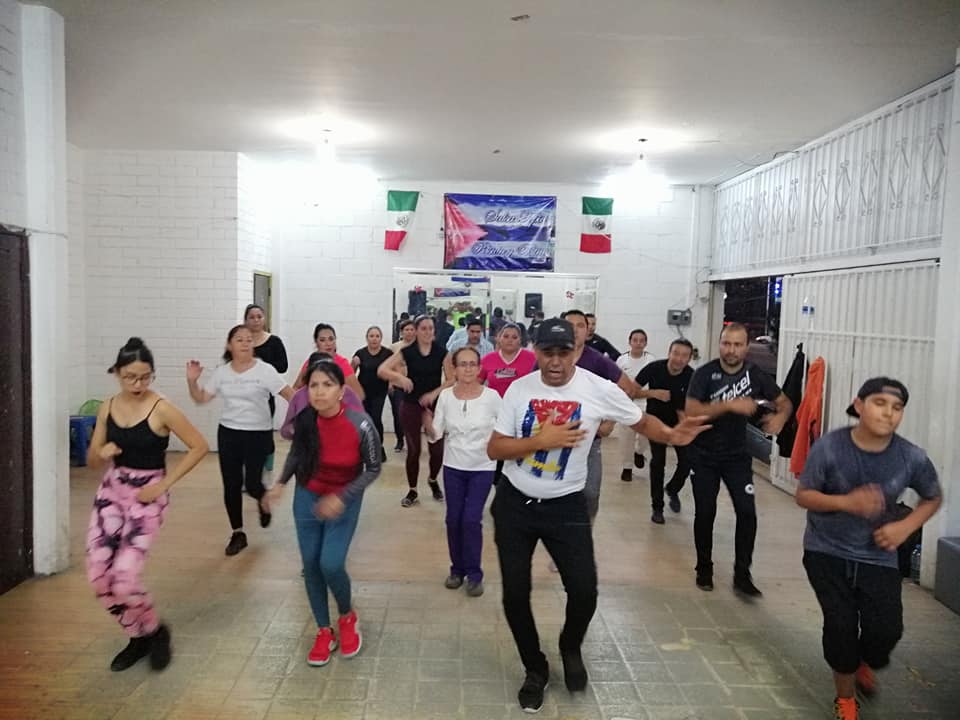
Thanks to personal motivation and the support of his students, he created and founded the Salsa Tepic Academy 6 years ago, he tells us that before founding his academy he gave dance classes at the Bar Juanes located at Rafael Buelna 86, Fray Junípero Serra, 63169 Tepic, Nayarit, Mexico; For him this was a hobby that he enjoyed very much and when he stopped working there, many of his students advised him to open a dance academy and that is how it came about.

Salsa Tepic Academy - Logo
Salsa Tepic Logo – Dance Academy


Practica de Salsa - Salsa Tepic
Estudiantes practicando pasos de baile en Salsa Tepic

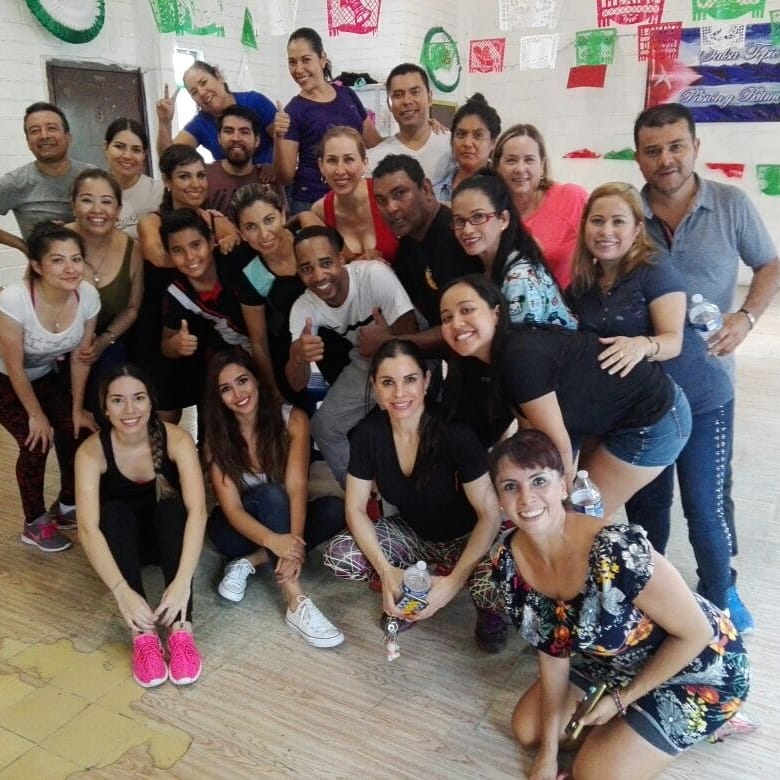
Estudiantes de la Academia Salsa Tepic
Photo of the Salsa Tepic Academy students

Son Cubano and Salsa Cubana are the genres that he likes the most, he mentions that each genre has an identification in each country and in Cuba he tells us that it is very lively and dynamic which can make different fusions such as Timba ( is the fusion of several Afro-Cuban rhythms)… giving this musical genre a lot of motivation, differentiating it from linear salsa, Salsa Neoyorquina and Salsa en Dos, but be careful, you have to know the differences between traditional Timba and Cuban Timba. and very broad cultural.Being Cuban, he tells us that music is in the blood of most Cubans, especially Afro-Caribbean music, and to top it off his parents enjoyed dancing so he spontaneously inherited this passion for dance from a very young age, and He perfected his native dance techniques in workshops with various teachers.

Rafael Reyes is also in charge of organizing the Salsa talent festivals in Nayarit, they have invited Guadalajara, Guaraguato, Puerto Bayarta, among others with new talents so that they have something more than just academic learning but a new experience through participation. and competition between the different students of each city, showing all their abilities on stage; In total, it has had 5 Salsa talent festivals, which one can find out when the next one will take place through the Salsa Tepic Facebook page.

Also the students of the Salsa Tepic academy have participated in other events such as the one that happened a few weeks ago at the Bar Tango Milonga, another event they participated was the Puerto Bayarta festival, and in other places.

The dance classes at the Salsa Tepic Academy are currently active, of course with the protection measures for the covid-19, they began to work from 7 – 10 am and from 5 to 10 pm Mexico time; There they teach Cuban Salsa, Bachata, Son Cubano, Rumba, Merengue, Cumbia, Cha Cha Cha, among other rhythms, so if you are interested in learning to dance from scratch or continue with the experience you have in order to be able to defend yourself during a social, competitions, parties and / or meetings, and at the same time that the students learn to identify the type of music that they dance respecting their respective times.

https://fb.watch/6q7Gdt89if/

And he leaves us the following message for all his readers, current and future students “Whatever happens, they dance, never stop, dance is very healthy, it takes away stress, it is motivational, it makes you more sociable and above all it is something that everyone likes when one learns … that they take off the taboo or the fear of saying I don’t like dancing because of any circumstance ”

For more information and the schedule of activities:

Discover The Alternative To Dance Latin Music In Israel

Havana Music Club: An exclusive Cuban atmosphere in Tel Aviv

Man dressed in black dancing with woman in white top
The owners of Havana Music Club are the same as the legendary Arena club.

The number one Latin rhythm club in Israel, Havana Music Club, since August 2010 opens its doors every night. It serves as a different entertainment venue for loyal Salsa and Bachata lovers from this country located on the Asian continent.

This club has set a new standard in the Middle East that resembles the best Latin music clubs in Europe and North America specifically New York and Los Angeles but with a Cuban atmosphere. Additionally, it has an underground parking lot for approximately 250 vehicles and nearby side streets with free parking spaces.

Ten years and a resounding success led Havana Music Club to create Hula La in July 2019. This “Little Brother” is located next to the main headquarters and also meets the requirements of high quality in sound, lighting, and atmosphere with a space clean that houses hundreds of dancers in 1500 square meters of parquet, which allows you to fully enjoy the continuous music of the various DJs.

This club complex is located next to Ayalon Lanes at the Hashalom Interchange (Azrieli Towers), a 2-minute walk from Hashalom Train Station.

The next event that Havana Music Club will bring to the Latin scene in Israel in 2021 will be the Caramelo festival. This event will have workshops with a couple of top-level national and international artists in the Salsa and Bachata styles. In addition, you will enjoy three nights of crazy parties, as well as accommodation with three meals, and hot/cold drink bars at the Hotel Leonardo Club.

Date: Thursday, September 2nd – Saturday, September 4th

Venue: Leonardo Club Hotel. Kampen St, Eilat, Israel

PARTIES IN HAVANA MUSIC CLUB

Couple dancing in the middle of the dance floor
The club has a food menu served by waitresses with an additional charge to the price of admission.

Havana Music Club offers Latin parties with Salsa and Bachata instructions three days a week (Tuesdays, Thursdays, and Saturdays) from 9:00 PM to late at night, and you can start from the basic level up to the professional level.

You will start with a small warm-up lesson to continue with the Latin rhythm class of the moment you prefer in any of its levels, and end with the great dance party in the Havana Music Club and Hula La. Likewise; you can also opt for classes for small groups.

Among the courses that will open soon are:

Woman dressed in lilac and man in black shirt
The club is handicap accessible

Salsa Lady Style: This course is aimed at Salsa dancers that have an intermediate level or higher. Women interested in developing body movement, gaining confidence in dancing, developing their style, and technique.

In the Salsa Lady Style course, you will work on proper posture, turns, leg and handwork, body movement, hip work, and upper body.

Chat for beginners: These Bachata classes are designed for all levels. The objective is to give you the bases so that you enter the world of “chat” and give you the tools to enjoy the dance that is conquering Israel.

Sabor de Cuba – Master’s Level: The course is taught by Lear Shoshani & Moti Sabag, one of the oldest and most prominent Afro-Cuban Salsa instructors in the country. In these lessons, they will teach the essentials of the music of this Caribbean island from its origins and emphasizing the Son, Rumba, and Afro-Cuban Mambo to dance more in tune with the music.

Salsa and Cha Instructor Training: Havana Music Club’s most prestigious course to attract future instructors from the Salsa and Bachata scene in this Middle Eastern country. This course includes general instruction, safety before a captive audience, dance basics, instructional experience, and various enrichment lessons in the field of rhythm, style, and musical history of these styles that mark the development of the night scene of this decade.

Maybe This Data Also Interests You

Dancers in the middle of a dance pass
Havana Music Club is an exclusive Cuban atmosphere in Tel Aviv
  1. There are 3 different rooms in the club: Central Room with capacity for 300 people seated or 850 people standing, Secondary room “Hula La”, and VIP Room with 90 square meters to accommodate from 20 to 50 guests.
  2. Smoking is prohibited within the club’s facilities.
  3. It is also strictly forbidden to bring any kind of drink. (Includes water)
  4. Havana Music Club offers live local bands’ performances.
  5. If you bought the ticket for a concert, I recommend you arrive at the opening of the doors to choose seats because the places are not separated.
  6. In general, the price online is cheaper than the one paid at the box office.
  7. Two other courses that will soon be offered are Mixed Style Lady Style and Salsa del Medio.
  8. Among the DJs that currently display their sets with the best mix of Latin music are DJ Charlie Pérez, DJ Nadav Shamgar (DJ NASH), DJ Moti, DJ Paco, and DJ Tzachi Bachar.
  9. According to the Israeli Ministry of Health guidelines, the number of people who spend time in the club should be limited. Attendees must present a vaccination or “in recovery” card plus an identification card.

SalsaGoogle.com is International Salsa Magazine


Home

Flashback: Arturo “Chico” O’Farrill

The Architect Of Afro-Cuban Jazz

Arturo "Chico" O'farrill with reading glasses and sitting
In memory of the 20 years of his physical disappearance

Arturo O’Farrill, better known as “Chico” O’Farrill was born on October 28, 1921, in Havana (Cuba) at the height of Son. He had a normal childhood like any son of a Jewish family raised to continue the family profession, Law.

In the 1930s Chico was admitted to the Riverside American Military School in Gainesville, Georgia. His father, an eminent Irish lawyer recognized in the Afro-Caribbean country, decided to intern him to continue his studies.

During his stay at that institution, O’Farrill discovered the great jazz orchestras that made life in that territory. Those bands were known by the name of Big Bands. He entered that musical environment and began his process of love and passion for the industry. He listened to recordings by Benny Goodman, Artie Shaw, Glenn Miller, and Tommy Dorsey while learning to play the trumpet on his own. In almost immediate time Chico became the trumpet player for the school’s military band and large dance groups.

Years later, Arturo returned to Cuba. He studied the same profession as his father (Law) and at the same time with his studies, he developed his facet as a composer. He received composition and harmony classes from important island musical instructors such as Félix Guerrero.

His progress, determination, and development in music were unstoppable. He was a member of the Armando Romeu Bellamar Orchestra and the Isidro Pérez Orchestra at the time of Mambo and Son, rhythms that prevailed and enhanced Latin music for decades.

MUSICAL HISTORY

Arturo "Chico" O'Farrill seated and in black and white
Chico O’Farrill dabbled in rock

“The Architect of Afro-Cuban Jazz” worked for four years (1943 – 1947) in Montmartre, the Cuban cabaret with the greatest French style. In the same way, he belonged to the Bellamar Orchestra, directed by Armando Romeu with Luis and Pucho Escalante, and Mario Romeu, among many other members.

As a trumpeter, Arturo traveled to Mexico and Europe. He created Los Raqueteros del Swing band, being the director and member of the orchestra. Subsequently, he founded Los Beboppers (the first Cuban bop group) with continuous performances at the Hotel Saratoga. Here, Chico was once again at the helm as director of the band and musician with his related instrument, the trumpet.

In the 1950s he began his successes as an arranger, working briefly for various musical directors such as Gil Fuller, Noro Morales, Frank “Machito” Grillo, and Benny Goodman.

Likewise, he composed his first masterpiece, Afro-Cuban Jazz Suite in five movements: Canción, Mambo, 6/8, Jazz, and Rumba Open. This masterpiece of composition was made and recorded for the imprint of the businessman Norman Granz, with the Machito Orchestra as the rhythmic base and accompanist.

The expert comments on Afro-Cuban Jazz Suite were numerous, but here are two of the most outstanding opinions:

Luc Delannoy: “It begins and ends with a hypnotic flute and conga duo that reflects the essence of Cuban treatment; the union of musical universes: the European (the flute) and the African (the conga). These two instruments are joined by the oboe, followed by the trumpets, saxophones, and the double bass “Tumbao”… After a return to swing and bebop in the fourth movement, Chico takes us back to the origins of Latin jazz with a melody of clear Arabic accents, before immersing himself in the universe of Afro-Cuban percussions.”

And Benny Carter commented on the Afro-Cuban Jazz Suite the following: “The reason for the coherence of the rhythmic parts and their relationships with the solos that have their own life and independence, Masterpiece of a genius.”

Arturo "Chico" O'farrill dressed in black and with a red background
His last album was Heart Of A Legend

After the enormous success of this powerful piece of music, O’Farrill wrote Cuban Fantasy for Stan Kenton during his stay in New York (EE.UU). However, Kenton eventually changed the name of the piece and it was called the Cuban Episode.

In 1953 he moved from New York to the California state and founded his orchestra with renowned musicians such as Mario Bauzá, Doug Mettome, Jimmy Nottingham, Eddie Bert, Fred Zito, Lenny Hambro, Flip Phillips, and the saxophonist Eddie Wasserman. The orchestra used the Afro-Cuban rhythmic section of Machito, harp, and oboe.

Under this concept, he recorded for Norman Granz and performed in two emblematic venues of the American Jazz music scene: Birdland (New York) and Hat Ballroom located in Los Angeles, California. During this period he composed three new movements: “La Jungla”, “Contrast”, and “Rhumba Finale”, baptized as “Manteca Suite”. The latter recorded in 1954 with Jazzist Dizzy Gillespie and an orchestra with 21 talented musicians.

In 1956 he returned to Cuba in search of inspiration and immediately began to work for the best record companies such as Panart and RCA Víctor. In this record label, he made “Chico’s Cha-Cha-Cha”, adapting the Charanga rhythm to the Big band format. This album was released, once again, on compact disc by BMG during the last decade of the 20th century.

Two years later the restless O’Farrill traveled to Mexico due to the great platform that this country provided for Latin American musicians at the time. During that residency, he once again stood out with a special sound. He appears on television as music director for singer Andy Russell, and there his life takes a dizzying turn. He started the semi-retirement period but never stopped composing. By that time, he composed his next and one of his greatest works “Azteca Suite” for trumpeter Art Farmer. And he made history once again!

In the 60s and with the rise of rock, Chico returned to New York and made arrangements for such important figures as La Lupe (They Call Me La Lupe); Cal Tjader (Along with Comes Cal); Count Basie (High Voltage); Gato Barbieri (Chapter Three: Viva Emiliano Zapata); Ringo Starr (Night and Day) and dabbled in Rock music with David Bowie (I Know That It Will Happen and Looking for Lester) and finally was the director of the Venezuelan Aldemaro Romero’s Orchestra.

In this stage that lasted until the end of the 20th century and already in the 70s, the Big bands went from being an innovation to being displaced by other rhythms that were rapidly increasing in popularity. These genres used new techniques, styles, sounds, and harmonies. It led to the appearance of icons in Jazz and the disappearance of the exclusive Bing bands for ballroom dancing.

For this reason, Chico O’Farrill reinvents himself and begins to work in the lucrative field of music for audiovisual advertising.

Arturo "Chico" O'farrill in black and white
Pure Emotion album earned a Grammy Award nomination for Best Latin Jazz Performance

In the mid-nineties, American Jazz producer and director Todd Barkan contacted the “Afro-Cuban Jazz Architect” to pay tribute to his career with a compilation of his musical hits. The name of the album was Pure Emotion and it got a nomination for Best Latin Jazz Performance at the 37th Grammy Awards.

O’Farrill toured Europe with his orchestra in 1996 and recorded his latest album entitled “Heart Of A Legend” with 14 tracks.

For this album, they had an orchestra of 18 musicians and a collaboration of international artists. The arrangements and musical direction of “Heart Of A Legend” were in charge of his son Arturo O’Farrill Jr. and who continues with his legacy.

On June 29, 2001, at 80 years old in New York City, Arturo “Chico” O’Farrill passed away.

Undoubtedly, Chico O’Farrill was always a visionary, and he was at the forefront for more than half a century of the musical genre today recognized worldwide as Latin Jazz.

In memory of the 20 years of his physical disappearance

Arturo “Chico” O’Farrill Forever!

SalsaGoogle.com is International Salsa Magazine

Home

What causes the birth of salsa in New York and other cities

Background

It is no secret that music has always been a vast source of social expressions that tell an infinite number of stories dating back to the time and focused on the awakening of the personal and collective conscience of the people at the time. This is exactly what has happened with salsa and Latin music in general from its origins. 

As is the case for almost all known musical genres, salsa was the result of a set of migration waves caused by the political, social and economic issues that were gestating in a large part of the Latin countries. These people saw in various cities across the U.S. the place they were looking for to start a new life far from the suffering of the past. This is how large Latino communities were growing in the country, New York being one of the cities with the highest number of these new residents.   

Although people from all over the continent immigrated to the United States, there is no denying that Puerto Ricans and Cubans started making an impact on their new home, at least in cultural terms. Cities that received these new citizens were already becoming too small for the large number of immigrants who would not stop arriving, which presented a challenge for the old and new inhabitants. 

A number of new arrivals were forced to live in inhumane conditions to find themselves in places which did not have minimum conditions of dignity to house human beings. This led many of them to live a life of squalor equal to the one from which they were fleeing, or even worse.   

This is how neighborhoods were starting to be born in New York City, which was gradually configured in small communities inhabited only by people of one or certain nationality. It was this mix of old and new culture that gave birth to new rhythms that were born on the streets and began to spread robustly. At that time, we were starting to enjoy the talent of Cheo Feliciano and historic boleros of Pedro Flores were becoming increasingly present in the rickety windows of Latin low-income neighborhoods. 

Picture of the Bronx in the 70's
The Bronx during the 70’s

This social situation coincided with the creation of the record label Fania Records from the hand of the legendary Johnny Pacheco and Jerry Masucci. The early work of the label attracted a great deal of attention due to its freshness and novelty in comparison with what was being done at the time. Fania All Stars, Bobby Valentín’s orchestra and a few other groups, not noticing it, began to start a trend to the sound of timbales and claves whose rhythm was increasingly fast and furious. 

The young people of the time were clamoring for music far from art academies and social circles which became more and more unattainable for them. Something that many would call music closer to the street and much more like them. The black population had ceased to be represented by much acclaimed jazz artists at the time and could feel its purest essence in boogaloo.   

For those who do not know, boogaloo can be defined as a genre of Latin origin resulting from the mixing of Afro-Cuban rhythms and American soul, which was already beginning to be sung in both English and Spanish. This last shows the widespread influence of the arrival of so many Latinos to the United States in such a short amount of time. 

This is what made the figures that would later emerge so famous. In addition to Pacheco and Valentin, names like Pete Rodriguez, Monguito, Ismael Miranda, and Ismael Rivera were also popularized. And of course, nor can we fail to mention the explosive duo formed by Héctor Lavoe and Willie Colón.   

Hector Lavoe and Willie Colón singing
Willie Colón and Hector Lavoe

What the term salsa means 

After the emergence of the already mentioned artists, there came about a great confusion concerning the meaning of the term salsa, as that was the word chosen to refer to the music done by a growing group of singers in New York. This, of course, did not make Tito Puente and Machito content, who saw the pioneers of this new trend as intruders who came to take the place they had already earned by pluck and application. 

Some scholars of the subject have stated that the term salsa comes from a kind of like campaigning in which this rising genre was likened to the seasoning used in food to make it more appetizing. Others said that it was just a phrase that says échale salsa (salsa in Spanish can also refer to sauce used in the kitchen) used by various musicians for sudden changes in rhythm. Fania Records used this to make its artists famous and it worked as well as expected. 

During the 1970s, the genre hung over the youth of the time and the old school that took quite a lot to impress. 

The Fania in japan
The Fania is arriving to Japan

What part Cuba and the Cuban Revolution played in all this.

It is undeniable that Cuban music had a before and an after due to the Cuban Revolution. When Castro came to power, high tensions began to arise between the island and the United States, which caused the Caribbean country to be perceived as a threat by the media of the time. This made its cultural and artistic expressions to be no longer seen with good eyes. This led artists who were afraid of being censored to rename it as salsa and pass it off as Latin music. 

This salsa ended up by uniting an entire continent in a single voice, for it spoke of a shared culture and a common origin that not only stood for Cuba, but also for Latin America in full. This was what turned the genre into an identity movement for countries such as Puerto Rico, Colombia, Venezuela, and many more. There was a time all these nations were competing to be considered the official home of salsa. 

This brought about a countless number of historic concerts in which the Fania All Stars, other groups, and artists proved that the Fania got huge potential as a product. This was the exact same Cuban music with certain variations that never left the art world despite pressures to do so.

Johnny Pacheco smiling with a tobacco
Johnny Pacheco

If you want more information, you can read Génesis of Salsa, its essence, characteristics, rhythm, history and expansión 

Home

Learn to play the percussion with Giovanni “Meñenguito” Hidalgo

A video tutorial by musicians for musicians

Virtuous percussionist, Giovanni “Meñenguito” Hidalgo, proves his talent in the video tutorial entitled Conga Virtuoso. In this masterclass, you will learn about rhythm, technique and improvisation to develop your percussive talents.

Throughout this video, you will observe the legendary Maestro Hidalgo accompanied by Changuito, Ignacio Berroa, Ray Romero, Eric Figueroa, John Benitez, Danilo Perez and David Sanchez issuing instructions in both languages (English and Spanish).

Also, you will be able to recognize the Tumbadora as a non-handed percussion instrument, that is to say, you will learn to play the tumbadora like a right-handed musician even as a lefty and the Maestro Hidalgo with more than three decades of experience teaches you that.

The legendary and multi-talented Puerto Rican musician, Giovanni Hidalgo, a outstanding percussionist, born in San Juan, Puerto Rico on November 22, 1963.

Today he is known as one of the best congueros of his generation in the world.

Giovanni “Meñenguito” Hidalgo
The virtuoso percussionist, Giovanni “Meñenguito” Hidalgo, demonstrates his talent in the Conga Virtuoso video tutorial.

And quite possibly one of the fastest of all known congueros. Through International Salsa Magazine, I introduce a tutorial method where Maestro Hidalgo gives a master class on rhythms, technique and improvisation; Method that, by the way, you can get in full on the YouTube channel entitled: “Conga Virtuoso”; which is bilingual in English and Spanish and is distributed by Warner Bros. Publications; it is notable that, in the tutorial, Giovanni Hidalgo is left-handed and the examples are written for people who use the right hand.

The tumbadoras as protagonists

Examples of three tumbadoras, including the position of the drums can be played the same way, even if one is right-handed.

Evolution of the tumbao: Around 1940, the bandleader Arsenio Rodriguez began to incorporate a tumbadora (conga), a bongo, a bell, two trumpets, a piano, and a tres (derived from Spanish guitar, but with three double strings and triple voices three).

In the late 1940s, Frank “Machito” Grillo also added the tumbadora to the Afro Cubanos Orchestra, thus achieving the percussion section composed of bongos, tumbadora, and timbales. At that time, the “conguero” performed with a single drum.

Different sounds were produced by dry beats, muffled beats (mute), open tones and deep tone (created with the palm of your hand).

Giovanni Hidalgo explains all these sounds in this YouTube video “Conga Virtuoso”. As Giovanni says, the traditional way of playing only with a tumbadora comes from 40s.

Although he begins almost all examples in lifting (with upbeats) on beat 4, the beginner should know that he starts on beat 1 in most musical situations, without lifting.

Another factor to remember is to use an open tone at the beginning of the first bar, as Giovanni demonstrated by Giovanni.

This initial open tone helps to “anchor” and synchronize the rhythm section in the first measure.

And quite possibly one of the fastest of all known and through International Salsa Magazine, I present, specifically, the introduction of a tutorial method, where the Maestro Hidalgo
Giovanni “Meñenguito” Hidalgo is known today as one of the best congueros of his generation.

This initial open tone helps to “anchor” and synchronize the rhythm section in the first bar.

It is eliminated by repeating the pattern and replaced by a left clap (P). Caption: O = open tone. P = with the palm of your hand, which is similar to the bass sound. B = deep sound (with the palm of your hand). S = dry. T = with the tip of your fingers. M = “muffled” note. It is accomplished by pressing the leather down with the same hand (cover). Two tumbadoras: the first step in the evolution of the tumbao was to perform with a drum.

The second phase incorporated the use of two tumbadoras. It was during this stage that the art of playing the tumbadora upgraded to a higher level.

Some of pioneers of the style with two tumbadoras are: Carlos “Patato” Valdez, Mongo Santamaría, Cándido Camero, Tata Güines, Francisco Aguabella, Armando Peraza, and Ray Romero. In the examples, Giovanni plays a “seca´´ (term to refer to a dry sound) in the later half of the third beat of the first bar.

This is a light “seca´´ as opposed to the most pronounced. By adding the bass: This is a modern approach to how you play the basic tumbao with two tumbadoras.

This pattern uses the bass sound in the fourth bar. Giovanni lifts the tumbao minimally with his legs while playing the bass sound in the fourth bat. He lifts the drum and lets the sound out of its lower part. He also adds the timbales and bongos: This section demonstrates how the tumbadoras, the timbales and the bongos work together in a section.

The pattern for the tumbadoras is the tumbao with variations combining both ancient and modern styles, as Giovanni mentioned. The rhythm of timbales is based on a shell pattern played on the cáscara (the sides of the timbales).

The bongo drum plays the basic pattern called “martillo” with improvised phrases called “chime”

Another factor to remember is that an open tone should be used at the beginning of the first bar, as Giovanni demonstrates.
The tumbadoras as protagonists

The bongo drum plays the basic pattern called “martillo” (the most important bongo pattern in Afro-Cuban music, which means “hammer” in English) with improvised phrases called “chime”.

When repeated, the first open tone is replaced by a left clap (P). Example of bongos: “Little” Ray Romero starts chiming immediately.

These phrases must also comply with the clave. The first example is the basic “martillo”, which is the basic function of the bongo drum in a section. The second example is a transcript of the chimes played by Ray Romero. Basic Martillo: T = fingertip. TH = thumb side. O = open tone on the bass drum (female).

Pattern for timbales: the changuito plays a shell pattern on paila (sides of the timbales) in a 2-3 clave.

In addition, he has a bass drum to which is added a pattern as would a drummer. The fingers from the left hand play the “Ghosts” notes while the right hand plays the bass drum. He also plays an open tone with the third finger from the left hand on the bass drum (female) in the first bar. This creates a melody line between the bass drum and the “hembra”. Also, Giovanni Hidalgo explains the rhythms from Puerto Rico, such as: jíbara, quás, plena, bomba, yubá and Dutch music. To conclude, we invite you to watch the videos “Conga Virtuoso” by Maestro Giovanni Hidalgo in full, which will be very useful for both beginners and advancing musicians.

Video: Conga Virtuoso Giovanni Hidalgo

Home

  • « Go to Previous Page
  • Page 1
  • Interim pages omitted …
  • Page 19
  • Page 20
  • Page 21
  • Page 22
  • Page 23
  • Page 24
  • Go to Next Page »

International Salsa Magazine (ISM) is a monthly publication about Salsa activities around the world, that has been publishing since 2007. It is a world network of volunteers coordinated by ISM Magazine. We are working to strengthen all the events by working together.