• Skip to primary navigation
  • Skip to main content

International Salsa Magazine

  • Home
  • Previous editions
    • 2025
      • ISM / November 2025
      • ISM / October 2025
      • ISM / September 2025
      • ISM / August 2025
      • ISM / July 2025
      • ISM / June 2025
      • ISM / May2025
      • ISM / April 2025
      • ISM / March 2025
      • ISM / February 2025
      • ISM / January 2025
    • 2024
      • ISM / December 2024
      • ISM / November 2024
      • ISM / October 2024
      • ISM / September 2024
      • ISM / August 2024
      • ISM / July 2024
      • ISM / June 2024
      • ISM / May 2024
      • ISM / April 2024
      • ISM / March 2024
      • ISM / February 2024
      • ISM / January 2024
    • 2023
      • ISM / December 2023
      • ISM / November 2023
      • ISM / October 2023
      • ISM – September 2023
      • ISM – August 2023
      • ISM July 2023
      • ISM Edition June 2023
      • ISM – May 2023
      • ISM April 2023
      • ISM March 2023
      • ISM February 2023
      • ISM January 2023
    • 2022
      • ISM December 2022
      • ISM November 2022
      • ISM October 2022
      • ISM September 2022
      • ISM August 2022
      • ISM July 2022
      • ISM June 2022
      • ISM May 2022
      • ISM February 2022
      • ISM January 2022
    • 2021
      • ISM December 2021
      • ISM November 2021
      • ISM October – 2021
      • ISM September 2021
      • ISM August 2021
      • ISM July 2021
      • ISM May 2021
      • ISM April 2021
      • ISM June 2021
      • ISM March 2021
      • ISM February 2021
      • ISM January 2021
    • 2020
      • ISM December 2020
      • ISM November 2020
      • ISM October 2020
      • ISM September 2020
      • ISM August 2020
      • ISM July 2020
      • ISM June 2020
      • ISM May 2020
      • ISM April 2020
      • ISM March 2020
      • ISM February 2020
      • ISM January 2020
    • 2019
      • ISM December 2019
      • ISM November 2019
      • ISM October 2019
      • ISM Septembre 2019
      • ISM August 2019
      • ISM July 2019
      • ISM June 2019
      • ISM May 2019
      • ISM April 2019
      • ISM March 2019
      • ISM February 2019
      • ISM January 2019
    • 2018
      • ISM December 2018
      • ISM November 2018
      • ISM October 2018
      • ISM September 2018
      • ISM August 2018
      • ISM July 2018
      • ISM June 2018
      • ISM May 2018
      • ISM April 2018
      • ISM March 2018
      • ISM February 2018
      • ISM January 2018
    • 2017
      • ISM December 2017
      • ISM November 2017
      • ISM October 2017
      • ISM September 2017
      • ISM August 2017
      • ISM July 2017
      • ISM June 2017
      • ISM May 2017
      • ISM April 2017
  • Download Salsa App
    • Android
    • Apple
  • Spanish

Search Results for: Afro-Cuban

Génesis of Salsa, its essence, characteristics, rhythm, history and expansión

Salsa and more Salsa

SALSA is the commercial term used since the late 1960s to define a Hispanic music genere, resulting from the synthesis of Cuban son and other Caribbean music genres with jazz and other American rhythms. Salsa has varieties from Puerto Rico, Venezuela, the Dominican Republic, Colombia and other Latin American countries.

From this synthesis, Afro-Cuban and Latin jazz was also born, which has influences from other countries as well. Salsa was developed by musicians of Caribbean origin (Cuban and Puerto Rican) in the Greater Caribbean and New York City. Salsa encompasses various styles such as salsa dura, salsa romantica and timba.

Genesis and expansion of salsa: chronology of themes

ESSENCE

Cuban director Machito said that salsa was what he had played for forty years (between 1930 and 1970 approximately) before the musical genre was named. On the other hand, the New York musician of Puerto Rican descent, Tito Puente, denied the existence of salsa as a genre in itself, affirming that “what they call salsa is what I’ve played for many, many years: it’s called mambo, guaracha, chachachá, guaguancó, everything is Cuban music.

The musician Eduardo Morales defines salsa as “a new turn of the traditional rhythms to the sound of Cuban music and the cultural voice of a new generation,” “a representation of Cuban and Hispanic identity in New York.

New York Salsa

It is also argued that the cut in cultural exchange between Puerto Ricans and the United States
New York Salsa

Nevertheless, some authors point out as a fundamental element in the emergence of salsa the role of Puerto Rican musicians and their culture, both on the island of Puerto Rico and in its New York diaspora. In that sense, the specific weight of Puerto Ricans in New York is pointed out, who, although a minority, were
Numerically far superior to any Latin American settlement.

It is also argued that the cut-off in cultural exchange between Puerto Ricans and the United States in New York’s Latin music scene.

MUSICAL CHARACTERISTICS
Rhythm: Uses the clave de son, the rhythmic pattern of the Cuban son, as a base

MUSICAL CHARACTERISTICS

Musical Instruments

The sauce has the following characteristics:

  • Rhythm: It uses as a base the clave de son, the rhythmic pattern of the Cuban son, which can be 2-3 or Melody:
  • In many cases, the melodies used in salsa correspond to those traditionally used in the son montunoa although it can also be assimilated to other genres of Cuban and traditional Caribbean music, including melodies of Latin American popular music.
  • Harmony: It corresponds to that used in Western music.
  • Instrumentation: It uses Cuban percussion instruments popularized since the 1920s such as pailaso timbales, bongo, Cuban güiro, cowbell, two maracas and conga.

Arsenio Rodríguez was the first musician to incorporate the conga or tambo into dance orchestras.

The percussion, the instrumentation is completed with piano, double bass (in many cases electric bass), trumpets, saxophone, trombones, flute and violin.

Puerto Rican Salsa
Puerto Rican Salsa

Puerto Rican Salsa

The influence of Afro-Cuban jazz is determined by the arrangement, although it is not an essential condition in salsa.

RHYTHM

Clave de son the most representative rhythmic cell of salsa is called “clave de son” which is traditionally interpreted by the claves.

Salsa dancers and musicians group the pattern into two parts:
1. A) A part of 3 clave touches where an intermediate counter rhythm is presented.
2. B) A part of 2 keystrokes of clave 2 without a counter rhythm.

The numbers represent the blacks, the plus sign [+] represents the hit of the claves, and the dot [.] represents each quaver.
“son key 3-2”
1 . 2 . 3 . 4 . 1 . 2 . 3 . 4 .
+ . . + . . + . . . + . + . . .
“son key 2-3”
1 . 2 . 3 . 4 . 1 . 2 . 3 . 4 .
. . + . + . . . + . . + . . + .

Rumba key
There is another similar rhythmic pattern that is rarely used in salsa, and comes from the Cuban rumba complex. This pattern presents 2 counter-rhythms in one of its parts.
“rumba clave 3-2”
1 . 2 . 3 . 4 . 1 . 2 . 3 . 4 .
+ . . + . . . + . . + . + . . .
“clave e rumba 2-3”
1 . 2 . 3 . 4 . 1 . 2 . 3 . 4 .
. . + . + . . . + . . + . . . +

Son Key (3-2)
The clave is not always played directly, but forms the basis of other percussion instruments, as well as the song and accompaniment, which use it as a common rhythm for their own phrases. For example, this is the common rhythm of the bell with harpsichord 2-3:
. . + . + . . . + . . + . . . + clef 2-3
+ . * . + . * * + . * * + . * * Bell coincides with the 2 of key
The plus sign [+] represents a severe blow of the bell.
The asterisk [*] represents a sharp blow of the bell.

Salsa Cubana
In 1933, Cuban musician Ignacio Piñeiro first used a related term, in a Cuban son entitled “Échale salsita.

THE TERM SALSA
In 1933, Cuban musician Ignacio Piñeiro first used a related term, in a Cuban son entitled “Échale salsita”.

In the mid-1940s, Cuban Cheo Marquetti emigrated to Mexico.

Back in Cuba, influenced by spicy food sauces, he gave that name to his group Conjunto Los Salseros, with whom he recorded a couple of albums for the Panart and Egrem labels. In 1957 he traveled to Caracas-Venezuela for several concerts in that city and it was in Venezuela where the word “salsa” began to be broadcast on the radio to the music made by Cuban soneros inside and outside the island, designating them as “salseros”.

Music author Sue Steward states that the word was originally used in music as a “cry of appreciation for a particular spice or a quick solo,” coming to describe a specific genre of music from the mid-1970s “when a group of “Latin” (Latin American) musicians from New York began examining the arrangements of the great popular classical bands from the mambo era of the 1940s and 1950s.

She mentions that the first person who used the term “salsa” to refer to this musical genre in 1968 was a Venezuelan radio disc jockey named Phidias Danilo Escalona, who was broadcasting a morning radio program called La hora de la salsa (The Salsa Hour) in which Latin music produced in New York was broadcast as a response to the bombardment of rock music in those days (the Beatlemania).

The Time for Salsa According to this version, Phidias Danilo Escalona

Salsa time
Venezuelan radio disc jockey named Phidias Danilo Escalona

What do you play?
What we do, we do with flavor, it’s like ketchup, which gives flavor to food.
What is this ketchup?
Well, that’s a sauce that is used in the United States to flavor the hamburger.Ah…! So what you guys play is sauce? Well, ladies and gentlemen, let’s now listen to the salsa of Ricardo Ray and Bobby Cruz.

Bobby Cruz called Pancho Cristal to baptize with the term “salsa” the new LP that was being launched to the market, Los Durísimos (1968). This version is supported by salsa singers such as Rubén Blades, Tite Curet Alonso and others.
It was lunchtime, time for the dressing, the flavor, and of course, the Cuban son, the guaguancó, the guaracha and the montuno.

Ed Morales also mentions the word as being used to encourage a band to increase the tempo and “put the dancers on top” to welcome a musical moment, [and] express a type of cultural nationalism, proclaiming the warmth and flavor of Latino culture.

He also mentions Johnny Pacheco, who made an album called Salsa na’ má, which Morales translated as “you just need a little bit of salsa or seasoning.

The word salsa to designate music made by “Latinos” in the United States, began to be used on the streets of New York in the late 1960s and early 1970s.

By this time, Latin pop was not a major force in the music heard in the United States as it lost ground to doo wop, R&B and rock and roll.

The emergence of salsa opened a new chapter of Latin music in American popular music where the Fania All-Stars orchestra, directed by Dominican Johnny Pacheco who along with the late lawyer Jerry Masucci founded the important salsa label Fania Records.

HISTORY AND EXPANSION

During the 1930s, 1940s and 1950s, Afro-Cuban music was widely consumed by sectors of “Latino” (‘Latin American’) origin in New York City. Cubans in New York, Puerto Ricans, and other musicians from other countries, based their music largely on elements of Afro-Cuban origin.

According to some musicians and historians, [who?] salsa is a trade name given to all Cuban music in the 1970s. Salsa expanded in the late 1970s and during the 1980s and 1990s.

New instruments, new methods and musical forms (such as songs from Brazil) were adapted to salsa, and new styles appeared like the love songs of romantic salsa.

Meanwhile salsa became an important part of the music scene in Cuba, Puerto Rico, Colombia, Dominican Republic, Venezuela, Panama and as far away as Japan. With the arrival of the 21st century, salsa has become one of the most important forms of popular music in the world.

Origins and instrumentation:
The integration of the tumbadoras and bongo in the groups that played son montuno was a fundamental element in the instrumentation of dance orchestras.

In the late 1920s, the son sextets and septets, which used bongo, reached a remarkable popularity in Cuba
Bongo and Tumbadoras

In the late 1920’s, the son sextets and septets, which used bongo, reached a remarkable popularity in Cuba. In 1928, Gerardo Machado, with the intention of reducing the influence of African elements in Cuban music, prohibited the use of bongo, congas and carnival groups, which caused the charangas orchestras with the use of timbales) to increase their popularity.

Bongo was reintroduced into Cuban popular music in the late 1930s.
Around 1940, Rafael Ortiz’s Conjunto Llave introduced the tumbadoras or congas into an orchestra, instruments that were previously only used in Afro-Cuban folk music.

Arsenio Rodríguez popularized the use of congas by integrating them into his ensemble, introducing the son montuno on a commercial level.

In the 1940’s, Mario Bauza, director and arranger of Machito’s “Los Afro-Cubans” orchestra, added trombones to the son montuno and the guaracha. These innovations influenced musicians such as José Curbelo, Benny More, Bebo Valdés. In the album Tanga (1943), Bauza fused elements of Afro-Cuban music with jazz.

The influence of Afro-Cuban jazz and the mambo developed by Pérez Prado in 1948 led to the introduction of the saxophone in the son montuno and guaracha orchestras. In 1955, Enrique Jorrín added trumpets to the charanga orchestras, which until then only used violin and flute.

By the 1950s, Cuban dance music, i.e., the son montuno, mambo, rumba, and chachachá, became very popular in the United States and Europe.
In New York City, the “Cuban sound” of the bands was based on the contributions of Cuban, Puerto Rican, and Dominican musicians. As an example, we can mention Machito, Tito Rodríguez, Johnny Pacheco, Tito Puente or even figures like the Catalan director Xavier Cugat.

On the other hand, and outside the New York circle, groups such as the Orquesta Aragón, the Sonora Matancera and Dámaso Pérez Prado y su mambo achieved an important projection at an international level.
The mambo was influenced by Afro-Cuban jazz and son. The great bands of this genre kept alive the popularity of the long tradition of jazz within Latin music, while the original masters of jazz limited themselves to the exclusive spaces of the bebop era.

The Latin music played in New York since 1960 was led by musicians like Ray Barretto and Eddie Palmieri, who were strongly influenced by imported Cuban rhythms such as the pachanga and the chachachá. After the missile crisis in 1962, Cuban-American contact declined dramatically.

In 1969 Juan Formell introduced the electric bass into Cuba’s sonero ensembles.
The Puerto Rican cuatro was introduced by Yomo Toro in Willie Colón’s orchestra in 1971 and the electric piano in the 1970s by Larry Harlow.

In the 1970s, Puerto Rican influence increased in the field of Latin music in New York and the “Nuyoricans” became a fundamental reference.

The word salsa to designate the music made by “Latinos” in the United States, began to be used on the streets of New York at the end of the sixties and beginning of the seventies.

By this time, Latin pop was not a major force in the music heard in the United States, having lost ground to doo wop, R&B and rock and roll. In that context, the emergence of salsa opened a new chapter in Latin music, especially in the United States.

The Fania record label
Fania All Stars
The Fania record label
Fania All Stars

The history of salsa, in which a large number of musicians participated, can be traced to some extent in the history of some important record companies.

In the seventies, Fiesta Récord, Manhattan Recording Company, and especially Fania Records, launched a great number of “salseros” from New York, performing tours and concerts all over the world.

Fania Records was founded in March 1964 by lawyer and businessman Jerry Masucci and Dominican flutist and bandleader Johnny Pacheco.

Fania began with Larry Harlow and the production of El Malo by Willie Colón and Héctor Lavoe in 1967.
Fania Records gave the genre its definitive backing by recording and distributing the albums of the great majority of salsa stars of the 1970s.

Within this company, the Fania All Stars were formed, an orchestra that brought together a large number of musicians and salsa singers such as: Ray Barretto, Willie Colón, Johnny Pacheco, Rubén Blades, Héctor Lavoe, Ismael Miranda, Cheo Feliciano, Bobby Cruz, and guest artists such as Tito Puente, Celia Cruz, and Eddie Palmieri.

The Fania All Stars instrumental ensemble represented the new tours of Caribbean music in the 1970s. In addition to the piano and bass, the presence of percussion instruments such as timba, tumba and bongo were used extensively by Puerto Rican and New York orchestras since the 1940s.

The wind instrument section was made up of three trumpets and three trombones, a rather strange endowment in the Caribbean musical tradition that would shape the particular sound of Salsa to this day.

The absence of the saxophone was remarkable, since at that time it belonged to musical concepts of the past and to the magnificence of the Big Band. The substitution of the saxophone for the trombone made it possible to differentiate, to some extent, the sound of salsa from the traditional Cuban sound.

Finally, the presence of the Puerto Rican Cuatro played by the musician Yomo Toro, who joined the group to bring the guitar from the rural Caribbean to the urban music scene (both the Cuban Tres and the Puerto Rican Cuatro), stands out.

The Puerto Rican Cuatro acquired the status of soloist and flagship instrument in the Fania All Stars while establishing the instrumental and sound differences with Cuban music.

Salsa and more Salsa is the commercial term used since the late 1960s
Genesis of Salsa
Genesis and expansion of salsa: chronology of themes

In 1969, El Gran Combo de Puerto Rico recorded “Falsaria”. This song, initially a bolero, was interpreted as salsa.

Also Willie Colón’s orchestra with Héctor Lavoe as vocalist, recorded “Che che cole” and other important songs.
In 1965 Joe Cuba Sextet, with the singer Cheo Feliciano, recorded the song “El pito (I’ll never go back to Georgia)” and the same year the duo composed by Richie Ray and Bobby Cruz recorded the song “Comején”.

In 1971, Eddie Palmieri recorded the song “Vámonos pa’l monte” and Cheo Feliciano, as a soloist, recorded “Anacaona”.

In 1972 Fruko y sus Tesos, in Colombia, recorded “A la memoria del muerto”.
In 1973 Raphy Leavitt with La Selecta Orchestra recorded “Jíbaro soy”. At the same time, in Peru the song “Llegó la banda” by Enrique Lynch and his band was recorded, the same one that would be popularized by Hector Lavoe a year later.

In 1974 Celia Cruz and Johnny Pacheco recorded “Quimbara” and the salsa version of the Peruvian song “Toro Mata”, and Ismael Rivera did the same with “El nazareno”.
On the other hand, the Fania All Star festival held in Zaire that same year was an outstanding event in the diffusion of salsa.

In 1975, Venezuela’s Dimensión Latina, with Oscar de León as vocalist, recorded “Llorarás”, Fruko y sus Tesos recorded “El preso”, and El Gran Combo from Puerto Rico, “Un verano en Nueva York”. Héctor Lavoe began his career as a soloist with the song “Periódico de ayer”.

In 1978 La Sonora Matancera recorded “Mala mujer”. Likewise, the duo formed by Willie Colón and Rubén Blades published the album Siembra, which contained emblematic salsa songs such as “Pedro Navaja” and “Plástico”.
In 1980 Henry Fiol released his songs “Oriente” and “La juma de ayer”.

From New York, salsa expanded first in Latin America (especially in countries like Cuba, Colombia, Panama, Dominican Republic, Venezuela and obviously Puerto Rico.
In the eighties it reached an important diffusion in Europe and Japan.

Miami became a kind of “second metropolis” for Cuban music, given the specific weight of the large number of Cuban immigrants.

The Cuban community became an important reference in the life of the city of Miami, contrary to what happened in New York, where the Puerto Rican influence prevailed.

Salsa after the seventies

Eighties
During the eighties the sauce expanded to Europe and Japan. In this country the Orquesta de la Luz was born, which became popular in Latin America.

At the end of this decade the so-called “salsa romántica” emerged, a style that became popular in New York, characterized by slow melodies and romantic lyrics, that is, a concept similar to the lyrics of the ballad but with a salsa rhythm.

This new manifestation of salsa was soon assimilated by Puerto Rican artists such as Frankie Ruiz, Eddie Santiago, Paquito Guzmán, Marc Anthony, Willie González, Cano Estremera; Cubans such as Dan Den, Rey Ruiz, Issac Delgado, and even Nicaraguans such as Luis Enrique.

Colombian Salsa
Colombian Salsa

In Colombia

Colombian Salsa

Salsa in Colombia, in the 1970s, was linked to groups like Fruko y sus Tesos through the company Discos Fuentes de Colombia and the group The Latin Brothers.

In 1988, the record company Discos Musart published the series of LP Salsa Colección Estelar, which caused an increase in popularity and led it to compete with cumbia.

In the eighties groups like Los Titanes, Grupo Niche, Orquesta Guayacán, Joe Arroyo appeared. Also in the eighties, the Cuban Roberto Torres and the Colombian Humberto Corredor developed in Miami the concept of charanga-vallenata.

Venezuelan Salsa
En ese tenor, se puede hablar de artistas como Canelita Medina, Federico y su Combo Latino, Los Dementes o el grupo del músico Carlos Emilio Landaeta, conocido como “Pan con queso” del Sonero Clásico del Caribe

Venezuelan Salsa

From the end of the 1940s and the beginning of the 1950s, the “tropical dance music” orchestras such as Alfonso Larrain’s (1947), La Sonora Caracas (1948) or maestro Billo Frómeta’s, Billo’s Caracas Boys (1951) or Los Melódicos (1958), combined in their repertoires cumbias, merengues and other Antillean rhythms with Cuban genres.

This determined the emergence of a movement that later influenced Venezuelan salsa.
In this sense, we can talk about artists such as Canelita Medina, Federico y su Combo Latino, Los Dementes or the group of the musician Carlos Emilio Landaeta, known as “Pan con queso” of the Caribbean Classic Sonero.

The salsa in Venezuela counted with groups like the Sonora Maracaibo, the Grupo Mango or Dimensión Latina, from where figures like Oscar D’León came out.

Also musicians like Nelson Pueblo added influences of llanera music to native salsa.
From 1990 to the present.
Salsa registered regular growth between the 1970s and 2000 and is now popular in many Latin American countries and some areas of the U.S. market.

Among the singers and groups that stood out in the nineties we find figures such as Rey Ruiz, Luis Enrique, Jerry Rivera, Dan Den, Marc Anthony, La InRosa, Víctor Manuelle, Michael Stuart, Celia Cruz, Maelo Ruizdia, La Sonora Matancera, DLG, Gilberto Santa .

The most recent innovations in this genre include mixing rap or reggaeton with salsa dura.
Salsa is one of the genres of “Latin” music that has influenced the music of West Africa.

An example of this influence is the group Sonero Africando in which New York musicians work with African singers such as Salif Keita and Ismael Lo.

The irruption of sensuality
From the eighties onwards, salsa orchestras began to move away from loud sounds and “descargas” to a more cadenced and melodic sound, accompanied by lyrics with abundant references to love and sexual relations as the main and, in some cases, exclusive reason.

This music was called “erotic salsa” and had as maximum exponents Eddie Santiago, Frankie Ruiz, Rey Ruiz, Willie González and Luis Enrique.

The categorization of erotic salsa resulted in the name of the previous genre as “salsa dura”, which suffered a decline in production and popularity at the same time that the new genre was consolidated. It is worth noting that in these opinions and texts about salsa there are any number of singers who are still active with it today and there are an infinite number of recordings made by them or orchestras that were not made known and that is where the work of the music lover or DJs comes in, IN DIFFERENT PARTS OF LATIN AMERICA.

Home

ISM January 2021

Cover january 2021

thanks to the artist

ISM brings you the January edition full of information that surely will interest you. Marlow Rosado talks about his two new studio recordings and marks expressed in music and ISM wants you to know a bit about the Orquesta Oeste 11.

North America

Bella Martínez presents “Las memorias de Jimmie Morales: un conguero para la historia”

“Vuelve conmigo” the new song by Enyel CO

This is the start of PC Records in 2021

Paquito Guzmán and Daniel Peña working together

“Golpe Duro” is the new from Little Johnny Rivero

“¿Qué hemos logrado?” winner at the Global Music Awards

Professor MSc. Carlos Colmenárez

Ángel “Cucco” Peña and a great legacy

José Madera, Timbal of Machito and his Afro-Cubans & Tito Puente

Génesis of Salsa, its essence, characteristics, rhythm, history and expansión

Tito Rojas passes away at 65 years of age

“El Gran Combo de Puerto Rico” in a virtual concert

Manny Cruz and Daniel Santacruz in Forbes magazine

Marlow Rosado talks about his two new recordings and contribution to music

Sandy from the duo Sandy and Papo passed away this December 23

Armando Manzanero “The King of Romanticism” left us this morning

Renowned pianist and producer Sony Ovalles died

Carlos Santana was part of “Peace Through Music: A World Event for Social Justice”

Europe

La Maxima 79 Salsa Orchestra was born in Milano, Italy

Latin America

ISM wants you to know a little about the Orchestra Oeste 11

@Latinasson, the online radio of Latin music and rhythms

COVID-19 affects the world of salsa (Music)

Yolanda Rivera The Lady of Salsa

Anthony Cruz Was one of the most emblematic interpreters of romantic Salsa

Génesis of Salsa, its essence, characteristics, rhythm, history and expansión

Professor MSc. Carlos Colmenárez and his “WRITTEN SALSA”


Artist jan 2021


Marlow Rosado talks about his two new recordings and contribution to music

Marlow Rosado “The Dalí of music” as he is known, closes the year talking about his latest productions and what is coming this 2021.

Marlow Rosado, is a Puerto Rican pianist who has made his way into the salsa genre. A very versatile and creative artist, he has been one of the lucky Latinos to be a Latin Grammy winner. He is an arranger, composer and conductor, his style delves into fusions of Latin jazz and Afro-Cuban traditions. However, he does not hesitate to reinvent himself after each musical production, without losing the flavor that has become his personal hallmark. He leans for the aggressive but fresh and modern rhythm. In addition, he is recognized for his quality productions.

Marlow Rosado talks about his two new recordings
Marlow is a Grammy winner.

“Before the issue of the pandemic, I had released an album … ‘Feminomanía’ a project where the voices are female. The musical production was at its peak, the pandemic arrived and everything came to a standstill, “said the Puerto Rican established in Miami city.

The project concentrated the diversity of different singers of the genre, among them: Carolina La O, Michelle Brava, Brenda K Starr and Aymee Nuviola. In addition, it has 13 songs and the musical participation of Marlow.

Rosado, was one of those artists who took advantage of the global pandemic to the fullest and decided not to lock themselves in apathy. During 2020, he performed two songs that marked his year. They are completely different but were made with the same love and dedication: one of salsa and another of Latin jazz.

Faced with the paralysis of activities worldwide, Marlow opted to enter the recording studio and give life to new productions.

“I went into the studio to produce another album and I started working on two at the same time. From the beginning, he had spoken with singer Frankie Negrón to do a salsa production. The album is called ‘Los colores de la salsa’ in allusion to our surnames Rosado and Negrón. Frankie recently moved to Miami, which made recording easy”, said Rosado.

The artist served as the composer of all the songs, as well as the musical arrangements.

“In the production ‘Los colores de la salsa’ there is a song called ‘Boricuas en Nueva York’ that has that Christmas air and we wanted to release it now to create an energy around those two albums that are coming in February” he added.

“Boricuas en Nueva York” with Frankie Negrón, was distributed under the JN Music Group label. The song has a Puerto Rican salsa rhythm, along with the voices of both singers who emigrated from Puerto Rico to the United States. Rosado was very pleased to work together with Negrón and to give this suitable theme for Christmas.

Marlow Rosado talks about his two new recordings
Marlow Rosado and Frankie Negron.

“Orun” is the following record production, made within the Latin jazz genre and very different from “Los Colores de la Salsa”. With this job he fulfilled a dream he had always had.

“I had always wanted to make a Latin jazz record. I’m a good jazz player and a fan of Edddie Palmieri. I love the career he has made linking salsa and latin jazz at the same time. I made the two albums, I presented them in JN Music Group, they liked them and they quickly told me we want to release them. Both will go on the market in February 2021 ”, said the artist.

The album featured the collaboration of Cuban-born pianist Chucho Valdés and saxophonist Ed Calle. For some, betting on new releases amid the global pandemic was a challenge. However, Rosado took it with good energy and believes that it is not impossible to give them the boost he wants.

“Who knows what happens. Sometimes you make an album at the best times and under the best circumstances and nothing happens. I am positive. I did these two projects in difficult times and look, I got them signed for me. So far I have managed to make the records and have the production company put them out… things that maybe under regular circumstances would not have achieved. We are going to think that this pandemic has come with the happiness that I have been able to make these two albums and that they are going to continue with the push they have been doing so far “, said the musician

Marlow has worked with the best of the industry. He created a song for Yolandita Monge (“Sentimiento Borinqueño”), he has participated in productions by Alejandra Guzmán, Ricky Martin, El Gran Combo, Elvis Crespo, the Puerto Rican Power orchestra, among others. He has also worked with Celia Cruz, Selena, Ricardo Montaner, Olga Tañón, and many more.

Marlow Rosado’s Biography

Marlow Rosado was born and raised in Cataño, in the central area of ​​San Juan in Puerto Rico. Later, he moved to the state of Florida, where he trained in the musical field. He studied up to a master’s degree in jazz.

Rosado is very dear to the children who have known him. In fact, he taught in elementary schools, sharing his passion for music with new generations. His first big break came from being able to work alongside Desmond Child, an American producer and songwriter who has been associated with renowned bands like Aerosmith, Bon Jovi and Kiss. A big leap in his career!

He is the typical Latino who loves his country, and grew up surrounded by his origins. Salsa accompanied him throughout his life. Before he was 10 years old, he was given an electronic organ and it was at that moment that everything changed for him.

He has won two Grammys, an achievement that fills him with great pride.

Marlow Rosado talks about his two new recordings
Marlow and one of his Grammys.

“The Grammys are my before and after in my career. They have given me the right to say: Look, I am right. I have always had my mind outside of what is commercial, making the music that I want to do. The Grammys have given me the right to know that I was right… where my music is going”, he said.

In 2009, together with his orchestra La Riqueña, he recorded his first album known as “Salsalsa”. For Marlow, the team he had was of another level: “The best musicians.” Then, in 2012 came “Retro”, along with his first Grammy Award; “Salsanimal” in 2014; “Harlow Marlow, volume 1” in 2016; and “Feminomanía”.

Harlow Marlow, Vol. 1 mixed elegant style with modern elements and salsa brava. The album was a tribute to his friend Harlow.

“I have a very special respect and affection for Larry Harlow. I have known him for many years. I have worked with him many times. When he came to Miami to play, I put the orchestra together for him. I have an unforgettable memory when I played the Hommy Opera at Lincoln Center. Larry conducted and I played the piano. For me it was an honor. One of the best gifts I have ever received was from him. He gave me the piano that looks like a guitar and I keep it in my studio with great pride. The connection with him is something special ”.

Marlow Rosado talks about his two new recordings
“The Dalí of music” as he is known.

Salsa is its flag and it will continue to innovate within it. Marlow’s career continues to climb. A pianist who has been called “The Dalí of music” because his hands become brushes when he plays the piano, just like the painter’s canvases. Marlow leaves his mark and will continue to give something to talk about. We have no doubts about it!


Home

Mark Weinstein Flutist, composer and arranger

North America / United States / New York

With his heart in jazz, Weinstein contributed greatly to the development of the salsa trombone by playing and arranging

Flutist, composer and arranger, Mark Weinstein began his study of music at age six with piano lessons from the neighborhood teacher in Fort Green Projects in Brooklyn where he was raised.

Between then and age 14 when he started to play trombone in Erasmus Hall High School, he tried clarinet and drums. Playing his first professional gig on trombone at 15, he added string bass, a common double in NYC at that time.

Mark learned to play Latin bass from Salsa bandleader Larry Harlow. He experimented playing trombone with Harlow’s band and three years later, along with Barry Rogers, formed Eddie Palmieri’s first trombone section, changing the sound of salsa forever.

With his heart in jazz, Weinstein was a major contributor to the development of the salsa trombone playing and arranging. He extended jazz attitudes and techniques in his playing with salsa bands.

His arrangements broadened the harmonic base of salsa while introducing folkloric elements for authenticity and depth.

Flutist, composer and arranger, Mark Weinstein began his study of music at age six with piano lessons from the neighborhood teacher in Fort Green Projects in Brooklyn
Mark Weinstein Flutist, composer and arranger

The only horn in a Latin jazz quintet led by Larry Harlow in the jam session band at the Schenks Paramount Hotel in the Catskills

The only horn in a Latin jazz quintet led by Larry Harlow at the jam session band at Schenks Paramount Hotel in the Catskills, soloist and arranger with Charlie Palmieri in the first trumpet and trombone salsa band in NYC, arranger and featured soloist along with the great Cuban trumpet player Alfredo Chocolate Armenteros in Orchestra Harlow, and with the Panamanian giant Victer Paz in the La Playa Sextet, and with the Alegre All Stars, Mark’s playing and arranging was a major influence on Salsa trombone and brass writing in the 60s and 70s.

Mark Weinstein continued to record with Eddie Palmieri, with Cal Tjader and with Tito Puente. He toured with Herbie Mann for years, played with Maynard Ferguson, and the big bands of Joe Henderson, Clark Terry, Jones and Lewis, Lionel Hampton, Duke Pearson and Kenny Dorham. In 1967 he wrote and recorded the Afro-Cuban jazz album, Cuban Roots for the legendary salsa producer Al Santiago.

It revolutionized Latin jazz; combining authentic folkloric drum ensembles with harmonically complex extended jazz solos and arrangements. Chick Corea was on piano and the rhythm section included the finest and most knowledgeable Latin drummers: Julito Collazo, Tommy Lopez Sr. and Papaito (timbalero with La Sonora Matancera).

El único cuerno en un quinteto de jazz latino liderado por Larry Harlow en la banda de jam session del Hotel Schenks Paramount en los Catskills, solista y arreglista con Charlie Palmieri en la primera banda de salsa de trompeta y trombón en NYC, arreglista y solista junto con el gran trompetista cubano Alfredo Chocolate Armenteros en Orchestra Harlow, y con el gigante panameño Victer Paz en el Sexteto de la Playa, y con los Alegre All Stars, el hecho de que Mark tocara y arreglara fue una gran influencia en la escritura del trombón de salsa y los metales en los años 60 y 70.

Mark Weinstein continuó grabando con Eddie Palmieri, con Cal Tjader y con Tito Puente. Hizo giras con Herbie Mann durante años, tocó con Maynard Ferguson y con las grandes bandas de Joe Henderson, Clark Terry, Jones y Lewis, Lionel Hampton, Duke Pearson y Kenny Dorham. En 1967 escribió y grabó el álbum de jazz afrocubano Cuban Roots para el legendario productor de salsa Al Santiago.

Revolucionó el jazz latino, combinando auténticos conjuntos de tambores folclóricos con solos y arreglos de jazz extendido armónicamente complejos.

Chick Corea tocaba el piano y la sección rítmica incluía a los mejores y más conocedores bateristas latinos: Julito Collazo, Tommy López Sr. y Papaito (timbalero de la Sonora Matancera).

A principios de los 70 Mark se tomó un tiempo libre de la música para obtener un doctorado en filosofía con una especialización en lógica matemática.

Se convirtió en un profesor universitario y sigue siéndolo hasta el día de hoy. Cuando regresó a la escena musical en 1978 tocando la flauta, escribió produjo y grabó las Suites de los Orishas con la cantante Olympia Alfara, el gran pianista de jazz colombiano Eddy Martínez y los percusionistas Steve Berrios, Julito Collazo, Papaito y Papiro junto con un coro afrocubano. Inédito hasta hace poco, la música de las Suites de los Orishas se convirtió en el tema del Sunday Salsa Show de Roger Dawson en WRVR.

Mark Weinstein volvió al jazz con una venganza, trabajando en conciertos y grabando más de una docena de CDs desde 1997.

Seasoning, su primer CD de flauta experimentó con diferentes escenarios para la flauta, incluyendo un cuarteto con el vibrafonista Bryan Carrott y Cecil Brooks III en la batería y un trío de flauta y dos guitarras con Vic Juris y Rob Reich.

En 1998, Mark grabó Jazz World Trios con el maestro guitarrista brasileño Romero Lubambo y el premiado percusionista Cyro Baptista.

Su exploración de temas brasileños con guitarra clásica y percusión contrastaba con un trío de freebop con Santi Debriano en el bajo y Cindy Blackman en la batería.

Jean Paul Bourelly y Milton Cardone completaron el conjunto con música basada en temas de santería.

El lanzamiento de Three Deuces en 2000, emparejó a Mark con los guitarristas Vic Juris, Ed Cherry y Paul Meyers.

Mark continued to record with Eddie Palmieri, Cal Tjader and Tito Puente
With his heart in jazz, Weinstein contributed greatly to the development of the salsa trombone by playing and arranging – Mark Weinstein

Because of limited distribution and more demand that albums available, Mark rerecorded the material from the original Cuban Roots with new arrangements and the help of such giants of Cuban music as pianist Omar Sosa, percussionists Francisco Aquabella, Lazaro Galarraga, John Santos, Jose De Leon, and Nengue Hernandez. It was co-produced with his nephew, trombonist, violinist and arranger Dan Weinstein for Michael McFadin and CuBop Records.

In 2002 Mark had the incredible opportunity to go to Kiev, Ukraine, where his father was born, to record the music of the Ukrainian composer Alexey Kharchenko. Milling Time, the record that they made, stretched his playing in a number of directions, from modern classical music to smooth jazz to Ukrainian folk music.

He continued his exploration of his roots with a jazz album of Jewish music with Mike Richmond on bass, Brad Shepik on guitar and Jamey Haddad on drums and percussion.

He then turned to Brazil and the music of Hermeto Pascoal’s Calendario do Som, entitled Tudo de Bom with guitarist and vocalist Richard Boukas, Nilson Matta on bass, Paulo Braga on drums and Vanderlei Pereira on percussion.

In 2005 he began his ongoing association with Jazzheads record recording another version of Cuban Roots called Algo Más, with Jean Paul Bourelly playing electric guitar, Santi Debriano on bass, Thelonious Monk award winning percussionist and vocalist Pedrito Martinez,  as well as Nani Santiago, Gene Golden and Skip Burney on congas and batá drums.

His next release on Jazzheads was O Nosso Amor with Brazilian jazz masters Romero Lubambo, Nilson Matta and Paulo Braga along with percussionists Guilherme Franco and Jorge Silva.

In the early 1970s Mark took time off from music to pursue a doctorate in philosophy with a specialization in mathematical logic.
Mark Weinstein He became a university professor and continues to be one to this day

This was followed by Con Alma, a Latin Jazz album featuring Mark Levine on piano, Santi Debriano on bass, Pedrito Martinez playing conga and drummer Mauricio Hererra.

Next a straight-ahead album, Straight No Chaser, with guitarist Dave Stryker, bassist Ron Howard and Victor Lewis on drums. A return to Brazilian music, Lua e Sol, saw Romero Lubambo and Nilson Mata joined by award winning percussionist Cyro Baptista

Mark Weinstein took time out from Jazzheads to record an album for Otá records in Berlin with Grammy nominated pianist Omar Sosa playing vibes, marimbas and piano along with Ali Keita on balafon, Mathais Ogbukoa and Aho Luc Nicaise on African percussion, bassist Stanislou Michalou and Marque Gilmore on drums. Back to Jazzheads, Mark recorded Timbasa with the percussion team of Pedrito Martinez and Mauricio Hererra, joined by Roman Diaz with the young giants Axel Laugart on piano and bassist Panagiotis Andreou. This was followed by Jazz Brasil with NEH Jazzmaster Kenny Barron on piano along with Nilson Matta and drummer Marcello Pellitteri.

His most recent album, El Cumbanchero was recorded with a string ensemble and arranged by Cuban piano virtuoso Aruán Ortiz, along with Yunior Terry on bass and percussionists Mauricio Herrera and Yusnier Bustamante.

Next up is an album of tangos with GRAMMY and Latin GRAMMY nominee, bassist Pablo Aslan, and featuring Latin GRAMMY winner Raul Jaurena playing the bandoneon, pianist Abel Rongatoni and guitarist Francisco Navarro. And many more surprises to come.

Mark took time from Jazzheads to record an album for Otá records in Berlin with Grammy-nominated pianist Omar Sosa
Back at Jazzheads, Mark recorded Timbasa with the percussion team of Pedrito Martinez and Mauricio Hererra, along with Roman Diaz with young giants Axel Laugart on piano and bassist Panagiotis Andreou

Home

Tito Puente’s must-hear: Records you won’t be able to forget

North America / Unites States

The best and more emblematic Tito Puente’s records

Ernesto Antonio Puente, better known as Tito Puente, El Rey del Timbal, was a recognized percussionist in the music industry. He was born in Harlem, New York on April 20, 1923.

Those who knew him as a child considered him very active. He was always looking for objects to generate sounds and make noise. The New Yorker, of Puerto Rican parents, began his music studies too young. At an early age he learned to play percussion and piano.

He was heavily influenced by jazz artists and Gene Krupa, considered the most influential drummer of the 20th century. Puente participated in various local bands and was part of the Machito group; musician and singer of Cuban origin who contributed to the creation of Afro-Cuban jazz.

Remember the great percussionist
Tito Puente made history with his unique style

Their first steps

At the age of fifteen he made his debut in a Miami orchestra. He amazes everyone with his ability for Latin perc battledussions.
For seven years he studied piano and drums. He then attended the Juilliard School, a conservatory of the arts located in New York. His musical training was very solid, which led him to become a great figure of the genre.

It was part of the development of rhythms and fusions that led to the success of salsa. However, he wasn’t a big fan of that term. Although he was known as a “salsa ambassador”, when asked about it, he responded in a humorous way:

“Salsa is what I put in spaghetti. What I play is Cuban music”, he repeated over and over again, extolling the roots of Afro-Caribbean music.
In the 1940s, he decided to form his own band, the Picadilly Boys, specializing in Latin jazz. They received the support of Tico Records to make their first musical recording. His career was just beginning. At the end of the 50s, “Dance Manía”, one of the artist’s most popular albums, was released.

Puente walked among the mambo, bossa nova and Afro-Cuban jazz. In the 60s, he ventured into salsa, without leaving behind other rhythms that characterized him.

The timbalero did not hesitate to support talented young people, Sophy from Puerto Rico recorded his first productions under the recommendations of Puente. Puente was in charge of the production, arrangements and instruments. It was a pleasure for her to receive the affection that he gave her. He treated her like a daughter and learned a lot from him; Celia Cruz was another of the artists who had the honor of working with “El Maestro”.

The sound of their timpani was known worldwide. He recorded more than a hundred albums, received a star on the Hollywood Walk of Fame in 1969, as well as the key to New York City and different nominations: Grammy Award for artistic career, Grammy Hall of Fame Award, Latin Grammy Award for Best Salsa Album, Grammy Award for Best Traditional Tropical Latin Album, Latin Grammy Award for Best Traditional Tropical Album, Grammy Award for Best Salsa Album and Grammy Award for Best Latin Recording.

Throughout his career, he had the opportunity to work with several record labels including: Charly Records, BMG, RCA Victor, Fania Records, Sony Discos and Concord Picante.

Most recognized albums:

Dance Mania, 1978.

Dance Manía, 1958 was the artist’s first album. Considered the most famous percussionist. The study work, entered in 2002, in the National Recording Registry; list of recordings that are considered important and part of the culture and history of the United States. It is also found in the 1001 Albums You Must Hear Before You Die, a music reference book founded in 2005.

The history of Latin music in the United States took a cultural turn after the appearance of Dance Manía. It was recorded under the voice of the Puerto Rican Santos Colón, in Spanish. They were generally performed in the native language of the United States or only as instrumental music.

Tito Puente wanted to break down barriers and have the American public listen to the pieces in Spanish. The album is positioned as the most famous Latin album of all time, surpassing successful artists of the time like Héctor Lavoe and Celia Cruz.

Homenaje a Beny, 1978.
Tito Puente made history with this album, by obtaining his first Latin Grammy. It was the winning album for Best Latin Music Album. With the help of his orchestra, he created an unprecedented album, full of flavor; an album that highlighted Cuban origins and fusions. A heartfelt tribute to the remembered Benny Moré, Cuban singer and musician who died in 1963. “Homenaje a Beny” featured 17 pieces of music.

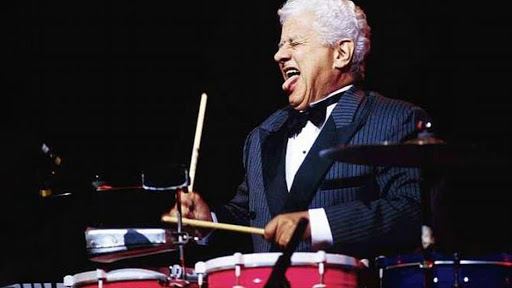
Tito Puente - Nobody will have his wonderful character
Tito Puente ‘s grimaces while performing

Cuba y Puerto Rico son…, 1966.
The career of the remembered Cuban singer Celia Cruz was on the rise. In 1966, Tito Puente decided to contact her to work together. They established a kind of association that was maintained through the years. In addition, they became very close friends, a bond that went beyond the musical realm.

Cruz appreciated him and was saddened after his death. In her autobiography “Celia, mi vida” she recalled the day she received the terrible news. She considered him an authority on Cuban music and admired his career.“Tito was always in charge of the arrangements, and he liked to work at dawn. We would go out to dinner, and when we returned, Tito would stay until four in the morning composing arrangements for what we were going to record the next day.

Although we were not very lucky with our recordings, Tito and I did very well with the tours. Together we travel to many countries. It was during those trips that we developed that great friendship that we had, ”said La Guarachera del Mundo.

In addition to “Cuba y Puerto Rico Son”, they recorded five more albums: Quimbo Quimbumbia (1969), Etc., Etc., Etc. (1970), Alma con alma (1971), En España (1971) and Algo especial para memoria (1972).

Timbalero Tropical (1998)
One of the last works of the artist and that featured fifteen songs. He worked hand in hand with the RCA label. The album stood out with works such as: El Timbal, Mi Guaguancó, Lo Dicen Todo, Mambo Macoco, Mambo and Preparen Candela. Topics that were very popular at the time and that today continue to sound at family gatherings. They are classic salseros that do not go out of style.

“Oye como va” was a song written by Puente in 1963. However, it was rock guitarist Carlos Santana who popularized it. The song went international and was positioned on the Billboard Hot 100, a list that ranks the best-selling hits in the United States. However, he was not the only one to cover it: Celia Cruz, rapper Gerardo Mejía, Bobby Hutcherson, Joe Cuba Sextette and Cheo Feliciano. When he presented the theme on stage he affectionately presented Santana as its author.

This 2020 marks the 20th anniversary of the physical disappearance of the great: Tito Puente. He passed away on May 31, 2000. His Caribbean flavor, his big smile and his white hair left a great void in the entertainment world. Puente left a great legacy. He contributed to the expansion of Latin music in the United States and served as a composer, percussionist, conductor, and performer.

His exaggerated grimaces, his style, energy, and his skill with the instrument earned him worldwide recognition. In addition to positioning him as an admirable figure among colleagues and young people who want to follow in his footsteps. Simply unforgettable!


Home

  • « Go to Previous Page
  • Page 1
  • Interim pages omitted …
  • Page 21
  • Page 22
  • Page 23
  • Page 24
  • Go to Next Page »

International Salsa Magazine (ISM) is a monthly publication about Salsa activities around the world, that has been publishing since 2007. It is a world network of volunteers coordinated by ISM Magazine. We are working to strengthen all the events by working together.