• Skip to primary navigation
  • Skip to main content

International Salsa Magazine

  • Home
  • Previous editions
    • 2025
      • ISM / November 2025
      • ISM / October 2025
      • ISM / September 2025
      • ISM / August 2025
      • ISM / July 2025
      • ISM / June 2025
      • ISM / May2025
      • ISM / April 2025
      • ISM / March 2025
      • ISM / February 2025
      • ISM / January 2025
    • 2024
      • ISM / December 2024
      • ISM / November 2024
      • ISM / October 2024
      • ISM / September 2024
      • ISM / August 2024
      • ISM / July 2024
      • ISM / June 2024
      • ISM / May 2024
      • ISM / April 2024
      • ISM / March 2024
      • ISM / February 2024
      • ISM / January 2024
    • 2023
      • ISM / December 2023
      • ISM / November 2023
      • ISM / October 2023
      • ISM – September 2023
      • ISM – August 2023
      • ISM July 2023
      • ISM Edition June 2023
      • ISM – May 2023
      • ISM April 2023
      • ISM March 2023
      • ISM February 2023
      • ISM January 2023
    • 2022
      • ISM December 2022
      • ISM November 2022
      • ISM October 2022
      • ISM September 2022
      • ISM August 2022
      • ISM July 2022
      • ISM June 2022
      • ISM May 2022
      • ISM February 2022
      • ISM January 2022
    • 2021
      • ISM December 2021
      • ISM November 2021
      • ISM October – 2021
      • ISM September 2021
      • ISM August 2021
      • ISM July 2021
      • ISM May 2021
      • ISM April 2021
      • ISM June 2021
      • ISM March 2021
      • ISM February 2021
      • ISM January 2021
    • 2020
      • ISM December 2020
      • ISM November 2020
      • ISM October 2020
      • ISM September 2020
      • ISM August 2020
      • ISM July 2020
      • ISM June 2020
      • ISM May 2020
      • ISM April 2020
      • ISM March 2020
      • ISM February 2020
      • ISM January 2020
    • 2019
      • ISM December 2019
      • ISM November 2019
      • ISM October 2019
      • ISM Septembre 2019
      • ISM August 2019
      • ISM July 2019
      • ISM June 2019
      • ISM May 2019
      • ISM April 2019
      • ISM March 2019
      • ISM February 2019
      • ISM January 2019
    • 2018
      • ISM December 2018
      • ISM November 2018
      • ISM October 2018
      • ISM September 2018
      • ISM August 2018
      • ISM July 2018
      • ISM June 2018
      • ISM May 2018
      • ISM April 2018
      • ISM March 2018
      • ISM February 2018
      • ISM January 2018
    • 2017
      • ISM December 2017
      • ISM November 2017
      • ISM October 2017
      • ISM September 2017
      • ISM August 2017
      • ISM July 2017
      • ISM June 2017
      • ISM May 2017
      • ISM April 2017
  • Download Salsa App
    • Android
    • Apple
  • Spanish

Search Results for: Afro-Cuban

Habana Style. Dance Company “Where dancing is a pleasure”

North America / USA / Las Vegas

Habana Style

Founded by a professional dancer and choreographer, Yody Iznaga in 2001, to offer people who are passionate about latincaribbean and cuban music a place where they could learn such exotic dance styles and express themselves in dance body movements as its main objective. Habana Style Dance Company is one of the very few dance schools in LAS VEGAS which offer its public a complete portfolio with about 15 different latin-caribbean dance styles with an objective to enable the students to feel identified with what they are looking for in specific.

Yody Iznaga professional dancer and choreographer born in Cuba and educated through the authentic Cuban technique of modern dance created by the professor Eduardo Rivero Walker at a professional company Teatro de la Danza del Caribe (Theater of Caribbean Dance). Yody Iznaga knows to perfection about 15 different dance styles. He dances on TV channels and big and famous stages known in the world of salsa. Yody has choreographed and danced for artists like Marc Anthony, Victor Manuelle, La India, Maelo Ruiz, and others. https://habana.style
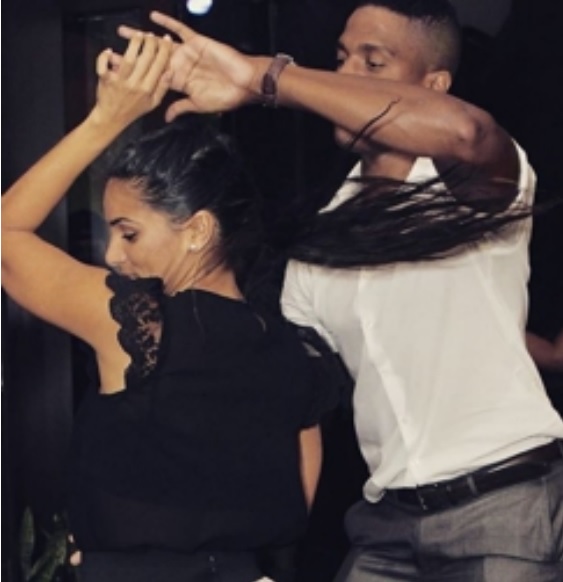
Habana Style - Social Photo 1
Habana Style – Social Photo 1

Dance Classes at Habana Style Dance Company

Private lessons Private lessons represent the most accurate, effective and the fastest way to learn or master any dance style of your choice; since you can choose exactly what you would like to learn and the areas you need to improve. The dance studio is reserved only and exclusively for you and the instructor for the time of your scheduled session. This is also why you can fully enjoy and exploit the most out of the instructor’s time and attention which are completely yours during the private lesson.

Workshops Workshops are special dance classes taught by certified professionals with the main objective to develop and improve special dance abilities and to acquire original movements of a specific dance style. Members of Habana Style Dance Company learn through an authentic technique created by the dancer & choreographer Yody Iznaga. This authentic method focuses also on clean movements while it is easy to understand and acquire due to the high and professional level of teaching methodology typical for Habana Style.

Group Classes Group classes are designed for people who want to learn in an entertaining way how to dance and at the same time to meet people and to connect to people who have the same dance objective.

The classes are structured so that also people without a partner can participate in and enjoy the group classes. Students keep on rotating which allows them to improve their commands necessary for social dance. The group classes are designed to create a friendly environment and increase trust among participant; students are greatly encouraged to practice and demonstrate the knowledge acquired in the group classes on the dance floor at our social dance nights.

Habana Style - Social Photo 2
Habana Style – Social Photo 2

Benefits of Dancing with Habana Style Dance Company

Habana Style Dance Company offers various benefits to its members while dancing Latin-Caribbean dances at the dance studio. Preparing and encouraging students to enjoy social dances anywhere in the world. On their way toward this goal, students have loads of fun, relieve stress, exercise, meet people with the same dance objective, and have constant participation in social events.

Members of Habana Style Dance School learn through an authentic technique created by the dancer & choreographer Yody Iznaga. This authentic method focuses also on clean movements while it is easy to understand and acquire due to the high and professional level of teaching methodology typical for Habana Style Dance Company.

Last but not least, Habana Style Dance School offers its members to join teams where they reach a very high level of dance including exotic movements within the social and professional dance through a long path of practices. What could be more beautiful and uniquely identifying than the exotic mixture of Salsa with Afro-Cuban rhythms and Cuban rumba within popular and social dances?
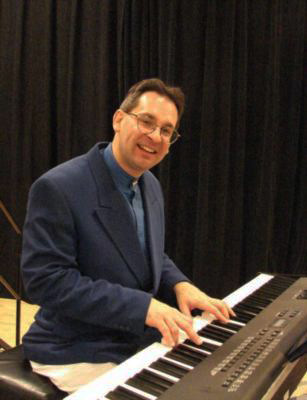
Rick Arroyo

North America / USA / Las Vegas

Meet the 2008 Las Vegas Latin Music Awards Winner in two categories Best Latin Jazz Band and Best Latin Jazz Performer, Rick Arroyo. Him and the Latin Percussion Ensemble provides the very best in Steel Drums, Jazz, Latin Jazz ( Afro-Cuban and Brazilian ), Salsa for Dancing and contemporary Jazz.

Rick Arroyo
Rick Arroyo

Born in the Bronx, New York, Rick started playing professionally music when he was 15 years old. Began playing piano at the age of 9, drums at age 11, congas and vibraphone at the age of 14.

Composer, Arranger and Las Vegas Latin Awards Winner in 2 categories, Rick Arroyo appeared in The Coral Reef Lounge at Mandalay Bay every Monday night for four years with his 10 piece Latin dance band, The Latin Percussion Ensemble.

He has played at The Blue Note, The House Of Blues, The Rio, Aladdin, Wynn, Tropicana, Bally’s, Venetian, Stardust, Sahara, Circus Circus, Harrah’s, Imperial Palace, Monte Carlo, Gordon Biersch Brewery, The MGM Grand & MGM Grand Garden Arena, Bellagio’s, Caesar’s Palace, Mirage, Treasure Island, Orleans, Flamingo Hilton, Las Vegas Hilton, Paris Hotel, Rancho Santa Fe Station, The Stardust, New York, N.Y. ( in the George Hamilton Cigar Lounge) Green Valley Station, Boulder Station, Sam’s Town, Alexis Park Resort, Stratosphere, Fremont Street, Riviera, Primadonna, Lady Luck, Avi Casino, Red Rock Casino, Renaissance Hotel, Suncoast Casino, Furnace Creek Inn, Four Seasons and many other locations in Los Angeles, Denver and in Las Vegas.

Rick has performed at several of The City Of Lights Jazz Festivals, The Clark County Amphitheatre, The Reed Whipple Community Center and other venues including radio and television Simulcast.

Rick has recorded and played with Esteban, Tito Puente Jr. Poncho Sanchez, Steve Rossi, Luis Conte, Bill Laster, Karen Briggs, Dick Mitchell, Dan St. Marsais, Artie Webb, Francisco Aguabella, Papo Conga, Dan Weinstein, David Romero, Joe Torres, Poncho Roman, Johnny Conga, Papo Rodriguez, Tata Palau, Johnny “Dandy” Rodriguez, Ghalib Ghallab, Luis Miranda, Bobby Matos, Johnny Polanco, Pachito Alonso, Eddie Resto, Larry White, Hector Casanova, Dick Berk, Ramon Flores, Art Velasco… Shared the stage with The Yellow Jackets, Fatburger, The Rippingtons, Gerald Albright, Richard Elliot, Carl Fontana Everrett Harp, Gilberto Santa Rosa and many others.

Rick Arroyo - Collash
Rick Arroyo – Collash

He has opened for Tito Puente, Willie Chirino, Gilberto Santa Rosa, Jesus Alemany, Cubanismo, President Barack Obama, David Benoit, Richard Elliott, Michael McDonald, Donna Summers, The Beach Boys, Sammy Hagar and many others.

Rick Has performed for Jenny Jones, Maurie Povich, Oscar Goodman, Shelly Berkley, Chip Maxfield, Senator Harry Reid, Barack Obama, Monte Rock, Joe Cortez, Robin Leach, Oscar De La hoya and many other celebrities.

Sitara Son Cuban – Latin Band

North America / USA / Angeles
Sitara Son - Integrants
Sitara Son – Integrants

Master percussionist and singer, Maestro Lázaro Galarraga is a native of Havana, Cuba, now living in Los Angeles. He was a founding member of the premier Cuban music troupe, Conjunto Folklorico Nacional de Cuba (1961-62, 1977-82) A world-renowned teacher, performing artist, choreographer and writer of Afro-Cuban music, culture and folklore, he has recorded, performed and taught across the U.S. and worldwide. He is also regarded as one of the great ‘Akpons’ or lead singers in the Afro-Cuban religious traditions and a master of the bata drums.

Guitarist/Vocalist, Jon-Oliver Knight is an accomplished classical guitarist who has toured extensively throughout the US, Central America, Mexico and Europe. He has played countless wedding ceremonies, cocktail hours and receptions and epitomizes the flexibility required to be a wedding guitarist. Jon-O is also in demand for his Vocals and plays sitar (Indian) and cuatro (Puerto Rican) in the band as well.

Sitara Son - Photo
Sitara Son – Photo

Bobby Wilmore’s is an incredibly well seasoned percussionist. From drum set to congas, bongos, or anything that Bobby can find that will make a noise, he is sure to captivate with his precision and creativity behind the drum. Bobby is one of the busiest percussionists in California with his unique “good vibes” personality and his astounding rhythmic ability and passion.

Pianist extraordinaire, Matt Amper is not only one of the most sought after Latin pianists on the west coast, but is also an accomplished Jazz and Classical pianist. Matt’s musicality is preceded by his need to dive deeper and deeper into exploring and perfecting his craft which many would say has already reached perfection!

Josiel Perez has performed and toured all over the world with some of the best bands out there. He currently plays Trumpet with SitaraSon among other La based bands. A wizard with his countless percussion instruments, Josiel brings that same skill and creativity to the Latin side.

Together these accomplished musicians form a Band that will astound and captivate you, leaving you wanting more.

Sitara Son Collash
Sitara Son Collash

Damian Ballester and the transformations of Cuban Folk Dance

Latin America / Cuba
Photo 3- Damian Ballester on stage

The relationship of Africa within the musical and dance culture in Latin America is notorious when we see the cultural expressions of the peoples of this continent, it is easy to see how similar they are, the use of percussion is one of the most relevant topics, in itself a mixture of cultural customs, religion, musicality, dance, in itself all the elements of the black race.

America, one of the main destinations of the ships with black slaves from many areas of Africa, caused our culture to be armed with a bit of each custom, therefore, we can say that in America there is a bit of each African people, this relationship of variety of slaves focused on dividing the forces of the race so as not to make it powerful, divided languages, customs, words and religions only left the marginalized population to communicate through percussion, an element that made the system improve at times of understanding within the fences where they lived.

Due to the above, African religions and customs are born in Cuba but, adopted by those already existing on the island, this combination gives us a rich variant of movements from three continents, Europe through Spain and Africa in all its splendor.

To clarify some topics of the folklore of the Caribbean island and its current dance transformations, we had to contact a great teacher, Damian Ballester, director of Iya Aye, one of the best folklore groups on the island of Cuba, to speak with this professional of the dance is necessary if we want to obtain real information about Cuban traditions, a great teacher who has left his teachings in many Spanish-speaking countries, among which Venezuela, Colombia, Ecuador, Mexico and now in the United States stand out…

we begin by greeting him and opening a pleasant conversation, to which we got an original response “Greetings acere, what was it”, calling him opens up a range of questions on the subject in question, here is an extract of the most common doubts generated around the relationship with salsa, its festivals and diffusion in the world.

Greetings Prof. Damian, grateful for your receptivity, we want to give information to our readers about the relationship of Cuban folklore within our world, Salsa, to begin with, what is defined as Cuban Folkloric dances?

Grateful for the opportunity and sure, that if we report on the case, folk dances are nothing more than the set of cultural goods or phenomena that constitute a cultural complex with manifestations of all aspects of popular life. It is the sum of the manifestations acquired by experience, by inheritance, by tradition, by the satisfaction of biological or sociological needs, among other things. This lasts through several generations and almost always undergoes transformations.

They will get compound terms in the word folklore, which speaks of people or people, popular knowledge, together with the popular knowledge of the people. It is a very long topic, because I should talk about so many things about my culture, better let’s leave the definition until here and thus add flavor to the interview.

Much better, we continue then, do African dances have any impact on Cuban folk dances?

Yes, of course, it is the root, the exercise of dance has always characterized my land and has suffered the same processes of contagion and transculturation between the ways of dancing of the colonizer and the styles introduced by African ethnic groups since the 16th century, in fact, the colonizers brought romance, active in the Cuban countryside for several centuries, with its couplets and their ways of singing and founding alegrías, while the black slaves included their ancestral rites, their drums, and their particular sense of rhythm and movement. bodily.

Given this brief explanation, we can say that not only dances of African origin contributed or influenced Cuban folklore, we can say that there is also an incidence from Spain, France and the Caribbean, but its main axis was born from the Spanish and the African.

We know the extent of Cuban folklore, for how long should a person prepare to be called a professor in this branch?

First of all, to carry the name, whether it is a teacher or instructor of Cuban folklore genres, there are two factors that are very important, the first is study, since Cuban folklore is made up of a very wide range of genres divided into different styles, I could mention some examples: Peasant, popular, Afro-Cuban and Franco-Haitian folklore.

Within the styles of peasant folklore, examples could be given of the Cuban zapateo, the ripiado parakeet, the chidonga, the hawk, the caringa, the son montuno, among others.

Within the styles of popular folklore, the Complex of the rumba, the mambo, the chachachá, the danzón, the dance, the pilón, the congas and the comparsas, the casino can be mentioned, within the Afro-Cuban folklore the Bantú cycle can be mentioned, the Yorubas, the Arara, the Abakua, within Franco-Haitian folklore we can mention the French tomb, the Haitian merengue, the gaga, the vodu among others, if I continue we will not finish today. (laughs to close)

Of the folkloric dances, which are the most outstanding or spread worldwide?

It could be said that there are several, examples are the popular folkloric ones, one could say the casino, the mambo, the chachachá, the son, the rumba complex, that the latter people tend to say are African or Afro-Cuban dances, that have African influence does not mean that they are classified within Afro-Cuban dances because this genre emerged in Cuba, was used as an object of protest against the government of that time and was eradicated in the essence of Cuban. In the same way, the one that has had the most impact and remained in the whole world are the Yoruba dances or dances of the orishas.

Should we open another interview to just talk about the many genres that the island embraces, what institutions correctly form the folkloric traditions in Cuba?

There are many institutions in Cuba, from the community point of view what is named in Cuba as amateur dancer are the community projects and actions that are nothing more than groups created in the communities, all of these supervised technically and methodologically by specialists from the houses of culture of each area by provincial and national methodologists governed by the Ministry of Culture.

From a professional point of view, there are art schools such as the ENA (NATIONAL SCHOOL OF ART) and the ISA (SUPERIOR INSTITUTE OF ART) all governed by a logical curriculum organized by specialists and connoisseurs of the genres.

Photo 2- Damian Ballester on stage

Other institutions that could be mentioned, is the little school of the national folkloric group of Cuba with 56 years of creation in charge of rescuing and safeguarding the traditional Cuban musical and dance traditions.

Wao, Enough, Do you know if there is any similar institution in the world?

In the world there are countless schools that are training dancers with the Cuban style and technique, whether they are Cuban or foreign teachers, but nothing like the preparation of art schools in Cuba that work with a logical and well-prepared program, in some schools around the world it could be said that they do not work under a logical methodological program for the teaching of these genres due to the commercial and monetary part, unfortunately there are many dedicated to commerce, to money and not to the necessary dedication.

This dissemination has been achieved while respecting the roots and traditions of the farmers? The root? The original essence?

Unfortunately, it could be said that a good diffusion of Cuban genres worldwide has not been respected or achieved, of 100% of the performers, it could be said that only 10% are protecting Cuban traditions, it is sad to say, but trade and populism it is destroying the folklore of an entire country.

Have these changes in traditions positively or negatively impacted Cuban culture?

First of all, traditions do not change if they are not passed down from generation to generation. In terms of their impact, I see it negatively because the dissemination that is taking place is incorrect and worst of all, there is no organization, which was of Cuba, can follow up on the program that is being given to Cuban genres, in itself, many see the commercial and hence they do not care about the poor distribution of what is taught.

What is the reason that so many dancers seek to perform Cuban dances? It is notorious to see it at festivals and congresses.

There are two very important factors: 1 Cuban music, which has been evolving in an incredible way, fusing Cuban rhythms within its repertoire, and the other factor is not because I am from Cuba, Cuban folklore could be said to be the most complete genre available. world level from the point of view of dance, is that it has a history, virtuosity is varied, it could be said that it is well complemented, due to its complexity and interpretive difficulty, it is what attracts attention, additionally, salsa comes from us, from these roots is born what now wants to be denied.

Teacher and the Cubans? Have Cubans spread their dance correctly?

It could be said that the vast majority of Cubans have disseminated the genres well, why do I say that the vast majority?

Because there is another small group that deforms it, money changes everything, foreigners think that all Cubans They dance, it has happened that they say Cuban and quickly you think he is a dancer, he knows everything, he is good, and no, that is not reality, one thing must be clear about being an opportunist, not a dancer, being a dancer by hobby and another is being one by profession or for being a teacher.

There are Cuban teachers who are hurt by the deformation that is happening with what has been studied so much, but there are others who only care about getting paid and do not care if their students do it well or badly.

How has the interpretation of Cuban roots impacted the so-called Salsa Casino in the world? Has the original and real spread of traditions been respected?

Look, since Cuban music began to evolve inside the casino, it began to undergo a series of transformations from movements to choreography due to the musical style that Cuban orchestras began to spread, known as TIMBA, which was well accepted by the public, If we talk about the impact from the traditional point of view, it could be said that there is no original interpretation of the Cuban roots because they are not executing a specific traditional genre, but rather what they are using different styles of the traditional folk dances that all this could be called Variety.

Have Cuban music and dance festivals or congresses devoted time and effort to improving these transformations? Have they worried about minimizing the damage?

In most cases, very few, first of all, if it is a competitive event, the organizers make the mistake of hiring unqualified personnel to evaluate genres of Cuban origin, and that is where the serious faults come from. There have been cases where there are groups , couples or soloists who perform a good technique within normal limits and the jury evaluates for a taste problem if they see it as beautiful and give it less points, or disqualify it, it is not about beauty, it is about correctness, the organizers should be more careful about these things.

What recommendations would you give to our dancer readers on this controversial topic?

The dancer must be clear about four aspects that are fundamental to his artistic life and entire career: dedication, love of dance and, most importantly, study.

Do only what you love and you will be happy, the one who does what he loves is blessedly condemned to success, which will come when it should come, because everything that should be, will be, and will come naturally.

Photo 1- Damian Ballester on stage

Let’s spend time respecting the roots and cultures of peoples, and above all, let’s take a good look at who we entrust our desire to learn, there are thousands of ways to learn correctly, everything is in the research, knowing who we contact and why There are hundreds of excellent instructors in the world, not to mention the many means of learning today.

I invite you to learn a little about this and other topics, I have a virtual classroom where I teach a lot of the theoretical and practical content online, I do it through the son rumbero academy and its virtual classroom format, follow the @sonrumbero accounts on Instagram and Facebook.

Salsa, territory of joy.

Latin America / Venezuela / Caracas

Salsa, territory of joy, language of celebration, enjoyment of the towns and their people, was born from a confluence of facts, geniuses and rhythms. Confluence that happened in the faith of the same religion: Afro-Cuban music.

Salsa pal Bailador
Salsa pal Bailador

And that mixture, which Richie Ray and Bobby Cruz cleverly described as “similar to the tomato sauce that is put on hamburgers to give them flavor”, was summed up in the insightful sentence of the occasional witness, the journalist Phidias Escalona: “the music that you make is salsa. From now on we will call it sauce”.

The year was 1968 and although the new rhythm already existed, there had been no consensus on the name. And that consensus began to emerge -perhaps for the first time- on the album “Los Durisimos The Strong Ones, Salsa y Control”, by Richie Ray and Bobby Cruz. Later, Richie himself would add: “The word was born around us, (however,) if it weren’t for (Jerry) Masucci there would be no salsa, because he brought it to the world.”

In 1960s New York Harlem, black Americans had begun to like Latin music, despite not speaking Spanish.

Ama a tu musa como a ti mismo - Salsa
Ama a tu musa como a ti mismo – Salsa

The guajira dazzled them until they made them dance. Believing that the mixture of boogaloo, blues, mambo, guaguancó or son montuno, was a variant of the boogaloo invented by Chubby Checker, the new rhythm was founded, incorporating the concepts of the Latin spirit in their interpretations and that -technically- they would add to the baggage : percussion, piano, violins, trumpets, trombones and whatever instrument would serve to give it flavor and richness.

Cocola' Wears - Venezuela Salsa
Cocola’ Wears – Venezuela Salsa

Musically, for example, the so-called “blue notes” would be added (that is how the overtones of the acoustically weak E and B notes, last to be added to the scale, where they would be relocated between Lam and Lam) would be added to the new fusions. Then came the downloads and phrases that we know until now as characteristics of salsa.

Thus the sauce was born. And so it has been transformed, always within the circle that encloses joy, passion and enjoyment, history, experiences, fortune or misfortune, seen from different perspectives: urban, social, sensual or everyday.

Tocadisco - musica
Tocadisco – music
  • « Go to Previous Page
  • Page 1
  • Page 2
  • Page 3
  • Page 4
  • Page 5
  • Page 6
  • Interim pages omitted …
  • Page 24
  • Go to Next Page »

International Salsa Magazine (ISM) is a monthly publication about Salsa activities around the world, that has been publishing since 2007. It is a world network of volunteers coordinated by ISM Magazine. We are working to strengthen all the events by working together.