• Skip to primary navigation
  • Skip to main content

International Salsa Magazine

  • Home
  • Previous editions
    • 2025
      • ISM / November 2025
      • ISM / October 2025
      • ISM / September 2025
      • ISM / August 2025
      • ISM / July 2025
      • ISM / June 2025
      • ISM / May2025
      • ISM / April 2025
      • ISM / March 2025
      • ISM / February 2025
      • ISM / January 2025
    • 2024
      • ISM / December 2024
      • ISM / November 2024
      • ISM / October 2024
      • ISM / September 2024
      • ISM / August 2024
      • ISM / July 2024
      • ISM / June 2024
      • ISM / May 2024
      • ISM / April 2024
      • ISM / March 2024
      • ISM / February 2024
      • ISM / January 2024
    • 2023
      • ISM / December 2023
      • ISM / November 2023
      • ISM / October 2023
      • ISM – September 2023
      • ISM – August 2023
      • ISM July 2023
      • ISM Edition June 2023
      • ISM – May 2023
      • ISM April 2023
      • ISM March 2023
      • ISM February 2023
      • ISM January 2023
    • 2022
      • ISM December 2022
      • ISM November 2022
      • ISM October 2022
      • ISM September 2022
      • ISM August 2022
      • ISM July 2022
      • ISM June 2022
      • ISM May 2022
      • ISM February 2022
      • ISM January 2022
    • 2021
      • ISM December 2021
      • ISM November 2021
      • ISM October – 2021
      • ISM September 2021
      • ISM August 2021
      • ISM July 2021
      • ISM May 2021
      • ISM April 2021
      • ISM June 2021
      • ISM March 2021
      • ISM February 2021
      • ISM January 2021
    • 2020
      • ISM December 2020
      • ISM November 2020
      • ISM October 2020
      • ISM September 2020
      • ISM August 2020
      • ISM July 2020
      • ISM June 2020
      • ISM May 2020
      • ISM April 2020
      • ISM March 2020
      • ISM February 2020
      • ISM January 2020
    • 2019
      • ISM December 2019
      • ISM November 2019
      • ISM October 2019
      • ISM Septembre 2019
      • ISM August 2019
      • ISM July 2019
      • ISM June 2019
      • ISM May 2019
      • ISM April 2019
      • ISM March 2019
      • ISM February 2019
      • ISM January 2019
    • 2018
      • ISM December 2018
      • ISM November 2018
      • ISM October 2018
      • ISM September 2018
      • ISM August 2018
      • ISM July 2018
      • ISM June 2018
      • ISM May 2018
      • ISM April 2018
      • ISM March 2018
      • ISM February 2018
      • ISM January 2018
    • 2017
      • ISM December 2017
      • ISM November 2017
      • ISM October 2017
      • ISM September 2017
      • ISM August 2017
      • ISM July 2017
      • ISM June 2017
      • ISM May 2017
      • ISM April 2017
  • Download Salsa App
    • Android
    • Apple
  • Spanish

Search Results for: Afro-Cuban

Papo Lucca. The Giant of the South

Latin America / Puerto Rico

Papo Lucca born in Ponce, Puerto Rico on April 2, 1946, Enrique ‘Papo’ Lucca began playing the piano at age 11 with his father’s orchestra. Initially, La Ponceña played versions of tropical hits of the moment by bands like Cortijo y su Combo and La Sonora Matancera.

Papo Lucca. The Giant of the South

In the late 1960s, Papo became the orchestra’s musical director, beginning a profound transformation that would eventually establish la Ponceña as one of the most progressive groups in the history of Afro-Caribbean music. Papo’s orchestrations were bold, experimenting with elements of jazz, rock, and Brazilian music. Representing the authentic spirit of Puerto Rican salsa, his piano solos were velvety, displaying elegance, restraint, and infinite swing.

During the mid-’70s, La Ponceña began to enjoy unprecedented success with critics and the public. The band recorded for the Inca label, which eventually became part of the Fania empire. Papo was invited to arrange and play on sessions for the company’s biggest artists, including Johnny Pacheco, Celia Cruz and Cheo Feliciano. He also recorded and toured with the Fania All Stars.

This compilation pays tribute to the art of Papo Lucca through 14 classic songs recorded between 1967 and 1981. Although Lucca has recorded as a solo artist and also collaborated with a multitude of salsa stars, it is his work with La Ponceña that best expresses the clarity of his vision.

The music we make has to make people happy, as well as make them dance. That’s what it’s all about, says Lucca from her home in Puerto Rico. When the public can dance, no matter how complicated the music is. The first theme that this genre had was to divulge the things that happened in the different communities, as if it were a newspaper.

Our journey begins with two fiery songs from the beginnings of La Ponceña: “Hachero Pa’Un Palo” and “Fuego En El 23” are versions of songs by Cuban Arsenio Rodríguez. La Ponceña always had a soft spot for Puerto Rican folklore, but she also found inspiration in the golden age of Cuban music.

La Sonora Ponceña
La Sonora Ponceña

The precise moment in which La Ponceña becomes a mature orchestra in total control of its aesthetics can be found in the six songs from the Musical Conquest/Conquista Musical and El Gigante Del Sur albums. Launched on the market in 1976 and 1977 respectively, they represent the pinnacle of the salsa movement.

These songs combine a musical skill that approaches virtuosity with deep lyrics and a generous sense of humor. “Ñáñara Caí” is a hilarious narrative of pure magical realism, describing a world where everything is turned upside down (my favorite phrase: I saw a cow/Hit with Pacheco). Also included in Musical Conquest, “El Pío Pío” achieves the perfect cross between Afro-Cuban rhythm and contagious pop. This hit is a mandatory part of all La Ponceña concerts.

The opening theme of the El Gigante Del Sur album, “Boranda” seems to offer a salsa version of progressive rock. Its lyrics contain an important sociopolitical message, and the sophistication of its arrangement is a slap in the face for all those who believe that this music is only for dancing. “Soy Tan Feliz” combines bolero climates with an electric piano solo that recalls the psychedelic sound of jazz-rock from the ’70s. “Noche Como Boca ‘E Lobo” creates a tasty collision between salsa fever and Brazilian rhythms.

Lucca was not alone in his mission to reinvent the rules of Puerto Rican dance music. It was also benefited by the prowess of some of the best instrumentalists on the island. Furthermore, his instinct for choosing singers was always irreproachable.

Some of the vocalists of la Ponceña that appear here are Tito Gómez, who would later find fame with the Grupo Niche de Colombia; the inimitable Luigi Texidor, who gave a sense of placidity to all the songs he performed; and Yolanda Rivera, who added variety to the band’s sound with her unique timbre.

One of Rivera’s happiest moments is included here: Coming from 1980’s Unchained Force, Johnny Ortiz’s “Borinquen” is a soulful anthem to Puerto Rico, blessed with a sinuous melody and subtle instrumental arrangement–one of Rivera’s happiest moments. transcendental within the Ponceña canon.

The golden days of salsa are a distant memory in the new millennium, but Papo Lucca hasn’t stopped shining. Perhaps precisely because he continues to record new music, he refuses to idealize the past when I ask him what his favorite album with “La Ponceña.”

The last one, the most recent, he explained in his characteristically introverted tone. All the albums are very important in the career of the orchestra. They all fulfilled their mission at the time, which was to reaffirm the previous one. That’s the way to maintain a pool after 50 years.

Papo Lucca
Papo Lucca

The teacher was a little more direct when I asked him about his favorite concert of all time.

It was my first concert with the Fania All Stars at Madison Square Garden, back in 1974, he said. All the stars of the Fania were still alive. A few years later we played in front of 47,000 people in Cali. My knees always shake before I go on stage, but this time they shook a little more.

Ismaray Chacón Tejeda

Latin America / Cuba

Ismaray Chacón Tejeda, a cuban who carries the betrayal of her land and her family throughout the world

When it comes to dances, rhythms and sounds, it is impossible not to take as a reference the island with the most impact in the world of dance in the entire world, the beautiful island of Cuba, how many countries are not nourished by all the culture that this pearl of the Caribbean It allows us to see with its cultural roots, it seems that on the day of creation they left in Cuba all the musical dance creativity that they had.

Today we will be talking with one of the distinguished artists of the Cuban cultural movement in Europe, a member of a family legacy in Cuba, the so-called aspirins, we are talking about Ismaray Chacón Tejeda, a Piscean eradicated in Switzerland.

Ismaray Chacón Tejeda

Welcome and always grateful for opening the doors of your life to make it known to our readers and your followers, we are going to get to know you a little.

Thank you for this great opportunity sir.

Ismaray let’s start by talking about the roots of your country. Do you live for folklore or do you enjoy it?

I enjoy it and at the same time I live it, it satisfies me is transmitting it and having the greatest result that a teacher can have, seeing the progress of the students, knowing that they deepen and feel identified with my culture, with my dance.

What does folklore mean in your life?

My identity as Cuban. It is life, feeling, experience… Everything!!

Photo of Ismaray Chacón Tejeda

 How was the idea of ​​being part of the dance world born in you?

I was born and raised in that environment for my family. My grandfather rehearsed every week at home with his group and I didn’t miss a concert. I am the result of that environment.

How long study and career?

Professionally I started at the age of 17, after I left the School of Art Instructors (EIA), which I could not finish, I auditioned in a group called Obini Bata (Bata Woman). This group and my family were my true school. Look, we rehearsed twice a week all day where we learned the different taps, songs and dances plus the rehearsal of the group for the weekly function, the other days I practiced with my family, or I attended a drum, güiro or cajon (religious festivals) . All that mix was very important to me as it gave me the foundation for my career.

How many countries have you traveled making known the culture of your Island?

Uff!… (Between laughter and emotion) I have really been very lucky to visit many and repeatedly. Singapore, Russia, Morocco, Israel, France, Italy, Spain, England, Sweden, Finland, Peru, Denmark, Poland, Serbia, Germany, Austria, Brazil, Canada, Croatia, Ukraine, Switzerland, among others. I would like to go to the brother countries of Latin America and be able to exchange cultures. I went to Mexico but only on vacation.

Ismaray Chacón Tejeda

What countries have you not visited that you would like to know?

Colombia, Argentina, USA, Africa (Nigeria, Congo), Dubai, China, Japan, India, Venezuela and other Latin countries, hopefully I can. Hey, let the promoters know (between laughs)

The Casino (Cuban Salsa), the rumba or the Afro-Cuban?

What comes to mind when you hear the name Luis Chacón Mendive?

Phew!… my map, my friend, the example to follow, my teacher, my idol, my little green old man, my adoration.

You have a traditional surname and a lot of renown in Cuba. At some point in your training was it a requirement or a motivation?

Yes, it was both. A motivation because it is a great pride for me to belong to this important family and to have that experience, which made me lean towards this side of dance, but at the same time, a challenge because I grew up with my grandfather and my father and every time I had to work, the other artists always said…

that’s Aspirin’s granddaughter… Koky’s daughter… There were those who trusted that I would do a good job, but there were also those who wanted to see if I was up to the job. that last name. Sometimes even though I don’t like to be the center of attention, I had to show it and be a fool as we say in Cuba.

congress and competition with Ismaray Chacón Tejeda

Why Aspirin?

Many say that when they see us play, dance or sing, their headaches go away hahahaha. In truth, it was from the great Aspirin who worked at that time and the boss always had pain in his teeth and sent him to the pharmacy to buy Aspirin. As it was very often, from there he got the nickname.

Do your dream and your reality go hand in hand? Did you dream of having another profession?

Today I can say yes. Being an artist was one of my dreams of the many I have. I remember when I was a child I wanted to be a flight attendant to travel the world and learn about other cultures, today I am lucky to travel carrying my culture and exchanging, I managed to be a flight attendant but in my own style. I’m very lucky.

What has the dance world given you and what has it taken from you?

It has not taken anything away from me, on the contrary, in addition to meeting so many beautiful people, it has given me life, emotions, sacrifices that today help me to value things more, it keeps me healthy and when I execute it, from that moment on all my problems they leave…it’s my therapy.

If you were born again, would you go back to dancing? Why?

Yes, a thousand times. Because art in general is a way of expressing what we feel, in the case of dance, we express it and transmit it with our body….it is life!

Photo of Ismaray Chacón Tejeda in a social

How is Cuban folklore currently spread in the world? Are lines of the original traditions maintained?

Well… this topic is very open and with different points of view, and the word Folklore says it all… In Cuba we have the Afro-Cuban and the Cuban, my point of view to summarize it in a few words, is an oral culture that was always transmitted through generations and family traditions, there is no book like in classical music where everything is written, rather what was seen that older people were doing was repeated, of course everything evolves and transforms over time of the generations even what is sung, the touches or their dances.

But in a certain way patterns are created to follow. I think that in order to spread it and teach it, it is important to know the basics and from there I totally agree with the evolutions, mixtures and others. We just have to be careful not to mistreat it.

What new projects could you share with us?

I currently live in Switzerland although I feel that I must start a new stage of my life in another European country. I also hope one day to be able to return to my country, be with my family and from there continue in the art that is what I love. For now I continue teaching and transmitting my culture throughout the world, already happily married I would like to have the blessing of one day having my family. Together with my husband Serguei Yera Madera, singer of La Reve, we want to continue developing our careers. We keep making history 😉

Grateful for letting us enter a very small corner of your life, we see that you are a true lover of your culture, we hope to continue seeing you succeed in the whole world. For our readers, you already know that this beautiful artist can be followed on her social networks.

Photo of Ismaray Chacón Tejeda and his family

The Cuban pianist Chucho Váldes launched his new album “Jazz Batá 2”

East Coast – New York – New Jersey

Chucho Váldes. This virtuous pianist, composer and arranger brings to the music market the sequel of his album Jazz Batá after four decades

Musicians: Chucho Valdés (Piano), Yelsy Heredia (Double Bass) – Dreiser Durruthy (Voice and Superaron Batá) & Yaroldy Abreu Robles (Congas & Percussion) – and Guest artist: Regina Carter (Violin). 

After (Forty Six) 46 years, Chucho Valdés returns to the musical arena with Jazz Batá 2, an album that once again shows the creativity of this imposing Cuban music artist.

Jazz Batá 2 of the Latin Jazz genre contains eight tracks recorded in two and a half days in the John Lee´s studio in New Jersey. This ten-handed CD is the mix of classical music from West Africa impregnated in the piano solos with the Jazz Batá (sacred drums, with the hourglass shape of the Yoruba religion in Cuba), Violin, Bass and Percussion that give a sound with personality, rhythmic and lyrical at the same time.

The band in small format for this record production has four supporting musicians: Yaroldy Abreu Robles, Dreiser Durruthy Bombalé, Yelsy Heredia and Regina Carter. The first three belong to the Guantánamo region and they have deep roots in the Cuban musical culture, in addition to having studied at the conservatory.

Chucho Váldes
Chucho Váldes

Likewise and it should also be noted that Chucho Valdés, influential star of the contemporary Afro-Cuban Jazz, established this experimental format to three instruments (Piano, Bass and Batá) for the first time in 1972 with his album Jazz Batá.

The Jazz Batá 2‘s first single, “100 Años de Bebo”, is an unpublished melody whose composition was by Bebo and it’s a tribute to his centenary. This Danzón-Mambo is played by Regina Carter with an introduction and a “Tumbao” final, added by Chucho Valdés.

The tracks: “Obatalá”, “Oshun” and “El Güije” are themes inspired by the Yoruba religion of Cuba (Santería). Oshun is a Haitian merengue with the incursion of the violin, while El Güije is based on a rhythm created by the percussionist Dreiser Durruthy, and he presents it by speaking the sacred language, derived from the Afro-Cuban religion known as “palo”.

“Son XXI” from this new studio album, is a song by the deceased Cuban composer, Enrique Ubieta, who played with rhythmic clusters of Jazz. The first time that Chucho Valdés interpreted this theme was in the Musical Theater of Havana at the beginning of the 60s.

“Luces” is the first Bolero that incorporates Congas and Batá, as well as the harmonies of increased chords. And the single seven: “Chucho Valdés humor” is a “Descarga”, built on a rhythmic three notes (G, B, and C). According to the Valdés’ Words, “It’s like a twister”.

Finally, the eighth track: “El Payaso” is a piano solo, dedicated to Maurice Ravel. This melody was composed by Chucho Valdés when he was a member of the Cuban Orchestra of Modern Music (Founder in 1967). “… I’m a bit avant-garde, I play Batá on the Piano …”, said Chucho Valdés .

With this record production, Chucho Valdés marks a new milestone in his career, a beginning with the record label: Mack Avenue Records, and a significant chapter of his past.

TRACKS:
  1. Obatalá
5. El humor de chucho
  1. Son XXI
6. 100 Años de Bebo
  1. Luces
7. El Güije
  1. Oshun
8. El payaso


Release: November 16th 2018

Label Record: Mack Avenue Records


Available NOW to download in the entire world!


For more information, please visit:

Web Site: https://www.valdeschucho.com/

Or Follow him for his Social Channel: https://www.facebook.com/valdes.chucho

For more information visit this social medias:

Facebook: https://www.facebook.com/valdes.chucho/?locale=es_LA 

Instagram: @chuchovaldesmusic

X (Twitter): https://x.com/chuchovaldes?lang=en&mx=2 

Spotify: https://open.spotify.com/artist/27mRThsZ9K1BYmz0rioxwp

Ritmo Caribe Promotions 24/7 Radio

East Coast – New York – New York

Ritmo Caribe Promotions 24/7 Radio. The New Digital Station in New York

Ritmo Caribe Promotions 24/7 Radio was launched last November in New York City and it’s an affiliation of Ritmo Caribe Promotions, a company dedicated to promoting artists of the tropical genre and Latin music in general.

In this digital station, you can listen to the themes of legendary singers and the Salsa´s New Blood 24 hours of each day, 100% guaranteed!

The musical genres that you can enjoy on http://www.ritmocaribepromotionsradio.com  range from Salsa music through Afro-Cuban rhythms to Latin and Brazilian Jazz, among many others.

Ritmo Caribe Promotions 24/7 Radio

Ritmo Caribe Promotions 24/7 Radio also includes live radio broadcasts from some of the best stations in the area, as well as the radio program “El Toque Latino” (The Latin Toca), hosted by Jimmy Castro.

Likewise and as additional information, we tell you that if you are an artist of the Tropical or Latin recording and you would like to rotate your music in this digital station, you can send it in mp3 format, including: cover image and details of the track or album to the following email: [email protected] or you can contact them through the telephone number: 845-564-5703.

Really, in Ritmo Caribe Promotions 24/7 you will have an Incredible Sensory Sensation!


For more information, please visit:

http://ritmocaribe.wix.com/ritmocaribe


Or Follow them in all their Social Channels:

  • Facebook: https://www.facebook.com/RitmoCaribePromotions
  • Instagram: https://www.instagram.com/ritmocaribe
  • Twitter: https://twitter.com/ritmocaribe42

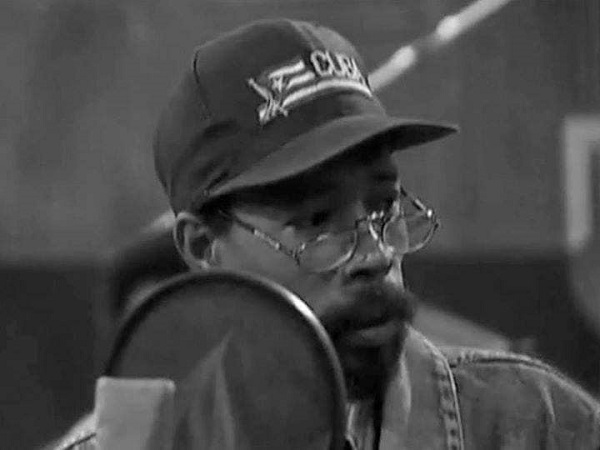
José Antonio “Maceo” Rodríguez was a faithful cultivator of Son Cubano and participated in the Afro Cuban All Stars project

José Antonio “Maceo” Rodríguez was born on April 17, 1950 in Holguín, Cuba.

Famous sonero voice leader of the group Sierra Maestra, he began his career at the beginning of the eighties of the last century with the group Sierra Maestra, integrated by former students of the Polytechnic University José Antonio Echeverría, of Havana, with which he won a televised contest of new musicians.

José Antonio Maceo Rodríguez was a faithful cultivator of Son Cubano and participated in the Afro Cuban All Stars project.

He died at the age of 55 on November 6, 2005 in Copenhagen, Denmark, of a heart attack, after giving a concert with his group at the end of a tour of Europe.

He was born on April 17, 1950 in a modest country house in the vicinity of the Antonio Maceo Sugar Mill, in Cacocun, in the eastern province of Holguin.

Relatives and neighbors say that since he was a child he loved art, music, pirouettes and attracting attention.

October 20, 1976 in Havana, together with his classmates at the José Antonio Echevarría University Center, he founded the musical group Sierra Maestra, called at that time Grupo de Sones de la Facultad de Ingeniería Eléctrica.

Those young dreamers performed in the popular contest “Todo el Mundo Canta”, where they took off on a spiral of success in Cuba and the world.

They traveled to many countries promoting Cuban music. They participated in Festivals of international relevance in Australia, Bosnia, Canada, Croatia, Cyprus, United Kingdom, Greece, Ireland, Israel, Italy, Macedonia, Mexico, Portugal, Puerto Rico, Singapore, Slovenia, Turkey, Yugoslavia and the United States.

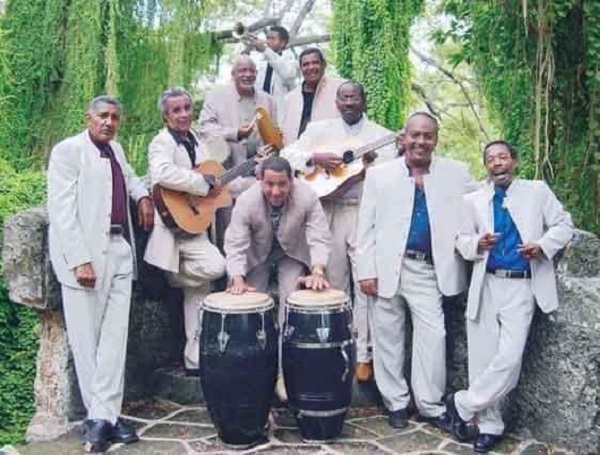
A faithful cultivator of Son, Rodríguez participated in the Afro Cuban All Stars project, nominated for a Grammy in 1998 and parallel to the Buena Vista Social Club.

José Antonio Maceo Rodríguez

His excellent voice, comparable according to critics to that of the great cultivators of the genre, was one of the emblematic of the current Cuban dance music scene.

She began recording in 1981 her first album, “Sierra Maestra Llegó con El Guanajo Relleno”, was a silver disc and received excellent reviews. He participated in the Afro Cuban All Stars project, and parallel to the Buena Vista Social Club.

The trumpet player José Alemañy, Cubanisimo, and Juan de Marcos González, founder of the Buena Vista Social Club, were his partners in the group for years, and together they undertook the task of recovering the tradition of famous sones and soneros, revitalizing the genre at a time when other musicians were opting for salsa and more commercial rhythms.

According to the Cuban composer, José Antonio Rodríguez not only possessed a very special voice, “he also had the courage and human qualities to remain faithful to that style, the son style, which is the mother of Cuban music”.

The repertoire of Rodriguez, known as Maceo among his friends and admirers, included, in addition to the great classics of traditional son, pieces that became very popular in his voice, such as Dame un traguito ahora or Esa mujer lo que quiere es que la miren.

Maceo, although small in stature, was an immense man, someone who could not conceive where to keep the torrent of voice he displayed without ostentation, so much musicality, intonation and love for Cuban music.

José Antonio was not only a great musician, he was a great person, very loved by his closest friends and in general by the people whose affection and admiration he won since the participation of Sierra Maestra in the Adolfo Guzmán contest and that thanks to his special way of interpreting the Cuban son, great musicians such as Ignacio Piñeiro’s Septeto were born again in the popular taste.

José Antonio Maceo Rodríguez y su Grupo

The singer died on November 6, 2005, just a few hours after finishing the European tour of Sierra Maestra with a concert at the Amager concert hall in Copenhagen.

With this presentation, the popular band put an end to the performance of all the Cuban artists who participated in the First International Latin Music Festival of that capital. The sonero’s remains were repatriated to Cuba, where he was buried.

Also Read: Bamboleo de Lázaro Valdés is another of those exquisite Cuban products, as well as sweet rum and mild cigars

  • « Go to Previous Page
  • Page 1
  • Interim pages omitted …
  • Page 4
  • Page 5
  • Page 6
  • Page 7
  • Page 8
  • Interim pages omitted …
  • Page 24
  • Go to Next Page »

International Salsa Magazine (ISM) is a monthly publication about Salsa activities around the world, that has been publishing since 2007. It is a world network of volunteers coordinated by ISM Magazine. We are working to strengthen all the events by working together.