• Skip to primary navigation
  • Skip to main content

International Salsa Magazine

  • HOME
  • Previous editions
    • 2026
      • ISM / May 2026
      • ISM / April 2026
      • ISM / March 2026
      • ISM / February 2026
      • ISM / January 2026
    • 2025
      • ISM / December 2025
      • ISM / November 2025
      • ISM / October 2025
      • ISM / September 2025
      • ISM / August 2025
      • ISM / July 2025
      • ISM / June 2025
      • ISM / May2025
      • ISM / April 2025
      • ISM / March 2025
      • ISM / February 2025
      • ISM / January 2025
    • 2024
      • ISM / December 2024
      • ISM / November 2024
      • ISM / October 2024
      • ISM / September 2024
      • ISM / August 2024
      • ISM / July 2024
      • ISM / June 2024
      • ISM / May 2024
      • ISM / April 2024
      • ISM / March 2024
      • ISM / February 2024
      • ISM / January 2024
    • 2023
      • ISM / December 2023
      • ISM / November 2023
      • ISM / October 2023
      • ISM – September 2023
      • ISM – August 2023
      • ISM July 2023
      • ISM Edition June 2023
      • ISM – May 2023
      • ISM April 2023
      • ISM March 2023
      • ISM February 2023
      • ISM January 2023
    • 2022
      • ISM December 2022
      • ISM November 2022
      • ISM October 2022
      • ISM September 2022
      • ISM August 2022
      • ISM July 2022
      • ISM June 2022
      • ISM May 2022
      • ISM February 2022
      • ISM January 2022
    • 2021
      • ISM December 2021
      • ISM November 2021
      • ISM October – 2021
      • ISM September 2021
      • ISM August 2021
      • ISM July 2021
      • ISM May 2021
      • ISM April 2021
      • ISM June 2021
      • ISM March 2021
      • ISM February 2021
      • ISM January 2021
    • 2020
      • ISM December 2020
      • ISM November 2020
      • ISM October 2020
      • ISM September 2020
      • ISM August 2020
      • ISM July 2020
      • ISM June 2020
      • ISM May 2020
      • ISM April 2020
      • ISM March 2020
      • ISM February 2020
      • ISM January 2020
    • 2019
      • ISM December 2019
      • ISM November 2019
      • ISM October 2019
      • ISM Septembre 2019
      • ISM August 2019
      • ISM July 2019
      • ISM June 2019
    • 2016
      • ISM December 2016
  • Spanish
  • Download Salsa App
    • Android
    • Apple

Search Results for: Bachata

6th International Kizomba Gala Hamburg

Europe / Germany / Hamburg

6th International Kizomba Gala Hamburg – Germany 13 – 16 Oct 2017

6th International Kizomba Gala Hamburg

We invited you to be part to one of the oldest and Best Kizomba Festivals in Germany. They are pioneers of Kizomba in Germany. They have a tradition of inviting 1st class International Teachers and DJs. Just follow their history of the Artists they have invited the last years. They brought most of the Artists you see at current Festivals in Germany for the first time. That tell you about the quality of this event.

We believe in Quality not Quantity!

They have invited first class International Instructors to teach you the proper way of Dancing Kizomba, Zouk and other African Dance. There will be an intensive 3 days Workshop starting from 9pm Friday – 07:00 pm Sunday, which will end with a Party. The Party will be thrill with shows and animations from the international instructors.
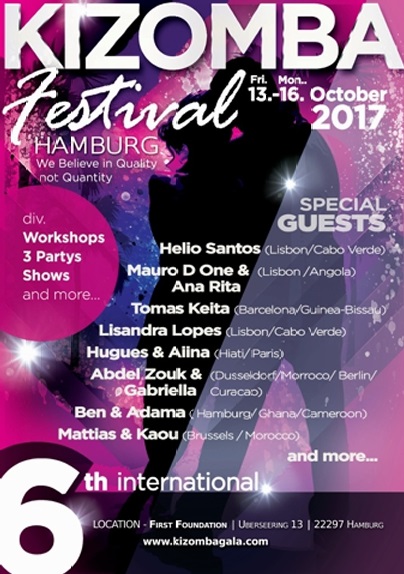
6th International Kizomba Gala Hamburg - Flyers
6th International Kizomba Gala Hamburg – Flyers

Confirmed Artists

  • Helio Santos (Lisbon/Cabo Verde)
  • Tomas Keita (Barcelona/Guinea-Bissau)
  • Mauro D One and Ana Rita (Lisbon /Angola)
  • Lisandra Lopes (Lisbon/Cabo Verde)
  • Hugues & Ailina (Haiti/ Paris)
  • Abdel Zouk & Gabriella (Dusseldorf/Morroco/ Berlin/Curacao)
  • Ben & Adama (Hamburg/ Ghana/Cameroon)
  • Mattias & Kaou (Brussels / Morocco)
6th International Kizomba Gala Hamburg 2017

DJ’s

  • DJ Ze Zom (Angola/Copenhagen)
  • DJ Ben (Hamburg/Ghana)
  • DJ Dos Anjos (Rotterdam/ Cabo Verde)

and more to come…

Photo by Kristi Fuoco. http://blog.young-germany.de/2012/12/hamburg-germany-top-ten -reasons-i-love-living-here/

See more information at this page: http://www.kizombagala.com/

2nd Edition Kizomba-Salsa-Schiff July 8. Mississippi Queen Dampfer.

For the second time in Hamburg we are going to have a KIZOMBA SHIP with Salsa, Bachata and Zouk shared on 3 Floors. We have been able to book the Mississippi Queen with selected DJs & Live act. Germany Hamburg Überseebrücke South-East Ponton 20459.

Germany / Hamburg
Germany / Hamburg

Alma Cubana Dance Academy

North America / USA / Portland

Alma Cubana Dance Academy

Alma Cubana Dance Academy

“They are a small dance group in Portland, ME. that offers Salsa and Bachata lessons and have student level teams for both those styles as well as ladies styling. Currently the lessons are on Sundays, you can find everything current on their website www.almacubanadance.com

Alma Cubana Dance was founded in the spring of 2015 by Vanessa Webber (Gutierrez). Alma Cubana means “Cuban Soul”, and being half Cuban, she wanted her group to reflect that heritage. It has been a long standing dream to offer classes, build a performance group and to help grow the Salsa and Latin dance community in Southern/Midcoast Maine. Their focus is to bring quality instruction while maintaining the social atmosphere of Salsa dance.

‘I danced Ballet and Modern growing up and helped develop a salsa company in Boston while in College which I believe is celebrating 10 years or more this year, although I am not with them anymore. I took 8 dancers to Miami last year and they competed in the first Miami Latin Dance Championships where all of them placed in at least one category.”

“They are a small dance group in Portland, ME. that offers Salsa and Bachata lessons and have student level teams for both those styles as well as ladies styling. Currently the My company is very young, only just 2 years, and it is mainly attended by those who love to dance but it is not a full time commitment. We perform locally a lot, and try to take the groups to 2-3 congresses or festivals, usually within driving distance. We have done Boston Salsa Festival twice, Connecticut Salsa Fest last year and Bachateando Miami last year, we plan to go to Connecticut and Boston again this year.” Vanessa Webber (Gutierrez), Alma Cubana Dance founder/director

They will be changing the schedule in April for Spring and Summer. Spring and Summer Schedule will have team practices on Sundays and Wednesday, classes for Salsa and Bachata before our regular latin night, which just celebrated 1 year.”

2017 Winter Schedule

Sundays

  • 3:00–4:00 pm Bachata and Body Movement
  • 4:00–5:30 pm Beginner Salsa Bootcamp
  • 4:00–5:30 pm Intermediate Salsa Bootcamp
  • 5:30–7:00 pm Open Level Salsa Team Rehearsal*

Tuesdays

  • 8:00–9:30 pm Bachata Team Rehearsal

2017 Spring/Summer Schedule

Sundays: Classes held at Aquarius Ballroom

  • 2:00–3:30 pm Ladies Choreography Class
  • 3:30–5:00 pm Bachata Performance Team*
  • 5:00–6:30 pm Salsa Performance Team*

Wednesdays: Classes held at Pearl Nightclub

7:30–8:15 pm Salsa for Social Dance 8:15–9:00 pm Bachata for Social Dance 8:00–9:00 pm Drop-in Class Salsa/Bachata (Note: There is a potential overlap/error in the Wednesday schedule near the end, listing 8:15-9:00 pm and 8:00-9:00 pm for different classes).

Esencia Latina Wednesdays at Pearl Nightclub

Esencia Latina means “Latin Essence” and that is what they want this night to embody. Start off the night with lessons to get your feet moving from 8-9pm. At 9, the lights go down and have a great mix of Salsa, Bachata, Merengue, Cha Cha and more to keep you on the dance floor. Latin dance is a social dance, its meant to be something you do with your friends and/or family. Loosen up, shake your hips and party like Latinas! Pearl Nightclub is located next to the Tap House 442 Fore St, Portland, ME

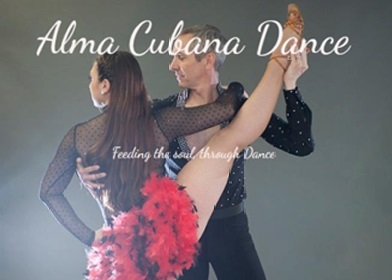
Alma Cubana Dance Academy - Flyers
Alma Cubana Dance Academy – Flyers

Australia and New Zealand / November 2025

Azuquita Entertainment 2025

Calibrated maracasMartinez attorney

Directory of Australian and New Zealand nightclubs

Australia circular flag
AUSTRALIA

Azuquita
Azuquita Entertainment & Productions
Sydney NSW, Australia 2000

Bachata ConeXión
Bachata ConeXión
497-499 Queensberry St
North Melbourne VIC 3051, Carlton, Australia 3053

Uruguayan Club
Club Uruguayo de Sydney
56 – 62 Whithford Rd Hinchinbrook
NSW, Australia 2168

El Giza
El Giza Lounge & Bar
152 Lygon Street
Carlton VIC 3053, Australia

La Bodega
La Bodega
12 Fitzroy street St
Kilda VIC, Australia 3182

Noun
Noun Green Square
355 Botany Road Zetland
NSW, Australia 2017

Pachanga
Pachanga
380 Russell St
Melbourne VIC, Australia 3000

The Collaroy
The Collaroy
1064 Pittwater Road Collaroy Beach
NSW, Australia 2097

The Mustang Pub
The Mustang Bar
46 Lake Street Northbridge
Western Australia, WA, Australia 6003

The Night Cat stage
The Night Cat
137-141 Johnston St, Fitzroy
Melbourne VIC, Australia 3065

Urban Salsa
Urban Salsa
Level 1, Suite 1, 136 Victoria Rd North Parramatta
NSW, Australia 2151

Vodka Temple
Vodka Temple
162 Lygon Street
Carlton VIC, Australia 3053

New Zealand Circular flag
NEW ZEALAND

El Barrio
El Barrio Latino Bar
35 Dixon Street
Wellington, New Zealand
+64 4-333 0261

Haitian bandleader and musician Mac Gregore Brunis fulfills his dream in Montreal

We do not often write a lot about Latin music artists in Canada, so we want to remedy that situation and provide coverage to a very talented Haitian based in Montreal. We are talking about bandleader, composer, and musician Mac Gregore Brunis, an artist with whom we have been able to talk about his interesting story and career with the musical group he currently directs, Sabor 19.

Mac posing for the camera
Mac Gregore Brunis posing for the camera at an event

Young Mac’s beginnings in music

In perfect Spanish, Mac thanked International Salsa Magazine for the invitation and started by telling that music had always been more than a simple hobby for him. His first contact with this world was in his native Haiti when he was on his way to school by public transport and there were always musicians playing, so music was always part of his life. 

He also played instruments with some of his classmates who formed musical groups in the classroom.

However, his professional career would not begin until his move to Canada, where he decided to go at age 21 to study electrical engineering and where he remains to this day. Some staff members of the University of Moncton, New Brunswick, where Mac would end up studying, visited some Haitian schools to promote their educational program among young students. The fact that French was spoken in Haiti, as in Canada, also helped Mac make the decision to try his luck in North America, since Haiti did not offer him the opportunities he was looking for.

It was in this country, more specifically in the city of Montreal, that he met other music lovers who introduced him to salsa and other Latin genres. Although he had already heard salsa and bachata in Haiti because of its proximity to the Dominican Republic, some Colombian friends he made in his new place of residence introduced him much more to all this culture, especially the music.

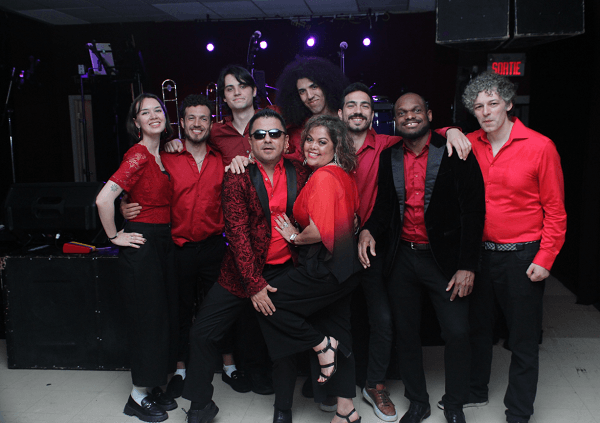
Mac and the rest of Sabor 19
Mac Gregore Brunis and the rest of Sabor 19 at La Salsa Rossa

Sabor 19

When Mac graduated and left the province of New Brunswick to move to Montreal, he began attending salsa and bachata socials to dance on Monday nights, and it was there that he met Eduardo Ramírez. They became friends and played together some of the instruments Eduardo carried, such as maracas, güira, and bongo. When Mac told his new friend that he wanted to learn to play the piano and other instruments, he and Eduardo began meeting to practice and develop the idea of creating a musical group, which they called Sabor 19 in homage to the year it was created, 2019. 

Once they had finally decided to do something more formal in music, they invited other musician friends with whom they met weekly to rehearse. They ended up being a group of about 10 people, including Diego, who would be the band’s lead vocalist. For better or worse, the original members are no longer there, but the current ones from countries such as Haiti, Colombia, Mexico, Canada, Morocco, and Turkey, have kept the ship afloat for the past seven years.

Despite coming from such diverse countries and backgrounds, this has not hindered communication between the musicians in the least. In fact, all of them speak or understand Spanish very well, so they have managed to understand each other almost perfectly. 

Mac playing at the festival
Mac Gregore Brunis and Sabor 19 playing at the Nuits d’Afrique Festival

Original music and genres

Since the foundation of the group, they have focused on covering the most popular hits such as “El Preso,” “Canoa Rancha,” “Un Verano en Nueva York,” and many others. Their repertoire consists of a total of about 70 covers, which are divided depending on the requirements of the concert or show.

However, over the past three years, Mac and the rest of the team have felt the urge to offer something of their own to the public, so they set to work to create their own music in regards to lyrics, arrangements, melodies, and everything else. 

Silly D’Or Festival 

Sabor 19 is well known for having reached the semifinals at the Silly d’Or Festival as part of the Nuits d’Afrique Festival, which is one of Montreal’s most popular music competitions. Although they did not win first place, Mac describes their participation as a very good experience, as this gave them the opportunity to make themselves known to a much wider audience. In addition, being evaluated gave them a good sense of which aspects to improve for the future.

Read also: Alberto Gonzalez talks about his book on Hector Lavoe and his experience with ‘‘El Jibarito de Ponce’’

Colombian dancer and instructor Camila Cepeda takes salsa caleña to Canada

Every day there are more Latinos who, with their talent, are gradually taking over various cities in Canada and the hearts of many of its inhabitants. Colombian instructor and dancer Camila Cepeda shows us that she and several of her compatriots have managed to break into the aforementioned North American country and shares with us a little bit of her interesting story.

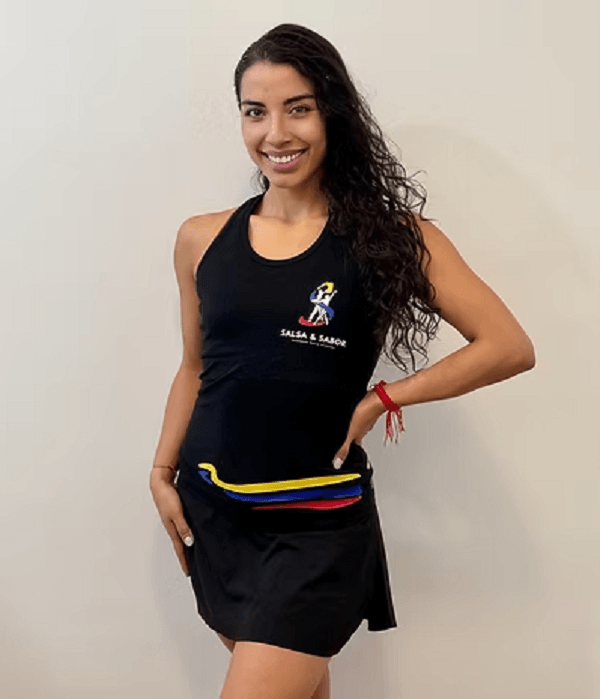
Dancer and instructor Camila Cepeda
Colombian dancer and salsa caleña instructor Camila Cepeda

Camila’s interest in dance

Camila has danced through life, and since she was a little kid, dance has been very important to her. One genre in particular that caught her attention was salsa caleña, especially since she saw it for the first time with dance groups on the TV show “Colombia’s Got Talent”. From there, more specifically in 2011, she looked for a dance academy where she could learn to dance and imitate what she saw on the screen.

Almost immediately, she realized that it was a very demanding style that required stunts and movements that were not common in more classic versions of salsa. After training in dancing, she did not want to be just an expert in salsa caleña, but many more people learned how to dance it as well, which led her to create a folk dancing group with which she would take her first steps towards teaching.

In addition to salsa caleña, Camila also danced salsa choka, champeta, bachata, merengue, and Colombian folklore. 

Camila dancing at an event
Camila Cepeda dancing in one of her salsa caleña events

Moving to Canada

Initially, Camila’s plans did not include leaving Colombia, but when she knew Canada, she found it an extremely interesting country where she could start something new with dance due to the lack of salsa caleña there. So, she entered the country with a student visa and studied international business at Seneca College in Toronto, with the intention of forming her own company in her new host country.

While gaining business experience through jobs for other companies, she continued to offer classes in parallel. Finally in 2020, in the middle of the COVID-19 pandemic and when she was still a university student, she decided to register and open her dance academy, “Salsa & Sabor.”

During that time, she also validated her teaching in English so that she could give classes to both locals and people from other cultures who spoke the same language.

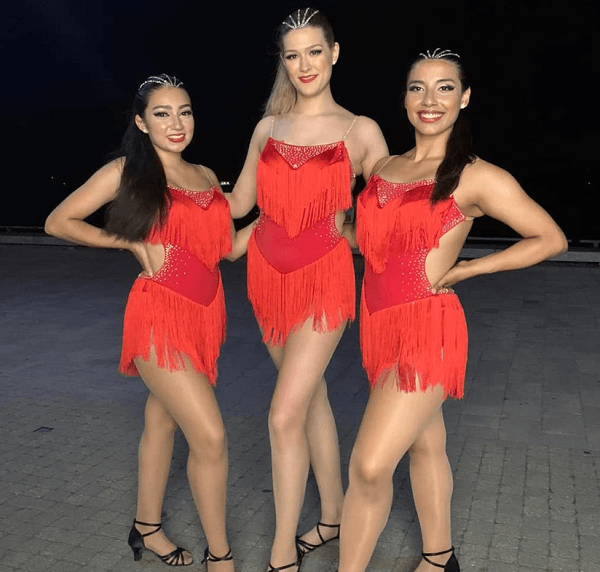
Camila, Aleja, and Sonia
Camila with dancers Aleja and Sonia

Salsa & Sabor today

Although the academy was started with only online classes due to the sanitary restrictions of that time, Camila was able to gather together a more or less numerous community that allowed her to stay afloat in such a difficult moment. Therefore, when government controls were relaxed, the young woman had no problem to organize dance classes and activities in parks keeping proper social distancing.

A short time later, she could finally open her dance studio, welcome students in person, and recruit other instructors such as Diana, Victoria, Mateo, and Paula. One thing to mention about these five young Colombians is that they were all Camila’s students in the past and, after all the training she offered, they also became experts in the field. Given the pitifully small number of salsa caleña instructors in Canada, when they were ready, she asked them to join her team, and they gladly accepted the opportunity.

This, in turn, helped them to open up more schedules and workshops for many more people, allowing the academy to grow even more.

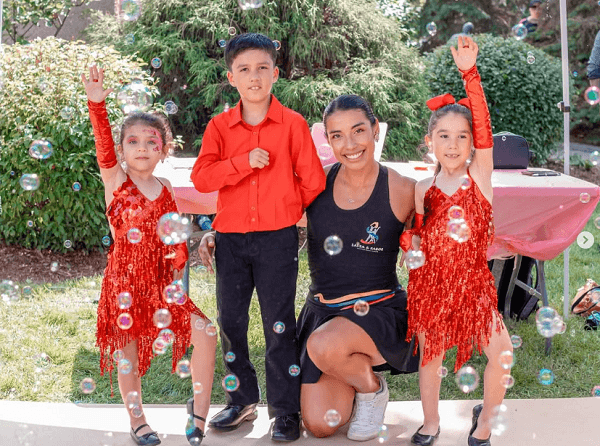
Camila with her students
Camila with some of her little students

Division of teaching genres and events

As we said at the beginning of this article, Camila also teaches other genres such as salsa choke, la champeta, bachata, and merengue, but her flagship and main rhythm remains salsa caleña. An important difference between salsa caleña and the rest is that it has a well-defined continuity and academic structure, so it takes much longer to learn. The other genres are relatively simpler, so they do not require as many hours or such an elaborate program.

Differences between salsa caleña and traditional salsa

According to Camila, a very important component of salsa caleña is its speed compared to traditional salsa. The way salsa is danced in Puerto Rico, Cuba, or New York is much better known around the world due to its age, while salsa caleña is a little newer and only began internationalizing a few years ago. In addition, traditional salsa is slower and uses the hips and shoulders a lot, while salsa caleña relies heavily on the rapid movements of the feet.

In fact, an important fact to know is that salsa caleña was created from a mistake. It turns out that a group of young people in Cali were doing private parties with LPs by various artists of the time, but they accidentally raised their speed and made the songs sound faster than they should. This led them to create completely new steps and choreographies based on these fast songs, giving rise to what we now know as salsa caleña. 

These parties were called “aguelulos,” a Colombian term to refer to alcohol-free parties or gatherings for young people. 

Read also: Tito Puente Jr.: perpetuating a legacy with its own rhythm

  • « Go to Previous Page
  • Page 1
  • Interim pages omitted …
  • Page 9
  • Page 10
  • Page 11
  • Page 12
  • Page 13
  • Interim pages omitted …
  • Page 69
  • Go to Next Page »

International Salsa Magazine (ISM) is a monthly publication about Salsa activities around the world, that has been publishing since 2007. It is a world network of volunteers coordinated by ISM Magazine. We are working to strengthen all the events by working together.