Search Results for: King of Mambo
Yerba Buena Gardens Festival 2018 Begin this May in the heart of San Francisco
North America / USA / San Francisco
2018 Yerba Buena Gardens Festival (YBG Festival) proudly announces the lineup for its 18th Season.
The tradition continues to downtown in San Francisco! Hang out this new season with the first all-female mariachi ensemble, Mariachi Flor de Toloache + Mexican vocalist, composer, and guitarist Diana Gameros on Sunday, May 6 at 1:00pm, the first concert of this year’s 100 admission-free events.

The very popular series Let’s Go Salsa@Jessie also will have the best Latin artists, such as: “New Mambo Retro Salsa” group Cabanijazz Project on May 17, the nine-piece combo Bululú led by Venezuelan-born percussion master and vocalist Lali Mejia on June 21, the Bay Area’s inventive Cuban band Pellejo Seco on July 19, among many others. YGB Festival offers you entertainment FREE completely: music, theater, circus, dance, poetry & culture programs to children and entire family with artists from the Bay Area and International guests.

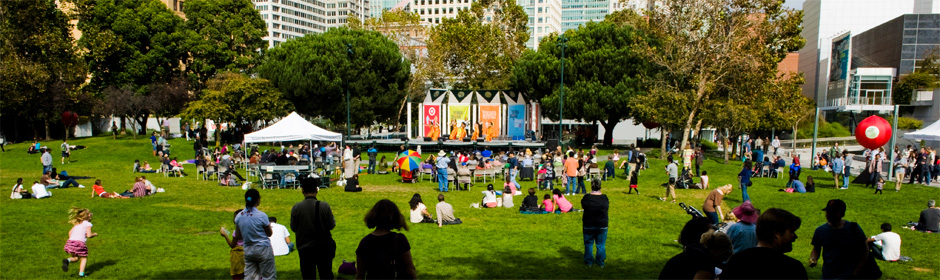
Named one of the Best Urban Green Spaces in North America by Local Medias, YGB Festival is a world-renowned cultural destination that offers three outdoor stages to performances for Bay Area residents, families, workers, and visitors alike. Yerba Buena Gardens Festival take place outdoors in Yerba Buena Gardens, off Mission Street between 3rd and 4th Streets, San Francisco.

YBG Festival Executive/Artistic Director Linda Lucero says, “Get inspired! Treat yourself and treat your family, friends, and co-workers to the most diverse performing arts experience in the Bay Area. Yerba Buena Gardens Festival is Free, Outdoors, and fresh!”
During these 6 months (May – October) YBG Festival includes the highly acclaimed Let’s Go Salsa@Jessie! Dance series, the family-friendly Children’s Garden Series, Poetic Tuesdays with Litquake, and Thursday Lunchtime Concerts.

Each and every week and weekend, the Festival presents a curated lineup of musicians, dancers, poets, and artists from around the world including the Moroccan trance music of Innov Gnawa with Book of J on May 12, northwestern Indian dance with Garba in the Gardens on May 19, the 2nd Annual Yerba Buena Gardens ChoreoFest on June 2 and 3, the most celebrated gamelan ensemble outside of Bali, Gamelan Sekar Jaya.
On June 9, powerhouse Afro-Venezeulan vocalist Betsayda Machado y La Parranda El Clavo with VNote Ensemble on June 16, three performances from Festival favorites Circus Bella on June 22 and 23, the all-women klezmer group direct from New York City Isle of Klezbos with San Francisco’s Fanfare Zambaleta on July 7, Ukulenny and Cynthia Lin’s SF Uke Jam Summer Uke-Splosion!
On July 14, Cuban saxophonist Yosvany Terry Sextet on July 28, the 40th Anniversary performance of the San Francisco Lesbian/Gay Freedom Band on July 29, one of Vietnam’s most celebrated traditional artists Vân Ánh Võ & The VA’V on August 25, Manila Disco Fever on September 1, and the Yerba Buena Gardens Festival commissioned piece from Marcus Shelby Orchestra – Blackball: The Negro League and the Blues on September 8. The Festival closes with the 18th Annual Halloween Hoopla on Sunday, October 28.

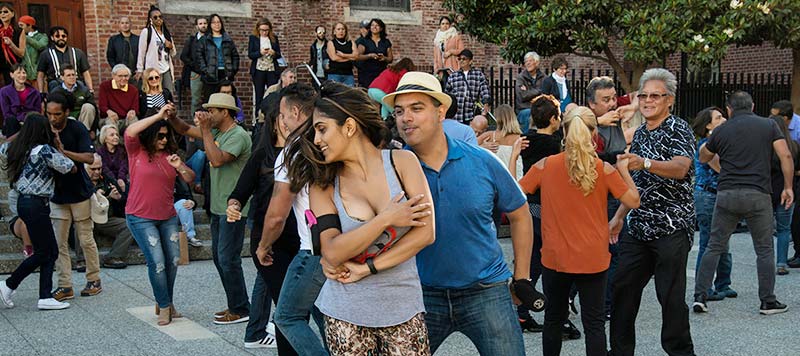
The popular series Let’s Go Salsa@Jessie!, the open-air salsa dance party in Jessie Square (near the Contemporary Jewish Museum), takes place on the third Thursday of each month from May to September from 6:00pm – 7:30pm.
Performers are the ‘New Mambo Retro Salsa’ group Cabanijazz Project on May 17, the nine-piece combo Bululú led byVenezuelan-born percussion master and vocalist Lali Mejia on June 21, the Bay Area’s inventive Cuban band Pellejo Seco on July 19, the U.S. State Department-sponsored Latin Jazz Ambassadors and the Mission’s own Annette A. Aguilar & StringBeans on August 16, and Los Mocosos vocalist and master salsero Manny Martinez y la Rebeldia on September 20.
This Festival brings the delightful Children’s Garden Series features interactive performances specially designed for kids and families every Friday from June to August in the Yerba Buena Children’s Garden at Fourth and Howard Streets.
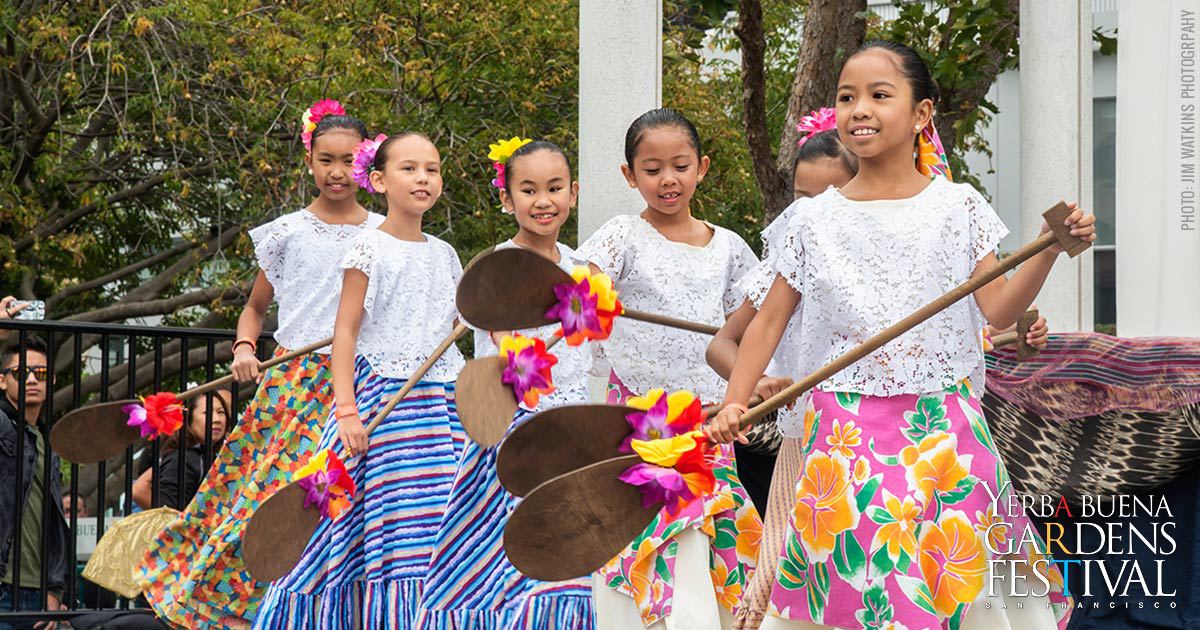
The series presents performances by kid favorites: the 2018 Grammy-nominated Alphabet Rockers, Non Stop Bhangra,Māhealani Uchiyama, Parangal Dance Company, Circus Bella, Unique Derique, Caterpillar Puppets, Chelle! & Friends, Pi Clowns, Red Panda Acrobats, Venezuelan Music Project, Crosspulse, and Ka-Hon. The series ends with the wildly popular 18th Annual Halloween Hoopla on Sunday, October 28.

Between these 100 free performances in YBG Festival are Thursday Lunchtime Concert Series that take place most Thursdays from 12:30pm to 1:30pm and is a favorite destination of downtown workers, shoppers, tourists, and students.
This year features the very best of local and international musicians including New World String Project on May 10, Community Music Center Older Adult Choirs on May 17, Dogon Lights on May 24, Kitty Pak on May 31, Latin Jazz Youth Ensemble of San Francisco on June 7, the Swedish Consulate’s Jenny Lind Concert on June 21, Dalia & the Big Violin on June 28, Manring Kassin Burr on July 5, Maikaze Daiko on July 12, Solate on July 19, Sol Development with Mino Yanci on August 2,
LINES Dance Center on August 9, Highest Ani on August 16, Faun Fables on August 23, La Patronal on August 30, John Brothers Piano Company on September 6, Daniel Riera: Future Flutist with Electric Ensemble on October 4, and Rice Kings on October 11.

This amazing event also celebrates annually: the 21st Native Contemporary Arts Festival on June 17, the 18th Annual AfroSolo in the Gardens featuring a Tribute to Duke Ellington featuring Denise Perrier and Nina Causley with David Hardiman’s San Francisco All-Star Big Band on August 4, the 25th Annual Pistahan on August 11 and 12, and Brazil in the Gardens: Pragandaia with special guest Margareth Menezes on August 18.
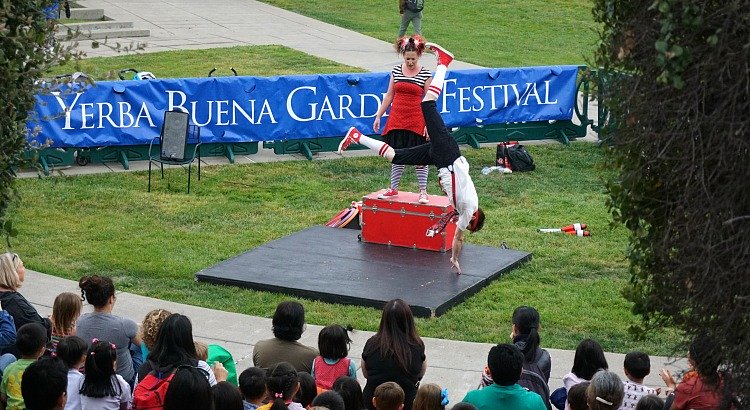
Poetic Tuesdays on the second Tuesday of each month with Guest curated by Litquake, Poetic Tuesdays run from 12:30pm-1:30pm and feature an array of poets and music as well as three performances of a new one-ring circus from Circus Bella on June 22 and 23. Conceived and directed by Abigail Munn and Joel Baker for Circus Bella, the show includes static trapeze, rope walking, juggling, contortion, unicycle, original clowning, acrobatics, and more.

Let’s Go Salsa Series’ Schedule (Every Third Thursday of month from 6:00pm to 7:30pm):
- May 17: Cabanijazz Project
- June 21: Bululú
- July 19: Pellejo Seco
- August 16: Annette A. Aguilar & StringBeans
- September 20: Manny Martinez y la Rebeldia
Venue: 760 Howard Street, San Francisco, CA 94103.
For more information and complete 18th Season Schedule, please visit www.ybgfestival.org
His name is: Elio Osácar Douguet, and artistically we know him as: Sonny Bravo
Interview conducted by journalist and music researcher Robert Téllez M., on February 4, 2017 and originally published later on the SONFONÍA portal. Interview provided by the author for International Salsa Magazine (ISM).

Robert: His name is: Elio Osácar Douguet, and artistically we know him as: Sonny Bravo When and where were you born?
Sonny: I was born on October 7, 1936 in West Harlem, New York City.
Robert: Are you of Cuban descent?
Sonny: Yes, my grandparents were born in Havana, three in Santiago de las Vegas and one (maternal grandfather) in Bejucal. My parents were born in Key West, FL, and raised in Tampa, FL.
Robert: Tell me about your father Santiago “Elio” Osacar.
Sonny: Obviously, my first mentor! Santiago Osácar Colomá, born October 12, 1911 in Key West, FL, raised in Tampa, FL. He and his two older brothers, Juan and Tomás, founded the Sexteto Tampeño in 1928. He married my mother, Elisa Douguet Bravo in February 1932 and they settled in New York around 1933. Shortly thereafter he joined the Caney Quartet as bassist and second voice. At that time he also formed and recorded with his own group, the Conjunto Moderno. Later he was also a member of Monchito y su Orquesta. But he always returned to Caney! Until his death in the summer of 1957, from a pancreatitis attack he suffered on the stage of the Chateau Madrid in NY.
Robert: Maestro Sonny, is it true that you played baseball, but due to an injury you turned to music?
Sonny: Yes, it was in an amateur league in Miami where I was raised, my father was the manager! I was a pitcher and after pitching a complete game, while it was drizzling; the shoulder pains started the next day and that’s as far as my brief career went.
Robert: Did you write arrangements for Conjunto Caney?
Sonny: I only wrote one, “Añorado Encuentro” (Piloto y Vera), but it was never recorded.
Robert: What groups did you work with in Miami?
Sonny: My first job was with the Conjunto Casino de Miami. I also worked with several orchestras (Juanito Sanabria) and several combos (Cheo Venero, Gonzalo Barr). From 1959 to 1961 I was with Conjunto Caney. Then (1961-1963) with Mandy Campo, with whom I made my first tour outside the U.S., it was to Aruba and San Juan, Puerto Rico. Between 1963 and 1964 I worked with José Fajardo. He played dances in Miami on Saturdays and in New York clubs the rest of the week. When he decided to stay in New York, he convinced me to return with him.

Robert: Is the Típico Charanga format your favorite?
Sonny: Yes! I would like to have the same format we used on Alfredo de la Fé’s LP (Toca, Alfredo Toca) with the modern harmonies that can be heard in my arrangement of “El casabe,” my adaptation of Humberto Perera’s arrangement of “Que rico bailo yo,” and my arrangement of my own song, “Toca, Alfredo toca.”
Robert: What pianists influenced your playing?
Sonny: Charanga genre: Jesús López. Ensemble genre: Lilí Martínez. Big band and combo genre: Pedro “Peruchín” Jústiz. Variety of genres: Rubén González.
Robert: How did you become involved with the José Fajardo Orchestra?
Sonny: In 1963, bassist Nilo Sierra took me to the Palladium to meet Fajardo. After I married my first wife, I returned to Miami, and was able to contact him. During 1963 I played with him the dances I mentioned above and also toured with him to Venezuela, Mexico, Santo Domingo, and Puerto Rico. Fajardo stayed to fulfill his contract at the San Juan Hotel, but Orestes Vilató and I returned to New York. Orestes because of melancholy, and I, because I found out that my wife was going to give birth in January 1965.
Robert: As I understand it, when you settle in New York, you start playing with: Willie Bobo, Bobby Valentin and Ray Barretto What would you highlight about your work with Barretto?
Sonny: Between 1965 and 1966 I was Raul Marrero’s musical director. Besides what you mentioned, I also played with Vicentico Valdés, Mauricio Smith, Cortijo, Maelo and La orquesta Broadway, at that time. With Ray Barretto (and his charanga format) I only worked for two weeks, that was in October 1966, until the return of his pianist, Edy Martínez, who had stayed in Colombia after a tour. I felt very comfortable with Barretto’s group and I would have liked to continue playing with him.

Robert: How did your integration with La Tipica 73 come about?
Sonny: I was there from the beginning. The group (unnamed) started in the summer of 1972 with musicians from various orchestras in a “jam session” (descarga) format, with the purpose of filling out the week with stews on Mondays, Tuesdays and Thursdays, that is, the laziest days in clubs and dance halls. Alfredo de la Fe was one of the original musicians. He and I played with Fajardo at that time.
There was also Bobby Nelson (flute) from Charlie Palmieri’s orchestra. Instigated by Johnny “Dandy” Rodriguez and with the support of several promoters and club managers, we decided to strengthen the group, create an ensemble and take the risk of competing with the already established groups.
Robert: Where did the idea of making the record production “Intercambio Cultural” come from?
Sonny: Johnny Rodriguez made the connection when he went to Havana on vacation. When he returned, he convinced Jerry Masucci to initiate the arrangements so that he could record at EGREM’s studios.
Robert: Was Típica 73 blocked because they had performed and recorded in Cuba and that’s why the group disbanded? Or were there other reasons…
Sonny: That’s the only reason!
Robert: What do you remember about your experience with Conjunto Clasico?
Sonny:
Side A: A lot of work, good music, good musicians.
Side B: Out of 20 songs, there were 19 solos of three and only one piano solo!
Robert: Maestro Sonny, you were present in several stages of Tito Puente’s orchestra, did you replace Jorge Dalto?
Sonny: Yes, in the Latin Jazz Ensemble. Jorge had his own group called “InterAmerican Band”. In the salsa band, I replaced Ruben Rivera. Eventually, the two formats came together to form a super-combo.
Robert: Of all the arrangements you have done in your career, which is your favorite?
Sonny: I have several, by format.
COMBO:
Typical ’73:
- Chachagüere
- Tula
- Rumba caliente

BIG BAND:
Latin Giants of Jazz:
- Gua Cha Rumba
- I have to conform
- I don’t bother

Mambo Legends Orchestra:
- Conmigo, candela brava 2.

CHARANGA:
Alfredo de la Fé:
- Toca, Alfredo Toca
- El Casabe

Robert: And your favorite piano solo?
Sonny: I have two. El casabe (Alfredo de la Fe LP), because of the relaxed son montuno tempo and because of my favorite format: ¡Charanga moderna! And ¿Adónde vas? (Tito Puente’s LP) because it was recorded live and I could extend the solo, and because it’s the King’s orchestra!
Robert: On January 28, 2003 there was a historic reunion in Puerto Rico, which culminated with the release of the album TIPICA 73 LIVE. How did you live that experience?
Sonny: The audience enjoyed it, but not me. There was flavor and swing, but the piano had a damaged key and I was almost completely out of tune and the choruses were pretty weak. The record was bootlegged before it was released.
Robert: Of today’s pianists, who would you single out?
Sonny: In the Afro-Caribbean Jazz genre (Latin Jazz) there are a ton of Cubans like Chucho Valdés, Gonzalo Rubalcaba, Hilario Durán, Ernán López-Nussa, Harold López-Nussa, Aldo López-Gavilán, Iván “Melón” Lewis, Alexis Bosch, Yan Carlos Artime, Rolando Luna, Ramón Valle, Manuel Valera, Daniel Amat, the Venezuelan Luis Perdomo, the Colombian Edy Martínez, etc. In the genre they call salsa, my favorite: Papo Lucca, the poet of the piano, impeccable flavor and swing. Eddie Palmieri is Eddie Palmieri! Oscar Hernandez, Ricky Gonzalez, Edwin Sanchez and Yeissonn Villamar.
Robert: What future do you see for salsa?
Sonny: Unfortunately, I think it is diminishing with the disappearance of the old guard. We need to remember and respect tradition, but we also need to move forward, developing genres and sub-genres. For example, in Cuba, dance is developed and danzonete and danzón emerge. They develop the son and the son montuno, the guaracha, the mozambique, the mambo, the ritmo pilón, the ritmo pa’ cá, etc., emerge. Then came the songo and the timba, all based on the son. Where is the development of the New York, Puerto Rican, Caribbean or South American “salsa”? It is still more or less the same since the day it was discovered. If it were not for the innovations in Cuba, there would be no groups such as: Los Van Van, NG La Banda, La Ritmo Oriental, Klimax, etc. And please don’t talk to me about “salsa monga” or “bachata” or “reggaeton”, which, in my humble opinion, are not innovations, but aberrations!
Exclusive interview with Sonny Bravo
Interview by music journalist and researcher Robert Tellez M.

Also Read: Robert Tellez is undoubtedly “El más que sabe de salsa” (The one who knows the most about Salsa)
Orestes Vilato
North America / USA / New York
Orestes Vilato. Cuban Multi-Percussionist.
Cuban multi-percussionist, Orestes Vilato, is undoubtedly one of the greatest figures in the history of the Cuban drums known as timbales.

During the fifties, the Vilato family moved to New York, salsa capital of the world, where young Orestes would rise to fame as an innovator of his beloved traditional instrument, “Los Timbales”. While living in New York for 25 years, Orestes was intimately involved with many musical organizations that played seminal roles in shaping the course of Latin Music around the world.
Among the many groups were: Fania All Starts (founding member), Ray Barretto, Tipica 73 (founding member), Los Kimbos (founder-director), Tito Puente, Johnny Pacheco, Cheo Feliciano, Ismael Rivera, Joe Cuba, Eddie Palmieri, Ruben Blades, La Lupe, Celia Cruz, Rolando La Serie, Chico O’Farril, Lionel Hampton, Los Chavales de Espana, Cal Tjader.
Other artists with whom he has recorded or worked include: Winton and Bradford Marsalis, Paco De Lucia, Whitney Houston, Linda Ronstadt, Aretha Franklin, Willie Nelson, Herbie Hancock, McCoy Tyner, Cachao, Andy Garcia, Emilio Estefan, Gloria Estefan, Paquito de Rivera, Dave Valentin, Mongo Santamaria, Armando Peraza, John Santos, Rebeca Mauleon, Giovanni Hidalgo and Raul Rekow.

In 1981, Mr. Vilato moved to the San Francisco Bay area, where he still resides with his family. From 1980 to 1989 he recorded and toured with the renowned Carlos Santana Band.
Orestes was nominated for a Grammy in 1995 (Latin Jazz category) for his CD, Ritmo Y Candela With Patato and Changuito. In 2009 his solo CD Its About Time was nominated for a Latin Grammy.
Orestes has recorded several movie sound tracks that include: Our Latin Thing, Mambo Kings, Carlito’s Way, Steal Big Steal Little, The Bird Cage, Dance With Me, Just A Ticket, Things To Do In Denver and The Lost City.
He has been a special guest artist in multiple Jazz Festivals around the country and Puerto Rico including the San Jose Jazz Festival. He has performed and taught at numerous music conservatories including The Berkeley School of Music, UCLA, Fresno University, Standford University as well as many conservatories overseas.
Orestes was given tribute at Yerba Buena Garden, Monterey and San Francisco Jazz Festivals.

Orestes’ style is one of the most imitated and emulated among recording-performing artists.
Betty Zapata ¨The Lady of Salsa¨
Latin America / Venezuela / Caracas
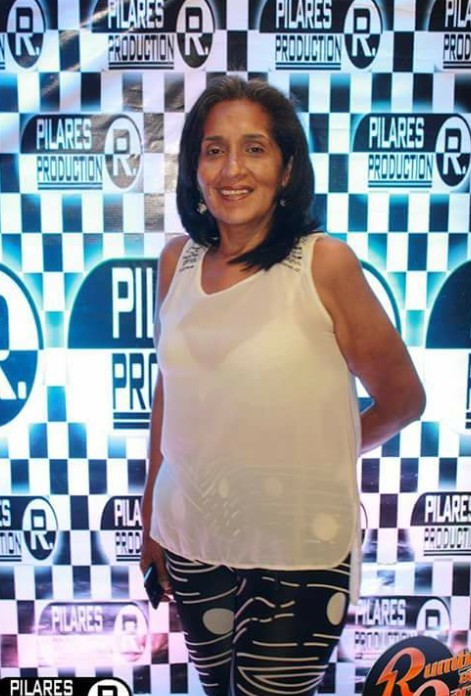
In Venezuela, Caracas, the neighborhood is a way of life with its own identity. The neighborhoods of the entire National Territory, its inhabitants, become outstanding characters. Such is the case of Betty Zapata who was born in the emblematic La Pastora Parish located in the Capital (Caracas). There he spends his childhood in a neighborhood of colonial and historical houses of Venezuela.

There are many memories of that legendary Zone, they are inevitably built by those associated with survival, preparation, development, work, love, struggle and family formation, its magic and what marked it for life… . “Music”.
My connection with music is due in part to the fact that I live in a popular area where the music that was heard was Afro-Caribbean (mostly Salsa), the parties or meetings in my house and the neighborhood were always enlivened by that type of music, the most rooted and sticky collectively, originating the most varied dancers.
In the Carnestolendas festivities, improvised platforms (Templetes) were installed to stage the most varied costume and dance contests. Leaving my childhood and beginning my adolescent stage, I participated in dance competitions, obtaining recognition and prizes that were awarded to the young people of my generation.
I attended festive celebrations (dance meetings) with my older sisters at the age of 12, not because I was a dancer, but to not leave me alone, since I was the youngest of 3 sisters, this allowed me to share with people older than me and which I was learning the different dance styles “remembering with great affection the Cayender family, made up of excellent dancers” they are part of my school and love for dance. My cadence, flavor and body movement also allowed me to learn until I had my own dance style.
The music of the moment was the Danzones, Billo’s, Melodicos and in my house my sisters listened in the 70’s to Joe Cuba, Ricardo Rey and Bobby Cruz, Eddie Palmieri, the Latin Dimension prevails, Grupo Mango, Salsa Mayor, La Banda and his Young Sauce. That stuck with me forever and I felt drawn to Salsa.
That gave me the basis to fully incorporate myself into the exciting world of music. In the Barrio salsa is something essential, if you don’t dance it, enjoy it, feel it, you’re nothing.
Attending a meeting, an event, a concert, a presentation, a party or a meeting and there is no salsa, you feel an emptiness since with it we enjoy, we share, we dance and it definitely puts us to enjoy.

In the course of my 6 decades of existence, I have not ceased to be linked to it in different facets: as an audience, spectator, guest, contestant, jury, organizer, producer and director of events.
Each of these participations has allowed me to stand out, stand out and be a well-known, popular and loved person, a reference in the organization of a good party, night events, presentations of representative groups of the world of Salsa such as:
Ray de La Paz, Herman Olivera, Frankie Vásquez, Bobbie Valentin, Willie Rosario, Spanish Harlem Orchestra, Sonora Ponceña, La Selecta, Mulenze, Carlos Cano Estremera, Julio López, Yolandita Rivera, Mambo Legends among others, and for those from the Patio: Bailatino, Rumberos del Callejón , Ensamble La Calle, Albondiga y su Pandilla, Repicao, Tributo, On Fire, La áquina de la Salsa, La Negramenta, Gerardo Rosales, Javier Plaza’s Son Risa Orchestra among others.
This has allowed me to be an obligatory reference when it comes to producing and making an event of great importance and musical quality where the Dancing Public is respected and appreciated, providing them with the comforts to enjoy an excellent show and Latin music is seen as an element of identity that belongs to all of us to live it and feel it.
I am (Betty Zapata) currently planning and developing projects in the short, medium and long term and to give you a heads-up I am giving you the scoop: I am here with my radio program to promote, support, disseminate and promote our exciting and magical world of Caribbean music.