• Skip to primary navigation
  • Skip to main content

International Salsa Magazine

  • HOME
  • Previous editions
    • 2026
      • ISM / April 2026
      • ISM / March 2026
      • ISM / February 2026
      • ISM / January 2026
    • 2025
      • ISM / December 2025
      • ISM / November 2025
      • ISM / October 2025
      • ISM / September 2025
      • ISM / August 2025
      • ISM / July 2025
      • ISM / June 2025
      • ISM / May2025
      • ISM / April 2025
      • ISM / March 2025
      • ISM / February 2025
      • ISM / January 2025
    • 2024
      • ISM / December 2024
      • ISM / November 2024
      • ISM / October 2024
      • ISM / September 2024
      • ISM / August 2024
      • ISM / July 2024
      • ISM / June 2024
      • ISM / May 2024
      • ISM / April 2024
      • ISM / March 2024
      • ISM / February 2024
      • ISM / January 2024
    • 2023
      • ISM / December 2023
      • ISM / November 2023
      • ISM / October 2023
      • ISM – September 2023
      • ISM – August 2023
      • ISM July 2023
      • ISM Edition June 2023
      • ISM – May 2023
      • ISM April 2023
      • ISM March 2023
      • ISM February 2023
      • ISM January 2023
    • 2022
      • ISM December 2022
      • ISM November 2022
      • ISM October 2022
      • ISM September 2022
      • ISM August 2022
      • ISM July 2022
      • ISM June 2022
      • ISM May 2022
      • ISM February 2022
      • ISM January 2022
    • 2021
      • ISM December 2021
      • ISM November 2021
      • ISM October – 2021
      • ISM September 2021
      • ISM August 2021
      • ISM July 2021
      • ISM May 2021
      • ISM April 2021
      • ISM June 2021
      • ISM March 2021
      • ISM February 2021
      • ISM January 2021
    • 2020
      • ISM December 2020
      • ISM November 2020
      • ISM October 2020
      • ISM September 2020
      • ISM August 2020
      • ISM July 2020
      • ISM June 2020
      • ISM May 2020
      • ISM April 2020
      • ISM March 2020
      • ISM February 2020
      • ISM January 2020
    • 2019
      • ISM December 2019
      • ISM November 2019
      • ISM October 2019
      • ISM Septembre 2019
      • ISM August 2019
      • ISM July 2019
      • ISM June 2019
    • 2016
      • ISM December 2016
  • Spanish
  • Download Salsa App
    • Android
    • Apple

Search Results for: King of Mambo

Steffen Kuehn and Christian Tumalan talk about their musical roots and orchestra

Preamble

This time, we are going to talk with German producer, arranger, composer and trumpet player Steffen Kuehn and Mexican bandleader, composer and musician Christian Tumalan. Both are at the head of the Pacific Mambo Orchestra and share the role of co-executive director of Pacific Mambo LLC and Pacific Mambo Records. Also, each has his own record label and separate musical achievements, but unify their skills to make the group they have in common one of the best in the United States.

Both expressed their points view about the orchestra, the work they do in it and what each one has done in music in general. These views reveal that quality, professionalism and adaptability are the main values on which the orchestra they lead is based.

Steffen Kuehn at the Tempo Latino Festival in France

A bit of Steffen’s story

The start of the conversation focused on the beginnings of Steffen Kuehn, who ackowledges having been a musician all his life, since he started playing the trumpet when he was just eight years old. He attended the University of North Texas to start his formal music education and learned to arrange music, compose and specialize more in the trumpet. He now focuses on is teaching trumpet, playing for the orchestra, arranging, selling music for television and movies, among other activities (all  have to do with music).

When we talk about his written publications, he mentioned a instruction book to help beginners to play the trumpet some years ago. Today, He is working on a second book and a new record production. What he has planned for Pacific Mambo is to make about 10 songs for its new album, of which two have already been made.

Christian’s musical background

Christian told us a bit about his musical training and confirmed that he studied piano for more than 10 years. He has also played piano since the age of 14 when he was in high school and started much more formal musical training at the age of 15. It can be said that he was already an expert at playing both instruments after a decade of much dedication and practice.

When asked about his roots in jazz, he commented to us that almost all jazz musicians have some training in classical music and direct access to technical elements with the instruments. His goal in learning about classical music was not to become a performer dedicated only to that style, but to gain as much knowledge as possible about music in general and to improve his piano skills.

Christian Tumalan plating the piano

How do you apply German and Mexican heritage to the music of the orchestra?

As for this interesting subject, both artists pointed out that polka music and Mexican banda music were very similar in terms of sounds and instrumentation used for both. In Steffen’s case, he was always very interested in going to the United States to learn and study about jazz, how and where it originated. He comments that, if he had wanted to study classical music, the best places would have been Germany, France and Italy, as many of its greatest exponents come from there.

Both Christian and I went to the root of how the jazz movement started, how it originated and developed over the years. However, I studied Latin music here in the United States and my Colombian roommate at the time explained to me a lot of things and introduced me to a lot of Latin rhythms I have ever heard before,” said Kuehn.

They both started to introduce jazz and this knowledge to the music of the orchestra. About this, Christian said that the mixture of rhythms was like ”a battle of entities” in which they were looking for what works and what does not work, since not everything can be mixed. ”What I usually do is combine my knowledge in classical music with my own Big Band arrangements,” Christian said.

”The fact that we have musicians from various countries in Europe and Latin America has helped us a lot to see different perspectives. Also, due to the number of musicians we are, we can play in different styles that other groups cannot” added Steffen.

Christian Tumalan and Steffen Kuehn during an interview with Jesse Chuy Varela

Skills they look for in their musicians

Steffen pointed out that the first thing they look for in their musicians is the chemistry we can have with them. In this sense, he mentioned that he has met excellent musicians with whom he does not get along with at all, which makes the work environment very heavy. Therefore, he does not take them into consideration for the orchestra because, if there is no chemistry and an atmosphere of respect, everything else does not work.

Another thing that the performer considers important is the spirituality of music, which many times is not attained by all musicians. When a musician opens up to the spirituality of the music, that’s when the magic happens and the chemistry hits us. We are very fortunate to have so many musicians who share this feeling and have reached that point as we have,” he added.

How do you share roles in the orchestra?

Christian commented that both he and Steffen were very good in different areas separately. Steffen has a quite charismatic way of communicating with people and knows how to earn the respect of others very quickly, while I focus more on the technical and musical aspects of the group. I think that complements us very well”. He also said that the German was very good with information and details such as tours, hotels, flights, names, taxes, among other things.

When Steffen’s came to talk about his partner, he said that he knew a lot about everything to do with music technology, stage direction, tempos, editing, mixing, video, audio and many other things. He confesses that he is unable to do many of these things, so they are left to Christian.

Read also: Multi-Percussionist Carlos Navarro and his Son Y Clave Orchestra

In front of adversity we grow with Johnny Cruz .

North America/ All USA

Johnny Cruz : This month I wanted to dedicate myself to good news, highlighting the work of those who, despite adversity, continue to strive to bring the best to the public. We keep working!

Gilberto Santa Rosa surprises us with his new album Colegas. His most recent phonogram. In this, Santa Rosa invested the last six years and presents 16 collaborations with Cuban artists -Isaac Delgado and Juan Jose Hernandez-Puerto Ricans -Tito Nieves, Tito Rojas, Luisito Carrion, Pirulo, Nino Segarra, Choco Orta among others-, as well as with a Dominican – Jose Alberto “El Canario” -.

Gilberto Santa Rosa - Colegas
Gilberto Santa Rosa – Colegas

The album is preceded by “40… y contando en vivo desde Puerto Rico”, an album recorded in 2018 live at the Coliseo de Puerto Rico in San Juan, to celebrate its 40 years of musical career. The majestic arrangements were the work of Dino Nugent (Apaga La Luz), Marty Sheller (Caminalo, Ban Ban Quere), Ramón Sánchez (Que Se Sepa), Javier Fernández (Tremendo Coco, Masacote), Louis García (Por La Calle Del Medio, Ocana Sordi, El Guateque De Chombo), Ricky González (Vamos a Bailar El Son, Eque Tumba), Manolito Rodríguez (Medley Boleros), José Madera (Bailadores), Rene González (Estoy como Nunca), Isidro Infante (Mario Ague, El Mejor Sonero, Sonerito), James Hernández (La Fonda De Bienvenido).

In good time Santa Rosa presents this production. He positions him on the GRAMMY platform and refreshes him in his role as sonero and incidentally, he extends a helping hand to some who had not recorded Salsa Brava again.

Tracks: La Familia; Caminalo; Que Se Sepa; Mazacote; Apaga La Luz; Sonerito; Por La Calle Del Medio; Nos Vamos A Bailar El Son; Medley Boleros; Ocana Sordi; Bailadores; El Mejor Sonero; Tremendo Coco; Estoy Como Nunca; Mario Ague; Eque Tumbao; La Fonda De Bienvenido; Ban Ban Quere; Guateque De Chombo.

Members: Angie Machado, Jan Duclerc, Jesús Alonso, turbidity Vilchez – trumpet; Charlie Sierra – maracas; Dino Nugent – violín; Johnny Torres, Pedro Perez – bass; Manolito Rodriguez – timbal; Rafy Torres, Toñito Vásquez, Víctor Vázquez, Reynaldo Jorge – trombones – trombone; Richie Bastar – bongo; Sammy García, Jimmie Morales – congas; Sammy Vélez, Josué Urbina; Pedro Méndez, Frankie Pérez, Janice Maysonet – saxophone; Luis Marín, Isidro Infante, Javi Fernández, Ricky González – piano; Orestes Vilató – timpani; Pablo “El Indio” Rosario – percussion; Meñique, Paquito Guzmán, Víctor Manuelle, Luisito Carrion, Justo Betancourt – backing vocals. Guests: Víctor Manuelle, Choco Orta, Juan José Hernández, Isaac Delgado, Yan Collazo, Luisito Carrion, Pirulo, Tito Nieves, Tito Rojas “El Gallo”, Ismael Rivera Jr., José Alberto “El Canario”, Carlitos Ramírez, Michelle Brava, Herman Olivera, Maelo Ruiz.

I take this opportunity to greet my good friend Johnny Rodríguez Jr., better known as Johnny “Dandy” Rodríguez, is an American bongo player. He was Tito Puente’s longtime bongo player, and also played with Tito Rodríguez, Ray Barretto, and Alfredo de la Fe. He belonged to various popular bands of the salsa era such as Tico All-Stars, Fania All-Stars, and Typica 73. He is a proud son of El Barrio (Spanish Harlem), New York, and stickball (street baseball) was more interested than music.

Marco Bermúdez - En mi voz
Marco Bermúdez – En mi voz

However, influenced by his father, Johnny, 17, earned the position of playing bongos in the Tito Puente Orchestra. Johnny spent more than 30 years with the orchestra, also working with Tito Rodríguez from 1965 to 1968 and with Ray Barretto from 1970 until the end of 1972. Johnny went on to form Tipica 73, of which he remained a member until 1979. He then returned to the band. Tito’s band, playing alongside him until the time of Tito’s death in May 2000.

Johnny “Dandy” Rodríguez Jr. continues to be a Latin jazz and salsa percussionist. Today he works as a percussionist in different Latin music ensembles, He is unstoppable and is very active with the Latin Jazz Giants (alongside his colleagues and Exclusive LP Artists Jose Madera and George Delgado) and that includes the stars from the original Tito Puente Orchestra. The band plays the famous music from the Palladium days of Tito Puente, Tito Rodríguez, and Machito, and also recorded The Giants Play the Music of the Palladium.

In 2008, Johhny entrusted LP’s Research and Development Department with the design of the John “Dandy” Rodríguez Jr. bongoes from the Legends series. John is proud that these drums, which bear his name, present such a sound and visual characteristics outstanding. Keep going, Johnny!

A few days ago, En Mi Voz, the solo debut of the Ecuadorian singer Marco Bermúdez, was officially launched on the market. This is a very good selection of ten songs, under the master hand of Oscar Hernández, the prestigious and renowned musician who is making his debut as a record producer with Ovation Records.

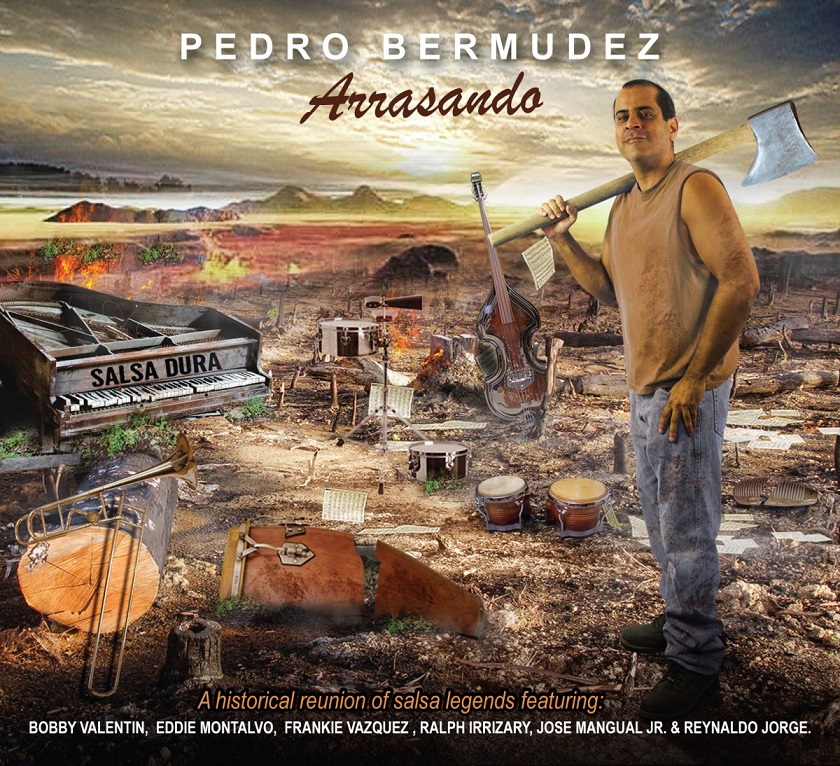
Pedro Bermudez - Arrasando
Pedro Bermudez – Arrasando

Marco has not saved anything for this premiere. He has met with his colleagues from the “Hispánica del Barrio” and the result could not be better: Jerry Madera, Máximo Rodríguez, Maneco Ruiz, Héctor Colón, Doug Beavers, Reynaldo Jorge, Jeremy Bosch, George Delgado, Luisito Quintero and Jorge González give solvency and flavor to En Mi Voz. The album opens with “Amanecer Contigo”, composed with four hands between Hernández and Bermúdez, where the trumpet solos by Maneco Ruiz and flute by Jeremy Bosch stand out.

Jeremy is also heard with his flute in his fine and heartfelt composition “Canto a mi Mamá” and in “Únicamente tú”, making Marco the second voice. The romantic spirit of the singer of the Spanish Harlem Orchestra and Mambo Legends Orchestra is confirmed in songs like “Solo Basta” and “Tu Regreso”. Oscar’s arrangements guarantee the key melody. Highly recommended this album, it has no waste!

I send my greetings and wishes for a reunion with this excellent salsa singer: Hermenegildo Olivera, or Herman Olivera. Born in Newark, New Jersey, the son of Puerto Rican parents and from an early age linked to Latin music. In the 70s, in the middle of the salsa boom, Herman began his love of singing by listening to the interpretations of Chamaco Ramírez, Héctor Lavoe, Cheo Feliciano and Marvin Santiago, among others. These vocalists were primarily his source of inspiration. When he was just 15 years old, Herman began his career as a salsa interpreter with an orchestra called La Justicia.

Johnny Rodríguez
Johnny Rodríguez

Later he was part of the band La Sónica, where he met his friend and trombonist Jimmy Bosch. After this he spent time with the Caramelo orchestra to later take the most important leap in his career by being part of the Conjunto Libre in 1978, where he left his voice reflected for the first time in the Incredible LP of 1981 under the direction of percussionist Manolo Oquendo and bassist Andy González, where he stands out with the theme Decídete.

In 1990, he was invited to record on the album Salsa Sudada, from the Valdesa Records label of Víctor Raúl Sánchez “Patillas” and with the musical direction of Isidro Infante, sharing vocalization with Mario Muñoz “Papaíto”, Adalberto Santiago, Eladio Peguero “Yayo El Indio” and Pablo Villanueva Branda “Melcochita”; in this work he interprets the songs La Aguja and a tribute to the city of Cali called Valle Plateado de Salsa. Later, it launched an independent project called Herman Olivera y La Exclusiva. Chequea la Mercancía.

Herman Olivera
Herman Olivera

Produced by Fernando Pastrana where the song Me Extraña Araña is one of the most outstanding. For 1997 he participates in the CD of the band Rikoson All Stars, called Evoluciones del Son, where he stands out very well in the romantic theme Aquella Noche. In 1998 he was requested by the piano teacher Eddie Palmieri and together with the vocalist Wichy Camacho they recorded the album El Rumbero del Piano, where he stands out as a singer on the songs Malagueña alerosa and Oiga mi Guaguancó.

That same year he was invited to the recording studios by the trombonist Jimmy Bosch and they released the album titled Soneando Trombón, which contains the hit Otra Oportunidad. Who plays a duet with Frankie Vázquez. On this CD also appears the song Descargarana. That same duo, Olivera and Bosch, meet the following year (1999) and produce Salsa Dura, where Herman shines performing the full Impacto Tendremos. The album also features the participation of singers Frankie “Nene” Morales and Frankie Vázquez. Parallel to this album, the RMM label launches a live CD and DVD titled Eddie Palmieri & Friend’s, where Herman looks excellent in the number Palo pa ’Rumba.

Felix Villalobos
Felix Villalobos

The invitation to tune in to the new Fm / Internet radio station on Live365.com continues: Salsagallery. Good music, interviews with the artists and much more… now with the participation of Felix Villalobos who joins Salsagallery Radio with a segment in which we will be talking about Music.

At the Spanish Harlem Salsa Gallery Museum we are happy to say that we are gradually returning to our activities and we will be opening the gallery sporadically. We do not stop, we continue to work for our music and we will always keep you informed through our social networks. We hope to have more news shortly and that we can return to normal soon.

Publicity
Raymond Stewart
Johnny Cruz
Correspondent
New York

Maelo y su Klan want to bring tropical rhythms to the whole world

Maelo y su Klan is the latest project, and one of the dreams, of the producer with more than twenty years of experience, Johnny Ysmael Salaverria Dicurú. The popular “Maelo” as his dearest friends call him, continues his career by working and pouring his heart into this project. With them the first genre fusion between Son and Kizomba is known. In the following lines we will talk about Maelo and his most beloved project.

Who is Maelo?

Johnny Ysmael Salaverria Dicurú was born in San Juan parish, in Caracas, capital city of Venezuela, where he spent his childhood surrounded by the joy of the Caribbean “soneros and salseros”. He was a child when he first expressed his interest in one of the most popular tropical Caribbean rhythms, salsa. Part of his influences came from his uncle, Héctor Bruno Dicurú.

Ysmael D´La O, is his artistic name on stage and producing, but his closest friends call him “El Tiburón de la Salsa”. He left with $80, and a luggage full of dreams, to look out for adventures abroad. His destiny was Tenerife, where he quickly earned the love and respect of the natives, and was embraced as an adopted son.

Maelo as a producer has worked with renowned soloists and groups, from all over the world. To name a few: Nicky Jam, El Binomio de Oro, Tito Rojas, Oscar D’León, Porfi Baloa, Tony Vega, La Dimensión Latina, Ray Sepúlveda, Guayacán, El Grupo Niche. As a promoter and producer of events, one of his greatest achievements was El Gran Combo De Puerto Rico who celebrated their 50th anniversary, and visited Europe hand in hand with him.

We can call Maelo, the cultural ambassador of Caribbean rhythms, making more than 30 countries listen and enjoy them. He was the first Latin American to have 100 continuous virtual conversations during the pandemic, a time when creativity was the escape of many artists.

Among his awards and recognitions is being nominated as International Producer of the Year in 2020, Producer and Promoter of the Virtual Euro Festival in the 20/21 edition. But soon more will come, since Maelo’s talent is infinite.

Defining Maelo and his Klan

The band stands out in danceable rhythms such as: Son, Charanga, Guaguancó, Salsa, Tropical, Latin Jazz and a lot of fusion with an original sound, which is inspired by African rhythms. Of course, with the influences of great masters of the old tropical school. In this way, a combination is created that generates a modern sound, worthy of the new generation. But what most characterizes this Klan is the creation of the fusion of the genres between Son and Kizomba.

The works of Maelo y su Klan have the collaboration of the renowned arranger and director of Billo’s Caracas Boys, the Venezuelan Julio Cesar Estrada. Also by Paquito Barón, ex-member of the Orquesta Bronco of Venezuela, in the musical production.

The Klan has all the merits and the support of the Anglo-Saxon and Asian public. One of his productions entitled ¡Cultura viva! Fusion is positioned as the new sound in Afro-Caribbean music. Maelo not only puts his talent for the band, but also puts all his knowledge of the tropical rhythms of Latin America, as well as its movements through Europe and Asia. Let’s hope that the journey of Maelo y su Klan will be a very long one, full of great successes, so that they can continue to please the public that loves these tropical rhythms.

Multi-Percussionist Carlos Navarro and his Son Y Clave Orchestra

Who is Carlos Navarro?

There have been many celebrities, orchestras, groups of all genres who played their part in the salsa cultural movement in the United States, but we cannot deny that bandleader Carlos Navarro and his Son Y Clave Orchestra played a very important role, since they achieved many goals in the Latin music scene in California, specifically in Los Angeles.
Carlos Navarro was a child of the couple formed by Rafael Navarro and Maria De Jesus Velasquez de Navarro, being at the same time the brother of Alexis Enrique (the famous singer Cherry Navarro), Manuel, Rene, Lelys and Audy. The whole family decided to move to Caracas, the parish of El Valle, where all the children continued their studies.

The first one to start an artistic career at a very young age was his older brother Alexis, who would later be known as Cherry Navarro in the artistic field. Carlos followed the same steps and also dedicates himself to music, but focused on salsa, mambo, merengue, and Latin jazz.

Producer, bandleader, percussionist and singer Carlos Navarro

Las Versalles

In the early 80’s, specifically in 1983, the artist served as co-founder and percussionist in one of the first and most important orchestras in Los Angeles, California, with styles of Salsa, Guaguancó, Merengue, cha cha chá, and Latin Jazz.

This group was called Las Versalles and hired many musicians based in the same city. Here you can see some of the main members and their instruments, Güiro: Carlos Navarro and Jorge Luis Balmaseda, Vocalist, Piano, Arranger: Fito Foster, Vocalist, Guitar, Flute, and Arrangements: Niño Jesús, Bass: Geraldo Zuldo and Luis López, Trumpets: Carleton Smith and Robert Hernández, Trombo: Arturo Velazco, Violin: Gene Hugo, Congas: Humberto Hernández and José “Papo” Rodríguez, Timbales: Héctor Andrade and Edwin Rolland, Backing Vocals: Fitto Foster, Niño Jesús, Bobby Rivas, Jorge Luis Balmaseda and Bass in ‘’Cama Y Mesa’’: Cuco.

Famous singer Cherry Navarro, Carlos Navarro's brother
Famous singer Cherry Navarro, Carlos Navarro’s brother

Son Y Clave

In 1999, the producer, percussionist and singer founded the Son Y Clave Orchestra and became a very important group in the nightlife of Los Angeles and surrounding areas.
One of the most attractive things for spectators of the places where they perform is the ease with which they dance and execute choreography, which are highly contagious, fast and elegant at the same time.

This diversity of performance styles is another one of the many things that has led this orchestra to the summit. In the same way, they have participated in all kinds of festivals, congresses, concerts and much more. They also had an important participation in salsa nights at venues in Los Angeles and the Bay Area such as El Floridita, where they played with Son Y Clave every Monday, until Carlos had to leave for a while and left talented musician Johnny Polanco in charge.

They have been so popular in the last few years that they have managed to open for world famous bands such as the Rolling Stones, who counted on the talent of the orchestra to grace their performances in one of their most important tours.

All members of the Son Y Clave Orchestra

God & Salsa and more

They have also been involved in major film projects such as ”Almost A Woman”, whose director has a long-standing friendship with Navarro. They participated in both the promotional trailer and various parts of the film, especially where there are parties and dancing.

Kaplan was so pleased with Carlos’ work in ”Almost A Woman” that she decided to contact him again to work hand in hand on a project titled ”UNO” which is based on one of the most famous Latin American TV hosts, the famous Renny Ottolina. Once again, Son Y Clave will join forces with the renowned filmmaker to put music to ”UNO”.

”Almost A Woman” had a lot of repercussion at the time, but the film for which they became known in recent years was ”God & Salsa”. Carlos Navarro himself was the main responsible for composing much of the original music that was part of the soundtrack of the film. In addition, they were also present at the filming, displaying their great talent and dedication to the audience.

Currently, Navarro has a lot of contacts, friendships and dealings with other figures and producers of the stature of classical guitarist Yalil Guerra, with whom he has participated in multiple musical projects both with his orchestra and at the production level.

He has also shared the stage with important talents in Los Angeles such as Tito Nieves, Luis Barbarán, Guillermo Canales, Ernie Valenzuela, Melissa Campos, Roosevelt Córdova, among many others.

Carlos Navarro, Luis Conte, Jorge Valmaceda, and the rest of the Siva Orchestra

La Sonora Matancera musical congregation of long trajectory and its sound quality, is one of the most popular in the Caribbean island “Cuba”

It was founded in Matanzas in 1924 under the name of La Tuna Liberal.

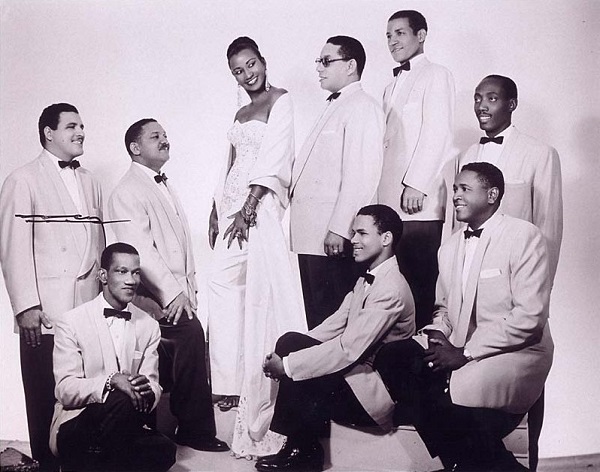
Its first members were: Valentín Cané, director and tres player, Manuel Valera, guitar and second voice, Manuel Sánchez (Jimagua), timbal, Ismael Governa, cornetín, Pablo Vázquez Govín (Bubú), double bass, Domingo Medina, guitar, Ismael Goberna, cornetín, Julio Govín, guitar, José Manuel Valera, guitar, Juan Bautista Llopis, guitar.

In 1926 Carlos Manuel Díaz Alfonso (Caíto), falsetto voice and maracas, and Rogelio Martínez Díaz (El Gallego), guitar, joined the group and it adopted the name Sexteto Soprano.

On January 12, 1927, under the name of Estudiantina Sonora Matancera, they moved to Havana. In November of that year they recorded their first two recordings for the Victor label: Fuera, fuera, chino, by José Manuel Valera, and El porqué de tus ojos, by Valentín Cané.

With the definitive name of Conjunto Sonora Matancera, it began its transmissions on the radio station El Progreso Cubano (later Radio Progreso). At that time it appeared on Radio Atwater Kent; in 1932, at the suggestion of Rogelio Martínez Díaz, it took the name of Sonora Matancera, and began its performances in the Havana Sport dance academies, and later in Marte and Belona, and later became part of the cast of CMQ Radio. In 1935, trumpeter Calixto Leicea joined the group; in 1939, composer, pianist and orchestrator Severino Ramos, who gave the Sonora its distinctive sound with his orchestrations.

La Sonora Matancera congregación musical de larga trayectoria y su calidad sonora, es una de las más populares en la isla caribeña “Cuba”

In 1944 pianist Lino Frias and trumpeter Pedro Knight Caraballo joined the group, who with Calixto Leicea formed the most interesting trumpet duo in the history of Cuban ensembles; in 1945 singer Bienvenido Granda Aguilera; in 1948, Angel Alfonso Furias (Yiyo), tumbadora. At this time the Sonora Matancera was formed by Rogelio Martínez Díaz, director, guitarist and chorus; Pablo Vázquez Govín (Bubú), double bass; José del Rosario Chávez (Manteca), timbal; Ángel Alfonso Furias (Yiyo), tumbadora, who replaced Valentín Cané; Calixto Leicea, first trumpet; Pedro Knight Caraballo, second trumpet; Lino Frías, pianist; Carlos Manuel Díaz Alfonso (Caíto), falsetto voice and maracas; Bienvenido Granda, singer and claves; and Celia Cruz, who soon became the stellar singer we knew and the mainstay of the Sonora Matancera hits. Thus began a period that critics have called the golden age of the Sonora.

In 1950, with the advent of television, the Sonora Matancera was one of the first musical groups to perform on this medium. It also signed a contract with the Seeco record company, with whose recordings it made a name for itself in the international market. In 1952, Raimundo Elpidio Vázquez replaced his father, Pablo Vázquez, on double bass (when Rogelio Martínez Díaz died in 2001, he took over the leadership of the group).

In 1926, it changed its name to “Septeto Soprano”. That same year, Carlos M. Díaz “Caíto” accompanied Eugenio Pérez in the choir.

Later in 1927, on Caíto’s recommendation, Rogelio Martínez joined the group and the name of the group was changed to Estudiantina Sonora Matancera.

Sonora Matancera
Sonora Matancera

With a great desire to improve the group travels to Havana where they get in touch with the record company “RCA Victor” and make their first recording on January 12, 1928.

At the beginning of the thirties, the group began to adapt to the new rhythms that were appearing at that time as well as adapting new instruments, such as the grand piano, which was played for the first time in the group by Dámaso Pérez Prado, who years later would become the “King of the Mambo”.

But it was in 1935 when the group took the name La Sonora Matancera, and with this change it introduced a new trumpet player: Calixto Leicea, who replaced Ismael Goberna, who died a few months later due to health problems.

The unforgettable José Rosario Chávez “Manteca”, who replaced the resigned “Jimagua”, also joined the band. Humberto Cané joined the group playing the tres and his father Valentín Cané began playing the tumbadora.

In 1938, Dámaso Pérez Prado retired and left the vacant piano position to Severino Ramos, who soon after became the musical arranger of the group.

During the first years of the forties they made presentations in dance academies, cabarets and in Radio Progreso Cubano, they also included in their repertoire: guarachas, montunos.

On January 6, 1944, two musicians from Arsenio Rodriguez’s group joined the group: Lino Frias (author of the popular song Mata Siguaraya) who began to play the piano and Pedro Knight who became the second trumpet player of the Sonora Matancera.

In the month of December, Bienvenido Granda enters the band recommended as vocalist, being his first recording “La Ola Marina” by Virgilio González, and with him they sign a contract with the nascent record label Panart Records. Valentín Cané, Israel del Pino, Caíto and Humberto Cané made recordings with this label.

In the middle of 1946 the founder Valentín Cané suffers asthmatic problems that force him to leave the group, dying two years later. Before the group joined Panart Records, it recorded other songs for the “Varsity” label, without the name of the Sonora Matancera appearing on the labels, here the first version of “Se Formó la Rumbantela” by Pablo Cairo, “Tumba Colorá”, “El Cinto De Mi Sombrero”, Bienvenido Granda and Humberto Cané participated in these numbers.

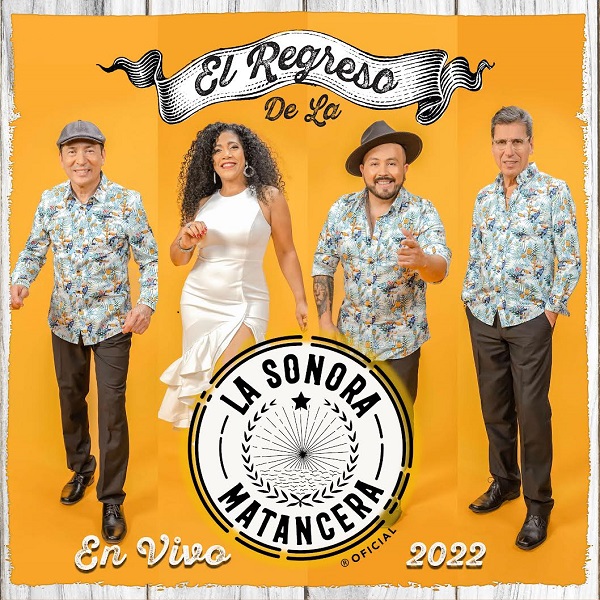
El Regreo de La Sonora Matancera 2022 2023

Members

Trumpets: Calixto Leicea and Pedro Knight

Double Bass: Elpidio Vázquez, replacing his father Pablo Vázquez, “Bubu”.

Piano: Lino Frías

Timbales, Bongó and Campana: José Rosario Chávez “Manteca” Chávez

Tumbadora: Ángel Alfonso Furias “Yiyo”.

Guitar and Choir: Rogelio Martínez

Maracas and Chorus: Carlos Díaz Alonso “Caíto”.

Claves and Choir: Bienvenido Granda.

Last January 13, 2023 they turned 99 years old and are still going strong from generation to generation.

Source:

Enrrique “Culebra” Iriarte, Venezuelan pianist, arranger and orchestra conductor.

Bibliography: Ecured Cuba

La Sonora Matancera 

You can read: Carlos “Patato” Valdés one of the best percussionists in the history of Latin Jazz

  • « Go to Previous Page
  • Page 1
  • Interim pages omitted …
  • Page 19
  • Page 20
  • Page 21
  • Page 22
  • Page 23
  • Interim pages omitted …
  • Page 33
  • Go to Next Page »

International Salsa Magazine (ISM) is a monthly publication about Salsa activities around the world, that has been publishing since 2007. It is a world network of volunteers coordinated by ISM Magazine. We are working to strengthen all the events by working together.