• Skip to primary navigation
  • Skip to main content

International Salsa Magazine

  • HOME
  • Previous editions
    • 2026
      • ISM / April 2026
      • ISM / March 2026
      • ISM / February 2026
      • ISM / January 2026
    • 2025
      • ISM / December 2025
      • ISM / November 2025
      • ISM / October 2025
      • ISM / September 2025
      • ISM / August 2025
      • ISM / July 2025
      • ISM / June 2025
      • ISM / May2025
      • ISM / April 2025
      • ISM / March 2025
      • ISM / February 2025
      • ISM / January 2025
    • 2024
      • ISM / December 2024
      • ISM / November 2024
      • ISM / October 2024
      • ISM / September 2024
      • ISM / August 2024
      • ISM / July 2024
      • ISM / June 2024
      • ISM / May 2024
      • ISM / April 2024
      • ISM / March 2024
      • ISM / February 2024
      • ISM / January 2024
    • 2023
      • ISM / December 2023
      • ISM / November 2023
      • ISM / October 2023
      • ISM – September 2023
      • ISM – August 2023
      • ISM July 2023
      • ISM Edition June 2023
      • ISM – May 2023
      • ISM April 2023
      • ISM March 2023
      • ISM February 2023
      • ISM January 2023
    • 2022
      • ISM December 2022
      • ISM November 2022
      • ISM October 2022
      • ISM September 2022
      • ISM August 2022
      • ISM July 2022
      • ISM June 2022
      • ISM May 2022
      • ISM February 2022
      • ISM January 2022
    • 2021
      • ISM December 2021
      • ISM November 2021
      • ISM October – 2021
      • ISM September 2021
      • ISM August 2021
      • ISM July 2021
      • ISM May 2021
      • ISM April 2021
      • ISM June 2021
      • ISM March 2021
      • ISM February 2021
      • ISM January 2021
    • 2020
      • ISM December 2020
      • ISM November 2020
      • ISM October 2020
      • ISM September 2020
      • ISM August 2020
      • ISM July 2020
      • ISM June 2020
      • ISM May 2020
      • ISM April 2020
      • ISM March 2020
      • ISM February 2020
      • ISM January 2020
    • 2019
      • ISM December 2019
      • ISM November 2019
      • ISM October 2019
      • ISM Septembre 2019
      • ISM August 2019
      • ISM July 2019
      • ISM June 2019
    • 2016
      • ISM December 2016
  • Spanish
  • Download Salsa App
    • Android
    • Apple

Search Results for: King of Mambo

Benny Moré. The story of Cuba’s biggest crowd idol

Latin America / Cuba / La Habana

Who is Benny Moré? He is not just another musician, he is unanimously the most brilliant popular artist that has existed on the Afro-Cuban island. He is the symbol, the myth, the legend, it is undoubtedly the summary of the popular, rich and abundant music of Cuba.

Benny Moré symbolizes the peasant “Guateque”, the “Sarao”, the bohemian, the coffee, the bar, the theater, the party, carnivals, the show. “El Bárbaro del Ritmo” was the most popular in Afro-Cuban music.
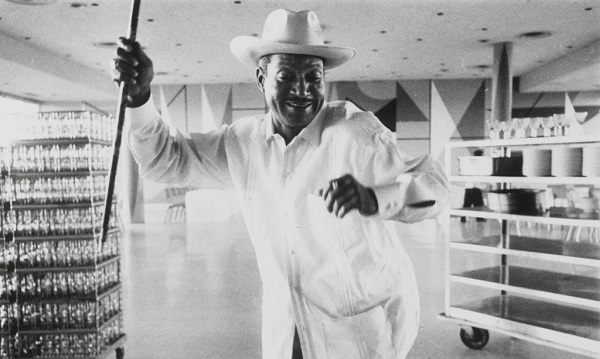
Benny Moré
Benny Moré

He was born on August 24, 1919 at seven in the morning in the Pueblo Nuevo neighborhood of the town of Santa Isabel de las Lajas, belonging to the Cienfuegos province. His parents were Virginia Moré and Silvestre Gutiérrez, and Benny was the oldest of 18 siblings. His last name Moré came from Ta Ramón Gundo Moré (slave of the Count Moré), who, according to the tradition of the Congos, was his first king in Santa Isabel de las Lajas.

Benny was gifted with a fluent tenor voice that gave life with great expressiveness and this context was definitive for his future career in music. He learned to play the insundi, the yuka drums, the Makuta and Bembé, invocators of deities, with whom he not only sang and danced to perfection, but also played the son, the guaracha and the rumba.

Since he was a child he expressed his great vocation for music, he would spend all day humming a song or improvising and directing ensembles composed of machetes, bongos made with milk cans, guitars made with a board and nails with strings of string sew, two sticks as keys, and so on.
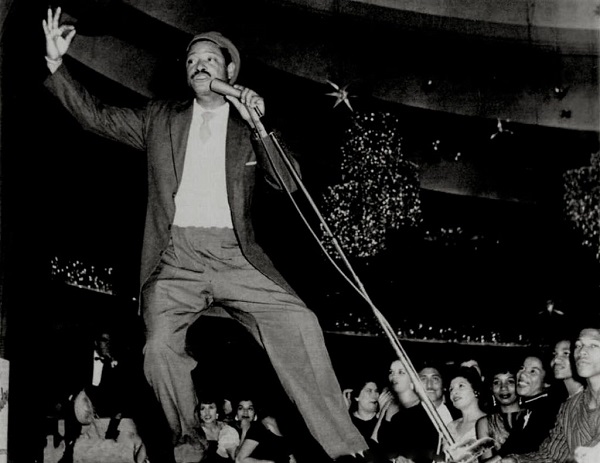
Benny Moré singing
Benny Moré singing

Moré was a teacher in all genres of Cuban music

The “Bárbaro del Ritmo” could always be found standing on a table singing and playing, surrounded by listeners. Bartolomé spent his childhood and adolescence, with no opportunity for study or permanent employment. Like his brother Teodoro, Bartolomé was enrolled in the School of Public Instruction “José de la Luz y Caballero”, where he always stood out for his conduct and application.

Why is the Bacardi symbol a bat?

Since he was a child, Moré had skills for singing and improvisation, which he demonstrated when he was barely seven years old, when he would run away for a few hours to entertain parties in the neighborhood and loved singing notes with his mother, to prevent her from sleeping while ironing late into the night.

His voice was particularly highlighted in the Son Montuno, the Mambo, and the Bolero
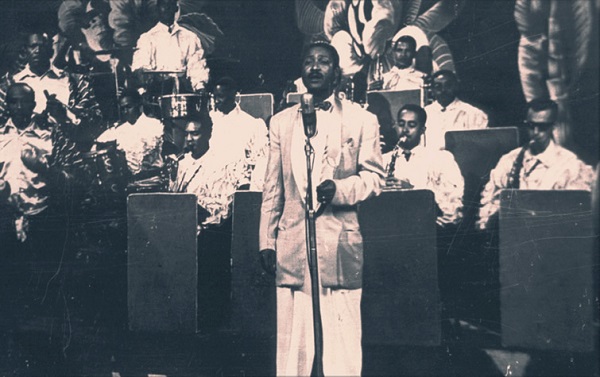
Benny Moré live
Benny Moré live

Benny went through a complicated life, but he was willing to do anything to achieve his dreams of triumph. With almost 20 years of age, in 1940 Bartolomé said goodbye to his mother at the Hotel Ritz in the Central Vertientes, where she worked, and traveled hidden, indistinctly, by train and truck to the City of Havana. He was definitely in the mission to try his luck in the bustling city!

Since then, he was seen by the famous neighborhood of Belen, with a guitar acquired in a pawnshop, wandering through cafes, bars, hotels, restaurants, and even brothels. That same year he told his cousin: “I stay in Havana, I rise up here or I sink”. From that moment began the saga of concerts at the bars of the port avenue … Once remembering those times, he confessed: “I threw myself into the street with a guitar on my shoulder to sing to tourists. I am not ashamed of it; Carlos Gardel also did it in Argentina and is the king of tango. ”

At that time, the CMQ station began broadcasting the Supreme Court of Art. Bartolomé Maximiliano Moré appeared in that program that Germán Pinelli and José Antonio Alonso encouraged. After presenting it and at the moment of beginning his presentation, they rang the bell.

Later Bartolomé returned to Monte and Prado to the Supreme Court and on this second occasion he won the first prize. Possessing a fresh voice, beautiful timbre, sensual and evocative. Bartolo sang with all the inner strength that claimed the Cuban rhythms.

In one of his raids, Siro Rodríguez, member of the famous Matamoros Trio, heard him sing in the bar of El Templete restaurant, on Avenida del Puerto, and was very impressed by the boy’s voice and tuning.

The entry of Bartolomé to the group of Miguel Matamoros was a fact and can be considered as his real debut as a professional singer, because with this group he had for the first time a steady job as a musician and made his first recordings on 78 revolutions per minute discs.

Benny knew he had a voice, the luck and a destiny. Perhaps he sensed it, intuited it, or simply trusted his triumph. When he started with Miguel Matamoros and his group, I already wanted to make changes in the picket line.

In Mexico, when Miguel became ill, he was able to direct the group, took control and enjoyed the “Cuates” in El Patio cabaret. When the contract ended, the Matamoros group returned to Havana, but without Bartolomé, who decided to try his luck by himself in Mexico.

When he communicated his decision to the famous author of El Son Siembra Su Maíz, Miguel Matamoros said: “It’s very good, but you have to change the name of Bartolo, which is very ugly. With that name you will not go anywhere”, You are right, Bartolo replied, from today I will call myself Benny, yes, Benny Moré. ”

The owner of the business was hypnotized by the very tasty atmosphere that Benny led as director. After singing with several push orchestras in Mexico, he planted himself beautifully with the most famous band of the 20th century: Pérez Prado and the Cuban mambo.

With this meeting two geniuses joined: Benny Moré had talent and natural intuition; in Pérez Prado, in addition to all that, the mastery of technique and an enormous facility to make music. With Perez Prado he conquered the noble Aztec people on tours of different states of that sister country.
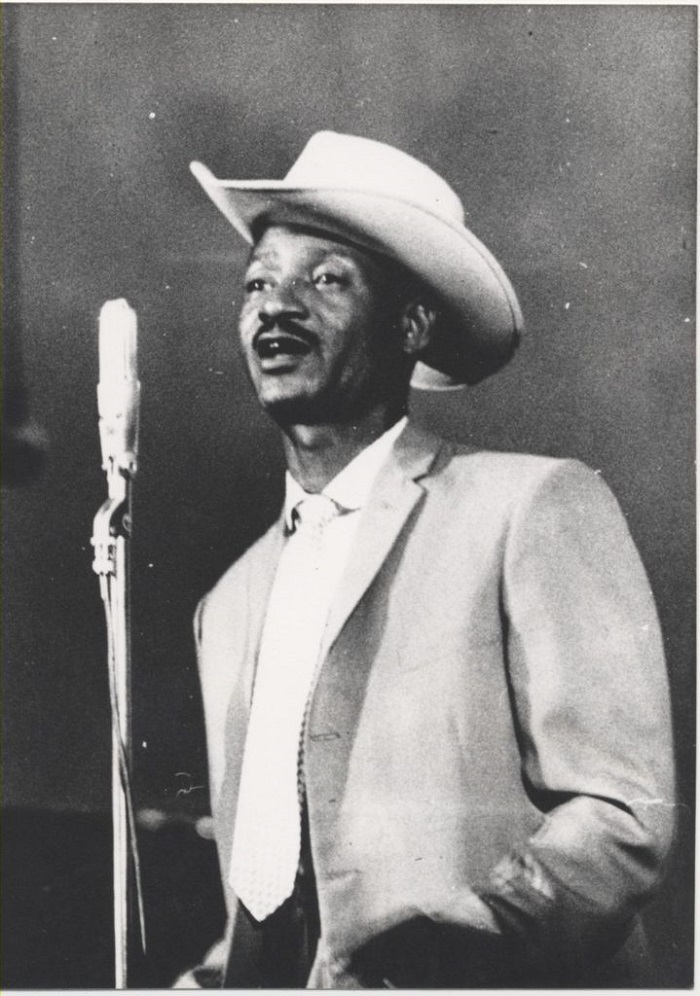
Benny Moré
Benny Moré

Due to the success achieved by Benny, the town gave him the title of “Prince of Mambo” and Pérez Prado, “King of Mambo“. He sang like nobody else in the world and began his international promotion.

By that time, Benny’s voice was known in Panama, Colombia, Brazil, Puerto Rico, Haiti, Venezuela, and of course, in his native Cuba.

In the joyful world of nightlife in Mexico City, the Cuban singer performed in many theaters, including Margo, Blanquita, Folliers and Cabaret Waikiki, alternating with renowned artists such as the legendary star Yolanda Montes (Tongolele), the Mexican Toña la Negra, and the outstanding cuban pianist and composer, Juan Bruno Tarraza, of whom Benny sang the bolero “It’s already twelve o’clock”.

Benny participates in many films and upon his return to Cuba, he was already certain that he had to be counted on.

The nostalgia for his family, friends, for the Homeland, and the desire to obtain laurels on his Island, where he considered that he was not known enough, made him return to his beloved Lajas at the end of the year 50. The ‘sonero mayor’ was definitely in Cuba, where he had left behind comforts, material and spiritual satisfactions, friends and even the loves that the successful do not usually lack.

During the following two years he acted by contract for a program called “De fiesta con Bacardí”, which was aired by the Eastern radio station with the orchestra of Mariano Mercerón, and the singers Fernando Álvarez Pacho Alonso.
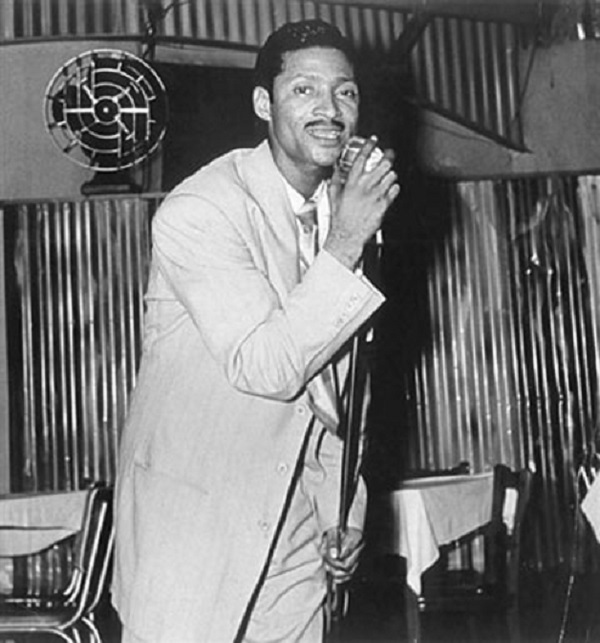
Benny Moré
Benny Moré

As Benny Moré was an exclusive artist of RCA Víctor, this firm claimed his presence in Havana to make different recordings. In order to fulfill this commitment he gave alternative trips to Havana and thus maintained his responsibility with the eastern radio station.

After the commitment at Casa Bacardí and maestro Mercerón, in 1952 Benny Moré returned to Havana.

Certainly, Benny concluded an era, closed a chapter of Cuban musical life, that stage of nightlife that was already declining.

Benny’s life was related to a world that has already disappeared. Then everything became myths and legends … Benny kept on singing, but now it would be on scratch discs, which were digitized.

The “oidores” (listeners) will be transported in time, imagine the bars of the Havana port full of curious tourists. From Chinese restaurants selling “complete” to poor people who passed their hats, after singing through the streets of Havana – Cuba.
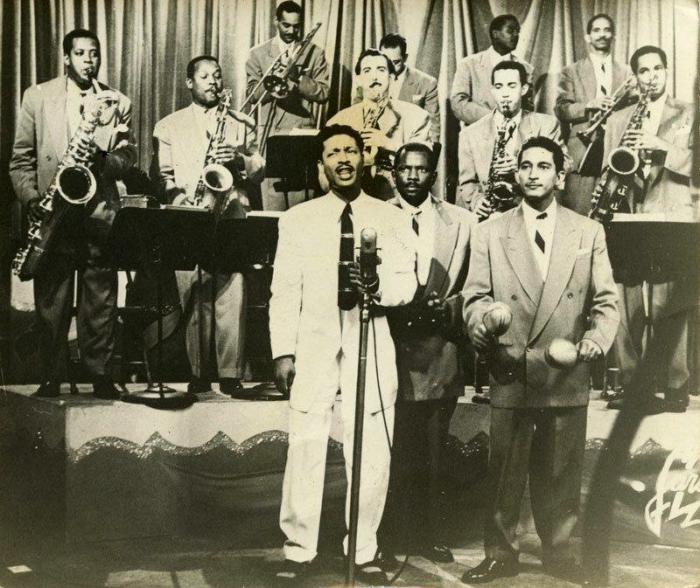
Benny Moré in concert

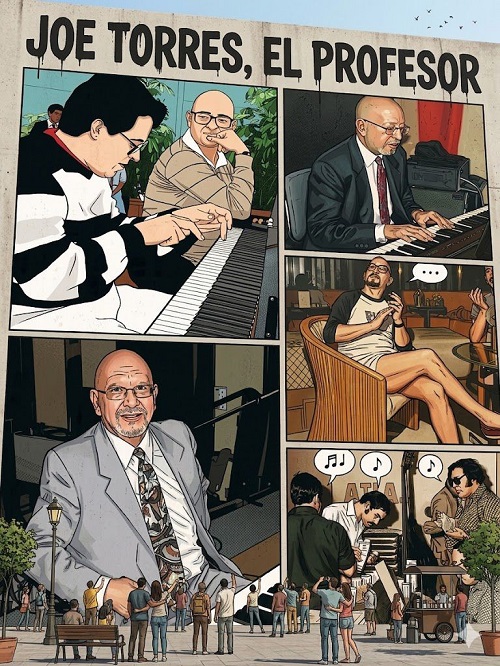
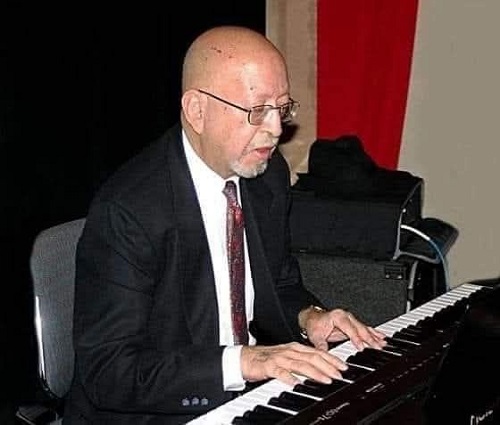
The Piano That Schooled the World the Eternal Legacy of “Professor” Joe Torres

The history of salsa is not only written by the voices of its idols or the thunder of its brass; it is written, fundamentally, on the black and white keys of those who knew how to sustain the pulse of an era.

On April 13, 2020, in the quiet of a Bronx hospital, the “backbone” of Salsa Dura passed away at the age of 76: José Manuel Torres, known universally as “Professor Joe.”

Jose Manuel Torres Professor Joe Torres passed away on this day, April 13, 2020, in the Bronx, New York City, at the age of 76

Born in Manhattan on November 29, 1943, a son of the Puerto Rican diaspora from Guayama and Ponce, Torres embodied the pure essence of the Nuyorican.
Raised on Fox Street, his destiny was sealed in the hallways of P.S. 52 an elementary school that would eventually become the academic sanctuary of Latin music in the South Bronx.

Excellence as the Standard: From Neighborhood Sound to Musical Glory

His nickname, “The Professor,” was no mere poetic license. In a musical ecosystem where many relied on intuition, Joe possessed an almost mathematical skill: sight-reading.

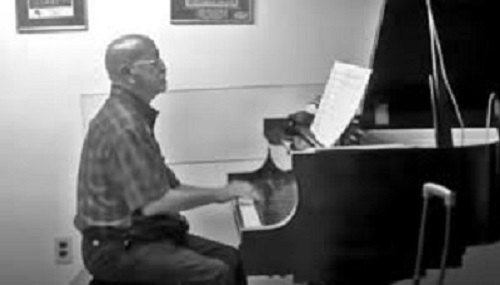
Un pianista maravilloso, que no se parece a nadie

His technical precision allowed him to navigate elegantly between formal discipline and “street” flavor (sabor).

After debuting in the 1960s with the “King of the Bass,” Bobby Valentín, on seminal albums like Bad Breath, his career took a definitive turn when he joined the orchestra of a young, rebellious Willie Colón.

Replacing the virtuoso Mark Dimond, Torres didn’t just fill a void; he defined an aesthetic. For a quarter-century, he was the harmonic architect behind the two greatest giants of the genre: Willie Colón and Héctor Lavoe.

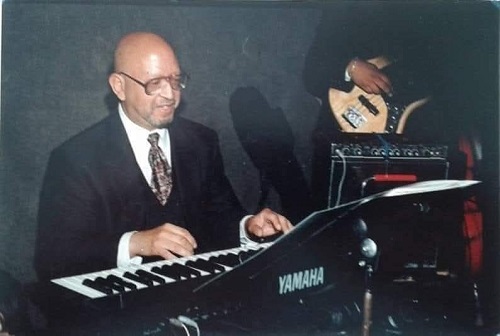
“As the pianist for the band, Professor Joe Torres was excellent,” Colón would recall years later.

It is his piano that resonates in the urban chronicles of Cosa Nuestra; the piano that provides the festive nostalgia in both volumes of Asalto Navideño a cornerstone of Puerto Rican identity and the piano that sustains the rhythmic tension in classics like The Big Break (La Gran Fuga) and Lo Mato.

There was no Fania milestone where Joe did not leave his mark, from the social lyricism of Siembra and Maestra Vida with Rubén Blades, to the raw power of Lavoe’s solo career.

Joe acompañó a Willie Colón y Héctor Lavoe en gran parte de sus grabaciones

Humility in the Shadows: The Man and the Legend

Despite participating in more than thirty productions that are now considered world cultural heritage, Joe Torres never felt the urge to claim the spotlight of a frontman.

As his colleague José Mangual Jr. noted, his humility was as vast as his talent. He preferred the rigor of the studio and the camaraderie of the stage, balancing his musical genius with his work as a computer technician a duality that spoke to his sharp intelligence and adaptability.

El Piano que Dictó Cátedra el Legado Eterno del “Profesor Joe” Torres

His legacy was celebrated in the year 2000 during the historic reunion concert of the “P.S. 52 Alums,” immortalized in the documentary From Mambo to Hip Hop. There, surrounded by titans like Ray Barretto and Manny Oquendo, Joe remained the same: a man with a kind smile and a sharp mind who, according to Blades, represented the true “gentlemanliness” of salsa.

Today, years after his passing, the void at the piano bench remains felt. The “Professor” didn’t just teach people how to read music; he taught that true greatness does not require noise.

His music lives on in every descarga, reminding us that as long as there is a piano playing in the Bronx, the echo of José Manuel Torres will never stop schooling the world.

Also Read: International Salsa Magazine presents essential trivia and facts about Héctor Lavoe.


Europe / May 2026

Cafe Berlin 2025Radio Gladys Palmera 2025

Karina Bernales present May 2026 FESTIVALS

Albania circular flag
ALBANIA
Albania Afro Fest 2026

ALBANIA AFROLATIN

May 6 / 12, 2026

Grand Blue Fafa Resort & Spa
Long Beach, Golem
Kavaje 1000, Albania

€ 135

Bulgaria JPG
BULGARIA
Salsa Holiday 2026

13th Paradise  Salsa Holiday

May 29 / 31, 2026

Hotel Kotva Sunny Beach
Slanchev Bryag 8240
Sunny Beach, Bulgaria

€ 190

Croatia circle flag
CROATIA
Fiume Fusion 2026

Fiume Fusion Festival

May 16 / 18, 2026

Uljarska 1
51000 Rijeka. Croatia

€ 100

Czech Republic circular flag
CZECHIA
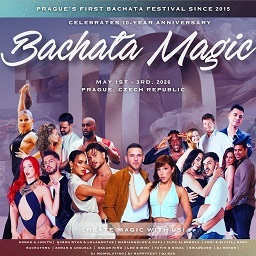
Bachata Magic 05 2026

Bachata Magic Festival Prague

May 01 / 04, 2026

PernerKarlín
Pernerova 47, 18600
Prague, Czechia

€ 100

Prague Salsa Marathon 2026

Prague Salsa Marathon

May 7 / 11, 2026

Romantic Grotta
Havlíčkovy Sady
Prague 2 12000, Czechia

€ 238

Denmark circle flag
DENMARK
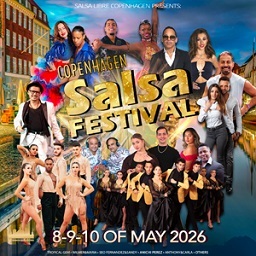
Copenhagen Salsa 2026

Copenhagen Salsa Festival

May 8 / 10, 2026

Kedelhallen
Nyelandsvej 75A, 2000
Frederiksberg, Denmark

DKK 1,500

France circle flag
FRANCE
Spring Break Latino 2026

Spring Break Latino

 May 13 / 17, 2026

Camping Arinella Bianca
769 Strada di Bruschettu 20240 Ghisonaccia
Corse, France

€ 225,64

Germany circular Flag
GERMANY
Salsafestival Augsburg 2026

15th FESTIVAL AUGSBURG

May 1 / 3, 2026

Parktheater im Kurhaus Göggingen
Graf-von-Seyssel-Straße 9
86199 Augsburg, Deutschland

€ 180

Cologne Salsa Congress 2026

Cologne Salsa Congress

May 22 / 24, 2026

MamboTwins Salsa Events Gbr
Sebastian Bibrach & Mehdi Harris, Hebbelstr, 54 50968
Cologne, Germany

€ 150

Greece circular flag
GREECE
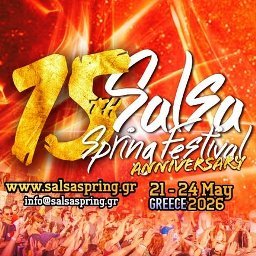
Salsa Srping Greece 2026

15th Salsa Spring Festival

May 21 / 24, 2026

Wyndham Loutraki Poseidon
Resort
Posidonos 48
Loutraki 203 00, Greece

€ 130

Italy circle flag
ITALY
Campeonato para Bailadores 2026

Campeonato para Bailadores

May 8 / 10, 2026

Piazzale Torino 16
48015 Milano Marittima
Ravenna, Italy

€ 90

SALSA ON TOUR 2026

SALSA ON TOUR

May 7 / 10, 2026

Garden Toscana Resort
Via dei Cavalleggeri, 1, 57027
San Vincenzo LI, Italy

€ 325

Salsa on the beach 2026

Salsa on the Beach

May 8 / 10, 2026

Hotel Bibione Palace
Via Taigete, 20, 30020
Bibione VE, Italy

Lithuania circle flag
LITHUANIA
Vilnius Salsa Festival 2026

Vilnius Salsa Festival

May 14 / 18, 2026

House of Polish Culture
Naugarduko g. 76
Vilnius, Lithuania

€ 160

Poland flag
POLAND
City Social Experience 2026

City Social Experience

May 29 / 31, 2026

SoSalsa
Elektryków 1, 80-863
Gdańsk, Poland

PLN 580

Portugal Circular Flag
PORTUGAL
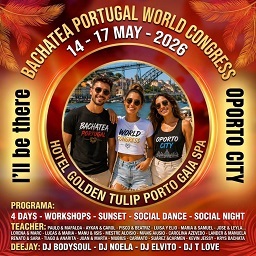
Bachatea Portugal 2026

Bachatea Portugal World Congress

May 14 / 17, 2026

Golden Tulip Porto Gaia Hotel
Praia de Lavadores, R. da Bélgica 86, 4400-044
Vila Nova de Gaia, Portugal

€ 100

Serbia And Montenegro circular flag
SERBIA AND MONTENEGRO
Cubanero 2026

Cubanero

May 7 / 10, 2026

SPENS
Sutjeska 2, 21000
Novi Sad, Serbia

€ 134

Spain Flag
SPAIN
Caribbean 2026

Caribbean Dance Festival

May 8 / 10, 2026

Hotel Don Ángel
Carrer del Pla de la Torre, 14 Santa Susanna
Catalonia 08398, Spain

€ 109

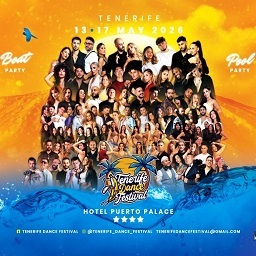
Tenerife 2026

Tenerife Dance Festival

May 13 / 17, 2026

Hotel Puerto Palace
Calle Doctor Cobiella Zaera 2, 38400
Puerto de la Cruz Tenerife, Spain

€ 125

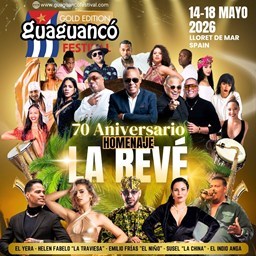
Guaguanco La Reve 2026

Guaguancó Festival

May 14 / 18, 2026

Hotel Evenia Olympic Park
Carrer Senyora de Rossell 35, 17310
Lloret de Mar, Spain

€ 100

eSencia Dance Festival 2026

eSencia Dance Festival

May 15 / 17, 2026

URH Palacio de Oriol
Calle Cristóbal de Murrieta Hiribidea 27, 48980 Santurtzi, Spain

€ 109

Valencia Baila 2026

Valencia Baila Peñíscola Edition

May 21 / 24, 2026

Hotel Spa Peñíscola Plaza Suites
Avinguda del Papa Luna 156, 12598 Peníscola
Castelló, Spain

€ 64

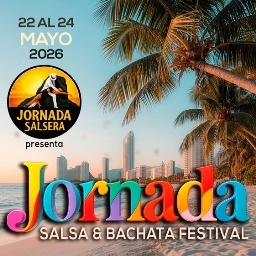
Jornada 05 2026

JORNADA
Salsa & Bachata

May 22 / 24, 2026

Hotel Meliá Benidorm
Av. Dr. Severo Ochoa 1
03503 Benidorm
Alicante, Spain

€ 70

Turkey circle flag
TURKEY
Istanbul 05 2026

Istanbul Dance Festival

May 14 / 15, 2026

Ora Arena
Altıntepsi, Yeni Çiftlik Cd.
34035 Bayrampaşa
İstanbul, Türkiye

€ 140

Calibrated maracasMartinez attorney

Directory of European nightclubs

Czech Republic circular flag
CZECHIA

La Macumba 2024
La Macumba
Štefánikova 230/7 150 00
Prague, Czech Republic

fRANCE FLAG
FRANCE

Canela
Canela Club Latino Paris
77 Rue du Faubourg du temple 75010
Paris, France

Cuba Compagnie
Cuba Compagnie Café
48 BD Beaumarchais 75011
Paris, France

Cubana
Cubana Café
47 rue Vavin 75006
Paris, France

La Pachanga
La Pachanga Officiel
8, rue vandamme 75014
Paris, France

La Peña
La Peña Saint Germain
3 passage de la Petite Boucherie 75006
Paris, France

Balajo
Le Balajo
9 rue de Lappe 75011
Paris, France

Pachamama
Pachamama PARIS
46 rue du Faubourg Saint Antoine 75012
Paris, France

Selsero
Salseroparis
9 Rue du Petit Pont, 75005
Paris, France

Germany circular Flag
GERMANY

Cascadas
Cascadas
Ferdinandstr. 12
20095 Hamburg-Mitte, Germany

Havanna
Havanna Berlin
Hauptstr. 30
10827 Berlin-Schöneberg, Germany
La Macumba - The Real Latin Club in Hamburgs
La Macumba – The Real Latin Club in Hamburgs
Adenauerallee 3 20097
Hamburg, Germany

Latin Palace Changó
Latin Palace Changó
Münchener Strasse 57
60329 Frankfurt, Germany

SODA
Soda Club Berlin
Schönhauser Allee 36
10435 Berlin, Germany

Malta Circle flag
MALTA

Bario Latino Malta venue
Barrio Latino Malta
Ghar il Lembi Street SLM1562 Sliema
Central Region, Malta

Poland flag
POLAND

Teatro Cubano
Teatro Cubano Warsaw
ul. Aleksandra Fredry 6 00-097 /> Warsaw, Poland

Spain Flag
SPAIN

ACM City
ACM CitY
Carrer Can Pallarès 2, Cerdanyola del Vallès
08290 Barcelona, Spain

Antilla
Antilla Barcelona
C/ d’Aragó, 141
08015 Barcelona, Spain

Azucar
Azúcar SalsaDisco
Calle de Atocha, 107
28012 Madrid, Spain

Disco Bar Cuba Live
Cuba Live
Ramón y cajal número 2
07011 Palma de Mallorca, Spain

El Son
Discoteca El Son
C. de la Victoria, 6
28012 Madrid, Spain

Prisma Discoteca
Discoteca Prisma
C. de Alcalá, 192
28028 Madrid, Spain

Discoteca El Edén Boliviano
El Edén Boliviano
Carrer Gremi de Tintorers, 49A
07009 Palma, Illes Balears, Spain

Mojito
Mojito Club
Rosselló, 217
08008 Barcelona, Spain

Morena
Morena Barcelona
calle 11 num.29
08860 Castelldefels, Spain
Que Chimba
Qué Chimba
Av. del Vallès, 117
08223 Terrassa, Barcelona, Spain
Sala Olvido Madrid
Sala Olvido
C/ Olvido 15
28026 Madrid, Spain
Seven Dance
Seven Dance (Dio Club)
Carrer del Perill 10
08012 Barcelona, Spain

The Host Madrid
The Host
C/ Ferraz nº 38
28008 Madrid, Spain
+34 918 05 36 48

United Kingdom circular flag
UNITED KINGDOM

Salsa Soho
Bar Salsa Soho
96 Charing Cross Rd
WC2H 0JG London, UK

Salsa Temple
Bar Salsa Temple
Victoria Embankment, Temple
WC2R 2PH London, UK

Juju's
JUJU’s Bar & Stage
Ely’s Yard 15 Hanbury Street
E1 6QR London, UK

Revolucion de Cuba
Revolucion de Cuba Leeds
64-68 Call Lane
LS1 6DT Leeds, UK

LightHouse
The LightHouse Bar & Club
62 Rivington Street
EC2A 3AY London, UK


Rafaelito and his career between Munich and New York

We had a very personable and honest conversation with Rafael Pareja Ibañez, who via WhatsApp has given us a few minutes of his busy schedule to tell us a bit about his fascinating career to date and the group he currently leads, Rafaelito Y Su Tumbao. 

The artist, born in Lima, Peru, has a huge love for music and remains intact to date, so he says it is a pleasure to share the story of how he came to pursue it professionally, no matter how many times he tells it.

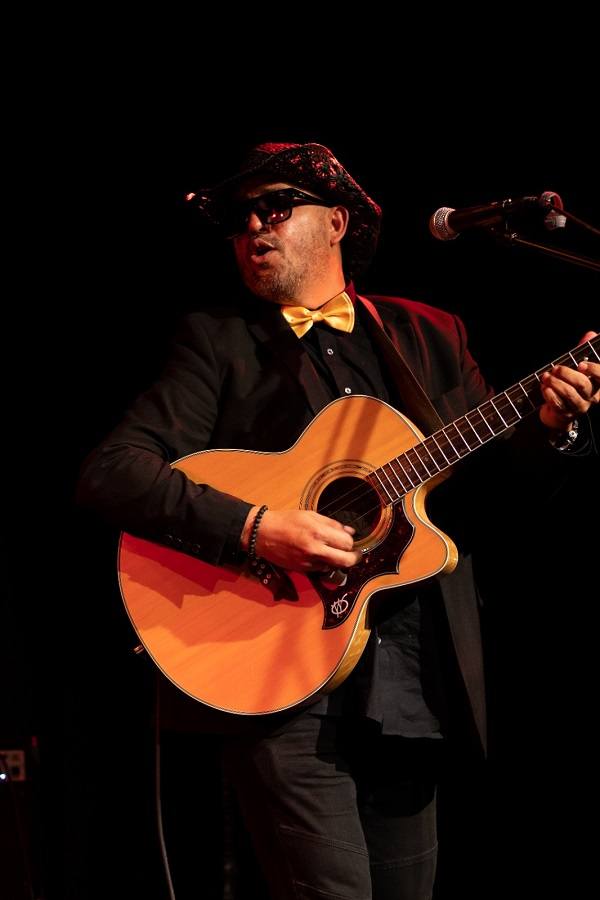
Rafaelito playing
Rafaelito playing the guitar live

Rafael’s beginnings in music

Rafael was first inspired by the artists his parents used to listen to at home, including La Sonora Matancera, Celia Cruz, Tito Puente, and many others. Family social gatherings always featured iconic songs by these stars, so he could not help but be interested in music at the early age of 10.

It all started when his father caught him beating some paint buckets to make it look like he was playing a drum set on the roof of their house, which led him to enroll his child in a music school to take guitar lessons. While it is true that this was the first instrument he learned to play, he also plays the baby bass in salsa and the piano together with all the percussion instruments.

At that time, what the young man played the most was rock and pop because the radio and other media left little room for Latin music. In fact, Rafael formed his first rock band at 16, as this was the genre with which young people identified the most in the 1980s.

Move to Germany

At 20 years of age, Rafael decided to move to Germany, specifically to Munich, where he lived for more than 27 years. It was there that he came into contact with people of other nationalities and had far more access to Latin music, especially Peruvian music, which surprised him greatly. He also got to listen to international stars such as Eddie Palmieri, Miguelito Cuní, and Arsenio Rodríguez.

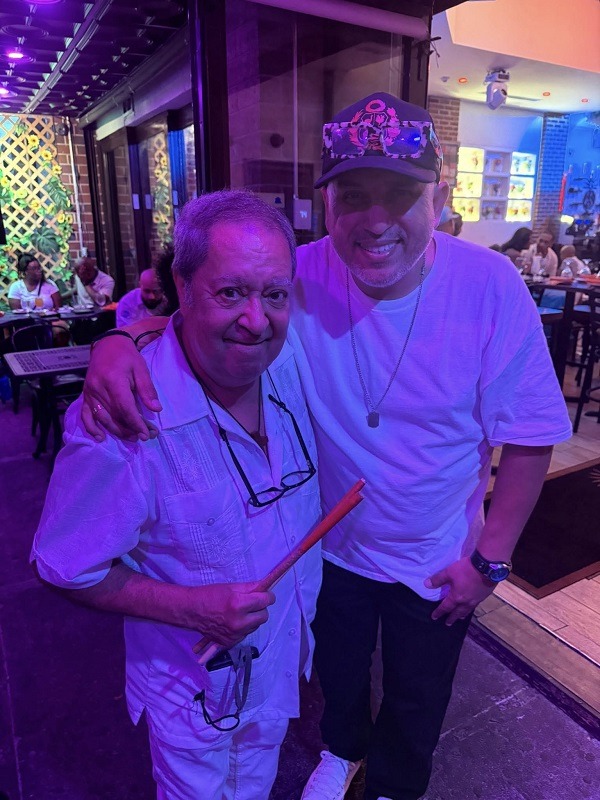
Rafaelito and Nicky Marrero
American Latin jazz percussionist Nicky Marrero and Rafaelito at Mamajuana Cafe in the Bronx

It was also in Munich where he began to have his first professional experience together with major musical groups from there such as the Sexteto Melaza, where he played alongside musicians from different parts of the world. At a student barbecue, Rafael was hanging out with many Latinos, and they began to sing and play instruments together, leading them to form a group, which they named Melaza. During that time, he dedicated himself to play salsa, guaracha, son, bolero, and cha-cha-cha in a sextet format.

The group featured a guitarist, a bassist, a conga player, a timbalero, a bongo player, and a singer. This sums up his first musical experience in Germany, which lasted about a year and a half. It also helped him draw the attention of other musicians in the city’s music scene, who convinced him to join other projects that were being created.

Another of those projects included a trio of young musicians called Madera Limpia which was founded in 2005, when rap, reggaeton, reggae, and many other genres mixed with Latin rhythms such as changüí or kiribá were super trendy. It turns out that a Romanian couple traveled to Cuba, produced a film called “Paraíso,” and went on a concert tour through Europe and North Asia. Therefore, they needed to hire many musicians, including the members of Madera Limpia, who contacted Rafael through connections and asked him to be their bassist. The Peruvian accepted the offer and toured all those places with these musicians, an experience he talks about with great affection.

Back in Munich, he met Lou Bega, the creator of the hugely popular swing-pop cover of Pérez Prado’s “Mambo No. 5,” which stayed at number one for 36 consecutive weeks in the United States. When his producer wanted to find a band to accompany him, there were very few Latin musicians in the city and Rafael was one of them. Obviously, they called him and his colleagues to work on some demos featuring Bega’s vocals and trumpet samples. After being selected, he became the director of his live band and accompanied him on many concerts in Europe between 2007 and 2008.

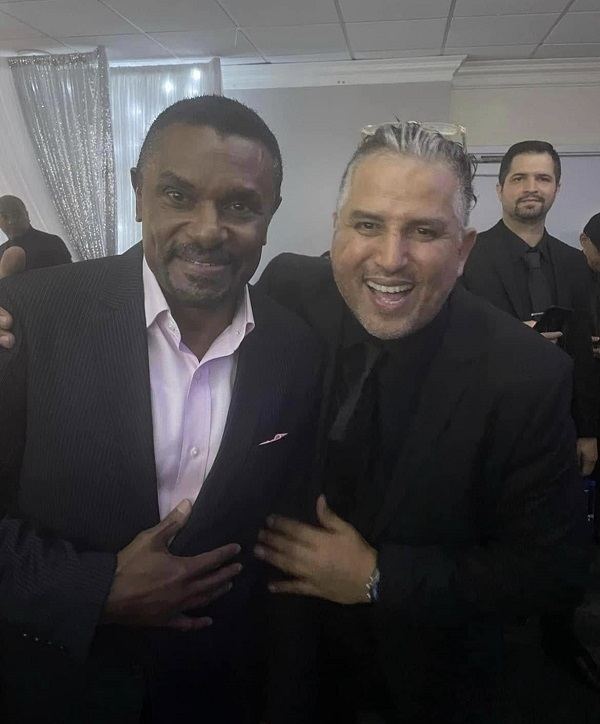
El Canario and Rafaelito
José Alberto ”El Canario” and Rafaelito

Rafaelito Y Su Tumbao

Right there in Munich, Rafael finally made up his mind and formed his own musical group, Rafaelito Y Su Tumbao, which currently has branches in Munich, Lima, and New York, where the artist currently resides. Rafael arrived in this city as early as 2020, which is when he got to perform with stars such as Charlie Aponte, Andy Montañez, Jose Alberto “El Canario,” Hildemaro, and many others. When he saw how good the human material was in his new place of residence, he also founded Rafaelito Y Su Tumbao in New York with musicians from there. 

What is striking about his move to New York is that it was motivated by Rafael’s reunion with his childhood sweetheart in Peru, whom he reconnected with in 2019. It turns out that his partner was living in New York, so he jumped on this new opportunity that life offered him and made the romantic decision to cross the Atlantic again and marry her. This radically changed his life both personally and professionally, but he’s glad he did.

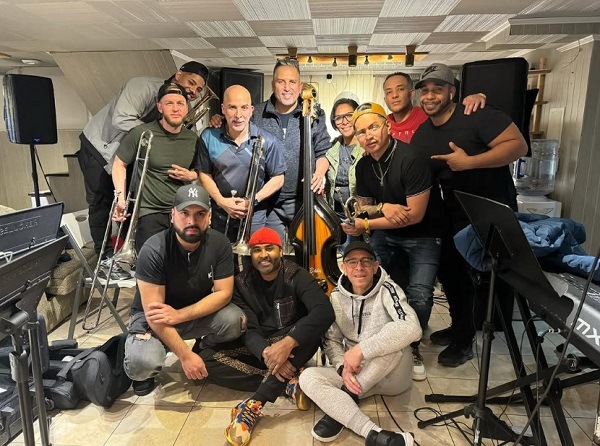
Members of Rafaelito Y Su Tumbao
Members of Rafaelito Y Su Tumbao in New York
Line Up :
Rafael Pareja – Baby Bass
Ray Cabrera – Piano
Andres Garces – Vocal
Karla Olivo Moreno – Vocal
Dennis Hernandez – Trumpet
Christian Gomez – Trumpet
Jimmy Bosch – Trombone
Andre Carpio – Timbal
Hector “ Jereto “ Ferreyra – Congas
Chuito Quintero – Bongo

Read also: Dominican bandleader and musical director Orlando Santana talks about La Makina and his career in general

San Clemente 3rd Salsa Congress

Latin America / Argentina / Buenos Aires
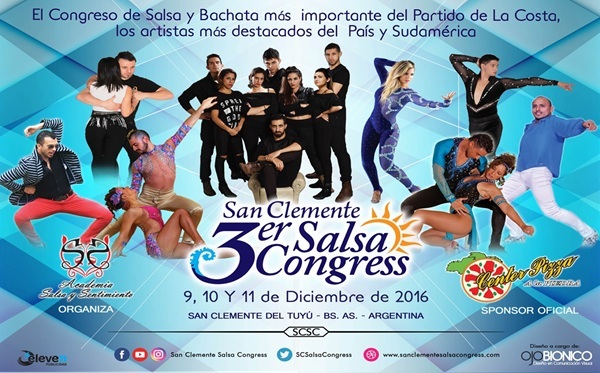
San Clemente 3rd Salsa Congress 2016

San Clemente 3rd Salsa Congress

December 9, 10, and 11, 2016 – San Clemente del Tuyú, Buenos Aires, Argentina

Kicking off this December, we present the 3rd International Congress of Salsa, Bachata, and Caribbean Rhythms. Widely recognized as the most important congress on Argentina’s Atlantic Coast, the event will take place on December 9th, 10th, and 11th in the town of San Clemente del Tuyú, located 185 miles (300 km) from the capital, Buenos Aires. The official sponsor is Center Pizza, with additional support from Tandori Indumentaria SYS.

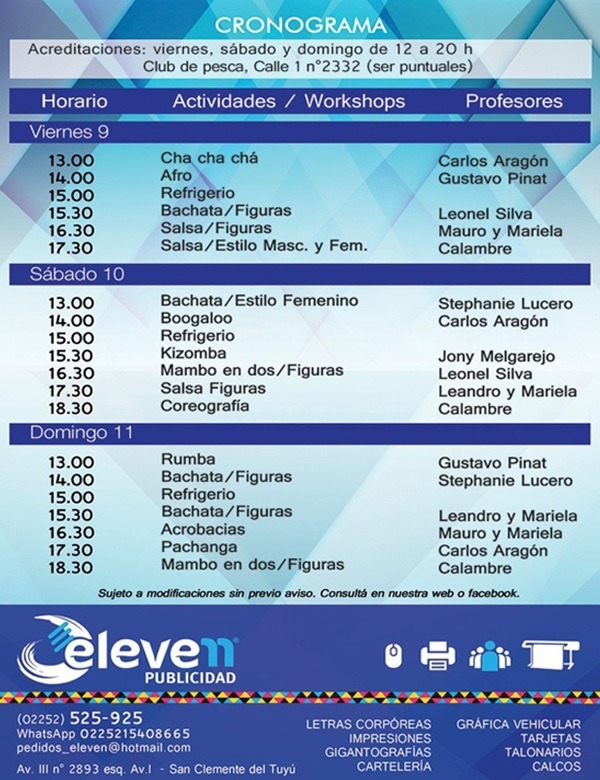
This international congress will bring together dancers, instructors, and aficionados from across Argentina and South America. The event features world-class workshops (professional training) and countless showcases by headlining artists and dance companies from Argentina and neighboring countries. Attendees can also look forward to sets by top-tier DJs and plenty of social dancing.

Dancers - San Clemente 3rd Salsa Congress 2016
Dancers – San Clemente 3rd Salsa Congress 2016

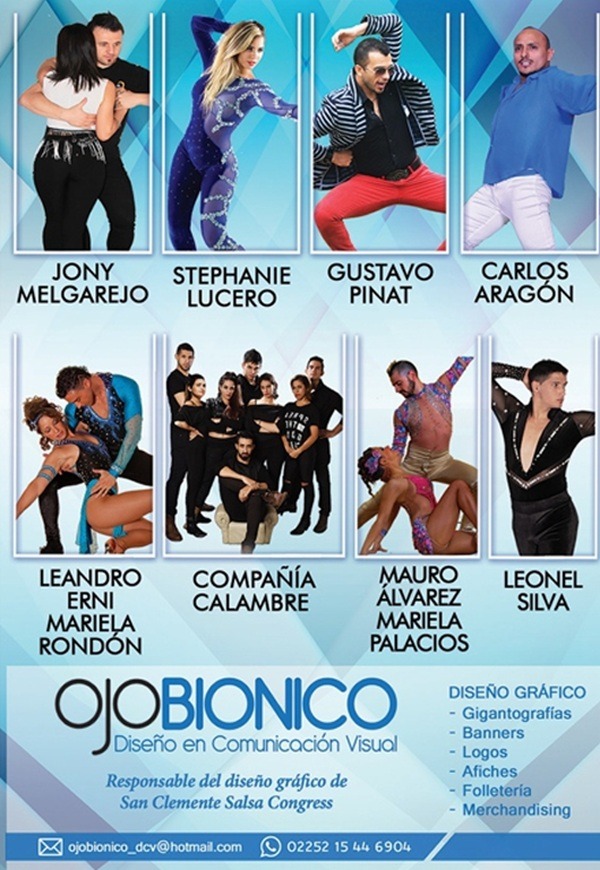
“The following main artists will be performing:”

Stephanie Lucero: Hailing from Buenos Aires, Stephanie is making her first-ever appearance at this Congress. She is widely recognized as one of the most prestigious instructors in the scene, standing out for her ability to dance both lead and follow roles with expertise. Stephanie has refined her skills under world-renowned masters such as Gaston Vidarte, Troy & Jorget, Korke & Judith, Daniel & Desiree, and Ataca & La Alemana. She has also shared the stage with international artists like Daniel Santacruz and Domenic Marte.

Currently, she leads her own all-female choreography group, “Luceros de Fuego.” For this major event, she will be leading two world-class workshops: Partner Bachata and Bachata Ladies’ Styling.

San Clemente 3rd Salsa Congress 2016 Flyers

La Compañía Calambre: Also making their debut at the congress and in the city, Calambre is Argentina’s premier dance company. Widely recognized as 2013 World Champions, they will be hosting three world-class workshops for this massive event. In addition to their incredible showcase, attendees will have the opportunity to enjoy their performances, dance with them, and interact with the team throughout all three days of the congress.

Leandro Erni & Mariela Rondon: Traveling from the city of Mar del Plata, this duo is the reigning Bachata Championship winners. They serve as directors of the Conjunto Clave Academy and are widely recognized as a world-class couple with an extensive international career. Notably, they secured 5th place at the 2015 World Latin Dance Cup in Miami. During the event, they will be hosting two workshops and performing two showcases. You’ll also have the chance to meet them and share the dance floor with them throughout all three days of the congress.

San Clemente 3rd Salsa Congress 2016 Flyers 2
San Clemente 3rd Salsa Congress 2016 - Details
San Clemente 3rd Salsa Congress 2016 – Details

Gustavo Pinat: Originally from Rosario, in the Santa Fe Province, Gustavo has over 19 years of experience in the salsa world. He has trained extensively across Europe and the Americas, including Germany, Switzerland, Spain, Italy, Greece, the U.S., Cuba, and Venezuela. A seasoned professional, he has taught workshops at numerous national and international congresses.

Gustavo is also the organizer of the VIVE CUBA Afro-Caribbean Rhythm Festival held in Rosario. Currently, he serves as the Director of the Bamboleo Salsa Studio in Rosario and leads “RAÍCES,” Argentina’s premier comprehensive training program for Afro-Cuban dance.

Leonel Silva: Hailing from Montevideo, Uruguay, Leonel is ranked among the top seven salsa soloists in the world and is a celebrated figure in his home country. Following his incredible performance at the last event, he returns to the 3rd San Clemente Salsa Congress.

San Clemente 3rd Salsa Congress 2016 - Schedule
San Clemente 3rd Salsa Congress 2016 – Schedule

Carlos Aragon del Carpio: One of South America’s leading figures in the scene, Carlos is a regular at the region’s most prestigious congresses. He is the director of the first South American Mambo “On 2” school in Argentina and has refined his expertise through extensive training in Cuba and the United States.

Our event host will be Silvio González, the director of the Argentina and Puerto Rico Salsa Open. A teacher and dancer with an extensive professional career, he is one of the most prominent figures in our country’s dance scene.

We are also proud to feature our Official DJ: GASTON “TIBURON” TABORDA, a nationally and internationally renowned DJ who headlines the most important congresses and competitions throughout Argentina and South America.

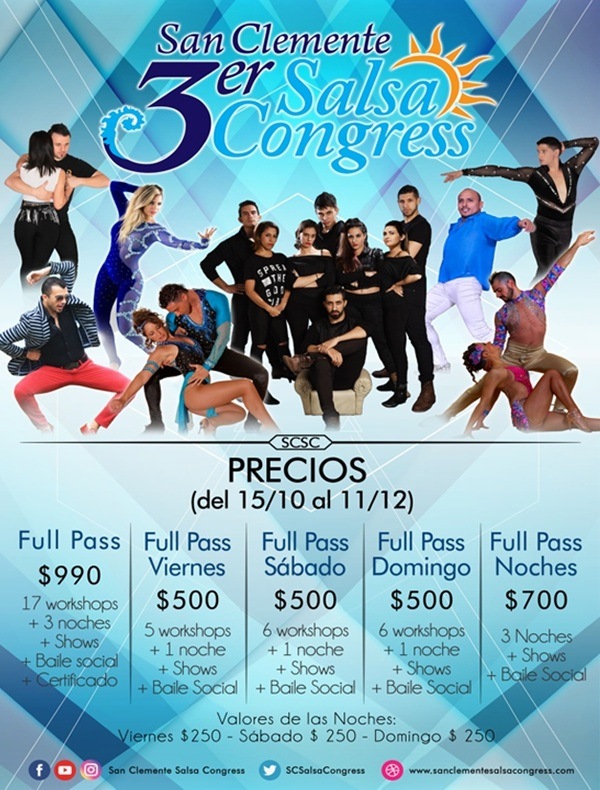
San Clemente 3rd Salsa Congress 2016 - Prices
San Clemente 3rd Salsa Congress 2016 – Prices

You can visit our official website and follow us on social media:

San Clemente 3rd Salsa Congress 2016 - Social Media
San Clemente 3rd Salsa Congress 2016 – Social Media

www.sanclementesalsacongress.com

  • Facebook: San Clemente Salsa Congress
  • Twitter: @scsalsacongress
  • Instagram: San Clemente Salsa Congress
  • YouTube Channel: San Clemente Salsa Congress


  • « Go to Previous Page
  • Page 1
  • Page 2
  • Page 3
  • Page 4
  • Page 5
  • Page 6
  • Interim pages omitted …
  • Page 33
  • Go to Next Page »

International Salsa Magazine (ISM) is a monthly publication about Salsa activities around the world, that has been publishing since 2007. It is a world network of volunteers coordinated by ISM Magazine. We are working to strengthen all the events by working together.