



The drum, tumbadora or conga as a soloist instrument in Cuban music or jazz bands, had as its first figure Chano Pozo, who, upon receiving the invitation of Mario Bauza and Dizzy Gillespie to participate in his big band, turned the world of jazz upside down.

This explosive union resulted in compositions such as Manteca or Tin Tin Deo.
They also created the roots of what is known today as Latin Jazz, which was originally called Afro Cuban Jazz “Cubop”.
After the surprising death of Chano Pozo, figures such as Cándido Camero, Carlos “Patato” Valdés, Mongo Santamaría, Armando Peraza, Tata Guines and Ray Barretto emerged who gave development and personality to the conga drum as a solo instrument.
It should be noted that Ray Barretto was born in New York and is of Puerto Rican descent.
He would be the first important figure in the world of conga drumming not born in Cuba. As a teenager, Barretto took care of his siblings in the evenings while his mother worked and spent hours listening to the radio.
There he was influenced by jazz and, in addition, his mother listened to Cuban and Puerto Rican music at home. This is how he formed his taste and love for music.
Mario Bauzá
He was a saxophonist in Justo Azpiazu’s orchestra and trumpet player in the Machín Quartet. Later, he joined Chick Webb’s orchestra as principal trumpet. In 1933 he was named director of the orchestra, and remained as such until 1937. Between 1937 and 1939 he played with the orchestras of Don Redman and Fletcher Henderson. And in 1938 he joined Cab Calloway’s band.
We can also affirm that Mario Bauzá is the musical godfather of two great jazz legends: Ella Fitzgerald and Dizzy Gillespie. Because it was Bauzá who made Calloway meet the then young trumpeter John Birks Gillespie, and Chick Webb incorporated Ella Fitzgerald into his band.

Chano Pozo
Luciano Pozo González, better known as Chano Pozo was born in Havana Cuba on January 7, 1915 and died in New York, December 3, 1948, was a Cuban percussionist, half brother of trumpeter Félix Chapolín.
Percussion instruments are instruments that produce sound when struck, shaken or percussed in some way.
This percussion can be done with drumsticks, with metal bars, with the hands, with keyboards or by striking two bodies against each other. This wide variety of possibilities allows for a wide range of sounds and types of instruments.
He shined shoes and sold newspapers, played music in many places and even danced in the well-known Havana comparsa of “Los Dandy”.
He belonged to the Abakuá Secret Society, which explains the perfect mastery he had of the drums of the rite. He had the habit of playing sacred rhythms on his congas, as well as singing Abakuá and Yoruba songs.
He worked in the public transmissions of the radio station Cadena Azul, together with figures of the stature of Charlie Parker and Dizzy Gillespie, being with Dizzy when he popularized the well-known theme of “Manteca”.

Dizzy Gillespie
He was born on October 21, 1917 in Cheraw, South Carolina.
Son of a bricklayer and occasional musician who treated him very badly.
The young Gillespie hit on everyone: “I was a devil, a strong devil”.
At the age of fourteen, he began playing the trombone, but soon switched to the trumpet, which he was already playing proficiently when his family moved to Philadelphia in 1935. There he got his first important contract with Frank Fairfax’s orchestra.
His life changed as he transformed from a thug in his youth to a true citizen of the world, supporting social causes such as racial integration.

Ray Barretto
Of Puerto Rican parents from Aguadilla, Raymundo Barretto Pagan was born on April 29, 1929 in Brooklyn, New York. He spent his childhood and youth in the Bronx and Spanish Harlem.
He grew up with his mother Dolores Pagan and his siblings Cecilia and Ricardo.
As a child, when he was only 10 years old, he listened to Arsenio Rodríguez, Machito, Duke Ellington, Benny Goodman, Harry James, Los Panchos, Pedro Flores, Daniel Santos and Miguelito Valdez.
At the age of 17, in 1946, he joined the U.S. Army.
In Germany he discovered his taste for music represented in Bebop, listening to the songs “Shaw Nuff” by Charlie Parker with Dizzy Gillespie and “Manteca” by Dizzy Gillespie with the Cuban Chano Pozo, who became his source of inspiration. It was at that time that he became thoroughly acquainted with jazz.

“The word percussion comes from the Latin percussio, a variation of the word percussus, which refers to the action of striking, shaking or vibrating something repeatedly.”
Percussion instruments have a great importance in music because, within a group of instruments, their usual function is to mark the rhythm of the piece. This means that they are often seen as the heartbeat of a musical composition.
Because of their primary role in creating and maintaining the rhythm of a piece, percussion instruments often work in conjunction with bass instruments, including the double bass or electric bass.
There are a large number of percussion instruments that can be classified according to different criteria. In this article you can find the most important classifications used today.
Many of these instruments are simple and rudimentary. It is due to their simplicity that percussion instruments are the oldest in the history of mankind.
The evolution of technology and music gradually allowed the development of more complex instruments, among which are wind instruments and stringed instruments.
Sources:
https://www.instrumentosdepercusion.com/
http://clasica.latinastereo.com/Salsero-del-mes/Mario-Bauza
http://old.latinastereo.com/html/genteLatina/salseroMes/RayBarretto/cronologia.shtm
The Oldest Latino Festival In India Returns With More Salsa Immersion

Latin Festival Madras started in 2014 and is the only one of its style in Chennai
The largest and oldest ten-day Latin gathering in Chennai (India) will bring the Maestro Jimmy Bosch “El Trombonista Criollo” and one of the best timbaleros in Europe today, Joaquín Arteaga live at the five-star hotel, Vivanta Chennai It Expressway located at 309, Old Mahabalipuram Road, Shollinganallur Chennai, Tamil Nadu, India 600119.
In this ninth edition of the festival, you will also find carefully designed Salsa, Bachata, and Kizomba workshops, special training camps with instructors with more than a decade of teaching experience at festivals around the world, performances by national and international dancers (Korea, Japan, Malaysia, Canada, Vietnam, China, and Russia) acclaimed worldwide, also social dancing in the company of the seven best DJs from Asia, pool party, theme parties, surfing, buffet lunches, and dinners with a luxury stay that characterizes this event as the only one of its kind in Madras, currently known as the Chennai city, capital of the Tamil Nadu state.
Friday, September 2nd will be the opening of the Latin Festival Madras https://www.latinfestivalmadras.in/ at Surf Turf beach, where you can dance all day long with delicious local food, and if you prefer a little more excitement you can surf in the Bay of Bengal with your fellow dancers. But, if you don’t know this sports discipline, don’t worry because there will be instructors on-site to perform this water sport with the correct technique.
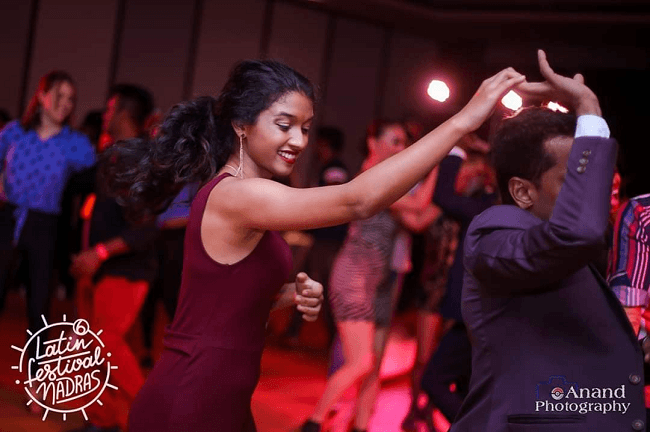
7 DJs will participate in this Latin event from Malaysia, Japan, Canada, Thailand, and India.
On Saturday, September 3rd, and Sunday, September 4th, all the activities (workshops, camps, shows, and parties) will take place at the Taj Vivanta hotel, a five-star venue to have a luxurious, memorable, and family experience.
Two of the peculiarities of this Festival are the parties before to the Latin event (August 29th – September 1st) and the getaway after the closing of the festival (September 5th – September 6th). The event’s organizers have planned to visit Pondicherry through Mahabalipuram for two days, the latter place a UNESCO World Heritage Site.
In Pondicherry they will be able to taste the typical dishes, dance, and do a guided exploration of the ruins and historical sites of the town.
On the second day, you will explore the old Franco-Tamil city. During the day they will visit the old Auroville community located 10 km from Pondicherry and during the night they will dance at the pool party at Anandha Inn Convention Center and Suites. And on Wednesday, September 7th, will be the big farewell to Chennai.
But, before leaving the city of Chennai, we must talk about the live music that will be present at this Latin event in India. The greatest exponents of the Trombone and the Timbal will say here, the maestro Jimmy Bosch and the creator of the hard Salsa orchestra Tromboranga, Joaquín Arteaga.
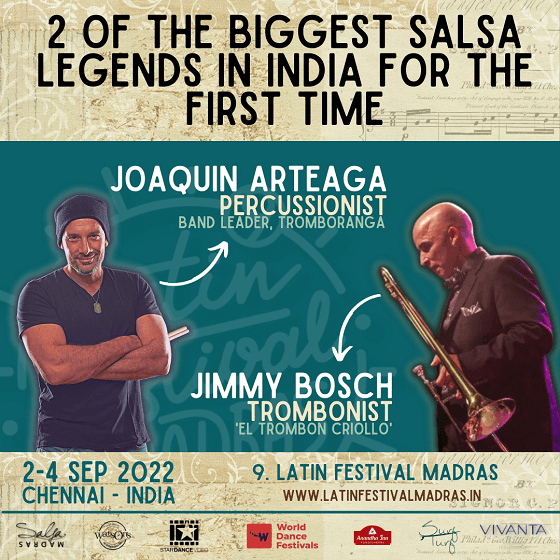
The objective of this festival is to provide a memorable experience and exposure to the educational value for future talents, artists, and instructors.
Jimmy Bosch is an exceptional Latin Music Trombonist acclaimed in more than 70 countries and has 11 Grammy Awards and more than 100 recordings in the Salsa and Latin Jazz genres. “El Trombonista Criollo” has worked with the FANIA All-stars, Eddie Palmieri, Ruben Blades, Ray Barretto, Machito, Cachao, and more. He has participated in Salsa conventions and Latin and Jazz music festivals around the world, as well as performed in clubs in Asia, Europe, America, and Oceania.
On the other hand, the second artist to perform on this special evening is the Leader, Director, and Timbalero of the Tromboranga salsa orchestra, Joaquín Arteaga. This Venezuelan timbalero based in Barcelona (Spain) has been part of the Gerardo Rosales Orchestra (2004) and has toured Europe accompanying international artists such as Andy Montañez, Andrés Cepeda, Jhon Lozano, Venezuelan Masters Orchestra, and Bloque 53, among many others.
Since 2009 he has been a sponsor of the prestigious Latin Percussion LP brand. Joaquín has produced and recorded nine albums for Tromboranga and has toured extensively throughout Latin America, North America, Europe, Australia, and Asia. This Venezuelan composer has also organized and taught salsa percussion workshops in Spain, Japan, Australia, Colombia, the USA, France, the UK, Morocco, Lebanon, Thailand, and South Africa, among many other countries.
The Full Passes for the event are USD 140 (travel to Pondicherry and Mahabalipuram is not included). The online sale ends on August 31st, and the prices of the passes increase every two months.
The major European festival of Latin and Afro-Cuban music will present Los Van Van, Pacific Mambo Orquestra, Interactivo, and Minyo Crusaders (H2)
The benchmark Festival of Latin and Afro-Cuban music in Europe, Tempo Latino, resumes its activities after the forced cessation of its activities for two years due to the Pandemic.
From Thursday, July 28th to Sunday, July 31st, on the main stage Les Arènes, the whole family, heterogeneous public, and inveterate traveler will enjoy the performances of Los Van Van, Pacific Mambo Orquestra, and Interactivo, as well as an exceptional set & exclusive presentation on Saturday, July 30th at 11 PM of “Con Tumbao All Stars” with the winners of Best Traditional Tropical Album at the Latin Grammy 2021 for their album “Chachachá…Homenaje a lo Tradicional”, Issac Delgado and Alain Pérez, as well as Oscar Hernández, Robby Ameen, Tony Succar, and many more.

Minyo Crusaders rediscovered the songs associated with the working classes.
The festival to be held in Vic-Fezensac, the heart of the Gers de Gascony department (France), will open its doors on Thursday, July 28th, with Tempo Latino Social Club on the stage of its satellite “Geo-rhythmic” Conga with a special performance by the Tokyo band, Minyo Crusaders.
This Cumbia band with a Japanese identity aims to make reversals between the traditional and foreign rhythms. Guitarist Katsumi Tanaka was in charge of bringing together the twelve musicians to perform these magnificent melodies with a fusion of the Caribbean (Reggae, Cumbia, and Cuban Salsa), Africa (Afro-Blues, Afro-Funk, Ethiopian rhythm), and Asia (Thai Pop) after of the Fukushima accident in 2011. The ticket for this show costs €15.80, and the opening is at 6 PM.
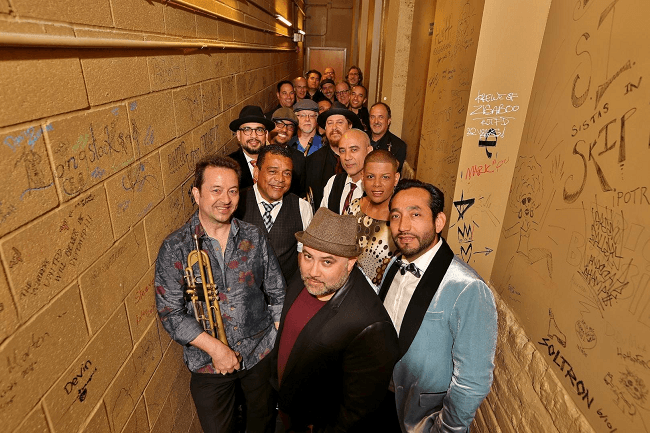
Pacific Mambo Orchestra is the only active Latin Big Band on the West Coast of the United States.
Continue on Friday, July 29th with the concerts of the Pacific Mambo Orchestra and Los Van Van together with the Cuban trumpeter, composer, singer, and leader of the band Havana D’Primera, Alexander Abreu.
The first orchestra to perform at the festival in its twenty-eighth edition at 9 PM will be the Pacific Mambo Orchestra. This North American band, a winner of the Grammy Award in the category “Best Tropical Album” in 2014, is the revival of the Latin sound of the Big Bands of the 40s with the combination of Mambo, Pop, Cha Cha, Timba, and Bolero. Pacific Mambo Orchestra founded 12 years ago by the Mexican pianist Christian Tumalan and the German trumpeter Steffen Kuehn has collaborated with renowned artists such as Carlos Santana, Poncho Sánchez, Pete Escovedo, and Arturo Sandoval.
Currently, this Latin Big Band performs on the West Coast of the United States with elite musicians from the Bay Area, and their repertoire is in English and Spanish. Their third album “The III Side” (2020) fuses the traditions of the Mambo of the 50s with the musicality of the moment. This Latin Big Ban considered one of the best in the United States will also is at the prestigious San Francisco Annual Jazz Festival on Wednesday, June 8th from 7:30 PM to 9 PM. Address: Miner Auditorium, 201 Franklin Street, San Francisco (EEUU).
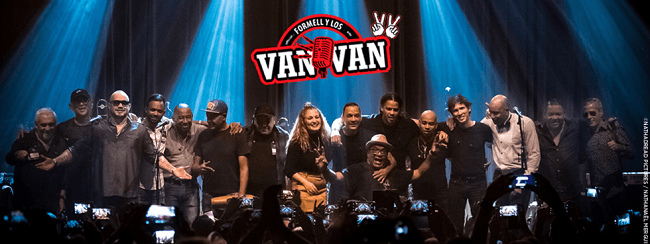
“Legado” is an album in homage to the legacy left by maestro Samuel Formell.
The second orchestra is to take the stage on Friday at 11 PM and will be Los Van Van with their special guest Alexander Abreu. The emblematic Cuban music orchestra will celebrate its more than 5 decades of history.
Los Van Van known by many as the “Rolling Stones of Salsa” was founded in 1969 by bassist and composer Juan Formell, a legend of Cuban music, who accompanied by José Luis Quintana, known as “Changuito” and César “Pupy ” Pedroso, invented the “Songo”, a Cuban rhythm predecessor of the “Timba” or “Salsa Cubana”, which generated the “Salsa – Son” with a Cuban sound that has made generations dance.
In 2018, they recorded their first record production “Legado” since the physical departure of Juan Formell in 2014. This tribute album has 14 songs with 3 new versions of the international singles Te extraño, Por qué lo haces y Amiga mía.
On the third day of the Festival, Saturday, July 30th, the Latin sound will be awakened by the performances of the Interactivo group and the exclusive presentation of “Con Tumbao All Stars”. On Sunday, July 31st, Tempo Latino will close its doors on the Les Arènes stage with London Afrobeat Collective and Alain Pérez & La Orquesta Bassiste.
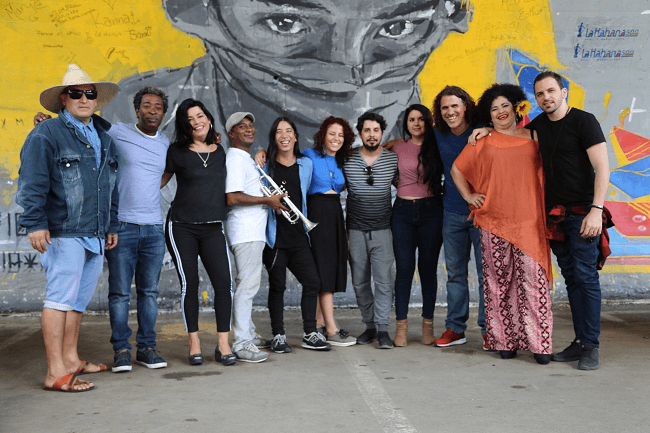
Most of the members of Interactive are representatives of currents such as Nueva Trova, son, and Cuban jazz.
The avant-garde collective, Interactivo, is one of the most representative bands of the current Cuban generation and will take to the Tempo Latino stage at 9 PM.
This emerging orchestra of international stages brings together the most brilliant and eclectic composers and producers in Havana. Each member contributes their specialty: Timba, Funk, Jazz, Hip Hop, Rock, Rumba, traditional Cuban music, and Soul for a result of great richness, where individual originality, musical creativity, and avant-garde ideas enrich the group.

London Afrobeat Collective has hypnotic flashes and powerful percussive beats.
Similarly, the addictive London Afrobeat Collective has been offering festive music based on Jazz, Funk, Rock, Dumb, and African Vibes for ten years. Its international DNA made up of nine members from England, Italy, France, Congo, Argentina, and New Zealand with the powerful voice of the Congolese singer Juanita Euka has made its rhythm addictive music with powerful and committed messages. The London-based band will open the night of concerts on Sunday, July 31st at 9 PM.

Alain Perez and the Bassiste Orchestra will offer a mixed show of Salsa, Son, Timba, and Latin Jazz
This musical evening ends with Alain Perez, bassist, singer, arranger, and who composes his orchestra of 13 young musicians on stage to offer a mixed show of contemporary Cuban Salsa, Timba, and Latin Jazz. His talent has given him wonderful experiences with internationally famous orchestras and musicians such as Los Van Van, Irakere, Issac Delgado, Paquito D’Rivera, and Celia Cruz. Always accompanied by his elephant-headed cane, in homage to Cuban musician Benny Moré, Alain has been influenced by flamenco through his work with Cuban artist Paco de Lucía.
The versatile artist born in Havana was twice-nominated for the Latin Grammy Awards in the category of Best Traditional Tropical Music Album with “El alma del Son, tribute to Matamoros” (2015) and “ADN” as Best Salsa Album. (2017).
El Cuento de la Buena Pipa (2020) is his most recent record production, and you can enjoy it on the main stage of the festival at 11 PM.
You can get the tickets for Tempo Latino 2022 on their official site http://www.tempo-latino.com/ for a four-beat tempo. The Tickets for the four nights of concerts are €86.70.
And while you wait for the Tempo Latino Festival (28th edition) you can enjoy its free predecessor event Clutcho at La Grainerie this May 4th. This place is emblematic of the circus and itinerant disciplines that take place with a large space that involves a large open-air square, and a performance hall with a capacity for 230 people through an “interior street” that serves for creative studios and workshops.
Covid-19 and its multiple variants have already ceased in France and that is why this European country is ready to start enjoying Latin events during this third month of the year. So don’t miss the details of each of the Latin parties that we bring this month dedicated especially to you.
(Salsa / Mambo)

Join and enjoy the end of this winter in the country with the Latin concert of the female group Mulatason and the band with the singular joy of Mambo Alfredo Buendía y Los Picaflores, this Saturday, March 5th at 9 PM at 3 Rue Ferdinand Buisson, 82000 Montauban, France Association Le Rio. Try to pre-sale tickets for € 20 because the price at the door will be € 24 per person.
And for those who still don’t know Mulatason, here I make a summary of their history. This orchestra formed in September 2013 by its director Yarelis Martínez Chávez is made up of five women with harmonious voices, and their music is a mixture of dance rhythms that range from Salsa through Timba and ending with the traditional melodies of the island of Cuba. Their popular and peculiar choreography called “Rikiti” has been their hallmark that they have managed to spread across large national and international stages.
The orchestra is made up of nine talented artists residing in Havana (Cuba) who graduated from higher art schools. Each member of the band is no older than 25 years old and they have a repertoire of original compositions.
Mulatason “Las Princesas de la Salsa” returns to Europe to present their new album No Vale Rendirse celebrating almost nine years in the art scene.

On the other hand, and for those who have not heard before about Alfredo Buendía y Los Picaflores, below I will tell you a little about them. This project of seven musicians was born on an afternoon in December 2016 in order to have fun on stage, make a type of music that injects energy into the audience, and transports joy and light madness to the spirit.
Alfredo Buendía (Lead Vocals – Trumpet 2) was returning from three years as a Jazz crooner in Rio de Janeiro (Brazil), he wanted to bring something new, interesting, and different to the artistic scene in France since he had become accustomed to the type of show that it’s made in America. Also, he wanted to play rhythmic and deliberately festive music like the one he had been listening to for a long time-El Mambo by Pérez Prado-with its history from Cuba in the 1950s to Mexico.
This bewitching goal materialized with Pierre Levy (Tenor Saxophone), Jonas Chirouze (Drums), Clément Lefèvre (Trumpet), Hugo Lebeau (Congas), Guillaume Pique (Trombone), Youssef Ghazzal (Double Bass), and Alfredo Buendía managing to create El Mambo a novel concept between Afro-Latin music and jazz little explored on the French scene.
(Salsa / Bachata)

Le Balajo nightclub open since 1936 brings Salsa and Bachata classes every Tuesday from 7:30 PM to 2 AM for beginners and intermediate level dancers. Salsa lessons for amateurs start at 7:30 PM while intermediate level classes begin at 8:30 PM followed by a Latin party hosted by DJ Karim until 2 AM.
Remember that to access the club you must present a Vaccination Certificate (Required) and an identity document.
The fees to attend this weekly event of joy and good humor are €8 and include non-alcoholic drinks and €12 if the drink is alcoholic, but if you just want to enjoy the bar and its atmosphere, the admission is €5.
(Salsa)

The Bar/Restaurant/Club La Pachanga is a place of reference for Salsa lovers, it is located in Paris at 8, rue Vandamme 75014. This club is designed with a cozy and Caribbean style. At the bar, you can enjoy different types of cocktails, Mojitos, Caipirinha, or Cuba Libre, just as they offer only Latin American dishes at the restaurant.
At Pachanga, you can attend classes for beginner and intermediate levels from Tuesday to Saturday from 7:30 PM to 8:30 PM with different instructors who will make you live an hour of Salsa Cubana and Salsa Puertorriqueña dance.

On Friday, March 18th, you can enjoy the Soireé Mix Latino “La Calle” event from 4 PM to 9 PM at Bar Le 3 located at the French city and commune Valence at 4 rue André Lacroix. This bar has a tropical atmosphere with living rooms with sofas and armchairs as well as a cozy and warm decoration. It also has a selection of 30 cocktails and a permanent musical atmosphere with a selected playlist of Jazz and other genres.
And the last Latin Music Bonus in France that I bring you for this edition is the Fiesta Latina Metz to be held on Friday, March 26th. This festival will offer you two workshops (Salsa and Bachata), in addition to having fun with the rhythm of Cuban Salsa, Dominican Bachata, Sensual Bachata, Kizomba, and other Caribbean melodies. There will be big parties with DJ Will, DJ Papy Culio, and DJ Kylian starting at 9 PM and ending with seven shows from 11 PM to 3 AM. Fiesta Latina Metz will have three rooms (Salsa/ Bachata/ Kizomba) and the prices to attend vary by combo: one workshop + evening: €12, while two workshops + evening: €20, and if you just want to attend to enjoy the shows the ticket has a value of €7. Fiesta Latina Metz will take place at the Quai Sablon Social and Cultural Center at 1 bis rue Castelnau 57000 Metz.