• Skip to primary navigation
  • Skip to main content

International Salsa Magazine

  • HOME
  • Previous editions
    • 2026
      • ISM / May 2026
      • ISM / April 2026
      • ISM / March 2026
      • ISM / February 2026
      • ISM / January 2026
    • 2025
      • ISM / December 2025
      • ISM / November 2025
      • ISM / October 2025
      • ISM / September 2025
      • ISM / August 2025
      • ISM / July 2025
      • ISM / June 2025
      • ISM / May2025
      • ISM / April 2025
      • ISM / March 2025
      • ISM / February 2025
      • ISM / January 2025
    • 2024
      • ISM / December 2024
      • ISM / November 2024
      • ISM / October 2024
      • ISM / September 2024
      • ISM / August 2024
      • ISM / July 2024
      • ISM / June 2024
      • ISM / May 2024
      • ISM / April 2024
      • ISM / March 2024
      • ISM / February 2024
      • ISM / January 2024
    • 2023
      • ISM / December 2023
      • ISM / November 2023
      • ISM / October 2023
      • ISM – September 2023
      • ISM – August 2023
      • ISM July 2023
      • ISM Edition June 2023
      • ISM – May 2023
      • ISM April 2023
      • ISM March 2023
      • ISM February 2023
      • ISM January 2023
    • 2022
      • ISM December 2022
      • ISM November 2022
      • ISM October 2022
      • ISM September 2022
      • ISM August 2022
      • ISM July 2022
      • ISM June 2022
      • ISM May 2022
      • ISM February 2022
      • ISM January 2022
    • 2021
      • ISM December 2021
      • ISM November 2021
      • ISM October – 2021
      • ISM September 2021
      • ISM August 2021
      • ISM July 2021
      • ISM May 2021
      • ISM April 2021
      • ISM June 2021
      • ISM March 2021
      • ISM February 2021
      • ISM January 2021
    • 2020
      • ISM December 2020
      • ISM November 2020
      • ISM October 2020
      • ISM September 2020
      • ISM August 2020
      • ISM July 2020
      • ISM June 2020
      • ISM May 2020
      • ISM April 2020
      • ISM March 2020
      • ISM February 2020
      • ISM January 2020
    • 2019
      • ISM December 2019
      • ISM November 2019
      • ISM October 2019
      • ISM Septembre 2019
      • ISM August 2019
      • ISM July 2019
      • ISM June 2019
    • 2016
      • ISM December 2016
  • Spanish
  • Download Salsa App
    • Android
    • Apple

Search Results for: Latin Jazz

Rafaelito and his career between Munich and New York

We had a very personable and honest conversation with Rafael Pareja Ibañez, who via WhatsApp has given us a few minutes of his busy schedule to tell us a bit about his fascinating career to date and the group he currently leads, Rafaelito Y Su Tumbao. 

The artist, born in Lima, Peru, has a huge love for music and remains intact to date, so he says it is a pleasure to share the story of how he came to pursue it professionally, no matter how many times he tells it.

Rafaelito playing
Rafaelito playing the guitar live

Rafael’s beginnings in music

Rafael was first inspired by the artists his parents used to listen to at home, including La Sonora Matancera, Celia Cruz, Tito Puente, and many others. Family social gatherings always featured iconic songs by these stars, so he could not help but be interested in music at the early age of 10.

It all started when his father caught him beating some paint buckets to make it look like he was playing a drum set on the roof of their house, which led him to enroll his child in a music school to take guitar lessons. While it is true that this was the first instrument he learned to play, he also plays the baby bass in salsa and the piano together with all the percussion instruments.

At that time, what the young man played the most was rock and pop because the radio and other media left little room for Latin music. In fact, Rafael formed his first rock band at 16, as this was the genre with which young people identified the most in the 1980s.

Move to Germany

At 20 years of age, Rafael decided to move to Germany, specifically to Munich, where he lived for more than 27 years. It was there that he came into contact with people of other nationalities and had far more access to Latin music, especially Peruvian music, which surprised him greatly. He also got to listen to international stars such as Eddie Palmieri, Miguelito Cuní, and Arsenio Rodríguez.
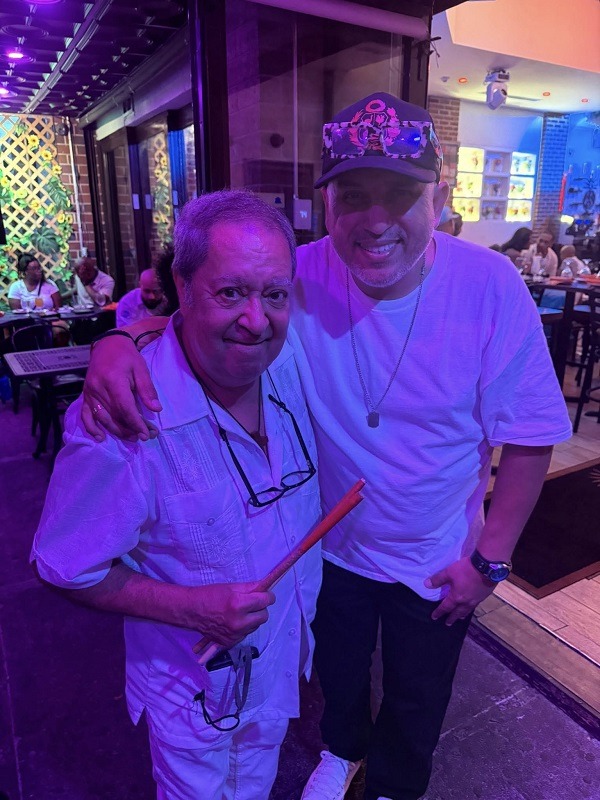
Rafaelito and Nicky Marrero
American Latin jazz percussionist Nicky Marrero and Rafaelito at Mamajuana Cafe in the Bronx

It was also in Munich where he began to have his first professional experience together with major musical groups from there such as the Sexteto Melaza, where he played alongside musicians from different parts of the world. At a student barbecue, Rafael was hanging out with many Latinos, and they began to sing and play instruments together, leading them to form a group, which they named Melaza. During that time, he dedicated himself to play salsa, guaracha, son, bolero, and cha-cha-cha in a sextet format.

The group featured a guitarist, a bassist, a conga player, a timbalero, a bongo player, and a singer. This sums up his first musical experience in Germany, which lasted about a year and a half. It also helped him draw the attention of other musicians in the city’s music scene, who convinced him to join other projects that were being created.

Another of those projects included a trio of young musicians called Madera Limpia which was founded in 2005, when rap, reggaeton, reggae, and many other genres mixed with Latin rhythms such as changüí or kiribá were super trendy. It turns out that a Romanian couple traveled to Cuba, produced a film called “Paraíso,” and went on a concert tour through Europe and North Asia. Therefore, they needed to hire many musicians, including the members of Madera Limpia, who contacted Rafael through connections and asked him to be their bassist. The Peruvian accepted the offer and toured all those places with these musicians, an experience he talks about with great affection.

Back in Munich, he met Lou Bega, the creator of the hugely popular swing-pop cover of Pérez Prado’s “Mambo No. 5,” which stayed at number one for 36 consecutive weeks in the United States. When his producer wanted to find a band to accompany him, there were very few Latin musicians in the city and Rafael was one of them. Obviously, they called him and his colleagues to work on some demos featuring Bega’s vocals and trumpet samples. After being selected, he became the director of his live band and accompanied him on many concerts in Europe between 2007 and 2008.

El Canario and Rafaelito
José Alberto ”El Canario” and Rafaelito

Rafaelito Y Su Tumbao

Right there in Munich, Rafael finally made up his mind and formed his own musical group, Rafaelito Y Su Tumbao, which currently has branches in Munich, Lima, and New York, where the artist currently resides. Rafael arrived in this city as early as 2020, which is when he got to perform with stars such as Charlie Aponte, Andy Montañez, Jose Alberto “El Canario,” Hildemaro, and many others. When he saw how good the human material was in his new place of residence, he also founded Rafaelito Y Su Tumbao in New York with musicians from there. 

What is striking about his move to New York is that it was motivated by Rafael’s reunion with his childhood sweetheart in Peru, whom he reconnected with in 2019. It turns out that his partner was living in New York, so he jumped on this new opportunity that life offered him and made the romantic decision to cross the Atlantic again and marry her. This radically changed his life both personally and professionally, but he’s glad he did.
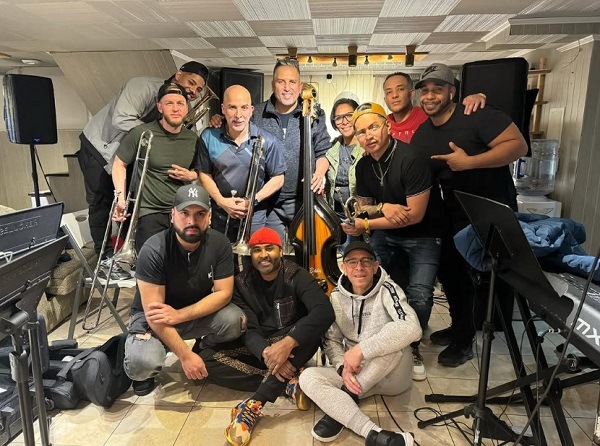
Members of Rafaelito Y Su Tumbao
Members of Rafaelito Y Su Tumbao in New York
Line Up :
Rafael Pareja – Baby Bass
Ray Cabrera – Piano
Andres Garces – Vocal
Karla Olivo Moreno – Vocal
Dennis Hernandez – Trumpet
Christian Gomez – Trumpet
Jimmy Bosch – Trombone
Andre Carpio – Timbal
Hector “ Jereto “ Ferreyra – Congas
Chuito Quintero – Bongo
Read also: Dominican bandleader and musical director Orlando Santana talks about La Makina and his career in general

‘‘El Griego Rumbero’’ visited the Salsa Museum and donated some objects

The artist we will talk about today is a very particular case, since he comes from a country which is not usually related to salsa or Latin music in general. However, the passion for these rhythms has captivated people from all over the world, so it is not surprising that our guest has experienced the same thing.

We’re talking about the Greek-born trombonist and composer Demetrios Kastaris, whom El Rubio Boris and I were fortunate to welcome at the Salsa Museum. Here’s a little of his fascinating story.

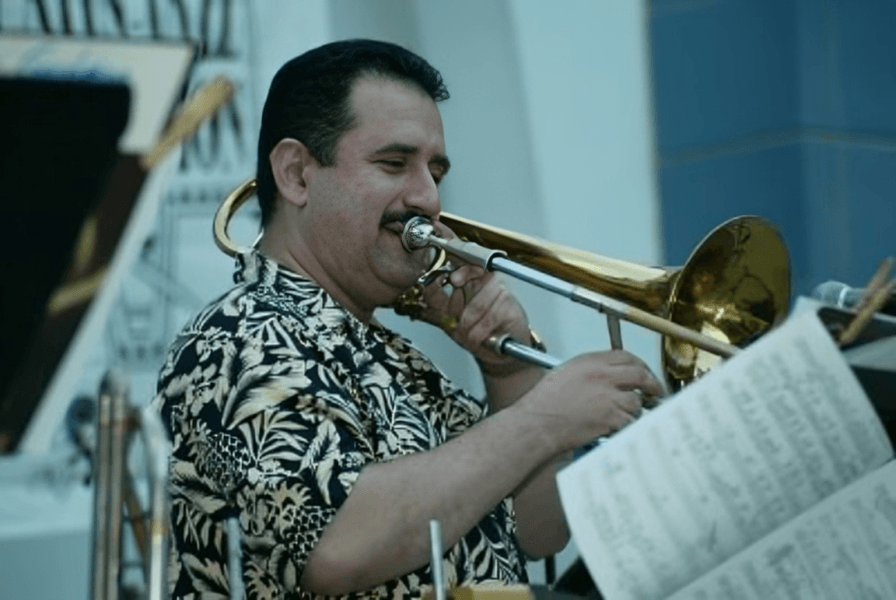
Demetrios Kastaris playing
Demetrios Kastaris playing the trombone

Demetrios’ early years

Demetrios was born in Thessaloniki, Greece, but moved with his family to the United States when he was just two years old. After living in Ohio for a few years, the family moved again, but this time to St. Louis, Missouri, a place that would be critical to the training of the Young man in the times to come.

The first contact of the boy with music was in elementary school during a live performance by a classical music quintet, but what really captivated him was a demonstration of a slide trombone by a member of the St. Louis Symphony Orchestra. It was at that instant the aforementioned instrument inspired Demetrios to take trombone lessons and join the school concert band.

More importantly, as Demetrios grew older, he spent countless hours practicing the trombone, especially in summer when he was free from school work. Finally, On reaching the age of 17, his perseverance began to bear fruit, and he got the opportunity to rehearse with the Stan Keaton Jazz Orchestra, which was the first great experience for the teenager. Just one year later, he sang as a soloist at the Classical Rimsky-Korsakov Concerto. 

Other than that, Demetrios received the John Philip Sousa Band Award just before graduating from high school. He then studied music education at the University of Missouri-St. Louis, when he played in the jazz band and won several awards with the group.

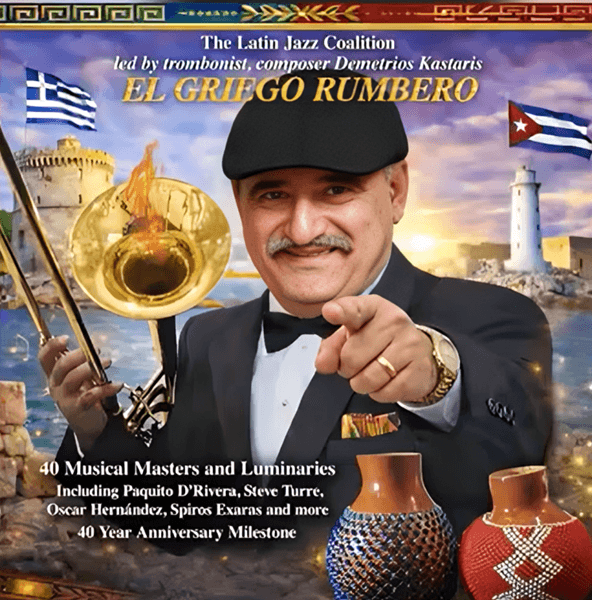
Cover of the album ''El Griego Rumbero''
Cover of the album ”El Griego Rumbero” by demetrios Kastaris

Moving to New York

Two years after having studied in Missouri, Demetrios moved to New York, where he received a scholarship that allowed him to attend New York University and take more steps in his musical career. While completing his studies, he met a bandleader on the subway and was invited to a rehearsal where he was given the opportunity to arrange Afro-Cuban jazz pieces for the first time in his life.

Latin music and its rhythmic features made such an impression on Demetrios that he began attending concerts by many of its great exponents, such as Willie Colón, Eddie Palmieri, Ray Barretto, Tito Puente, Mongo Santamaría, and many others. This led him to transcribe and conscientiously analyze these artists’ songs to satisfy his curiosity and learn more about these rhythms.

After graduating with honors, he earned a masters degree in jazz from the Manhattan School of Music. Soon after, he was already teaching in public schools while performing with one of the bands of the Concord Resort Hotel.

Other important details of his career

For over 50 years of artistic career, Demetrios has had the opportunity to perform with big Latin stars such as Tito Puente, Luisito Quintero, Alfredo De La Fé, Ray Barretto, Charlie Palmieri, Herencia Latina, Oscar Hernández from The Spanish Harlem Orchestra, and many others. 

Already in the decade of 1980, the artist founded the Latin-Jazz Coalition and recorded several of his original compositions in genres such as Brazilian and Afro-Cuban jazz. In certain Circles, his work has earned him the nickname of “El Griego Rumbero”, a moniker by which he is still known today.

Johnny Cruz, Demetrios Kastaris and El Rubio Boris

Much more recently, Demetrios was invited to play with Los Leales de Cuba at the Buena Vista Curry Club and also to rehearse with Los Muñequitos de Matanza, which was a very learning afternoon and a memorable experience for him. Thereafter, he traveled to Cuba on several occasions to learn much more about this music.

Visit to the Salsa Museum

Just two years ago, Demetrios visited the Spanish Harlem Salsa Museum directed by yours truly and spent an enjoyable time with our entire team but he did not come alone. He brought us his photograph and a poster of the Latin Jazz Coalition, which were mounted on a wall alongside many other photographs of stars such as The Fania All Stars, Hector Lavoe, Tito Puente, Celia Cruz, El Gran Combo de Puerto Rico, Larry Harlow, and many others. 

His childhood trombone was also added to our extensive display of objects donated by artists and their families. This took place on March 20, 2024, and the instrument remains at our institution to this day as a reminder of a Greek man’s love for our music and a thank you to his dedication over the years.

Johnny Cruz ISM

Read also: Rey Ruíz visits the Salsa Museum and talks about his prolific career

Ralph Mercado: The Visionary Who Turned the Rhythm of the Barrio into a Global Phenomenon

The Giant of New York Salsa

Ralph Mercado was a music promoter and an iconic figure of Salsa and Latin music in New York. More than just an entrepreneur, Mercado was the strategist who took Salsa out of local New York clubs and placed it on the world’s most prestigious stages.

Through his vision, the sound of Latin identity found a commercial language without losing its “street” essence, making him the most influential tropical music mogul of the 20th century.

Ralph Mercado, the visionary who transformed the rhythm of the neighborhood into a global phenomenon

Creator of “The Perfect Combination”; Early Days in the Bronx and Brooklyn

Of Puerto Rican and Dominican descent, Mercado was born on September 29, 1941, in Brooklyn. As a mere teenager, he was already organizing parties and dances as the president of a neighborhood social club.

He later founded the 3 & 1 Club on Atlantic Avenue, which hosted local bands and musicians such as Eddie Palmieri and Richie Ray & Bobby Cruz, among many others. Shortly thereafter, he created his first production and promotion company, Showstoppers, through which he promoted R&B acts of the caliber of James Brown, Aretha Franklin, Gladys Knight & the Pips, The Stylistics, and The Chi-Lites.

Expanding the Empire

He eventually ventured into Manhattan, where he helped expand the legendary Fania All-Stars, promoted dances at the Cheetah Nightclub, and presented Latin Jazz artists at venues like the Red Garter and the Village Gate. In 1972, Mercado established RMM Management, representing Palmieri and Ray Barretto.

Ralph Mercado was a music promoter and an emblematic figure of salsa and Latin music in New York

He managed the genre’s biggest stars, including Tito Puente and Celia Cruz, with whom he worked for 25 years. “I learned so much from her,” Mercado told the AP in July 2003, following the passing of the “Queen of Salsa.” “I witnessed the impact she had in every country we visited.”

Mercado credited Cruz and Puente with the internationalization of Salsa. “They were two artists with so much talent and such good hearts… something unrepeatable,” he expressed at the time.

The RMM Phenomenon

By 1987, his popular “Latin Tinge” nights at the Palladium attracted hundreds of salseros every Thursday. In 1992, he founded the independent label RMM, which branched into RMM Records, RMM Filmworks, and two publishing houses. With a catalog of over 140 artists, the label sold millions of albums annually.

Mercado brought Salsa to South America and to places as remote as Africa, Asia, and Israel. He personally discovered and launched the careers of talents like Marc Anthony, La India, Domingo Quiñones, Tony Vega, José Alberto “El Canario,” and Tito Nieves. For his work, he received numerous accolades, including the Billboard Lifetime Achievement Award in 1999.

Mercado creador de La Combinación Perfecta; RMM

The RMM Label: A Hit Factory

Mercado’s impact was solidified by his ability to adapt tradition to changing times. While others clung to the past, Ralph understood the potential of Salsa Romántica and the power of international collaborations. RMM didn’t just produce records; it produced culture, documenting the history of the rhythm through videos and massive concerts that redefined the concept of Latin entertainment.

His influence extended far beyond recording. As a promoter, he opened markets in Europe, Asia, and throughout Latin America, ensuring the tumbao was heard in every corner of the planet. He was a relentless negotiator and a protector of the legends’ legacies, ensuring that Latin Jazz and Salsa Dura maintained their academic prestige while dominating the pop charts.

An Indelible Legacy

“Without him, I don’t believe the Fania All-Stars would have achieved the success they did,” stated Eddie Palmieri. Meanwhile, promoter Leo Tizol remembered him as someone “accessible and noble” who never refused to share his knowledge with those starting out.

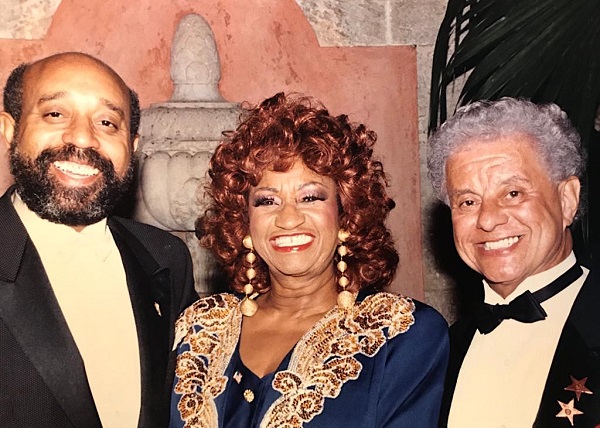
Mercado, Celia y Puene

Ralph Mercado passed away on March 10, 2009, surrounded by his wife Cynthia, his five children, his siblings, and his grandchildren. His departure left a void that as the greats of music often say can never be filled.

Source: RMM / Photo: Ralph Mercado Archives

Also Read: Hector Maisonave Manager of the Greatest Salseros in New York

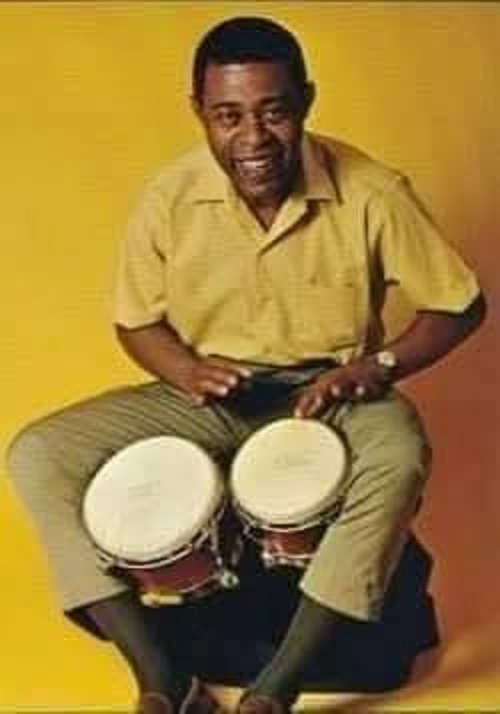
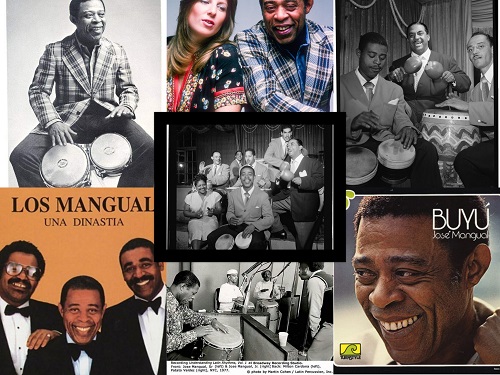
José Mangual Sr. “Buyú”: The Architect of Bongo Sound Defining the Rules of How it Should Sound

In the history of Afro-Latin music, there are names that didn’t just play an instrument they defined the rules of how it should sound. José Mangual Sr., known universally as “Buyú,” is one of those pillars.

José Mangual Sr., known universally as Buyú, is one of those pillars

An extraordinary and legendary percussionist, José Mangual Sr. was the founder of the prestigious percussive lineage that carries his surname.

Since his childhood in Juana Díaz, he professed a deep love for music; by age ten, he was already playing professionally, and during his youth, he even enjoyed crafting his own bongos.

Over time, he became the musician who endowed the instrument with an extraordinary sonority. He was the father of the equally prominent percussionists José Mangual Jr. and Luis Mangual.

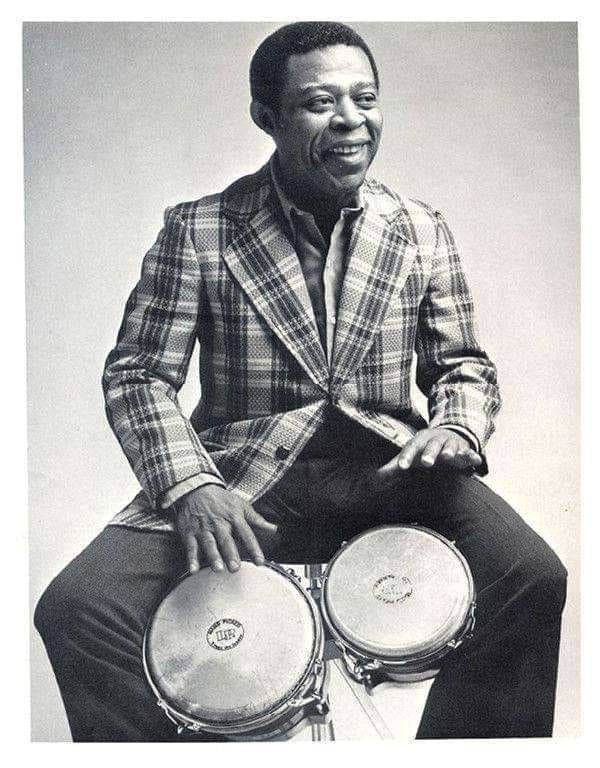
The Architect of Sound on the Bongos defining the rules of how it should sound

The Architect of Sound on the Bongos defining the rules of how it should sound

Considered by experts as one of the greatest bongo players of all time, his legacy remains the gold standard for meter and tuning in Latin Jazz and Salsa.

From Juana Díaz to the Heart of Spanish Harlem

Born on March 18, 1924, in Juana Díaz, Puerto Rico, Mangual discovered his vocation at age 10. However, his musical destiny was sealed in 1938 when he migrated to New York at the age of 14.

Settling in Spanish Harlem (“El Barrio”), he found himself at the epicenter of a cultural explosion that was about to change world music forever.

The Consecration: Machito and his Afro-Cubans

Although he began by filling the timbales position, it was with the Machito and his Afro-Cubans orchestra where “Buyú” made history. Under the direction of Mario Bauzá (who is said to have given him his nickname), Mangual remained with the group for nearly 17 years.

The Legacy and the Patriarch of a Dynasty
  • Rhythmic Innovation: He was part of the “perfect percussion trio” alongside Carlos Vidal (congas) and Machito (maracas).
  • Historic Fusion: His performance was key to blending the complexity of Afro-Cuban rhythms with the harmonies of New York Jazz in the 1940s and 50s.

An Unrivaled Session Musician

His technique was so clean and his sound so bright that he became the preferred collaborator for the biggest stars. Throughout his career, he contributed his mastery to projects led by:

  • Tito Puente: The “King of the Timbales.”
  • Israel López “Cachao”: Participating in historic Afro-Cuban Jazz “descargas” (jam sessions).
  • Jazz Greats: His versatility allowed him to navigate fluidly between the world of Big Bands and traditional Salsa ensembles.

Pedagogical Legacy and Solo Career

In the 70s and 80s, Mangual recorded music not only for enjoyment but also for instruction:

The Patriarch of a Dynasty
  • Album “Buyú” (1977): A Latin Jazz gem on the Turnstyle label, featuring tracks like “Black & Brown Boogie.”
  • Musical Education: Alongside conguero Carlos “Patato” Valdés, he recorded the volumes of Understanding Latin Rhythms. These LPs became the auditory manual for thousands of percussionists around the globe.
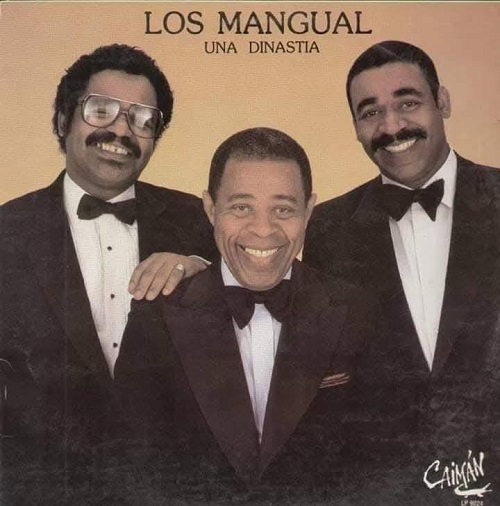
  • The Mangual Dynasty: In 1986, he consolidated his family heritage with the album Los Mangual: Una Dinastía, recording alongside his talented sons.

“The sound of his cowbell and his bongo didn’t just mark time; they cemented the foundations of the music we dance to today.”

The Patriarch of a Dynasty

The impact of José Mangual Sr. extends through his sons, who inherited his musical excellence:

  • José Mangual Jr. (“El Milamores”): Famous bongo player and singer, a key figure in the orchestras of Willie Colón and Héctor Lavoe.
  • Luis Mangual: Renowned percussionist and musical director.

Passing and Recognition: Buyú passed away in 1998, leaving an irreplaceable void. In 2001, he was posthumously inducted into the International Latin Music Hall of Fame  a fitting tribute to the man who gave the bongo unprecedented brilliance and elegance.

Also Read: Israel “Cachao” López, a Cuban musician and composer, has been hailed as “the Inventor of Mambo”

Bandleader and conga player Tony Rosa tells us how he built his career

The great percussionist, conga player, and six-time Grammy winner Tony Rosa has honored us with his presence for this February edition, which is full of many interesting things despite being a very short month.

Like so many other artists of this kind, he started very young in this world. Although his musical roots were not so Latin or folkloric, as is common, he ended up falling in love with one of his great passions today: Latin music.

Tony Rosa with his Grammy
Tony Rosa as part of the Latin Grammy Arturo O’Farrill & The Chico O’Farrill Afro-Cuban Jazz Orchestra won

Tony’s beginnings in music

Tony started playing the tumbadora at the age of just 10 in New York, his native city, but when he turned 12, he moved to Los Angeles, California, which is where his formal career as a musician began. It was in Los Angeles that he learned to play percussion, more specifically the conga, in the streets of this new city that welcomed him and his family.

One interesting thing about this is that absolutely everything he knows about instruments he learned by himself, indicating that he did not attend any institution that provided formal training in music. At that time, as a 15-year-old boy, he was already playing for different orchestras and touring with them.

Rock phase

Before becoming integrally involved with salsa, Tony played with some rock bands such as Chicanos. In fact, rock is a genre he still likes very much, and several of his favorite groups are rock bands such as Queen and Santana. However, that phase did not last for ever, and it was not long before, at the age of 16 or 17, he played with orchestras such as Azuquita Y Su Melao. 

In 1997, he moved back to his native New York, where he started collaborating with Conjunto Libre and other groups of salsa and Latin jazz, a genre that was also making him curious.

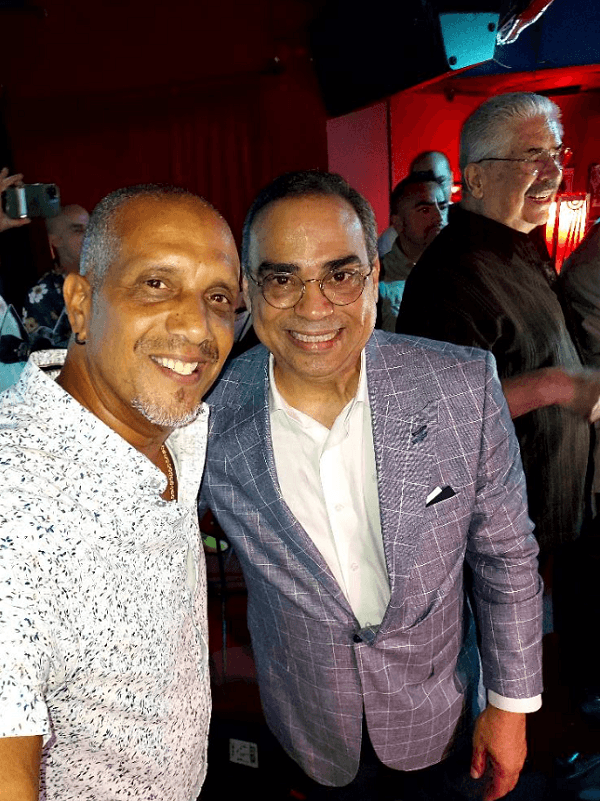
Tony and Gilberto
Tony Rosa and ”The Salsa Gentleman” Gilberto Santa Rosa

Time with the Afro Latin Jazz Orchestra and Arturo O’Farrill

In 2008, while playing with Manny Oquendo, Tony met orchestra leader, composer, and pianist Arturo O’Farrill, who, after witnessing the great talent he had, asked whether he would be interested in joining his Afro Latin Jazz Orchestra, and he said yes. In total, he spent about nine years playing with O’Farrill and it was over five years ago. In fact, when asked if he knew why the Afro Latin Jazz Orchestra would no longer be playing at Birdland, he said he knew absolutely nothing about it.

After that, the artist found the right time to create his own quintet which he named Tony Rosa’s Afrojazz and with which he has songs such as “Mambo Mongo,” “Nothing Personal,” “Alfie’s Theme,” “Isn’t She Lovely,” and “Rica Mulata.”

Tony, Eddie, and Adan
Tony Rosa, legendary pianist Eddie Palmieri, and producer and arranger Adan Pérez

However, he assures us that his affection for O’Farrill and the orchestra remains intact, and they even played together again in a tribute to Andy González at Saint Peter’s Church in Manhattan. He is also grateful for all the experience he gained there, otherwise he would not have the project he currently manages.

Projects apart from Tony Rosa’s Afrojazz

In addition to his work he does with his Latin jazz quintet, Tony is also recording with another musical group called Los Amigos, with which he recently released an album.

And about tours and performances at arenas and well-known venues, he says he does not know yet what he will be doing in the coming months. However, he expects things to start moving as the year progresses.

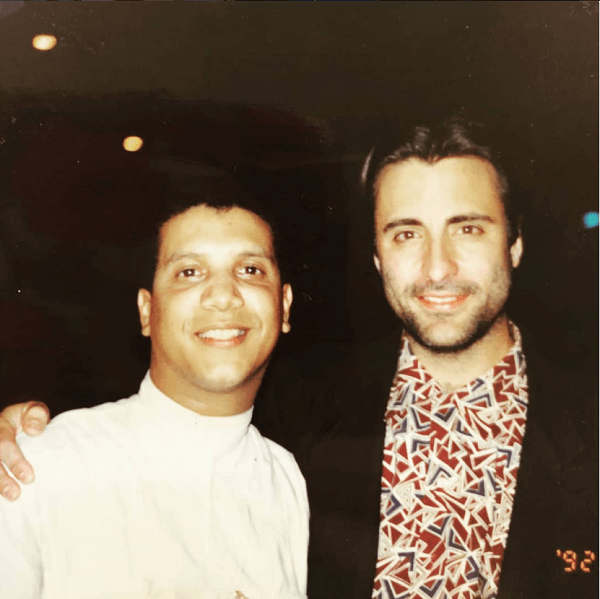
Tony and Andy
Tony Rosa and Cuban-American actor Andy García in 1992

Read also: Bandleader Arturo O’Farrill leaves behind Birdland to look for other opportunities

  • « Go to Previous Page
  • Page 1
  • Interim pages omitted …
  • Page 20
  • Page 21
  • Page 22
  • Page 23
  • Page 24
  • Interim pages omitted …
  • Page 95
  • Go to Next Page »

International Salsa Magazine (ISM) is a monthly publication about Salsa activities around the world, that has been publishing since 2007. It is a world network of volunteers coordinated by ISM Magazine. We are working to strengthen all the events by working together.