|
|
|
|
|
|
|
|
 Av. Vieytes 1655 Buenos Aires Barracas, CABA, Argentina +54 11 5021-9936 |
|
|








|
|
|
|
|
|
|
|
|
Av. Vieytes 1655 Buenos Aires Barracas, CABA, Argentina +54 11 5021-9936 |
|
|
|
|
|
|
|
|
|
|
|
|
|
|
|
|
|
|
|
|
|
|
|
|
|
|
|
|
|
|
|
|
|
|
|
|
|
|
|
|
|
|
|
|
|
|
 2410 San Ramon Valley Boulevard San Ramon, CA 94583 +1 925 560-6556 |
|
 510 Embarcadero West Oakland, CA 94607 +1 510 238-9200 |
|
|
|
I placed the order online on October 25, 2023. By return email, I received confirmation of payment and a promise to receive my copy the following week.
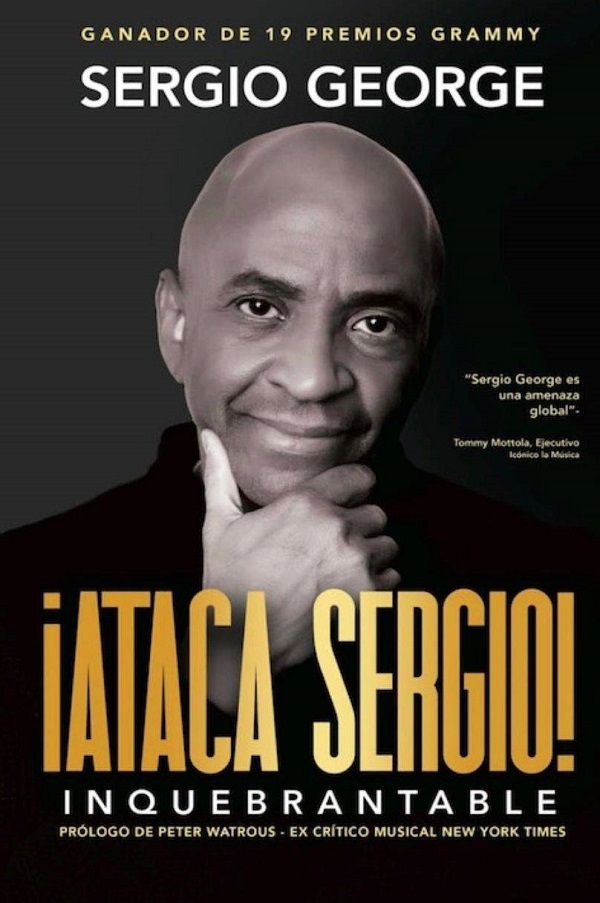
As a reader, I was deeply disappointed with the content of the “book”. Attack Sergio! Unbreakable falls short of being an autobiography. I would classify it as a self-help book with little depth, no substance.
Writing a book requires literary knowledge, basing the content on rigorous research and stating the data with mathematical precision.
The cover of the text is appropriate for the trajectory of the artist who is the subject of the text. However, the data on the cover that assures that he is the winner of 19 Grammy awards contradicts the text. Specifically, on the third page of the introduction it says that he is the winner of 18 or 19. Evidently, the recently launched book should not be taken as a reference for a subject of such seriousness.
From the legal page it is clear that Sergio George is the author and that Janice Rodriguez was in charge of editing. Sadly, the work lacked editorial care, which detracts from the literary value of what is presented. There are many expressions that seem to be literal translations from English and that do not necessarily maintain the idiomatic integrity of what the author wants to express. Now, if that were the case, you should stop counting the missing and extra accents.
Having said that, I am going to manage my criticism, since space is limited and the idea is not to write another book about the “book”. Certainly, in the world of the versed salsero, of which I am one, the most awarded producer in Latin music has a great story to tell. But his literary delivery fell short. I understand the intention to approach his complaint as a self-help book. But that grand intention also failed.
In his usual combative style Sergio George launches harsh criticisms of salsa artists. Resentment has won out over objectivity. Each blow takes away the value of his exposition, until it becomes the outlet that we all need to have at given moments.

Of course, emotional maturity is what prevents one from publishing matters that should remain in the privacy of conversations between the affected parties.
With a high sense of arrogance, characteristic of narcissistic personalities, the author accuses the “great salseros” of having murdered salsa because of their ego, pointing them out as the culprits of the death of the “musical genre”.
This becomes another of the great contradictions of the text. At times he claims that salsa is not a genre, but on multiple occasions he refers to salsa as a musical genre. On the other hand, he says that salsa is in danger of extinction shortly before assuring that it is dead. His point of view in that sense is not clear either, although he does state near the end that there is a legacy that does not die.

I believe in the evolution of the species and I see that the adaptations through which salsa has gone through are similar to the genetic modifications necessary so that, within each species, the fittest survive.
The text has several anecdotes. However, due to the lack of details, these do not add value to the construction of the history of salsa. In some of them, the names of certain characters are not mentioned. I guess the author did not want to enter into a request for relays or preferred not to risk dealing with legal controversies.
With so much that Sergio George has contributed to the history of Latin music, it is a mistake that the book has not been given more structure and objectivity.
Sergio George has been a cornerstone in the history of Afro-Latin rhythms and is the owner of a brilliant musical career that has made many shine. But to that exposure, the text does not do justice either.

Also Read: Metamorphosis: from music to photojournalism, a reinvention without limits
In the early 1970s, the American social landscape was dominated by the Vietnam War and the birth of several protest movements advocating for equality, justice and the defense of human and civil rights, and from sing sing a historic concert.
In the midst of all that collective turbulence, Eddie Palmieri and his orchestra were giving free rein to their social rebellion with a sweeping musical proposal.
But Palmieri’s rebelliousness was not only reflected in his music, but also in his decision to take his group’s sound to atypical and controversial scenarios that would attract the attention of the authorities.
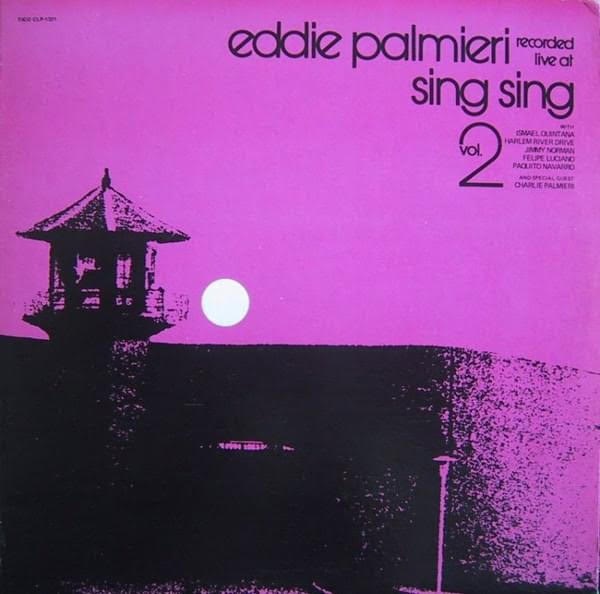
In those days, a good friend of Eddie Palmieri was incarcerated in the sinister and historic Sing Sing Correctional Facility, also known as Sing Sing Prison, infamous for the reputation of its inmates and for its executions with electric chairs.
It was at that moment that the idea of an unprecedented performance at the facility was born.
Palmieri’s group was not only the orchestra of choice for Hispanics, it was also favored by the majority of African-Americans in the Latin dance world, and at that time the prison population at Sing Sing was composed mostly of Hispanics and African-Americans, so the stage was perfect.
However, it was not easy to perform a concert in a maximum security prison like the dreaded Sing Sing Prison.
However, at the request of Eddie Palmieri himself and with the coordination of Roulette Records and the prison administration, the performance took place on Wednesday, April 12, 1972.
It was the third prison in New York State, built in 1825. The state legislature allocated $20,100 to purchase the Silver Mine farm. The prison was to be self-supporting and not require a state budget.
Elan Lynds, a jailer at Auburn Prison (New York’s second prison), brought 100 convicts from Auburn to the new prison and employed them for its construction.
Harris A. Smiler was the first person executed by electrocution at Sing Sing on July 7, 1891. From 1914 until 1971, only the electric chair at Sing Sing was used for executions.
On January 8, 1983, more than 600 inmates in B Block started a riot, taking 17 officers hostage; it ended 53 hours later.
Sing Sing in popular culture
Near the end of Herman Melville’s short story Bartleby, the Scribe, it is mentioned that Monroe Edwards died of tuberculosis in Sing Sing Prison.

In addition, it was performed live by the band Corizonas (union of Arizona Baby and Los Coronas) in their live album “Dos bandas y un destino”.
There is a song by the salsa group Conjunto Clásico on the album El panadero released in 1986, called A los muchachos de Sing Sing, which has a message of encouragement to convicts.
There is a song by the French-Tunisian singer-songwriter (Michel) Laurent entitled Sing Sing Barbara, from 1971, which tells the story of an inmate who sends desperate messages of love to his wife from this prison.
There is a song by the Madrid group Los Nikis entitled Diez años en Sing Sing, which also gives title to the tribute album to that group.
There is a song by the Basque group Sorotan Bele titled Sing Singatiko Folk & Rolla.
In 1932 the film Twenty Thousand Years in Sing Sing was shot, directed by Michael Curtiz and starring Spencer Tracy and Bette Davis. The film is based on the book of the same name by Lewis E. Lawes.
In the film Constantine, and in the official Constantine comic book, John Constantine is seen to use the Sing Sing prison chair to connect to hell.
In the film Citizen Kane, protagonist Charles Kane threatens his political rival, Jim Gettys, to send him to Sing Sing, when Gettys informs Kane that he will publish his affair with Susan Alexander in the newspapers if he does not withdraw from the election.
In the film The Pilgrim, Charles Chaplin plays the role of a convict recently escaped from prison, who, when he is at the train station, moves his finger without looking over the board of destinations to choose one at random and falls on Sing Sing, so he repeats the process again when he realizes his unfortunate choice.
In the movie Breakfast at Tiffany’s, Holly Golightly periodically visits inmate Sally Tomato at this prison.
In the movie and musical The Producers, the main characters stop at the same prison and create a musical called Prisoners of Love.
In the video game Driver Parallel Lines, the protagonist spends 28 years in Sing Sing.
In the ABC television series Castle, Sing Sing is cited during an episode of the fourth, fifth and eighth seasons.
In the film noir movie Odds Against Tomorrow, Johnny, the character played by Harry Blafonte, says, “I know they changed his color when they rehabilitated him in Sing Sing.”
In the AMC television series Mad Men, Sing Sing is quoted during an episode of the third season.
In the series Breakout Kings, prisoners are transferred to Sing Sing for their help.
In the song Báilalo como tú quieras, by artist Tego Calderón, the phrase “If rapping was a crime, I’d be in Sing Sing!” appears.
In the horror movie saga Maniac Cop, cop Max Cortell is killed in Sing Sing prison by inmates and is resurrected in the form of a “maniac cop”.
In the Netflix series The Punisher, Arthur mentions to Billy Russo having been imprisoned 10 years in Sing Sing, in episode 4 of the second season.
In the novel “The Ppsychoanalyst” by John Katzenback published in 2002, the Sing Sing prison where a man served six months is named.
In Georges Simenon’s novel The Hound Dog starring Commissar Maigret, one of the characters spends several years in Sing Sing prison.
In the comics “Mortadelo y Filemón”, by cartoonist Francisco Ibáñez, when a character has done something barbaric, he is sentenced to Sing Sing prison and appears with the typical black and white striped prisoner’s suit, chopping stone with an iron ball chained to his leg.
In the series Law and Order the Sing Sing prison is constantly mentioned.
Also Read: Carlos “Nene” Quintero comes from a family of musical prodigies

Among other works of recognition such as: LAS COSAS SON COMO SON, TU DESDÉN, GOLPE DE GRACIA, SI ELLA VOLVIERA, DESENGAÑOS, among others.
This group was founded by the Colombian composer and musician Carlos Enrique Navia in 1981 in the capital of salsa in the city of Cali – Colombia, which came to fame in 1987.
Following the release of his first album entitled LA IDENTIDAD, under the Codiscos label, musical production that includes the works, LAS COSAS SON COMO SON, Y ME QUIERES, PARA QUERERTE, CADA CUAL, POR SU LADO, LA FUMA, GENTE CORRIENTE, BRABAJE and MUJERES.
Work that was awarded as the official album of the Cali Fair and gave him the opportunity to make his first international tour of the United States, visiting the states of Florida, New York, California, Texas, Illinois, among others.
This group had a very important boom in Colombia and the whole world for being elected revelation orchestra of the year and gave him the participation in the most important events and fairs throughout the Colombian territory.
Thanks to the success and recognition, the orchestra recorded its second album called LA MÚSICA in 1989, album that expanded its audience in other countries such as: Mexico, Venezuela and Ecuador with the works TU DESDÉN, AMOR ETERNO, TE QUIERO TANTO, LA MÚSICA, SON SABORIONDO, SENTIMIENTOS POR TI and BOMBA NAVIDEÑA, work that occupied the first places in the FM radio stations, preselected as Cali’s fair disc and elected the second most important song of the fair.

After a long tour in the United States, the orchestra arrives in Colombia to record their fourth album entitled SALSA CON ENERGÍA, a product produced in the studios of Grupo Niche.
This production included songs such as: LA RETIRADA, ESE SOY YO, BOROJO, AGITACIÓN, SI ELLA VOLVIERA, LLEGASTE A MI VIDA, DESENGAÑOS and COMO YO TE AMÉ, one of the hits of preference of our listeners, occupying the first places and beating the record of the most played song in all salsa genre stations in Colombia, United States, Mexico, Venezuela, Ecuador, Peru, Spain, Italy and many more countries.
ORQUESTA LA IDENTIDAD is an orchestra that has been characterized by its perseverance.

This album included songs such as: GOLPE DE GRACIA, PECADORA, COCTEL DE AMOR, SI YO PUDIERA, SEÑORA CALI, MUJER AMADA, TE PILLÉ, NO IMPORTA, among others. This product was widely distributed in countries such as Ecuador, Venezuela, Mexico, Peru, United States, among others.
As a record label Identidad Producciones, ORQUESTA LA IDENTIDAD has recorded albums such as A TIEMPO, a production that has captivated the salsa public with songs like: CUANDO EL AMOR SE ACABA, MI NIÑA, LA ESQUINA DEL MOVIMIENTO, LE CANTO AL PACÍFICO, TE QUIERO Y TE AMO, TU DESDÉN, LA FUMA and singles such as: POR SIEMPRE ELLA, FRACASO, DICIEMBRE EN CALI, SON PA EL BAILADOR, COLOMBIA REAL, A MI PADRE, BENDICIÓN DE MADRE, MI GUAGUANCÓ, HOMENAJE A LA SONORA MATANCERA, GUAYAQUIL among others.
Works that are played on Latin radio stations and massively on digital platforms. Orquesta LA IDENTIDAD is a group that has participated in important Latin music events such as: SEBASTIÁN DE BELALCÁZAR awards on two occasions and nominated for best salsa genre orchestra, event organized by FALCON MANAGEMENT BOOKING & ENTERTAINMENT, INDEPENDENCE FESTIVAL OF GUAYAQUIL – ECUADOR, INDEPENDENCE FESTIVALS OF COLOMBIA IN THE UNITED STATES, WORLD SALSA FESTIVAL, BILLBOARD LATIN MUSIC, FESTIVAL OF ORCHESTRAS IN COLOMBIA AND FAIRS THROUGHOUT THE COLOMBIAN TERRITORY.
ORQUESTA LA IDENTIDAD is currently preparing the celebration of 40 years of artistic career, an album that will include the greatest hits such as MUJERES, QUIÉREME, GOLPE DE GRACIA, MUJER AMADA, LAS COSAS SON COMO COMO SON, TU DESDÉN, UN TOQUE DE MISTERIO, COMO YO TE AMÉ and DESENGAÑOS, which will have collaborations with national and international artists of recognition in the salsa genre and is preparing to make its next international tour of the United States year 2024.
CONTACT Carlos Enrique Navia General Manager Contact: 310 822 8068 – 317 642 1031 Email: [email protected]
Also Read: Colombia’s legendary Grupo Niche and its founder Jairo Varela