• Skip to primary navigation
  • Skip to main content

International Salsa Magazine

  • HOME
  • Previous editions
    • 2026
      • ISM / April 2026
      • ISM / March 2026
      • ISM / February 2026
      • ISM / January 2026
    • 2025
      • ISM / December 2025
      • ISM / November 2025
      • ISM / October 2025
      • ISM / September 2025
      • ISM / August 2025
      • ISM / July 2025
      • ISM / June 2025
      • ISM / May2025
      • ISM / April 2025
      • ISM / March 2025
      • ISM / February 2025
      • ISM / January 2025
    • 2024
      • ISM / December 2024
      • ISM / November 2024
      • ISM / October 2024
      • ISM / September 2024
      • ISM / August 2024
      • ISM / July 2024
      • ISM / June 2024
      • ISM / May 2024
      • ISM / April 2024
      • ISM / March 2024
      • ISM / February 2024
      • ISM / January 2024
    • 2023
      • ISM / December 2023
      • ISM / November 2023
      • ISM / October 2023
      • ISM – September 2023
      • ISM – August 2023
      • ISM July 2023
      • ISM Edition June 2023
      • ISM – May 2023
      • ISM April 2023
      • ISM March 2023
      • ISM February 2023
      • ISM January 2023
    • 2022
      • ISM December 2022
      • ISM November 2022
      • ISM October 2022
      • ISM September 2022
      • ISM August 2022
      • ISM July 2022
      • ISM June 2022
      • ISM May 2022
      • ISM February 2022
      • ISM January 2022
    • 2021
      • ISM December 2021
      • ISM November 2021
      • ISM October – 2021
      • ISM September 2021
      • ISM August 2021
      • ISM July 2021
      • ISM May 2021
      • ISM April 2021
      • ISM June 2021
      • ISM March 2021
      • ISM February 2021
      • ISM January 2021
    • 2020
      • ISM December 2020
      • ISM November 2020
      • ISM October 2020
      • ISM September 2020
      • ISM August 2020
      • ISM July 2020
      • ISM June 2020
      • ISM May 2020
      • ISM April 2020
      • ISM March 2020
      • ISM February 2020
      • ISM January 2020
    • 2019
      • ISM December 2019
      • ISM November 2019
      • ISM October 2019
      • ISM Septembre 2019
      • ISM August 2019
      • ISM July 2019
      • ISM June 2019
    • 2016
      • ISM December 2016
  • Spanish
  • Download Salsa App
    • Android
    • Apple

Search Results for: Latin

Festivals in June 2023, Europe, Asia, Australia and New Zealand

Spring in Europe


The next beginning of rest in summer, pleasant temperatures at night and heat during the day, the work of the year has its rewards in holidays and is traveling, knowing places and people, cultures and languages and all this leads us to have fun as a couple or alone and thus meet nice people with whom to share, and at this point we want to captivate you by enjoying tropical dances, commonly called Latin music, as it is Salsa, Bachata, Kizomba among other variables are sensual and exotic rhythms in many cases, that make us experience pleasant bodily and sensory, for this incredible experience we have festivals in the European continent and Asia with some ease of transport according to our budgets but if we want to go further let’s not forget the beautiful beaches and active life of New Zealand very few hours by plane

This month of June we have festivals in the following countries and do not forget that next month comes Tempo Latino, a festival like no other, about which I will be informing you.

Germany

Cologne Salsa Congress
Jun 02 2023 – Jun 04 2023
Hurth, Germany
http://colognesalsacongress.com/en/

Spain

Estilos Unidos Dance Festival
Jun 02 2023 – Jun 04 2023
La Zenia, Alicante, Spain
https://estilosunidos.com/

Latin Dance Festival & WTP European Meeting Summer Edition
Jun 02 2023 – Jun 04 2023
Lloret de Mar, Spain
https://www.facebook.com/LatinDanceFestivalWTP
CROACIA

Summer Sensual Days

Jun 05 2023 – Jun 12 2023

Rovinj, Croatia

https://www.summersensual.com/

Croatian Summer Salsa Festival 2023

Jun 12 2023 – Jun 19 2023

Rovinj, Croatia

https://www.crosalsafestival.com/

NEW ZEALAND

NZ Salsa Congress

Jun 02 2023 – Jun 04 2023

Wellington , New Zealand

https://www.nzsalsacongress.co.nz/

FRANCE

Kizomba Gala Challenge Festival

Jun 08 2023 – Jun 12 2023

Saint Herblain, France

https://www.facebook.com/events/555875292933107

PORTUGAL

Estrutura Kizomba Summer Festival

Jun 15 2023 – Jun 18 2023

Chaves, Portugal

https://www.estruturakizomba.com/en

Aquae Flaviae International Congress

Jun 16 2023 – Jun 18 2023

Chaves, Portugal

https://www.facebook.com/events/452697403072900

KOREA

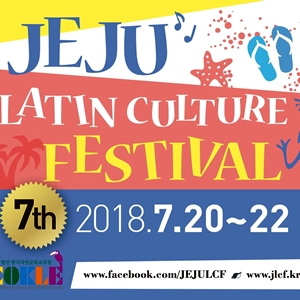
Jeju Latin Culture Festival

Jun 22 2023 – Jun 25 2023

Jeju-si, South Korea

http://www.jejulcf.com/

MALAYSIA

Afro Latin Fest Asia

Jun 23 2023 – Jun 25 2023

Kuala Lumpur, Malaysia

https://www.alfa-asia.net/


ROMANIA

Carpathian Latino Fest

Jun 24 2023 – Jun 26 2023

Ramnicu Valcea, Romania

https://www.facebook.com/events/661474741321475


ISM Edition June 2023

titule salsagoogle.com is International Salsa Magazine

Cover edition 150 june 2023 International Salsa Magazine

Image Map

International Salsa Magazine

Banner yellow and blue, couple dancer latin music in north america edition 150 June 2023 International Salsa Magazine

banner yellow and blue, couple dancer latin music in europe edition 150 June 2023 International Salsa Magazine

Banner couple dance latin music in latin america, yellow and blue edition 150 June 2023 International Salsa Magazine

Back Cover Woman chinasse dj edition 150 June 2023 International Salsa Magazine

Sony Music’s new talent, Luis Figueroa, is unstoppable…And, he is a salsa singer

The singer and songwriter of Puerto Rican descent, Luis Figueroa, is one of Sony Music’s most recent acquisitions. Most recently… La Luz is now available on all digital platforms. Listen to it HERE.

Imparable el nuevo talento de Sony Music, Luis Figueroa

He is not new to the music scene. He brings experience from other sounds and has been nominated twice for a Latin Grammy. For Luis Figueroa, the recently signed Sony Music talent, success in the salsa sound is already assured.

Proof of this is that he has already performed on the most important salsa stage in the world, during the 39th edition of the National Salsa Day at the Hiram Bithorn Stadium in San Juan, Puerto Rico.  The salsa public is betting on him, and Sony Music seems to know it.

He says he has not come to the salsa scene to change anything. He claims “to have come to make a new chapter in what salsa is and to leave my essence within what inspired me and motivated me to be a salsa artist…Learning from the pioneers, who also had resistance in their time. In spite of that, salsa erotica and salsa romántica came to stay.”

He started early on and decided to combine his academic and artistic work. From his academic application, he approached music as a business, which is very encouraging for the tropical genres.

El cantante y compositor de ascendencia boricua, Luis Figueroa

Luis confesses that it was always clear to him that he “was not going to be just another one of the horrendous stories that have been heard about the contractual environment”.

For the singer and composer it was “extremely important to know the business side of the music business, to know the contractual aspect and to protect my copyrights”.

Luis is an artist with his sights set high and his feet on the ground.  He is a humanistic and transparent person, allowing the positive in every story to prevail. He has been very judicious in applying the advice that more experienced artists offer him in good faith.

He recalls that when he was barely eight or nine years old, Gilberto Santa Rosa told him, “you have to keep studying because we are tired of brute singers, you know?” Luis took that statement almost as an instruction.  Eventually, he managed to get accepted into Berklee College of Music, from where he graduated with a concentration in Song Writing and Music Business.

As soon as he finished college, the invitations and requests from different producers began.

He came to Sony Music through Magnus with Marc Anthony’s endorsement, but he was polishing his songwriting skills with the band Magic. He says he was not fluent in Spanish at the time. However, his mother always instilled in him the obligation he owed to himself to keep his mother tongue, Spanish, alive.

Although he learned the structure and mechanics of songwriting in Los Angeles trying to keep the focus on both languages, he didn’t feel the confidence with Spanish that he had with English.

Nevertheless, his development as a songwriter flowed. Before signing with Sony Music, in 2018, he had the opportunity to position a single with Sebastian Yatra, spreading nothing more and nothing less than the urban pop hit, Por perro, which is from his audit.

Luis Figueroa y Bella Martinez  , Sony Music Latin

Today he reflects and understands that Por perro opened doors for him as a composer in both the American and Latin markets. Por perro has accumulated over 654 million views on YouTube and reached #16 on Billboard’s Latin Pop Songs chart. In addition, RIAA® certified it 4X-Platinum. And, the video went on to be nominated for Video of the Year at the 2019 HTV Heat Awards. Luis presented this single during Romeo Santos’ Golden Tour in stadiums throughout Latin America to sold-out crowds.

Says the artist, “We came to Sony at a time when we were not signed as a salsa artist. We were still finding our style, we wanted to go more on the urban pop side. We did songs for Janis and Sebastián Yatra and Manuel Turizo. I think from sharing with different songwriters on the Latin side I was able to develop more with my ideas and now I have the ability to be able to compose songs completely my own. It took me about four or five years to be able to generate that confidence to compose and to have the audacity to expose my inspiration.”

For Luis it was surprising that his interpretation of Hasta el sol de hoy was so well received.  For a moment he thought he was going to hear something like: “you’re crazy, like this is not what we want you to do”, but it was precisely that song one of the bases of the bridge that managed to unite the urban aspect to salsa.

With that hit, which is already a salsa classic, Luis Figueroa made the transition that turned him into a trend. With that song he continued to be known and received massive support. With that song he gained more confidence, not only in the compositions he was creating, but also strengthened his career within the salsa sound. Luis has nourished himself from other genres, refreshing and enriching salsa.

Luis Figueroa y Bella Martinez DNZ 2023

Salsa fans have long been calling for new injections of talent and suggesting new nuances. Luis seems to have picked up on those ideas, sharing new energy gained from his time in bachata, urban, romantic and pop.

I also find it fascinating that this recent salsa convert has made the long-awaited crossover from Spanish to English in reverse; that is, the innovative route from English to Spanish.  That reverse crossover gave Luis a clear understanding of the artistic route he is passionate about and which seems to be one in a continual evolutionary process.

Maybe that is the key, what made him one of the fastest growing exponents of salsa, of the so-called new generation.  He attributes this growth to the audacity to continue creating, which in turn has strengthened his roots in what he does: music. He reflects and affirms that: “seeing my friends take songs of mine, seeing them grow and seeing them be so successful gave me confidence in my pencil, as a composer on the Latin side, although it took me a while. Initially, I took the easy route; doing covers and interpretations of different songs, but I set out to focus on composing and I succeeded.

Before salsa it was bachata. The Caribbean rhythm was all around it.  When he was working with Romeo Santos, his life was all bachata. “I was living, sleeping, singing and speaking in the language of bachata music that inspired me a lot. That’s where my compositions began to stand out, while I was doing backing vocals for Romeo Santos and Juan Luis Guerra on certain songs. It was in that environment that he came into contact with my interpretation.”

However, his greatest inspiration is Jerry Rivera and he considers himself fortunate to have many mentors and several godfathers in salsa, including Johnny Rivera, whom he thanks for lending him a hand and his collaboration in various projects.

Artists such as Tito Allen, Marc Anthony’s musical director Angel Fernandez, Johnny Rivera and Ray Sepulveda have all been supportive. Songs like the one catapulted by the eternal daddy of salsa, Frankie Ruiz, Esta cobardía, and Borinquen -from the pen of Johnny Ortiz- in voice of Yolanda Rivera managed to tattoo themselves in his musical formation.

Two of the aforementioned referents, Tito Allen and Yolanda Rivera were performing on the same stage of the 39th edition of the National Zalsa Day, which was given by Luis Figueroa. For his part, the famous Borinquen composer, Johnny Ortiz, witnessed the great concert accompanied by his most loyal fans in the front row.

Other composers who have influenced Luis are: “The composer of Hasta el sol de hoy – Gustavo Márquez – and Omar Alfano, with whom I had the opportunity to share the stage in Panama when I went to share the stage with great musicians, opening a Marc Anthony concert”.

Luis says he doesn’t mind having the same blueprint of all the others who came before him, and adds: “if you see all my songs, they have to be four or five pregones. The songs from the times before were six minutes, five interludes, they were eight minutes long.” He says he has taken the basic structure to merge it with the modern one on the urban side of salsa. He assures to have adapted because the times require agility in the processes. Having refreshed the salsa scene is one of his great achievements, and by leaps and bounds, hand in hand with Sony Music Luis Figueroa reached the National Salsa Day, the most important salsa stage in the world.

Luis made it to the finish line. Of course, he can’t afford to relax his spirits in this competitive environment.  Nor can he afford to listen to criticism from detractors. His innovative spirit and the freshness of his pen make this salsa singer one of infinite possibilities and a forceful pace. From my corner, I will be supporting him, not only because of the clarity of what he is doing.

The public that follows salsa will support it because we all need salsa to do well. The coalition that we call salsa is now one of action and not complaints, because there is no Musical Productions, because there is no Fania, because everything has been changing, and now that the record companies have reduced their footprint, I affirm as a researcher, that there is nothing more true than the saying: “Nobody knows what he has until he loses it”.

I know that Luis is prepared for what is coming, and more. I know that he will continue to move forward like the snowball that continues to grow and as it moves, it becomes unstoppable. He has already reached the stage of the National Zalsa Day.  He is no longer an emerging artist, nor a new artist.  He arrived at the plaza by way of triumph.  Luis Figueroa is a fully-fledged salsa artist. What remains is for him to continue.

What’s next… For those who continue his unstoppable rise, the question is: What’s next? Luis Figueroa arrives with the album, Voy a ti, which includes the single, Bandido. We’ll keep an eye out for the release of what is sure to be another hit.

Chronology of an evolving salsero:

Awarded at the 2016 Premios Juventud for his version of Flor Pálida, performing with Marc Anthony.

In mid-2017, after being discovered through several videos uploaded on his YouTube page, Luis signed with Magnus Media, Marc Anthony’s entertainment company. His performance of Flor Pálida won him a Premio Juventud for Best Video Cover.

Combining his musical and acting abilities, Luis had a featured role in Telemundo’s acclaimed television series Guerra de idols. Along with Pedro Capó and Christian Pagan, he performed the series’ theme song, Tequila pa’la razón, presenting it live at the Billboard Latin Music Awards, 2017.

In 2018, he accompanied Romeo Santos as a vocalist on three of his international tours, including the world tour, Golden.

In 2019, he released his first single for Sony Music Latin, La Especialista, which reached #27 on the Billboard Latin Pop Airplay chart, remaining for 8 weeks, and the pre-release single from his debut album, Te Deseo, reached #24 on the Latin Pop Airplay chart, remaining 11 weeks on Billboard. La Especialista, boldly combines acoustic guitars and melodies that complement her voice.

Pandora named Luis to its Latin Artists to Watch 2020 music discovery playlist. That same year, Luis made Billboard’s list that consolidated 17 male Latin artists to be discovered during the forties. He was also named one of Billboard’s fastest rising Latin artists.

In July 2021 Luis scored his first #1 on Billboard with Hasta El Sol De Hoy, a track that also reached the top of the Mediabase and LATIN monitor charts. His follow-up single Si Tú Me Dices Ven became his second Top 10 hit, while Billboard chose Luis as part of its Latin Artist on the Rise series. Also in 2021, he was nominated for Best Pop Artist at the HTV Heat Latin Music Awards.

In 2022, Luis released his first salsa album. The production generated three consecutive Top 10 hits on the Billboard Tropical Airplay chart and earned him his first Latin GRAMMY Award nominations for “Best Salsa Album” and “Best Tropical Song”.

The album – self-titled Luis Figueroa – solidified his status as one of the salsa genre’s leading voices and rising stars. Luis was nominated for his first Premios Lo Nuestro in 2022 for Tropical Artist of the Year and Tropical Song of the Year for Hasta El Sol De Hoy.

Luis Figueroa has had a good year in 2023. In January he topped the Media Base – Tropical chart with his Latin GRAMMY® nominated song Fiesta Contigo, and was also nominated for three Premios Lo Nuestro Awards in the Tropical – Artist of the Year, Tropical – Song of the Year and Tropical – Album of the Year categories.

Bella Martinez  Sony Music Latin

By: Bella Martinez

bellamartínezescribe.com

Bella Martínez Writer, Researcher in Afro-Caribbean music.


Bella Martínez
Writer, Researcher in Afro-Caribbean music.


Read Also:  «Mambo Night in Miami Beach» celebra el centenario del natalicio de «El Inolvidable», nuestro Tito Rodríguez.

Francisco Aguabella “El Tamborero de Cuba” Bravo and Virtuoso Percussionist of Afro-Cuban Ritual Music

Aguabella was born on October 10, 1925 and grew up in the drumming tradition of Matanzas in Cuba.

On May 8, 2010, Francisco Aguabella “El Tamborero de Cuba” passed away in Los Angeles, United States. Bravo and virtuoso percussionist of Afro-Cuban ritual music, Latin/jazz and jazz.

Of remembered links to Tito Puente’s band, Mongo Santamaría, Cachao López, Eddie Palmieri, Dizzy Gillespie, Frank Sinatra, Jorge Santana’s group “Malo” and his own “Latin Jazz Emsemble”.

Aguabella nació el 10 de octubre de 1925 y se crio en la tradición de los tambores de Matanzas en Cuba

In 1953 he emigrated to the United States and settled in California as an olu batá (bata drummer).

Batá drumming is a ceremonial musical style that plays an integral role in the African-derived Santeria religion practiced in Cuba, Puerto Rico and since the 1950s in the United States.

No other music of the Americas bears a more striking similarity to West African music than the batá. Its set of three double cone drums reproduces the Nigerian Yoruba drum set of the same name.

Francisco Aguabella “El Tamborero de Cuba” Bravo y Virtuoso Percusionista de la música ritual afrocubana

Many of the rhythms closely resemble their African prototypes, and the Afro-Cuban language of Lucumí, in which Aguabella sings, is clearly a derivation of Yoruba.

Prior to 1980, Aguabella and Julito Collazo were the only olu batá in the United States who had been initiated into a secret society of drummers designated to perform a very sacred type of batá known as batá fundamento .

The batá fundamento is an integral part of Santeria ceremonies in which an individual’s initiation into the religion cannot be consecrated unless he or she has been presented before this sacred ensemble.

Each year Aguabella builds a shrine for his patron saint, Santa Barbara (Changó), and plays music at a birthday party held in her honor.

Francisco Aguabella “El Tamborero de Cuba”

It’s an all-day celebration for invited friends who are primarily but, not exclusively members of the Santeria sect “Santa Barbara knows it’s her birthday,” Aguabella said, “I know how she feels.

She feels happy if I honor her, I feel bad if I don’t so on St. Barbara’s day every December 4 whatever work I am doing today I don’t do for anyone, I love this saint very much and I promised her I was going to have a party every year.

Se recuerda sus vinculaciones a la Banda de Tito Puente, Mongo Santamaría, Cachao López, Eddie Palmieri, Dizzy Gillespie, Frank Sinatra, el grupo Malo

Although Aguabella is widely respected for his sacred drumming he is also known for his virtuosity in the secular forms of Afro-Cuban music.

Choreographer Katherine Dunham was so impressed with Aguabella’s drumming that she invited him to join her company for tours of South America and Europe.

The most influential of Aguabella’s secular styles is rumba, a complex of several musical genres that evolved in Cuba in the early 20th century.

Rumba was the basis for much of the Cuban dance hall music that in turn helped shape American popular music through dance bands based throughout the United States.

However Afro-Cuban rumba bears little resemblance to the ballroom dance rumba that inspired Francisco. Rumba as Aguabella said is part of daily life for many Afro-Cubans, it doesn’t have to be a special day to play rumba, we could start a rumba here without a drum.

You could play it here or there on the wall, in Cuba rumba is 24 hours a day, we gather in a corner and have a glass of rum…. And someone says: Why don’t we play a little rumba?  Some people touch the wall and someone else plays a bottle and maybe takes a cap off the bottle and ‘ca ca ca ca ca ca ca ca ca’ and the Rumba.”

Aguabella’s goal has long been to maintain the integrity of the tradition he so respects, while incorporating it into “crossover” music aimed at a wider audience.

It was his superior musical ability and commitment to tradition that led musicians such as Mongo Santamaria, Malo and Carlos Santana to bring him into their groups.

Cubacan Francisco Aguabella Año 2002

Aguabella lived in Los Angeles; where he continued to performand exert a great influence on Latin American music.

Afrontilas Music

Read Also:  Tata Güines known as Manos de Oro, Cuban rumbero and percussionist

The legacy of Leopoldo Pineda, the ambassador of the trombone in La Maquinaria Fania All Stars

The Dominican trombonist was part of Las Estrellas de Fania and stood out for his virtuosity on his instrument, as commented by musicians Joe de Jesús and Willie Álvarez.

Leopoldo Pineda, “Palma Sola” was born on May 8, 1939 in a small batey called Palma Sola, in Barahona, southern province, Dominican Republic.

El legado de Leopoldo Pineda, el embajador del trombón en La Maquinaria Fania All Stars

He passed away on June 27, 2019 in New York City. Due to his solvency on the instrument, Leopoldo was a participant in hundreds of salsa recordings for more than three decades.

At 80 years of age, Leopoldo Pineda, the Dominican trombonist who earned the respect of his colleagues in the most courageous years of salsa, has passed away.

A case of diabetes had undermined his health in recent years and the fatal outcome came on Thursday, June 27 in New York City.

In recent years, Pineda had been retired from musical activity, due to health problems and diabetes.

Willie Álvarez y Leopoldo Pineda (Foto Willie Álvarez)

He began at a very young age to seek out musical instruments. In his hometown, Pineda would often visit a neighbor’s house to watch him rehearse different instruments.

There he began his first lessons, learning to play trumpet and tambora.

He studied music at school for compulsory education and there he developed certain tropical rhythms.

In Barahona, there was a music school where Leopoldo graduated and later, because of his talent, he was referred to the National Conservatory of Music in Santo Domingo.

As he grew in knowledge, musically speaking, he learned to play several instruments, among them, the Saxophone and the Trombone, the latter being his weapon of choice for the rest of his life.

Leopoldo Pineda
Leopoldo Pineda

In his native Barahona, he was known as “Chanchito”, but it was at the Conservatory where the nickname “Palma Sola” was born, identifying him to his classmates by the name of the town where he was born.

After participating in various groups in the Republic, Leopoldo went to New York City and there he started playing with Tito Rodriguez’s orchestra in the 60’s.

He also recorded with Los Cachimbimbitos and Los Cachimbales.

He also recorded with Ismael Rivera’s Los Cachimbos and was producer of one of Milly Quesada’s first albums.

Musician Jimmy Bosch used to include Leopoldo Pineda in the select group of trombonists from whom he learned. Willie Colón, el Malo del Bronx, had emotional words for don Leo. Indeed, the Dominican Pineda is part of the glorious history of the best salsa, the one that was born in the neighborhood and that has deeply penetrated in this part of South America.

Alfredo de la Fe posted on his Facebook account: “Leopoldo Pineda, great musician, we played together with Típica 73 and Fania All Stars.

Lepoldo Pineda Trombonita de la Típica 73 y Fania All Stars

Then he began to walk the best paths of Salsa, being part of orchestras such as Típica 73, Orquesta Harlow, Willie Colón, Fania All Stars, Sar All Stars, Jose Mangual Jr, La Conquistadora, Jose Alberto “El Canario”, Rubén Blades, Orlando Watussi, Laba Sosseh, Monguito El Único and Héctor Lavoe, among others.

Fania Records

Read Also: Orestes Vilató is one of the most influential figures in the world of Latin percussion.

  • « Go to Previous Page
  • Page 1
  • Interim pages omitted …
  • Page 189
  • Page 190
  • Page 191
  • Page 192
  • Page 193
  • Interim pages omitted …
  • Page 305
  • Go to Next Page »

International Salsa Magazine (ISM) is a monthly publication about Salsa activities around the world, that has been publishing since 2007. It is a world network of volunteers coordinated by ISM Magazine. We are working to strengthen all the events by working together.