


César Monge, trombone player, after graduating from the Escuela de Bandas Militares, was part of the orchestras “La Tropicana de Eldy Tor” and “Los Mundiales” and “Swing Latino”.
Victor Cuica, a saxophone player, knew him from those musical steps.
Oscar León had just bought a car with which he used to be a cab driver, but with a great love for music.
León wanted to create a musical group and gave Cuica the task of recruiting musicians from the Escuela Superior de Música, where Cuica was studying.

That orchestra was called “Oscar y sus estrellas”. César Monge played in that orchestra for a while, until musician Federico Betancourt, director of his group “Federico y su Combo”, hired him.
While playing with this orchestra, in the Caracas night club La Distinción in the urbanization El Rosal, a disagreement arose between the owner of the orchestra and the owner of the club.
León took advantage of the incident and decided, together with Cuica and Monge, to reestablish his group. Cuica, inspired by the name of the successful American group The 5th Dimension, suggested calling it Dimensión Latina.

Then León took a square and drew the logo with which the group was launched.
It was formally created on March 15, 1972 in a first rehearsal in La Guaira, at the home of the pianist Enrique (Culebra) Iriarte. It was formed by Iriarte on piano, César Monge (Albóndiga) and José Antonio Rojas (Rojitas) on trombones, José (Joseíto) Rodríguez on timbales and bongo, Elio Pacheco on tumbadoras and Oscar León, renamed Oscar D’León on bass and in the role of singer.
Several nights the establishment was frequented by Victor Mendoza, singer and musician founder of Trio Venezuela and by then hired as music producer by the Top Hits record label, who had a band called “El Clan de Victor”, which had to produce an album per year. Mendoza motivated the musicians and they did two musical auditions.
José Rodríguez, who had some money saved due to his work as a musician and motorcyclist, arranged for the recording at Estudios Fidelis with a song by Elio Pacheco and another by Oscar León. These tests were not to the liking of the label owner.
This discouraged Enrique Iriarte, who promptly left the group. His place was taken by pianist Jesús “Chuíto” Narváez. Despite the label’s refusals, Víctor Mendoza wanted to record them and decided to include them in his production of “El Clan de Víctor” in 1972.

The sextet’s first hit was “Pensando en ti”. Mendoza then suggested Oscar León the artistic name of Oscar D’León.
During 1973 they recorded their second album, called “Dimensión Latina” where he gained recognition and participated in important events, such as tours of Curacao and the carnival of Maracaibo, launching their third album “Triunfadores” from which the second hit of the orchestra “Qué Bailen Tós” was released.
In 1974 the bolerista from Caracas Wladimir Lozano joined the orchestra, who had been working in night clubs in Caracas along with the harpist Ramón Hernández.
Wladimir gave the group more interpretative depth, achieving the duo Oscar and Wladimir, which gave birth to important interpretations and commercial successes that earned the band international recognition.
The highlight of Lozano’s entrance was “La Piragua”, a song that reached the top of the radio charts.
By 1975, La Dimensión Latina enjoyed the support of the public, who enjoyed their performances on television and being the image of commercial products.
A new album arrived, “Dimensión Latina ’75”, and with it came their consecration, for some critics the most successful and iconic. It included songs of extraordinary commercial success such as “Taboga”, “Parampampam”, “Mi Adorada”, “Cañonazo”, and a song by Oscar that was included as filler but would become the best-selling single in their history, “Llorarás”.
Musician Carlos Guerra joined the orchestra on trombone, increasing the number of trombonists to three.
Subsequent productions included new commercial and interpretative achievements such as “Dolor cobarde”, “El frutero” and “Dormir contigo”. After their presentation in the United States, La Dimensión produced the album “La Dimensión Latina en Nueva York” (1976), which would be the seventh and last album of the orchestra with Oscar D’León, who would leave the group to start a successful solo career.
In the absence of Oscar, La Dimensión Latina calls, at the suggestion of Joseíto Rodríguez, the well-known guarachero and gaitero from Zulia Argenis Carruyo, who had been a member of Super Combo Los Tropicales and Guaco, for the recording of the album “La Dimensión Latina ’77 Internacional” and bassist Gustavo Carmona.
That same year, thinking of continuing to blaze trails abroad, they thought of a voice of international stature, and it was the Puerto Rican musician Roberto Roena who suggested the famous Puerto Rican singer Andy Montañez, lead singer of the Gran Combo de Puerto Rico.
Montañez was tempted by an extraordinary contract. Along with Montañez, the Zulian singer and sonero Rodrigo Mendoza joins the band and for the first time La Dimensión has three voices in its cast.
On November 11, 1977, La Dimensión Latina headlines the “Salsa International” festival at Madison Square Garden in New York, organized by Ralph Mercado and with the presence, among others, of Wilfrido Vargas and Cheo Feliciano.
Andy Montañez remained with the orchestra until 1980, recording eight albums, including hits such as “El Eco de un Tambor” by maestro Tite Curet Alonso, “Linda Minerva” sung as a duet with Argenis Carruyo, “Ave María Lola”, “Por el Camino”, “Mi Bombolaye”, and Puerto Rican contributions such as “Cantante Errante” by composer Johnny Ortiz and “Quisiera Saber”.
Rodrigo Mendoza managed to create hits such as “Fanfarrón”, “Córreme guardia” and “Suena el cuero”.
The orchestra also included Colombian pianist Samuel del Real, percussionists Carlos (Pacusso) Guillén and Luís Machado and the voices of Cheo Valenzuela, Alexis Martínez, Luis Arturo Guaramato and Alex “Mostaza” Vargas.

Four decades later and united by salsa, the reunion of the year Oscar D’ León and La Dimensión Latina.
Poliedro de Caracas
Only Invershow makes it possible
Venezuela this May 12, 2023 we will live something “HISTORIC”, and you can be present at this iconic reunion.
From seeing them together again to dancing and singing to the rhythm that only they can achieve.
It will be an unprecedented concert, don’t let them tell you about it and buy a ticket to live it YOU.

“The important thing is to maintain the style of the orchestra. The singer here has to adapt to the orchestra, not the orchestra to the singer. Whoever comes to sing has to adapt to the repertoire and to our way of doing salsa, which is very peculiar. We have a unique sonority”.
César Monge, Albóndiga.
Visit: La Dimensión Latina S.R.L
Read also: Freddy de Jesús Ortega Ruiz “Coco & su Sabor Matancero”





or weeks, we have witnessed how the Latino community in the United States has withdrawn its support, and has even considered its decision to buy Goya Foods, after the demonstration of support by its CEO to Donald Trump.
Goya Foods, or Goya as this Hispanic-rooted food company is popularly known, faces calls for a boycott in the United States. This comes after its CEO, Robert Unanue, fervently praised the President of the United States, Donald Trump, saying that his leadership is “a blessing.”
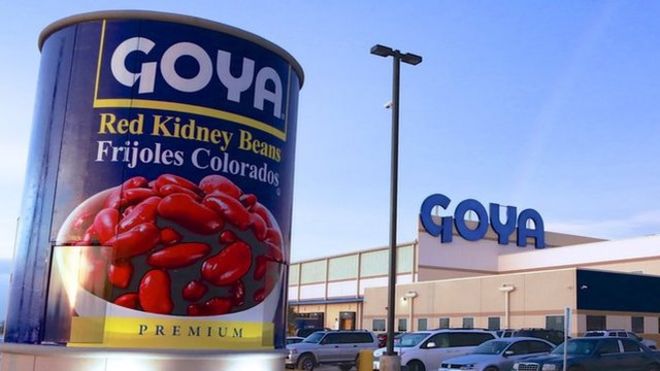
Goya Foods is the largest Hispanic-owned food company in the US With these statements, many of its loyal consumers and even some high-profile Democratic supporters are asking that they not buy the company’s products.
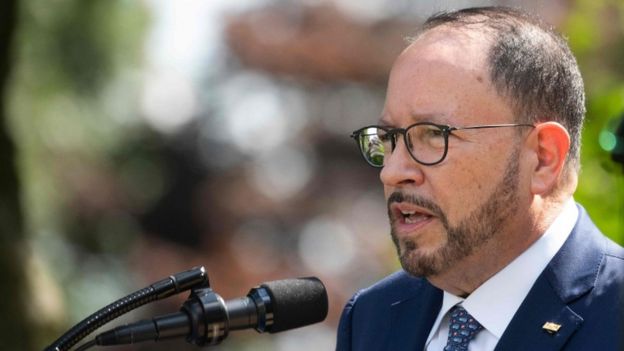
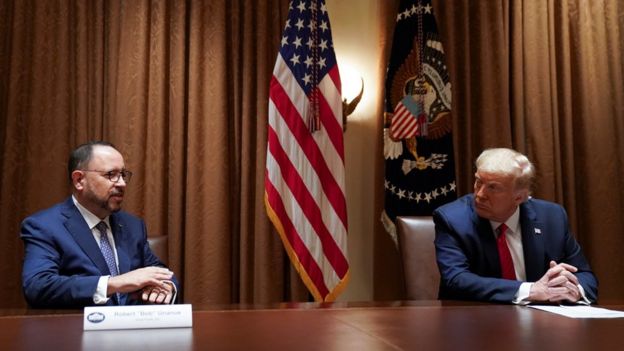
Unanue attended an event at the White House where President Trump signed the Hispanic Prosperity Initiative, which was described as an effort to improve access to educational and economic opportunities for members of this community.
Unanue’s exact words were: “We are all truly blessed to have a leader like President Trump, who is a builder.”
For many regular consumers it is puzzling and contradictory that the CEO of the largest empire of food consumed by Latinos in the United States, suddenly decides to support so openly a president who is not exactly the favorite for Hispanics.
Since then, much criticism has rained, not only for the political affinities of the highest representative of Goya Foods, but for what this company represents for the millions of Latinos in the United States.
The White House, has made controversial anti-immigration decisions, sought to end a policy that protects hundreds of thousands of undocumented youth from deportation, and sought to build a border wall in the south. enacted a policy that separated children from parents when they were detained at the border.
Many consumers have since said that they would no longer buy the company’s products, which include basic inputs for the preparation of traditional food in many Latin American countries. Those who promote this boycott have shared brands and alternative recipes on different social networks, with the hashtags #Goyaway and #BoycottGoya.
Some consumers say they have grown up with a sense of cultural attachment to the brand, but are now disappointed by the CEO’s comments. Many have relied on the company for affordable products that are often hard to find, but are key ingredients in Hispanic cuisine. Now they feel slighted by a CEO who has left the community that supports their company.
Unanue defended himself and pointed out that he has also worked with initiatives of former US first lady Michelle Obama. She stated that, in her view: “This is repressing (freedom) of expression,” she said. “I don’t apologize for speaking – and especially when the president of the United States calls you – you’re going to say, ‘no, sorry, I’m busy, thank you.’
But the debate seems to involve more than just Latinos, as Goya has always been concerned about also attracting non-Latino consumers, from Asians to white Americans, using advertising slogans in English such as “Goya, O-Boya.” For many non-Latinos, consuming Goya products is a fairly authentic, albeit superficial, way of practicing Latinidad.
Goya fans are divided on whether or not to follow the boycott, a considerable number planning to end their attachment to the brand. Some have even published recipes for making adobo and stir-fry, among other alternatives to the brand’s products. Others have posted suggestions for lesser-known brands like Sun Vista, Pilón and Badia.
Goya will have to deal with a significant drop in sales and its perception in the market, at least in the short term, during a time when so many economic indicators are in recession. It’s also true that earlier this year, Goya donated some 136,000kg of food, or roughly 270,000 meal portions, to food banks and organizations to help with the coronavirus crisis. In the event that generated all the controversy, Unanue announced that it would donate another million cans of Goya chickpeas and 454,000 kilos of food products to food banks to help families affected by the pandemic.
Elections in key states are often defined by very narrow margins; even a small dropout of Latinos from the Republican side could be decisive for the results.
The White House Hispanic Prosperity Initiative Act created a 20-member commission designed to work with various Cabinet members to implement vague initiatives related to employment, education, and small business development. But most Latinos will find this effort too little, too late, and too much like election-year complacency.
The message of the Latino community in the United States is very clear, they are a united front and will not be manipulated by last minute actions, even with the support of important figures in various sectors of the Hispanic community.
Like many of the immigrants in search of the “American dream”, Prudencio Unanue landed with his wife in New York in 1921, from Puerto Rico. The Unanue family had emigrated from Spain to the island in the early years of the 20th century. In New York he settled in the Latin quarter of Harlem and after several years of hardship, one day in 1936 he made the best investment of his life: he bought a bankrupt company (Seville Packing Company) and the Goya brand.
In 1936, Prudencio Unanue found the name Goya perfect: simple and easy to pronounce in Spanish and English. And he decided that his new business venture would bear that name, convinced that this time he would achieve his goal. He bought the brand for $ 1. He never imagined that that day a giant was being born that today has a turnover of more than US $ 1,500 million a year, according to company figures, and sells all kinds of foods of Hispanic American origin, such as beans, rice, canned meat and seafood, condiments, cheese, oil and even frozen dishes.
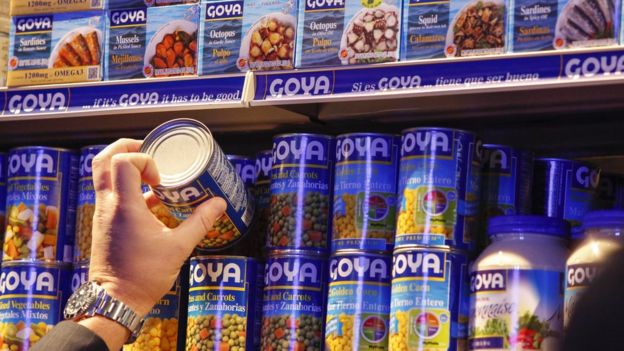
It started by importing products from Spain – like olives and olive oil – to sell to Spanish expatriates, but quickly expanded the business to import food from Latin America to reach other immigrant communities. In fact, as after the Second World War, a wave of Puerto Ricans entered New York to fill the lack of labor in the factories, Unanue realized that there was a great opportunity.
Then, in the 1960s, the first Cuban wave arrived and thus, little by little, Latino immigrants were opening up space in the different states of the country, and in the same way the business began to expand. Goya gave an answer to the “nostalgia” of those who leave their country.
Prudencio was succeeded by his son Joe, who inherited the challenge of expanding Goya internationally and today the firm is under the executive direction of his grandson: Robert Unanue. It only remains to wait to see how high the price Goya Foods will have to pay for having disheartened so many, to maintain a political stance rejected by the majority of its consumer base.

Latin music has been of great influence for singers in training and, without a doubt, marked the lives of its pioneers. Some born in Spanish-speaking countries and others with descent from these lands have not been able to put aside the flavor that has been inherited to them. There are those who affirm that these tropical and Caribbean rhythms are carried in the veins and it is very difficult to get rid of these roots.
The arrival of Latinos in the United States also implied the arrival of their customs and culture. Latin music is considered to be a large number of genres, including: salsa, merengue, bachata, bolero, bossa nova, reggaeton, rumba, ranchera, cumbia, tango, among others.

Latinamerican Festival at Nagoya in Golden Week
Latin American music has influenced American music, starting from jazz to country music. Many bands added congas, percussion, or maracas to their instruments as they were drawn to the result these elements brought.
Starting in 1940, the music of Latin America, which still did not have a specific term, covered a greater number of audiences in the United States; international radio networks broadcast different themes of the time. In addition, they featured different Mexican bolero musicians such as Alfredo Antonini, Néstor Mesta Chayres, Eva Garza and Juan Arvizu. In the 1940s the US also heard the “Calypso” with great acceptance.
It was not until the 1950s that the term “Latin music” became popular, seeking to establish a difference between Afro-American and Afro-Latin American rhythms. Some artists marked this musical fusion to a greater extent, making the best of Latin music known on American soil. During the 1950s, music brought to the north from the island of Cuba, such as mambo, cha-cha, and rumba, was very popular. As well as the famous Mexican songs: rancheras and mariachis.
Some Latino artists who marked the history of Latin music in the United States Tito Puente was an American percussionist with Dominican origins remembered for his participation in worldwide jazz, Cuban music and salsa. In 1950 he helped promote the genre of mambo and cha-cha. His album “Dance Manía” was considered the most famous by the artist, it was one of the most heard among the Latino community in the US The album also set a precedent by being recorded in Spanish, generally, Latin albums were in English or with instrumental songs. It was Tito Puente who broke with this tradition.
At the beginning of the 20th century, tango touched American soil. Then, in the 70s, the Argentine Astor Piazzolla gave something to talk about by demonstrating his passion for the genre and revolutionizing what was known until that moment. Piazzolla was born in Mar de Plata but lived in New York from a very young age. It definitely changed the way of looking at music that was long marginalized, it was considered the music of the working class. The singer made mixtures between tango, jazz and contemporary classical music. His songs were a great success and were famous in bars of the time.
It was not until the late 1960s and early 1970s that the term “salsa” began to become known. Afro-Caribbean musicians mixed Cuban dance with influences from jazz, Caribbean music, and American rhythms. Although in previous decades it had already had its beginnings, it was in the streets of New York where it was consolidated as a commercial success.
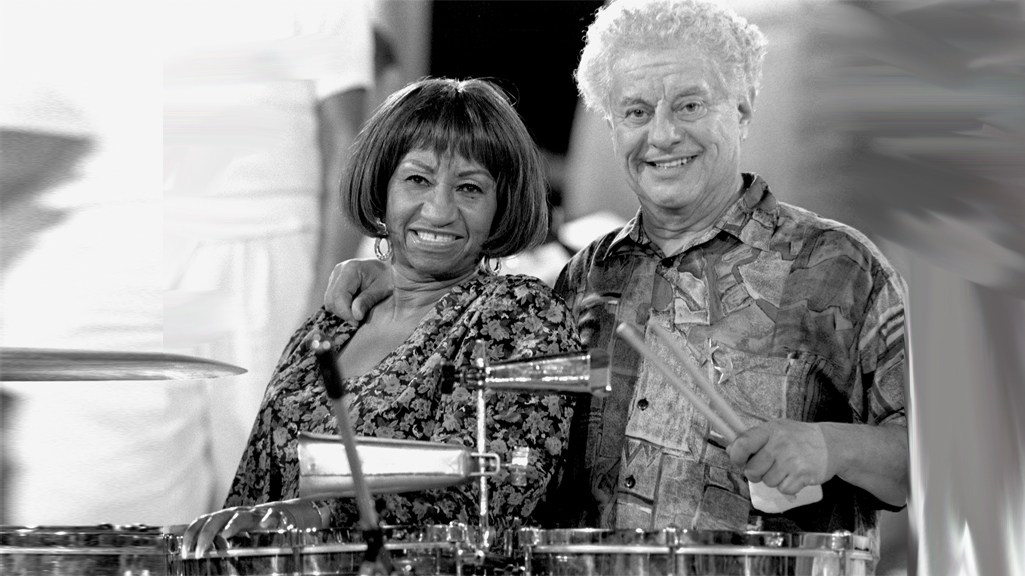
Celia Cruz and Tito Puente – Latin music
Salsa launched artists who are now legends to stardom, such as: Celia Cruz, Willie Colón, Héctor Lavoe, Rubén Blades, Johnny Pacheco, among others.
Between the 1970s and 1990s, Dominican immigrants to the United States continued, especially to New York City, and promoted genres such as merengue and bachata. Juan Luis Guerra was one of the great exponents of both styles.
In the 90s, Selena mixed the Texan aesthetic with pop, giving her the title of the highest representative of the genre.
Entering the 2000s
In this decade, Latin rhythms continued to set the trend. Singers like Rubén Blades returned with songs that promised to be hits in the country.
At the end of 1999 Marc Anthony surprised his followers with an album of the same name. Although he was already known in the salsa genre, he decided to try other styles. With the intention of reaching the Anglo market, he is encouraged to sing in English. “I Need To Know” is a cha-cha song that quickly became popular in the United States. For eleven weeks it remained in the top North American positions, ranking in the Top 10 on the Billboard. The Spanish version won the Grammy for the best Latin song of the year 2000.
Marc Anthony was one of the artists who marked this decade in the US That same year a compilation of his best salsa songs went on sale, which he called: “Desde el principio”. With these successes to his credit within this country, he set out to make an important tour of the United States. Canada and Central America. Madison Square Garden in New York was overflowing with fans who wanted to hear this American singer but who positioned himself as the leader of a Latin genre.
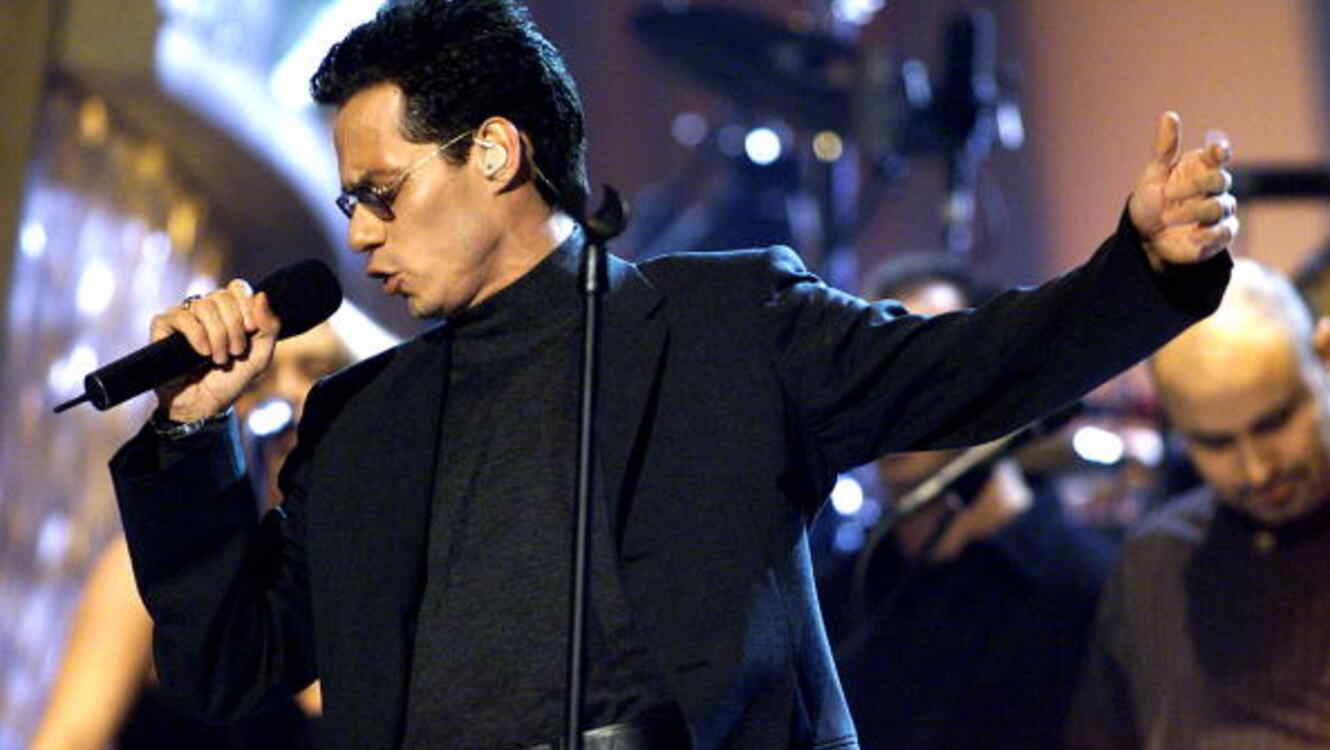
Marc Anthony
The opening of “I Need To Know” appeared in the Nissan Versa commercial in the United States and in 2009 it also featured in an American Dad chapter, an American television series; thus giving greater projection to this genre throughout the North American territory.
During this decade, salsa and Latin music in general ended up positioning themselves in the United States.
In 2002 Blades launched his album “Mundo”, becoming one of the most popular in the United States. In fact, it won a Grammy. The album contained a mix of various rhythms and instruments. The artist wanted to create a fusion of cultures and musicians from different countries. “Estampa” was a subject with great acceptance as it evoked the Afro-Cuban influence in New York music.
By the year 2000, there were already music channels and with them the projection of emerging talents who in many cases did not speak the English language. The dynamics of these channels focused on the public, who chose which songs and videos were to be played, giving the opportunity to many young, little-known artists. They were also considered a springboard for the singers of the season and the Latin movement in general.
A movement that is here to stay
Latin music had come to continue making history and it was time to give it greater merit within the American spectacle.
Today, Latin singers, songwriters, and bands are innumerable. Latin music continues to gain space in the United States and more and more artists are achieving success within its borders. In addition, the endless awards that enhance their work in the industry.
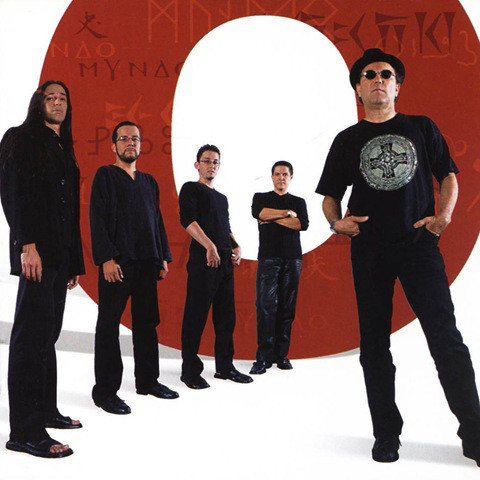
Ruben Blades – Mundo
The consumption of these musical rhythms has increased throughout the American territory. Latinos and followers of this genre have gained space over the years; they can enjoy nightspots, live music, festivals, concerts and much more. Long live Latin America and its people! Long live the United States and the countries that have opened their doors to Latin music