• Skip to primary navigation
  • Skip to main content

International Salsa Magazine

  • Home
  • Previous editions
    • 2025
      • ISM / November 2025
      • ISM / October 2025
      • ISM / September 2025
      • ISM / August 2025
      • ISM / July 2025
      • ISM / June 2025
      • ISM / May2025
      • ISM / April 2025
      • ISM / March 2025
      • ISM / February 2025
      • ISM / January 2025
    • 2024
      • ISM / December 2024
      • ISM / November 2024
      • ISM / October 2024
      • ISM / September 2024
      • ISM / August 2024
      • ISM / July 2024
      • ISM / June 2024
      • ISM / May 2024
      • ISM / April 2024
      • ISM / March 2024
      • ISM / February 2024
      • ISM / January 2024
    • 2023
      • ISM / December 2023
      • ISM / November 2023
      • ISM / October 2023
      • ISM – September 2023
      • ISM – August 2023
      • ISM July 2023
      • ISM Edition June 2023
      • ISM – May 2023
      • ISM April 2023
      • ISM March 2023
      • ISM February 2023
      • ISM January 2023
    • 2022
      • ISM December 2022
      • ISM November 2022
      • ISM October 2022
      • ISM September 2022
      • ISM August 2022
      • ISM July 2022
      • ISM June 2022
      • ISM May 2022
      • ISM February 2022
      • ISM January 2022
    • 2021
      • ISM December 2021
      • ISM November 2021
      • ISM October – 2021
      • ISM September 2021
      • ISM August 2021
      • ISM July 2021
      • ISM May 2021
      • ISM April 2021
      • ISM June 2021
      • ISM March 2021
      • ISM February 2021
      • ISM January 2021
    • 2020
      • ISM December 2020
      • ISM November 2020
      • ISM October 2020
      • ISM September 2020
      • ISM August 2020
      • ISM July 2020
      • ISM June 2020
      • ISM May 2020
      • ISM April 2020
      • ISM March 2020
      • ISM February 2020
      • ISM January 2020
    • 2019
      • ISM December 2019
      • ISM November 2019
      • ISM October 2019
      • ISM Septembre 2019
      • ISM August 2019
      • ISM July 2019
      • ISM June 2019
      • ISM May 2019
      • ISM April 2019
      • ISM March 2019
      • ISM February 2019
      • ISM January 2019
    • 2018
      • ISM December 2018
      • ISM November 2018
      • ISM October 2018
      • ISM September 2018
      • ISM August 2018
      • ISM July 2018
      • ISM June 2018
      • ISM May 2018
      • ISM April 2018
      • ISM March 2018
      • ISM February 2018
      • ISM January 2018
    • 2017
      • ISM December 2017
      • ISM November 2017
      • ISM October 2017
      • ISM September 2017
      • ISM August 2017
      • ISM July 2017
      • ISM June 2017
      • ISM May 2017
      • ISM April 2017
  • Download Salsa App
    • Android
    • Apple
  • Spanish

Search Results for: Trombones

Trumpeter Davián Raúl Launches Solo Career with “Despierta Salsero” Album

Davián Raúl has released his debut production, Despierta Salsero, available now in digital format and on CD. The young Puerto Rican salsa artist is currently on a promotional tour for the album.

Davián Raúl is no stranger to the salsa scene. He’s been playing the trumpet since he was ten years old, starting with the Banda Sinfónica de Toa Baja. He eventually became a trumpeter for Sonora Ponceña, thanks to the support of Papo Lucca, director of “Los Gigantes del Sur.” To reach his current position, Davián Raúl pursued an education in Music Education and Performance, with the trumpet as his primary instrument. He is a graduate of the Interamerican University of Puerto Rico and is currently a music teacher at a school in Comerío, Puerto Rico, where he mentors students from pre-kindergarten through sixth grade.

Trumpeter Davián Raúl launches his solo career with the album Despierta Salsero.

Before joining one of the most important and iconic salsa orchestras—one that heavily emphasizes the trumpet’s sound—Davián was a trumpeter for the orchestras of Nino Segarra, Primi Cruz, Osvaldo Román, and Anthony Cruz, to name a few. He was also part of Conjunto Chaney shortly before auditioning for La Ponceña. During his time as a backing musician, he traveled the world, playing his instrument in major venues and gaining the experience necessary to make his leap. Davián Raúl makes his debut as a solo singer with Despierta Salsero, bringing a solid hard salsa proposal aimed at satisfying the taste of true salsa aficionados.

Album Details

The album features 10 tracks encompassing hard salsa, romantic salsa, rumba, bolero, and son. The recording includes: ‘Al que nace pa’ salsero,’ ‘Tengo que marcharme,’ ‘La campana’ (a song dedicated to Cali, Colombia, known as “the salsa capital of the world”), ‘Ahora me extrañas,’ ‘Coño, despierta salsero,’ ‘Mientras me sigas necesitando,’ ‘Mi salsa no muere,’ ‘La pachanga,’ ‘Te traigo el son,’ and ‘Ten compasión.’ The orchestration was arranged by Raúl Berríos Raymundí, with arrangements by talented musicians such as Ramón Sánchez, Ernesto “Tito” Rivera, Ángel “Pajay” Torres, and Andy Guzmán. Nine of the ten compositions are original works by Raúl Berríos Raymundí and Irvin Raúl Berríos López. The tenth track, ‘Mientras me sigas necesitando,’ is a renowned song by the celebrated Camilo Sesto.

Musical Production and Guest Artists

The musical execution was handled by a carefully selected group of great Puerto Rican and international musicians. The congas feature “Pequeño” Johnny Rivero, Kachiro Thompson, Gadwin Vargas, Charlie Padilla, and Sammy García. Japhet Rodríguez, Pete Perignon, Edwin Clemente, Pablo Padín, and Diego Camacho play the timbal. Alexandra Albán, Luisier Rivera, Javier Oquendo, and Richard Carrasco perform on the bongos. Richard Bravo is on drums, while Raúl Berríos Raymundí, Sergio Múnera, Ricardo Lugo, Ramón Vázquez, and Pedro Pérez provide the rhythm on bass. Andy Guzmán, Ramón Sánchez, and Carlos García play the piano. The trumpet section showcases David “Piro” Rodríguez, Angie Machado, Jesús Alonso, Marito Ortiz, Dante Vargas, Pedro Marcano, Yoandy Vera, and Davián Raúl himself. José Berríos Raymundí and Irvin Raúl Berríos López contribute on trombones. For the choruses, the voices of Carlos García and Jorge Yadiel Santos alternate with those of Raúl, Irvin, and Davián himself. The sound engineering team responsible for mixing and mastering included Papo Sánchez, Andy Guzmán, and Rolando Alejandro. With this impressive lineup, Davián Raúl, one of the youngest members of the Berríos dynasty, makes his debut, confidently declaring that “salsa is still in control.”

Davián Raúl released his first production available in digital format and on compact disc, Despierta Salsero.

Endorsements

Recently, “El Caballero de la Salsa,” Gilberto Santa Rosa, endorsed Davián Raúl’s debut production via a video clip shared on social media. Santa Rosa stated, “Davián Raúl is a tremendous young talent whom you must listen to… so that true salseros know there’s plenty of salsa for a long time to come. Davián Raúl: Go for it!” In response, Davián Raúl commented on his Facebook page, “Infinite thanks (…) for making this dream possible. You didn’t just give me space, you gave me an opportunity worth gold! This is just the beginning… and may the salsero awaken throughout the world!”

Bella Martinez Puerto Rico


Also Read: Bella Martinez, the irreverent Salsa writer

Oscar D’León’s La Crítica was founded in Caracas in 1978

La Critica by Oscar D’León

We had just returned from New York when “Chiquitín,” Oscar D’León’s longtime secretary, called us at the office to let us know there was a commotion in the “Faraón de la Salsa’s” office.

Oscar D'León's La Crítica was founded in Caracas in 1978
Oscar D’León’s La Crítica was founded in Caracas in 1978

It was about the defection of some musicians from the Orquesta La Salsa Mayor. Indeed, Leo Pacheco, Felipe Blanco, and other musicians had decided to leave for financial reasons.

The news caused a stir; Oscar had already achieved a very special sound. He had moved away from the trombones that characterized his style and had incorporated a brass section with trumpets that made a difference. Suddenly, he was without his powerful machinery. Leo and his group formed what was called Nuestra Orquesta La Salsa Mayor, and Oscar, without a second thought, reassembled his group alongside Enrique “Culebra” Iriarte.

La Crítica

No one should doubt that Oscar had a tough time, but the prestige he had gained and the popularity of the sonero allowed him to come out on top.

Paul González, the son of “El Guajiro” González, a veteran guarachero and who at the time served as manager for the now-called “Sonero del Mundo,” devised the orchestra known today as La Crítica to avoid future setbacks and to have an orchestra on hand to alternate in scheduled dances.


La Critica de Oscar D’ León

The project’s formation brought together pianist and arranger Mauricio Silva, percussionist Radamés Pimentel, and Teo Hernández, who would serve as vocalist.

Since 1978, La Crítica emerged as an exceptional group. The jazz influences infused by Mauricio Silva from the very beginning were crucial for the public to accept the band as a favorite. In that “beginning,” other significant names included “Cheo” Navarro and Gustavo Quinto, who were already known from their time with Grupo Mango.

It could be said that Teo Hernández was the newest to the scene, as he had only been “toiling” in the world of salsa for five years, although he already had a “summa cum laude” after recording with maestro Ray Pérez and his Dementes. A female voice would debut with the orchestra: Gladys Torres.

40 Years of La Crítica

There have been many setbacks and successes over 40 years.

The musicality of this successful group is to be celebrated this Saturday, June 16, at the BOD Cultural Center. The event is at 5:00 in the afternoon, when the salsa public will gather en masse.

La musicalidad de esta exitosa agrupación ha de ser celebrada este sábado 16 de junio en las instalaciones del Centro Cultural BOD.

Jorge Collazo, who was Oscar D’León’s press chief and now is La Crítica’s on their return, tells us that a spectacular night is being prepared, “an evening to remember, a show that no salsero should miss.

The original singers will be there: the sonero Teo Hernández and Gladys Torres, who will take the stage accompanied by top-tier musicians and luxury guests to celebrate, dance, and sing the well-known hits of the moment, we are talking about ‘Se necesita rumbero,’ ‘Amada ven,’ ‘La merenguita,’ ‘Madre,’ ‘Rumba rumbero,’ ‘No lloraré,’ ‘A él,’ and ‘Cruel desilusión,’ among others.”

La musicalidad de esta exitosa agrupación ha de ser celebrada este sábado 16 de junio en las instalaciones del Centro Cultural BOD.

The prestige gained by La Crítica allowed it to accompany great international soneros such as Justo Betancourt, Héctor Lavoe, Ismael Miranda, Ray de la Paz, Daniel Santos, and the legendary Celia Cruz.

This is part of La Crítica.

Also Read: Cheo Linares is a Singer, Composer, Sonero, Poet and Caraqueño

Eddie Montalvo Iron Hands: “I’m in love with Venezuela”

We felt an unforgivable duty to publish this interview with Eddie Montalvo “Iron Hands,” as it is Swing Latino update on the biography of a musician who is more than just a friend, a godfather; he’s family, the kind that gives you friendship, that fills you with conflicting feelings and leads you to relive wonderful and unforgettable moments.

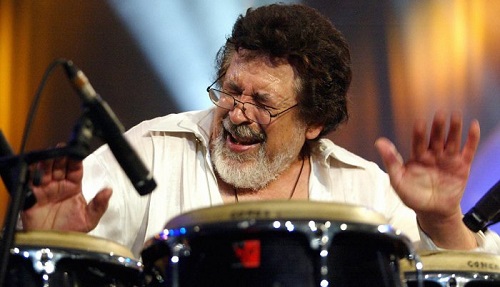
Giogerling Mendez y Eddie Montalvo

He is a living legend of our Afro-Caribbean music.

We hadn’t seen each other for many years, so I wanted to share the time with him before he left Venezuela (he was playing on Saturday, so we met on Friday and shared some time with longtime friends starting at noon), before the show. The next day he would say goodbye to Venezuelan soil. This interview will be published in two installments, and here is the first one.

– How long has it been since Eddie Montalvo last came to Venezuela?

– Let me put it this way. The last time I came to Venezuela was with Rubén Blades and Son del Solar. I’ll call it Seis, because Son was with another keyboardist, Arturo Ortiz, Robby Ameen on drums, and two trombones, Reinaldo (Jorge) and Jimmy Bosch. That was the last time, many years ago.

I’ve always loved Venezuela, it’s the honest truth. I’m in love with Venezuela, no matter what happens. I’m always grateful for it. I’ve always had many friends here.

The School of the Street

– What was your first experience in music? Why conga?

– Well, when I was very young, my parents and I would go every weekend to a party at an aunt’s house. At that time, my goddaughter, I’m not going to lie to you. The gentlemen were always well-dressed, with ties, the ladies with their eyebrows done, their hair combed, a real formality despite their humility.

Everyone was dancing at that party, and Eddie Montalvo was banging on the tables until he could say no more. That’s how they got me two metal cookie tins, and it became my first instrument.

When I was five, I asked my parents if it was possible for Santa Claus to bring me a bongo. My parents were poor, and yet, on December 25th, a bongo appeared under the Christmas tree.

A bongo that didn’t have a key, a bongo that you had to put a fire under to get the sound out.

At ten, without lying to you, I asked them if it was possible for them to buy me a conga, and my parents bought me a conga that cost 50 US dollars.

As I grew older, I started crossing the street where there was always a party of rumba players. I went down with the conga, and they asked me, “Do you know how to play?” And I said, “No,” then they said, “Well, if you don’t know how to play, you can’t sit here with us and rumba.”

I went home frustrated with the conga line because they wouldn’t let me sit in and play at the party.

Héctor «Bucky» Andrade

It just so happened that there was a conga player who played with Héctor Lavoe, with Willie Colón, on an album called The Hustler.

His name was Héctor Andrade and he had a nickname: Bucky. He saw me every day when I came down with the conga line, and it seems he felt sorry for me and said, “Come here.” I said, “Are you talking to me?” He said, “Yes, yourself, come here!” Bucky said, “I see you here every day, and I feel sorry for you because I know you love the conga line, because you spend hours sitting on the bench watching us; I’m going to teach you the first tumbao like it’s played in rumba, street rumba.”

Because remember, my first music school was the street. My parents didn’t have the money. After Bucky taught me, he said, “Go home and practice.

When you think you’re ready, come, but I warn you, there will be about five rumberos playing the quinto. If you get tired, you’ll never play here again.”

I went to my room and practiced. When I felt God tell me to come down, that you’re ready, I went down.

Bucky looked at me and said, “How are you feeling?” And I sat down to play the tumba’o. About seven or eight rumberos played by, and I was still playing the tumba’o, tired, but I couldn’t stop playing, and that was my first experience. I learned a lot by watching the rumberos on the street. That way, I prepared myself and was able to sit with all of them, play the first part, play the second part, play the third part, and then quintate. That way, I played the grade they wanted and went down every day to sit with them.

Formal Studies

As I grew older, in my last year of school, I saw they had a Latin orchestra at a music school, but honestly, all they played was a Latin segment, but it was all American music.

The teacher was Italian. I knocked on the door of that school, and the teacher in charge looked at me and said, “Can I help you?” And I said, “I’m here because I’d like to know if it’s possible for you to let me play conga here with the Latin group.” He said, “Oh, no, no, no, look, son, I have tons of conga players here. Everyone comes here because they want to play conga. Excuse me, come see me next year.” And so I wasted all that time frustrated because I wanted to play.

Time came and school started in September. I tried again, and the teacher refused again. So I said, “No, no, no, no, wait, you promised me I could play conga here.” And seeing my insistence, the teacher asked me, “Do you really play conga?” “I think so.” Then he said, “Bring me a conga that’s in that room. I want it to play me a merengue, a cha-cha-cha, and a mambo.” I played it for him, and he said, “Wow, you have good hands, you’re starting with the Latin orchestra here,” and that’s how I graduated from hig  h school at 17.

From School to Work

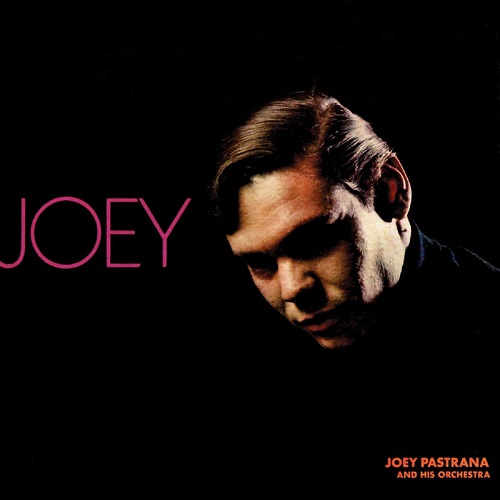
At that time, I went to work at the stock exchange in New York, and I didn’t like it, so I left. One day, I went into a New York club, and Joey Pastrana’s orchestra was playing.

It just so happened that someone said to Joey Pastrana, “Look, you see that skinny kid over there on the corner, that kid plays conga,” and he said to the kid, “Tell him to come over here.”

The kid came up to me and said, “Look, Joey wants you to go over there on stage.” I replied, “I don’t know Joey. And you’re telling me Joey wants me to go over there when I don’t even know him?” “Well, look, go, he’s calling you.”

Joe Psatrana
Joe Psatrana

I went over there, and he said, “Look, and Joey said, “Do you want to play a number with me?” And I said, “I don’t know who told you I play conga. I don’t play conga.” And he answers, “But the kids here are saying you play conga.”

And because of his insistence, I played a number. When I played the number, he said, “Do you want to play here? Because my brother, Willie Pastrana, is leaving the group.”

And when I came to see you, at 17, I was playing with Joey Pastrana. So, from then on, I went with Tony Pabón in the protest. I was with Ernie Agosto and La Conspiración, with Adalberto Santiago, Los Kimbos, even with La Diferente for a little while, just for a while; with the great Héctor Lavoe, with Pacheco, with Pete el Conde, very quickly. Then with the Estrellas Fania, and those from Puerto Rico.

– You replaced Ray Barreto in Fania, hence the nickname Manos de Hierro? Tell us a little about your experience with Fania.

– Oh, because I always had heavy hands when I played. And they called me that name: Ray Barretto, “Hard Hands,” and I, “Iron Hands.” They were the musicians, and your dad (Ángel Méndez) gave me that nickname. I’ll never forget this. I forgot to mention someone, Willie Colón, who I also played with and recorded the album “Siembra.”

Ray Barretto’s Replacement

I can’t explain how I was able to make my career in music, because, blissfully, I was in the audience at Madison Square Garden watching Fania, and I never in my life thought I’d play with the Fania Stars!

Regarding the question about whether I reviewed Barretto: before joining the Fania stars, there was Johnny Rodriguez, El Dandy.

He left, and I joined. So when I saw Barreto wanting to return, I said these words to Ray Barreto: “With all due respect to you, because you’re an icon I’ve always respected, this chair, I was just warming it up, this chair is yours.” And he said to me in English: “Eddie, we’re going to split the show. You play half the show, and I’ll play half.” And I said to him, “Ray, this seat is yours. I respect it,” and he said, “No, half and half.”

Ray Barretto
Ray Barretto

We always had a tremendous relationship. I remember when my father passed away, and Ray came and stayed with me at the funeral home for two hours. I’ll never forget it.

And I’m telling you from the bottom of my heart, one of the things I hold dear is that when Ray got sick, honestly, I wanted to go see him, and they always told me, Eddie, you can’t go because they have him in intensive care and they won’t let you in.

I was always calling mutual friends who knew if he was coming out of intensive care or not. They would tell me, “Eddie, no, hey man, don’t come because you’ll waste your time.” That’s how I couldn’t see him in his final days. It was only when he passed away that I went to the funeral home.

The same thing with your father, you know, your father for me is the friendship, and I’m not saying this because you’re interviewing me, but the relationship, the respect I have for your father, and you know, I thank your father because he was the one who made us, and I say this, of course, God made us, and with all due respect, but when it comes to the entertainment side of things, your father was the magazine that everyone bought.

When I started out in 1977, coming to Venezuela, I met your father, Ángel Méndez, Swing Latino, with Fernando, the photographer, and the truth is that the friendship was never lost.

Eddie Montalvo y Ángel Méndez

We’ll be releasing the second part of this interview soon.

Pónle Saborrrr!

By:

cafeatlantico

Swing Latino

Giogerling Mendez

Dj. Augusto Felibertt

Also Read: The legacy of Leopoldo Pineda, the ambassador of the trombone in La Maquinaria Fania All Stars

The multifaceted Aymée Nuviola delivers her ‘Corazón Sonero’ to Puerto Rico, at the historic Tapia Theater in Old San Juan

Pete Perignon’s orchestra kicked off Aymée Nuviola’s concert, entitled Corazón Sonero, with a powerful Latin jazz introduction. During the first minute, the instrumental melody settled into a salsa key, giving way to the voices of Lorna Marcano and Ricely Colón, who chanted: “Yo te invito a bailar y a gozar con Aymée, la sonera del mundo” (I invite you to dance and enjoy with Aymée, the sonera of the world). The chorus duo of Marcano and Colón prepared the theater for the triumphant entrance of the voice of La Sonera del Mundo.

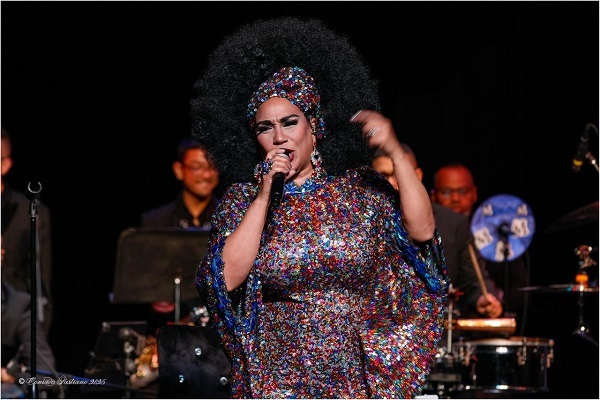
La multifacética Aymée Nuviola Imágenes Conrado Pastrano

As the curtain rose at the historic Alejandro Tapia y Rivera Theater in Old San Juan, the stage design by José “Quenepo” Ramos Vega, which revealed two transparent fabric borders held in the middle by an imposing white star, caught the attention of the audience. The red of the triangle of the Cuban flag was represented by the pendant unfurled to the left of the star, while the cloth representing the Puerto Rican flag was held on the right hand side of the same star. The inspiration of the design demonstrates that the Cuban and Puerto Rican flags are fraternal twins.

The opening lyric that resounded in the theater, which was filled to capacity, with the vocal power of Aymée Nuviola read: “A little bit of good salsa, a little bit of pure salsa, so that new people, get to know our culture”. From then on, the music obeyed Nuviola’s command, singing: “Let the clave get into your body, let the conga and the bongo move the floor”. Sure enough, three hours later we were still letting the stage delivery of the musical team continue to move the floor. Pete masterfully directed: Jean Carlos Camuñas on tumbadoras, Carlos Pagán on bongó, campana, güiro and maracas, Miguel Camilo on piano, Jorge Rivera on bass, Pedro Marcano and Víctor Ambert on trumpets, César Ayala and Léster Pérez on trombones and Saviel Cartagena on tenor and soprano saxophones.

Ten minutes into the music under the direction of the leader of the generation of the present, as timbalero Pete Perignon is known on Puerto Rican soil, Aymée greeted the audience with a heartfelt, “¡Buenas noches, Puerto Rico!” She thanked the attendees in a candid manner for joining her, while making jokes about how heavy her dress was as she elegantly adjusted the flounce and wings of her sleeves. She also commented on the design of the theater, inaugurated in 1832.

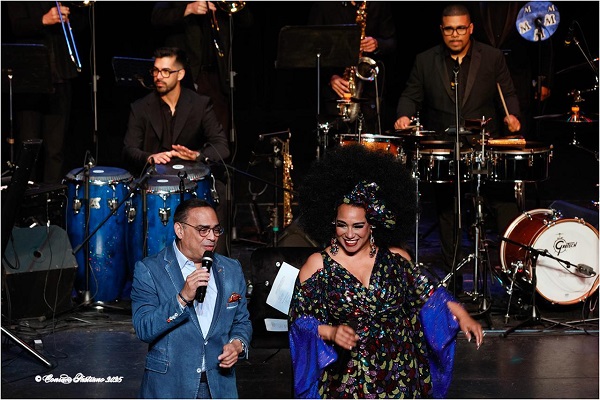
Gilberto SantaRosa y Aymée Nuviola Imágenes Conrado Pastrano

That first conversation with the audience served to connect with a: “we are survivors”, in clear reference to the COVID-19 pandemic, shortly before quoting Celia Cruz saying: “As Celia said so well: ‘Thank you Puerto Rico, for lending me your flag’. She also recognized actor Willy Denton, who played Pedro Knight when Aymée impersonated Celia Cruz in the soap opera Celia and who was among those present.

Nuviola boasted of having reached the fifth floor, as she recounted that she was going to record her version of ‘El ratón’ with Cheo Feliciano, whose unexpected death thwarted the long-awaited collaboration. However, Aymée decided to record it anyway, in order to pay tribute to Señor Sentimiento. The evening’s repertoire included: ‘Un poco de salsa’, ‘Salsa con timba’, ‘Yo sé que es mentira’, ‘El ratón’, ‘La tierra del olvido’ and ‘La gota fría’.

Many remember Aymée for her character of Celia Cruz in an acting performance that marked “a before and after” in the singer’s career. This was acknowledged by the actress, shortly before paying tribute to Celia, with her versions of ‘Cúcala’ and ‘Quimbara’, in addition to performing a medley of some of the songs with which Celia was crowned the Queen of Salsa. The medley included ‘Toro mata’ and ‘Bemba colorá’, among others.

The concert included a bohemian part during which Aymée accompanied herself on the classical piano to share with us her passion for the filin. The selected repertoire was: ‘Obsesión’, ‘Bésame mucho’, ‘Me faltabas tú’, ‘Perfidia’ and ‘Lágrimas negras’.

Before performing ‘El espacio’, of her own composition, and accompanied by Miguel Camilo on piano, Aymée said that the song was inspired by “someone else’s skeleton”, as the composer described it. Aymée emphasized that ‘El espacio’ is not dedicated to her husband. Between jokes and laughter, the sonera shared with those present her love story with Paulo Simeón, while acknowledging the presence of Fabio Díaz Vilela, who was the owner of the place where the couple met more than 14 years ago. Aymée expressed her gratitude to Fabio, for also having been a great support for the career of the producer, “from day one”.

Aymée Nuviola Imágenes Conrado Pastrano

The climax of the concert came as the sonera took off ‘El cuarto de Tula’, Gilberto Santa Rosa -who was among the attendees- went up on stage to duet with Aymée, between each soneo to describe the scope of the talent of the Cuban who gave her sonero heart to Puerto Rico. El Caballero de la Salsa was also able to tell La Sonera del Mundo the fascination that the Puerto Rican public has for her. For their part, Aymée’s soneos expressed to Gilberto the admiration she has for him for being “a great maestro”.

The repertoire of this last section included the songs ‘Fiesta’ and ‘El manisero’, which incorporated correspondences between the singer and the pianist. The coda of ‘El manisero’ coincided with the closing of the curtain, while the audience shouted “another, another, another”. The ñapa corresponded to ‘Chan chan’, a song included in the album that won Nuviola a Grammy for his production A Journey through Cuban Music. The interpretation was sprinkled with the strength brought by the trumpets of Pedro Marcano and Víctor Ambert, along with the trombones of César Javier Ayala and Léster Pérez. Chan Chan’ announced the farewell with which Aymée Nuviola’s energetic “God bless Puerto Rico” resounded as the curtain came down on her first solo concert on Puerto Rican soil. For my part, I reciprocate: “God bless Aymée Nuviola and her team (including Paulo Simeón and Luis Solís)”.

Here in the Island of Enchantment we are pleased to know that Corazón Sonero has consolidated this high-end artist, whom we already consider our own.

Bella Martinez Puerto Rico

Images: Conrado Pastrano

Also Read: Mel Martinez I come from Puerto Rico and Puerto Rico is Salsero

What a pleasure to talk to Pablo Pérez ‘‘El Alcalde de La Salsa’’

It is a pleasure to talk to Latin music artists who have left our genres in a high place all over the world and today it is the turn of the great American producer, composer and percussionist Pablo Perez, also known as ”El Alcalde de La Salsa”, who we were lucky enough to interview to know his fascinating story with music. We say to our dear readers that they cannot miss it.

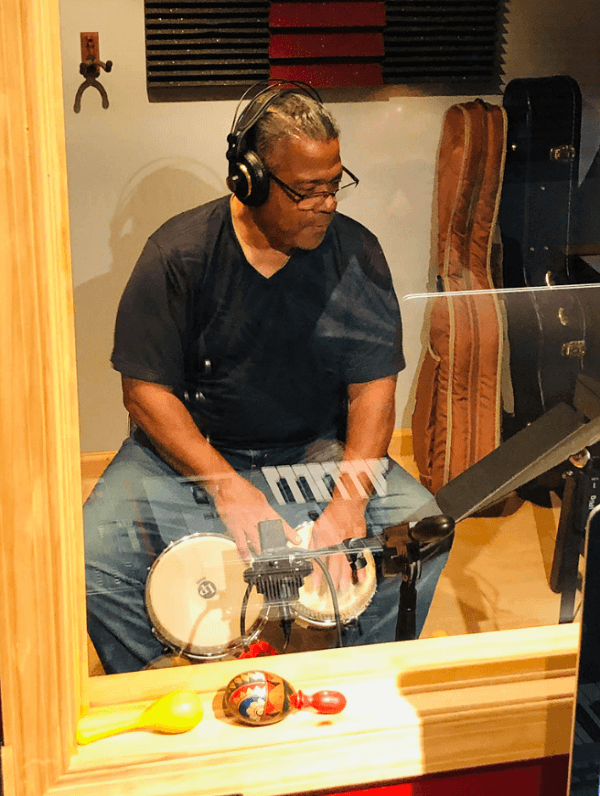
Pablo playing
Pablo Pérez ”El Alcalde de La Salsa” playing the bongos live

How Pablo became interested in music 

From the beginning, Pablo made it very clear that since his childhood he has been interested in music, to the point of beginning to study it at school, as his taste was great since then. To what we must add that the time when he grew up in Trenton, New Jersey, was marked by a total command of salsa, which greatly influenced the young boy. However, he clarifies that he liked all types of genres like ballads, boleros, cha cha chá, merengue, classical music, among others. 

He grew up listening to all sorts of artists and groups such as La Fania All Stars, Ray Barretto, Willie Colón, Johnny Pacheco, Spanish Harlem Orchestra and many others. To some extent, all of them have influenced the style he applies to his own work today.

World traveler

Throughout all this process of being involved with music and learning what he knows today, he came to live in a lot of Latin countries like Puerto Rico, Venezuela, Ecuador, Argentina, Panama, Costa Rica, among others. During all these travels and stays, Pablo dedicated himself at all times to play and present his music to the populations of those places.

In the same way, each of these places has given something new to his style and, in them, he was able to hear new versions of other songs that he knew before. He himself did a new version of the llanera song ”Quierela más que yo” by Venezuelan singer Luis Silva, making it into a salsa song and giving it his own touch. ”I’ve always wanted people to connect with me through my music and I’m always looking to do new, danceable and interesting things,” Pablo said on the subject.

The artist has always liked to mix different sounds and instruments, so he had the idea of creating a trombone orchestra (the first instrument of his career) and seing how it worked. Finally, this group included two trombones, two trumpets and a baritone in order to obtain a bigger sound, helping with a ”baby bass” (an electric double bass model designed by Ampeg), and a piano.

Pablo in the studio
Pablo Pérez recording in the studio

The Pablo Pérez Project and Orquesta Yanes

Although it is true that Pablo’s first major project was The Pablo Pérez Project in 2005, prior to that, he already had a group called Orquesta Yanes (2001), with which he recorded two albums back then. During that time, what was used were LPs and cassettes, one of them being a recording made in Belgium (country where he also lived) and called ”Pablo Pérez con el paisaje latino”. This was the same name of a group he created with local and Latin European musicians in Europe.

At the same time, the musician was also part of other orchestras in his native New Jersey as well as in Puerto Rico and some of them were ”El Nuevo Sonido”, ”Paquito Y Su Tumbao”, ”Peligro” and many others.

Time in Belgium

One of the most important events in Pablo’s career during his time in Europe was his involvement in the album ”Algo Diferente” by Mexican musician Héctor Islas y Su Pachuco 21. The artist referred to Islas as a very good person and a great singer whom he met in the aforementioned country and it was not long before they worked together.

Hector invited him to join his orchestra as a timbalero and they both toured the rest of Europe together, taking their music to anyone who wanted to listen to them in those territories. Later, the Mexican went to Cuba to make a series of recordings in which he asked Pablo to play the bongos.

During their tours, they were able to play alongside El Gran Combo de Puerto Rico, Jerry Rivera, Original de Manzanillo, Sin Damas, La Fania All Stars, La India and many more.

Pablo and Luis
Luis González ”El Tsunami de La Salsa” next to Pablo Pérez

El Alcalde de la Salsa

A very interesting facet Pablo had was that of a politician in 2014, when he ran for mayor of Trenton, New Jersey. Although targets were not met, the artist explains that this decision to compete gave him many positive experiences with the community.

One of the biggest endorsements he received at the time came from Willie Colón, whom he had known for many years. When the trombonist asked Pablo about his motivations for running for office, he replied that what he wanted was to help the community from a better position. That is when Colón nicknamed him ”El Alcalde de La Salsa” (The Mayor of Salsa), which Pablo liked so much that he decided to use it for the rest of his career.

It is worth mentioning that he also received the endorsement of Tito Nieves during his aspirations for political office.

Music played a crucial role in the campaign events, since the artist’s orchestra was very attractive to people, especially for the fundraisers that Pablo and his team carried out. Likewise, it was a good tool for the former candidate to connect with the community, especially the Latino community. 

It was in this same period that he made contact for the first time with his current bassist and arranger Michael Colón, pianist Efraín ”Juanito” Dávila and other musicians with whom he was able to form his orchestra, which helped him a lot during his political career to gain the sympathy and attention of people. 

When asked if he would be interested in running for public office, he assured that this stage of his life is over and that he prefers to concentrate solely on music for now. 

Willie and Pablo
Willie Colón endorsing Pablo Pérez’s campaign

Read also: How freelance musicians are viewed today

  • Page 1
  • Page 2
  • Page 3
  • Interim pages omitted …
  • Page 11
  • Go to Next Page »

International Salsa Magazine (ISM) is a monthly publication about Salsa activities around the world, that has been publishing since 2007. It is a world network of volunteers coordinated by ISM Magazine. We are working to strengthen all the events by working together.