• Skip to primary navigation
  • Skip to main content

International Salsa Magazine

  • Home
  • Previous editions
    • 2025
      • ISM / November 2025
      • ISM / October 2025
      • ISM / September 2025
      • ISM / August 2025
      • ISM / July 2025
      • ISM / June 2025
      • ISM / May2025
      • ISM / April 2025
      • ISM / March 2025
      • ISM / February 2025
      • ISM / January 2025
    • 2024
      • ISM / December 2024
      • ISM / November 2024
      • ISM / October 2024
      • ISM / September 2024
      • ISM / August 2024
      • ISM / July 2024
      • ISM / June 2024
      • ISM / May 2024
      • ISM / April 2024
      • ISM / March 2024
      • ISM / February 2024
      • ISM / January 2024
    • 2023
      • ISM / December 2023
      • ISM / November 2023
      • ISM / October 2023
      • ISM – September 2023
      • ISM – August 2023
      • ISM July 2023
      • ISM Edition June 2023
      • ISM – May 2023
      • ISM April 2023
      • ISM March 2023
      • ISM February 2023
      • ISM January 2023
    • 2022
      • ISM December 2022
      • ISM November 2022
      • ISM October 2022
      • ISM September 2022
      • ISM August 2022
      • ISM July 2022
      • ISM June 2022
      • ISM May 2022
      • ISM February 2022
      • ISM January 2022
    • 2021
      • ISM December 2021
      • ISM November 2021
      • ISM October – 2021
      • ISM September 2021
      • ISM August 2021
      • ISM July 2021
      • ISM May 2021
      • ISM April 2021
      • ISM June 2021
      • ISM March 2021
      • ISM February 2021
      • ISM January 2021
    • 2020
      • ISM December 2020
      • ISM November 2020
      • ISM October 2020
      • ISM September 2020
      • ISM August 2020
      • ISM July 2020
      • ISM June 2020
      • ISM May 2020
      • ISM April 2020
      • ISM March 2020
      • ISM February 2020
      • ISM January 2020
    • 2019
      • ISM December 2019
      • ISM November 2019
      • ISM October 2019
      • ISM Septembre 2019
      • ISM August 2019
      • ISM July 2019
      • ISM June 2019
      • ISM May 2019
      • ISM April 2019
      • ISM March 2019
      • ISM February 2019
      • ISM January 2019
    • 2018
      • ISM December 2018
      • ISM November 2018
      • ISM October 2018
      • ISM September 2018
      • ISM August 2018
      • ISM July 2018
      • ISM June 2018
      • ISM May 2018
      • ISM April 2018
      • ISM March 2018
      • ISM February 2018
      • ISM January 2018
    • 2017
      • ISM December 2017
      • ISM November 2017
      • ISM October 2017
      • ISM September 2017
      • ISM August 2017
      • ISM July 2017
      • ISM June 2017
      • ISM May 2017
      • ISM April 2017
  • Download Salsa App
    • Android
    • Apple
  • Spanish

Search Results for: Trombones

Tromboranga, the Latin soul in Europe.

Europe

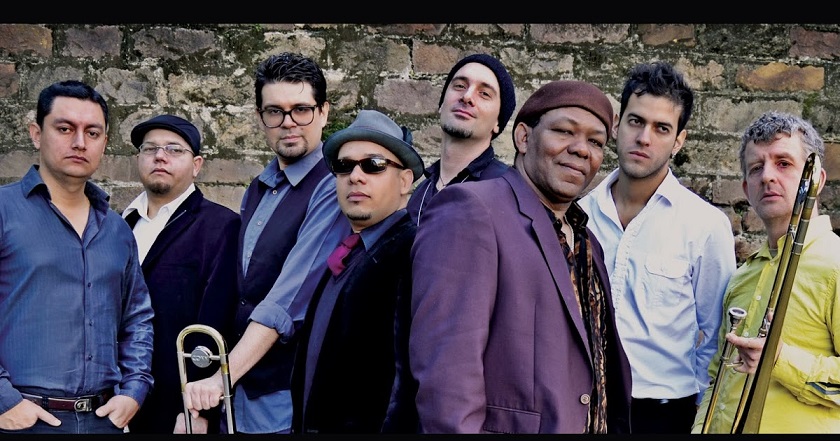
A band formed in Spain to share rhythm, music and soul around the world. As a part of the new generation of independent Latin orchestras around the world, Tromboranga is the pure essence of “Salsa Dura”. Tromboranga´s spicy ingredients are the trombones sound, solid and strong percussion, and they recover the essence of “soneos” (voice improvisation among the chorus). With influences from the salsa music from the 60s and 70s, maintaining a raw, strong and a very danceable sound.

Their original songs like “Humildad”, “Palo pa la campana”, “Ah Caraj”, “Mi China Colombiana”, talks about stories that can describe the life of any of us, and they have become number one in Latin radios and dance floors worldwide.

Tromboranga is made up of musicians from the Caribbean and Europe, all residents of Barcelona, Spain.

Its members are:

Joaquín Arteaga, Band leader, Timbal and composer from Venezuela, known for his long career as a percussionist and also as band leader of the orchestra “Bloque 53”.

Diego Coppinger, traditional “Sonero”, with an extensive carrer that includes “Tropicana” in Cuba, gives color and Cuban flavor, with great force and experience in his amazing soneos.

Freddy Ramos, young singer from Venezuela, also arranger with a wide impresive musical career.

Rafael “Madagascar” Arciniegas adds Colombian flavor with his piano and arrangements.

Lorenzo “El diablo” Barriendos, Venezuelan musician on bass, with tastefull tumbaos, known for his interventions with orchestras such as Trabuco Venezolano, Mango group Guaco among others.

The strong and colorful trombone section, which offers a distinctive mark on the band: Vladimir Peña (Venezuela), Josep Blanes (Spain) and Albert Costa (Catalunya), all supported by the taste and the conga afinque Oriol Martinez and the spicy bongo of Climent Campa.

Tromboranga
Tromboranga

Their first EP “Agua que va caer” hits the market in November 2011 in anticipation for the first official cd “Salsa Dura” (April 2012), considered by Latin music lovers, DJs, dancers and specialize salsa bloggers among the 10 best CDs of 2012. Also recorded a CD together with Bloque 53 “Tumba Puchunga” where the song “Me alborotas” and also “Tumba Puchunga” reached number one in many Latin radios listings.


In April 2013 the new cd “Al mal tiempo buena salsa”, take them to do their first world tour in Spain, France, Belgium, Switzerland, Netherlands, Tunisia, Germany and Colombia.

In November 2013 they release a L.P. Vinyl Special Limited Edition (only 300 copies) called “Solo para coleccionistas Vol. 1”. They are invited to do 4 concerts at one of the biggest salsa festivals in the world “La Feria de Cali” and Pereira, Colombia. The 4 concerts were filled in its entirety. Since then the followers and fans of the band call themselves “Salseros Tromborangueros”.


In 2014 visit Mexico on a tour of four dates, all concerts were sold out and the public had the opportunity to hear some songs from the 4th Album called “Salsa pa’ rato”, with 10 new original tracks.

From “Salsa pa´rato” album the track “Palo pa la campana” is already a hit among salsa dancers, been between top 10 salsa dancing songs of 2014. Also “Sentimiento Caleño”, a song dedicated to the city of Cali. Songs with social messages like “Esclavo de tu apariencia”, “No tengo pa pagar” and “Como la marea” also known for their catchy tune.


2015 arrives with new album “Golpe con Melodía” , with 8 new hard and raw salsa tunes, and great swing for dancers, with songs like “Golpe con Melodía”, son montuno “Carretera” and a cover of “La mafia”. And a extensive tour in Colombia, Ecuador and in USA for the first time in cities like New York, Miami, Los Angeles, Las Vegas and many more.


In 2016 the songs “Ah Caraj, aquí que pasó”, “Cambumbo”, “El rey sin corona”, “No me vuelvo a enamorar”and “Mi China Colombiana” from new album “Sangre Sudor y Salsa” are already on every salsa Dj set. Also they release amazing new videos from this songs. In 2016 they have long tour from Japan to Russia, from USA to United Kingdom and all Europe.


Other songs like “Agua que va caer”, “Humildad”, “Te provoca”, “Adios que te vaya bien”, “Mama Calunga”, “amigo el raton”, “Boogaloo Marilu”, “Rompe colchon” are danced currently on the dance floor of salsotecas, dance schools, salsa parties and salsa festivals worldwide.
Tromboranga CD cover

THE 2018 TOUR

JANUARY

  1. • 19 Lille, FRANCE..

FEBRUARY

  1. • 14 @The Gov Hindmarsh, Adelaide, AUSTRALIA.
  2. • 16 @The Track, Toorak, Melbourne AUSTRALIA.
  3. • 17 @Cloudland, Fortitude Valley, Brisbane, AUSTRALIA.
  4. •18 @The Studio venue, Auckland NEW ZEALAND.
  5. • 24 @Big Top, Luna Park, Sydney AUSTRALIA.
  6. • ALL TICKETS FOR AUSTRALIA at:

APRIL

  1. • 7 Afrolatin Festival, Madrid SPAIN.


MAY

  1. • 11 Bern, SWITZERLAND.
  2. • 13 Barceloneta, Barcelona, SPAIN.


JUNE

  1. • 8 Bangkok THAILAND.
  2. • 9 Bangkok THAILAND.
  3. • 23 Ourense SPAIN.
  4. • 30 Saint Tropez, FRANCE.


AUGUST

  1. • 25 Pirineos salsa Festival, Huesca, SPAIN.


OCTOBER

  1. • 11 Aventura Dance Cruise Los Angeles U.S.A.
Tromboranga cover
Tromboranga cover

Discography:

-Tromboranga EP “Agua que va caer” (2011)

-Bloque 53 & Tromboranga “Tumba Puchunga” (2012)

-Tromboranga “Salsa dura” (2012)

-Tromboranga “Al mal tiempo buena salsa” (2013)

-Tromboranga “Solo para coleccionistas” (2013)

-Tromboranga “Salsa Pa´Rato” (2014)

-Tromboranga “Golpe con Melodía” (2015)

-Tromboranga “Sangre Sudor y Salsa” (2016)


Web & Social Network:

www.tromboranga.com

www.facebook.com/tromboranga

www.youtube.com/tromboranga

www.twitter.com/tromboranga

www.instagram.com/tromboranga


Music available at:

@cdbaby: http://www.cdbaby.com/Artist/Tromboranga

@iTunes:  https://itunes.apple.com/es/artist/tromboranga/id484381251

Production and Bandleader: Joaquin Arteaga

Musicians:

Joaquin Arteaga: Director and Timbal.

Diego Coppinger : Voice

Freddy Ramos: Voice

Oriol Martinez: Congas

Climent Campa: Bongo

Lorenzo Barriendos: Bass

Rafa Madagascar : Piano

Vladimir Peña: Trombone

Josep Blanes: Trombone

Albert Costa: Trombone

Papo Vázquez the Pirate & Troubadour of Our Latin Music

Papo Vázquez Enjoying the Bell.

Angel Vásquez, “Papo Vásquez”, was born on February 24, 1958 in Philadelphia, Pennsylvania, USA.

Papo Vazquez
Papo Vazquez

By age 15, Papo Vázquez was playing with local American bands in Philadelphia and accompanying guest artists such as Eddie Palmieri.

At just 17, he moved to New York and was hired to play for trumpet player Chocolate Armenteros’ band, and soon began playing and recording with other top artists on the salsa scene such as The Fania All-Stars, Ray Barreto, Willie Colón, Grupo Folklórico Neoyorquino, Eddie Palmieri, Larry Harlow, and Hector Lavoe.

Vazquez also became a key player in the burgeoning New York Latin jazz scene of the late 1970s, performing with Jerry Gonzalez, Hilton Ruiz, and more.

He began his studies with Slide Hampton, eventually recording and performing Slide Hampton’s World Trombones.

Papo Vázquez Photo by Ernie Gregory (Gone but not forgotten) Thank you Ernie!PV

A Grammy-nominated trombonist, composer, arranger, NEA Master Artist, he has a 50-plus year career in jazz, Latin and Afro-Caribbean music.

Musical Director of the National Puerto Rican Day Parade Orchestra, (NYC/WABC) 2016, 2017, 2018, 2019.

Commissioned by Wynton Marsalis to compose music for Jazz and Art series, conducted and performed with the J@LC orchestra, CD release August 2019 New York Pops Education, Board of Education certified, 2018 and 2019

New music commissioned for Afro Latin Jazz Alliance for the “Nueva Música” concert series.

Nominated for Grammy for Papo Vázquez’s Mighty Pirates, Marooned/Isolated, 2008

Born in 1958 in Philadelphia, Pennsylvania, although his early formative years were in Puerto Rico.

He went on to play and/or record with jazz luminaries Tito Puente, Dizzy Gillespie’s United Nations Orchestra, Chico O’Farrill, Ray Charles, Slide Hampton’s World of Trombones, Jerry Gonzalez Fort Apache, among many others. By the age of 22, Vazquez had traveled the world.

Papo Vázquez Mighty Pirates Troubadours 2023

Vázquez was deeply moved by jazz from a young age. His appreciation and knowledge of indigenous Caribbean music provides him with a unique ability to fuse Afro-Caribbean rhythms with the freer melodic and harmonic elements of progressive jazz.

Beginnings

After spending his early years in Puerto Rico, he grew up in the heart of North Philadelphia’s Puerto Rican community. He purchased his first trombone from a friend for $5 and joined the elementary school band.

At the age of 14, an uncle recommended him to a local salsa band, where he met trumpeter Jimmy Purvis. Purvis inspired Papo’s lifelong passion for jazz by giving him two records: J.J. Johnson’s Blue Trombone and John Coltrane Live at the Village Vanguard. By 15, Vazquez was performing with local Latin bands in Philadelphia and accompanying visiting New York artists such as Eddie Palmieri.

He was a founding member of Jerry Gonzalez’s Fort Apache and Conjunto Libre, as well as the popular Puerto Rican Latin fusion band Batacumbele.

With Batacumbele he performed, composed, arranged and recorded several albums from 1981 to 1985. Upon his return to New York, he joined Tito Puente’s Latin Jazz Ensemble, traveling with them as principal trombonist and touring Europe with Dizzy Gillespie’s United Nations Orchestra.

Leader, Composer and Innovator.

Vázquez has always been deeply moved by jazz, and specifically cites the music of John Coltrane and J.J. Johnson as having influenced him most. In addition, his appreciation and knowledge of the indigenous music of Caribbean peoples gives him a unique ability to fuse Afro-Caribbean rhythms, specifically those of Puerto Rico, with the freer melodic and harmonic elements of progressive jazz.

During his time in Puerto Rico with Batacumbele in the 1980s, he began experimenting with “bomba jazz,” a fusion of jazz and traditional Puerto Rican bomba. In 1993 he recorded his first album as a leader, Breakout. He continued to collaborate with a variety of Latin Jazz artists, contributing Overtime Mambo to Hilton Ruiz’s Manhattan Mambo and Contra Viento y Mareo to Descarga Boricua, Vol. 1.

In 1999, he released a live recording with a number of leading New York Latin and jazz artists, including bassist Andy Gonzalez, saxophonist Michael Brecker, among others. The release of Pirates & Troubadours At the Point, Vol. 1 was followed the next year by At The Point, Vol. 2.

Mighty Pirates Troubadours Songs del Yucayekepor Papo Vazquez
Mighty Pirates Troubadours Songs del Yucayeke
por Papo Vazquez

This project evolved into the Pirates Troubadours, an “Afro-Puerto Rican jazz band” that includes musicians such as Roberto Cepeda of Puerto Rico’s Familia Cepeda folklore group, Milton Cardona and Anthony Carrillo on percussion, and John Benitez, among others. The group performed at festivals around the world and released Carnival in San Juan in 2003, followed by From The Badlands in 2007.

Interest grew as a composer.

He was the first artist to receive a composer commission (Iron Jungle) for the Afro-Latin Jazz Orchestra, then a resident orchestra at Jazz at Lincoln Center.

His first classical composition, Palomita Suite Afro-Caribeña which to date was the first time Bomba y Plena had been performed with a Chamber Orchestra, was commissioned by the Bronx Arts Ensemble and premiered at the Hostos Center for Arts and Culture in the Bronx in 2004.

In 2007, on a commission from the Bronx River Arts Center, he wrote Sube el Río (River Rising) for its Mighty Pirate Orchestra for its 20th anniversary concert “Bronx River Sounds.”

Discography

Papo Vázquez Mighty Pirates Troubadours – Capítulo 10: Breaking Cover, Picaro Records 2020
Cuarteto Papo Vázquez – GV J.S. Bach, Picaro Records 2017
Papo Vazquez Mighty Pirates Troubadours – Spirit Warrior, Picaro Records, 2015
Papo Vazquez Mighty Pirates Troubadours – Oasis, Picaro Records, 2012
Papo Vázquez The Mighty Pirates – Marooned / Aislado, Picaro Records, Nominación al Grammy 2008
Papo Vázquez Pirates Troubadours – From The Badlands, Picaro Records, 2007
El Niño Josele – 2011
Tego Calderon – The Underdog / El Subestimado, Jiggiri Records, 2006
Shakira & Wyclef Jean – Tema de la final mundial de fútbol (“Bamboo”), 2006
Ray Barretto – Normas rican-ditioned, Zoho Music, 2006
Los Pleneros de la 21 Para Todos Ustedes, Smithsonian Folkways, 2005 – Nominación al Grammy,
Bebo Valdes – Bebo de Cuba, Calle 54, 2005 – Grammy, Mejor Álbum de Jazz Latino
Papo Vázquez Pirates Trovadores – Carnaval en San Juan, Cu-Bop Records, 2003
Wayne Shorter – Alegria, Verve, 2003 – Grammy, Mejor álbum instrumental de jazz
Jack Bruce – Sombras en el aire, Sanctuary Records Group, 2001
Freddie Cole Rio de Janeiro Blues, Telarc
Chico O’Farrill “Carambola” Fantasía
Banda sonora de la película Mo ’Better Blues de Spike Lee
Papo Vázquez “Piratas y trovadores – En el punto Vol. I” Cubop
Papo Vázquez “Piratas y trovadores – At the Point Vol. 2” Cubop
Milton Cardona “Cambucha” Clave americana
Arturo O’Farrill “Bloodlines” Fantasy
Chucho Valdés “All Stars Bronx Lebanon New Directions Project” RMM
“Jammin ‘in the Bronx” Papo Vázquez Band, Chucho Valdes & The Machito Orq RMM
Chart Busters con el Dr. Lonnie Smith, Lenny White, Hiram Bullock, Craig Handy, Papo Vázquez, et.al. Chico O’Farrill Fantasía “Pure Emotion”
Steve Berrios Fantasía del “primer mundo”
Descarga Boricua “Descarga Boricua” Tierrazo
Dave Valentin “Tropic Heat” GRP
Juan Luis Guerra 440 “Fogarate” 440
Papo Vázquez “Breakout” Timeless
Ruben Blades “Amor y Control” “Antecedente” & “Caminando” Sony
Hilton Ruiz “Manhattan Mambo” Telarc y “Hands on Percussion”
RMM Tito Puente “Fuera de este mundo” Tito Puente “100” RMM
Jerry Gonzalez Fort Apache Band “Obatala” “Live in Berlin” Enja & “Ya Yo Me Cure” American Clave
New York Latin Jazz All Stars “Feliz Navidad”
Bobby Valentin “Presenta al Cano Estremera” – Bronco Records
Batacumbele “Con Un Poco de Songo” & “En Aquellos Tiempos” Tierrazo
Ray Barretto “Ricanstruction” Fania
Slide Hampton “Mundo de trombones” WEST54
Chico O’Farrill “Calle 54”
Fania All Stars “Habana Jam” Fania
Willie Colon & Ruben Blades “Siembra” Fania
Willie Colon y Celia Cruz Fania
Héctor La Voe “De Ti Depende” – Feliz Navidad, Fania
Mon Rivera “Vuelvo a Vivir” Fania

Sources:

© 2017 por Papo Vázquez. Creado con orgullo.

Textos www.jazzismomedellin.com

Also Read: Eddie Palmieri brought salsa for the first time and live from Sing Sing Penitentiary in New York

The legacy of El Palladium lives on, as demonstrated by ‘Mambo Fantasy’

The legacy On Saturday, January 18, 2025, the Tropicoro Club at the Fairmont El San Juan Hotel in Puerto Rico was decked out to celebrate the music of Tito Rodríguez; led by his heir, Tito Rodriguez Jr., and El Caballero de la Salsa: Gilbertito Santa Rosa on vocals and the characteristic marquee of “El Inolvidable”. The show was part of ‘Mambo Fantasy’, a duel between the legacy of Tito Puente and that of Tito Rodríguez, two of the Kings of mambo during the golden age of big bands.

Humberto Ramirez, Herman Olivera, Tito Rodriguez jr. y Gilberto SantaRosa en Mambo Fantasy

The dance concert featured the musical power of the big orchestras, responsible for placing Latin music among the favorites of the dancing public. It was a must remember that the history of what was the era of mambo was strengthened in the emblematic New York halls, among which “El Palladium” stood out. To do so, the dance corps of Tito Ortos and Tamara Livolsi was accompanied by the nonagenarian Mambo Mike, engaging in an energetic choreography that the trio executed to perfection.

The legacy of Tito Puente resonated under the musical direction of the trumpeter, arranger, composer and producer Humberto Ramírez, with Hermán Olivera and Michelle Brava as the singers in charge of interpreting Puente’s repertoire.

Michelle La Brava 'Mambo Fantasy' en Puerto Rico
Michelle La Brava ‘Mambo Fantasy’ en Puerto Rico

Rodríguez’s legacy was carried out by the union between the timbalero, arranger, composer, producer and orchestra director, heir to the musicality and the name of one of our greatest musical glories -Tito Rodríguez, Jr.- and one of the greatest stars of contemporary music -Gilberto Santa Rosa. The group was composed of: Gerardo Rivas on the tumbadoras, Pete Perignon on the bongos, Mako Pérez and Genaro “Ginno” Ramírez on the chorus, Luis Marín on the piano, Johnny Torres on the bass; Freddie Miranda, Josué Urbina, Saviel Cartagena and Francisco “Pacman” Cruz on the saxophones; Georgie Torres and Anthony “Nony” Rosado on the trombones; with Rolando Alejandro, Pedro Marcano, Kevin Ibáñez and Becky Zambrana on the trumpets. And since legacies are significant, it should not be overlooked that the three percussionists of this group are children of musicians.

Orquesta 'Mambo Fantasy' en Puerto Rico
Orquesta ‘Mambo Fantasy’ en Puerto Rico

The repertoire, which included “Mama Güela,” “A los Muchachos de Belén,” “Vuela la paloma,” the bolero “Me faltabas tú,” “Baranga,” “Bon sueno,” “Yambú,” “Avísale a mi contrario,” “El agua de Belén,” “Óyeme Antonia,” “Estoy como nunca,” and the surprising intervention of the tumbador singer Johnny Rivero, the bolero “Tómame ya,” “El que se fue,” and “Abarriba cumbiaremos,” made it clear that the musical complexity of the golden age of mambo remains alive. The Gentleman of Salsa gave a lecture on his expertise in the most Tito Rodríguez-like dance that has ever been seen and heard, imprinting his interpretive style on the songs of “El Inolvidable,” while demonstrating his mastery of the dance, sliding across the stage using Rodríguez’s best steps.

Herman Olivera 'Mambo Fantasy' en Puerto Rico
Herman Olivera ‘Mambo Fantasy’ en Puerto Rico

Evidently, the participation of El Caballero de la Salsa was inspired by the musical perfection of “El Inolvidable”, achieving an impeccable performance. Through the magic that Santa Rosa brought to the concert, Tito Rodríguez, Jr. managed to connect with the Puerto Rican public that follows his father’s music. For our part, we are grateful for the invitation of the work team responsible for the success of ‘Mambo Fantasy’, while we remain awaiting the next show that manages to bring together these greats of mambo.

Also Read: Bella Martinez, the irreverent Salsa writer

Bella Martinez Puerto Rico

Salsa at its best, led by the leader of La Puertorriqueña: Don Perignon

The most recent production of the Bailable Víspera de Reyes, which was instituted in 1987 by the timbalero and band leader known in the salsa scene as Don Perignon, was quite an event. Thirty-eight years ago, ‘La Puertorriqueña’ was still known as ‘Compañeros y amigos’.

El líder de La Puertorriqueña, Don Perignon

However, the dance that fulfills a promise made by Perignon to kings has continued to be celebrated beyond the names with which Perignon has identified his band over time.

Each year, the show brings with it a box of surprises. In addition to what is promised during the promotion, the salsa public that comes to the traditional gala knows that anything can happen there. This year, the stage showcased great artists in addition to the luxurious closing that gave us the night by way of El Caballero de la Salsa, Gilberto Santa Rosa performing the emblematic song by Johnny Ortiz, ‘Tu música popular’.

Ángel Martínez, Efraín Hernández, Don Perignon y Miguel Aponte

In this edition, held on January 5, 2025, the concert was started by the successor of the Perignon dynasty, also a percussionist, Pete Perignon; flanked by vocalists Ricardo Rodríguez in the more melodic songs and Julio López in the heavier numbers. López got the first turn at the microphone with ‘Azúcar pa’ un amarga’o’, followed by Rodríguez in the key of ‘Cuéntame tu historia’.

According to Pete himself, he invited Jorge Yadiel Santos to silence rumors regarding the singer’s departure from his orchestra. With the vocal power that characterizes him, the now soloist closed the presentation of the first orchestra of the night; performing ‘Baila’ and ‘Gotita caído en clave’.

Cuto Soto, Gamalier González, Rafy Torres, Pedro Marcano, Carlos __Coamito__ Martínez, Jr., Ángel Segarra y Humberto Ramírez

The group led by Pete Perignon and his timbal offered a great performance with master musicians of the present generation. These were: Jean Carlos Camuñas on the tumbadoras, Carlos Pagán on the bongó, Reynaldo Burgos on the piano, Jorge Rivera on the bass; Víctor Ambert and Jahaziel García on the trumpets; Darnell Febres and César Javier Ayala on the trombones, and Víctor “Yuca” Maldonado on the baritone saxophone.

La Mulenze kept the crowd on the dance floor, with the first song of their repertoire being ‘La sala pa’l baile’, performed by Rafy Andino. The vocal front was completed by Rafy Cruz and Alex Ojeda. The bassist, director of the orchestra of eternal youth, Edwin Morales led his boys, as he affectionately refers to his musicians; Among them were Emanuel Navarro on the tumbadoras, Robert Watts on the timbal, Alberto Muriel on the bongo, Manolo Navarro on the piano, Carlos “Coamito” Martínez, Jr. and Abdel Rivera on the trumpets; in addition to Willie Torres Ortiz and Heity Morales Nogueras on the trombones. The golden touch was offered to those present during the interpretation of the song “Mala paga”, written by our Moncho Rivera, when the Venezuelan master musician and sonero Marcial Istúriz took on the task of accompanying Rafy Andino on the soneos, shortly after Rafy confessed to being a great admirer of one of the greatest exponents of the salsa sound in Venezuela.

Henry Santiago, Joe González, Rico Walker, Marcial Istúriz, Hermán Olivera, Jerry Rivas, Pichie Pérez, Josué Rosado y Pedro Brull

Before starting his presentation, the star of the annual gala, Don Perignon marked and conducted the orchestra to play ‘Happy Birthday’ in honor of the evening’s host, also Z-93 announcer: Néstor Galán, “El Búho”. The timbalero conducted the orchestra, which was reinforced for the evening with guest musicians. The group in its Bailable Víspera de Reyes 2025 version was composed of: Charlie Padilla on the tumbadoras, Miguel Aponte on the bongó, Ángel Martínez on percussion (güiro), Luis Marín on the piano, Efraín Hernández on the bass; Cuto Soto, Gamalier González and Rafy Torres on the trombones; in addition to Pedro Marcano, Carlos “Coamito” Martínez, Jr., Ángel Segarra and Humberto Ramírez on the trumpets. For the vocal front, Perignon called on: Henry Santiago, Pedro Brull, Joe González, Pichie Pérez, Josué Rosado, Jerry Rivas, Rico Walker, Marcial Istúriz, Hermán Olivera and Gilberto Santa Rosa.

Cuto Soto, Gamalier González, Rafy Torres, Pedro Marcano, Carlos __Coamito__ Martínez, Jr., Ángel Segarra y Humberto Ramírez

The repertoire took the followers of La Puertorriqueña on a historic tour that demonstrated the variety of songs and voices that come together in a salsa key with the cadence and flavor that Perignon manages to give to each project he leads. Joe González performed ‘Ciudad, ciudad’, Pedro Brull excelled singing ‘Represento’, Pichie Pérez was in charge of vocalizing ‘Como mangó’, Josué Rosado visited to sing ‘Cantándole al amor’, Jerry Rivas was in charge of ‘El pin pin’, Rico Walker shined with ‘Que vengan rumberos’, followed by Marcial Istúriz and a masterful interpretation of ‘La familia’ and Hermán Olivera with his spectacular ‘Ritmo Bembé’.

Marcial Istúriz comparte micrófono con Hermán Olivera

La Puertorriqueña was born in 1988 near the promise of Kings, which happens every January 5. The dance of January 5, 2025, which was held at the Sheraton in San Juan, Puerto Rico and was dedicated to trombonist Toñito Vázquez (RIP) showed that the promise of Reyes by Don Perignon -who is the leader of a generation of musicians- established more than three decades ago, remains valid. The participation of El Caballero de la Salsa recreated the beginning of his career, together with his first musical director: Don Perignon. That brotherhood between Gilberto and Perín, like the promise of Reyes, also remains valid. For our part, we will continue in salsa thanks to the call of the leader of La Puertorriqueña.

Also Read: Don Perignon and La Puertorriqueña are prides of Puerto Rico

Bella Martinez Puerto Rico

Salsa, territory of joy.

Latin America / Venezuela / Caracas

Salsa, territory of joy, language of celebration, enjoyment of the towns and their people, was born from a confluence of facts, geniuses and rhythms. Confluence that happened in the faith of the same religion: Afro-Cuban music.

Salsa pal Bailador
Salsa pal Bailador

And that mixture, which Richie Ray and Bobby Cruz cleverly described as “similar to the tomato sauce that is put on hamburgers to give them flavor”, was summed up in the insightful sentence of the occasional witness, the journalist Phidias Escalona: “the music that you make is salsa. From now on we will call it sauce”.

The year was 1968 and although the new rhythm already existed, there had been no consensus on the name. And that consensus began to emerge -perhaps for the first time- on the album “Los Durisimos The Strong Ones, Salsa y Control”, by Richie Ray and Bobby Cruz. Later, Richie himself would add: “The word was born around us, (however,) if it weren’t for (Jerry) Masucci there would be no salsa, because he brought it to the world.”

In 1960s New York Harlem, black Americans had begun to like Latin music, despite not speaking Spanish.

Ama a tu musa como a ti mismo - Salsa
Ama a tu musa como a ti mismo – Salsa

The guajira dazzled them until they made them dance. Believing that the mixture of boogaloo, blues, mambo, guaguancó or son montuno, was a variant of the boogaloo invented by Chubby Checker, the new rhythm was founded, incorporating the concepts of the Latin spirit in their interpretations and that -technically- they would add to the baggage : percussion, piano, violins, trumpets, trombones and whatever instrument would serve to give it flavor and richness.

Cocola' Wears - Venezuela Salsa
Cocola’ Wears – Venezuela Salsa

Musically, for example, the so-called “blue notes” would be added (that is how the overtones of the acoustically weak E and B notes, last to be added to the scale, where they would be relocated between Lam and Lam) would be added to the new fusions. Then came the downloads and phrases that we know until now as characteristics of salsa.

Thus the sauce was born. And so it has been transformed, always within the circle that encloses joy, passion and enjoyment, history, experiences, fortune or misfortune, seen from different perspectives: urban, social, sensual or everyday.

Tocadisco - musica
Tocadisco – music
  • « Go to Previous Page
  • Page 1
  • Page 2
  • Page 3
  • Page 4
  • Interim pages omitted …
  • Page 11
  • Go to Next Page »

International Salsa Magazine (ISM) is a monthly publication about Salsa activities around the world, that has been publishing since 2007. It is a world network of volunteers coordinated by ISM Magazine. We are working to strengthen all the events by working together.
