
UNITED STATESDIRECTORY OF NIGHTCLUBS |
||
| CALIFORNIA | FLORIDA | ILLINOIS |
| MICHIGAN | NEW JERSEY | NEW YORK |
| OHIO | PENNSYLVANIA | TEXAS |
| VIRGINIA | WASHINGTON | |
UNITED STATESDIRECTORY OF NIGHTCLUBS |
||
| CALIFORNIA | FLORIDA | ILLINOIS |
| MICHIGAN | NEW JERSEY | NEW YORK |
| OHIO | PENNSYLVANIA | TEXAS |
| VIRGINIA | WASHINGTON | |

Each year, the Hollywood Salsa Fest focuses on the importance of salsa music, recognizing that Afro-Latin music fuses us into a culture that draws from diverse roots. This year’s festival – sponsored by the city in a public-private partnership with various businesses – was held at the Artspark at Young Circle.
As masters of ceremony, the festival featured the winning team of “Meca” from Salseo Radio and “El Cacique” from Zeta 93 FM, Puerto Rico’s leading salsa radio station. On the decks was DJ “Boricua loco” with a tremendous selection of salsa, in addition to coordinating from his musical corner the dance exhibitions by the salsa dancers of YC Dance Studios.
The first orchestra in charge of starting the concert, Latin All Stars, counted with the vocal and scenic mastery of Marlon Mendioroz, Yorman Clay, Adrián Marchant, Yomil Rivas and Frank Cróquer, backed by a musical team that did not fall short of the expectations of those who waited patiently for the stage to light up with good salsa. Latin All Stars was followed by “Juano, tu cantante” from Cali, Colombia. The team of musicians of the orchestra with the second shift shined accompanying who for 16 years was part of Orquesta Guayacán.

At around 6:00 p.m., it was the turn of the Cuban sound known as timba, with the Julio Montalvo Orchestra and Miami’s Huracán. Once the hurricane winds that accompanied Julio Montalvo ceased, tribute was paid to the late Venezuelan percussionist Robert Vilera thanks to the staging of Vilera Son. The tribute to Vilera’s legacy featured the talents of Los Gaitanes from Panama, Avelino Romero from Venezuela, El Mola and Braidsman from Cuba, as well as Robert Vilera’s first singer, Felix Argenis.
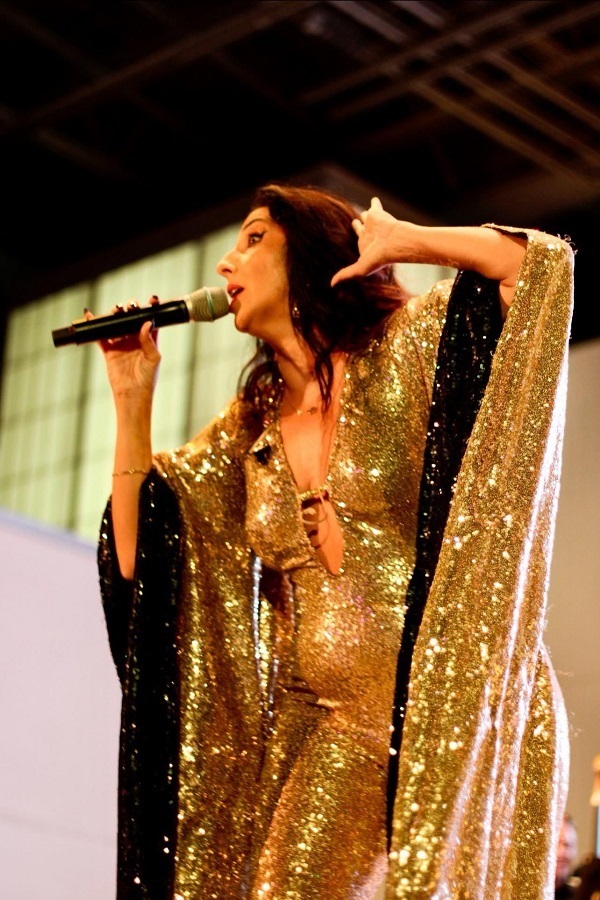
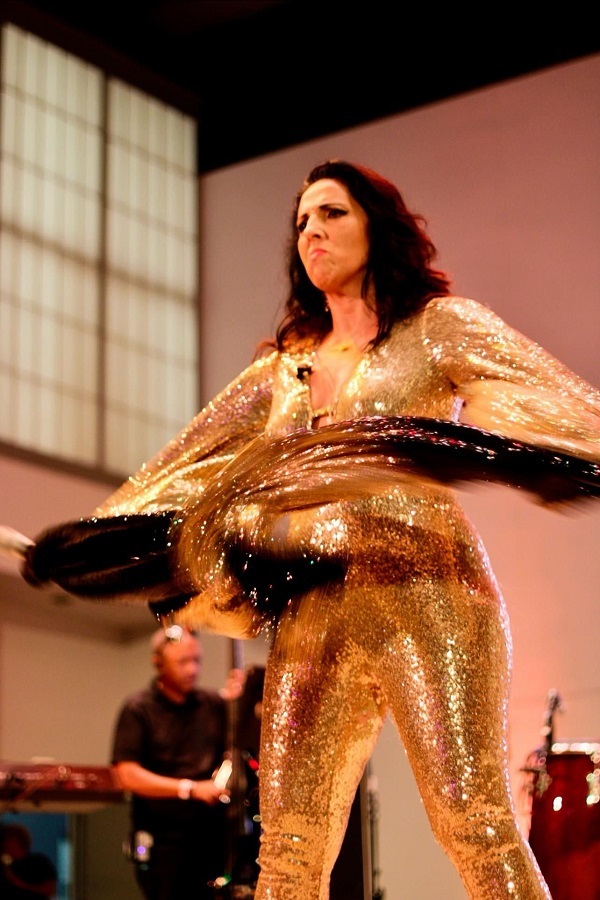
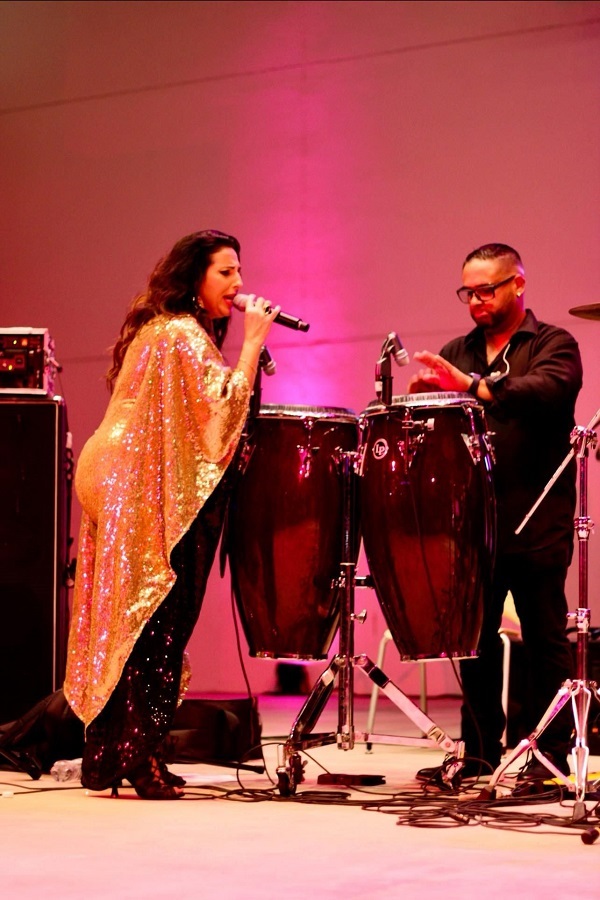
“La muñeca de la salsa”, Melina Almodovar, was backed by Luigi Flores from Costa Rica on piano and musical direction, Johnny Fortunato from Dominican Republic on bass, Pablo Molina from Venezuela on timbales, Juan Pablo Camacho from Venezuela on tumbadoras, Carlos Molina from Venezuela on bongo, Carlos Perez from Cuba on first trombone, Ramon Benitez from Colombia on second trombone, Carlos Frank from Cuba on first trumpet and Julian Cifuentes from Colombia on second trumpet.
On backing vocals, Melina was backed by: Joe Arroyo from Puerto Rico and Freddy Lugo from Cuba. Melina gave us a first class show. As part of Melina’s performance, “El Calvito Reyes” joined her for the first time to perform the recently released single ‘Dos pa`lante’ as a live duet.
During the afternoon, the festival took place under a beautiful blue sky that kept the crowd’s enthusiasm positive. During the night, the clear Floridian skies kept the attendees dancing at full steam. Of course, to that end, the aforementioned talents kept the stage in salsa.

Christian delighted us with his repertoire shortly before inviting us to listen to his recently released CD entitled El legado continúa. To bid farewell to the musical day, which lasted nearly ten hours, the grand finale invited the group of singers who had paraded on stage during the day and part of the night to come in and jam with the “papa de los pollitos” (father of the chicks).

Also Read: A party of dancers at the concert to celebrate Willie Rosario’s 100th birthday
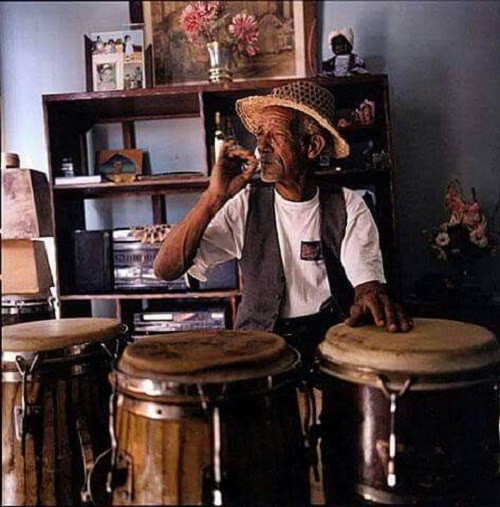
Remembered man of the Cuban rumba to which he imprinted his own styles.

He accompanied for a long time with his percussion the Las D’Aida Quartet and the Canadian artist Jane Bunnett.
Considered as one of the great rumberos of Cuba by introducing new styles in the Cuban rumba whose artistic baptism was given in the famous comparsa of Los Dandys.
He performed in several groups such as Los Componentes de Batea, Los Guaracheros de Regla and other groups whose banner was the tambor bata, he had a brief stint with the Sonora Matancera and played in the orchestra that accompanied the Cuarteto Las D’Aida at the Tropicana Club.
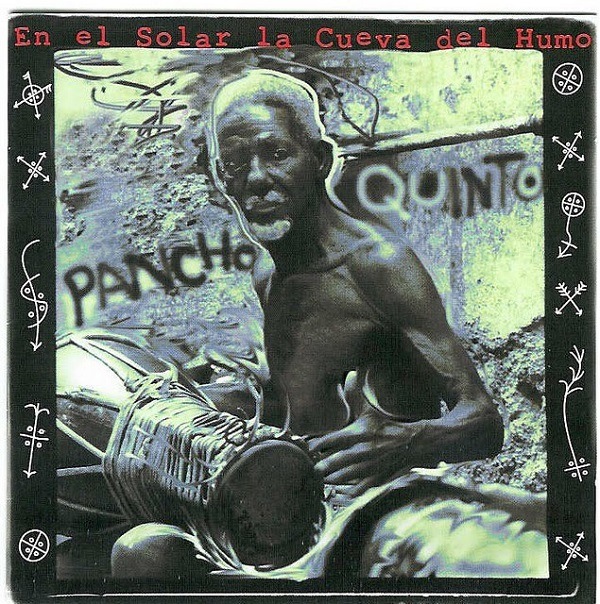
Later he founded the Guaguancó Marítimo Portuario, a group that became the popular Yoruba group Andaba, which performed with the Canadian artist Jane Bunnett, with whom Pancho Quinto collaborated in other productions, and in the twilight of his career he had three productions as a soloist. This rumbero percussionist lived 71 years.
He was preceded by the sonorous echo of Pablo Roche’s bata lucumí juramentados. Such was the heritage that little Pancho gathered when he arrived in this world in the arms of his great-grandmother Camila, with no other identity than his African blood and his diagonal marks on his face, as was the ancestral custom of his family Ilé in the Gold Coast.
That night the conch shells spoke, and from that moment the child was consecrated to the deity of Shangó, god of music and drums.
He received on his right wrist a leather strap with fine bells, which, according to custom, would protect him and his drums from the bad influences of destiny.
Perhaps that is the reason why Pancho Kinto, when he played, knew that his music reached his ancestors in Oyó, beyond time, light and the Atlantic.
This man, a port man for most of his life, inherited the natural wisdom of those princes who came as slaves to Cuba.
Both built and endowed with religious foundations the first set of bata drum that was born in the island, and from that remote time the sacred song of the orchestra consecrated to the lucumí altar was heard.

It could be said that they were the survivors of the total of slaves that arrived to America, there is an estimate of fifteen million according to data that I heard the Cuban investigator Leovigildo Lopez say when the first Yoruba congress, celebrated in the Palace of the Conventions in Havana.
But to that fantasy that leads men to the inspiration of that mysterious and mythical love towards life, to that renewed and novel way of singing, dancing, playing, turning the palpable into spiritual and the intangible into vital, men like Francisco Hernández Mora pay tribute, exponent of those traditions that merged in our continent and whose result is none other than the embrace between blacks and whites, although there are groups or castes that do not assimilate it as it is.
I learned a lot with Pablo,” said Pancho in this interview in 1994, when he was just beginning to play with flutist Janet Brunet, with whom he toured internationally, recorded and filmed in Canada.
Pablo was called Akilakua, powerful arm, he was a big black man, he goes on talking, with all gold teeth, ugly as his mother’s pussy, but with something special in his personality.
Of the historical drums he commented that they passed from the hands of the olú batá Andrés Roche to those of his son, later considered one of the greatest bataleros of these times.
Pablo’s father was called the Sublime, because of the way he played the original African bata, he did whatever he wanted with those hands. he added.
Paradoxically, the life of both has always been an unknown for those who try to unravel it or look for a chronological order, as it has almost always happened with many rumberos and composers, I am thinking now of Tío Tom or Chavalonga, but that is not the subject now, What I want to say is that these musicians have been teachers and inspiration for a pleiad of Cuban artists and of other nationalities that with luck have heard of the touches of those drums that officiated in the sacred ceremonies of the orisha pantheons.
From those drums, he commented, were born all the drum sets of secret foundation, because from one is born another, like children.

Pancho kinto played with those sworn drums when in the town council of Regla they took out the procession of the virgin, although it was Jesus Perez, another of Roche’s students, to whom it corresponded to offer the first public concert with a robe orchestra, a sacrilege for many at that time, and much more if it was an act in the Aula Magna of the University of Havana.
However, five decades after the writer and ethnologist Fernando Ortiz sponsored that concert, Pancho Kinto played the bata in the same university campus to pay homage to the memory of his ancestors with his sonority.
Pancho was a Cuban musician who learned to play quintiar from a very young age and along with this he made his drums and cajones in his own way, his own inventions, as he said, playing the tumbador with a spoon in his left hand, he was just a party of bata and cajon, I saw him do that many times in the fabulous rumbas that were celebrated in a lot in Campanario, where the group Yoruba Andabo used to meet in its beginnings.
There he became known for being a member of the Cayo Hueso group, but Pancho had been playing with them since they were Guaguancó Marítimo Portuario in the port of Havana.
Originally they were Geovani del Pino, Chang, el Chori, Palito, Fariñas, Callava, Marino, Pancho and others, many are gone forever like Pancho, whose unexpected death surprised everyone on February 11, 2005.
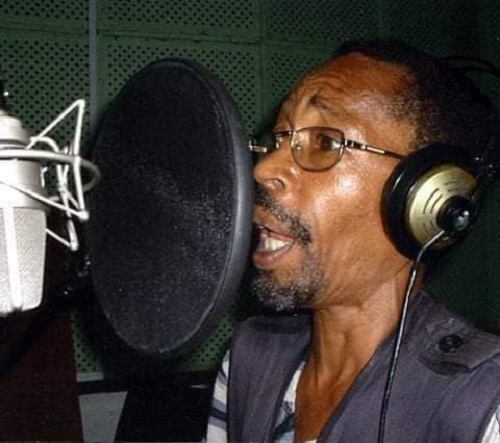
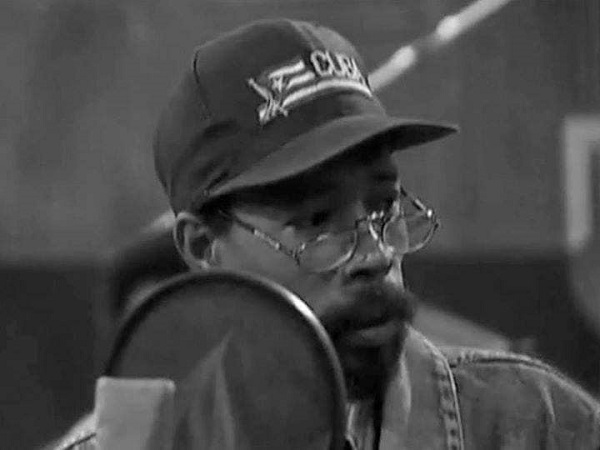
Famous sonero voice leader of the group Sierra Maestra, he began his career at the beginning of the eighties of the last century with the group Sierra Maestra, integrated by former students of the Polytechnic University José Antonio Echeverría, of Havana, with which he won a televised contest of new musicians.

He died at the age of 55 on November 6, 2005 in Copenhagen, Denmark, of a heart attack, after giving a concert with his group at the end of a tour of Europe.
He was born on April 17, 1950 in a modest country house in the vicinity of the Antonio Maceo Sugar Mill, in Cacocun, in the eastern province of Holguin.
Relatives and neighbors say that since he was a child he loved art, music, pirouettes and attracting attention.
October 20, 1976 in Havana, together with his classmates at the José Antonio Echevarría University Center, he founded the musical group Sierra Maestra, called at that time Grupo de Sones de la Facultad de Ingeniería Eléctrica.
Those young dreamers performed in the popular contest “Todo el Mundo Canta”, where they took off on a spiral of success in Cuba and the world.
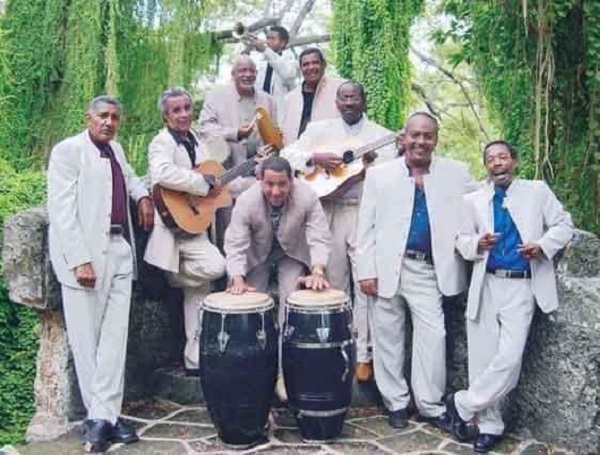
A faithful cultivator of Son, Rodríguez participated in the Afro Cuban All Stars project, nominated for a Grammy in 1998 and parallel to the Buena Vista Social Club.

His excellent voice, comparable according to critics to that of the great cultivators of the genre, was one of the emblematic of the current Cuban dance music scene.
She began recording in 1981 her first album, “Sierra Maestra Llegó con El Guanajo Relleno”, was a silver disc and received excellent reviews. He participated in the Afro Cuban All Stars project, and parallel to the Buena Vista Social Club.
According to the Cuban composer, José Antonio Rodríguez not only possessed a very special voice, “he also had the courage and human qualities to remain faithful to that style, the son style, which is the mother of Cuban music”.
The repertoire of Rodriguez, known as Maceo among his friends and admirers, included, in addition to the great classics of traditional son, pieces that became very popular in his voice, such as Dame un traguito ahora or Esa mujer lo que quiere es que la miren.
Maceo, although small in stature, was an immense man, someone who could not conceive where to keep the torrent of voice he displayed without ostentation, so much musicality, intonation and love for Cuban music.
José Antonio was not only a great musician, he was a great person, very loved by his closest friends and in general by the people whose affection and admiration he won since the participation of Sierra Maestra in the Adolfo Guzmán contest and that thanks to his special way of interpreting the Cuban son, great musicians such as Ignacio Piñeiro’s Septeto were born again in the popular taste.

The singer died on November 6, 2005, just a few hours after finishing the European tour of Sierra Maestra with a concert at the Amager concert hall in Copenhagen.
With this presentation, the popular band put an end to the performance of all the Cuban artists who participated in the First International Latin Music Festival of that capital. The sonero’s remains were repatriated to Cuba, where he was buried.
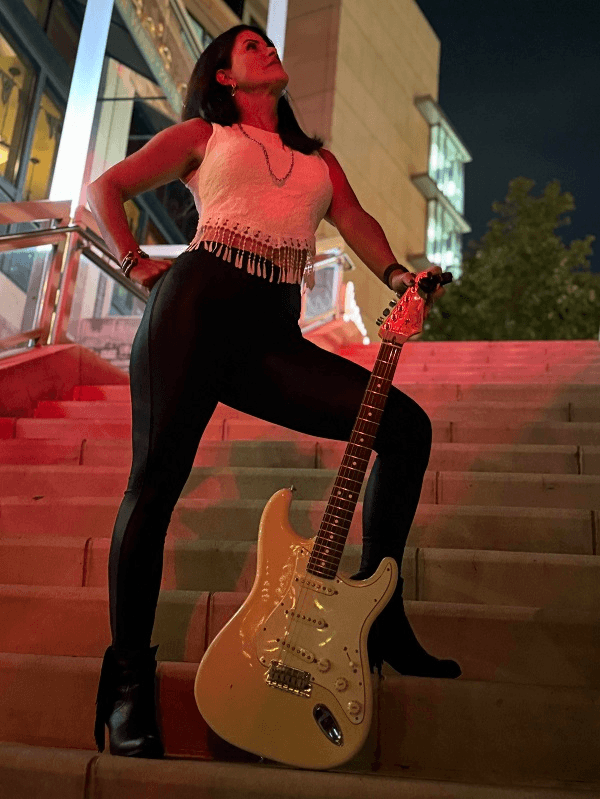
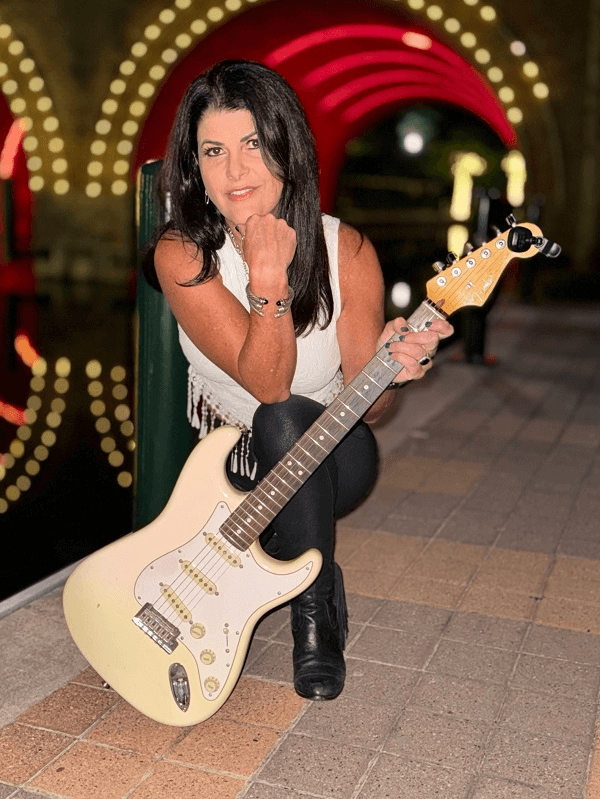
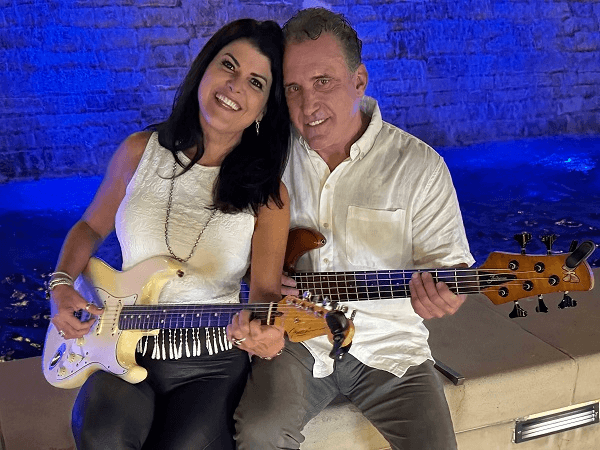
Yelba Heaton is a Nicaraguan-born bandleader, singer and guitarist whose strong musical heritage coming from her family has made her have close contact with music since before she could say her first words.
The artist based in The Woodlands, Texas has been kind enough to answer a few questions for us in order to know more about her musical beginnings, the creation of her band, her projects outside of music, among other topics.

For many generations, Yelba’s family had become very popular among her acquaintances for knowing how to carry a tune properly and having some guitarists and pianists in this melodic family tree.
In her case, as she grew older, she and her siblings saw their father constantly serenading their mother and playing romantic boleros on his guitar, so this instrument was a day to day affair for the children. This is how the couple’s children began to experiment with music both together and separately, which little by little sparked Yelba’s interest in this branch of the arts.
This interest reached such a point that both she and her sister Thelma began to compete in every talent show that was held at the school they attended, Yelba played the bandurria and Thelma played the guitar. Both of them were very good with each other on stage and their voices joined together in a very harmonious and pleasant way for the audience that heard them.
When she turned nine, she participated in the tv show ”Junior Patherns”, which was very popular in her country at that time. Already at that time, she showed her great skill as an performer and the way she would follow later on.
As she got older, she began to sing in the church she was attending at the time, but could not start her career formally until she became an adult after her divorce in the United States. This was a very stormy phase of life for Yelba, as she had recently separated from her husband and father of her five young children, leading her to suffer from depression and believe that her life was over. However, it was just beginning.
At the same church, she met another guitarist, who when saw the bad stuff that she had gone through, decided to invite her to participate in an open mic night at a nightclub, which Yelba did not even know what it was at the time. Although she confesses to being extremely intimidated by the great artists with whom she shared that night, it was an experience that she is grateful to have had, as it gave her the opportunity to put aside her sadness for one night and experiment with music like she had never done before.
After sitting down with her guitar and performing ”Besame mucho” to the audience that night, having heard those present applause and ask for more songs made her be truly happy and blissful. Immediately, she knew she wanted to experience that feeling again and again.

Formal beginning of Yelba in music
That same night that Yelba performed at that venue, Jeremy Garcia, a flamenco guitarist accompanied her with his instrument and resulted in a beautiful combination of melodies that left all those present delighted, including the owner of the place, who proposed to both of them to make a paying gig for next Saturday, to which they replied ”of course”. That was how Yelba, Jeremy and bongo player Benny Rod (Yelba’s friend from church who joined later) started their paid musical careers as a trio.
Over time, the three artists caught the attention of critically acclaimed guitarist Mark Towns, who invited Yelba to sing with him at an event in Clear Lake and also gave him some copies of their CDs. Towns was a key piece in the formal creation of the band and the trust that she was gaining to sing in public.
Over the next few years, she was performing at larger and larger events and learning all she could about clave, song forms of various genres, stage presence and other important aspects of her nascent career.
Creation of Yelba Variety’s Band and Latin Fire
Although Yelba, Jeremy and Benny were already a trio, they still could not find a name that perfectly defined what they stood for, but that changed when one day they performed songs Yelba had learned to sing on her father’s knee when she was little. That night, everything went great and they received very positive feedback from the audience and the media who covered the concert.
As a result of this performance, a reporter from the Houston Chronicle wrote an article about the band in which he was very complimentary about their show and described what he saw that day as ”Latin fire”. The first line of the article said that: ”Latino fire is what I heard last night…”. Yelba liked this opinion so much that she decided to baptize her band as ”Latin Fire”.
Such was the impact this report had on her career that the Nicaraguan still keeps a copy of it and can be found on her website to this day. This was undoubtedly a very important event for her and her band mates.

Yelba as a wedding planner and motivational speaker
Just like Yelba performs very well in music, she has also found time to work as a wedding planner, a hobby for which she found out she is talented. The artist has assisted numerous marriages with minimum budget, but with her help, she was able to achieve great things with very little money. This is how she has made engaged couples ask for her help and she is always happy to collaborate with them.
Another area in which she works on very well is motivational speaking. She found out she had a talent for this while doing her master’s degree in finance and learned to move in the corporate world, which gave her the necessary experience to address an audience properly. In addition, her career as an artist requires her to sing, play and dance in front of crowds, which also gives her the confidence she needs to speak to all kinds of audiences at a given time.
Without a doubt, Yelba Heaton is a multifaceted Latina who leaves our culture on high and we are proud to have had her in this edition of International Salsa Magazine.