• Skip to primary navigation
  • Skip to main content

International Salsa Magazine

  • HOME
  • Previous editions
    • 2026
      • ISM / April 2026
      • ISM / March 2026
      • ISM / February 2026
      • ISM / January 2026
    • 2025
      • ISM / December 2025
      • ISM / November 2025
      • ISM / October 2025
      • ISM / September 2025
      • ISM / August 2025
      • ISM / July 2025
      • ISM / June 2025
      • ISM / May2025
      • ISM / April 2025
      • ISM / March 2025
      • ISM / February 2025
      • ISM / January 2025
    • 2024
      • ISM / December 2024
      • ISM / November 2024
      • ISM / October 2024
      • ISM / September 2024
      • ISM / August 2024
      • ISM / July 2024
      • ISM / June 2024
      • ISM / May 2024
      • ISM / April 2024
      • ISM / March 2024
      • ISM / February 2024
      • ISM / January 2024
    • 2023
      • ISM / December 2023
      • ISM / November 2023
      • ISM / October 2023
      • ISM – September 2023
      • ISM – August 2023
      • ISM July 2023
      • ISM Edition June 2023
      • ISM – May 2023
      • ISM April 2023
      • ISM March 2023
      • ISM February 2023
      • ISM January 2023
    • 2022
      • ISM December 2022
      • ISM November 2022
      • ISM October 2022
      • ISM September 2022
      • ISM August 2022
      • ISM July 2022
      • ISM June 2022
      • ISM May 2022
      • ISM February 2022
      • ISM January 2022
    • 2021
      • ISM December 2021
      • ISM November 2021
      • ISM October – 2021
      • ISM September 2021
      • ISM August 2021
      • ISM July 2021
      • ISM May 2021
      • ISM April 2021
      • ISM June 2021
      • ISM March 2021
      • ISM February 2021
      • ISM January 2021
    • 2020
      • ISM December 2020
      • ISM November 2020
      • ISM October 2020
      • ISM September 2020
      • ISM August 2020
      • ISM July 2020
      • ISM June 2020
      • ISM May 2020
      • ISM April 2020
      • ISM March 2020
      • ISM February 2020
      • ISM January 2020
    • 2019
      • ISM December 2019
      • ISM November 2019
      • ISM October 2019
      • ISM Septembre 2019
      • ISM August 2019
      • ISM July 2019
      • ISM June 2019
    • 2016
      • ISM December 2016
  • Spanish
  • Download Salsa App
    • Android
    • Apple

Search Results for: dance

Samuel Quinto Feitosa is a Brazilian virtuoso jazz and classical pianist

Samuel Quinto Feitosa, FRSA (born September 5, 1973) is a Brazilian jazz, pop, gospel and classical pianist, as well as music producer, composer, arranger, educator and writer living in Portugal since 2004.

Quinto grew up in Salvador, where he developed his art mainly with the piano. Samuel Quinto was born in Belém, Pará, but grew up in Salvador, Bahia.
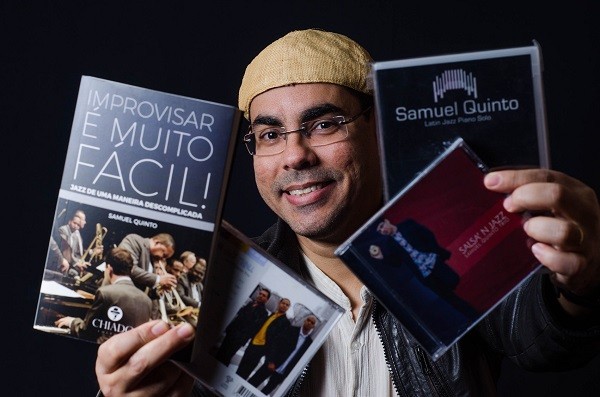
Samuel Quinto Feitosa is a Brazilian virtuoso jazz and classical pianist.

Since the age of seven, he developed his musical talent by virtue of the contact with the piano through the gospel, accompanied by the Baptist Church that he studied during his childhood with his family in Salvador.

Then Samuel took the first steps on the piano in the family home, always without accompanying teachers, and developed his piano skills learning also, as self-taught, harmony, reading and writing music and orchestration, musical composition, arrangements for the church choir, which begins to play as a pianist at the age of 12 years. In Europe.

Samuel Quinto released his first CD “Latin Jazz Thrill” in 2007, in Portugal, with trio formation (Bass, Piano and Drums), which formed the core of his repertoire in various festivals and concerts during the years 2007 and 2008 in Portugal.

During his 2008 tour he performed in cities such as Hamburg, Berlin, Cologne, Heilbronn, Liège and Limoges; in addition to a special concert held in Salvador in collaboration with the Catholic University of Salvador in June 2008. His compositions are used at the University of Porto (ESMAE) in the Jazz degree, as study material in the training of Jazz students.

The second CD entitled “Salsa ‘n Jazz”, containing eight original compositions by Samuel Quinto, and the standard Stella by Starlight, is released in June 2009 with a concert in the city of Porto, and the concomitant launch of his new tour.
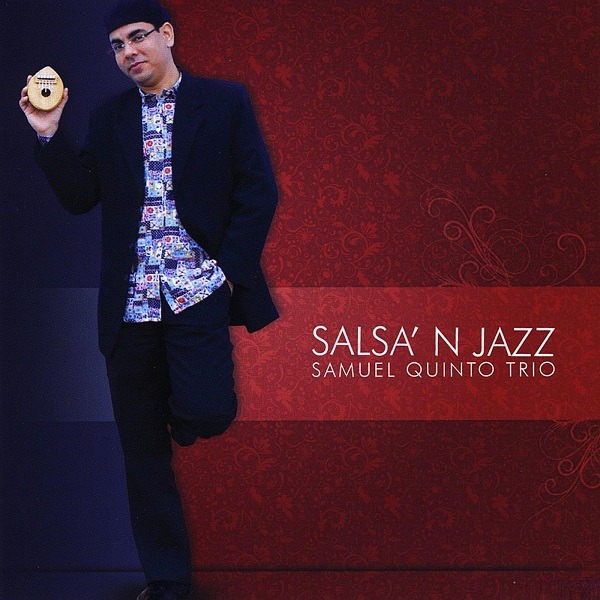
Samuel Quinto Trío Salsa'N Jazz (2009)
Samuel Quinto Trío Salsa’N Jazz (2009)

Even more extensive, which passed through Belgium, Germany, Portugal, Spain, France, Luxembourg, Netherlands and England. In this second work, Samuel was accompanied by another Brazilian, classically trained, Marcos Borges on bass and Manuel Santiesteban, Cuban, graduated in drums in Havana, Cuba.

He founded the first Latin Jazz course at the North Jazz School, Porto – first professional Jazz school accredited in Portugal and one in the Iberian Peninsula to have the Professional Jazz Instrumentalist course until then.

Besides being invited to be the artistic director of one of the most traditional Portuguese jazz clubs, Si bemol.

Samuel has also been invited to conduct workshops in the field of Jazz, Latin Jazz Composition and Arranging both in Brazil and Europe. But his musical talent is not only to jazz, after having been a pianist of the corps de ballet, he began to develop the scholar side of his music.

Inspired by great composers such as Beethoven, Mozart, Bach, Tchaikovsky, Brahms and others, he began compositions to accompany ballet in performances, as well as for orchestra and choir. _ (allaboutjazz)

There is something about Brazilian-born pianist Samuel Quinto that strikes a vibrant chord in the inner ear. Perhaps it has to do with his wonderful grasp of the joy that abounds in the Brazilian northeast.

His sense of “joy”. Perhaps it also has to do with his mature approach, his wonderful use of dynamics, his expression and his innate ability to allow the tonal center of his music to shine.

He has an exquisite ear and his hands are independently controlled by his mind, which separates melody and harmony when necessary.

Quinto, as a result, makes his fingers tingle on the keys, rumble and guffaw and cry with chords from which he wrings laughter and sadness and pure joy.

In Salsa’ N Jazz he plays with a primal hypnotic rhythm that calls to the roots of his music, which reach all the way to deepest Africa, through the folk corners of Brazil and Spain, which means the Mediterranean nooks and crannies of the Middle East, India and Europe.
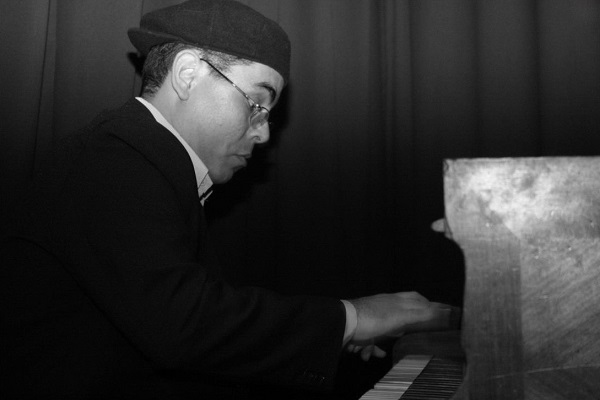
Samuel Quinto Feitosa is a virtuoso pianist.

The result is a discotheque where these cultures converge in a point of ignition that warms the blood of the soul. His playing is muscular and intuitive and smacks of an artist who likes to invent on the fly, to constantly evolve.

The starting point of Quinto’s playing is also a deeply symbiotic relationship with forro music in all its vibrant splendor-baiao, xote and arrasta-pe-all elegantly captured and sparkling as his fingers touch ebony and ivory.

The most joyous and memorable display of this is her rendition of Victor Young’s “Stella by Starlight,” which gets a rousing liner treatment and reaches its climax as the song’s choruses unfold.

It is worth mentioning that on this song – as on the others on this album – Brazilian bassist Marcos Borges and Cuban drummer Manuel Santiesteban shine with their wonderful interplay.

Samuel Quinto is also an accomplished composer and demonstrates maturity and a sense of adventure with the rhythmic variety he presents here in a rumba, “Quinto’s Rhumba” which, by the way, is played in a deliciously choppy style reminiscent of Thelonious Monk.

“Jaci” is an exciting, danceable song that crosses Cuban rhythms with a touch of Brazil.

“Bolero To Preta,” an affectionate semblance of the pianist’s mother, suggests that the pianist has a lot of inner clave.

“Ficou No Meio” is simply a marvelous forro that becomes dizzying as Quinto, Borges and Santiesteban gloriously rumba in harmony and rhythm.

Santiesteban gloriously ruminate the harmony and rhythm.

“Voo Da Andorinha” is a chorinho that, quite simply, reveals Quinto’s “Alma de Nordeste”. And “Isabel (Para Voce)” is a beautiful ballad that shimmers and shines as its emotive tonal colors begin to unfold.

“Salsa’ N Jazz” is an emblematic song that captures everything unforgettable about this album: a pianist with the ability to dazzle in silence while the right hand flies exotically and the left constantly invents harmony and rhythm.

Here is a very promising pianist, who brings with him his rich Brazilian tradition and, indeed, all of Latin America, a new and exciting musical landscape. _

Raul D’Gama Rose

                                                             Samuel Quinto Trio – Salsa’N Jazz (2009).

Musicians:

Samuel Quinto (Piano)

Marcos Borges (Bass)

Manuel Santiesteban (Drums)

Information provided (September 16, 2023)

Samuel Quinto

Samuel Quinto Feitosa  (Neuroscientist and Musician)
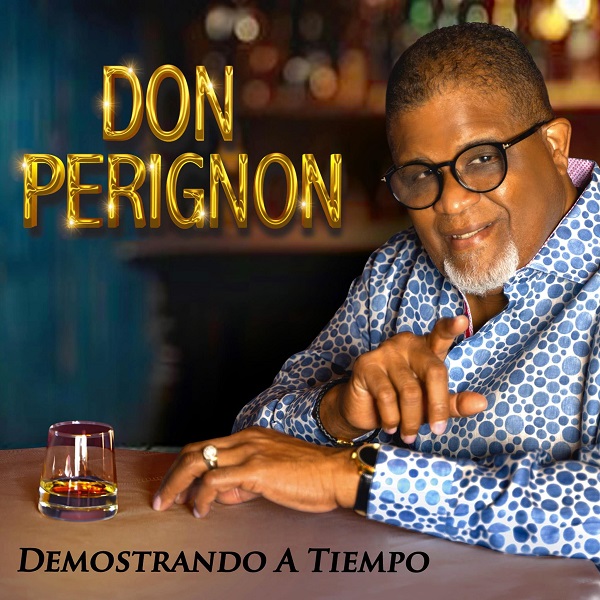
Orquesta la Identidad is one of the most nationally and internationally recognized groups in the salsa genre

La Puertorriqueña de Don Perignon presents her new recording work

Demostrando in time

With great enthusiasm, La Puertorriqueña de “Don Perignon” announces the release of its most transcendental recording production, entitled Demostrando a tiempo.

La Puertorriqueña de Don Perignon presents her new recording work

This release is a testament to more than forty-five years dedicated to music by the orchestra’s leader, Pedro Morales Cortijo, known artistically as “Don Perignon”. After overcoming health challenges,

“Don Perignon“, with renewed vigor, turns his attention to what he calls “an unprecedented chapter for the orchestra”.

And what better way to kick off this new phase than with the release of the album? Demostrando a tiempo, a title derived from Moncho Rivera’s composition arranged by Carlos García, adds a historical and significant nuance to the recording.

“Don Perignon” highlights the importance of paying tribute to the pioneers of Puerto Rican popular music, Ismael Rivera and Rafael Cortijo, underlining the crucial influence they had on the musical movement to which their group belongs:

“Moncho represents Ismael Rivera and I represent Rafael Cortijo. They (Cortijo and Rivera) were the ones who created what we do, that’s why we decided to pay tribute to these two greats of our music”.

The album opens with a composition by Sammy Ayala, entitled ‘Dilo tú’, previously recorded by Rafael Cortijo’s Combo. This song, on this occasion, includes an exquisite timbal solo by Perignon.

This, which is La Puertorriqueña’s thirteenth production, rescues two jewels of the prolific composer Catalino “Tite” Curet Alonso.

The first, ‘Aquí estoy con mi son’, was first recorded in 1991 by singer Frankie Hernández under the production of Bobby Valentín. The second, ‘Soy tu ley’, was initially recorded in bolero time by Cheo Feliciano, the so-called “Señor sentimiento”. For this occasion, the skillful musical arrangement -in salsa key- by Ramón Sánchez gives the song a fascinating nuance, by integrating it with the distinctive sonority of the orchestra.

Pedro Luis Morales Cortijo, is the first name of the Puerto Rican timbalero and musical director

It should be noted that ‘Soy tu ley’ was destined to be part of the album Música Maestro (2014), but like fine wines, it waited patiently until it reached its optimum point to be released.

Highlighting the musical diversity, the album includes ‘A quién iré’, a composition by singer-songwriter Héctor Olmo, which at Perignon’s request, seeks to express gratitude to God for all that He has given him, including what the orchestra leader calls “a new opportunity in life”.

“I have my way of thanking God, but not through a message as fine as that,” says the director of La Puertorriqueña, considering that the song written by Olmo came to answer questions about everything he has achieved musically, despite the many obstacles that have come his way. ‘A quién iré’ features the arrangement by Juan C. Cardona, the vocal participation of Alex D’ Castro and the creation of the chorus by “Don Perignon” himself.

Demostrando a tiempo includes the songs: ‘Sácala a bailar’ (composition and vocals by José Karlo Ribot, with a tasty arrangement by Andy Guzmán who incorporates a forceful piano solo); ‘Sin brújula’ (lyrics by Harold Aguirre, musical arrangement by Ramón Sánchez, sung by Joe González); ‘La clave me lleva’, ‘Como si me amaras’ and ‘Afinque, cadencia y sabor’ (title that lists the distinctive adjectives of La Puertorriqueña).

Demostrando a tiempo reflects the dedication and unparalleled talent of “Don Perignon” and La Puertorriqueña.

Through a careful fusion of tradition and innovation showcased in the repertoire, this album represents the invaluable contribution of the orchestra, captivating dancers around the world with its vibrant and distinctive sound.

La Puertorriqueña de “Don Perignon” invites the public to immerse themselves in this unique musical experience and enjoy Demostrando a tiempo, available on digital platforms and select music stores.

La Puertorriqueña de “Don Perignon” invites the public to immerse themselves in this unique musical experience and enjoy Demostrando a tiempo, available on digital platforms and select music stores.

Don’t miss the opportunity to experience the magic of Demostrando on time. Join us on this exciting musical journey.

About Don Perignon:

Pedro Luis Morales Cortijo, is the first name of the Puerto Rican timbalero and musical director known internationally as “Don Perignon,” whose musical career began in 1974.

Don Perignon y la Puetorriqueña

“Don Perignon” comes from a family with a long musical tradition, which includes his cousin, Rafael Cortijo.

After having stood out as musical director for singers Andy Montañez and Lalo Rodríguez, in 1989. “Don Perignon” released his first production La buena vida, which featured the participation of Victor Manuelle. This album was followed by Festival de soneros (1990) and Subiendo (1992).

In his career “Don Perignon” with his orchestra, La Puertorriqueña, has released thirteen recordings, in which figures such as Gilberto Santa Rosa, Víctor Manuelle, Luisito Carrión, Oswaldo Román, Pedro Brull, Josué Rosado, Rico Walker, José Alberto “El Canario” and Hermán Olivera, among others, have collaborated.

Bella Martinez Puerto Rico


Also Read: Déjalo, the latest track by Pedro Conga y su Orquesta Internacional

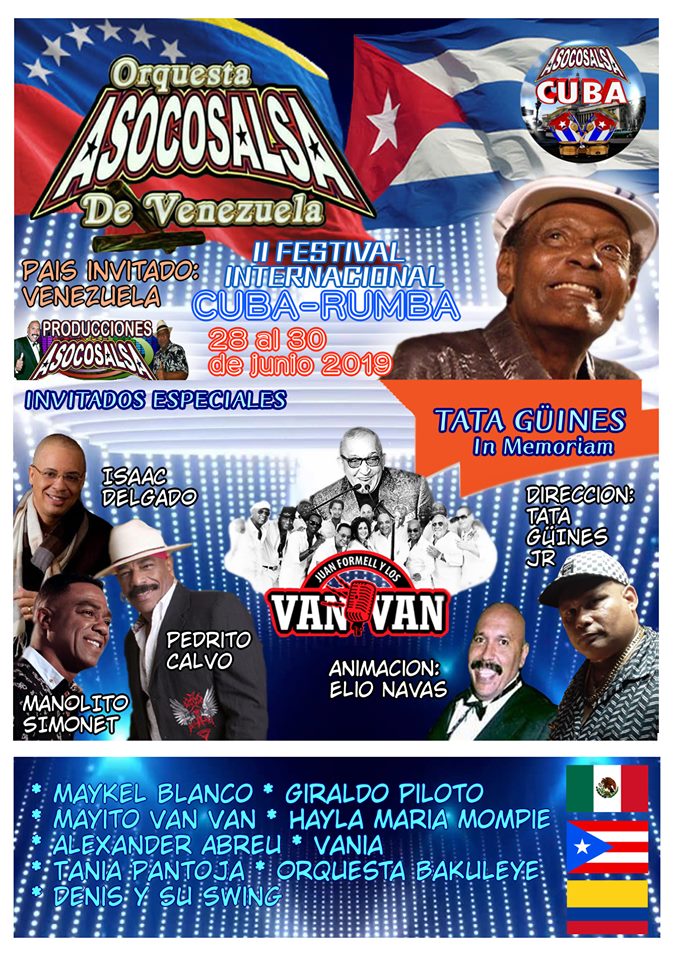
Cubarumba Tataguines in memoriam International Festival in its second edition.

Latin America / Cuba / La Habana

The National Center for Popular Music invites you to participate in the Cubarumba Tataguines in memoriam International Festival in its second edition.

It will be held in Havana from June 28-30, 2019. With the aim of Honoring the memory of Tata güines, Stimulating the artistic creation of rumba groups from the community, encouraging children’s projects based on the folkloric and musical genre, highlight the social value of the rumba as intangible heritage of humanity.

Asocosalsa Cuba
Asocosalsa Cuba

Likewise, to carry out a national and international workshop based on the pedagogical need to strengthen cultural nationality by art students in Cuba on the basis of the figure of tata güines, the fundamental foundation that promoted the proclamation of Rumba as Intangible Heritage of Humanity. . With this goal we urge all young people, students who wish to participate in the Festival through the following themes:

Themes:

  1. Cultural educational practices
  2. Potential value of transformation of the percussive theory of Tata güines.
  3. Main factors that slow down or facilitate the descending of the Rumba genre as a percussion modality.
  4. Ethical and aesthetic values ​​promoted by the practice of percussion
  5. Challenges to perfect percussive techniques
  6. Creation and promotion of Cuban art
  7. Young rumbero, possibility of cultural advancement. Harvested experiences and challenges for the present and immediate future.
  8. Others

The venue will take place at the Turf Night Club

General program:

Press conference

Thursday, June 13, 2019

Venue: El Turf Night Club

Address: F Street between Calzada and Quinta Vedado

Time: 2pm

Participation: Press-Radio-Television-Guests

Duration: 1h

toast to daddy

Place House Museum Tata güines

TIME: 3 PM

Event schedule:

Thursday, June 27

  • 8:00 Opening Gala Avellaneda Hall of the National Theater

Cast Subject to change

  • Tata guines Jr.
  • Makuta Flow
  • Rumbansoc
  • Ronald and his Rumbera explosion
  • Denis and his swing
  • Vania Borges
  • Iannna Wobble

Friday, June 28

Venue: Club Noturno El Turf

  • 9:00 Inaugural Conference
  • 10:00 Recess
  • 10:30 Percussion and dance workshops
  • 12:30 Demonstration group
  • 1:30 Visit Tata Guines House Museum
  • 2:00 Lunch

Cultural

Devil Tun Tun: 4pm to 6pm.

Show Woman in the rumba

Omini Bata-Rumba Morena

  • 6:30 a.m. to 8 p.m. Tataguines/Ochareo Group
  • 10-2am Venue: Club Norturno El Turf Shows with rumba groups

Explosion Rumbera/Rumbavila/Rumbansoc/

Saturday, June 29

Venue: Club Noturno El Turf

  • 9:00 Inaugural Conference
  • 10:00 Recess
  • 10:30 Percussion and dance workshops
  • 12:30 Demonstration group
  • 2:00 Lunch

Cultural

  • 3:00 Clave de Rumba folkloric ensemble / children’s project.
  • 8pm-2am Venue: El Turf Timbalaye Nightclub /Rumberos de Cuba/Rumbansoc/ Tata güines

Sunday, June 30

Venue: El Turf Night Club

  • 9:00 Report of the event. Delivery of Certificates.
  • 10:00 Recess
  • 10:30 Symposium Asocosalsa Cuba
  • 5:00 Cinema Avenue Closing Gala
  • 10:00 Final reception.

Festival Project

Event Organizing Committee:

Víctor Rodríguez García: Executive Director

Arturo Soto Martínez: Chairman of the Event

Suset Núñez Vázquez: CNMP Events Coordinator

Osorio García Rule: CNMP Events Department

Brigitte Oliva: General Producer

Principal Cubarumba
Principal Cubarumba

Company National Center for Popular Music

INTRODUCTION

The Cubarumba 2019 Tata güines in memoriam project is a previous interactive festival that consists of pedagogical, competitive, sociocultural moments that will transfer original Cuban music, through percussion and dance workshops, interaction with the community, as well as shows of this genre, intangible heritage of the humanity, the evident and permanent need to rescue Cuban roots, and the representation of the name Tata güines, a national and international figure. Following this trilogy as a cultural line, the president of the festival Arturo Soto Martínez advocates for this event.

Carrying out research, it is verified that this festival has a high tourist level, which causes a useful strategy to penetrate tourists about our idiosyncrasy and traditions, in addition to giving an unforgettable moment to all those who are present at that moment.

If we observe the social gaze, we realize the motivation of society in general since we encourage in the community a hope of cultural revival, a festival of inclusion in all senses since people of all ages and disabilities participate. Achieving a mutual interaction that achieves as a result an inclusion of this musical genre in daily life and in the tastes of all the people who enjoy it.

It is emphasized that times are changing, however it is important to take actions so that the celebrations of our origin are not forgotten, it is about looking for very frequent actions that work with everyday life, exclusivity, professionalism and good taste that keep this celebration alive. choice for youth not only in our country but around the world

For all the above, the need for this culturally artistic project becomes evident, specifically in these places where a large foreign crowd is concentrated, since it is unaware of Cuban culture. Relying on the battle of ideas that we have daily for the rejection of national identity, this project that settles the roots, that remembers the past, that discloses our present and that above all that is written increases love is evident, permanent and necessary. for Cuban culture.

DEVELOPING

  • Goals:
    • Honor the memory of Tata güines
    • Stimulate the artistic creation of rumba groups from the community
    • Encourage children’s projects based on the folkloric and musical genre.
    • Highlight the social value of the rumba as intangible heritage of humanity

Themes:

  1. Cultural educational practices
  2. Potential value of transformation of the percussive theory of Tata güines.
  3. Main factors that slow down or facilitate the descending of the Rumba genre as a form of percussion.
  4. Ethical and aesthetic values ​​promoted by the practice of percussion
  5. Challenges to perfect percussive techniques
  6. Creation and promotion of Cuban art
  7. Young rumbero, possibility of cultural advancement. Harvested experiences and challenges for the present and immediate future.
  8. Others

PARTICIPATION METHOD

  • Delegates
  • Student
  • Musicians
  • Guests

REGISTRATION FEES: DELEGATES

Foreigners………………50 cuc includes participation in the event, certificate and/or credits.

Cubans …………………….250 cup includes food, participation, certification and/or credits

Cuban students ……………..125 cup includes food, participation, certification and/or credits

PROJECT OBJECTIVES

GENERAL OBJECTIVE

Carry out an international rumba festival based on the artistic value of the figure of tata güines in the world on the basis of the Rumba proclamation as Intangible Heritage of Humanity

Goals:

  • Honor the memory of Tata güines
  • Stimulate the artistic creation of rumba groups from the community
  • Encourage children’s projects based on the folkloric and musical genre.
  • Highlight the social value of the rumba as intangible heritage of humanity
Specific Objectives Actions Indicators Participants Responsible
Honor the memory of Tata güines Hold the Cubarumba Tataguines Festival in memoriam Conciliation Company, Sponsors, Organizing Committee Event Leader
Stimulate the artistic creation of rumba groups from the community Theoretical-practical dance and percussion workshops, presentation of youth groups in event activities Conciliation with Artex, Egrem. Cuban and foreign population Org Committee
Encourage children’s projects based on the folkloric and musical genre.


Activity in the National Folkloric Ensemble of Cuba, headquarters for the socialization of children’s projects Address of Palenque, Production Org Committee Event Leader
Highlight the social value of the rumba as intangible heritage of humanity Activity the woman in the rumba, the longest rumba, the rumba and its youth, the rumba does include you Group Directors Production Event Leader


Tata Guines No 1
Tata Guines No 1

Beneficiary population:

Directly, the population that benefits is Cuban and foreign, since in some way the project is aimed at educating, including, transforming the culture of these times that affects this population.

For this, their full participation is needed, in the first order the attention that is very important, then the interest in dance and percussion and the decline that forms the taste for this musical genre.

Also highlighting the importance of the social inclusion of people with disabilities, we can mention that the festival has the honor of promoting groups with different disabilities. Example of the incursion of culture in Cuba.


Danilo y Orquesta Universal in one and only performance this month at Flamingo Conference Resort and Spa

North America / USA / California / Santa Rosa

Danilo y Orquesta Universal: Prepare to an evening in the company of the best Hard Salsa and practice this tropical dance with multiples dance lessons for all levels

Enjoy the experience and connection with Salseros of the San Francisco Bay Area in the Saturday Night Live Salsa organized by Santa Rosa Salsa located in the spaces of Flamingo Conference Resort and Spa, which has achieved its fame for the Latin Live entertainment it offers.

Date: Saturday, June 8th

Cost: $15 (Includes dance lessons)

Show: 9:30PM

Salsa Lessons: 7:00PM & 8:00PM (No partner or experience necessary)

Danilo y Orquesta Universal

Bio: When Danilo Paiz was a child, his grandfather took him to the rehearsals of his Big Band era Jazz group. His grandfather, Francisco Perez, known in Nicaragua as Pancho Perez, was the director and saxophonist of both his own groups, “The Black Cats” and “La Centroamericana”. These bands played the music of Benny Goodman, Glen Miller, Perez Prado, Artie Shaw and other music of the ’50s.

This early exposure to Jazz gave Danilo a strong foundation for his composing skills and in his unique and original vocal style.

In his extensive musical career, this compositor has played with talent and internationally known musicians, such as: Ray Baretto, Ruben Blades, Mary Wilson of the Supremes, Benny Velarde and his Super Combo, Ray Obiedo, Dave Valentin, among others.

Danilo demonstrates some of his best work on bongo and vocals on the Ruben Blades’ CD titled “Ruben Blades and Son del Solar, Live!”. More about his Biography as well as Event Dates through http://www.danilo-y-universal.com

Join Danilo y Orquesta Universal for a night of Salsa Dura!

Purchase your Tickets NOW at:

https://www.eventbrite.com/e/DANILO-Y-ORQUESTA-UNIVERSAL-AT-THE-FLAMINGO-june-8-2019-tickets-60293323955


The Flamingo Conference Resort and Spa Details:

Venue: The Flamingo Conference Resort and Spa. 2777 4th St. Santa Rosa, CA 95405

Phone: (707) 545-8530

Age: +21 with ID

FULL BAR | DRESS TO IMPRESS | FREE PARKING

Website: www.SantaRosaSalsa.com

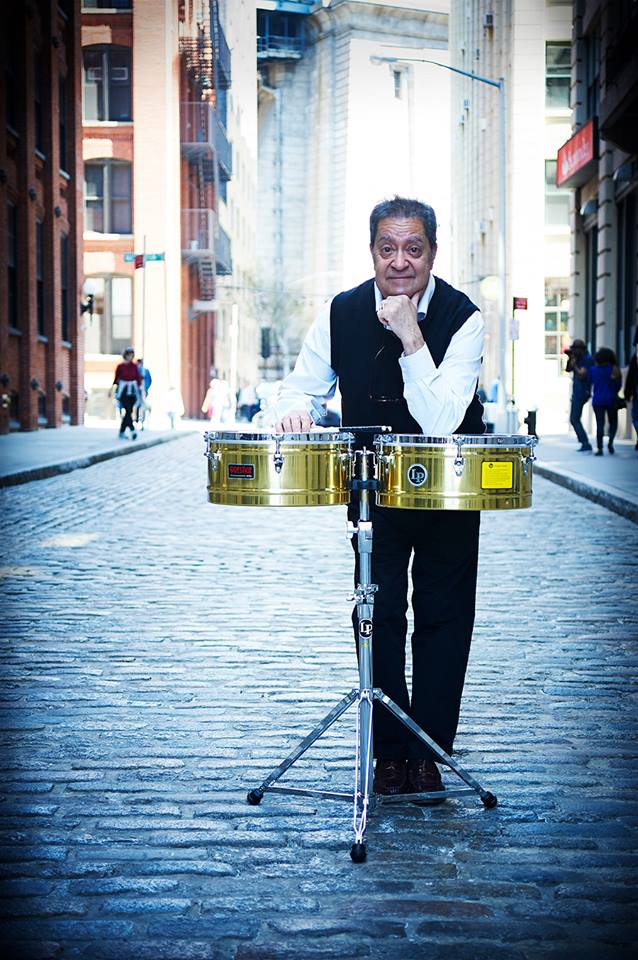
Nicky Marrero one of the best timbaleros of all time.

North America / USA / New York

Nicky Marrero, an Award Winning Master Percussionist, Innovator and Educator.

Nicky Marrero born in the Bronx, in 1950; recorded his first album “El Malo” with Willie Colon in 1967.

Still in High school, he joint Eddie Palmieri, performed and recorded with the Fania All Stars, Dizzy Gillespie, Machito, Ringo Starr amongst so many more.

His unique talent left a mark on sound in style through his creativity and boldness of breaking with tradition and creating his own to this day.

The most recorded, versatile and dynamic Puerto Rican Percussionist of his time.

Nicky Marrero
Nicky Marrero

Exciting News!!
Latin Master Percussionist Nicky Marrero is taking on a few more private students.
How about you?

Do you share the passion and dedication to reach a higher level as a professional, student and or serious hobbyist with one of the best?

So email your details to [email protected] do not  miss out on this unique opportunity to broaden your knowledge and advance your own skill and technique under the guidance of a true, World class Award winning Master of his Craft.

https://www.facebook.com/NickyMarreroOfficialPage

https://www.facebook.com/NickyMarreroOficial/

  • « Go to Previous Page
  • Page 1
  • Interim pages omitted …
  • Page 72
  • Page 73
  • Page 74
  • Page 75
  • Page 76
  • Interim pages omitted …
  • Page 168
  • Go to Next Page »

International Salsa Magazine (ISM) is a monthly publication about Salsa activities around the world, that has been publishing since 2007. It is a world network of volunteers coordinated by ISM Magazine. We are working to strengthen all the events by working together.