
Search Results for: dance
Asia Festival – September 2023
|
Cyprus
|
Salsa Jam In Cyprus
Sep 21 2023 – Sep 25 2023 The Olive Tree HotelInonu Caddesi, Kyrenia, Cyprus, 8099 DescriptionThe 16th edition of Salsa Jam In Cyprus includes workshops for all levels, shows & non-stop parties with international performers, instructors and djs. Cost from € 70 |
| Georgia
|
Tbilisi International Dance Festival
Sep 22 2023 – Sep 24 2023 https://www.facebook.com/events/764132295441860 Caliente SDF Dance Studio61 Agmashenebeli Ave, Tbilisi, Georgia DescriptionThe 5th edition of Tbilisi International Dance Festival offers master classes by leading specialists from many countries & dance parties for 3 nights (Bachata, Cha Cha, Reggaeton, Salsa, Semba) Cost: N.A |
| India
|
ConRi Sensual Aura
Park Regis Goa HotelSaqwadi, Arpora, Bardez, Goa, India DescriptionThe second edition of ConRi Sensual Aura offers workshops, shows, socials & parties with local & Bachata, Kizomba international instructors, performers & Dj’s playing: York & Snakes Cost: N.A |
| Israel
|
Caramelo Festival
Sep 07 2023 – Sep 10 2023 https://en.caramelo.co.il/ Leonardo Club EilatKampen St, Eila, Israel DescriptionCaramelo Festival offers Bachata, Salsa, Brazilian Zouk shows, workshops and parties with international & local instructors, performers & Dj’s playing: Alejandro, Paco, Matias & Charlie. Cost: N.A |
| Japan
|
Japan Bachata Festival
Sep 22 2023 – Sep 24 2023 https://www.facebook.com/events/3576655205900497 Hotel LungwoodHigashi Nippori 5-50-5 B2F, Arakawa City Tokyo, Japan, 116-0014 DescriptionThe 11th edition of Japan Bachata Festival offers parties, workshops, performances, competition with national and international instructors, performers and dj’s. Cost: Full Pass: ¥15,000 |
| South Korea
|
Seoul Kizomba Competition
Sep 14 2023 – Sep 16 2023 https://www.facebook.com/events/872624597087640 Kyungsunghall30, Sinchon-ro 16-gil, Mapo-gu, Seoul, South Korea DescriptionThe 4th edition of Seoul Kizomba Competition offers 13 hours of workshops, 3 night of parties and competitions with international performers, instructors and dj Blvck Skyle Cost: Full Pass: €198 |





Eduardo Paim: The Father of Kizomba

Eduardo Paim, the creator of the musical genre called Kizomba, is well-cherished in the Latin Dance community for being one of the most influential musicians in Latin music history. He is internationally renowned as the godfather of Kizomba music.
Born in Angola in the 1980s, Kizomba music is a blend of Kilapanga, Semba, and Angolan Merengue. Semba is the traditional Angolan music. As compared to Semba, Kizomba has a more sensuous rhythm. It’s slower and more romantic than Semba. As the principal language of Angola is Portuguese, therefore Kizomba songs are mostly sung in Portuguese. Coming from the Bantu term “Kimbundu”, Kizomba means fiesta or party. The forefathers of Kizomba are Eduardo Paim and his band SOS that he founded in 1982.

Eduardo Paim
Though it was the album “Luanda minha banda” Eduardo Paim made his successful debut with, his real breakthrough is considered “Do kaiaia” which was his second recording in 1992.
This album exceeded 50,000 copies. Later on, he released the album “Kambuengo” which was a great success too. “Ka-Ne-La” “Rosa baila” and “Chindu a tempo” are still on the top of the list of his popular songs.
The father of Kizomba, Eduardo Paim, calls himself “the precursor of Kizomba”. According to him, it was in the early 80s that the process of creating Kizomba started. There were two groups, namely SOS and Afro Sound Star (ASS). The use of kilapanda (type of music and dance from Angola. It is related to semba and kizomba, two other popular genres of Angolan music) as a reference style by the group Afro Sound Star inspired him a lot. Moreover, traditional African music such as Semba also contributed to his inspiration for the development of a new music genre. Today, kizomba is danced worldwide.
Just like everything else in this world, Eduardo Paim also had his ups and downs in his journey to music. Having said that, a time came when his schedule was just reduced to one show per year from six shows a month! At this point, he dreamed to build up his own record studio, and started working for it. And yes, he succeeded in earning a name as a producer in Angolan music industry. He named his studio “EP Studios”. Being a producer, he supported many Angolan singers of the new generation. With his release of the album “Maruva na taca” he made his comeback to the music industry in 2006.
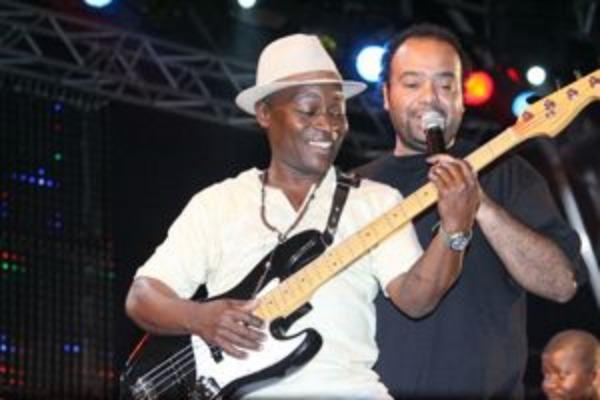
Eduardo Paim with Paulo Flores
Though it was the album “Luanda minha banda” Eduardo Paim made his successful debut with, his real breakthrough is considered “Do kaiaia” which was his second recording in 1992. This album exceeded 50,000 copies. Later on, he released the album “Kambuengo” which was a great success too. “Ka-Ne-La”, “Rosa baila”, and “Chindu a tempo” are still on the top of the list of his popular songs.
Many musicians of the new generation of Angolan music participated in his album “Maruva na Taca”. Yuri da Cunha, Nancy Vieira, Paulo Flores, Big Boss, and Bonga are to name a few. He also released his new cd “Etu mu dietu” a long period after “Maruva na taca”. You can keep yourself updated about his shows and releases by subscribing to Eduardo Paim Official Channel on YouTube.
Eduardo Paim, the father of Kizomba, has given birth to such a music genre that knows no borders. Known for having a sensuous, slow, and insistent rhythm, Kizomba is danced not just in Angola but also in other African countries and in USA and Europe as well. Moreover, Kizomba is also gaining a lot of fame in China, especially in cities such as Shenzhen, Shanghai, and Beijing.
Directory California
| The Noypitz Bar & Grill |  |
333 S Alameda St SUITE 115, Los Angeles, CA 90013, USA |
| Globe Theatre |  |
740 S Broadway, Los Angeles, CA 90014, USA |
| The Mayan |  |
1038 S Hill St, Los Angeles, CA 90015, USA |
| Soho Dance LA |  |
1618 Cotner Ave, Los Angeles, CA 90025, USA |
| Los Globos |  |
3040 Sunset Blvd, Los Angeles, CA 90026, USA |
| Ballet Hollywood |  |
6623 Hollywood Blvd, Los Angeles, CA 90028, USA |
| The Vermont Hollywood |  |
1020 N Vermont Ave, Los Angeles, CA 90029, USA |
| El Floridita Restaurant |  |
1253 Vine St, Los Angeles, CA 90038, USA |
| Steven’s Steak House |  |
5332 Stevens Pl, Commerce, CA 90040, USA |
| Riviera 31 Lounge Bar |  |
8555 Beverly Blvd, Los Angeles, CA 90048, USA |
| MNR Dance Factory |  |
11606 San Vicente Blvd, Los Angeles, CA 90049, USA |
| 7 Kingdoms |  |
11301 W Olympic Blvd # 116, Los Angeles, CA 90064, USA |
| ViBE – dance studio & creative space |  |
2939 S Sepulveda Blvd, Los Angeles, CA 90064, USA |
| State Social House |  |
8782 Sunset Blvd, West Hollywood, CA 90069, USA |
| Rock It Sports Lounge
|
 |
14239 Hawthorne Blvd, Hawthorne, CA 90250, USA |
| Ocean Towers |  |
201 Ocean Ave Santa Monica, CA 90402 |
| The Victorian |  |
2640 Main St, Santa Monica, CA 90405, USA |
| Quiet Cannon
|
 |
901 Via San Clemente, Montebello, CA 90640, USA |
| Alegria Nightclub |  |
115 Pine Ave. Long Beach, CA 90802 562-357-8005 |
| PCH Club |  |
6285 CA-1, Long Beach, CA 90803, USA |
| En Pointe Dance & Fitness |  |
713 Termino Ave, Long Beach, CA 90804, USA |
| Sagebrush Cantina |  |
333 S Alameda St SUITE 115, Los Angeles, CA 90013, USA |
Puerto Rican singer and talented sonero Charlie Maldonado
Interview with Charlie Maldonado
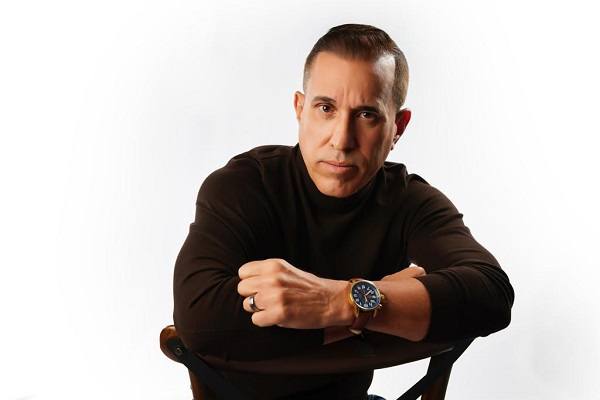
José Charlie Maldonado Rodríguez, artistically known only as Charlie Maldonado, is a Puerto Rican singer who has a great talent as a backup singer and sonero, which he has been developing throughout a prominent and very successful career in the world of music.
After having read his biography and being interested in the journey he has been on in salsa, we decided to contact him and arrange a conversation in which we could learn more about him and everything he has done to get here. Next, is a little bit of Charlie’s beginnings and, later on, everything he told us.
Beginnings
Charlie was born on October 4, 1964 in the city of San Juan, Puerto Rico. At a very young age, he was always exposed to boleros and salsa music, as his father belonged to a musical trio that was very popular at the time.
For those years, he listened to Ismael Rivera, Cheo Feliciano, Gilberto Monroig, Danny Rivera, Marco Antonio Muñiz, among others. Charlie said that, with such references at that time, it was impossible not to be enchanted by the music, so his interest in this branch of the arts grew and grew over time.
His interest got to the point where he wanted to learn to play percussion instruments such as the tambourines, the maracas, the drums and, most especially, the bongo (it was the first instrument Charlie learned to play).
Although he does not consider himself as the best bongo player of the world, he is believed to be very capable of playing it efficiently and delighting the listening audience. Most interestingly, he did not achieve this level through formal academic training at an institute, but through constant practice at ”rumbones de esquina” (congregation of people who play music, dance and drink alcohol on a street corner), school activities, family gatherings and Christmas parties.
These informal activities in which he was able to participate gave him the opportunity to develop as an artist from a very young age. In addition, his father and other musicians in the family helped him a lot in this process. The magic you feel when you play music, the family warmth and interaction with the public are not learned in any academy,” said Charlie.
The Saljaztet
The first opportunity for Charlie to play in a professional group came with The Saljaztet in 1990 thanks to its founder Bobby Concepción, who saw him singing in one of those street parties and believed in his talent and what could be done with it.
Bobby is an industry veteran who has worked with many orchestras such as Orquesta Panamericana and La Orquesta del Maestro Willie Rosario. Being around him taught him a lot and he gained a lot of experience by seeing him in action on stage.
He even taught him some vocal and instrumental techniques to apply in his performances.
Charlie keeps the best memories of this group, its director and his colleagues. He is extremely grateful for everything he learned from them and continues to apply many of these things today.
Osvaldo Núñez, Sammy Marrero, La Selecta and more
”Every human being who comes into our lives has a lot to contribute and teach us. Lord made is different, so all the musicians I’ve worked with have taught me different things” said the artist.
Osvaldo ”Cuchón” Núñez is a brilliant musician who was very dynamic on stage. He was able to play the trumpet, do chorus and lead at the same time. He performed all of these functions excellently, which is why Charlie paid too much attention to what he was doing and copied him.
Raphy Levitt from La Selecta de Puerto Rico was an extremely regimented person who ran the orchestra very well and was excellent for business. He had an almost military discipline and was extremely picky about his musicians and vocalists, to the point that he made them rehearse separately depending on their roles on stage.

In the case of Sammy Marrero, he was always at the height of Levitt’s demands and sometimes exceeded them. In addition to being extremely disciplined, he always lived up to what was required of him on each project and even a little more. He even worked with him when he had his own orchestra, a period in which Charlie learned even more from him.
On this subject, the singer concludes that ”The personalities mentioned have taught me three fundamental things: discipline, perseverance and respect for the public”.
Solo career
The idea of becoming a soloist was always on his mind, but it was not until 2016 that he was able to carry it forward. The previous year, in 2015, the maestro Raphy Levitt unfortunately passed away, at which time Charlie had some songs recorded.
He was already thinking about becoming independent and creating his own musical project, but had not decided to leave the orchestra until the death of Levitt. That is when he got hands on work and finished the record production he had already started.
In 2016, he launched his first solo project entitled ”Dueño de Nada”, whose songs are mostly written by Charlie Ramos. The only cover in the album is precisely ”Dueño de Nada”, which was written by Manuel Alejandro and masterfully played by José Luis Rodríguez ”El Puma” in the 1980’s.
His most recent album is entitled ”Vida Artificial”, which was released in September last year and addresses very interesting and current issues. The single that gives its name to the whole album, ”Vida Artificial”, ”is perfect for today. Phones, tablets and computers are damaging everyone’s mind. There are families who sit at the table, but don’t even talk to each other focus their attention to electronic devices. Technology is important, but we can’t be connected to it all the time. That was the message we wanted to bring with Artificial Life” said Charlie.

Future projects
Charlie is about to release a song titled ”Señora Rumba” written by Eduardo Saya. The material has already been recorded and Charlie and his team are working on the video clip, which has a few shots filmed. It is expected to be released this August.
Likewise, he is working on his concerts and private presentations in Puerto Rico, but some opportunities are opening up in Colombia in the future.
También lee: We spoke with Andrea Chaparro from Lulada Club