• Skip to primary navigation
  • Skip to main content

International Salsa Magazine

  • Home
  • Previous editions
    • 2025
      • ISM / October 2025
      • ISM / September 2025
      • ISM / August 2025
      • ISM / July 2025
      • ISM / June 2025
      • ISM / May2025
      • ISM / April 2025
      • ISM / March 2025
      • ISM / February 2025
      • ISM / January 2025
    • 2024
      • ISM / December 2024
      • ISM / November 2024
      • ISM / October 2024
      • ISM / September 2024
      • ISM / August 2024
      • ISM / July 2024
      • ISM / June 2024
      • ISM / May 2024
      • ISM / April 2024
      • ISM / March 2024
      • ISM / February 2024
      • ISM / January 2024
    • 2023
      • ISM / December 2023
      • ISM / November 2023
      • ISM / October 2023
      • ISM – September 2023
      • ISM – August 2023
      • ISM July 2023
      • ISM Edition June 2023
      • ISM – May 2023
      • ISM April 2023
      • ISM March 2023
      • ISM February 2023
      • ISM January 2023
    • 2022
      • ISM December 2022
      • ISM November 2022
      • ISM October 2022
      • ISM September 2022
      • ISM August 2022
      • ISM July 2022
      • ISM June 2022
      • ISM May 2022
      • ISM February 2022
      • ISM January 2022
    • 2021
      • ISM December 2021
      • ISM November 2021
      • ISM October – 2021
      • ISM September 2021
      • ISM August 2021
      • ISM July 2021
      • ISM May 2021
      • ISM April 2021
      • ISM June 2021
      • ISM March 2021
      • ISM February 2021
      • ISM January 2021
    • 2020
      • ISM December 2020
      • ISM November 2020
      • ISM October 2020
      • ISM September 2020
      • ISM August 2020
      • ISM July 2020
      • ISM June 2020
      • ISM May 2020
      • ISM April 2020
      • ISM March 2020
      • ISM February 2020
      • ISM January 2020
    • 2019
      • ISM December 2019
      • ISM November 2019
      • ISM October 2019
      • ISM Septembre 2019
      • ISM August 2019
      • ISM July 2019
      • ISM June 2019
      • ISM May 2019
      • ISM April 2019
      • ISM March 2019
      • ISM February 2019
      • ISM January 2019
    • 2018
      • ISM December 2018
      • ISM November 2018
      • ISM October 2018
      • ISM September 2018
      • ISM August 2018
      • ISM July 2018
      • ISM June 2018
      • ISM May 2018
      • ISM April 2018
      • ISM March 2018
      • ISM February 2018
      • ISM January 2018
    • 2017
      • ISM December 2017
      • ISM November 2017
      • ISM October 2017
      • ISM September 2017
      • ISM August 2017
      • ISM July 2017
      • ISM June 2017
      • ISM May 2017
      • ISM April 2017
  • Download Salsa App
    • Android
    • Apple
  • Spanish

2025

Gabrielito Y La Verdad giving everything in Los Angeles and beyond

Gabriel González from the group Gabrielito Y La Verdad has been kind enough to speak exclusively with International Salsa Magazine and me, Karina García, about his beginnings, bands, and current career. The composer, actor, and musician gave us some of his time to address the most important issues concerning his successful career and everything that surrounds it, for which we are extremely grateful.
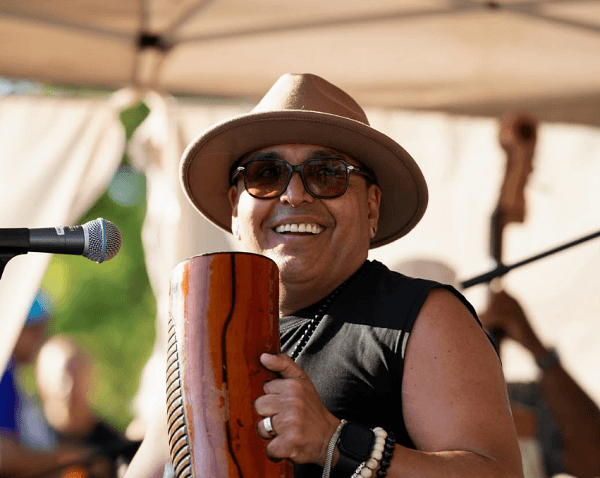
Gabriel performing at the museum
Composer, percussionist, singer, and actor Gabriel Gonzalez playing live at the Los Angeles County Museum of Art

How Gabriel started to become interested in music 

Gabriel was born and raised in Los Angeles, where he took his first steps towards what would become his lifelong vocation. Since his parents were Mexican immigrants, it was not uncommon for him to listen to rancheras, huapango, boleros, son jalisciense, and other genres typical of that country.

He liked music so much that he began participating in contests at “El Mercadito,” a place located east of Los Angeles, where amateur concerts and all kinds of musical events were held. After his father sang there several times, he told him he wanted to do the same, and that is how he began entertaining wider audiences with his voice.

Years later, after his passion for music was being shaped and getting more serious, he contacted his uncle, who was a promoter, and took him with him to Mexico to get some acting work in movies. This means that his artistic career was not just limited to singing but also to acting, but at some point, both areas would end up mixing. 

It should be noted that his work as an actor made him stay in Mexico for several years, so he shared with many great actors of the time who were also singers, such as Yolanda del Río, Federico Villa, David Reynoso, Lucha Villa, and many more. 

Upon returning to California, he experienced a significant culture impact. He realized that he was not Mexican enough for Mexicans nor American enough for Americans. This double identity made it much easier for him to cross cultural and musical boundaries, so from playing ranchera, huapango, and son jalisciense, he was given a chance to play other styles such as son montuno, which for Gabriel is the basis of salsa and much of Latin music. 
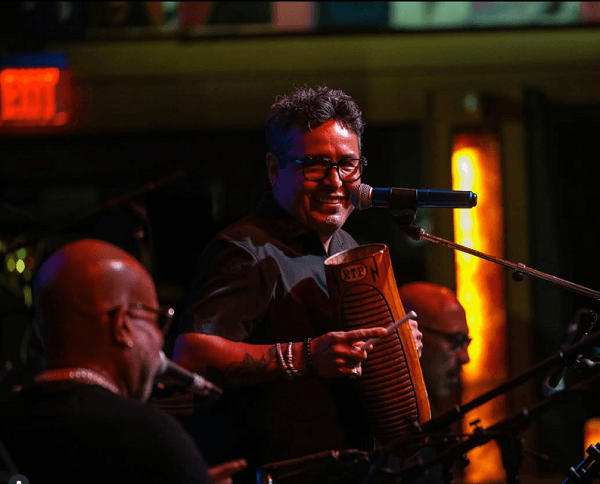
Gabrielito at the Vibrato Grill And Jazz
Gabrielito Y La Verdad performing at the Vibrato Grill And Jazz

Gabriel’s professional beginnings in music

Gabriel tells us that, during a huge part of his career, he worked as a solo artist, but he went on to collaborate with several groups and one of them was the Mexican band Quetzal, which specializes in playing Chicano rock and son jarocho. His sister Martha González was the lead singer, so he was able to work with them on and off for about 20 years. He describes his time with Quetzal as a very nice period in which he learned a lot and was even blessed to win a Grammy, but everything has an end, so he went ahead and worked with many other bands in the Los Angeles salsa scene.

In fact, today he is a member of Boogaloo Assassins and has been playing with them since 2015, while also having his own project, which he named Gabrielito Y La Verdad.

Gabrielito Y La Verdad

After all experience gained so far, Gabriel decided to form his own group Gabrielito Y La Verdad, with which he had his first big hit “Oye Muñeca,” released around 2019. Since the project began, the artist has had the same keyboardist and pianist, but the rest of the musicians have come and gone over the years, as it is not easy to maintain a cohesive musical group for a long time.

In fact, he usually has a list of musicians he can call, and their presence at an event depends almost entirely on their availability and ability to read sheet music. Gabriel often works with the same musicians Jimmy Bosch uses, so when the Puerto Rican travels to Los Angeles, Gabriel knows he can count on them if an event comes up. He also often uses some of Jerry Rivera’s musicians and those of many other exponents of the genre.
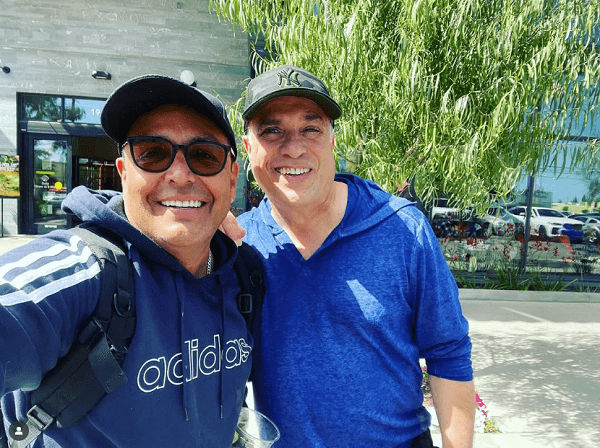
Gabriel with Oscar Hernandez
Gabriel Gonzalez and bandleader and pianist Oscar Hernandez

Facets additional to singing

In addition to being a singer and film actor, Gabriel has also participated in commercials and done a little musical theater, since the condition of being an artist forces you to learn a little about everything. Being still very young, he participated in the film ”Mojado de Nacimiento” alongside La Sonora Santanera.

One of those memorable experiences was his participation in the second national tour of the musical ”In The Heights” with Lin-Manuel Miranda. It was during this tour that Gabriel learned that he had won a Grammy with the band Quetzal. The news came during a bus trip, making it clear that he experienced several of these facets at the same time without any problems.

More recently, he has served as composer of several of Gabrielito Y La Verdad’s songs in collaboration with pianist Matt Amper, who is also actively involved in the creation of the group’s original songs. 

Collaborations with other artists

Gabriel has shared the stage and collaborated with big names in the industry like Bruno Mars, “El Divo de Juarez” Juan Gabriel, Los Van Van, Silk Sonic, and many others. Similarly, during his acting career, Gabriel also met many great actors of the time with whom he shot scenes during the day, and at night, did voice-overs at the studios, and went out singing.

All this led him to share the stage with Aida Cuevas, Rosenda Bernal, Los Lobos, and Lalo Guerrero. While still with Quetzal, he opened for Aerosmith, Taj Mahal, and others. 

Gabriel Gonzalez and Richie Perez
New York’s singer Hector ”Pichie” Perez and Gabriel Gonzalez

Read also: Creator of Afro-Rican Jazz William Cepeda talks about this subgenre

Colombian dancer and instructor Camila Cepeda takes salsa caleña to Canada

Every day there are more Latinos who, with their talent, are gradually taking over various cities in Canada and the hearts of many of its inhabitants. Colombian instructor and dancer Camila Cepeda shows us that she and several of her compatriots have managed to break into the aforementioned North American country and shares with us a little bit of her interesting story.

Dancer and instructor Camila Cepeda
Colombian dancer and salsa caleña instructor Camila Cepeda

Camila’s interest in dance

Camila has danced through life, and since she was a little kid, dance has been very important to her. One genre in particular that caught her attention was salsa caleña, especially since she saw it for the first time with dance groups on the TV show “Colombia’s Got Talent”. From there, more specifically in 2011, she looked for a dance academy where she could learn to dance and imitate what she saw on the screen.

Almost immediately, she realized that it was a very demanding style that required stunts and movements that were not common in more classic versions of salsa. After training in dancing, she did not want to be just an expert in salsa caleña, but many more people learned how to dance it as well, which led her to create a folk dancing group with which she would take her first steps towards teaching.

In addition to salsa caleña, Camila also danced salsa choka, champeta, bachata, merengue, and Colombian folklore. 

Camila dancing at an event
Camila Cepeda dancing in one of her salsa caleña events

Moving to Canada

Initially, Camila’s plans did not include leaving Colombia, but when she knew Canada, she found it an extremely interesting country where she could start something new with dance due to the lack of salsa caleña there. So, she entered the country with a student visa and studied international business at Seneca College in Toronto, with the intention of forming her own company in her new host country.

While gaining business experience through jobs for other companies, she continued to offer classes in parallel. Finally in 2020, in the middle of the COVID-19 pandemic and when she was still a university student, she decided to register and open her dance academy, “Salsa & Sabor.”

During that time, she also validated her teaching in English so that she could give classes to both locals and people from other cultures who spoke the same language.

Camila, Aleja, and Sonia
Camila with dancers Aleja and Sonia

Salsa & Sabor today

Although the academy was started with only online classes due to the sanitary restrictions of that time, Camila was able to gather together a more or less numerous community that allowed her to stay afloat in such a difficult moment. Therefore, when government controls were relaxed, the young woman had no problem to organize dance classes and activities in parks keeping proper social distancing.

A short time later, she could finally open her dance studio, welcome students in person, and recruit other instructors such as Diana, Victoria, Mateo, and Paula. One thing to mention about these five young Colombians is that they were all Camila’s students in the past and, after all the training she offered, they also became experts in the field. Given the pitifully small number of salsa caleña instructors in Canada, when they were ready, she asked them to join her team, and they gladly accepted the opportunity.

This, in turn, helped them to open up more schedules and workshops for many more people, allowing the academy to grow even more.

Camila with her students
Camila with some of her little students

Division of teaching genres and events

As we said at the beginning of this article, Camila also teaches other genres such as salsa choke, la champeta, bachata, and merengue, but her flagship and main rhythm remains salsa caleña. An important difference between salsa caleña and the rest is that it has a well-defined continuity and academic structure, so it takes much longer to learn. The other genres are relatively simpler, so they do not require as many hours or such an elaborate program.

Differences between salsa caleña and traditional salsa

According to Camila, a very important component of salsa caleña is its speed compared to traditional salsa. The way salsa is danced in Puerto Rico, Cuba, or New York is much better known around the world due to its age, while salsa caleña is a little newer and only began internationalizing a few years ago. In addition, traditional salsa is slower and uses the hips and shoulders a lot, while salsa caleña relies heavily on the rapid movements of the feet.

In fact, an important fact to know is that salsa caleña was created from a mistake. It turns out that a group of young people in Cali were doing private parties with LPs by various artists of the time, but they accidentally raised their speed and made the songs sound faster than they should. This led them to create completely new steps and choreographies based on these fast songs, giving rise to what we now know as salsa caleña. 

These parties were called “aguelulos,” a Colombian term to refer to alcohol-free parties or gatherings for young people. 

Read also: Tito Puente Jr.: perpetuating a legacy with its own rhythm

Jose Nogueras and Bobby Cruz Share a Social Message in Salsa

Veteran artists Jose Nogueras and Bobby Cruz have teamed up to create “Yo Soy Tú, Tú Eres Yo” (“I Am You, You Are Me”), a powerful song that celebrates equality, solidarity, and brotherhood among all people. According to a statement from Nogueras, the track delivers a deep and universal message: “Beyond our differences, we share the same dreams, struggles, and hopes.”

Bobby y Jose Por Bella Martínez

Composed by Jose Nogueras, “Yo Soy Tú, Tú Eres Yo” is a clear tribute to hope, love, justice, and unity, all set to a salsa rhythm deeply rooted in Puerto Rican heritage. The unmistakable voices of Nogueras and Cruz encourage us to reflect on the importance of human connection and empathy.

The song blends the classic essence of salsa with a meaningful human message. As is often the case with Nogueras’s compositions, the content resonates with today’s social reality. The arrangement perfectly complements the lyrics with rhythmic power, flavor, and authentic Puerto Rican style. This new release honors tradition while connecting with new generations of musicians and fans alike, thanks to its timeless message.

José Nogueras and Bobby Cruz combine their experience to produce "Yo soy tú, tú eres yo" (I Am You, You Are Me) by Bella Martinez

José Nogueras and Bobby Cruz combine their experience to produce “Yo soy tú, tú eres yo” (I Am You, You Are Me) by Bella Martinez

Nogueras’s lyrics once again confirm that his music serves as a vehicle for unity and hope. Meanwhile, the impeccable musical arrangement by Luis “Perico” Ortiz brings together several generations of great Puerto Rican musicians. The track features the talented Jorge Rivera on bass, interacting with the veteran tumbadora player Sammy Garcia. One of the most promising percussionists of his generation, David Marcano, shines on timbal and bongo. He’s also a member of one of the most respected dynasties in Puerto Rican popular music. On piano is Puerto Rico’s most versatile contemporary salsa artist, Carlos Garcia. The voices of the irreplaceable Josué Rosado and Willito Otero in the chorus seem to welcome back someone we’ve been missing for a while: Aldo Matta. The trumpets were handled by the song’s arranger, Luis “Perico” Ortiz, while Diego Diaz played the trombone.

Bella Martinez Puerto Rico


Also read: Mel Martinez, “I come from Puerto Rico and Puerto Rico is Salsa”

Jeremy Bosch Releases New Single “¿A dónde iré?”

The renowned musician, vocalist, composer, and arranger, Jeremy Bosch, has announced the release of his new single, “¿A dónde iré?” (Where Will I Go?). The song is the first promotional cut from his upcoming album, scheduled for release in October of this year.

“¿A dónde iré?” was written by Bosch, who is also a virtuoso flutist. For the lyrics, he drew inspiration from Psalm 139. In a press release, Jeremy commented on his inspiration, “This song was born from a moment of introspection and gratitude. I wanted to capture how God finds and accompanies us everywhere, even when we don’t perceive Him. I hope that those who listen can feel that closeness and trust in Him.”

The lyrics “combine biblical verses with Jeremy’s personal experience, intertwining his life’s testimony with the spiritual richness of scripture,” according to the artist’s team.

With this composition, the talented salsa artist whose work spans various musical genres seeks to invite listeners “to reflect on the presence of God (…) and the intimacy of a relationship with Him, through an authentic and moving musical expression.”

Jeremy Bosch lanza su nuevo sencillo “¿A dónde iré

Jeremy Bosch’s commitment to this production is evident. He is the composer of both the lyrics and melody, as well as the arranger, producer, vocalist, and background vocalist, in addition to playing the flute. The song features Álex “Apolo” Ayala on bass, interacting with Gabriel Chakarji on piano. Marcos Torres is on congas and minor percussion, and Marcos López is on timbales and bongos. The trumpets were handled by “Maneco” Ruiz and Jesús Ricardo. Doug Beavers played the trombone and Mario Castro the tenor saxophone. Edmar Castañeda is on harp, Roman Lajara on guitars and banjo, while Ali Bello played the violins, Samuel Marchan the violas, and Mara Navas the cellos.

About the Artist

Jeremy Bosch is a proud Puerto Rican. He was born in Ponce and raised in Las Piedras. He is a 2013 graduate of Berklee College of Music, with a degree in Jazz Composition.

Jeremy was the singer and flutist for the Spanish Harlem Orchestra from 2015, when director Óscar Hernández recruited him to replace Ray De La Paz, until early 2025, when he left SHO to focus on his solo career. In 2016, his compositions earned him recognition as a great writer, with the album Hecho a mano by Buena Vibra Sextet, released through Salsaneo Records. In 2020, while reviewing Pequeño Johnny Rivero’s album Golpe duro, I came across Jeremy’s credit as a background vocalist on the record. At that point, we already identified him as one of the new, promising salsa artists to watch. In Puerto Rico, in addition to his solo career, he is associated with the contemporary percussionist and orchestra director Pete Perignon, with whom he collaborated on the single ‘Sería una pena’ (2020).

Previously, Jeremy had the good sense to venture into a tribute to another notable Ponce native: Cheo Feliciano. The work, published under the title Prefacio, was recorded live at the Dizzy Club in New York. For this feat, he shared the stage with special guests such as Óscar Hernández, Johnny “Dandy” Rodríguez, and Nelson González. On that occasion, he stood out among compositions by Tite Curet Alonso, such as ‘Si por mí llueve,’ ‘Pa’ que afinquen,’ and ‘Los entierros’—to name a few—with arrangements by vibraphonist Felipe Fournier.

JB con flauta El reconocido músico, vocalista, compositor y arreglista Jeremy Bosch

Another notable production from his distinguished career allowed him to share the studio with Luis Enrique and Alain Pérez for the production of Prólogo hoy. This was followed by Epílogo, an Afro-Caribbean music album. Jeremy doesn’t want to be associated solely with salsa. In fact, his musical journey has been bold and varied, experimenting with “salsa mixed, produced, and arranged from a more synthesized and minimalist perspective,” as he described in an interview for the National Foundation for Popular Culture of Puerto Rico.

From his corner, this artist who has chosen to get to work—overcoming the temptation to complain—invites “a reconciliation between generations” for a healthy coexistence to enrich and diversify the contemporary musical talent pool.

Bella Martinez Puerto Rico


Also Read: Long live music! Repeat after me: “Long live the musicians so they can keep making it”. And I add: “Long live SALSA”.

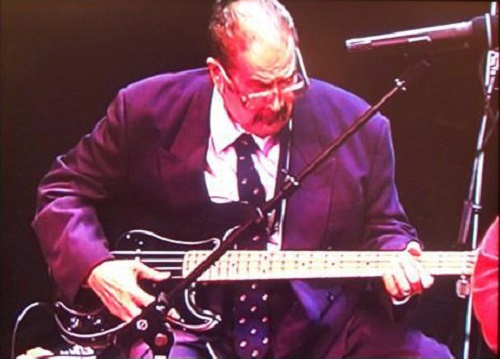
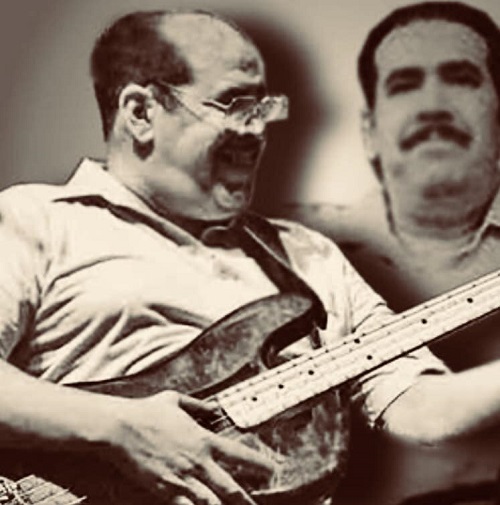
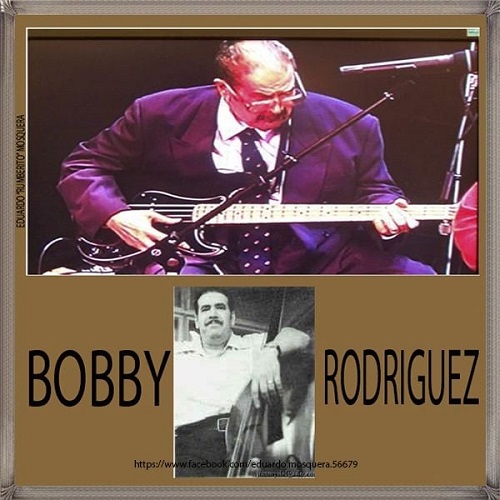
Roberto “Bobby” Rodríguez was a master of the Baby Bass and was instrumental in its popularization within Latin music

Roberto “Bobby” Rodríguez “Big Daddy” (1927-2002) was a renowned bassist and a key figure in Latin jazz and salsa. He was known for playing both the upright bass and electric bass.

Roberto Bobby Rodriguez was a master of Baby Bass and played a decisive role in its popularization within Latin music

He worked with legendary artists and bands such as Charlie Parker, Dizzy Gillespie, Machito, Tito Puente, and The Alegre All Stars. Born in Tampa, Florida, to Cuban parents, he is often associated with the Baby Bass, a type of electric upright bass.

The Baby Bass is a specific type of electric upright bass developed by the Ampeg company. It has a distinctive sound and is very popular in Latin music, especially salsa.

Many famous bassists in the genre, including Roberto “Bobby” Rodríguez “Big Daddy,” are known for playing this instrument. With its deep, percussive tone, the Baby Bass helped define the sound of salsa music.

In summary, the connection between Roberto “Bobby” Rodríguez and the Baby Bass is that the famous bassist, Roberto “Bobby” Rodríguez “Big Daddy,” was a master of the instrument and was instrumental in its popularization within Latin music.

“Big Daddy’s” Career and Legacy.

The son of Cuban and Puerto Rican parents, Roberto “Bobby” Rodríguez “Big Daddy” was born in Tampa, Florida, on May 2, 1927. His talent left a lasting mark on the performance of both the upright bass and the electric bass.

He began his career in New York at the age of 17 with Machito and His Afro-Cubans, where he replaced Julio Andino. He participated in recordings with Chico O’Farrill, Dizzy Gillespie, Cal Tjader, Eddie Palmieri, Willie Bobo, Mongo Santamaría, Joe Cuba, Eric Dolphy, the Alegre All Stars, and Tito Rodríguez. His most important and enduring collaboration, however, was with Tito Puente.

Rodríguez’s involvement with Puente’s band resulted in a catalog of countless tumbao basslines. He occasionally had the opportunity to lead the band with a solo, loaded with highly creative melodic improvisations.

On the 1990 album, Goza mi Timbal, the track “Ode to Cachao” features a large number of Bobby Rodríguez’s solos. In addition to being a tribute to Israel López, this track is a showcase of “Big Daddy’s” immense virtues and is considered one of the most unforgettable solos in Latin jazz. This partnership remained active from the 1950s to the 1990s.

Roberto Bobby Rodriguez Big Daddy was born in Tampa, Florida, on May 2, 1927

The nickname “Dedo Gordo” (Fat Finger) was given to him for his way of playing the electric bass, with a thick sound—something that in American musical circles is called a “groove.” According to experts, his technique was meant to emulate the sound of the Ampeg Baby Bass.

One characteristic he was always recognized for was his unique ability to play the clave rhythm with his foot while performing on the bass. His musical experience always made him seem like a contributor with a jazzy style.

On July 29, 2002, after a life full of resounding successes and an impressive legacy, Bobby Rodríguez passed away in New York.

Ambiguities with the Name Roberto “Bobby” Rodríguez.

The name “Bobby Rodríguez” has been used by several artists within the universe of Caribbean music.

One common source of confusion is the flutist, clarinetist, and saxophonist from Manhattan, Robert “Bobby” Rodríguez, who founded the group “La Compañía.” His date of birth has not been confirmed.

Another point of confusion is the common misconception that “Big Daddy” began his career with the Marcano Quartet. The truth is that the quartet featured Félix Manuel Rodríguez, who, in the early stages of his career at age 17, also went by the name “Bobby Rodríguez.” He would later adopt his famous stage name, Bobby Capó.

A third artistic namesake is Dr. Bobby Rodríguez, a trumpet player born in Los Angeles, California, who is also a teacher and author of the book, ABC’s of Brass Warm-Up. He has been nominated for a Grammy and has received awards as an educator.

Roberto Bobby Rodríguez Big Daddy (1927-2002)

The list of names similar to Roberto “Bobby” Rodríguez becomes much longer if you search for homonyms of his given name. For example, there is Roberto (Reimundo) Rodríguez, a trumpet player from Cienfuegos, Cuba. He co-founded the orchestra Los Jóvenes Estrellas de Cuba and became a member of the Fania All Stars. He also appears in the documentary Nuestra Cosa Latina. In 1982, he founded the group Los Rodríguez with his sons, Roberto Jr. and Willie.

His son, Roberto Rodríguez Jr., is another homonym we encounter in these musical paths.

Continuing with more homonyms, there’s the Cuban trumpet player Roberto Luis Rodríguez, who is the father of the currently famous trumpet player Roberto Juan Rodríguez, also Cuban, but who moved with his Jewish family to Miami at the age of nine. He has played with top artists such as Joe Jackson, Julio Iglesias, and Paul Simon.

 By: Diego Aranda (Audiokat)

Dj. Augusto Felibertt

Los Mejores Salseros del Mundo

Also Read: Bobby Valentín, the King of the Bass in the Fania All-Stars Machine – The Mind of a Master

  • « Go to Previous Page
  • Page 1
  • Page 2
  • Page 3
  • Page 4
  • Page 5
  • Page 6
  • Interim pages omitted …
  • Page 21
  • Go to Next Page »

International Salsa Magazine (ISM) is a monthly publication about Salsa activities around the world, that has been publishing since 2007. It is a world network of volunteers coordinated by ISM Magazine. We are working to strengthen all the events by working together.