• Skip to primary navigation
  • Skip to main content

International Salsa Magazine

  • Home
  • Previous editions
    • 2026
      • ISM / January 2026
      • ISM / February 2026
    • 2025
      • ISM / December 2025
      • ISM / November 2025
      • ISM / October 2025
      • ISM / September 2025
      • ISM / August 2025
      • ISM / July 2025
      • ISM / June 2025
      • ISM / May2025
      • ISM / April 2025
      • ISM / March 2025
      • ISM / February 2025
      • ISM / January 2025
    • 2024
      • ISM / December 2024
      • ISM / November 2024
      • ISM / October 2024
      • ISM / September 2024
      • ISM / August 2024
      • ISM / July 2024
      • ISM / June 2024
      • ISM / May 2024
      • ISM / April 2024
      • ISM / March 2024
      • ISM / February 2024
      • ISM / January 2024
    • 2023
      • ISM / December 2023
      • ISM / November 2023
      • ISM / October 2023
      • ISM – September 2023
      • ISM – August 2023
      • ISM July 2023
      • ISM Edition June 2023
      • ISM – May 2023
      • ISM April 2023
      • ISM March 2023
      • ISM February 2023
      • ISM January 2023
    • 2022
      • ISM December 2022
      • ISM November 2022
      • ISM October 2022
      • ISM September 2022
      • ISM August 2022
      • ISM July 2022
      • ISM June 2022
      • ISM May 2022
      • ISM February 2022
      • ISM January 2022
    • 2021
      • ISM December 2021
      • ISM November 2021
      • ISM October – 2021
      • ISM September 2021
      • ISM August 2021
      • ISM July 2021
      • ISM May 2021
      • ISM April 2021
      • ISM June 2021
      • ISM March 2021
      • ISM February 2021
      • ISM January 2021
    • 2020
      • ISM December 2020
      • ISM November 2020
      • ISM October 2020
      • ISM September 2020
      • ISM August 2020
      • ISM July 2020
      • ISM June 2020
      • ISM May 2020
      • ISM April 2020
      • ISM March 2020
      • ISM February 2020
      • ISM January 2020
    • 2019
      • ISM December 2019
      • ISM November 2019
      • ISM October 2019
      • ISM Septembre 2019
      • ISM August 2019
      • ISM July 2019
      • ISM June 2019
      • ISM May 2019
      • ISM April 2019
      • ISM March 2019
      • ISM February 2019
      • ISM January 2019
    • 2018
      • ISM December 2018
      • ISM November 2018
      • ISM October 2018
      • ISM September 2018
      • ISM August 2018
      • ISM July 2018
      • ISM June 2018
      • ISM May 2018
      • ISM April 2018
      • ISM March 2018
      • ISM February 2018
      • ISM January 2018
    • 2017
      • ISM December 2017
      • ISM November 2017
      • ISM October 2017
      • ISM September 2017
      • ISM August 2017
      • ISM July 2017
      • ISM June 2017
      • ISM May 2017
      • ISM April 2017
      • ISM March 2017
      • ISM February 2017
  • Download Salsa App
    • Android
    • Apple
  • Spanish

North America

Eddie Montalvo Iron Hands: “I’m in love with Venezuela”

We felt an unforgivable duty to publish this interview with Eddie Montalvo “Iron Hands,” as it is Swing Latino update on the biography of a musician who is more than just a friend, a godfather; he’s family, the kind that gives you friendship, that fills you with conflicting feelings and leads you to relive wonderful and unforgettable moments.

Giogerling Mendez y Eddie Montalvo

He is a living legend of our Afro-Caribbean music.

We hadn’t seen each other for many years, so I wanted to share the time with him before he left Venezuela (he was playing on Saturday, so we met on Friday and shared some time with longtime friends starting at noon), before the show. The next day he would say goodbye to Venezuelan soil. This interview will be published in two installments, and here is the first one.

– How long has it been since Eddie Montalvo last came to Venezuela?

– Let me put it this way. The last time I came to Venezuela was with Rubén Blades and Son del Solar. I’ll call it Seis, because Son was with another keyboardist, Arturo Ortiz, Robby Ameen on drums, and two trombones, Reinaldo (Jorge) and Jimmy Bosch. That was the last time, many years ago.

I’ve always loved Venezuela, it’s the honest truth. I’m in love with Venezuela, no matter what happens. I’m always grateful for it. I’ve always had many friends here.

The School of the Street

– What was your first experience in music? Why conga?

– Well, when I was very young, my parents and I would go every weekend to a party at an aunt’s house. At that time, my goddaughter, I’m not going to lie to you. The gentlemen were always well-dressed, with ties, the ladies with their eyebrows done, their hair combed, a real formality despite their humility.

Everyone was dancing at that party, and Eddie Montalvo was banging on the tables until he could say no more. That’s how they got me two metal cookie tins, and it became my first instrument.

When I was five, I asked my parents if it was possible for Santa Claus to bring me a bongo. My parents were poor, and yet, on December 25th, a bongo appeared under the Christmas tree.

A bongo that didn’t have a key, a bongo that you had to put a fire under to get the sound out.

At ten, without lying to you, I asked them if it was possible for them to buy me a conga, and my parents bought me a conga that cost 50 US dollars.

As I grew older, I started crossing the street where there was always a party of rumba players. I went down with the conga, and they asked me, “Do you know how to play?” And I said, “No,” then they said, “Well, if you don’t know how to play, you can’t sit here with us and rumba.”

I went home frustrated with the conga line because they wouldn’t let me sit in and play at the party.

Héctor «Bucky» Andrade

It just so happened that there was a conga player who played with Héctor Lavoe, with Willie Colón, on an album called The Hustler.

His name was Héctor Andrade and he had a nickname: Bucky. He saw me every day when I came down with the conga line, and it seems he felt sorry for me and said, “Come here.” I said, “Are you talking to me?” He said, “Yes, yourself, come here!” Bucky said, “I see you here every day, and I feel sorry for you because I know you love the conga line, because you spend hours sitting on the bench watching us; I’m going to teach you the first tumbao like it’s played in rumba, street rumba.”

Because remember, my first music school was the street. My parents didn’t have the money. After Bucky taught me, he said, “Go home and practice.

When you think you’re ready, come, but I warn you, there will be about five rumberos playing the quinto. If you get tired, you’ll never play here again.”

I went to my room and practiced. When I felt God tell me to come down, that you’re ready, I went down.

Bucky looked at me and said, “How are you feeling?” And I sat down to play the tumba’o. About seven or eight rumberos played by, and I was still playing the tumba’o, tired, but I couldn’t stop playing, and that was my first experience. I learned a lot by watching the rumberos on the street. That way, I prepared myself and was able to sit with all of them, play the first part, play the second part, play the third part, and then quintate. That way, I played the grade they wanted and went down every day to sit with them.

Formal Studies

As I grew older, in my last year of school, I saw they had a Latin orchestra at a music school, but honestly, all they played was a Latin segment, but it was all American music.

The teacher was Italian. I knocked on the door of that school, and the teacher in charge looked at me and said, “Can I help you?” And I said, “I’m here because I’d like to know if it’s possible for you to let me play conga here with the Latin group.” He said, “Oh, no, no, no, look, son, I have tons of conga players here. Everyone comes here because they want to play conga. Excuse me, come see me next year.” And so I wasted all that time frustrated because I wanted to play.

Time came and school started in September. I tried again, and the teacher refused again. So I said, “No, no, no, no, wait, you promised me I could play conga here.” And seeing my insistence, the teacher asked me, “Do you really play conga?” “I think so.” Then he said, “Bring me a conga that’s in that room. I want it to play me a merengue, a cha-cha-cha, and a mambo.” I played it for him, and he said, “Wow, you have good hands, you’re starting with the Latin orchestra here,” and that’s how I graduated from hig  h school at 17.

From School to Work

At that time, I went to work at the stock exchange in New York, and I didn’t like it, so I left. One day, I went into a New York club, and Joey Pastrana’s orchestra was playing.

It just so happened that someone said to Joey Pastrana, “Look, you see that skinny kid over there on the corner, that kid plays conga,” and he said to the kid, “Tell him to come over here.”

The kid came up to me and said, “Look, Joey wants you to go over there on stage.” I replied, “I don’t know Joey. And you’re telling me Joey wants me to go over there when I don’t even know him?” “Well, look, go, he’s calling you.”
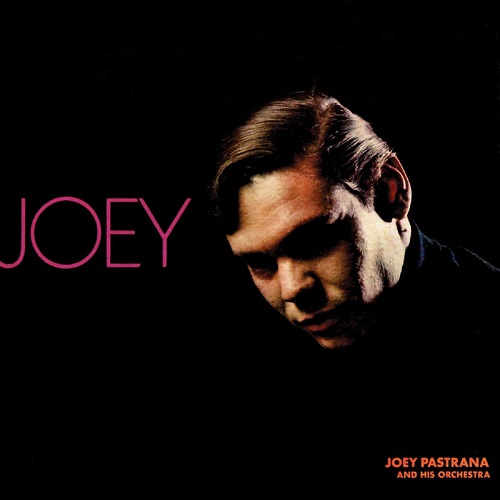
Joe Psatrana
Joe Psatrana

I went over there, and he said, “Look, and Joey said, “Do you want to play a number with me?” And I said, “I don’t know who told you I play conga. I don’t play conga.” And he answers, “But the kids here are saying you play conga.”

And because of his insistence, I played a number. When I played the number, he said, “Do you want to play here? Because my brother, Willie Pastrana, is leaving the group.”

And when I came to see you, at 17, I was playing with Joey Pastrana. So, from then on, I went with Tony Pabón in the protest. I was with Ernie Agosto and La Conspiración, with Adalberto Santiago, Los Kimbos, even with La Diferente for a little while, just for a while; with the great Héctor Lavoe, with Pacheco, with Pete el Conde, very quickly. Then with the Estrellas Fania, and those from Puerto Rico.

– You replaced Ray Barreto in Fania, hence the nickname Manos de Hierro? Tell us a little about your experience with Fania.

– Oh, because I always had heavy hands when I played. And they called me that name: Ray Barretto, “Hard Hands,” and I, “Iron Hands.” They were the musicians, and your dad (Ángel Méndez) gave me that nickname. I’ll never forget this. I forgot to mention someone, Willie Colón, who I also played with and recorded the album “Siembra.”

Ray Barretto’s Replacement

I can’t explain how I was able to make my career in music, because, blissfully, I was in the audience at Madison Square Garden watching Fania, and I never in my life thought I’d play with the Fania Stars!

Regarding the question about whether I reviewed Barretto: before joining the Fania stars, there was Johnny Rodriguez, El Dandy.

He left, and I joined. So when I saw Barreto wanting to return, I said these words to Ray Barreto: “With all due respect to you, because you’re an icon I’ve always respected, this chair, I was just warming it up, this chair is yours.” And he said to me in English: “Eddie, we’re going to split the show. You play half the show, and I’ll play half.” And I said to him, “Ray, this seat is yours. I respect it,” and he said, “No, half and half.”

Ray Barretto
Ray Barretto

We always had a tremendous relationship. I remember when my father passed away, and Ray came and stayed with me at the funeral home for two hours. I’ll never forget it.

And I’m telling you from the bottom of my heart, one of the things I hold dear is that when Ray got sick, honestly, I wanted to go see him, and they always told me, Eddie, you can’t go because they have him in intensive care and they won’t let you in.

I was always calling mutual friends who knew if he was coming out of intensive care or not. They would tell me, “Eddie, no, hey man, don’t come because you’ll waste your time.” That’s how I couldn’t see him in his final days. It was only when he passed away that I went to the funeral home.

The same thing with your father, you know, your father for me is the friendship, and I’m not saying this because you’re interviewing me, but the relationship, the respect I have for your father, and you know, I thank your father because he was the one who made us, and I say this, of course, God made us, and with all due respect, but when it comes to the entertainment side of things, your father was the magazine that everyone bought.

When I started out in 1977, coming to Venezuela, I met your father, Ángel Méndez, Swing Latino, with Fernando, the photographer, and the truth is that the friendship was never lost.

Eddie Montalvo y Ángel Méndez

We’ll be releasing the second part of this interview soon.

Pónle Saborrrr!

By:

cafeatlantico

Swing Latino

Giogerling Mendez

Dj. Augusto Felibertt

Also Read: The legacy of Leopoldo Pineda, the ambassador of the trombone in La Maquinaria Fania All Stars

Ismael ‘Pat’ Quintana, born in Ponce Puerto Rico, began his musical career in 1961 alongside Eddie Palmieri and La Perfecta

Ismael ‘Pat’ Quintana, born in Ponce, Puerto Rico, began his musical career in 1961 alongside Eddie Palmieri and La Perfecta

smael 'Pat' Quintana, born in Ponce, Puerto Rico, began his musical career in 1961 alongside Eddie Palmieri and La Perfecta
smael ‘Pat’ Quintana, born in Ponce, Puerto Rico, began his musical career in 1961 alongside Eddie Palmieri and La Perfecta

Commemorating one more anniversary of the departure of the Maestro: Ismael Quintana (Ponce, June 3, 1937-Colorado, April 16, 2016) was a Puerto Rican singer and composer of salsa, bolero and other genres of Caribbean music.

He began his musical career in 1961 alongside Eddie Palmieri and La Perfecta, and later continued as a solo singer.

In 1970, he signed with Fania Records and joined the Fania All Stars, in addition to recording more solo albums.

By 2012, his health condition prevented him from continuing to perform and he stopped giving concerts.

In April 2016, he died of a heart attack at his residence in Colorado in the United States at 78 years of age and paid the first tributes.

Quintana was the singer who gave the name salsa to Afro-Caribbean music, after having heard it in Venezuela.

Ismael ‘Pat’ Quintana, born in Ponce, a town rich in culture on the beautiful island of Puerto Rico, moved to New York when he was very young. It was in the South Bronx that he fell in love with Latin music.

Ismael 'Pat' Quintana
Ismael ‘Pat’ Quintana

During these early years, he played percussion with a variety of bands throughout New York City.

He persevered and eventually joined Angel Natel’s orchestra as a teenage bongosero.

During one memorable night in 1959, the band was asked to play a particular number for one of the club’s dancers.

Natel’s singer was not familiar with the song, but Ismael was. He stepped up to the microphone, performed the song and in the process electrified the crowd with his talented voice. That night launched a magnificent career, a career that would eventually position Quintana as one of the most prominent vocalists in Latin music.

In 1961, visionary keyboardist Eddie Palmieri decided to leave the sanctuary of Tito Rodriguez’s eminent orchestra to pursue the dream of forming his own band.

Eddie was present when Quintana auditioned for Orlando Marin’s popular orchestra.

The pianist would eventually track him down and offer him the opportunity to become the lead singer of his new orchestra, La Perfecta.

This proved to be a vital move in Eddie’s quest to become one of the top Latin music bandleaders. Their alliance would last 12 years.

Together, Quintana and Palmieri pushed the boundaries of progressive salsa, creating dissonant improvisations that fused the raw tradition of Afro-Caribbean music (exemplified by the singer’s hardcore sonics) with a relentless desire to experiment (illustrated by Palmieri’s choice of electronic keyboards, use of structures borrowed from other musical formats, as well as meandering solos that had their own idiosyncratic logic).

Quintana inició su carrera musical en 1961 al lado de Eddie Palmieri y La Perfecta

The 1965 album Azúcar Pa’Tí is probably the aesthetic pinnacle of their collaboration. It featured classic salsa anthems such as “Oyelo Que Te Conviene”, included here for your listening pleasure.

Another unforgettable moment was Eddie’s decision to record a double LP set in the Sing Sing penitentiary.

Quintana’s voice sounds appropriately impassioned on that socially significant 1972 concert recording.

By 1973, Quintana had decided to embark on a solo career. He signed a contract with UA Latino Records and recorded two albums of excellent quality.

Quintana En 1970, firma con el sello Fania Records

The second of these two releases gave him the opportunity to sing tangos and ballads, backed by a spectacular orchestra led by South American arrangers Héctor Garrido and Jorge Calandrelli.

Surprisingly, the singer has stated in interviews that he prefers to dance ballads and boleros rather than sing more fast-paced material.

Quintana’s first work for Vaya Records was recorded in 1974, It included the hit “La Blusita Colorá”, which is featured in this collection.

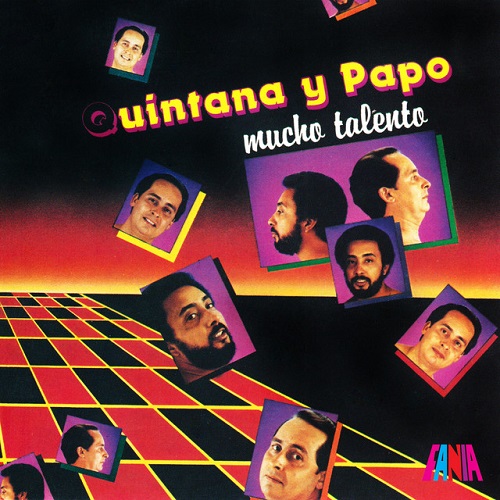
The singer also collaborated with keyboardist and bandleader of La Sonora Ponceña Papo Lucca, as well as Ricardo Marrero.

Quintana y Papo Mucho Talento

In 1975, Quintana was invited to join the legendary Fania All-Stars as one of their lead vocalists.

He appeared in the movie Salsa and participated in many of the combo’s historic performances, delivering a blistering version of the self-written “Mi Debilidad” at Yankee Stadium.

When not traveling the world with the All-Stars, Quintana could be found in the recording studio, working on material that appeared on his albums for Vaya Records.

Ismael Quintana’s name appears on many classic albums from the salsa explosion of the 1970s, both as a background singer and as a percussionist.

His phenomenal vocal abilities have obscured the fact that he is one of the most exciting maracas players in the genre.

He is also an innovative composer, having written many of the songs that make up Eddie Palmieri’s seminal albums of that era.

Quintana is also known as one of the nicest guys in the Latin music business.

A true professional who is never late for his concerts and a devoted family man who doesn’t smoke or drink.

Ponce in Puerto Rico has given birth to several legendary Latin singers, from Héctor Lavoé and Cheo Feliciano to Ednita Nazario and Pete ‘El Conde’ Rodríguez. Ismael Quintana is yet another luminary from that region.

This Latin Heritage compilation is a well-deserved tribute to one of salsa’s best. Fania All Stars.

By:

Marino Del Jesus

Historia Salsera

Dj. Augusto Felibertt

Also Read: The Royalty of our Latin Music Pete “El Conde” Rodríguez first singer signed by Fania Records label

This is Indiana composer, arranger, music teacher, and trumpet player David Hardiman

Our interviewee today is very special because of the talent and the enormous academic background he has, so we are very pleased to have been able to talk with him. We are talking about the arranger, composer, trumpeter, pianist and music teacher David Hardiman, whom we welcome to International Salsa Magazine.

This is David Hardiman
Music teacher and musician David Hardiman holding his trumpet

A little bit of David’s story

The artist from Indianapolis, Indiana, began his tale telling us a little bit about how he started getting interested in music, which was when he was in fourth grade. That is when he started learning to play the trumpet and piano, taking advantage of the fact that he had one at home.

Unlike other children and young people who find other interests and hobbies besides music, David never stopped and kept playing the trumpet until high school, during which time he played in the marching band, the orchestra, the jazz band and the concert band of the institution.

Years later, he attended Indiana University where he also played in the marching band and concert band. He received his bachelor of music education through which he obtained a lot of classical training that he would later apply to his artistic career, but he did not stop there, as he also began to participate in ensembles with which he played R&B and jazz.

When he returned to his hometown Indianapolis, he was hired by a band with which he started playing blues, tap and jazz at parties, weddings and other events of this type.

In addition to that, he also taught instrumental music for over 11 years at the elementary level. He also taught flute at the fourth grade level and prepared children of those ages to be introduced to instruments until their formation in high school, something very similar to his case when he got started in this world.

The young musician already wanted to expand his horizons and thought about leaving the nest and moving from his home state to try his luck elsewhere, but first he obtained his master’s degree in music education in 1970. This was the final step that would make him realize that he was ready to take flight farther away from home.

David playing the trumpet
David Hardiman playing the trumpet live

Berkeley

In 1971, David went to Berkeley, California, where he began to teach at King Junior High School, which he describes as an excellent experience that taught him a lot about music at the educational and practical level. His teaching specialized in the orchestral and symphonic part of classical-oriented music. At the same time, he spent much of his time playing for clubs and private parties with various orchestras and bands. 

One of his fellow teachers at King Junior High School named Grey Gomez taught at the elementary level and was a trombone player. Gomez told David that he needed a trumpet player for a group called ‘’The Aliens’’, so he proposed him to join the band and play with him at The New Yorker club. This would be the first time the musician played Latin music, more specifically salsa.

Introduction to Latin music in San Francisco

By then, David was looking for new challenges, so he decided that he could not teach at low levels at King Junior High School for life, so he began working part-time at the City College of San Francisco. Parallel to this, he played with another band for various basketball and soccer games during breaks.

Soon after, the musician began directing the big band in the aforementioned institution and teaching at the middle college level outside of San Francisco. When he became a full-time professor at the City College, he was much more exposed to Latin music and genres, which was contrasted with his hometown, as Indiana is not known for its large number of Latin orchestras and musicians. 

David at 12 years old
Young David Hardiman playing the trumpet at 12 years old

In the Bay Area, he began to have much more contact with people from other nationalities and cultures, especially Latinos, which made him listen to various Latin music groups and play with others. He even opened up for great artists such as Celia Cruz and the Fania All Stars.

He also played with the group Café Canela, whose genres are a very interesting combination of salsa, chá chá chá and many more.

San Francisco All Star Big Band 

About 50 years ago, parallel to what he did with other orchestras, he created his own big band named San Francisco All Star Big Band, with which he has played for all kinds of events such as festivals, university parties, religious services, weddings, birthdays, charity balls, nightclubs, among others. 

With this orchestra, he has a few albums which can be found on YouTube and other similar platforms and they are ‘’It’ll be alright’’, ‘’Portrait of David Hardiman’’, and ‘’Music Around The World’’.

Portrait of David Hardiman
Cover of the album ”Portrait of David Hardiman”

Read also: Puerto Rican singer Max Rosado and what he had achieved in Washington DC

Liz Rojas and John Narvaez share their experience with the San Francisco Salsa Festival

The San Francisco Salsa Festival is one of the most important Latin music events in The Bay Area and California in general, so we could not miss it. Eduardo Guilarte, senior editor of International Salsa Magazine attended on our behalf to witness firsthand everything that happened over the three days of the festival, as in previous years. 

To learn a little more about the most important facts related to the festival, Elizabeth Rojas and John Narvaez have made room in their busy schedule to talk with us and relate some elements and details of this fifteenth edition, which we are infinitely grateful. 

John, Liz, and Angie at the festival
John Narvaez, Angie Seminario y Liz Rojas

How was the 15th edition of the San Francisco Salsa Festival organized? 

Liz tells us that the organization of this edition started last year immediately following the previous festival to avoid wasting time and handle contingencies as soon as possible. Whenever they complete an edition, they immediately start to organize the next one, since all the details to keep in mind are too many to leave them for another time.

Liz and John always have to confirm orchestras and artists in advance, but they have a very efficient team of friends and partners to help them with everything related to the event. For this reason, every year it has become easier to make the preparations faster and more efficiently.

Novelties compared to other years

As for the novelties of this edition compared to other years, it could be shown that there was much more influx of people wanting to enjoy the activities offered. In addition to that, the dancers made sure that the program included more guests for classes, dance workshops on Friday, shows and competitions, which in turn helped to attract more interested public.

Another innovative detail was the invitation to local teachers in order to attract their students and people from their academies in general.

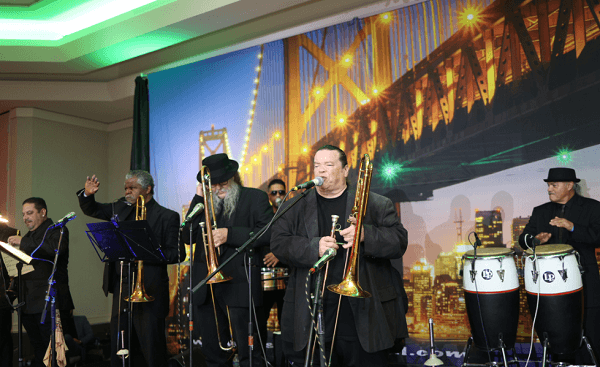
Latin Rhythm Boys at the festival
The Latin Rhythm Boys playing at the San Francisco Salsa Festival

Adding to all this, Liz and John sought to take much more into account the bachata dancers and artists in order to offer a little more variety in terms of musical genres and not just salsa.

Situation with the Orquesta La Máxima 79

No matter how majestic an event can be, there are always facts that can tarnish a little the satisfaction of organizers with all that has been achieved. This not so pleasant situation was the regrettable absence of the orchestra La Máxima 79, which was unable to travel to the United States at the last minute because of visa related issues.

John described how the days went by and the visas for the members of the group were not issued, to the point that the immigration department had not even conducted the first interviews. Because of this, they began to consider the possibility that La Máxima might not perform their show as planned. 

However, this didn’t stop them from having a card up their sleeve, so replacing La Máxima 79, they hired the amazingly talented Ray de La Paz, whose concert was amazing and delighted the audience with his fabulous show. They had to do much more publicity in the last few days due to the unforeseen change, but fortunately, it was all worth it.

They met Ray de La Paz in Hong Kong in 2004 during one of his shows where they were dancers on stage with him. Although they did not know him at the time, they really liked how he sang, so they called him up for the festival. They proposed to him to participate through Javier Cabanillas, another musician hired for the festival, who was a friend of his and kindly provided them with his contact information to invite him.

Ray at the festival
Ray de La Paz on the red carpet at the San Francisco Salsa Festival

When we wanted to know how the organization deals with last-minute inconveniences, Liz commented that they already had a plan B for such an eventuality. The main organizer of the event, Angie Seminario, and John had already talked about what to do in a situation of this kind. Likewise, they did not wait for the last moment to replace the missing orchestra, but acted quickly and worked on an alternative in parallel. At this point, John highlighted the importance of cultivating good connections and relationships with many musicians, so that they can count on them in emergencies.

Despite everything, they do not give up and will do whatever it takes to bring La Máxima to the festival next year. They are already working on this issue with the company’s lawyer.

The hardest thing to organize the San Francisco Salsa Festival

Together with last-minute absences, another problem which Liz and John face when organizing the festival is the hotel booking process for the time planned. Booking for the selected days and times of the festival and the multiple activities to be developed can turn to a headache, even more so than the organization of the workshops and concerts.

Also, the economic and time requirements can be very complex depending on what an event needs. The fines imposed by the government on venues that exceed the time limits with their events are well known, so planning failures should be avoided at all costs. 

John also added that it is always very complicated to deal with people and the selection process of the best staff to work with is not always easy. ”We always look for people who are equal or better than us. We make sure to surround ourselves with people who are even smarter and more capable than us so that they can see what we can’t” said the dancer and entrepreneur.

John, Anfie, Liz, and Ray at the festival
John Narvaez, Angie Seminario, Liz Rojas, and Ray de La Paz

How John and Liz feel now in comparison to the first festival

When compared this latest edition with the first one, John says that both he and Liz are extremely proud of what has been achieved so far. The artist assures that for him it is a great honor to be able to have Liz by his side, then thanks her for accompanying him and making the festival and the rest of the things they have achieved possible. 

Meanwhile, Liz fully agrees with her partner and also said she feels very proud of what they have accomplished all these years. Since we have seen other artists doing big dance events, John and I set out to achieve the same thing someday and we are very proud to have been able to make it possible” said the dancer ending her speech.

Julio at the festival
Julio Bravo playing the maracas during Ray de La Paz concert

Read also: Kiki Valera and his talented and special family’s great legacy

Anya Kasetvman

North America / USA /  New York

Anya Kasetvman. One Life with Latin Passion

Winner of two consecutive years, 2010 and 2009 of the Salsa World Championship in the division ON 2, kind, thoughtful, genuine, and I would add a touch of mystery in her look; so Anya Kasetvman is defined as: a dancer by profession and with a Latin passion for conviction.

Anya Kasetvman - Photo 1
Anya Kasetvman – Photo 1

Coming from Ukraine, this young artist tried to conquer the world of dance very early and, VAYA, that she did it: championships (many), congresses (a lot), fashion design (uf!) And education (at all levels), these are all the awns in which Anya has been very successful always with the unconditional support of her brother and her family, thus catapulting her American dream: to be the Queen of the Salsa dance floors in the world!

She was born on August 26th, 1984 in Ukraine; this nice Virgo brought to North American lands at the age of 8th was to embark on her way to conquer dance.

Anya Kasetvman - Photo 2
Anya Kasetvman – Photo 2

Grown up in Brooklyn since 1993, her childhood was relatively easy, she did not have her Ukrainian roots rooted in so she had an adaptation to her new environment much faster, although she experienced a certain degree of racism for her Russian origin, it was nothing that her parents and she couldn’t overcome. I started dancing pretty soon after we immigrated so it was easy to shut out normal life and focus on my special dance life that I had and many others didn’t.

Finding dance for young people was a hardship however. There was no ballroom dancing for children in America at the time so I am grateful that my brother Eugene katsevman helped develop and grow that industry for me to partake in, said Anya.

Anya Kasetvman - Photo 3
Anya Kasetvman – Photo 3

Her brother Eugene, an outstanding dancer, has been her main ally and model to follow in terms of her learning to confront the different vicissitudes of life and in the professional field of dance: He is my teacher above all else. I learned everything I know from him some things directly some things by example and just being in his life and knowing him. He is in many ways my true role model and the one person I can always count on being a step ahead so I always have something to learn, told me Anya.

Anya Kasetvman - Photo 4
Anya Kasetvman – Photo 4

She spent great part of her adolescence between happy moments and a lot of dance preparation. Being a model student for her excellent qualifications, Anya had to make the most important and transcendental decision in her life so far, which by that time could have changed her future: to decide to make a living through her passion for dancing or to follow a university career.

I would say the hardest part of my life would be the pivotal point between deciding my future whether I was good enough to make a living as a dancer or could find passion in academics which I never did although… It was very difficult to leave college and have an unknown future until I found salsa and a new path for my dance career. Commented Anya.

Anya Kasetvman - Photo 5
Anya Kasetvman – Photo 5

This young dreamer entered the world of salsa fortuitously thanks to her great friend and dance partner then Luis Aguilar, a talented dancer who worked with her teaching international Latin ballroom dance at a popular dance school in Manhattan. I encouraged him to compete and make a career out of dance in return he taught me salsa so we could partner together. The dance industry seemed very open minded at the time and accepting of all race cultures and dance abilities I also saw teaching opportunities and a place for myself because of my ballroom knowledge and what I had to offer as a teacher to this new environment, said Anya.

Anya Kasetvman - Photo 6
Anya Kasetvman – Photo 6

In 2007 was their first participation in a prestigious Congress of Salsa that took place in the city of New York, where they went up to the podium and occupied the surprising position of second place among a total of 10 competitors with recognized trajectories. During that same year Anya continued to participate in different state, local and world competitions, finishing that year in the fourth place among the best dancers in the world. It was a great experience for me to be an unknown dancer who could achieve success with my abilities alone without an established reputation something unheard of in the ballroom circuit. That made me fall in love with salsa. Anya Kasetvman.

Anya Kasetvman - Photo 7
Anya Kasetvman – Photo 7

However, it wasn’t enough for Anya and her partner who continued obtaining titles at the different Salsa World Congresses, which they attended by taking first place in December 2009, in Florida, thanks to the precision of their steps, the cadence of their movements of shoulders and hips, multiple turns, perfect execution and technique, besides an almost perfect coordination and deep connection with his dance partner Luis Aguilar.

Anya Kasetvman - Photo 8
Anya Kasetvman – Photo 8

I feel like I trained my whole life for that moment so it was truly a very special unexpected accomplishment… The second time we won was 2010. We ranked 3rd into the final so winning in 2010 felt like an even bigger surprise and accomplishment. It was truly magical coming in from 3rd place and beating the couple that dominated our division for many years before us. At that moment, I knew it was time to retire from competition because nothing could ever live up to achieving my dreams two years In a row, despite all of these obstacles. So I retired competing in 2010 and began judging shortly thereafter, said Anya.

Anya Kasetvman - Photo 9
Anya Kasetvman – Photo 9

With 23 years of training and artistic career, Kasetvman is also dedicated to teaching and it’s because she possesses a unique gift that unselfishly shares with future generations of salseros of different levels that make her proud of her work and with great enthusiasm describes it in the following way: I’m blessed to share my gift of dance on many platforms and I feel very humbled to be considered amongst the top dancers in the world and performing truly makes me happy; being able to create art and share it with others, is truly a blessing.

Anya Kasetvman - Photo 10
Anya Kasetvman – Photo 10

However, I feel in that field I am amongst very many and that gift is subject to many opinions and tastes. When I am teaching, coaching or directing I feel I have more reach and value on a higher level in the lives of others, even if it’s on a smaller scale. Teaching is such an important job and I truly see it as an incredible responsibility.

Anya Kasetvman - Photo 11
Anya Kasetvman – Photo 11

Living my own dreams is of course an exceptional gift, but being able to help people achieve theirs and reach heights they never thought possible, truly makes me feel honored. I feel fortunate that I have learned so many different elements of dance and styles and had so many different experiences sharing those with others and helping them in their journeys no matter what they are, give me a higher sense of purpose and accomplishment. Of course I wouldn’t have been able to be the teacher I am without the stage experiences and competition results, but teaching is where I truly feel I excel and have a lot to offer a vast variety of individuals.

Kasetvman, who currently resides in Queens, NY, teaches and directs big teams of professionals, beginners, amateurs, and competitors from all areas of dance in New York city during the week and on weekends she teaches salsa lessons in other cities in the United States. The main purpose of these classes has always been to teach their students to achieve their own dreams, regardless of the obstacles they have to overcome along the way.

Anya Kasetvman - Photo 12
Anya Kasetvman – Photo 12

Likewise, and in addition to this kind of personalized instruction, Anya also offers an option of instruction to student to their comfort through educational – explicative DVDs that show the mechanic of the body and how it works, technical information, mechanical association, performance and presence stage dance that allows you to understand dance skills, good habits and discipline that help give dancers a sense of style and musical performance that they can see, practice and implement instantly. A niche neglected in dance and that Anya provides with all the passion that characterizes her.

Anya Kasetvman - Photo 13
Anya Kasetvman – Photo 13

This passionate and talented girl also acted for the ex-president of the United States, Barack Obama, starring in the documentary “La Época” and taught at the United Nations, great achievements that she obtained thanks to her determination, perseverance and whose work ethic was fundamental because it led her to achieve great opportunities that did not come alone, but the hand of kind people who saw in Anya the necessary professionalism of dance to carry them out and that she also took advantage of and value their years of preparation in search of excellence.

Anya Kasetvman - Photo 14
Anya Kasetvman – Photo 14

With a height of 5.3, Kasetvman has achieved everything that set out to do; her foray into fashion has been a success. Her creations have been made with great imagination, elegance, mesh and luxury that accentuate the waist, provide sensuality, mobility, comfort and flexibility that increase fantasy and eroticism in the dance. When I was growing up as a ballroom dancer, it was impossible not to fall in love with the fashion and the necessity to develop a style on the dance floor.

I began designing my own dresses and enjoying the creative process along with a sense of development and identity that it provided me in the process. Ultimately, a few years later after achieving some success with my ever changing looks and many encouraging words from great dress makers and role models, I began designing for others. I have to give most credit to my brother and his dance partner. And to Vesa Hietala the premier ballroom dress maker in the world. One day he encouraged me and told me I have what it takes and I never looked back, commented Anya.

Anya Kasetvman - Photo 15
Anya Kasetvman – Photo 15

Romantic, simple and addicted to all forms of beauty, talents, dreams and aspirations, Anya has made it clear that the key to success is to believe in you; surround yourself with people who support your visions and achievements, but mainly work hard for it, and never give up on your objectives and goals.

I think believing in yourself is the hardest, yet most important step to any success story. Do what you must to build confidence and earn what you want so you can feel good about it once you have it. No dream is too small or too big, if you couldn’t achieve it you would have never dreamed it. So, do what it takes get the help you need and don’t be afraid to succeed.

Anya Kasetvman - Photo 16
Anya Kasetvman – Photo 16

Each personal circumstance may teach us the lessons we need to prepare us for the future. Aim to be a better version of you, every day and stay focused on you. Everyone has their own path and their own track. Also think it is very important to remain open minded; often, our dreams come true, just not always as specifically as we had planned, so being able to recognize that you are getting what you wanted. I think helps us achieve success in the long run.

I never imagined I would be dancing Salsa when I was training to be a ballroom dancer, yet here I am living the dancers dream and working with my biggest passion in life; I wish that for everyone. ANYA KASETVMAN If you want to contact Anya or buy her DVDs visit her website www.anyakasetvman.com or follow her on Facebook www.facebook.com/anyakasetvman/

Anya Kasetvman - Photo 17
Anya Kasetvman – Photo 17


  • « Go to Previous Page
  • Page 1
  • Interim pages omitted …
  • Page 23
  • Page 24
  • Page 25
  • Page 26
  • Page 27
  • Interim pages omitted …
  • Page 127
  • Go to Next Page »

International Salsa Magazine (ISM) is a monthly publication about Salsa activities around the world, that has been publishing since 2007. It is a world network of volunteers coordinated by ISM Magazine. We are working to strengthen all the events by working together.