• Skip to primary navigation
  • Skip to main content

International Salsa Magazine

  • Home
  • Previous editions
    • 2026
      • ISM / January 2026
      • ISM / February 2026
    • 2025
      • ISM / December 2025
      • ISM / November 2025
      • ISM / October 2025
      • ISM / September 2025
      • ISM / August 2025
      • ISM / July 2025
      • ISM / June 2025
      • ISM / May2025
      • ISM / April 2025
      • ISM / March 2025
      • ISM / February 2025
      • ISM / January 2025
    • 2024
      • ISM / December 2024
      • ISM / November 2024
      • ISM / October 2024
      • ISM / September 2024
      • ISM / August 2024
      • ISM / July 2024
      • ISM / June 2024
      • ISM / May 2024
      • ISM / April 2024
      • ISM / March 2024
      • ISM / February 2024
      • ISM / January 2024
    • 2023
      • ISM / December 2023
      • ISM / November 2023
      • ISM / October 2023
      • ISM – September 2023
      • ISM – August 2023
      • ISM July 2023
      • ISM Edition June 2023
      • ISM – May 2023
      • ISM April 2023
      • ISM March 2023
      • ISM February 2023
      • ISM January 2023
    • 2022
      • ISM December 2022
      • ISM November 2022
      • ISM October 2022
      • ISM September 2022
      • ISM August 2022
      • ISM July 2022
      • ISM June 2022
      • ISM May 2022
      • ISM February 2022
      • ISM January 2022
    • 2021
      • ISM December 2021
      • ISM November 2021
      • ISM October – 2021
      • ISM September 2021
      • ISM August 2021
      • ISM July 2021
      • ISM May 2021
      • ISM April 2021
      • ISM June 2021
      • ISM March 2021
      • ISM February 2021
      • ISM January 2021
    • 2020
      • ISM December 2020
      • ISM November 2020
      • ISM October 2020
      • ISM September 2020
      • ISM August 2020
      • ISM July 2020
      • ISM June 2020
      • ISM May 2020
      • ISM April 2020
      • ISM March 2020
      • ISM February 2020
      • ISM January 2020
    • 2019
      • ISM December 2019
      • ISM November 2019
      • ISM October 2019
      • ISM Septembre 2019
      • ISM August 2019
      • ISM July 2019
      • ISM June 2019
      • ISM May 2019
      • ISM April 2019
      • ISM March 2019
      • ISM February 2019
      • ISM January 2019
    • 2018
      • ISM December 2018
      • ISM November 2018
      • ISM October 2018
      • ISM September 2018
      • ISM August 2018
      • ISM July 2018
      • ISM June 2018
      • ISM May 2018
      • ISM April 2018
      • ISM March 2018
      • ISM February 2018
      • ISM January 2018
    • 2017
      • ISM December 2017
      • ISM November 2017
      • ISM October 2017
      • ISM September 2017
      • ISM August 2017
      • ISM July 2017
      • ISM June 2017
      • ISM May 2017
      • ISM April 2017
      • ISM March 2017
      • ISM February 2017
  • Download Salsa App
    • Android
    • Apple
  • Spanish

North America

Puerto Rican singer Wito Rodríguez talks about his success and career

How his career starts

We are here with the very talented Irwin Wito Rodriguez (https://www.facebook.com/nmjrecords). Pleased to meet you, Mr. Rodriguez, such a pleasure to have you here. How are you?

Thank you very much, Karina. Thank you for the invitation. Quite well, thanks to God. I am in Florida at the moment, where the temperature is very pleasant.

Talented Puerto Rican singer Wito Rodríguez

Your beginnings in the musical world occured in a rock band, which is very common in many of your colleagues. Many of them start as boleristas and rockers. How did you go from a rock band to singing salsa and other genres like this?

I was born in Chicago and my parents are Puerto Rican, so I was raised American and tended to speak more English than Spanish. I listened only to music in English, but I also listened to Daniel Santos, Los Panchos and Tito Rodriguez at hore since I was a little boy. However, they were my parents’ favorite artists, not mine. As the years went by, my dad bought me my first guitar, so I joined a rock band of four or five kids and we started playing very cool songs. This lasted until I was 14 years old, when my father decided to send us to Puerto Rico and it was a very drastic change for me because now I was going to be in a school where Spanish is spoken and my Spanish was very bad. When I arrived in Puerto Rico, it was very nice to see the island in person because I only knew it from what my dad told me.

Five or six months after I arrived in Puerto Rico, I started singing with another rock band until I turned 16, which was when a very famous percussionist named Chacón (he had a band called Chacón Y Sus Batirítmicos) heard me sing and told me that he would like me to sing with them. He lived near me, so I could go to his place. I started going about twice a week to learn to play the conga and the clave. Around that time, I started learning everything related to salsa and typical Puerto Rican rhythms.

So I started playing in a nightclub, but I wasn’t supposed to do that because I was still 16 years old. So, they got me a jacket, hid me and I started singing there. When I turned 17, I moved to Chicago to finish school and speak English again. Three months later, I started singing salsa with the first orchestra in Chicago whose name was La Orquesta La Justicia from 1971.

So, you didn’t like salsa, but you developed a taste for it.

That’s correct. I didn’t have the joy of attending music school, so I just tried to learn as much as I could from what I saw. If I saw someone playing on a stage, I would approach the musicians, ask questions and clear my doubts. I learned a lot of things on my own.

Image taken from his video clip You’ll Never Find Another Love Like Mine

Military service and his first orchestra

You were part of the German orchestra Conexión Latina while serving in the army. How did the idea of starting a Latin music group in such a country arise?

When I was in the Orquesta La Justicia, I met many salsa stars like La Lupe, Ismael Rivera, Larry Harlow, Ray Barreto, El Gran Combo de Puerto Rico, La Sonora Ponceña and many others. All these artists helped me and taught me many things.

When I joined the U.S. Army, I had the opportunity to sing with an orchestra in Puerto Rico, but I was in Chicago. I accepted and prepared everything to return to the island, but the orchestra had already gone on tour when I arrived and they didn’t take me. It was very sad for me because I left everything in Chicago, since I wasn’t thinking of returning.

From there, I decided to join the U.S. Army and wanted to be sent as far away as possible. A week later, I reveived word that I passed the test and that I would be sent to Germany. That’s when I started a band called Wito Y Su Conjunto Sabor in 1977 along with other Puerto Ricans who also sang or played instruments. We were the only salsa band in Germany at that time. In 1981, I already had an orchestra called La Sonora Antillana and we played for the German audience, which was very tough.

In 1983, I left the army. Then, Luis García, an excellent tres player, and Cano Robles from Conjunto Canayon, Puerto Rico, made my first album called Calorcito. The following year, I released my first album and it was awesome because it led me to release another record production that took me to tour all around Europe.

In 1992, I went back to Tampa, where my dad lived. I came back to be in need because nobody knew who I am there. It was very difficult, so I had to start working until I returned to the Army and was sent to Pennsylvania. In 2007, I finally retired with 30 years of service.

In 2013, I started making my first solo album whose name was Qué Mundo Maravilloso. In 2016, I moved to Orlando, where I finished my other three albums I released later.

Art for the song Qué Mundo Maravilloso

You took opera classes. How did this help you in salsa?

Those classes taught me how to stabilize my voice, know how to modulate, know how to breathe, know how to feel the tone in one part of the body (under your nose), know what tone comes after the previous one and all kinds of things. I also learned some very good exercises to warm up my voice.

Another thing these classes taught me was resistance. Spending an hour singing on stage is not easy.

A lot of singers have a good voice, but they don’t have the necessary training to get to the right tone for them and avoid singing off-key.

I read that you have been nominated for the Hollywood Media Music Awards and the Miami Fox Music Awards for both English and Spanish songs. Which songs are the most successful? English or Spanish?

I try to include even a salsa song in English in all my albums. My last song focuses more on the American audience than the Latin audience. It was a good choice because the video has about 42,000 views on YouTube, which means it attracks more attention than my other work.

One of the things that has done musicians in general most harm has been Covid-19. Many are recovering, but others had to get a job because they could no longer make a living from music.

Many of his songs are related to his Puerto Rican roots
Spanish Harlem Salsa Gallery and its role towards salsa

Spanish Harlem Salsa Gallery and Latin music

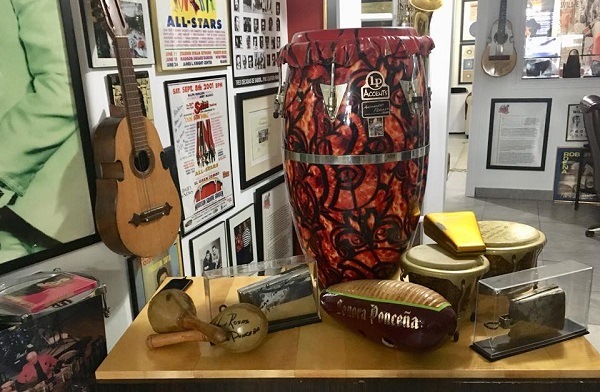
The Spanish Harlem Salsa Gallery (https://salsagoogle.com/north-america/the-spaha-salsa-gallery-and-the-johnny-cruz-show-to-the-order-of-salsa/) is one of those places where every salsa lover in New York should visit since there is plenty to see here. This museum has all kinds of items donated by many renowned artists or relatives of some who had passed away. This collection of valuable possessions has resulted in a set of priceless objects that will bow anyone visiting the facilities of such a special institution out of water.

The Spanish Harlem Salsa Gallery, also known as Spaha Salsa Gallery, can be defined as an institution of a cultural nature whose main purpose is to serve as a reminder of how great our culture is, especially our music. Both residents and visitors of East Harlem, New York, can learn about the salsa genre and its roots as long as they desire. All thanks to a lot of tools, information and many initiatives with which those interested will know all kinds of interesting facts about salsa first hand.

Another of the great objectives pursued by this place is the quest for knowledge about Latin music and the artists involved to offer it to anyone who decides to visit its facilities. That is why both its president Johnny Cruz and the team that helps him have been responsible for creating an inclusive and diverse gallery in which you can appreciate how far Hispanic talent has come by the hand of its top stars.

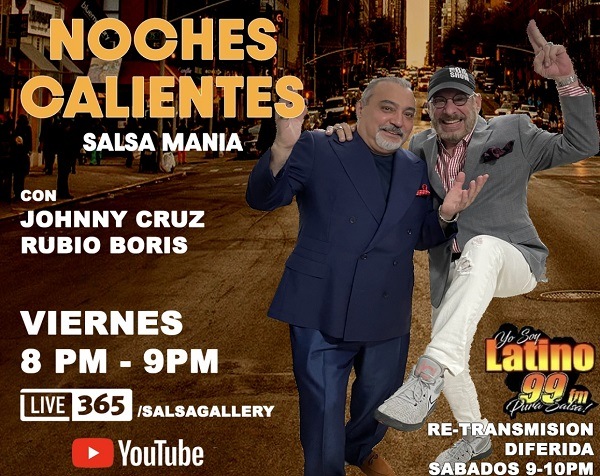
Johnny Cruz and Rubio Boris presenting their show

Role of the Spaha Salsa Gallery in the dissemination of Latin culture

The role played by the Spaha Salsa Gallery in the dissemination of Latin culture is very important, since these institutions are the ones that manage to arouse the interest of the inhabitants of Harlem and other nearby sectors towards one of the most representative musical genres of Latinity. This has made many other cultural institutions to use this gallery in order to awaken a higher interest in its own activities, which shows extensive cooperation between those who seek to promote anything Latin-related at all costs.

Fortunately, our work is not that complicated to carry out because too many tourists visit New York every day and many of them know that this city was the birthplace of the biggest salsa movement in history, so they are always looking for cultural sports in which you can find information about this set of rhythms and how it emerges in the public arena.

Some instruments donated by La Sonora Ponceña

Who Johnny Cruz is

Johnny Cruz is the founder of the Spaha Salsa Gallery, but there are many other facets by which this talented Puerto Rican is known in the entertainment industry. Cruz is a famous musician and record producer who has worked and make friends with a wide number of artists from all genres, by providing him with the platform to create a true sanctuary for Latin music lovers.

One interesting fact about the museum is that it is located on the plot where a hardware business owned by Johnny’s father used to function, which was made into something completely different thanks to the genius of his son long after. Today, that place contains several of the most invaluable objects in the history of salsa and whose relationship with some of the greatest figures of the genre is legendary.

Link to the official website of the Spaha Salsa gallery: spahasalsagallery.com

        By Johnny Cruz, ISM Correspondents, New York, New York City


Once again, maestro Bobby Valentín delivers a very daring and innovative musical theme


While it is true that salsa is very much alive, it is also true that it has been enriched through fusions and transformations.  Of course, this is not the first time we see that the salsa sound is transformed to give way to increasingly daring musical themes.   

I’ve said it before and I’ll say it again: “I’m glad there are collaborations where the wallet of other sounds invests in producing music that I enjoy.  Note that the only music I enjoy with the passion I enjoy nothing else is salsa.  This salsa I’m talking about also includes fusions and other inventions, as long as I like them.”

Well, let’s get to the mambo….

During the “Tropical Music Festival” I was backstage and was able to share with the musicians before and after their performances.  That privilege gave me the opportunity to talk to them about their projects, among other things.  On a side note, Oria Rivera graciously let me know about the release that same day of Bobby Valentin’s latest single.  As soon as I got home I listened to the song via You Tube.

Once again, maestro Valentín delivers a very daring and innovative song. I know that “chinchas” are going to fall on me as usual; but without being repetitive, you know that I am one of those who believe that Valentin is never wrong. 

Let’s establish that boogaloo or bugaloo is a Latin music and dance genre that was popular in the United States in the 1960s. It originated in New York City, mainly among Hispanic and Latin American teenagers. The style was a fusion of popular African-American rhythm and blues (R&B), in turn combining soul music with mambo and son montuno.

In the 1950s and 1960s, African Americans in the United States listened to various styles of music, including jump blues, R&B and doo-wop. Latinos in New York City shared those tastes, but also listened to genres such as mambo and cha-cha-chá. There was a mix of Puerto Ricans, Cubans and African-Americans in clubs, whose groups tried to find common musical ground. In the end, boogaloo or bugaloo was the common musical ground, a fusion of many styles cooking American son montuno, guaguancó, guajira, guaracha, mambo, R&B and soul on the same stove.  That must have been the reason why the boogaloo or bugalú allowed Spanish and English on equal terms.

As you can see, fusions are not a recent fad.

Well then.  The time has come to tell you what my salsa ears have heard, since there will be those who say that this is not a salsa song.  Well, the truth of the matter is that it is not suitable for salseros without musical appreciation skills.

From the first bars of this song, Bobby Valentín’s musical arrangement highlights the bass, accompanied by trumpets and saxophones in an arrangement that sounds great.  In the first thirty seconds of the song you can appreciate the vocal part of the composer -Bobby Valentín- ultra well accompanied by his most recent acquisition for the front of his orchestra: Leró Martínez. And for the most skeptical, Bobby and Leró sing in impeccable English.

The song is perfect, since in three minutes it opens up a range of musical possibilities in “English without barriers”.  Despite the brevity of the song, it lacks nothing.  Nor does it feel or sound like musical creativity was curtailed by trying to shorten the time.  The track flows naturally from the prelude, to the mambo, to the closing. At one and a half minutes, the saxophones provide the melody and the trumpets the breaks.  At the fiftieth minute, the trumpets play challenging the rhythm section, formed by:  Victor Roque on the tumbadoras, Kevin Vega on the timbal and Javier Oquendo on the bongo. Ceferino Cabán’s piano complements the “king’s” bass in a masterful way.

Shortly after the second minute (2.19), Victor “Yuca” Maldonado’s baritone saxophone sets the stage for Julito Alvarado and Angie Machado’s trumpets to firmly establish their presence.  This second minute also highlights the dynamism of the trombone by Eliut Cintrón. Let’s not forget that the composer, arranger, producer and bassist of this song was a trumpet player in his beginnings. At exactly 2.40 the bass takes command of the orchestra with more forcefulness, melodically allying itself with the sound of the trumpets and saxophones. Well into the second minute (2.44) the electric guitar in command of Javier Perez begins a correspondence with the bass, which is maintained until the closing of the song.

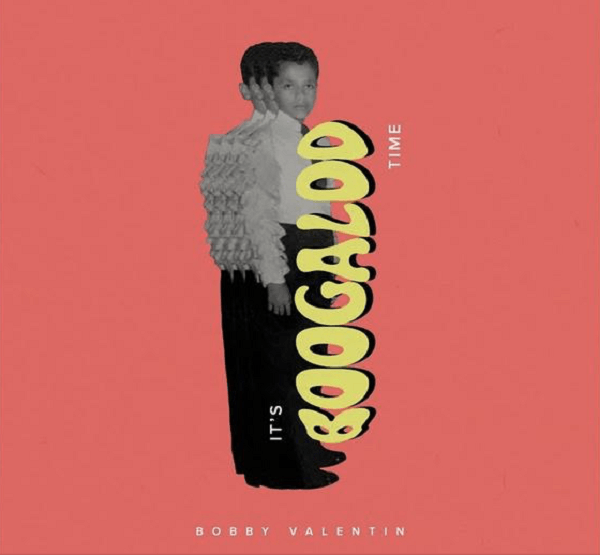
As for the cover art, it features a childish Bobby Valentine dressed as a musical celebrity.  The boy wears dark pants and a white shirt with those stylish puffed sleeves that scream mambo.  The title letters, which read It’s Boogaloo time are superimposed over the child’s image.  The style of the yellow letters that inscribe the word Boogaloo over the image described above make me imagine letters in some liquid material. The composition of the artwork rests on a rather garish salmon-colored background. According to the credits, both the graphic design and art direction were created by Orialis Valentin. Brava!

If you are one of those who say you are tired of the same old same old, I challenge you to listen to this gem, just as I recommended El Twist a while back. 

Salsa lives! I hope I have dispelled your doubts, if you had any.  If you still have any doubts, I confirm that you are not ready for this salsa conversation.

Musical Director: Bobby Valentín

Audio Recording & Mixing: Play Bach Studio

Engineer Carlitos Velázquez and Ramón Martínez

Mastering: WAVEM Acoustic LLC; Eduardo Ramos

Producer: Bobby Valentín

© 2022, Bronco Records, Inc. (Artist: Bobby Valentín)


By Bella Martinez, ISM Correspondents, San Juan, Puerto Rico


Luis González “El tsunami de la salsa” 50 años, mi música… Mi pasión


The trumpeter and director of the orchestra known as ‘The Tsunami of Salsa’ -Luis Gonzalez- delivers his new album under the title ’50 years, my music… My passion’.

With this production, Luis González takes the opportunity to celebrate five decades of musical life; during which he has been a musician of important orchestras, such as the Ray Barretto Orchestra, the Luis “Perico” Ortiz Orchestra and the Willie Rosario Orchestra, from which González left to form his own.

It should be noted that for thirteen years the trumpeter has been known as ‘the tsunami of salsa’ while becoming the director of his musical proposal, which he has kept active on local and international stages since 2009.

The launching of ’50 años, mi música… Mi pasión’ took place on Tuesday, May 3, 2022 at the headquarters of the National Foundation for Popular Culture in Old San Juan.  Present were Rafy Arroyo, Ricky Ramos and Jorge “Yoyo” Ocasio representing the current enrollment of the Luis González Orchestra; in addition to the ‘King of the Bass’ -Bobby Valentín- and trumpet player, director of the Juan Morel Campos Music Institute of Ponce and director of the Del Sur al Norte Orchestra, Julito Alvarado.

In ’50 años, mi música… Mi pasión’, guest musicians include trumpet players Jan Duclerc, Jesús Alonso and Julito Alvarado; pianist, arranger and music producer Pedro Bermúdez; Efraín Hernández on bass; William “Kachiro” Thompson on tumbadoras; Richard Carrasco on bongó; Gamalier González on trombone; and the voices of Pichie Pérez, Juan Bautista and Darvel García on backing vocals. On vocals, Rafy Arroyo, Ricky Ramos and Pedro Arroyo participated as guests.

Interestingly, a trend that has been emerging lately in salsa recordings also took over the tsunami.  I am referring to the batá drums, which for this album were played by Anthony Carrillo and Juanchi Sánchez. The album was recorded at Rolo Recording Studio, under the direction of Luis González himself. The mixing and mastering was in charge of Vinny Urrutia.  

The composers responsible for the songs chosen for this, the tsunami’s third release, include Francisco “Chalina” Alvarado, Yova Rodríguez, Luis “Perico” Ortiz, Eliu de Jesús, Cucco Peña, García Guadalupe, Ricky Ramos, Pedro Arroyo and Onorio Rivera. For the musical arrangements, Tsunami counted on arrangers of the stature of Oscar Hernandez, Javier Fernandez, Luis ‘Perico’ Ortiz, Ricky Gonzalez, Roberto Perez, Isidro Infante, Julito Alvarado and Pedro Bermudez.

Currently, the orchestra better known as ‘El Tsunami de la Salsa’ counts on the musical experience of its members: Rafael “Bodo” Torres (piano), Mario Vélez (bass), Luis González (leader, fiscorno and trumpet), Ito Torres and Simón Rivera (trumpets), Jorge Echevarría (trombone), Rigo Díaz (timbal), Jorge “Yoyo” Ocasio (tumbadoras) and Wilfredo Rosario (bongo).

So, we are still in salsa.  Yes, salsa lives! The efforts of this bandleader attest to that. Congratulations and may the next one come.  


By Bella Martinez, ISM Correspondents, San Juan, Puerto Rico


On March 19, 1928, in Guaynabo, Puerto Rico, Rafael Viera Figueroa was born.


Excellent Music Promoter. Remembered for promoting the LP Siembra by W Colón and R Blades. He founded Viera Discos, “Cathedral of Latin Music”.

He was considered one of the main disseminators of salsa in Puerto Rico, Rafael Viera, also creator of Viera Discos, one of the most important points of the movement until 2016, year in which it was closed.

Viera Figueroa was, from the late sixties to the eighties, Fania’s representative on the island. Why? He was the one who brought the music of the label founded by Pacheco and Masucci to the land of Ismael Rivera, when it was mainly distributed in the United States.

He was the promoter of the first Fania All Stars concert in Puerto Rico in 1973 and was in charge of bringing to Puerto Rico the films ‘Our Latin Thing’ and ‘Salsa’, which packed the local theaters in the seventies. According to Primera Hora, he was the one who inaugurated the Roberto Clemente Coliseum in San Juan.

In 2014 Viera suffered a stroke that kept him in intensive care. On that occasion his son, Richie Viera, gave these words to the aforementioned media: “I am a man of faith, and in God I trust that Dad will recover and will be able to continue with us for many more years, offering us his wisdom, his anecdotes and promoting and collaborating so that new talents will have a place in Latin music”.

Viera was known for the famous Casa del Coleccionista store, which he ran for more than 60 years in Santurce, for Viera Discos and for the Catedral de la Música.

He was also one of the driving forces behind the salsa boom at the time of Fania Records, where he worked as producer and promotion manager of the conglomerate of record labels; Fania Records, Vaya Records, Tico Records, Alegre Records, Cotique Records, Éxito Records, International Records and Música Latina, among others.

He was also involved in the success of the careers of artists such as Willie Colón, Larry Harlow, Cheo Feliciano, Richie Ray and Bobby Cruz, Celia Cruz, Ismael Miranda, Sandro, Sabú, Willie Rosario, Miki Vimari, Sonora Ponceña, Tommy Olivencia, La Lupe, Tito Puente, Eddie Palmieri, Ismael Quintana, Justo Betancourt, Héctor Lavoe, Tito Rojas, Frankie Ruiz, Corporación Latina, Junior Toledo, Viti Ruiz, Guillo Rivera, Ray Barreto, Willie Rosario, Orquesta La Terrífica, Roberto Roena y su Apollo Sound, Johnny Pacheco, Pete “El Conde” Rodríguez, Impacto Crea, Ismael Rivera, Raphael, Wilkins, Trio Los Condes, Joan Manuel Serrat and the most important conglomerate of musicians in the history of Latin music known as Fania All Stars, among others. In 1973, he was the promoter of the first Fania All Stars concert in Puerto Rico, which inaugurated the Roberto Clemente Coliseum in San Juan.

In the field of cinema, Viera brought to Puerto Rico the film “Our Latin Thing” and Salsa, films that crowded the local movie theaters.

He passed away on January 13, 2019 in Puerto Rico, may he rest in peace and eternal glory to Rafael Viera!


By Bella Martinez, ISM Correspondents, San Juan, Puerto Rico


  • « Go to Previous Page
  • Page 1
  • Interim pages omitted …
  • Page 93
  • Page 94
  • Page 95
  • Page 96
  • Page 97
  • Interim pages omitted …
  • Page 127
  • Go to Next Page »

International Salsa Magazine (ISM) is a monthly publication about Salsa activities around the world, that has been publishing since 2007. It is a world network of volunteers coordinated by ISM Magazine. We are working to strengthen all the events by working together.