The heir to a musical dynasty that defined the sound of the “Dean of Latin Ensembles”
On March 15, 1934, the Jesús María neighborhood in Havana saw the birth of one of the most solid figures in Cuban syncopation: Raimundo Elpidio Vázquez Lauzurica. Known worldwide as “Elpidio Vázquez,” his destiny was written between the strings of a double bass and the mystique of Cuba’s most iconic musical group.
As the son of the legendary Pablo Vázquez Gobín (“Bubú”) and the older brother of master pianist Javier Vázquez, Elpidio did not just inherit an instrument he inherited a historical responsibility.
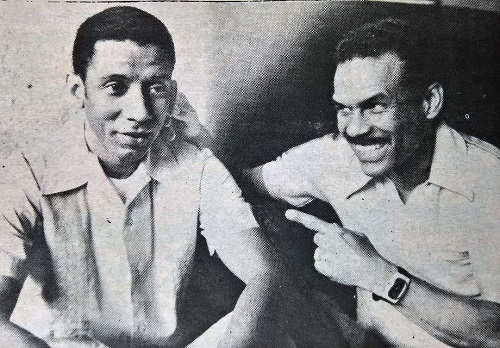
His formal connection with Sonora Matancera began in 1952, when he started subbing for his father. It didn’t take long for his talent to secure him the permanent spot, becoming the rhythmic backbone of the institution until the end of his career.
Legacy and Musical Contributions: Beyond the Double Bass
Elpidio Vázquez was not just a performer; he was a sonic architect. His ability to maintain a precise tumbao allowed Sonora Matancera to preserve that unmistakable harmonic signature that captivated the entire continent.
In addition to his technical prowess, Elpidio shined as a composer, contributing tracks that became essential hits:
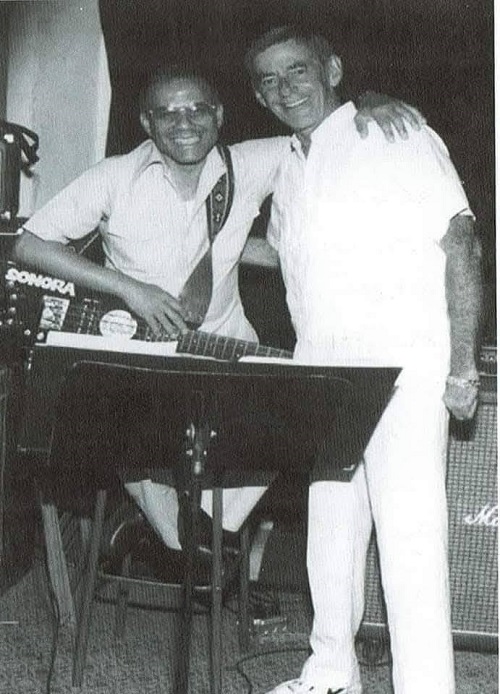
- “Le dio con la sartén”: A guaracha recorded by the “Flaco de Oro” (The Golden Thin Man), Celio González, in late 1959.
- “La negrita inteligente”: A gem performed by the Queen herself, Celia Cruz, in 1961.
His versatility led him to explore other musical horizons. He participated in the vibrant Cuban descarga (jam) sessions alongside Osvaldo “Chihuahua” Martínez and collaborated on historic recordings with giants of salsa and bolero, such as Ismael Rivera, Daniel Santos, Johnny Pacheco, Justo Betancourt, and Roberto Torres.
The Double Bass: Unlike many bassists of the salsa era who quickly transitioned to the Baby Bass or the electric bass, Elpidio is remembered for his mastery of the acoustic double bass, maintaining that organic, deep sonority of traditional, evolved Cuban son.
Recognition and Saying Goodbye to the Stage
One of the most memorable chapters of his career took place in 1989, during the 65th-anniversary celebration of Sonora Matancera. Organized by Gilda Mirós, Elpidio rocked world-renowned stages like Carnegie Hall and New York’s Central Park, reaffirming the band’s timeless relevance.
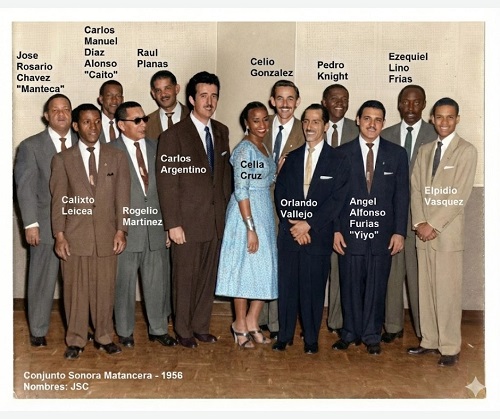
Career with Sonora Matancera
- The Historic Handover: In 1952, Elpidio took on the responsibility of replacing his father on the double bass for Sonora Matancera. This was no small task, as he had to maintain the characteristic tumbao that had defined the group’s sound for decades.
- Sonic Signature: He is credited with imprinting a robust harmonic stamp and a rhythmic stability that allowed Sonora to back the biggest stars of the era (Celia Cruz, Nelson Pinedo, Bienvenido Granda, etc.) with flawless precision.
- Exile and Continuity: Like the rest of the group, he left Cuba in 1960, continuing his career abroad and participating in Sonora’s prolific New York era and their international tours.
A historical footnote: After the death of Rogelio Martínez, it is said that Elpidio was designated as the group’s musical director by public deed. However, in a gesture of humility and after decades of dedication, he preferred to retire in New Jersey, letting his brother Javier take the helm for the orchestra’s new era.
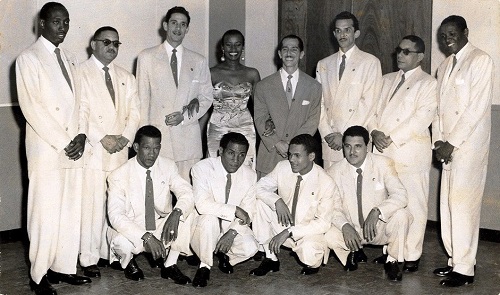
Today, the figure of Elpidio Vázquez remains a symbol of artistic fidelity and musical excellence the bridge between the tradition of “Bubú” and the modernity of New York salsa.

- Paoli Mejías A Talent Forged in the Streets and Discipline with a New Sound in Latin Jazz - March 30, 2026
- Ralph Mercado: The Visionary Who Turned the Rhythm of the Barrio into a Global Phenomenon - March 28, 2026
- Profile of Raimundo Elpidio Vázquez Lauzurica: The Guardian of the Rhythm in Sonora Matancera - March 28, 2026