• Skip to primary navigation
  • Skip to main content

International Salsa Magazine

  • HOME
  • Previous editions
    • 2026
      • ISM / March 2026
      • ISM / February 2026
      • ISM / January 2026
    • 2025
      • ISM / December 2025
      • ISM / November 2025
      • ISM / October 2025
      • ISM / September 2025
      • ISM / August 2025
      • ISM / July 2025
      • ISM / June 2025
      • ISM / May2025
      • ISM / April 2025
      • ISM / March 2025
      • ISM / February 2025
      • ISM / January 2025
    • 2024
      • ISM / December 2024
      • ISM / November 2024
      • ISM / October 2024
      • ISM / September 2024
      • ISM / August 2024
      • ISM / July 2024
      • ISM / June 2024
      • ISM / May 2024
      • ISM / April 2024
      • ISM / March 2024
      • ISM / February 2024
      • ISM / January 2024
    • 2023
      • ISM / December 2023
      • ISM / November 2023
      • ISM / October 2023
      • ISM – September 2023
      • ISM – August 2023
      • ISM July 2023
      • ISM Edition June 2023
      • ISM – May 2023
      • ISM April 2023
      • ISM March 2023
      • ISM February 2023
      • ISM January 2023
    • 2022
      • ISM December 2022
      • ISM November 2022
      • ISM October 2022
      • ISM September 2022
      • ISM August 2022
      • ISM July 2022
      • ISM June 2022
      • ISM May 2022
      • ISM February 2022
      • ISM January 2022
    • 2021
      • ISM December 2021
      • ISM November 2021
      • ISM October – 2021
      • ISM September 2021
      • ISM August 2021
      • ISM July 2021
      • ISM May 2021
      • ISM April 2021
      • ISM June 2021
      • ISM March 2021
      • ISM February 2021
      • ISM January 2021
    • 2020
      • ISM December 2020
      • ISM November 2020
      • ISM October 2020
      • ISM September 2020
      • ISM August 2020
      • ISM July 2020
      • ISM June 2020
      • ISM May 2020
      • ISM April 2020
      • ISM March 2020
      • ISM February 2020
      • ISM January 2020
    • 2019
      • ISM December 2019
      • ISM November 2019
      • ISM October 2019
      • ISM Septembre 2019
      • ISM August 2019
      • ISM July 2019
      • ISM June 2019
  • Download Salsa App
    • Android
    • Apple
  • Spanish

Search Results for: All Stars

Henry Benavides surprises with “Por Cuenta Propia,” his new project

Henry Benavides, arranger, composer, pianist and producer of tropical music with emphasis on Salsa, was born in Barrancabermeja, Santander, Colombia.

In York, NY March 31, 2023 ‘Por Cuenta Propia’ is the name of Henry Benavides’ new project, with which he wishes to elevate his musical career. The Colombian composer, pianist, arranger, and producer of tropical music pays homage to great artists of the industry with his new album.

“The production is inspired by the great salseros who influenced my musical beginnings, such as Richie Ray and Papo Lucca.

The songs I chose marked my childhood, and in my new album I seek to give it a modern and different touch with my arrangements,” shares Benavides.

Henry Benavides sorprende con “Por Cuenta Propia,” su nuevo proyecto

It is worth noting that the album is musically diverse. Despite being known for revolutionizing the tropical industry, Benavides shows us that even playing boleros, he is capable of transforming and creating new stories.

‘Por Cuenta Propia’ will be available through all digital platforms starting April 21, 2023, and you can already pre-order it through Spotify.

This project symbolizes the convergence of past stories and new rhythms. At the same time, Benavides is preparing for his upcoming Latin American tour this summer.

About Henry Benavides

“Henry Benavides is a Colombian tropical music composer, pianist, arranger and producer whose focus is on modernizing great salsa songs and giving them a new style. Benavides has had the opportunity to work with the ‘Discos Fuentes’ record label in Medellin, Colombia, where he collaborated with internationally recognized artists. As a member of the new generation, his mission is to modernize the salsa genre and share with his style, a new way of making salsa”.

Henry Benavides, arreglista, compositor, pianista y productor

Henry Benavides, arranger, composer, pianist and producer of tropical music with emphasis on Salsa, was born in Barrancabermeja, Santander.

He inherited from his grandparents the taste for music, at the age of 12 he began to play the drums induced by his father.

He graduated as a high school graduate from the industrial technical institute in the year 2000, and by then he already had clear what would be his life project, to live for music.

He decided to travel in 2002 to Pamplona, Norte de Santander, where he settled and enrolled in the university of this same city in the Faculty of Music to formalize his musical studies.

Shortly after entering the school he stood out among his classmates for his great talent. He was a member of the Big Band Oriol Rangel of this institution, being in his seventh semester, his teachers tell him that the knowledge he has acquired so far is the necessary, and that he really has nothing to do there, with the great talent he has, and they suggest him to go out to the arena! What prompted this Barranqueño to undertake his audacity in 2005 and decided to seek opportunities in the city of Medellin.

There he began working with Jhon Jairo Betancur making tracks and karaokes of salsa, merengues, ballads and vallenato, for Discos Fuentes recording pianos and then produced them, being in charge of everything for 2 and a half years, time that was enough to make known his talent which gave him the opportunity to work with the master Alberto Barros in the musical direction of the tribute to the Colombian salsa, and zone three, and to make a production for Panamanian singer Gabi Gabi Gabi.

production for the Panamanian singer Gabino Pampini, Sonora Carruseles, among others.

In 2009, he was invited to record in the city of Cali, an opportunity that he did not miss to seek new alternatives in his career and decided to seek the maestro Alexis Lozano, director of the orchestra Guayacán, to show him his work done during all these years.

He was lucky enough to meet him, and show his talent, which led to an exchange of knowledge and great musical connection between the two and immediately Alexis made it concrete and proposed him to produce music immediately.

Henry Benavides
Henry Benavides

In 2012 he directs and produces for Sony music in Mexico, the DVD “La Salsa de los Grandes”, a tribute to the Fania All Stars, with the participation of the best singers and musicians of the world salsa. Considered this work as the most representative of his career for having obtained GOLD and PLATINUM DISC, becoming the only Santandereano to obtain historically this recognition.

In addition to this, he was the author, composer and producer of songs such as YO SOY BARRANQUEÑO, where he pays tribute to his hometown, and EL HINCHA NÚMERO UNO, a song dedicated to his alma team, Alianza Petrolera.

She currently has a music production company, where she makes local, national and international productions, and at the same time has formed her orchestra, with musicians representative of her city, with which she has had the honor of being the only one to accompany an international artist, this being another historic achievement.

In this year 2020 he will launch his new production, entitled “Mi Vida”, which contains 10 unpublished songs of composition, arrangement and production, a dream that began 10 years ago and will close a very important cycle in the life of this young and talented artist.

Among other projects, he is the Musical Director of #salsagang, a project to promote new talents that is currently focused on the Mexican market, as it is one of the most important places for tropical music.

Henry Benavides through his extensive experience and professionalism, has positioned himself as one of the best salsa musicians and producers in the country.

All the productions mentioned above, can be found on the web and social networks.

Contact us:

Yoly Terán

610.348.9700

[email protected]

Henry Benavides

Read also: Salsa at Hacienda El Paraíso with Los Lebron Brothers Orchestra

The magic timbales of Nicky Marrero

Today’s character

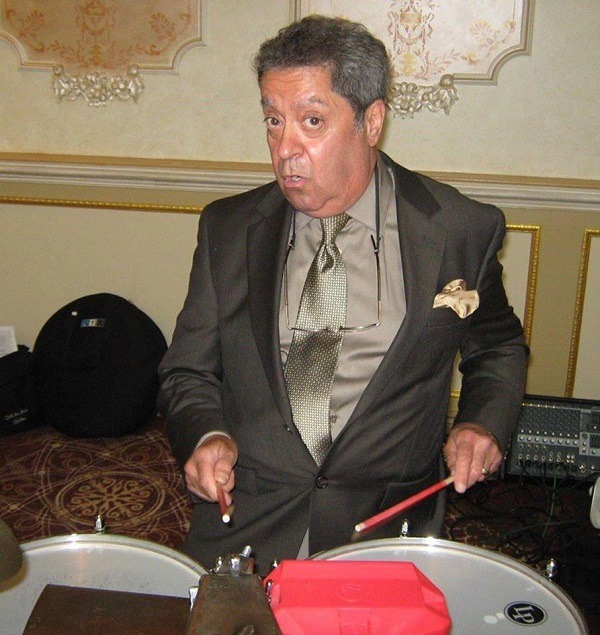
After a long wait, we have managed to make the talented New York musician Nicholas Marrero, better known as Nicky Marrero, to come to the Spanish Harlem Salsa Museum to share with Johnny Cruz and his friendly staff on February 26th of this year. Therefore, we would like to take this opportunity to talk a little about his brilliant career and the great contributions he has made to Latin music in the United States.

Nicky Marrero playing the timbales

Beginnings

Nicholas Marrero was born in the Bronx, New York, on June 17, 1950 and both his parents are Puerto Rican. This made the boy grow up among maracas, guitars, güiros and other instruments at home. In addition to the roots of his parents and the whole family, young Nicholas showed a talent that made him stand out very quickly and led him to study drums until his interests began to change and he started feeling drawn to the music made by Willie Bobo and ”The King of Timbales” Tito Puente. Both figures were arguably two of his greatest influences and inspirations in the world of music.

According to rumors in certain circles, his first recording was with Willie Colón’s band when he was only 15 years old, but the material was never released because of some alleged problems with the record label involved. The first albums with his participation as timbalero that were made public were ”El Malo” and ”The Hustler” by Willie Colón, both made in 1968. The usic productions were released in LP format in both cases.

Johnny Cruz and Nicky Marrero playing the timbales in 2017

Collaborations with Eddie Palmieri and others  (título 3)

That same year, the growing artist began collaborating with Eddie Palmieri’s orchestra and had an important participation in the album ”Champagne”, which was released through the Tico Records label and whose repertoire includes songs such as ”Cinturita”, ”Palo De Mango” and ”Ay Que Rico”. Marrero contribute his talent to Palmieri’s on 15 more productions over the next 50 years that followed. Many of them were extremely successful and earned him the Latin Grammy Award on several occasions.

Another important step in his career was the replacement of Orestes Vilato as timbalero in the Fania All Stars, with whom he performed all kinds of activities in many countries such as tours, concerts, press releases, among other things. He played in 25 music productions for this important salsa and Caribbean music orchestra during the time that he was a member of the group.

Johnny Cruz and Nicky Marrero again in 2023

Although the artist’s most outstanding collaborations have been with Eddie Palmieri and Fania All Stars, the timbalero has also collaborated with other great names in the world of salsa and Latin music such as Hector Lavoe, Louie Ramirez, Larry Harlow, Alfredo De La Fé, Ismael Miranda, Cheo Feliciano, Joe Quijano, Daniel Santos and many more.

Among the latest works in which Nicky participated is the album ”Full Circle” by Eddie Palmieri for the Ropeadope Records / Uprising Music label. The unmistakable sound of the musician is more than present with his characteristic bongos and timbalitos along with the unforgettable notes from the piano of maestro Palmieri, who has been more than a mentor since the artist started his prolific career.

Read also: Life and career of Ernie Acevedo

        By Johnny Cruz, ISM Correspondents, New York, New York City

In front of adversity we grow with Johnny Cruz .

North America/ All USA

Johnny Cruz : This month I wanted to dedicate myself to good news, highlighting the work of those who, despite adversity, continue to strive to bring the best to the public. We keep working!

Gilberto Santa Rosa surprises us with his new album Colegas. His most recent phonogram. In this, Santa Rosa invested the last six years and presents 16 collaborations with Cuban artists -Isaac Delgado and Juan Jose Hernandez-Puerto Ricans -Tito Nieves, Tito Rojas, Luisito Carrion, Pirulo, Nino Segarra, Choco Orta among others-, as well as with a Dominican – Jose Alberto “El Canario” -.

Gilberto Santa Rosa - Colegas
Gilberto Santa Rosa – Colegas

The album is preceded by “40… y contando en vivo desde Puerto Rico”, an album recorded in 2018 live at the Coliseo de Puerto Rico in San Juan, to celebrate its 40 years of musical career. The majestic arrangements were the work of Dino Nugent (Apaga La Luz), Marty Sheller (Caminalo, Ban Ban Quere), Ramón Sánchez (Que Se Sepa), Javier Fernández (Tremendo Coco, Masacote), Louis García (Por La Calle Del Medio, Ocana Sordi, El Guateque De Chombo), Ricky González (Vamos a Bailar El Son, Eque Tumba), Manolito Rodríguez (Medley Boleros), José Madera (Bailadores), Rene González (Estoy como Nunca), Isidro Infante (Mario Ague, El Mejor Sonero, Sonerito), James Hernández (La Fonda De Bienvenido).

In good time Santa Rosa presents this production. He positions him on the GRAMMY platform and refreshes him in his role as sonero and incidentally, he extends a helping hand to some who had not recorded Salsa Brava again.

Tracks: La Familia; Caminalo; Que Se Sepa; Mazacote; Apaga La Luz; Sonerito; Por La Calle Del Medio; Nos Vamos A Bailar El Son; Medley Boleros; Ocana Sordi; Bailadores; El Mejor Sonero; Tremendo Coco; Estoy Como Nunca; Mario Ague; Eque Tumbao; La Fonda De Bienvenido; Ban Ban Quere; Guateque De Chombo.

Members: Angie Machado, Jan Duclerc, Jesús Alonso, turbidity Vilchez – trumpet; Charlie Sierra – maracas; Dino Nugent – violín; Johnny Torres, Pedro Perez – bass; Manolito Rodriguez – timbal; Rafy Torres, Toñito Vásquez, Víctor Vázquez, Reynaldo Jorge – trombones – trombone; Richie Bastar – bongo; Sammy García, Jimmie Morales – congas; Sammy Vélez, Josué Urbina; Pedro Méndez, Frankie Pérez, Janice Maysonet – saxophone; Luis Marín, Isidro Infante, Javi Fernández, Ricky González – piano; Orestes Vilató – timpani; Pablo “El Indio” Rosario – percussion; Meñique, Paquito Guzmán, Víctor Manuelle, Luisito Carrion, Justo Betancourt – backing vocals. Guests: Víctor Manuelle, Choco Orta, Juan José Hernández, Isaac Delgado, Yan Collazo, Luisito Carrion, Pirulo, Tito Nieves, Tito Rojas “El Gallo”, Ismael Rivera Jr., José Alberto “El Canario”, Carlitos Ramírez, Michelle Brava, Herman Olivera, Maelo Ruiz.

I take this opportunity to greet my good friend Johnny Rodríguez Jr., better known as Johnny “Dandy” Rodríguez, is an American bongo player. He was Tito Puente’s longtime bongo player, and also played with Tito Rodríguez, Ray Barretto, and Alfredo de la Fe. He belonged to various popular bands of the salsa era such as Tico All-Stars, Fania All-Stars, and Typica 73. He is a proud son of El Barrio (Spanish Harlem), New York, and stickball (street baseball) was more interested than music.

Marco Bermúdez - En mi voz
Marco Bermúdez – En mi voz

However, influenced by his father, Johnny, 17, earned the position of playing bongos in the Tito Puente Orchestra. Johnny spent more than 30 years with the orchestra, also working with Tito Rodríguez from 1965 to 1968 and with Ray Barretto from 1970 until the end of 1972. Johnny went on to form Tipica 73, of which he remained a member until 1979. He then returned to the band. Tito’s band, playing alongside him until the time of Tito’s death in May 2000.

Johnny “Dandy” Rodríguez Jr. continues to be a Latin jazz and salsa percussionist. Today he works as a percussionist in different Latin music ensembles, He is unstoppable and is very active with the Latin Jazz Giants (alongside his colleagues and Exclusive LP Artists Jose Madera and George Delgado) and that includes the stars from the original Tito Puente Orchestra. The band plays the famous music from the Palladium days of Tito Puente, Tito Rodríguez, and Machito, and also recorded The Giants Play the Music of the Palladium.

In 2008, Johhny entrusted LP’s Research and Development Department with the design of the John “Dandy” Rodríguez Jr. bongoes from the Legends series. John is proud that these drums, which bear his name, present such a sound and visual characteristics outstanding. Keep going, Johnny!

A few days ago, En Mi Voz, the solo debut of the Ecuadorian singer Marco Bermúdez, was officially launched on the market. This is a very good selection of ten songs, under the master hand of Oscar Hernández, the prestigious and renowned musician who is making his debut as a record producer with Ovation Records.

Pedro Bermudez - Arrasando
Pedro Bermudez – Arrasando

Marco has not saved anything for this premiere. He has met with his colleagues from the “Hispánica del Barrio” and the result could not be better: Jerry Madera, Máximo Rodríguez, Maneco Ruiz, Héctor Colón, Doug Beavers, Reynaldo Jorge, Jeremy Bosch, George Delgado, Luisito Quintero and Jorge González give solvency and flavor to En Mi Voz. The album opens with “Amanecer Contigo”, composed with four hands between Hernández and Bermúdez, where the trumpet solos by Maneco Ruiz and flute by Jeremy Bosch stand out.

Jeremy is also heard with his flute in his fine and heartfelt composition “Canto a mi Mamá” and in “Únicamente tú”, making Marco the second voice. The romantic spirit of the singer of the Spanish Harlem Orchestra and Mambo Legends Orchestra is confirmed in songs like “Solo Basta” and “Tu Regreso”. Oscar’s arrangements guarantee the key melody. Highly recommended this album, it has no waste!

I send my greetings and wishes for a reunion with this excellent salsa singer: Hermenegildo Olivera, or Herman Olivera. Born in Newark, New Jersey, the son of Puerto Rican parents and from an early age linked to Latin music. In the 70s, in the middle of the salsa boom, Herman began his love of singing by listening to the interpretations of Chamaco Ramírez, Héctor Lavoe, Cheo Feliciano and Marvin Santiago, among others. These vocalists were primarily his source of inspiration. When he was just 15 years old, Herman began his career as a salsa interpreter with an orchestra called La Justicia.

Johnny Rodríguez
Johnny Rodríguez

Later he was part of the band La Sónica, where he met his friend and trombonist Jimmy Bosch. After this he spent time with the Caramelo orchestra to later take the most important leap in his career by being part of the Conjunto Libre in 1978, where he left his voice reflected for the first time in the Incredible LP of 1981 under the direction of percussionist Manolo Oquendo and bassist Andy González, where he stands out with the theme Decídete.

In 1990, he was invited to record on the album Salsa Sudada, from the Valdesa Records label of Víctor Raúl Sánchez “Patillas” and with the musical direction of Isidro Infante, sharing vocalization with Mario Muñoz “Papaíto”, Adalberto Santiago, Eladio Peguero “Yayo El Indio” and Pablo Villanueva Branda “Melcochita”; in this work he interprets the songs La Aguja and a tribute to the city of Cali called Valle Plateado de Salsa. Later, it launched an independent project called Herman Olivera y La Exclusiva. Chequea la Mercancía.

Herman Olivera
Herman Olivera

Produced by Fernando Pastrana where the song Me Extraña Araña is one of the most outstanding. For 1997 he participates in the CD of the band Rikoson All Stars, called Evoluciones del Son, where he stands out very well in the romantic theme Aquella Noche. In 1998 he was requested by the piano teacher Eddie Palmieri and together with the vocalist Wichy Camacho they recorded the album El Rumbero del Piano, where he stands out as a singer on the songs Malagueña alerosa and Oiga mi Guaguancó.

That same year he was invited to the recording studios by the trombonist Jimmy Bosch and they released the album titled Soneando Trombón, which contains the hit Otra Oportunidad. Who plays a duet with Frankie Vázquez. On this CD also appears the song Descargarana. That same duo, Olivera and Bosch, meet the following year (1999) and produce Salsa Dura, where Herman shines performing the full Impacto Tendremos. The album also features the participation of singers Frankie “Nene” Morales and Frankie Vázquez. Parallel to this album, the RMM label launches a live CD and DVD titled Eddie Palmieri & Friend’s, where Herman looks excellent in the number Palo pa ’Rumba.

Felix Villalobos
Felix Villalobos

The invitation to tune in to the new Fm / Internet radio station on Live365.com continues: Salsagallery. Good music, interviews with the artists and much more… now with the participation of Felix Villalobos who joins Salsagallery Radio with a segment in which we will be talking about Music.

At the Spanish Harlem Salsa Gallery Museum we are happy to say that we are gradually returning to our activities and we will be opening the gallery sporadically. We do not stop, we continue to work for our music and we will always keep you informed through our social networks. We hope to have more news shortly and that we can return to normal soon.

Publicity
Raymond Stewart
Johnny Cruz
Correspondent
New York

Almost two years of Leon Gast’s departure to another plane

Who was Laon Gast?

On March 8, 2021, we received the deplorable news of Leon Gast‘s death, who was a very notable American film director, producer, cinematographer and editor who was the director of the film based on the Fania All Stars, ”Our Latin Thing’‘. The unfortunate demise occurred when the director was 85 years old and the news was reported by friend and colleague Barbara Kopple.

Given the important contributions made by Mr. Cast offered to Latin music during his lifetime, we did not want to waste this opportunity to pay homage to his work through this material. Next, we will talk a little about his life and everything achieved both porfessionally and personally.

Leon Gast was the creator of ''Our Latin Thing''
Leon Gast was the creator of ”Our Latin Thing”

A little bit of his beginnings

Leon Jacques Gast was born on March 30, 1936 in New Jersey, studied at Henry Snyder High School and graduated with a degree in Dramatic Arts at Columbia University. During tha time of his life, he worked alongside writer and broadcaster Lowell Thomas in the television series ”High Adventure”, which meant one of his first triumphs at a professional level, but it definitely would not be the only one.

Another reason why Gast began to be so well known was thanks to his talent for photography, which would begin to be recognized in a number of famous magazines and print media such as Vogue and Esquire. In that regard, the producer began to create covers for the famous Fania All-Stars, which led him to create ”Nuestra cosa latina”. This documentary has been one of the greatest film projects that the filmmaker has carried out and many consider it a very important contribution to the consolidation of salsa as the cultural movement that it would later become.

Many people consider that Gast contributed a lot to the salsa genre as a movement

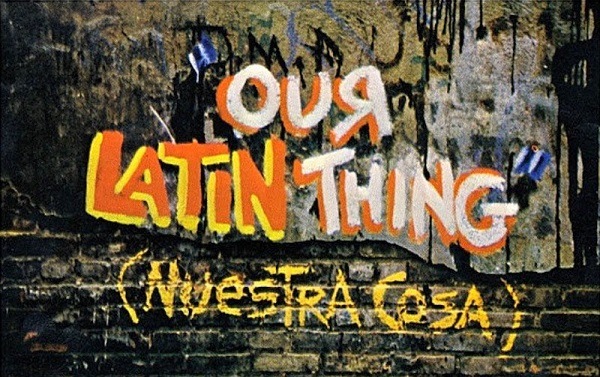
Our Latin Thing

”Our Latin Thing” is a documentary film that consisted in portraying how the Latin music scene in New York City was like in the 1970s. The material basically focuses on the concert made by the Fania All Stars at the Cheetah nightclub in August 1971. For many, this event marked the birth of the salsa genre as a movement.

The concert attracted two thousand people and resulted in the albums ”Live At The Cheetah Volume 1” and ”Live At The Cheetah Volume 2”, which were very well received by fans of that time. The event was the consecration of the Fania All Stars as one of the most famous musical groups in Latin music history.

In addition to that, Cast accompanied the famous orchestra and many other Latin music artists to Africa in order to record each and every one of their performances during the Zaire 74 Festival.

The film has been taken by many institutions as a reference to continue promoting salsa and music in general from its release to today.

Artwork for ''Our Latin Thing''
Artwork for ”Our Latin Thing”

Other hits and details about Leon Gast’s life

Another of the biggest successes of this famous filmmaker was ”When We Were Kings”, which was a film released in 1996 and focused on important events for the United States such as Waltergate, the resignation of President Nixon, activism against racism, sports, mythical boxing matches and much more.

Another important project conducted by him was ”Manny”, which was focused on world famous boxing champion Manny Pacquiao’s life and his most important moments.

Read also: Salsa singer Angel Rumba and what he has to say

International Salsa Magazine showcases important facts about Héctor Lavoe

(Héctor Juan Pérez Martínez; Ponce, 1946 – New York, 1993) Puerto Rican singer and composer, considered one of the best interpreters of Caribbean music of all time and a pioneer in the introduction of New York salsa in the early 1970s.

He was part of the legendary orchestra of trombonist Willie Colón and was known by the nickname of El Cantante de los Cantantes.

-.Héctor Juan Pérez Martínez was born on September 30, 1946 in Ponce, Puerto Rico. His parents Luis and Francisca are musicians who, from song to song, manage to support a large family of several children.

-. In the year of Hector’s birth, the singers who would influence him are much older: Daniel Santos is 30 years old; Ismael Rivera, better known as “Maelo”, is 15; and Jose “Cheo” Feliciano is eleven.

-. At the age of three, he suffers his first loss: the death of Francisca Martínez, his mother.

-. Juan Morel Campos is a music academy where his father enrolls him. Héctor begins to learn classical music, but he quickly decides to learn what is played in the streets. Jesús Sánchez Erazo, better known as “Chuito el de Bayamón”, is his first idol.

-. Sings the song Campanitas de cristal, a bolero composed by Rafael Hernández Marín, at a school party.

-. In the early sixties, he forms with friends, including Papo Luca, a group that performs boleros and salsas. He earns 18 dollars a night and his talent seduces the people of Ponce. He is invited to sing on television programs. Musicians Felipe Rodríguez and Tito Lara give him a promising future.

-. At the age of 17, being recognized in his native Ponce, he travels to New York. His family does not agree with his departure. In the city he is greeted by the ghost of the death of a brother, who was supposedly a drug addict. He stays in the apartment of Priscila, one of his older sisters.

Héctor Juan Pérez Martínez

Before joining the Fania All Stars for the first time, a group directed by the Dominican Johnny Pacheco, he was part of bands such as Orquesta Nueva York and Alegre All Stars.

-. In 1966, at the age of 21, he sings alongside Pete Rodríguez, Adalberto Santiago, Tito Puente, Richie Ray, among other artists, in the incipient Fania All Stars. He meets Willie Colón, an American musician with Puerto Rican parents. “We both knew the world in the Bronx neighborhood. I learned to speak Spanish with Hector, although at first I understood what he was saying. I remember he had a brilliant sense of humor and was a great imitator of singers,” said Colón in an interview.

-. In 1967, he achieved fame with his first album with Willie Colón. It is a mixture of genres such as guaracha, plena and guaguancó, and is entitled El Malo. The album is a tribute to the slum culture of the United States and Latin America.

-. He tries to work as a painter, but his sister won’t allow it. After two weeks, he attends a musical rehearsal with his backing vocalist friend Roberto Garcia. Hector takes the microphone and makes the orchestra directors fall in love with him.

-. At the beginning of 1968 he meets Carmen, a follower he meets at a concert. On October 30 of that year Jose Alberto, his first son, is born.

-. After the birth of Jose Alberto, he has his second son with Nilda Román, another follower. With her, who is nicknamed “La Puchi”, he finally marries and stays in an apartment in Queens. Héctor Junior is the name of his second son.

-. At the end of the sixties he becomes addicted to drugs. In more than one stage he leaves the audience in a daze.

-. In 1971 he is called again to record, together with other stars, Fania All Stars at the Cheetah. This combo featured Cheo Feliciano, Richie Ray, Ismael Miranda, Celia Cruz and the young Rubén Blades. In 1973, the group filled the Yankee Stadium bleachers. Anacaona, Quítate tú and Ahora vengo yo are some of their hits.

-. With Willie Colón, he recorded more than 18 albums between 1967 and 1973. Thousands of reissues of Asalto navideño, El Juicio and Lo Mato were made. Che che colé, Ausencia, Calle luna calle sol, Todo tiene su final are the most requested songs by the Latin American public.

(H3) -. Willie Colón dissolves the duet in 1974. However, both continue to work. Lavoe’s talent continues despite his excesses and the author of Talento de televisión knows it well.

-. In 1975 he releases La voz, his first solo album. This incursion is interpreted as a second wind in his career. So much is his energy to continue that he releases eight more albums. De ti depende (1976) is a collection of boleros and Comedia (1978) breaks sales with the song El cantante, written by Rubén Blades. This work was also produced by Willie Colón, who that year teamed up with Blades to record Siembra, the best-selling salsa album.

-. His interpretation of El cantante helps to build the nickname “El cantante de los cantantes” (The singer of the singers).

-. He performs at the Coliseo Evangelista Mora in Cali in 1977. This concert was attended by the writer Andrés Caicedo, who managed to take a picture with Lavoe in the dressing room. Months later, the author of ¡Qué viva la música! committed suicide with an overdose of barbiturates.

-. As a result of a strong depression, Lavoe is interned in a mental sanatorium in the United States in 1977. His heroin addiction, which he had begun to suffer at the end of the sixties, is not only known by those close to him but also by his fans. “He paid a lot of attention to me and, when he was in trouble, he would call me”, confessed singer Ismael Miranda in an interview.

-. Lives in Cali between November 1982 and March 1983 at the Hotel Aristi. He is a regular singer at the Juan Pachanga discotheque, owned by Larry Landa, a concert organizer. In the capital of the Valley it is said that Lavoe takes drugs during the day and tries to sing at night.

Hector Lavoe el Cantante de los Cantantes

In February 1987, due to a fire, he jumps out of his apartment in Queens. At the same time, in Puerto Rico, his mother-in-law is stabbed to death.

-. On May 7, 1987, his son Hector is hit by a stray bullet. “That death broke his heart,” said Tito Nieves in an interview. “At that moment Héctor Lavoe’s soul dies”.

-. He is diagnosed with AIDS in 1988. Those who visit him in the hospital maintain that he does not lose his sense of humor nor his desire to return to the stage.

-. In Bayamón, Puerto Rico, he sings Mi Gente in a patron saint festival. But his presentation is sabotaged by one of the organizers who supposedly owes him money; in the middle of the song the lights are turned off and Lavoe is left without sound to continue.

-. In 1988, he throws himself from the ninth floor of a hotel in San Juan. He survives to continue fighting the battle. He sings on a Bronx street in 1989. His physical deterioration is a reflection of his state of mind. Lavoe is a ghost of his former self.

Héctor Lavoe
Héctor Lavoe

-. Tito Nieves is one of his friends who accompanies him in his difficult days. Lavoe depended on other people to live. A thrombosis paralyzes part of his body.

-. In March 1993, pushed by his record company, he makes his last presentation in New Jersey. He sings with Roberto Roena’s orchestra. Maestro Roena is not able to play in front of the “Singer of singers”. “It was too much to put him on stage”, he said indignantly.

-. At the age of 46 he dies of a cardiac arrest, on June 29, 1993, in New York. “He came into the world to enjoy it and suffer it. Although he was not happy, he made many people happy,” said his sister Priscila.

-. He is buried in Puerto Rico. He is accompanied by a horde of followers. The presence of his friend Ismael Miranda stands out, who bids him farewell saying: “He is not here with us, but his music continues”.

-. In 2007, El cantante, a movie inspired by his life, was released. It stars Marc Anthony and Jennifer Lopez.

-. Currently there are two monuments in his honor. One in his native Ponce, Puerto Rico, and another in Callao, Peru.

Héctor Lavoe

You can read: Génesis of Salsa, its essence, characteristics, rhythm, history and expansión

  • « Go to Previous Page
  • Page 1
  • Interim pages omitted …
  • Page 17
  • Page 18
  • Page 19
  • Page 20
  • Page 21
  • Interim pages omitted …
  • Page 58
  • Go to Next Page »

International Salsa Magazine (ISM) is a monthly publication about Salsa activities around the world, that has been publishing since 2007. It is a world network of volunteers coordinated by ISM Magazine. We are working to strengthen all the events by working together.