• Skip to primary navigation
  • Skip to main content

International Salsa Magazine

  • HOME
  • Previous editions
    • 2026
      • ISM / March 2026
      • ISM / February 2026
      • ISM / January 2026
    • 2025
      • ISM / December 2025
      • ISM / November 2025
      • ISM / October 2025
      • ISM / September 2025
      • ISM / August 2025
      • ISM / July 2025
      • ISM / June 2025
      • ISM / May2025
      • ISM / April 2025
      • ISM / March 2025
      • ISM / February 2025
      • ISM / January 2025
    • 2024
      • ISM / December 2024
      • ISM / November 2024
      • ISM / October 2024
      • ISM / September 2024
      • ISM / August 2024
      • ISM / July 2024
      • ISM / June 2024
      • ISM / May 2024
      • ISM / April 2024
      • ISM / March 2024
      • ISM / February 2024
      • ISM / January 2024
    • 2023
      • ISM / December 2023
      • ISM / November 2023
      • ISM / October 2023
      • ISM – September 2023
      • ISM – August 2023
      • ISM July 2023
      • ISM Edition June 2023
      • ISM – May 2023
      • ISM April 2023
      • ISM March 2023
      • ISM February 2023
      • ISM January 2023
    • 2022
      • ISM December 2022
      • ISM November 2022
      • ISM October 2022
      • ISM September 2022
      • ISM August 2022
      • ISM July 2022
      • ISM June 2022
      • ISM May 2022
      • ISM February 2022
      • ISM January 2022
    • 2021
      • ISM December 2021
      • ISM November 2021
      • ISM October – 2021
      • ISM September 2021
      • ISM August 2021
      • ISM July 2021
      • ISM May 2021
      • ISM April 2021
      • ISM June 2021
      • ISM March 2021
      • ISM February 2021
      • ISM January 2021
    • 2020
      • ISM December 2020
      • ISM November 2020
      • ISM October 2020
      • ISM September 2020
      • ISM August 2020
      • ISM July 2020
      • ISM June 2020
      • ISM May 2020
      • ISM April 2020
      • ISM March 2020
      • ISM February 2020
      • ISM January 2020
    • 2019
      • ISM December 2019
      • ISM November 2019
      • ISM October 2019
      • ISM Septembre 2019
      • ISM August 2019
      • ISM July 2019
      • ISM June 2019
  • Download Salsa App
    • Android
    • Apple
  • Spanish

Search Results for: All Stars

Interesting conversation with vocal coach and YouTuber Ceci Dover

Who is Ceci Dover and what she has done

Ceci Dover is a professional vocal coach and singer of Argentinean origin residing in Spain, where she has been dedicated to voice, music and technological advances that have emerged out in this world over the past few years. All this accumulated experience has made her worthy of sharing the stage with several of the most important Spanish-speaking artists such as Coro Kennedy and Alejandro Lerner.

Ceci Dover working in her studio

In her talent and knowledge, we can notice that she has received a very solid training in the issues she always touches and two very important teaching centers in her academic life were the Manuel de Falla Conservatory and the singing academy Valeria Lynch, both of which contributed greatly to make Ceci the professional voice teacher she is today. Another important detail to highlight from her route is the Still Voice Training academy in the United States in 2020, which would complete her studies as a coach and professional singer.

Currently, Ceci is dedicated to perform vocal diagnosis for those who request it and she works as a content creator through YouTube, a platform on which she offers her analysis to well-known voices in the entertainment world so that the public can know a professional opinion on their quality or the absence of it.

In view of Ceci’s great career in the world of music, we wanted to talk to her and learn a little more about her career and experience from her own mouth.

How did your interest in music and vocal technique begin?

After thanking us for the space we gave her, Ceci went on to explain that it all started when she was in high school, which she combined with singing studies at a particular level since she turned 13 years old. Once she finished school, she enrolled in a conservatory and began studying lyrical singing full time for about 12 year until she chose to specialize in folk singing in order to achieve a change of range.

Throughout this process, she discovered that she enjoyed singing and teaching, although she would be dedicated exclusively to the latter.   

Major references and inspirations

Her most significant influences are Whitney Houston, Aretha Franklin, Mariah Carrey, Celine Dion, Barbra Streisand, Freddy Marcury, Michael Jackson, among others. Ceci said to belong to old school because of her tastes, but it took a few years for her to start paying more attention to music in Spanish. It was in 2020 that she started paying attention to Latin voices such as Juan Gabriel, who has gone on to become one of her favorite artists worldwide. Although she has discovered a lot of talent in music in Spanish, she has been really fascinated by Mexican culture, which has given birth to several of the songs that did not have faces during her childhood.

Italian singer Laura Pausini and Ceci Dover

One of the things that has caught her attention the most about rancheras and boleros is that they allow artists to show all their talent and vocal ability. In addition, he says that these genres come from times when singers ”sang for real, excellence was demanded of them and had to be good in order to succeed”.

The industry dies not require artists to offer quality because it only focuses on creating characters and products carefully designed to make shows,” said the professional singer on this subject.

Importance of lyrics in culture

Ceci has been highly critical of everything related to the kind of lyrics that have been used in modern genres such as reggaeton and considers that so much vulgarity is not necessary to express what is wanted. In fact, he considers that these lyrical resources are an involution and a total reversal in music. Ensures that trap and reggaeton do not bother her, but she believes that explicitness, offenses and vexations used by many of its exponents do not send any positive message to the youth.

For the artist, this issue becomes even more serious and delicate when talking about young children as well, who are the primary audience of this musical content. She comments that her own son learns these lyrics at school and comes home singing them, something that makes her very angry and leads her to do everything possible to reverse the negative effects that this may have on his upbringing.

Peruvian composer and singer Eva Ayllón with Ceci Dover

It is possible to talk about heartbreak without being vulgar and degrading. I understand that this is what many young people like nowadays, but I think it is not a generational thing, but a matter of education. I have very young students who also disagree with that way of expressing music”, she added.

In that sense, he also points out that parents should instill other musical references and listen to other music so that their children get to know other voices and styles. Few people know Freddy Mercury or Michael Jackson, but everyone knows Bizarrap, Rosalia and Quevedo. That has to change” said the performer.

Vocal diagnosis and training

When Ceci was asked if a person without natural vocal talent could develop it, her answer was yes, although with several points to consider. A person without natural singing talent can develop his full potential and educate his voice. I know singers who don’t have good voice, but they strive to make good songs, write good lyrics and convey the listening audience special things” Ceci replied.

”I encourage everyone to educate their voice, even if they weren’t born with the natural talent that can make that process a little easier. I think we all can work on our voice and offer quality singing, but within our means. You can’t promise people that they are going to sing like Celine Dion in a year if they don’t have the conditions to do that. There are borders we simply cannot cross, but we can look for the best version of ourselves” she added.

Ceci working in one of her videos

Scenography and details unrelated to voice

Just as voice is a very important part of the analysis, there are other aspects that can distract Ceci from her analysis, such as lyrics, costumes and choreography. In that sense, she mentions the recent case of Shakira, whose story of heartbreak attracts much more attention than the technical details involved.

He also mentioned the case of K-Pop groups, whose choreographies, pirouettes and costumes stand out much more than their members’ voices. ”Before, the technical aspects related to voice were what stood out on stage, but now the visual part of the show is much more important than before,” said the artist. ”I was very much against backing tracks, but I have realized that K-Pop groups cannot achieve a perfect voice with such demanding dances and aerobics,” she concluded on this issue.

Salsa exponents

Although Ceci has focused on analyzing rancheras, boleros, pop and reggaeton, she thinks it is time to dedicate some of her material to analyze other more tropical genres such as salsa or merengue. In this part of the conversation, she expressed her admiration for stars such as Juan Luis Guerra, Marc Anthony, Celia Cruz and many more. There have been many followers who have asked her to react to voices of this genre, so she is considering making an exclusive special for tropical rhythms such as these and thereby appeasing the part of her audience that enjoys these styles.

Read also: Mexican announcer Jesse ‘‘Chuy’’ Varela and the radio today

Honor to whom honor is due – Johnny Cruz

Johnny Cruz
Johnny Cruz

This month I hope to be able to pay tribute to great figures of our Latin music, who have worked tirelessly for years to make our music very high.

I want to greet my great friend Larry Harlow and wish him a speedy recovery. Larry Harlow is an American artist and performer, composer and producer of Cuban son, Montuno, Afro-Cuban jazz, mambo, guaracha, cha-cha, and salsa, hailing from Brooklyn, New York. Harlow, who is known for his mix of Afro-Cuban jazz and piano playing styles, studied music in the 1950s in Cuba, but was unable to complete his studies before the 1959 Cuban Revolution, forcing him to leave the island.

Larry Harlow y Johnny Cruz

The Harlow Orchestra was the first to sign with Fania Records, Harlow has also produced more than 106 albums by various artists and more than 50 albums of his own authorship, in addition to those he produced for Fania. Among his most popular albums were “Abran Paso” and “Tributo a Arsenio Rodríguez” with Ismael Miranda as the vocalist. He also appeared with La Fania All-Stars, in the film, Nuestra Cosa Latina.

Harlow recorded one of his most momentous albums in just two days. Under the simple title of Salsa, it pays homage to the Cuban roots of tropical music, combining the sound of trumpets and trombones with two violins that evoke the aesthetics of the charanga of groups such as Orquesta Aragón.

With “The portfolio”, a version of a song by Arsenio Rodríguez, Harlow finds his greatest success. Thanks to the singers Adalberto Santiago and Junior González, the nickname “the wonderful Jew” arises. In 1972, salsa was in full swing. Larry Harlow, meditates on a musical concept for the Afro-Caribbean music market. Inspired by the success of the Anglo-Saxon opera, “Tommy”, Harlow was preparing for the launch of a similar concept, aimed at the salsa market.

For 1973 the opera Hommy, using the lyrics of Heny Álvarez, tells the story of a boy who, although blind and deaf, had a great talent for percussion. The outstanding musicians of the time and singers such as Justo Betancourt, Cheo Feliciano, Adalberto Santiago, Junior González, Pete “El Conde” Rodríguez and Celia Cruz joined.

The combination of musicians and voices achieved its goal with a recording that established a lecture in the history of Afro-Caribbean music with a radiant exhibition that captured the airwaves and the imagination of the salsa audience. The songs “Es un Varón”, “El Día De Navidad”, “Quirinbomboro”, “Gracia Divina”, “Cari-Caridad” and “Soy Sensacional” were undoubted radio hits that became themes of dance and discussion among all the salseros.

It was the first time that an opera, Spanish-speaking, and in the salsa guild, was directed to the populace. Salsa got dressed up and that legacy opened the doors for the Afro-Caribbean musical tradition to now visit the most prestigious venues in the world.

That is the legacy of “Hommy”, one of the best recordings of the time, which brought together the best musicians of the moment in an expression that transcended time; and, in turn, he brought Celia Cruz to the salsa market and placed her in a seat of honor which she never left. But more importantly, “Hommy” took Salsa to a new place among audiences. What a contribution from Larry Harlow!

Ralph-Irizarry
Ralph-Irizarry

I also want to send my regards and appreciation to Ralph Irizarry. Recognized as one of the timpanists with the greatest “swing”, Ralph Irizarry has a distinctive style that has allowed him to leave an indelible mark in the groups where he has played. Born in Harlem Latino New Yorker, Ralph is a self-taught musician who learned his trade by listening to his brother’s records and the music of his idols in nightclubs, where he used to sneak into when he was 16 years old.

His family moved to Puerto Rico when Ralph was in his teens; There he acquired his first professional experiences with La Terrífica, El Gran Combo, La Sonora Ponceña and many other groups. After three years on the island, Ralph returned to New York, where he began playing with local groups.

One winter night in 1978, he met the legendary Ray Barreto at Manhattan’s Corso Nightclub and began a productive working relationship that would result in five extraordinary recordings. Ralph has recorded with David Byrne, Paul Simon, Harry Belafonte, Earl Klugh, Juan Luis Guerra, Cachao, Celia Cruz and Yomo Toro, although he is widely recognized for his musical relationship with Rubén Blades and Seis Del Solar, with whom he remained. recording and performing internationally for 13 years.

His musical contributions have also been fundamental in the recording of two Latin jazz albums made by Seis del Solar for the Messidor Records label. Currently, he is one of the most sought after musicians who has kept working on commercials and film and television soundtracks.

His charisma also allowed him to develop an unexpected acting career: he acted in The Mambo Kings, playing the role of Pito Fernández. In the summer of 1996, Ralph participated along with Tito Puente in the show Master Timbaleros, presented at S.O.B.’s in New York. This historic concert was the culmination of 26 years of dedication, practice, and love of music. He founded the group Timbalaye, a septet with a strong big band sound.

The group combines contemporary Latin jazz with diverse tropical rhythms (timba and songo) and traditional Afro-Cuban rhythms (bomba, cha cha chá and son montuno). Their innovative sound has allowed the group to perform weekly at various venues in New York. Among his most recent projects is a recording at Birdland for a compilation to be released by the RCA Records label. Timbalaye is considered the force of Latin jazz. My hug and respect to you Ralph!

I am happy to express my gratitude and admiration to a powerful woman, Director of Taínos Tower and Vice President of the Museum of Salsa: María Cruz.

Johnny Cruz and Mrs. María Cruz

María Cruz was born in Carolina, Puerto Rico. In 1966 she came to New York looking for new opportunities. While studying at Manhattan Community College, she began working with the East Harlem Pilot Block Redevelopment Project. Although she may have had no idea at the time, that job was the beginning of her career as a community activist and advocate for social services. As a community worker at the East Harlem Pilot Block, she helped design and offer a tenant orientation in preparation for the occupation at Taino Towers.

Later, she became a Building Representative and worked with tenants regarding apartment issues, rent, social service issues, and Section 8. Maria Cruz has been involved in many community activities:

From 1984 to 1989; She served as president of the Tenants Association of her apartment building. She was vice president of the East Harlem Little League Baseball organization. In her spare time, she organized bus trips for neighborhood children to amusement parks and ball games. Encouraged and assisted several tenants to return to school and continue their education, so that they can be trained and empowered to return to the workforce and leave Public Assistance. Ms. Cruz earned her RAM (Registered Apartment Manager) certificate from NYU and is registered as a Certified Leasing Professional.

Currently, Ms. Cruz is the Executive Director of ARCO Management Inc. / Taino Towers. She has always been a strong activist for the community. In the summer of 1999, Ms. Cruz organized the first annual Taino Family Day. Day in which all residents and members of the East Harlem community participate and celebrate a day of unity. On Taino Family Day, residents rent “kioscos” food stalls and sell various ethnic foods, dance to the rhythm of various musical bands, and children enjoy activities such as face painting, puppet theater, and a petting zoo.

Each year, Ms. Cruz focuses on a different topic such as: education, music, tributes, and family values. As Executive Director, one of her greatest accomplishments was the renovation of the Touro College building. She is currently a board member of the East Harlem Council for Human Services and works closely with local politicians and representatives.

In 2002, Ms. Cruz along with Irving “Magic” Johnson opened the Magic Johnson Computer Learning Center. This program provides computer classes to Taino Towers and the East Harlem Community. As Executive Director, she was also able to oversee the completion of the Senior Park at Taino Towers.

In the summer of 2003, voted by the majority of the tenants, the Park for the elderly was renamed the Maria Cruz Park for the elderly. In September 2019, she was honored with the Eugenio María de Hostos Award from the Puerto Rican National Association for her commitment to the East Harlem Community. People like Mrs. Cruz are exemplary citizens of the Latino community in the United States, and in New York.

Papo Rosario and Isidro Infante

Do not stop listening to the new single: “Gracias”, and the first solo production of Papo Rosario, produced by the arranger and musician Isidro Infante. Rosario is grateful to be alive and to be able to walk after being bedridden as a result of a car accident. Papo Rosario is a world-class artist who has put the name of Puerto Rico high. Rosario, withdrew in 2019 from the group considered the “university of salsa”, El Gran combo de Puerto Rico, after having an accident and presenting health problems. Now, he affirms that he already feels ready to resume his musical career with the launch of his first solo production by producer Isidro Infante. Much success in this new stage.

I highly recommend that you follow the track of Quintero’s Salsa Project, a Venezuelan salsa group based in New York, nominated for a Latin Grammy and led by cousins ​​Luisito and Roberto Quintero, released an album in which they pay tribute to the work of La Dimensión Latina, the orchestra that represented a before and after in the history of this musical genre in Venezuela.

Quintero´s Salsa Project

The band wanted to go back to the 60s to remember that particular style with which La Dimensión Latina championed Venezuelan salsa: “Many of the world’s salsa players and Venezuelans identify with this rhythm. We, the Quintero, have always been loyal fans of these great teachers. With this album we wish to pay tribute to those who today are a world icon of salsa ”, they said through their networks. “Ya tú lo verás”, promotional single from the album composed by Oscar D’León, was arranged by the legendary trombonist and director of La Dimensión Latina, César Monges, better known as “Albóndiga”.

The album is the second released by Quintero’s Salsa Project, following their debut project, Nuestro Hogar, which was nominated for the 2019 Latin Grammy for Best Salsa Album. In that same ceremony, Luisito Quintero, one of the great Venezuelan percussionists who make a professional life in the United States, received the gramophone as a member of the Spanish Harlem Orchestra, which was recognized for his Anniversary album as Best Latin Tropical Album. Quintero is also a member of the group of the great pianist Chick Corea. Do not miss it!

The invitation to tune in to the new Fm / Internet radio station on Live365.com continues: Salsagallery. Good music, interviews with the artists and much more.

Johnny Cruz on the Radio

At the Spanish Harlem Salsa Gallery Museum we are happy to say that we are gradually returning to our activities and we will be opening the gallery sporadically. We do not stop, we continue to work for our music and we will always keep you informed through our social networks. We hope to have more news shortly and that we can return to normal soon.

By Johnny Cruz, ISM Correspondents, New York, New York City

Larry Harlow ”El Judío de la Salsa”: innovative and irreverent

A set of innovative ideas


Recorded live on January 16, 1974 at Sing Sing Prison, listeners will immediately discover that the musicians actually came to play from the first note. In a recent conversation, Harlow considers this album to be one of the best of his career and tells how the enthusiasm of the audience positively affected the performance. This was the only Latin album to be recorded in quadraphonic format. The basic concept was similar to today’s surround sound systems, but the way to achieve the four audio channels changed in terms of format.

Harlow took advantage of new technology and recorded the live album live an 8-channel RCA unit and mixed the recording by spinning on a chair surrounded by four speakers. The Fania sound was created by New York musicians who added swing and a distinctive musical sensibility to Cuban son and other Spanish-speaking Caribbean genres. In the process, they twisted the music into something totally new. “Live in Quad” provides an opportunity to hear that musical transformation, as the main part of the music from this concert consists of compositions by Arsenio Rodriguez.

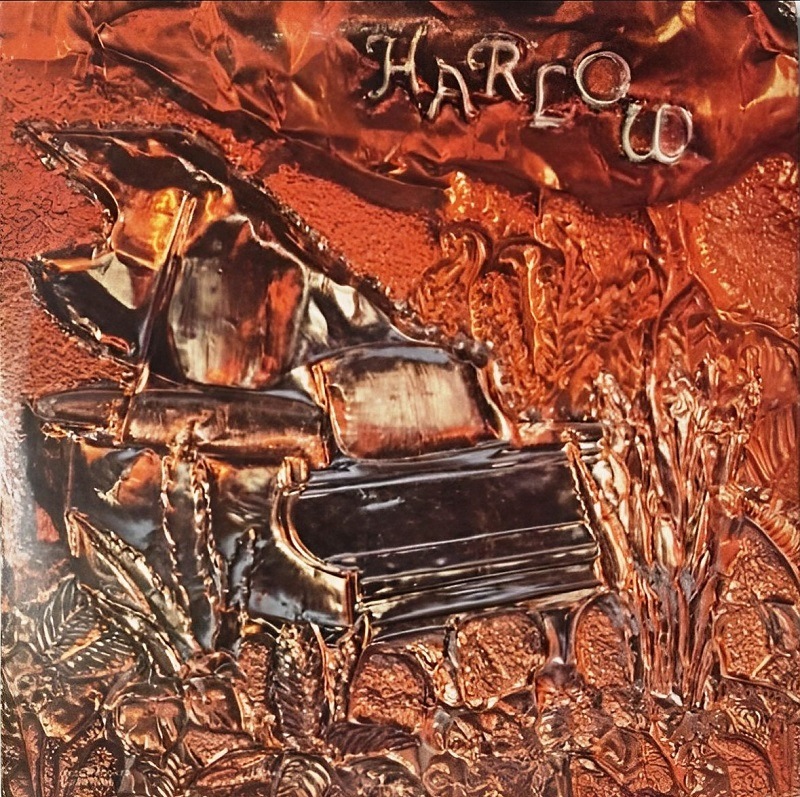
Cover of the album
Cover of the album ”Live In Quad”

In the 1950s, Harlow made several visits to Cuba, where he followed and became friends with Rodriguez. Back in New York, he had the opportunity to play with his idol and eventually dedicated an full album to him. For Harlow, the piano is overdubbed and interacted with a harpsichord, simulating the union of the tres and the piano made by Arsenio. This album sounds as exciting and fresh as it did 32 years ago. “Señor Sereno,” Harlow’s big hit with Ismael Miranda, opens the album. Junior Gonzalez, who debuted with Harlow in Hommy, gives us his own version. On a personal level, this performance is an example of the Fania sound: great orchestral work, swing and energy.

More details about the album

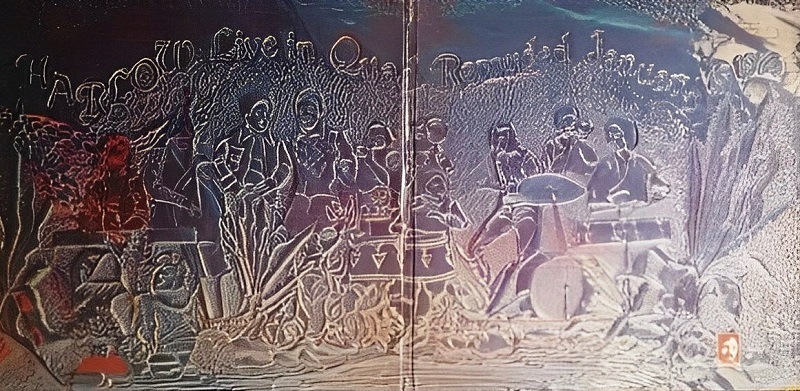
 Inside of the album
Inside of the album ”Live In Quad”

Also from Hommy, the song “Gracia Divina” grows in intensity with Tony Jiménez’s brilliant rhythmic fills over Harlow’s guajeos and the powerful swing of the horn section. Justo Betancourt’s gifted voice stars in the treatment given by Harlow to “Mayari” by Compay Segundo. “Jóvenes Del Muelle” is another Cuban classic, arranged by the great Barry Rogers. The arrangement and playing evoke classic ensembles while still sounding modern. Here we listen to trombone solos and a tasty bass solo by Eddie Guagua Rivera.

To date, Harlow is best known for his version of “The Wallet.” This arrangement by Sam Burtis in a masterclass. Notice the Lilí Martínez’s influence in Harlow’s solo, followed by fine trumpet solos and another violin solo by Lewis Kahn. “Tumba y Bongo” was originally composed for Arsenio’s rhythm section (Kila, Quique and Chocolate). This arrangement by Mark Weinstein highlights an exciting hand-to-hand between Pablo Rosario and Tony Jimenez, who delights the audience when he raises his drum in the middle of the solo.

Back of the album
Back of the album ”Live in Quad”

“Suéltala” provides a framework for Júnior González’s soneos while offering exciting solos by Reynaldo Jorge and Nicky Marrero. “Arsenio”, the theme song of the dramatic album Harlow recorded in tribute to his musical hero, gets the matancero flavor of Justo Betancourt with Tony Jimenez standing out with another great solo. In “Descarga Final,” Harlow unleashes the creativity of the members of his orchestra and the singers exchange soneos in a friendly hand-to-hand. Guagua offers another impressive solo while the percussionists are meant to steal the show.

Credits:

Ralph Castrella – Trumpet

Charlie Miller – Trumpet

Junior Gonzalez – Maracas

Larry Harlow – Piano, Harpsichord

Reynaldo Jorge – Trombone

Pablo “El Indio” Rosario – Bongo, Cowbell

Anthony “Tony” Jimenez – Congas

Nicky Marrero – Timbales

Eddie “Guagua” Rivera – Bass

Lewis Kahn – Trombone, Violin

Lead Singers – Justo Betancourt, Junior Gonzalez

Choir – Adalberto Santiago, Larry Harlow, Ralp Castrella

Master Of Ceremonies – Paco Navarro

Producer – Larry Harlow

Engineer – Bernie Fox

Assistant Engineer – Randall Shepherd

Mixing – Good Vibration Studios, N. Y. C.

Recorded Live – Sing Sing, January 16, 1974.

Arrangements – Louie Cruz (“Señor Sereno,” “Gracia Divina”), Larry Harlow (“Mayari,”, “Descarga Final”), Barry Rogers (“Jóvenes del Muelle”), Sam Burtis (“La Cartera”), Mark Weinstein (“Tumba y Bongo”), Charlie Camilleri (“Suéltala”), Bobby Valentín (“Arsenio”)

Original Album Cover – Gary Mason

Metal Graphic Art From Original Album – Charlie Rosario

Devised used by Harlow
Device used by Harlow to record the album

Señor Sereno
Ismael Miranda

Garcia Divina
Larry Harlow / Jenaro ”Heny’’ Álvarez

Mayarí

Jóvenes Del Muelle
Sabino Peñalver

La Cartera
Arsenio Rodríguez

Tumba Y Bongó
Arsenio Rodríguez

Suéltala
Arsenio Rodríguez

Arsenio
Larry Harlow / Ismael Miranda

Read also: Javier Cabanillas and his Cabanijazz Project

Goodbye to El Canario de Carolina

Music in mourning

The world of music, more specifically salsa, has lost one of its greatest stars later this year 2022 and is none other than the unforgettable Lalo Rodriguez, who leaves a huge void after his unfortunate departure. In view of the unfortunate things that happened to the humanity of the great artist, we want to take this opportunity to remember the most important of his musical work and the importance of the legacy left by him.

A little of his biography

Ubaldo Rodríguez Santos, better known as Lalo Rodríguez, was born in Río Piedras, Puerto Rico on May 16, 1958 in the family formed by his parents José Rodríguez and Magdalena Santos. As a child, he soon started singing in music festivals and radio and television shows, in which he already showed the great talent that would carry him for the rest of his life. So much so that, a few years later, he was already part of his first musical group, the Tempo Moderno Orchestra.

Lalo Rodríguez was found dead on December the 13th

When he was 15 years old, he received the necessary support to move to New York City, a place where some of the biggest salsa stars of the time were located. While there, he joined Eddie Palmieri‘s band and provided vocals for several songs on the album ”Sun of Latin Music”, which became the first salsa album to win a Grammy. The following year, the artists would team up again to create ”Unfinished masterpiece”, which got a nomination for the aforementioned awards. At that time, it was Palmieri himself who named him ”Lalo” for the first time.

After walking away from Palmieri, he participated in the Machito Grillo’s orchestra, with whom he recorded the album ”Fireworks”. Incredibly, this album also got a Grammy nomination, which represented fabulous numbers for Lalo. Upon coming of age, he already had three albums, a Grammy won and two Grammy nominations.

1980s

During these years, Lalo recorded a significant amount of albums and was beginning to be considered as one of the precursors of romantic and erotic salsa, a subgenre that was beginning to gain much more notoriety in those years. One of the biggest hits of his entire career was the song ”Ven devórame otra vez”, which won him a Lo Nuestro Award in the category of Tropical Song Of The Year and reached very good positions in the Latin Music charts.

Lalo Rodríguez and Eddie Palmieri

1990s

In the 1990s, he continued working hard in his career, resulting in the albums ”Nací para cantar” and ”Estoy aquí”, with which he won gold and platinum records due to the large number of copies sold. These were the last record productions of the artist to be released to the public.

Recent years

Lalo never stopped being active on stages of all types, both in his native Puerto Rico and in other countries around the world. In 2020, it was announced that he was going to release a new album and already had a song selection to include in the material, although no further details had been offered.

Unfortunately, fate would not allow him to go forward with his plans and he was found dead near a basketball court in Carolina, Puerto Rico. One of the first relatives to make an appearance was his road manager.

Lalo Rodríguez and Johnny Cruz

After knowing that Lalo was found dead, his road manager Francisco Pérez, who had been working with the artist for several years. He indicated that he had communicated with him that same day and they had agreed to meet, but instead, he received the unfortunate news about his death.

During the following days, many artists expressed their sorrow for the departure of the singer and highlighted his great talent in life, such as Víctor Manuelle, Elvis Crespo, Arnaldo Vallellanes, among many others.

Read also: This is the story of Percussionist Joe González

        By Johnny Cruz, ISM Correspondents, New York, New York City

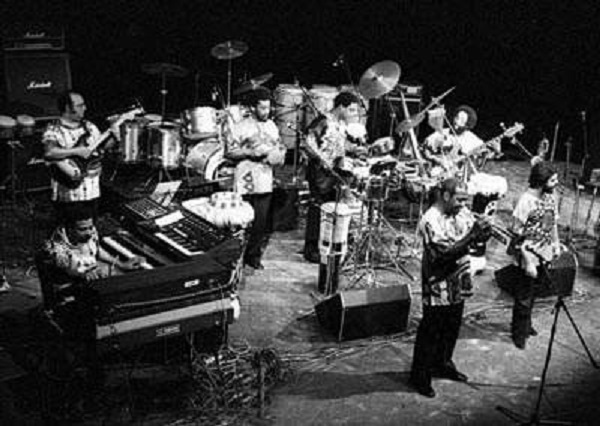
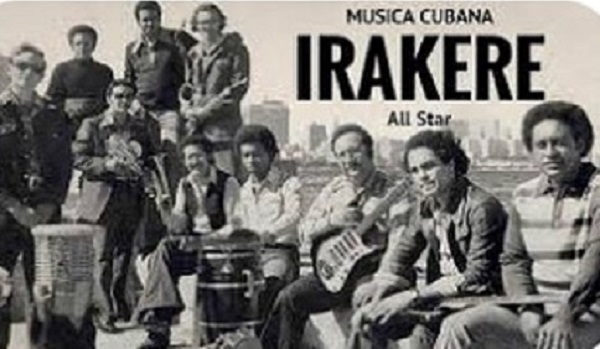
Irakere was a Cuban group that developed an important work in Cuban popular music and Latin Jazz under the direction of Chucho Valdés

Irakere was formed as such in 1967 but had begun to work much earlier; in that year precisely they went to a selection called in Havana to organize with the best musicians of that time the Cuban Orchestra of Modern Music; already in 1972 they were approaching to what they currently produce deciding in 1973 to call it Irakere, which in Yoruba language means Vegetation and that is how, starting from its name, they work based on the Afro-Cuban musical roots.

In this way, through the combination, mixture and interrelation of classical, impressionism, jazz, rock and various compositional techniques they managed to walk through all styles such as dance music, concert, traditional and popular Cuban music.

Thanks to the impulse of pianist Chucho Valdés, the Cuban group Irakere took off in 1973, nourished by Thelonious Monk’s bop.

Founders

Grupo Irakere: It was founded in Havana in 1973, by:

Jesús Valdés(Chucho) composer, director and pianist;

Paquito D’Rivera (Paquito), alto and tenor saxophone, flute and clarinet;

Carlos Averhoff, tenor saxophone, soprano, flute and bass clarinet;

Jorge Varona, trumpet, trombone and percussion;

Carlos del Puerto, bass, bass guitar and tuba;

Carlos Emilio Morales, guitar;

Bernardo García, drums and batá drums;

Jorge Alfonso, batá drums;

Enrique Plá, drums;

Carlos Barbón, güiro, chekeré and tambourine; and

Oscar Valdés, singer, tumbadora (conga), batá drums and bongo.

Irakere, fue un grupo cubano que desarrolló un importante trabajo en la música popular cubana y el Jazz Latino

On the founding of Irakere, Chucho Valdés expressed:

“For us the group always existed, it was present at all times; it was like something pending. At the beginning it had no name, it was just an idea we were working on: to use Cuban folkloric percussion in dance music, and to look for different timbres with a common characteristic: “ours”.

Then Oscar Valdés came up with the idea of combining the not easy and little known batá drum with the tumbadora, güiro and cowbell and so, step by step we arrived at the current group…”.

About Irakere’s first stage, the musicologist Leonardo Acosta points out: “one of the successes of Irakere had been not to try to invent and identify itself with a “new rhythm”, according to the old guidelines of advertising so much used from the forties to the sixties.

The slogan about the “new rhythm” was until recently the “open sesame” on which the musicians counted to become famous overnight, and by that way sometimes quite commercial results were achieved.

Apart from the fact that no “new rhythm” is so new, they all come from the alteration or amalgamation of pre-existing rhythms.

Irakere’s only alchemy comes from the spontaneous creativity of its members. Since there is no commercial endeavor, laboratory practices are unnecessary, and the group can perform a contradanza, a danzón, a son montuno or a cha cha chá without fear of seeming “old-fashioned”, since they are in fact playing something else at the same time. And without setting themselves the goal, nor having to invent a “pega” name, almost by an imperative of the material they are working on, new rhythmic combinations are emerging, to the point that Irakere’s rhythm is unmistakable among Cuban listeners or dancers.

Grupo cubano Irakere

Certainly, and in spite of their triumphs in international jazz festivals, Irakere is not a jazz group. But these successes are not gratuitous either, because as we have seen, they have formidable musicians with great experience in the jazz field, especially in the aspect of improvisation, the great discovery of jazz and perhaps its greatest contribution to the music of the 20th century.

“Paquito D’Rivera: Irakere was born against the will of the Cuban authorities”.

When talking about Cuban music, the name of one of the most emblematic groups in the country’s musical history comes to mind, Irakere, which in Yoruba language means vegetation, jungle.

Irakere became the seed that would germinate a lush forest of rhythms and sounds, a school through which many of the great stars of Cuban music have paraded.

Founded more than four decades ago, this legendary band has been a pioneer of Afro-Cuban jazz and the initiator of the musical revolution in the seventies.

Gracias al impulso del pianista Chucho Valdés, el grupo cubano Irakere levantó vuelo en 1973

Irakere emerged at a time when, due to political demands on the island, music and culture were treated as an instrument of revolutionary identification and jazz was branded as imperialist music.

It was at this time, in the late sixties and early seventies, that a group of great musicians founded a band whose main goal was to enrich Cuban popular dance music with Latin jazz as essential elements.

Under the direction of the outstanding pianist Jesús “Chucho” Valdés, excellent musicians came together in search of a different sonority, based on the use of Afro-Cuban folkloric percussion together with the renewed timbres of the popular rhythms of the time that fused jazz, rock, funk and popular Cuban rhythms such as son, mambo or cha cha chá, together with classical or concert music.

“Irakere was the Musical Generation of change”.

Sources:

https://www.ecured.cu/Irakere

Leonardo Acosta

Radio Televisión Marti

Mirna Guerra

Irakere

You can read: Israel Kantor was an excellent bassist, arranger and composer who achieved great popularity in Cuba for his vocal technique and original “Sonear” style

  • « Go to Previous Page
  • Page 1
  • Interim pages omitted …
  • Page 40
  • Page 41
  • Page 42
  • Page 43
  • Page 44
  • Interim pages omitted …
  • Page 58
  • Go to Next Page »

International Salsa Magazine (ISM) is a monthly publication about Salsa activities around the world, that has been publishing since 2007. It is a world network of volunteers coordinated by ISM Magazine. We are working to strengthen all the events by working together.