• Skip to primary navigation
  • Skip to main content

International Salsa Magazine

  • HOME
  • Previous editions
    • 2026
      • ISM / March 2026
      • ISM / February 2026
      • ISM / January 2026
    • 2025
      • ISM / December 2025
      • ISM / November 2025
      • ISM / October 2025
      • ISM / September 2025
      • ISM / August 2025
      • ISM / July 2025
      • ISM / June 2025
      • ISM / May2025
      • ISM / April 2025
      • ISM / March 2025
      • ISM / February 2025
      • ISM / January 2025
    • 2024
      • ISM / December 2024
      • ISM / November 2024
      • ISM / October 2024
      • ISM / September 2024
      • ISM / August 2024
      • ISM / July 2024
      • ISM / June 2024
      • ISM / May 2024
      • ISM / April 2024
      • ISM / March 2024
      • ISM / February 2024
      • ISM / January 2024
    • 2023
      • ISM / December 2023
      • ISM / November 2023
      • ISM / October 2023
      • ISM – September 2023
      • ISM – August 2023
      • ISM July 2023
      • ISM Edition June 2023
      • ISM – May 2023
      • ISM April 2023
      • ISM March 2023
      • ISM February 2023
      • ISM January 2023
    • 2022
      • ISM December 2022
      • ISM November 2022
      • ISM October 2022
      • ISM September 2022
      • ISM August 2022
      • ISM July 2022
      • ISM June 2022
      • ISM May 2022
      • ISM February 2022
      • ISM January 2022
    • 2021
      • ISM December 2021
      • ISM November 2021
      • ISM October – 2021
      • ISM September 2021
      • ISM August 2021
      • ISM July 2021
      • ISM May 2021
      • ISM April 2021
      • ISM June 2021
      • ISM March 2021
      • ISM February 2021
      • ISM January 2021
    • 2020
      • ISM December 2020
      • ISM November 2020
      • ISM October 2020
      • ISM September 2020
      • ISM August 2020
      • ISM July 2020
      • ISM June 2020
      • ISM May 2020
      • ISM April 2020
      • ISM March 2020
      • ISM February 2020
      • ISM January 2020
    • 2019
      • ISM December 2019
      • ISM November 2019
      • ISM October 2019
      • ISM Septembre 2019
      • ISM August 2019
      • ISM July 2019
      • ISM June 2019
  • Download Salsa App
    • Android
    • Apple
  • Spanish

Search Results for: All Stars

Oscar D’León celebrates 50 years of career in Caracas “International Salsa Magazine says present”

In September, the greatest exponent of Venezuelan salsa in the world will celebrate five decades of brilliant artistic career with an international tour that will have as its main event, an impressive and awaited symphonic gala at the Teresa Carreño Theater. And for september 22 at the Forum in Valencia.
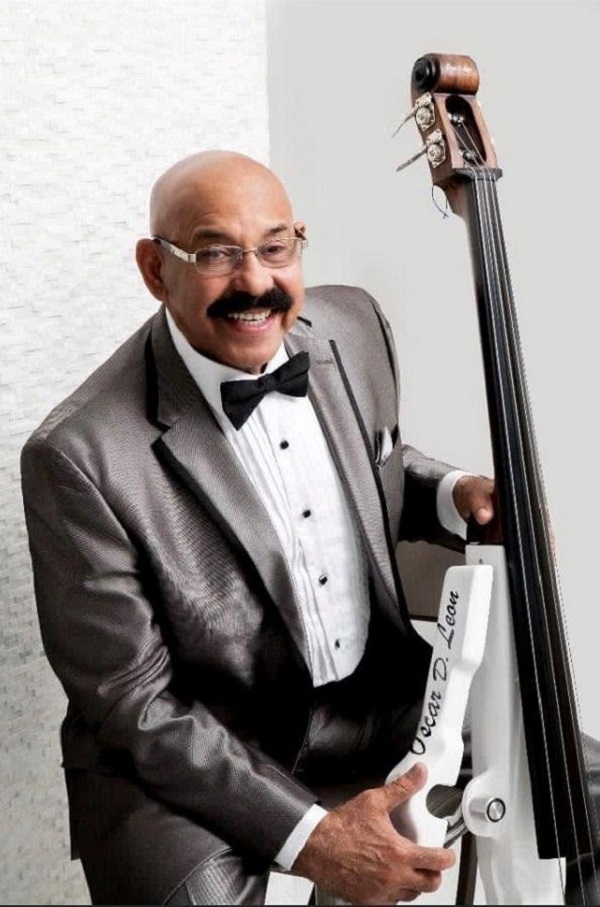
Miami, May 19, 2022. Undisputed legend of Caribbean music, Oscar D’León, the Sonero of the World, celebrates 50 years of successful artistic career with an international tour that will take him to different locations in the Americas and Europe this summer.

This tour, which will begin on June 20 in Mexico City, will continue in July with the “50th Anniversary Europa Tour 2022”, culminating in a spectacular symphonic gala at the iconic Teresa Carreño Theater, which, during two performances on September 16 and 17, will give his audience the opportunity to sing and dance to the music that has made him the most recognized and admired Venezuelan artist in the world over the course of five decades.

Acapulco, Arequipa, Santiago de Chile, Miami, Frankfurt, Munich, Berlin, Paris, Amsterdam, Madrid, Tenerife, London, Istanbul are some of the cities that will live the energizing experience of seeing him on stage, a real party for music lovers.

Deserving of hundreds of awards and recognitions, including five Latin Grammys, D’León has been nominated nine times for the U.S. Grammy, being the first Venezuelan to obtain such a statuette. He did it in 2001 thanks to the song “Cielito Lindo, La Negra Mariachi Medley” Featuring-Oscar D’Leon, included in a collection album: “Masterpiece/Obra Maestra de Tito Puente y Eddie Palmieri”.

In 2013, he received the Award for Musical Excellence, a special recognition granted by vote of the Board of Trustees of the Latin Recording Academy to artists who have made creative contributions of exceptional artistic importance in the field of recording during their careers.

A true prophet in his own land, this global artist who began writing his formidable musical history in 1972, at the age of 28, when he formed the Dimensión Latina Orchestra, promises to celebrate his half-century of career with an unforgettable show at the Teresa Carreño Theater, the most important in Caracas, organized by the Venezuelan companies Imagen Producciones and Oz Show, in alliance with the National Orchestra System of that country.

Important Notes

Venezuelan musician who is among the most outstanding authors and performers of salsa and Caribbean music in general. Oscar D’León’s professional career began late: legend has it that one night, while visiting a nightclub in 1973, he heard that the band playing there had been fired. Oscar seized the opportunity and offered his own band to replace the one that had left.

The owner accepted and hired him to start playing a few days later. There was only one problem: the band at that time consisted only of D’León himself. He quickly got in touch with trombonist César Monge, told him what had happened and both got down to work to put together a line-up.

The band was finally formed by Oscar (vocals and bass, an instrument he had taught himself to play), César Monge (trombone), José Rodríguez (percussion), Enrique Iriarte (piano) and José Antonio Rojas (trombone).

Thus was formed La Dimensión Latina, Oscar D’León’s first orchestra. “Pensando en ti” was the first of the orchestra’s long list of hits. Four years later, Óscar left the band and was replaced by Puerto Rican Andy Montáñez, a vocalist who sang with the Gran Combo de Puerto Rico. Óscar returned with his own orchestra, La Salsa Mayor, with which he recorded his first album, titled after the group’s name: La Salsa Mayor (1977). The work was a great success in his country, and little by little his name began to be heard on an international scale. The following year he recorded the album El Más Grande, which contained the songs “El baile del suavecito” and “Mi bajo y yo”, and shortly afterwards he made his first visit to New York to offer live performances.

Aside from being a great sonero, Oscar D’León is also an extraordinary showman. Almost always accompanied by his bass, with which he plays and dances as if they were a couple, Óscar moves around the stage with great skill. In Venezuela, Óscar D’León is an idol, not only as a singer and musician, but also as a model of a self-made man who, from a very humble position, achieves fame and success on an international scale.

He is considered one of the best interpreters of Afro-Latin music of all times and is undoubtedly among the Venezuelan artists with more projection abroad.

Despite having gone through several stages in the development of Latin music, Oscar D’León’s style, always unmistakable, has maintained some constants that have allowed him to ensure the loyalty of his wide audience. D’León has recorded with the most outstanding salsa stars; among his collaborations, which can be traced in more than fifty albums, stands out his participation in The Mambo King, the hundredth full-length album by the legendary Tito Puente.

Corresponsal: Lida. María Fernanda León

www.Sanjuanproducciones24.blogspot.com

Fasching Presents An Intimate Concert With Miriam Aïda

The only performance of the most influential Bossa Nova and Jazz singer in Sweden will be in September

Leyenda: Miriam Aïda sings in Portuguese, Spanish, English, and Swedish (her native language).

Miriam Aïda is one of Sweden’s most popular Jazz singers. She has an indisputable talent, a seductive and harmonic voice, and her outstanding appearances on stage always surprise the audience thanks to her impeccable fusion of Jazz and Latin rhythms.

On Thursday, September 29th, it will be the only concert that the Swedish singer will give at the imposing club Fasching https://www.fasching.se/miriam-aida/#2022-09-29T20-00 from 8 PM, and tickets are available from 120 SEK (persons standing) to 200 SEK.

She will create this intimate and exceptional show with the feature of five prominent musicians from the Scandinavian Jazz music scene: Mats Andersson (Guitars), Johan Olsson (Accordion and Keyboards), Simon Peterson (Bass), Finn Björnulfson (Percussion), and Ola Bothzén on Drums.

Miriam will navigate the music of the American coast, stroll along the Caribbean Sea, and descend to the magnificent beaches of Brazil to present the rhythms that took root in the New World: Bolero, Cuban Rumba, Samba-Soul, and Jazz, among other genres that together to the colorful voice of Aïda, they will perform the songs from their most recent production Loving the Alien released in 2018, in addition to their greatest hits compiled on eight albums.

This singer, leader of Bossa Nova and Latin Jazz in Sweden, has taken her show to the main cities of Japan, the United Kingdom, Brazil, France, Spain, USA, Turkey, Russia, Italy, and Germany as a soloist as with the band A Bossa Elétrica, and has had the good fortune to have shared the stage with great Brazilian personalities such as Hermeto Pascoal, Badi Assad, and guitar master Marco Pereira.

She is the Director of the record label Connective Records and radio programs.

The extensive career of Miriam Aïda www.miriamaida.com goes from her first album Jan Lundgren Trio Presents Miriam Aida & Fredrik Kronkvist released in 2002. This record production together with her husband Fredrik Kronkvist, the pianist Jan Lundgren, and two very talented young soloists performed for the first time the Funky-Soul-Jazz rhythm and standards with an American and Swedish touch.

Who is Fredrik Kronkvist? https://fredrikkronkvist.wordpress.com/bio He is a master of the Alto Saxophone and one of the established stars of Swedish Jazz. He has nearly 9 million views on digital platforms for his ballad hits Theme for Ernie. This saxophonist with extensive knowledge of the instrument and Jazz is currently releasing a new album in early 2022 with ten original ballads and directs his band made up of four musicians from the vanguard of current Jazz.

Miriam after a year of this successful album releases her debut solo album My Kind of World (2003) with classics like “Big City” and passionate Bossa Nova ballads. She continues with A Bossa Elétrica – Eletrificacao (2004), and Miriam Aïda & Fredrik Kronkvist with Monday Night Big Band – Live at the Palladium (2005) recorded live. This CD features moving, direct Jazz and Bossa nova. With this powerful Big Band, they covered great songs like Horace Silver’s Senor Blues, Nat Adderley’s Fun, Right Here, and Right Now, to name a few.

She also participated in the album Joe Spinaci and the Brookolino Orchestra-Too Darn Hot (2005) and continued with her solo album Meu Brasil (2007). The material is mainly in Portuguese and compiles great composers from different eras such as Baden Powel, Nelson Cavaquinho, and Jorge Ben. It contains a new Bossa Nova written by Miriam with Swedish lyrics and incorporated Swedish poet Nils Ferlin’s interpretation of the poem in Portuguese.

It is followed by Come on Home (2008), Letras ao Brasil (2009), Visans Väsen (2011), É De Lei! (2014) recorded in Sweden and Rio de Janeiro in collaboration with the Brazilian arranger Jayme Vignoli and the voice of one of the best singers from Rio, Marcos Sacramento, and Quatro Janelas (2015).

Where To Go Dancing Salsa In Africa During September

Latest news from the Salsero movement in Morocco, Ghana, and Ivory Coast

In September, we came with more force and recharged. In this edition, we offer you the compilation of the best Salsa and Bachata events so that you don’t stay without being part of the Latin scene of the African continent during the last month of summer.

World Salsa Congress Marrakech 2022

Leyenda: James Torres (Organizer and DJ of World Salsa Congress Marrakech)

After the cessation of the event for a year due to the pandemic in Morocco, the World Salsa Congress Marrakech 2022 returns from Wednesday, August 31st to Tuesday, September 6th with four dance floors for the enjoyment of Salsa in the NY and LA style, Cuban Salsa, Bachata, and Kizomba.

A six-day event of Salsa parties, total relaxation, entertainment, workshops, and international live shows with the participation of 2,000 people from 48 countries around the world at the Palmeraie Resorts hotel located in Circuit de la Palmeraie 40000 Marrakesh, Morocco.

In this eighth edition, every day in the Atlas Room will be a pool party with special guests and international DJs. On Friday, September 2nd, the shows will begin (10 PM – 11:30 PM), on Saturday, September 3rd, five hours of lessons will be held at different levels simultaneously in five rooms (10:30 AM – 3:50 PM), and On Sunday, September 4th, classes will begin at 11 AM and will end this day with the closing party at Nikki Beach with international DJs (Dress code: White).

The DJs that will be entertaining the World Salsa Congress Marrakech 2022 https://www.salsacongress-marrakech.com/programme.php?lang=en are DJ Tronky (Rome), DJ Mascalzone (Rome), DJ Mauri (Amsterdam), DJ Kamal “Salsa Dura” (NRW/Germany), DJ Juan (New York), DJ Babacar (Porto/London), DJ Marco Polo (Helsinki/Finland), DJ Miguel (Miami), DJ “El Loco” Hicham (Nantes/ France), DJ Giorgio Rod (Paris), DJ Ale “El Cubano” (Cuba), DJ Kito Et Jal’s (Rabat/Morocco), and DJ Myster’Youss (Montreal).

The secret party 1001 Night with international DJs will be on Monday, September 5th starting at 9 PM. €10 must be paid for the cost of the transport service. The price of tickets for the six days of Salsa Immersion, Pool Parties, and 33° Sun is €260.

Salsa Dance Night 

Leyenda: Salsa Dance Night (Wednesday 7th, 14th, 21st, and 28th September)

The entertainment company Vienna City Limited offers Salsa every Wednesday night from 6 PM to 11:30 PM at the Vienna City Hotel located on Emmanuel Quist Rd, Tema, Ghana (West African country).

This business chain with more than 20 years of experience maintains the quality standard in Salsa dance nights with regular training.

This nightclub in the Vienna City Hotel https://viennacity.com.gh/ has established itself as one of the most influential in the seaside city of Tema over the years. Here, you can enjoy a variety of drinks and exotic cocktails, as well as resident and guest DJs that will keep you dancing the night away.

The Meridian Lounge Bar is the soul of the hotel. It has an elegant style and a beautiful panoramic view of the neighborhood. The lounge bar lounge is also dedicated to game nights, comedy, and live Jazz on the weekends. So, don’t miss the opportunity to enjoy Salsa in Ghana every Wednesday in September.

Baila Conmigo – Soirée Latino

Leyenda: Salsa, Kizomba, Bachata – (Free Entry) 

On Friday, September 16th, you can attend the 100% Latin evening (Salsa, Kizomba, and Bachata) with resident DJs at the Cacao Lounge located inside the Sofitel Abidjan Hôtel Ivoire https://www.facebook.com/SofitelAbidjan (5 stars) located at Boulevard Hassan II 08 Bp 01, Abidjan, Ivory Coast (country in West Africa) starting at 7 PM.

Admission is free, you must use the Mask at all times, and there will be a Hydroalcoholic Gel available.

And if you are a beginner, it does not matter because the professionals of Social Dance Abidjan will be there to support you in your immersion in the dance of Latin rhythms.

Unique Latin atmosphere, Tapas, DJ, and a majestic environment of water and vegetation you will find at the Sofitel Abidjan Hotel Ivoire, a combination of French luxury and African charm on the Ivory Coast.

Carlos Molina Jr. presents his book El Legado, 100% real salsa stories

Carlos Molina and El Museo de La Salsa

It makes us very happy to talk today about Carlos Molina Jr. and El Museo de La Salsa in Colombia, place that has become a salsa library with all the information the Latin public wants to get about their favorite artists. The popularity that this proposed reading has achieved is no coincidence, as it compiles the old, the new and the best of our Latin roots to raise anyone interested awareness of it.

Carlos Molina Jr., director of El Museo de la Salsa

Carlos Molina Jr., director of El Museo de La Salsa, knows everything that a proper salsero should know about this beautiful musical genre, since much of his life has been tied to this kind of music and the biggest stars who have excelled in it. Let us not forget that Daniel Santos himself had a chance to hold him when he was just a baby, which says a lot about the path taken by Molina growing up.

This man has so many things to say and stories to tell that he has written a book in which all this data can be read in great detail.

“El Legado”

Molina explained recently that the book arose due to his intention in paying tribute to his father, Carlos Alfredo Molina. He said that he had already worked on a documentary in his honor and wanted to use that same script for a text in which the most important stories of both his progenitor and himself could be read.

Carlos Molina Jr. next to Oscar D’ León

Molina Jr.’s father became known as “El Fotógrafo de La Salsa” in the middle and maintained a close relationship with several of the most famous artists of the genre. Such was his closeness that he even managed to attend many of their rehearsals and forged bonds of friendship that many can only dream of.

It was Molina Sr.’s work as a photographer that allowed his son to create El Museo de La Salsa and turn it into a place of pilgrimage where all lovers of the genre should visit at least once. The room has approximately 700 photographs, which are part of an archive of 300,000 negatives.

Childhood and adulthood surrounded by artists

Molina Jr.’s childhood was definitely not common, as his father’s profession allowed him to stay in constant contact with many big names in the industry. He got to witness a very important number of rehearsals and grew up forming a very special relationship with music.

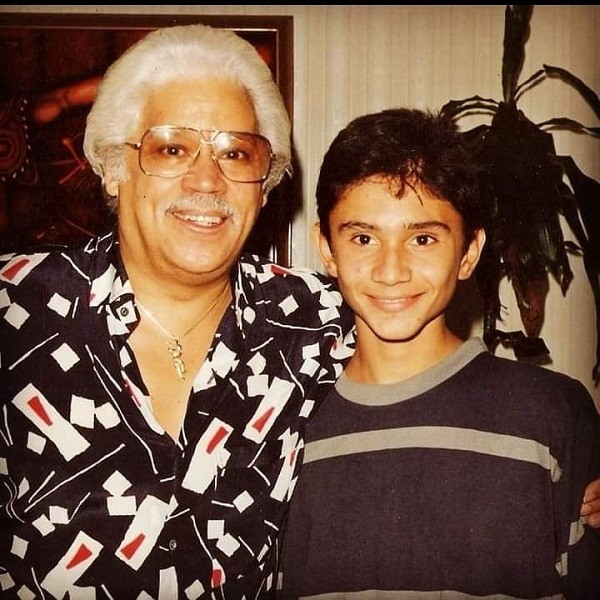
Johnny Pacheco and Carlos Molina Jr.

He also managed to form the same relationship with several well-known singers, some of whom write the foreword for El Legado such as Willie Rosario, Andy Montañez and Papo Lucca. From the very beginning, the three luminaries maintained a very close relationship with the museum and did not hesitate to participate in the text when asked to do so.

“El Legado” tells completely true stories

The book is already on sale at the Museo de La Salsa, but it can also be found on Amazon, so anyone who wishes to read some of the most important salsa stories ust has to order their copy and enjoy everything the material has to offer.

Molina Jr. also commented that he still expects many more copies of the book to be printed and made available at “la Red de Bibliotecas Públicas de Cali”.

Celia Cruz and Carlos Molina Jr.

        By Johnny Cruz, ISM Correspondents, New York, New York City

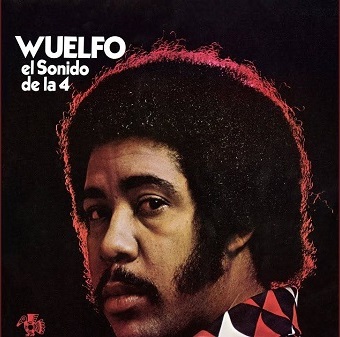
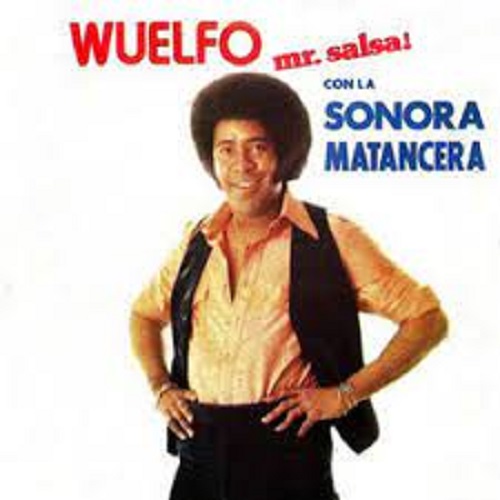
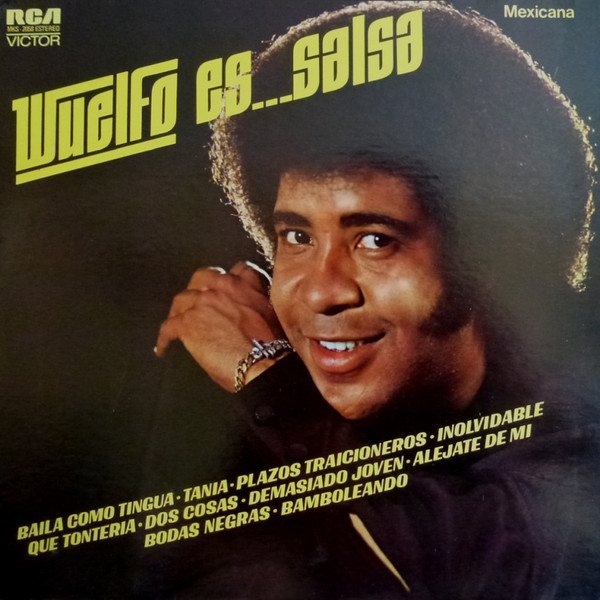
Wuelfo Gutiérrez López was a brilliant Sonero, “El Ultimo de los Matanceros”

Wuelfo Huergo Gutiérrez López, son of Wuelfo the sailor, was born in Santiago de Las Vegas, Cuba on September 23, 1942.

The eldest of three brothers, he was from a very young age an enthusiast of dancing, music and singing.

On May 31, 2005, Wuelfo Gutiérrez López “El Ultimo de los Matanceros” passed away.

He was a brilliant Sonero of outstanding participation with “La Sonora Matancera”, Orquesta de Javier Vásquez, “Orquesta Harlow”, and his own group, which he founded in Mexico after settling in this country.

He gave as much luster to his small homeland as to the big one: in the 70’s he was the singer of the famous “Sonora Matancera”, the pioneer of the Cuban ensembles.

At the end of the 50’s he organized together with three other coterráneos, Juan Luis Cobo, Manolito Santos, and Rolando (Rolo, E.P.D.) González, a quartet called “The Fraterns” (Los Fraternos), in the style of the American school of famous quartets like “The Platters”, “The Drifters”, “Frankie Lymon and the Teenagers”, and others that marked a guideline in the history of “Rock and Roll” and the so-called “Doo Wop”, which is a choral sound characteristic of these groups of the decades of the 50s and 60s.

Around 1958, the group appeared in the well-known José Antonio Alonso’s program of the then powerful Cuban television, which was a continuity of “La Corte Suprema del Arte” of the Cuban radio, initiated in 1938, from where great figures of the Cuban music came out. Substantial changes took place in our country and soon after “Rock and Roll”, at least in Cuba, fell into silence.

Wuelfo left Cuba in mid-1961. I did not see him again (although I always knew about him through his brothers Juan and Gabriel) until 1979, when he returned to visit his native land.

Always with the same sympathy and friendly and popular simplicity that characterized him.

At that time he had already been with “La Sonora Matancera”; the great singer Roberto Torres, “El Güinero Mayor”, who was leaving his place in the Sonora to form his own group, introduced him to the director Rogelio Martinez, who accepted him immediately.

He remained with La Sonora from 1973 to 1976, with which he visited the U.S.A., Mexico and most of Latin America. He recorded, among sones and guarachas, 20 numbers of diverse musical authors, among them: “Anacaona”, by Tite Curet Alonso; “A Burujón Puñao”, by José Carbó Menéndez; “Así Se Compone Un Son”, by Ismael Miranda; “Muñeco Viajero”, by Carlos and Mario Rigual; and “El Chivo”, by our late compoblano Vinicio Gonzaléz, one of our santiagueras glories, among other authors.

When he left La Sonora due to disagreements with Don Rogelio, he settled definitively in Mexico, which became his second homeland.

In Mexico City he formed his own group, which he named “Sonora Las Vegas”, alluding to the person who made him known as a singer and gave him celebrity, and to his hometown, therefore Las Vegas.

He began to be called “Mister Salsa” working in radio, television and cabarets. He loved Mexico very much; in an interview he said: “because the people are tasty and because I feel at home here”.

In Mexico he married Miss Araceli Zoreda Pérez, from whose marriage there were no children; the union was interrupted by Araceli’s death several years later.

The year 1989 marked the 65th anniversary of the founding of “La Tuna Liberal”, among other names, which achieved notoriety in Cuba and internationally under the name of Sonora Matancera. So that this date would not be overlooked, the notable Puerto Rican journalist, broadcaster and producer Gilda Mirós had the happy initiative to gather all the singers alive at that time who had left their art with La Sonora Matancera.

The event was to be held in New York City. Wuelfo was there singing “Anacaona”, together with a true constellation of stars: Vicentico Valdés, Yayo El Indio, Celio Gonzaléz, Nelson Pinedo, Carlos Argentino, Bobby Capó, Alberto Beltrán, Leo Marini, Albertico Pérez, Roberto Torres, Jorge Maldonado, Daniel Santos, and the greatest female voice Cuba has ever produced: Celia Cruz.

In July 1995 I met my friend again, when Wuelfo arrived from Mexico invited to the celebration of our patron saint, Santiago Apostle, in the halls of the former Radisson Hotel in Miami. Among those present sang Amado Herrera (Maninito), José Antonio García (Chamaco), and Wuelfo. All the santiagueros present recognized our values; among them were Wuelfo Sr. and other close relatives.

I did not see him again until 1999, when a group of santiagueros friends welcomed him to Miami, where he intended to settle down. It was not possible.

Wuelfo’s last recording?

He had spoken to me about sending me his recordings with the idea of getting them to some radio stations so that they would know him, and in turn, to some places where records were sold to see if I would have the opportunity to play his recordings, among them the 14 LPs he had recorded and possibly his last recording, a CD called “Wuelfo Cumbia Del Gato Volador”, which he kindly sent me from Mexico.

He spent long periods of time in Veracruz, where he felt at home and his performances were strongly applauded. To such an extent that the government of the state of Veracruz, in November 2003, offered him a just tribute in the framework of the Festival del Son (first photo, above right). On that occasion he performed with his “Sonora Las Vegas” at the La Reforma Theater and the Atarazanas Cultural Center.

Wuelfo, Lázaro Reutilio Domínguez (son of Celina González and Reutilio Domínguez), and the author meet by chance at the “Palacio de los Jugos” on 8th Street and 143rd Avenue in Southwest Miami.

Like many other singers, he dreamed of spending the rest of his life singing; he wanted to die on the stage. Apparently an oversight in his health was complicated by prostate cancer. We would talk on the phone from time to time and he would show me that he was very optimistic, but he was not. In 2004 he underwent intensive treatment at the Oncology Hospital of the Centro Medico Nacional Siglo XXI in Mexico City, but the initial illness led to pulmonary complications which in turn caused a stroke that took his life on May 31, 2005.

According to a friend who assisted him until the last hour, it was very sad to see how his life was passing away.

The Sindicato Único de Trabajadores de la Música had been carrying out activities to collect funds to help him financially.

He was buried in the American Pantheon at 11:00 a.m. on June 1, 2005.

It seems to me very fair to remember this value of ours six years after his departure, remaining in our local history along with other celebrities that also in due time it will be necessary to give them the merit they deserve, not only for future generations to know them, but at present there are coterráneos that for lack of the required information, and against our will, do not know anything about them.

This small biography is not even remotely all that can be known and said of Wuelfo, because there are stages unknown by the writer, who urges those who know and wish, to make their contribution to know much more of our singer friend, who had the honor of going down in posterity, perhaps without him thinking about it, for having sung with that great musical group that was and is La Sonora Matancera.

This work would not have been possible if he had not had the help of Dr. Héctor Ramírez Bedoya. Héctor Ramírez Bedoya, Colombian anesthesiologist who helps many to mitigate their ills through surgery in his native Medellín, but who as a musicographer, and from the presidency of the Corporación Club Sonora Matancera de Antioquia, has had the merit of having written the “Historia de la Sonora Matancera y sus Estrellas”, a book of the same title published in 1996, which is considered the greatest work ever written about the dean of the Cuban ensembles.


Home

  • « Go to Previous Page
  • Page 1
  • Interim pages omitted …
  • Page 43
  • Page 44
  • Page 45
  • Page 46
  • Page 47
  • Interim pages omitted …
  • Page 58
  • Go to Next Page »

International Salsa Magazine (ISM) is a monthly publication about Salsa activities around the world, that has been publishing since 2007. It is a world network of volunteers coordinated by ISM Magazine. We are working to strengthen all the events by working together.