• Skip to primary navigation
  • Skip to main content

International Salsa Magazine

  • HOME
  • Previous editions
    • 2026
      • ISM / March 2026
      • ISM / February 2026
      • ISM / January 2026
    • 2025
      • ISM / December 2025
      • ISM / November 2025
      • ISM / October 2025
      • ISM / September 2025
      • ISM / August 2025
      • ISM / July 2025
      • ISM / June 2025
      • ISM / May2025
      • ISM / April 2025
      • ISM / March 2025
      • ISM / February 2025
      • ISM / January 2025
    • 2024
      • ISM / December 2024
      • ISM / November 2024
      • ISM / October 2024
      • ISM / September 2024
      • ISM / August 2024
      • ISM / July 2024
      • ISM / June 2024
      • ISM / May 2024
      • ISM / April 2024
      • ISM / March 2024
      • ISM / February 2024
      • ISM / January 2024
    • 2023
      • ISM / December 2023
      • ISM / November 2023
      • ISM / October 2023
      • ISM – September 2023
      • ISM – August 2023
      • ISM July 2023
      • ISM Edition June 2023
      • ISM – May 2023
      • ISM April 2023
      • ISM March 2023
      • ISM February 2023
      • ISM January 2023
    • 2022
      • ISM December 2022
      • ISM November 2022
      • ISM October 2022
      • ISM September 2022
      • ISM August 2022
      • ISM July 2022
      • ISM June 2022
      • ISM May 2022
      • ISM February 2022
      • ISM January 2022
    • 2021
      • ISM December 2021
      • ISM November 2021
      • ISM October – 2021
      • ISM September 2021
      • ISM August 2021
      • ISM July 2021
      • ISM May 2021
      • ISM April 2021
      • ISM June 2021
      • ISM March 2021
      • ISM February 2021
      • ISM January 2021
    • 2020
      • ISM December 2020
      • ISM November 2020
      • ISM October 2020
      • ISM September 2020
      • ISM August 2020
      • ISM July 2020
      • ISM June 2020
      • ISM May 2020
      • ISM April 2020
      • ISM March 2020
      • ISM February 2020
      • ISM January 2020
    • 2019
      • ISM December 2019
      • ISM November 2019
      • ISM October 2019
      • ISM Septembre 2019
      • ISM August 2019
      • ISM July 2019
      • ISM June 2019
  • Download Salsa App
    • Android
    • Apple
  • Spanish

Search Results for: Bar

Where To Go Dancing Salsa In Paris?

We bring you the 5 best Salsa clubs and events so you don’t miss any opportunity to continue dancing in the city of lights

Every year is a unique opportunity to make Salsa resound throughout the city of freedom and lights. Here, several prestigious places monthly immerse attendees in a Latin atmosphere. It is why in this August edition, we will take you on a journey into Latin American culture with a dream destination of Salsera fun in Paris.

La Pachanga
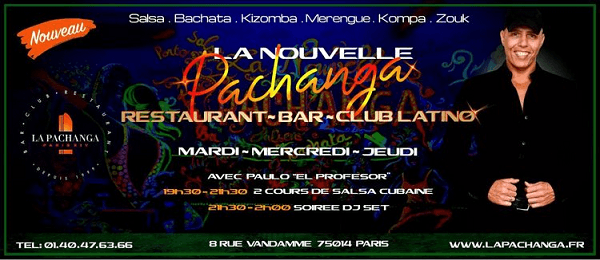
La Pachanga derives its name from the Cuban rhythm of the 60s

The Bar/Restaurant/Club La Pachanga https://www.lapachanga.fr/ is a place of reference for Salsa lovers, and is located near the Eiffel Tower at 8, rue Vandamme 75014. This club is designed in a cozy and Caribbean style. At the bar, you can enjoy various types of cocktails, Mojitos, Caipirinha, or Cuba Libre as well as a Latin American menu at the restaurant.

At the Pachanga, you can attend classes for beginner and intermediate levels with different instructors who will make you live two hours of Salsa Cubana and Salsa Puertorriqueña dance from Tuesday to Thursday from 7:30 PM to 9:30 PM continuing with social dancing and DJ set until 2 AM. On Saturdays, there are also two-hour Salsa lessons at the same time, and La Pachanga closes its doors on this day at 5 AM. The cost of entry is 12 euros.

Le Balajo

You must present a Vaccination Certificate and an identity document to access the club.

Le Balajo nightclub https://www.balajo.fr/ open since 1936 brings Salsa and Bachata classes every Tuesday from 7:30 PM to 2 AM for beginners and intermediate-level dancers. Amateur Salsa lessons start at 7:30 PM, while Intermediate Salsa lessons begin at 8:30 PM, followed by a Latin party hosted by DJ Karim until 2 AM.

The fees to attend this weekly event of joy and good humor are €8 and include non-alcoholic drinks and €12 if the beverage is alcoholic, but if you want to enjoy the bar and its atmosphere, the entrance fee is €5. The address is 9 Rue de Lappe, 75011 Paris, France.

Cubana Café

It is a restaurant, bar, and smokehouse for cigar enthusiasts with a quiet atmosphere in the evening.

The Cubana Café Bar/Restaurant https://www.cubanacafe.com/ is a cozy, exotic place with a 100% Cuban atmosphere. Every weekend they organize Latin Nights until dawn. Starting on Fridays and Saturdays with a DJ set from 9 PM to 5 AM and ending on Sundays from 12:30 PM to 3 AM, if you consume one of the three traditional Cuban dishes with a cocktail with or without alcohol, you will only pay €17.90. Cubana Café opened its doors 22 years ago and is located at 47 Rue vavin in the 6th district. Decoration made in Cuba, warm colors, Salsa, and a dynamic atmosphere at night await you at Cubana Café.

Pachamama

The decoration is influenced by the regions of South America with glamorous and bohemian touches that converge.

Pachamama Parisian Restaurant/ Bar/ Nightclub https://www.pachamama-paris.com/index.php/en/home-alt-2/ is located at 46-48 rue du Faubourg Saint Antoine, 75012, Paris, in a historic building from the 19th century designed by Gustave Eiffel in the neo-vintage colonial style. It has three levels inspired by the myths and sacred symbols of the pre-Columbian peoples influenced by the Latin traditions of the New World. It is open from Thursday to Saturday from 8 PM to 5 AM, with resident DJs on stage lighting up the dance floor (Lower Floor) with harmonious mixes between Latin Music, Soul, Pop, and Deep House.

La Terrasse Latino
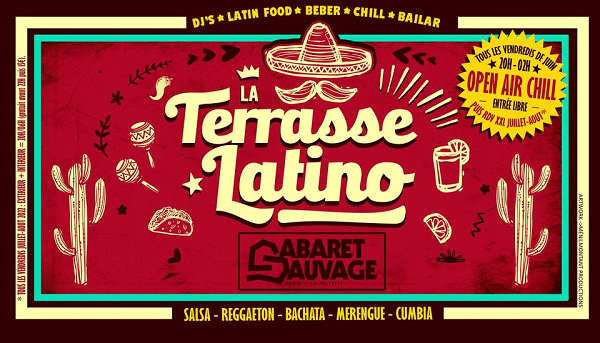
Around 1,000 lovers from the Latin American continent enjoy gathering at the Terrasse every Friday in the summer.

The largest open-air Latino gathering in Paris continues on the terrace of Cabaret Sauvage this summer in August. La Terrasse Latino https://www.cabaretsauvage.com/work/la-terrasse-latino-du-cabaret-sauvage-3  located at Parc de la Villette 59 Boulevard Macdonald, 75019 will offer Salsa Caleña lessons every Friday with instructor Francy Barahona de Calisabor (8:45 PM – 9:30 PM). It will also have Latin American cuisine, and DJ El Dany, DJ Nybra, DJ Barbas and DJ Capitán Cumbia will be present until 5 AM. Admission is free from 8 PM to 10 PM and after that it will cost €15 per box office.

Paris Salsa Weekend 

Paris Salsa Weekend is organized by passionate DJs and followed by a large Salsera community.

The capital of France is a dream destination for Salsa dancers. Here, magic happens, that’s why in this edition, we bring you three regular Salsa parties in a row that will take place during Paris Salsa Weekend 2022, https://www.lesalsaclub.com/psw from September 9th to September 11th. So, don’t miss the opportunity to attend because they are rarely held.

Sal’Sounds 70’S Party in Paris. You will hear Salsa only on Vinyl by DJ Mulato on Friday, September 9th from 9 PM to 2 AM. The address is Salle Colonne, 94 Bd Auguste Blanqui, 75013, Paris, and admission is €13. Party strictly on vinyl is the sound that dictates the law!

LeSalsa’Club Party. You will dance at the biggest monthly Salsa social party on September 10th from 3 PM to 8 PM. You can meet national and international instructors specializing in On1 and On2 styles here. LeSalsa’Club will take place in the 13th arrondissement, at the Maison des Associations de Solidarité (MAS), 10-18 rue des Terres-au-Cure, 75013 Paris. The cost of admission is €13.

Sunday Night – O’Sulli Sauce. The Paris Salsa Weekend culminates with the party on the night of Sunday, September 12th at O’Sullivans By The Mill located at 92 Bd de Clichy from 9 PM to 2 AM, and the ticket will have the same value as the previous ones.

Home

Businessman, producer and broadcaster Jimmy Castro promotes his Ritmo Caribe Promotions Radio

Jimmy Castro and his radio station Ritmo Caribe Promotions Radio

We had the pleasure of interviewing businessman, producer and broadcaster Jimmy Castro, who started his radio show “El Toque Latino” on radio station WTCY 1400 AM from 1998 to 2002 in Harrisburg, Pennsylvania. He then worked as a producer on “The Latin Jazz & Salsa Show” in Richmond, Virginia on station WCLM 1340 AM between the years 2008-2014. He eventually launched his own online Radio station Ritmo Caribe Promotions Radio in 2018 through the link www.ritmocaribepromotionsradio.com. Here, listeners can find salsa, Latin jazz and Afro-Cuban music.

Producer, promoter, and broadcaster Jimmy Castro

Here is our conversation:

You founded Ritmo Caribe Promotions in 1998. What made you found this company and why focus on setting up festivals and concerts?

I started the company as a DJ Record Pool called Caribbean Rhythms Record Pool in 1996 in Harrisburg Pennsylvania. I began meeting many of the artists that I was receiving music from, who began asking me if I would bring them to Harrisburg, Pennsylvania to perform. That’s when I changed the company name to Ritmo Caribe Promotions, and produced many concerts and festivals there featuring artists to include Larry Harlow, Tito Puente, Cano Estremera, Hector Tricoche, Van Lester, Miosotis, Edgar Joel, Yomo Toro, Eddie Palmieri, and more.

Why focus specifically on salsa, Latin jazz and Afro-Cuban music?

I used to promote more genres when I began such as Merengue, Bachata, Reggaeton, and Mexican but as the years went on it began getting more difficult because I was receiving so much music but I had a limited staff to and wouldn’t be able to focus on so many artists. I decided to limit it to the genres I had the most experience in.

Jimmy Castro while leading his old show “El Toque Latino”

I knew that Ritmo Caribe Promotions has co-produced songs by several well-known artists. Let’s talk a bit about your role as producer and record label.

Throughout the years, I have always dreamed of producing a Salsa song with my company. In 2020, I had the opportunity to co-produce my first Salsa song with JA Creations entitled “Mariana” by Colombian Salsa vocalist Jaime Andres featuring Frankie Vazquez “El Sonero del Barrio!” Since then I have co-produced 3 more Salsa tunes, “Nuestro Camino” by Leonardo Garcia featuring country vocalist Cat Beach, Max Rosado, and special guest Nestor Torres, “Mi Motivo” by Leonardo Garcia featuring Grammy nominated Miss YaYa, and “Lo Afortunado Que Soy” by William Mendoza’s Latin Heartbeat Orchestra featuring Cuban vocalist Amauri Menocal. Finally, on August 15, 2022 I will be releasing my first Salsa tune as Executive Producer entitled “Historia de Un Amor” featuring a vocalist from The Netherlands, Julie Huard.

What leads you to launch your own online radio station in 2018?

I started in radio broadcasting in 1997 with my own radio show called “El Toque Latino” on a commercial radio station, WTCY 1400 AM in Harrisburg, Pennsylvania. I was on the air for 5 years. I then moved to Richmond, Virginia where I worked as a producer on The Latin Jazz & Salsa Show on WCLM 1450 AM / WHAP 1340 AM for 8 years. I was also the entertainment producer for 10 years for the annual Latin Jazz & Salsa Festival, with The 15th Annual Latin Jazz & Salsa Festival scheduled this year on August 27th, in which I will be bringing headline artist Herman Olivera.

Finally, in 2018, I no longer was interested in working on everybody else’s radio station, and decided to launch my own 24/7 internet radio station, Ritmo Caribe Promotions Radio, where I am able to program exactly the way I want to. www.ritmocaribepromotionsradio.com.

Jimmy Castro with the “King of Timbales” Tito Puente

You have also produced theatrical plays and film productions. Give us more details about that.

The play I am most proud of was produced by my company Ritmo Caribe Promotions and Yamile Music (Los Angeles) entitled “Melena: A Cultural & Musical Journey into my Afro-Cuban Roots” which was the true story of Afro-Cuban latina percussionist Melena, and her journey from Cuba and becoming one of the best female percussionist in the world. You could check out the play in 3 parts on YouTube by searching for “Melena: A Cultural & Musical Journey into my Afro-Cuban Roots (Part 1, 2, and 3).”

You also receive music in mp3 format from the audience to place on the station. What basis do you have for choosing between the tracks you receive?

I accept music from artists from around the world, again Salsa, Latin Jazz, and Afro-Cuban music, and I listen to all the music I receive and focus on the quality of the production, ensuring I receive mp3/wave along with the album cover image, and last but not least the music has to be GOOD! I also send it to many Salsa dancers who I am connected with to get their opinion on the tune.

What you can say about your show “El Toque Latino”? How has this show changed with the passage of time?

I mentioned “El Toque Latino” in a question above, however, this show is no longer on the air. Now, it is only “Ritmo Caribe Promotions Radio” 24/7 at www.ritmocaribepromotionsradio.com.

Jimmy Castro with Puerto Rican salsa singer Cano Estremera


Home

Salsa En La Web also promotes Latin music around the world

Salsa En La Web

As our dear readers know, International Salsa Magazine is dedicated to promoting Latin music artists, especially those who sing salsa, but we also believe that it is of extremely importance to promote platforms that, like us, seek to spread this wonderful and colorful music everywhere.

Salsa En La Web is a salsa community on the internet, so there are members from all over the world. This site is devoted to promoting and spreading everything related to salsa and Latin music so that the new generations get to know the musical idols of their parents and grandparents. They also want this musical genre to keep growing and never go out.

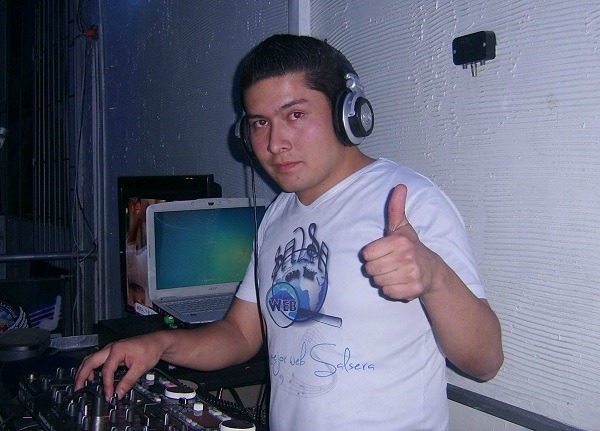
DJ Danny Salsa, director and programmer of Salsa En La Web

Interview

Today, we talked to the administrators of the website Salsa En La Web, which is devoted to promoting salsa worldwide, and our questions were as follows:

Who are we talking to? Please provide your name, occupation and direct or indirect relashionship with salsa.

You’re talking to DANNY SALSA, director and programmer of SALSAENLAWEB. I am also a chemist and DJ by profession. – Collector of romantic salsa.

According to what I read on your Facebook page, you have spread salsa culture at the global level for 11 years. How did everything start?

In 2011 we started sharing music on a blog where we spread LP, CD, ARTISTS, GROUPS, ORCHESTRAS. After that, we also shared gatherings of collectors and salsa events in Bogota.

To date, we have not failed to spread salsa culture that through this beautiful music, we want to make a better culture.

DJ Danny Salsa loves salsa and wants to promote it

What has motivated you to create a website of this style? Why are salsa and Latin music so important to you?

First of all, the taste for salsa music started from I was 13 years. From a very young age, I had contact with computers after school. In my spare time, I created my first blog and, after knowing the world of the internet, I created this website of salsa.

Salsa has brought me great friends, moments, live artists since I programme salsa at bars. I saw the happiness dancing and sharing after entering the world of collecting your albums for your own taste brings.

What part of the world is the largest part of your audience from?

Colombia is our biggest audience with listeners who always listen to our programming at any time of the day and from any time of the day and from any part of the planet where there is an Internet connection.

According to the map on your website, many members of your audience are in Europe and the southern United States. Where are you located? Are you in different countries?

The website is free on the platform www.salsaenlaweb.com.co and from the APP without any cost, listeners in these countries can listen to us from these countries send us their good comments and this motivates us to programme the best salsa music through our . We are in Bogota, Colombia but we have listeners all over the world.

In addition to salsa, what other musical genres do you promote?

We don’t do dissemination of other genres because we are select in salsa.

What goals have you set in the long run?

We want to be the salsa website of reference for its good content in the whole world and have great sponsors that allow us to keep working in favor of salsa.

Logo of Salsa En La Web


Home

This is Roger Danilo Páiz Pérez from Danilo Y Su Orquesta Universal

Why is he called Danilo?

We will start a conversation with bandleader, percussionist, and singer Roger Danilo Páiz Pérez. Pleased to meet you, how are you doing?

I’m fine thanks, Karina. Sitting here and ready to be interviewed by your magazine. I have a lot of information about what has happened in my life being a musician here in the Bay Area since the 70’s.

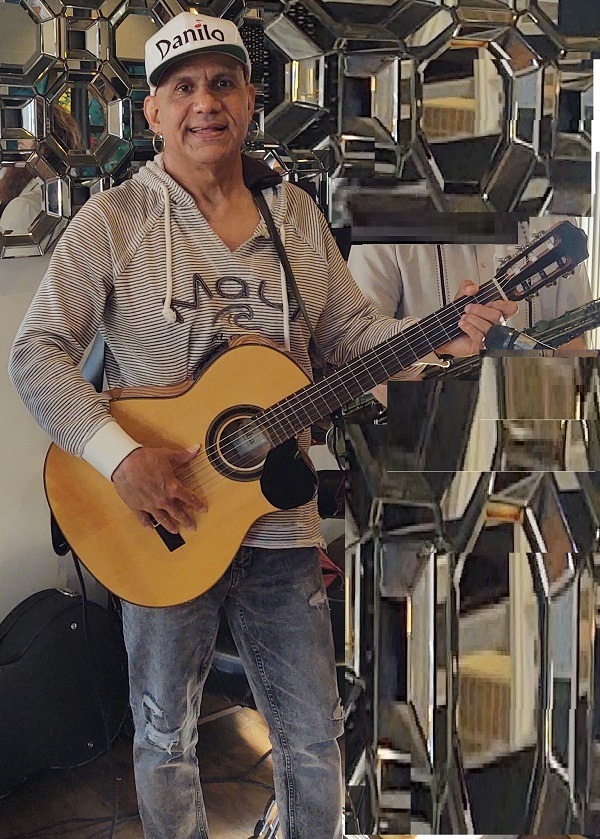
Danilo on guitar at one of his frequent restaurant performances

You are Francisco Pancho Perez’s grandson. Did your grandfather serve as inspiration for the path you would take in music?

Definitely he did. I remember being about four or five years old when I used to hear my grandfather play with his big band, which was composed of 15 or 14 musicians. I always listened to them practicing in our house and started dancing, so my grandfather used to call me cha cha chá. It was a great inspiration for me.

He played music similar to American jazz, and that’s where the inspiration for the music I play today comes from. The salsa that I write is inspired precisely by that kind of jazz.

Where does the name Danilo come from? Also, why is your orchestra called Danilo Y Su Orquesta Universal?

I have to make it clear that Danilo is my middle name since I was born. This is not a nickname as many believe. Some people even think that I have changed my name, but I didn’t. Roger Danilo Páiz Perez has always been my name.

Everyone called me Roger Páiz in the past, that is to say, people called me by my first and last name. In fact, when I played with Rubén Blades in 1989, the album we recorded has me in the credits as Roger Páiz. But when I founded my own orchestra in the 1990s, I thought Danilo was better suited to Latin music, so I started using my middle name to call my orchestra Danilo Y Su Orquesta Universal.

The word universal comes from the fact that I am a Buddhist. I practice the religion of Nichiren Daishonin (monk in Buddhism from Japan in the 13th century and founder of the branch of Nichiren Buddhism) for more than 30 years. That word is widely used in the Buddhist scriptures, and I am very involved in that.

Roger Páiz getting ready to hit with Josh Jones’ band

Your country of origin is Nicaragua. Is Nicaraguan salsa similar to Californian salsa? Are they different? Do you combine them?

Since I was very young, I listened to a lot of Cuban orchestras. I remember my dad tuning in to Celia Cruz, La Sonora Matanzera, among others. From that experience, I picked up all those things since childhood.

Here in the United States, the style was much more modernized. However, I grew up listening to El Gran Combo de Puerto Rico and many other orchestras in the ‘60s and ‘70s. My biggest inspirations were Héctor Lavoe, Oscar De León, Rafael de Jesús, Cheo Feliciano and many others from those years. I paid a lot of attention to how they sang and the melodies that they used.

What Danilo has learned from his musical references

You have made contact with Latin music stars such as Ray Barretto, Rubén Blades, Benny Velarde Y Su Super Combo, Andy Narell, Ray Obiedo, Cheo Feliciano, Oscar De León and many others. What did you learn from all these musical references?

For example, I shared a gig with Cheo Feliciano in Puerto Rico while I was with Rubén at a concert. (Luis Enrique was actually at that concert as well.) Cheo taught me how to phrase with the clave, since this is a very important detail in singing Salsa.

In the case of Héctor Lavoe, I learned a lot from the melodic part. When he sang, the melody was very interesting and appealed to me a lot.

Another singer I liked a lot was Rafael de Jesús, because his style tended to sound like jazz. Sometimes he sang some lines that sounded very jazzy, but he never lost his style as a Salsa singer. That’s one of the main things I liked about him.

Another singer I liked a lot was Rafael de Jesús because his style tended to sound like jazz. Sometimes he sang some lines that sounded very jazzy, but he never lost his condition as a salsa singer. That’s one of the main things I liked about him.

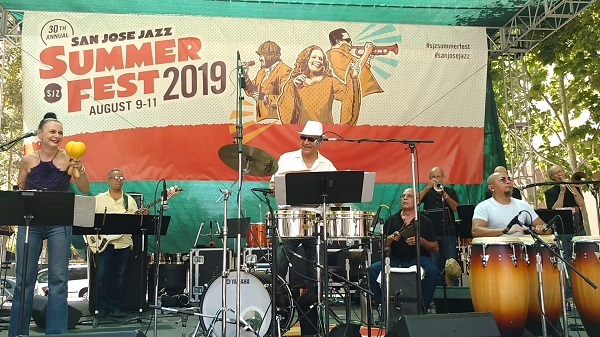
Danilo y Su Orquesta Universal at the San Jose Jazz Summer Fest 2019

Did he receive academic training in music?

I took classes  in Oakland, California, learning music theory, piano, singing, and much more. These studies helped me a lot to better prepare myself musically speaking.

Studying music is important because it enhances the way you perform, sing, and play on stage. That’s when people can tell whether you are a musician who has studied and analyzed music. I’ve met musicians who learned everything by ear and they never progress to the next level.

Of course, there were also things I learned on the stage, in the studio and in rehearsals. I’ve unified all this knowledge to do my job to the best of my ability.

I saw that you have some dates to perform in the Bay Area and other places, can you tell us a little bit about that?

In 1995, I got the opportunity to take a group to Singapore (to be the house band at the Hyatt Regency Hotel). What I did was to find the best six musicians who could play the music I was asked to play. We rehearsed, traveled to Singapore, and stayed there about three months, all expenses paid. It was an amazing experience and I was honored to present my music in that country.

Danilo with Tito Puente, Jr.

What about your current performances?

We just played at La Peña here in Berkeley. It was really good, a lot of people showed up there and they recorded the whole show. Fans sent me some videos as well, so I have to start editing them.

We also played at The Ramp, El Rio, The Turf Club, Kimbara, among others. Coming up, we will be playing at the Cigar Bar.

Let’s talk about your latest album Perseverando.

I decided to call this album Perseverando because of my experience of overcoming the difficulties of maintaining a music career.

Turning to Buddhism, the word perseverando is very important, because life puts barriers in your way and you have to persevere to overcome them. It was common for record labels to say that they were saturated and couldn’t sign me, but I kept writing and recording original music despite the difficulties. The first album is called Vivencias and the second one is called Avanzando. They are titles that have had a lot to do with my life experiences.

I made a video for one of the songs on this álbum, Rumberos de la Bahia, which is on YouTube: https://youtu.be/z3E7K_5SLJo

What other projects do you have pending?

I’m thinking about putting out an album that will be a combination of songs that have not been released yet with some remixes of songs on my albums. Although a dream of mine is to be nominated for a Grammy, that is not why I créate music. Music is my life and my passion.

Cover of the album Perseverando


Home

Milano Latin Festival Will Have Great Salsa Stars

The Lombardy Metropolis will continue impregnated with Latin American Culture until August

Milano Latin Festival opens its doors at 5:30 PM, and concerts start at 9:30 PM

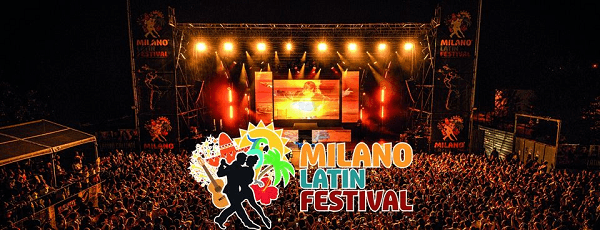
The most important annual festival of the summer in northern Italy dedicated to celebrating Latin American culture will continue bringing Salsera fun to the 190,000 visitors of the Foro Mediolanum in the town of Assago located in ASSAGO Viale Milano Fiori parking Metropolitan 20100 Assago, Lombardy, Italy.

Milano Latin Festival founded almost a decade ago (2013), maintains the format of its beginnings with concerts by artists with a trajectory in tropical genres, urban rhythms, and traditional music, tasting of Latin American cuisine, art exhibition, and sale of crafts with a wide variety of Natural ethnic products for health and nutrition with organic and fair trade. Likewise, you can find the Salone Delle Nazioni (Nations Hall), especially for Diplomatic Missions of Latin America, organizations, and institutions.

This reopening that began on June 9th and will end on August 16th puts the magnifying glass on the public that loves Latin dances, residents, tourists, experts, connoisseurs, or simply curious about Latin rhythms after two years of cessation due to the Covid-19 pandemic.

This edition has featured presentations by artists from the Tropical genre such as Marc Anthony (June 10th), Frank Reyes (June 11th), and Habana D’ Primera (June 12th).

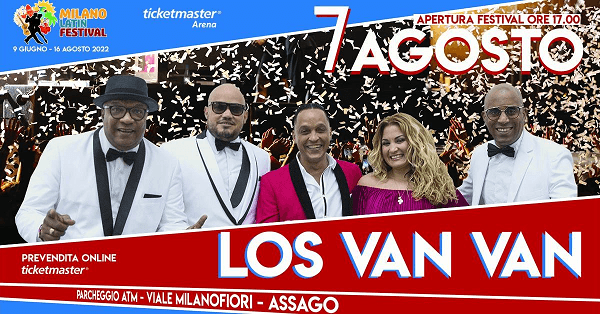
The Van Van derives their name from the jargon of the cane collectors to say Come on, Come on.

This month brings Prince Royce (July 1st) and continues with the presentation in a single evening of Maelo Ruíz, Alex Magan, and David Pabón with Salsenato Vol. 2 (July 2nd). Oscar D’ León (July 14th), Tony Vega (July 23rd), Tony Succar (July 30th), and ends on August 7th with the performance of the most prolific group in Cuba, Los Van Van.

This prolific Cuban orchestra is still in force with its peculiar sound. “Their texts are considered by many to be true chronicles of Cuban society. They have an extensive recording career with more than 40 albums, many of them nominated and awarded. They obtained a Grammy (2000) with the production “Permiso que llegó Van Van” and were nominated with the album “Fantasia”, a tribute to Juan Formell in 2017”. Fragment extracted from the Milano Latin Festival website. https://www.milanolatinfestival.it/

For the Salone Delle Nazioni program, there will be a rich calendar of cultural events on the occasion of paying tribute to the various countries with the celebration of their national holidays. This tribute begins with the Day dedicated to the second generation: A challenge for everyone! (July 1st). During this celebration, there will be reflections and testimonies of the “New Italians” with themes inspired by the encyclicals of Pope Francisco, Laudato Si, and Fratelli Tutti. In the same way, this tribute to each country will continue with Los Kunas de Panamá (July 4th), the national day of the Bolivarian Republic of Venezuela (July 5th), and then there will be the pictographic exhibition of the Environment in tribute to the Holy Father Pope Francis from July 6th to 8th. The celebration of the national days of Argentina, Peru, Colombia, Cuba, El Salvador, and Bolivia will continue.

So, July is the best month to vacation in Milan thanks to the most complete Festival that celebrates Latin American culture with more than five honored countries, concerts by internationally renowned artists, dance schools with great instructors, performances by folk groups and DJs, exhibitions photo booths, ethnic restaurants, and a street food area, musical plazas, cocktail bars, and a concert area. Milano Latin Festival is the largest three-month event celebrating Latin American culture in Italy.

  • « Go to Previous Page
  • Page 1
  • Interim pages omitted …
  • Page 116
  • Page 117
  • Page 118
  • Page 119
  • Page 120
  • Interim pages omitted …
  • Page 165
  • Go to Next Page »

International Salsa Magazine (ISM) is a monthly publication about Salsa activities around the world, that has been publishing since 2007. It is a world network of volunteers coordinated by ISM Magazine. We are working to strengthen all the events by working together.