• Skip to primary navigation
  • Skip to main content

International Salsa Magazine

  • HOME
  • Previous editions
    • 2026
      • ISM / March 2026
      • ISM / February 2026
      • ISM / January 2026
    • 2025
      • ISM / December 2025
      • ISM / November 2025
      • ISM / October 2025
      • ISM / September 2025
      • ISM / August 2025
      • ISM / July 2025
      • ISM / June 2025
      • ISM / May2025
      • ISM / April 2025
      • ISM / March 2025
      • ISM / February 2025
      • ISM / January 2025
    • 2024
      • ISM / December 2024
      • ISM / November 2024
      • ISM / October 2024
      • ISM / September 2024
      • ISM / August 2024
      • ISM / July 2024
      • ISM / June 2024
      • ISM / May 2024
      • ISM / April 2024
      • ISM / March 2024
      • ISM / February 2024
      • ISM / January 2024
    • 2023
      • ISM / December 2023
      • ISM / November 2023
      • ISM / October 2023
      • ISM – September 2023
      • ISM – August 2023
      • ISM July 2023
      • ISM Edition June 2023
      • ISM – May 2023
      • ISM April 2023
      • ISM March 2023
      • ISM February 2023
      • ISM January 2023
    • 2022
      • ISM December 2022
      • ISM November 2022
      • ISM October 2022
      • ISM September 2022
      • ISM August 2022
      • ISM July 2022
      • ISM June 2022
      • ISM May 2022
      • ISM February 2022
      • ISM January 2022
    • 2021
      • ISM December 2021
      • ISM November 2021
      • ISM October – 2021
      • ISM September 2021
      • ISM August 2021
      • ISM July 2021
      • ISM May 2021
      • ISM April 2021
      • ISM June 2021
      • ISM March 2021
      • ISM February 2021
      • ISM January 2021
    • 2020
      • ISM December 2020
      • ISM November 2020
      • ISM October 2020
      • ISM September 2020
      • ISM August 2020
      • ISM July 2020
      • ISM June 2020
      • ISM May 2020
      • ISM April 2020
      • ISM March 2020
      • ISM February 2020
      • ISM January 2020
    • 2019
      • ISM December 2019
      • ISM November 2019
      • ISM October 2019
      • ISM Septembre 2019
      • ISM August 2019
      • ISM July 2019
      • ISM June 2019
  • Download Salsa App
    • Android
    • Apple
  • Spanish

Search Results for: Bar

Alberto Gonzalez talks about his book on Hector Lavoe and his experience with ‘‘El Jibarito de Ponce’’

As an artist, one of the most noble actions to be taken is to honor the great artists whose legacy inspired later generations, including those who pay homage to them today. Proof of this is the talented bandleader, composer, singer, and now author, Alberto González, whom we thank for sharing his story and various facets of his life with us, including his role as the author of a new book about “the singer of all singers,” Hector Lavoe. 
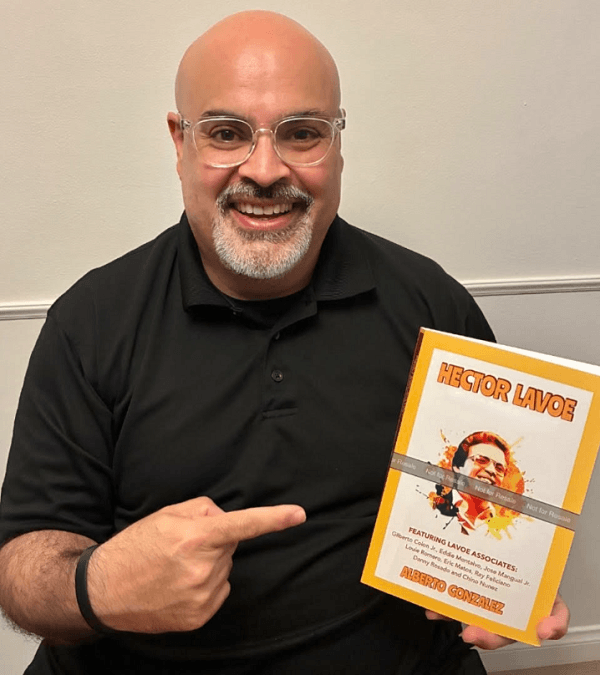
Alberto and his book on Hector
Author Alberto Gonzalez with a version of his book ”Hector Lavoe and Associates”

Alberto’s initial interest in music

Alberto’s initial interest in music began with an aunt from Puerto Rico who went to live with him and his parents in Chicago. She loved the music of Raphael and Sandro, so her nephew listened to them practically every day and ended up falling in love with their music and how they sang.

Little by little, Alberto began to learn their songs and was unknowingly taking his first steps toward becoming a professional singer. However, it did not stop there; he also listened to the trio music that his parents enjoyed and eventually to the salsa albums that his older brother began bringing to the house. Those salsa albums really caught Alberto’s attention.

Among the artists his brother listened to were Eddie Palmieri, La Sonora Ponceña, El Gran Combo de Puerto Rico, Willie Colón, and the one who would become his greatest inspiration, Héctor Lavoe.

Eventually, his brother became a professional trumpet player and played with various salsa orchestras in Chicago. Since he always heard Alberto singing songs at home, in 1979, he suggested that he audition for a new band of young salsa musicians his manager was putting together. For the audition, Alberto was tasked with learning and singing the popular Willie Colón and Héctor Lavoe song “Voso.”

Fortunately, his audition was a great success, and Alberto was asked to join La Típica Leal 79. The story behind the band’s name is interesting: Carlos Caribe Ruíz, the manager of the group, decided on the name Típica Leal because most of the members of his previous band, La Juventud Típica, decided one day to quit; they left him. For that reason, he decided to create a new band, and he made sure to add the word “Leal” (loyal in English) to the band’s name. His hope was that the new band, made up mostly of teenagers, would be loyal and not leave, just like the previous band did.

Sometime later, Alberto would go on to sing with a band called La Inspiración Latina, and he also worked briefly with Orquesta Yambo. In 2001, he moved to Los Angeles, where he began working with Johnny Polanco y Su Conjunto Amistad, becoming one of their main vocalists and traveling the world with them and the band.
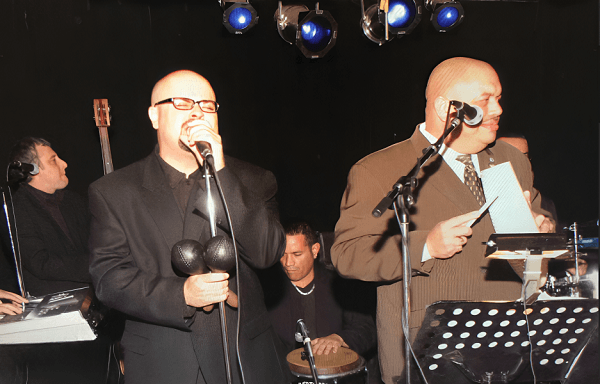
Alberto and Johnny Polanco
Alberto Gonzalez playing with Johnny Polanco Y Su Conjunto Amistad

Orquesta Salsa Caliente

When he left Johnny Polanco’s group, Alberto finally felt ready to form his own group, and that is how Orquesta Salsa Caliente was born. He has been leading the band for many years now and has even traveled with the band to Africa and Bermuda.

Over the past few years, Alberto has concentrated mainly on his work as an author. While he continues to perform, his primary focus has been on his debut book ‘‘Hector Lavoe and Associates.’’

Alberto’s Hector Lavoe Experience

In 1979, after auditioning and doing well with the song “Voso,” 15 year old Alberto officially became a member of La Tipica Leal 79.Caribe, the band’s manager, then asked him to learn a few more Hector Lavoe (and Willie Colon) songs. Since Hector was his favorite singer, he gladly learned the songs. Since his voice was somewhat similar to Hector’s, his bandmates began to affectionately call him “Baby Lavoe.”

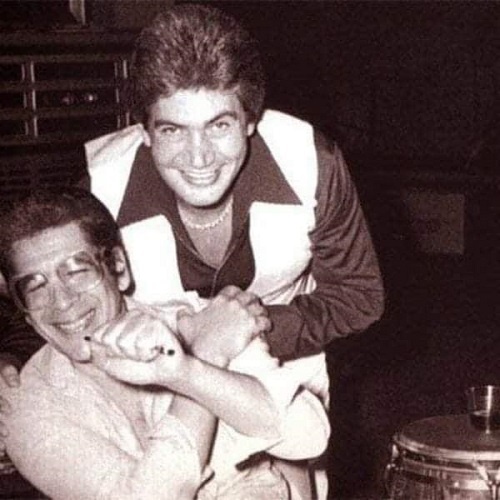
In the fall of that same year, Alberto learned that Héctor and his orchestra were going to be performing in Chicago. Once he found that out, he asked Caribe to please take him to see Héctor, and, if at all possible, to introduce him to Héctor. Thankfully, he did get to go to that show, and he did meet Héctor. It was during that show, and during one of Héctor’s breaks, that he was able to take a photo with his favorite singer. Alberto still cherishes that photo to this very day. That night, he realized that Héctor was a “man of the people” due to his humility and how he treated others. The photo and his experience with Héctor were some of the main reasons why he decided to write a book about Lavoe. Over the years, many have criticized Héctor and have focused primarily on the negative aspects of his life. Sadly, many people are not familiar with the other side of Héctor, the humble, generous, and kind side of Lavoe. They will learn more about that side of Héctor in the new book.

Well, about a year and a half after first meeting Héctor, La Típica Leal 79 was booked to open for Celia Cruz and Héctor Lavoe. That show would take place at one of the most acclaimed dance halls in the city, where many of the greatest salsa artists performed over the years. That night, Alberto was able to share another conversation with Héctor, and he also took another photo with him. Héctor was generous with his time; he was kind and very accommodating. That’s something that Alberto never forgot.

This and other experiences are documented by the author in the book. Alberto actually interviewed about sixteen of Héctor’s former musicians, and eight of them are featured in the book. You’ll learn about their musical experiences, and you’ll be able to read about their experiences with “El Jibarito de Ponce,” Héctor Lavoe. These are the musicians that are featured: Gilberto Colon Jr., Eddie Montalvo, Jose Mangual Jr., Louie Romero, Eric Matos, Ray Feliciano, Danny Rosado, and Chino Núñez.

Alberto called the book “Héctor Lavoe and Associates,” and that title was somewhat inspired by Willie Colón’s 1978 compilation album “Willie Colón and Associates.”
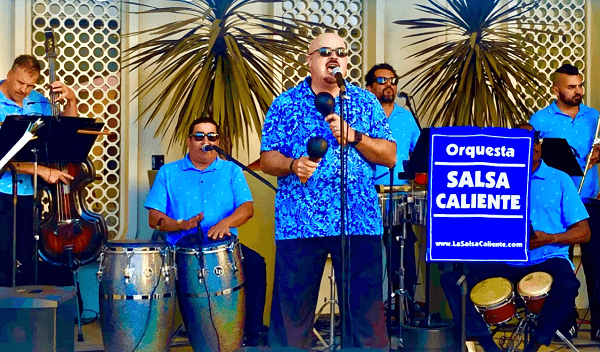
Alberto and Salsa Caliente
Alberto Gonzalez and his orchestra Salsa Caliente

A few Lavoe stories from the book

Among the many anecdotes that can be read in the book, Alberto told us one in which, on one occasion, a couple of Héctor Lavoe’s musicians had their vehicle broken into, and all of their instruments were stolen. When Héctor found out what had happened, he bought them new instruments and told them not to worry about paying him back. He did not charge them a penny.

Here’s another story. During a show, one of Héctor’s trumpet players accidentally dropped his trumpet on the floor and damaged it beyond repair; the instrument was unplayable. What did Héctor do? Héctor gave him $1,000 to go buy a new trumpet and, once again, didn’t charge him a penny.

These are just a few of the many stories regarding Héctor Lavoe that you’ll be able to read in the more than 400 pages of the book. The book will be officially launched in the coming months. For more information, please visit: www.hectorlavoebook.com.
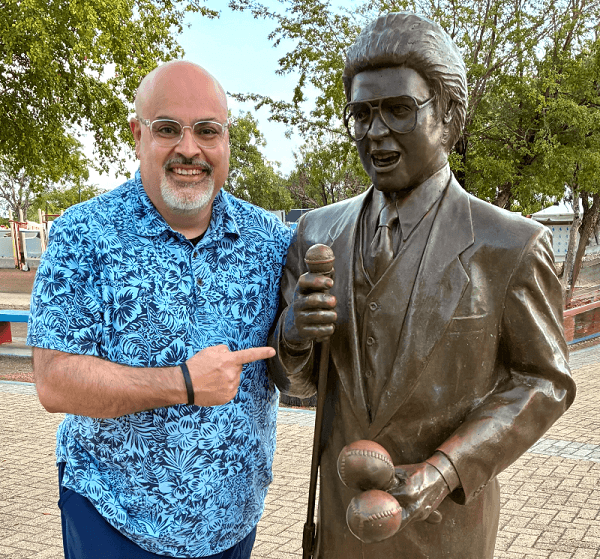
Alberto and Hector in Ponce
Alberto Gonzalez next to the statue of Hector Lavoe in Ponce, Puerto Rico

Read also: Puerto Rican American bandleader and singer Elle Jay is proud of her roots
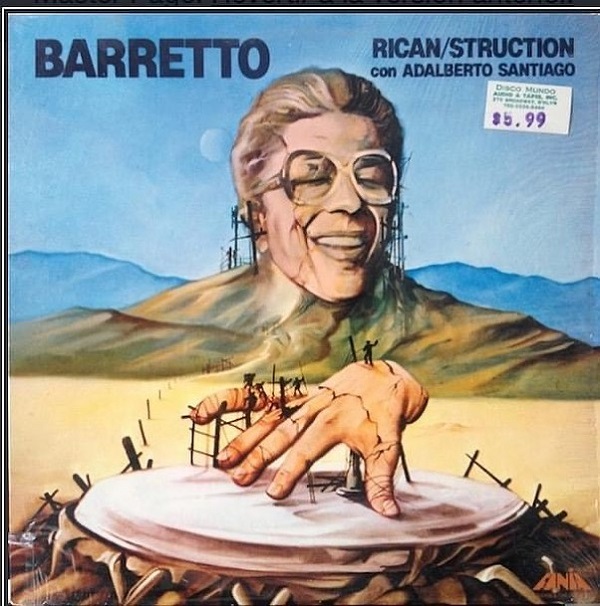
Ray Barretto: Rican/Struction of a Master for the year 1979

“Rican/Struction” is the most representative album of Ray Barretto’s career, not only for its innovative character but also for its immense personal significance.

RicanStruction is the most representative album production in Ray Barretto's career
RicanStruction is the most representative album production in Ray Barretto’s career

In 1978, Ray Barretto was struggling to cope with the poor reception of his recent album, “Can You Feel It?” (1978), which he had recorded a year earlier with Atlantic Records. Despite its quality, the album went largely unnoticed by the public, causing Barretto great frustration and disappointment.

For a few years, Barretto had been tired of playing the same old repertoire. To give his career a fresh start, his manager, Jerry Masucci, sold his contract to Atlantic, intending for him to record a more commercial jazz fusion and funk album. However, the plan didn’t work out as they had hoped. During this time, the percussionist spent his days feeling pensive and worried, convinced that signing with Atlantic had been a mistake because the label gave his last two albums very little promotion.

One morning, while driving and lost in thought, Barretto slammed on his brakes to avoid hitting a car that suddenly appeared. The abrupt maneuver caused another vehicle to rear-end him. The collision resulted in several injuries, the most serious being severe damage to the tendons connecting his thumb to the rest of his right arm. Doctors “gave up on him,” claiming he would never be able to play again.

The news plunged the musician into a deep depression. Doctors recommended surgery, but Barretto refused, fearing his hand would never be the same. He sought second opinions in Los Angeles and San Francisco, but every specialist gave him the same diagnosis and the same solution: surgery.

They say Barretto would visit clubs with a palpable sadness and bitterness because he couldn’t play. Many people in the industry said his career was over until one night, an old friend and fellow musician told him about the benefits of acupuncture, a traditional Chinese medicine that had helped several people with similar problems.

Barretto underwent a long and painful treatment for almost two years, gradually restoring movement to his right hand. Once he was nearly recovered, he decided it was time to return to music.

He broke his contract with Atlantic, sought out Adalberto Santiago (who had left his band in 1972 to form La Típica 73), and re-signed with Fania Records. With them, he produced the album “Rican/Struction” (1979), his most representative work, not only for how progressive it was but also for the immense personal value it held.

Adalberto Santiago y Ray Barretto

The production was a resounding success, and a year later, it earned him the titles of “Musician of the Year” from Latin New York magazine. In this way, the master Ray Barretto demonstrated his great strength and tenacity to the world.

Did you know…?

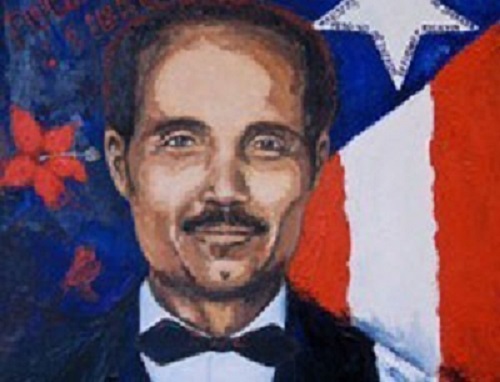
  • The song “Al Ver Sus Campos” from the album Rican/Struction is a tribute to the Puerto Rican patriot Pedro Albizu Campos. Composed by Johnny Ortiz and arranged by Oscar Hernández, the song, sung by Adalberto Santiago, captures the feeling of Albizu’s resistance as he fought to liberate his homeland from foreign invading forces.

  • Albizu Campos was a jibarito, a legend who existed under the burning Puerto Rican sun.
    Albizu Campos was a jibarito, a legend who existed under the burning Puerto Rican sun.
  • According to Adalberto Santiago, “the Rican/Struction album is a musical gem because, in New York, no musician buys records, and this one was bought by the entire salsa community.”

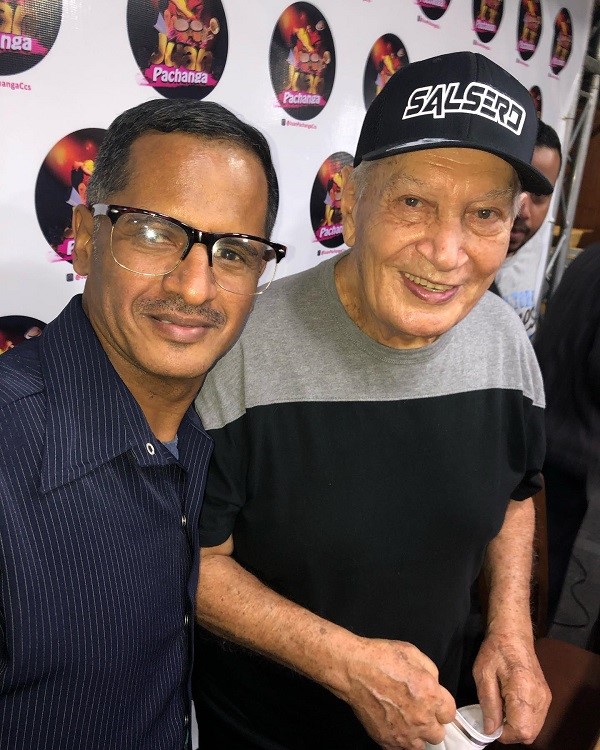
  • Dj. Augusto Felibertt y Adalberto Santiago
    Dj. Augusto Felibertt y Adalberto Santiago

Vocalists for Ray Barretto and La Típica 73

  • Adalberto Santiago was in Ray Barretto’s band from 1966 to 1972. When he left to join La Típica 73, he was replaced by Tito Allen, who recorded the album Indestructible with Barretto in 1973.
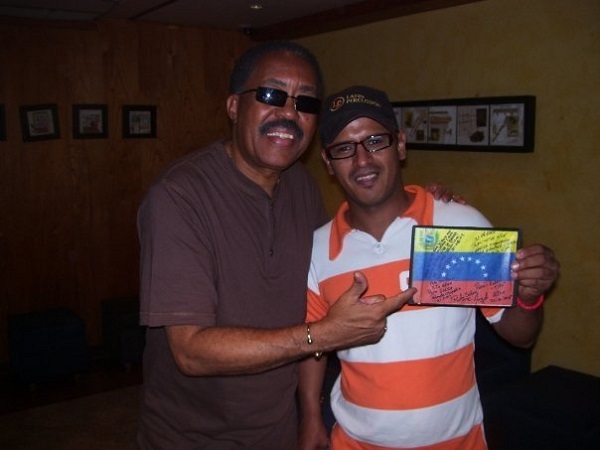
  • Tito Allen y Dj. Augusto Felibertt
    Tito Allen y Dj. Augusto Felibertt
  • When Adalberto Santiago left La Típica 73 to form Los Kimbos, his replacement in the group was once again Tito Allen. With them, Tito recorded the album Rumba Caliente (1976). Then, in 1977, La Típica 73’s vocalist was the late Camilo Azuquita for the album The Two Sides of Típica 73.

By:

Los Mejores Salseros del Mundo

Dj. Augusto Felerttib

Also Read: Raymundo “Ray” Barretto Pagan was born in Brooklyn, New York on April 29, 1929

Loca Luna Restaurant &Bar

North America / USA / Atlanta

Living La Vida Loca is easier than you may think!

Loca Luna proudly offers Midtown a refreshing alternative to conventional nightlife, providing an eclectic mix of traditional Latin cuisine and cocktails, and award winning live musicians – every single night of the week! Whether you come for Wednesday’s free salsa lessons or dancing until the wee hours on the weekend, Loca Luna gives you something to look forward to any night of the week.

Loca Luna Restaurant & Bar - Latin Sol event
Loca Luna Restaurant & Bar – Latin Sol event

Creative Loafing has consistently voted Saturday staple Orchestra MaCuba the “Best Salsa Band” in the city and both Creative Loafing and insite agree that Loca Luna is the best restaurant with live entertainment.

550-C Amsterdam Ave NE Atlanta, GA 30306

We encourage you to see for yourself why Loca Luna is one of Atlanta’s favorite destinations. Along with a full bar of premium iquors and New World wines, Loca Luna is also home to the region’s best Mojito Bar, offering the city’s freshest, seasonal cocktails.

Bring all of your closest friends and plan a celebration in any one of our different settings ranging from an open patio with views of the Midtown skyline and Piedmont Park, to the more intimate VIP loft overlooking a lively bar own below. Further tailor your event with custom, all you can eat tapas platters and specialty drinks.

Rediscover your “salsa” side and put a little extra sabor back into your week!

Upcoming Events (LocaLuna):  http://loca-luna.com/events/

Salsa Lesson - Loca Luna Restaurant & Bar
Salsa Lesson – Loca Luna Restaurant & Bar

Salsa Wednesday

EveryWednesdays at Loca are a great way to get through the middle of the week.

They ofter Free Salsa lessons from 8-9 pm with Orquesta MaCuba Salsa Band.

June 7, 14

Time: 5:00 pm – 10:00 pm

Latin Sol Fridays at LocaLuna

Live Music beginning at 7:30 pm with Ruth & The Knights

Also featuring Latin & International rhythms (Salsa, Pop Latino, Merengue & More) with DJ Danny B & Guest DJ’S.

Jun 2 @5:00 pm – Jun 3 @3:00 am

Jun 9 @5:00 pm – Jun 10 @3:00 am

Jun 16 @5:00 pm – Jun 17 @3:00 am

The Night Hector Lavoe, “The Singer of Singers,” Refused to Please Pablo Escobar

January 1, 1981. The air was thick with the scent of a new year, but for Héctor Lavoe, it was anything but celebratory.

The Night Hector Lavoe, “The Singer of Singers,” Refused to Please Pablo Escobar

In Medellín, at a New Year’s Eve party hosted by none other than Pablo Escobar, the “El Cantante” himself found himself in a terrifying standoff.

This isn’t just a rumor; it’s a chilling anecdote that has cemented its place in music lore. It was a night when the King of Salsa faced down the King of Cocaine, and lived to tell the tale.

The Escape

The story begins with a frantic encounter recounted by a Colombian chronicler, Juan José Hoyos, who heard it directly from a taxi driver. It was well past midnight when a man, impeccably dressed in a suit but barefoot, suddenly appeared on the side of the road. He was clearly terrified, and the driver, unable to ignore his distress, pulled over.

The man, disheveled and without a dollar to his name, begged for a ride to his hotel. He explained he’d been singing at a “mafioso” party, and things had taken a dark turn. “My name is Héctor Lavoe,” he whispered.

Héctor Lavoe: “El Cantante de los Cantantes”

The taxi driver was skeptical. “You’ll have to sing ‘Yo Soy El Cantante’ if you want me to take you to the hotel,” he challenged.

Héctor, now inside the cab, bristled. “My friend, that’s exactly why I’m in this mess! One of those guys made me repeat that song like ten times, threatening me with a pistol! I got fed up and told the orchestra, ‘I’m not singing anymore, shut off the equipment!'”

The driver insisted, reminding the slight man in the suit that he was doing him a favor. Then, a voice, otherworldly and unmistakable, filled the cab:

“🎵 Yo soy el cantante / que hoy han venido a escuchar / lo mejor del repertorio a ustedes voy a brindar. / Y canto a la vida / de risas y penas / de momentos malos / y de cosas buenas. 🎵”

There was no doubt. It was Héctor Lavoe.

The Ordeal, Corroborated

What might have been dismissed as another tall tale from a taxi driver gained chilling veracity when members of Lavoe’s band corroborated the story.

Eddie Montalvo, the group’s conga player, vividly recalled the night. The gig with Pablo Escobar had been arranged by Larry Landa, a music promoter with deep ties to the drug world. The contract stipulated they’d play until 2 AM, but Escobar had other plans, demanding they continue until six in the morning.

Eddie Montalvo
Eddie Montalvo

“When it was two in the morning, Héctor told the band to stop,” Montalvo recounted. “The organizer threatened them at gunpoint to force them to keep singing. He wanted Héctor to repeat ‘Yo Soy El Cantante.'”

Amidst the chaos, the legendary salsa singer Ismael Rivera, who was also present, bravely stood up to the aggressors. Even the bodyguards got involved. Eventually, Lavoe and his musicians were herded into a small room and locked in for the rest of the night.

El Sonero Mayor Ismael Rivera

After an hour, in a desperate move, Héctor smashed a window. With the help of the other musicians, they slipped out one by one into the darkness, leaving their instruments behind, consumed by fear. “For thirty minutes they slipped and fell until they reached the highway,” Montalvo revealed.

And that’s how Héctor Lavoe ended up in that taxi, on a cold January morning in 1981.

A Strange Resolution

But the saga didn’t end there. The very next day, a mysterious individual visited Héctor and his band at their hotel. He presented them with a check, returned their confiscated passports and retained instruments, and offered a surprising apology.

Review of the Era (Flash)

This dramatic incident remains a stark reminder of the volatile world Héctor Lavoe navigated, and his unwavering spirit in the face of immense danger.

Also Read: International Salsa Magazine showcases important facts about Héctor Lavoe

By:

1) Los Mejores Salseros del Mundo

2) Dj, Augusto Feliberrtt

3) Hector Lavoe – Fans

Javi Jiménez from Barrio Manouche talks about his career in Spain and then in San Francisco

Javi Jiménez from Barrio Manouche graces us with his presence in this July 2025 edition after several months of wanting to talk to the artist. After witnessing one of his wonderful shows at Cascal Restaurant, where the group performs regularly, we have checked the high quality of Javi’s work and that of his bandmates, so we could not miss the opportunity to share the most important aspects of his career, both in his native Spain and in San Francisco.

Javi with his guitar
Javi Jiménez with his gypsy jazz guitar

Javi’s beginnings in the musical world

The first contact with music in Javi’s life was made thanks to his parents, and in the neighborhood where he grew up, music was always present. From an early age, he and his brother listened to all kinds of genres at home, which awoke in them an interest in this art form beyond seeing it as simple entertainment. He remembers that since he was six, he saw his uncle playing the guitar until a few years later, when he turned 10, his uncle gave him this instrument so that he could play it himself.

Although his family did not have many musicians, he mentioned a cousin of his who was a bassist and actually wrote him his first chords on a piece of paper so that he could experiment with his new guitar and he did.

First professional experiences

He describes his taste in music after the age of 12 as an “obsession,” and at that time, he was very into rock and punk, nothing to do with what he plays today. He then started hanging out with several schoolmates who shared his hobby of playing music, which ended up giving rise to his first band, Mulatask. Currently, there is nothing about this online, as the internet did not exist at that time, so all evidence that this alternative rock and grunge band ever existed is on CDs and MP3 files that are not public.

In addition to that, the music his parents listened to continued to influence him to some extent. Among their favorite artists were Silvio Rodríguez, Victor Jara, Canción Protesta and Paco Ibañez. These singers impacted him so much that he began to study a little the classics and play them, but rock and electric guitar were still his favorites above all else. In fact, his favorite artists were Jimmy Page of Led Zeppelin, Pink Floyd, Jimmy Hendrix, among others. 

Javi and his brother
Javi Jiménez and his brother Luis Jiménez sitting to his right

This was the kind of music he played with his friends in the neighborhood and they even gave small recitals in front of audiences of 200-300 people when they were 15 or 16 years old at the time, which made the teenage Javi love to show his art to the world. 

Transition to gypsy jazz, modern jazz, and flamenco

Javi’s transition to gypsy jazz (inspiration for the name of his future band), modern jazz, and flamenco began when he moved to Barcelona, where he studied at a jazz and modern music conservatory. There he discovered a lot of genres and styles he had never heard before, one of which was bebop, also known simply as bob, which is a jazz style developed in the United States during the 1940s. At that time, he also discovered Charlie Parker, John Coltrane, Thelonious Monk, Dizzy Gillespie, among others.

Although Javi did not really identify with that language, he wanted to truly understand music so he could interpret it as best as possible. He did everything he could to understand bebop, but he found it very difficult until he started listening to Belgian gypsy jazz guitarist of Roma descent, Django Reinhardt, who was also a fan of Louis Armstrong. When he listened to Armstrong, he wanted to play the same thing, but with his own Roma touch, so he formed a band with two guitars, a bass, and a violin.

One of this band’s favorite genres is gypsy jazz manouche, which Javi loved and was passionate about since the first time he listened to it, to the point that he would name his future group Barrio Manouche (Gypsy jazz in Spanish).

On the side of flamenco, there were many gypsies and immigrants in his home neighborhood, including the Porrina family, which consisted of world-renowned percussionists such as Ramón Porrina, who has played with Concha Buika and Israel Suarez ‘‘El Piraña’’, a flamenco guitarist who was in Paco de Lucía’s last lineup.

Album release party
”Despierta” album release party at The New Parish in 2019

Javi tells us this to show that flamenco was very present in the environment he grew up, largely because there were many migrants. In his family’s case, they came from Andalusia and Cordoba.

He continues to insist that he still did not like it very much and his thing was rock. It was in California that he finally had nostalgic about the music of his homeland and wanted to reconnect with his roots in foreign lands. 

Moving to California

Javi had never thought about trying his luck in California until he met Adam Rouch, a Californian tattoo artist and musician who became his friend and with whom he toured Europe. In 2009, Adam had to return to his city because his parents were not in good health, and he told his Spanish friend to go with him to see how he liked the place. 

Although the artist was not convinced by the idea, he ended up accepting and discovered in San Francisco fun, cultural exchange, diversity, and many things that fascinated him. The best thing was the opportunity for its inhabitants to express themselves through practically any type of art or genre without fear of judgment, which made him decide to definitely stay living and finally become an American citizen.

Javi and Fanny Ara
Javi Jiménez and dancer Fanny Ara at the 62nd Monterrey Jazz Festival

How Barrio Manouche was formed

After he met with many musicians and made many contacts, Javi and his brother Luis, who is also part of the group on cajón and percussion, met Salvadoran percussionist Marcos Odara, French saxophonist Cyril Guiraud, violinist Magali Sanscartier, bassist Chris Bastian, his future replacement Gary Johnson, and guitarist Ross Howe. Finally, they included Colombian bongo player and flutist Iván Rondón, with whom they collaborated until he became a permanent member of the band.

The previous artists make up the instrumental part, but the dancing part includes Fanny Ara and Brazilian dancer Emaye Ama. 

Thanks to the huge number of nationalities and cultures present in the group, they have managed to get a unique sound Javi describes as a “bomb” due to the mixture of elements that are so diverse from one another.

 He says he feels a deep appreciation and respect for each of them, which makes the unity of the group stronger and more lasting despite the crises and the passage of time.

Read also: Sizzling Summer Nights dancer April Connella breaks silence on Orlando Delgado and her career

  • « Go to Previous Page
  • Page 1
  • Page 2
  • Page 3
  • Page 4
  • Interim pages omitted …
  • Page 165
  • Go to Next Page »

International Salsa Magazine (ISM) is a monthly publication about Salsa activities around the world, that has been publishing since 2007. It is a world network of volunteers coordinated by ISM Magazine. We are working to strengthen all the events by working together.