| Directory of Australian and New Zealand nightclubs | ||
|
|
||
|
|
|
|
|
|
|
|
|
|
|
|
|
|
|
|
|
|
||
|
|
||
| Directory of Australian and New Zealand nightclubs | ||
|
|
||
|
|
|
|
|
|
|
|
|
|
|
|
|
|
|
|
|
|
||
|
|
||


Directory of Asian nightclubs |
||
 HONG KONG |
||
 Graffiti LKF Graffiti LKFG/F, 17-18 Lan Kwai Fong, Central Central, Hong Kong |
 SOLAR LKF SOLAR LKFCentral 2nd Floor, Ho Lee Commercial Building, 38-44 D’Aguilqr Street, Lang Kwai Fong Central HKI Hong Kong |
 Sole Mio Sole MioUpper Ground Floor, 51 Elgin Street, Soho Central Hong Kong, Hong Kong |
|
|
||
|
|
||
|
|
||
|
|
 Bar Mirage Bar Mirage5F VORT Roppongi Briller, 3-14-14 Roppongi, Minato-ku Tokyo 106-0032, Japan +03-5860-6946 |
 Fiesta Latin Spot Bar Fiesta Latin Spot Bar3F, 1 Chome-14-6 Kabukicho, Shinjuku City Tokyo 160-0021, Japan +81 90-1086-2878 |
 El Cafe Latino El Cafe Latino3 Chome-15-24 Roppongi, Minato City |
|
|
|
|
||
|
|
|
|
|
|
||
|
|
|
|
| Karina Bernales present |
APRIL 2025 |
FESTIVALS |
|
|
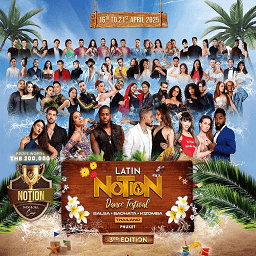 |
Latin Notion Dance FestivalApr 17 / 20 2025 Pamookkoo Resort From THB 5,912.50 |
Cuba has an extensive list of talented musicians and a great musical and artistic tradition that are truly the envy of many countries, so it is impossible to cover all the exponents of this land of talents. However, in this opportunity, we talked to one who sets the bar very high among them all, the incredible arranger, composer, sound engineer and multi-instrumentalist Kiki Valera, whom we have been able to interview for the March edition.
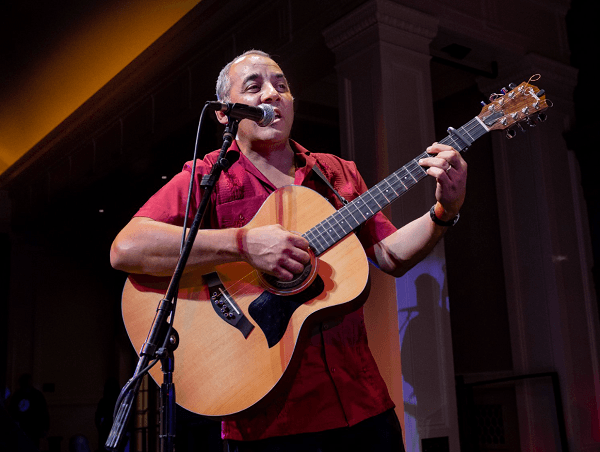
The first thing to point out about Kiki is that he was born into a very musical family in the easternmost part of the island of Cuba, specifically in Santiago de Cuba, which is an area well known for the presence of the now world famous Cuban son. In addition to that, his father, Don Felix Valera, inherited from his family and ancestors those musical genes that came from his grandparents, great-grandparents and further back.
So much so that Don Felix was a music teacher in the small town of San Luis, which was 30 kilometers from Santiago de Cuba, while his mother was a dance teacher. Both were recent graduates of the first national school of art instructors that was founded in the country in the early 1960s, while Kiki was just being born.
Growing up surrounded by all this environment, music was the first thing he heard and lived, not to mention that the artist already had the necessary conditions and abilities to dedicate himself to this world professionally. When he was six years old, his father gave him a Cuban tres, one of the most iconic instruments of the son, and taught him his first songs, melodic motifs, tumbaos, among other things.
One thing to mention is that the Valera Miranda family does not consist of professional musicians as such, but rather empiric musicians who frequently get together at family events such as birthdays, Christmas, New Year holidays and vacations to play the tres, the bongo, the maracas, the guitar, among many other instruments.
As a child, this was all very normal for him until he realized that his interest in music was genuine and he entered the Conservatorio Esteban Salas in Santiago de Cuba to study classical guitar. It was thanks to his studies that he realized that his family’s thing with music was something really authentic that had been developing a very long time ago, more precisely since the 19th century.
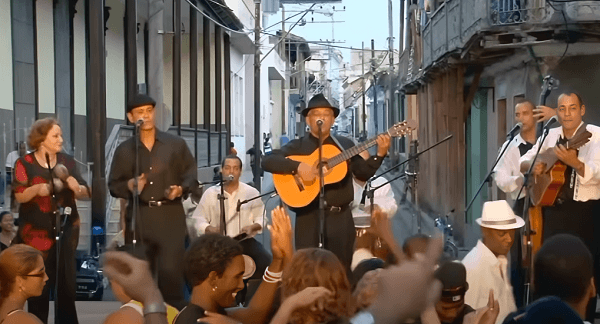
It turns out that a now deceased musicologist named Danilo Orozco was conducting a sociological survey in the eastern part of the country and happened to be a good friend of his father. In one of their many talks, Don Felix told him much about the family history with music for several generations, which caused Orozco’s curiosity and he got to the rural area where the family had lived. These visits determined that the oldest ancestors were true carriers of the roots of son in the eastern region, to the point that this researcher even made a documentary and the Valeras of that time recorded two albums with a didactic approach to show the cultural phenomenon that happened in that family nucleus.
After all this, Kiki felt even more destined to continue the legacy of his ancestors in music, but with a little more academic training and more modern touches in keeping with the times. That was more than 40 years ago.
There is a whole resurgence of genres, already thought forgotten, by the passage of time, but thanks to tributes by certain fashion artists, they have risen from the ashes to occupy the place that should never have been taken away from them. We have the example of Bad Bunny with his album ”DeBÍ TiRAR MáS FOToS”, which focuses on the cultural and musical heritage of Puerto Rico and makes use of salsa, plena, and boleros to show the musical richness of the Island of Enchantment. We can also mention Desorden Público’s upcoming album ”Salsa All-Ska” which pays homage to salsa as part of the celebration of its 40 years of musical trajectory. Not to mention the 2024 Latin Grammy Awards which paid tribute to salsa and counted with the presence of Oscar D’ Léon, Tito Nieves, Marc Anthony and La India among its guests.
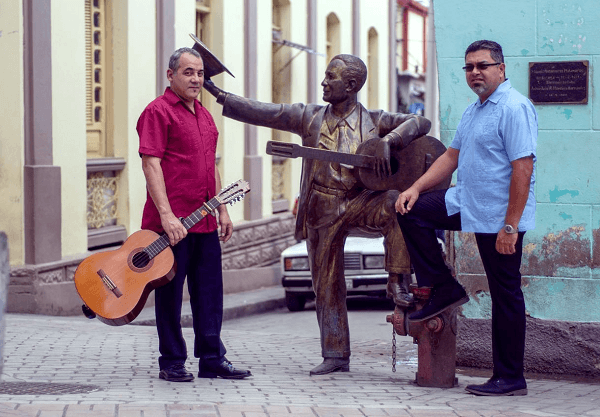
On this phenomenon, Kiki considers that artists in general are the reflection of their time and the manifestation of the environment in which they develop. For the same reason, he believes it is inevitable wanting to look back to understand where we come from, no matter how many years pass. ”After you study a genre such as reggaeton, you can tell that it has been nourished by other musical manifestations that preceded it. Moreover, when musicians are given the task of acquiring technical and theoretical knowledge of music, they always try to innovate by recreating the foundations of the genres in which they work” said Kiki on this interesting and important subject.
”There is a saying that if we don’t know where we come from, it’s hard for us to know where we are going and this is the case. Contemporary musicians generally provide their vision of music and create new concepts, fusions and rhythmic patterns, but all this always comes from the past to a certain extent. To build something new, you need a base” he continued.
Changing the subject radically, we wanted to know when Kiki decided to leave his country to settle in the United States, specifically in Seattle, to which he replied that he arrived here on April 2, 2013. The main reason why he left was due to his partner Naomi Bierman, who convinced him to move to start a life together in another place.
With that decision, the musician had to make a total shift in mindset, since he had lived in Cuba all his life and came from a very close-knit family. He had to give up the closeness he had with his loved ones, culture, values and climate to adapt to a completely different way of life in a territory that was nothing like his own.

Read also: His father’s love for music rocketed him to stardom
It is a pleasure to talk to Latin music artists who have left our genres in a high place all over the world and today it is the turn of the great American producer, composer and percussionist Pablo Perez, also known as ”El Alcalde de La Salsa”, who we were lucky enough to interview to know his fascinating story with music. We say to our dear readers that they cannot miss it.

From the beginning, Pablo made it very clear that since his childhood he has been interested in music, to the point of beginning to study it at school, as his taste was great since then. To what we must add that the time when he grew up in Trenton, New Jersey, was marked by a total command of salsa, which greatly influenced the young boy. However, he clarifies that he liked all types of genres like ballads, boleros, cha cha chá, merengue, classical music, among others.
He grew up listening to all sorts of artists and groups such as La Fania All Stars, Ray Barretto, Willie Colón, Johnny Pacheco, Spanish Harlem Orchestra and many others. To some extent, all of them have influenced the style he applies to his own work today.
Throughout all this process of being involved with music and learning what he knows today, he came to live in a lot of Latin countries like Puerto Rico, Venezuela, Ecuador, Argentina, Panama, Costa Rica, among others. During all these travels and stays, Pablo dedicated himself at all times to play and present his music to the populations of those places.
In the same way, each of these places has given something new to his style and, in them, he was able to hear new versions of other songs that he knew before. He himself did a new version of the llanera song ”Quierela más que yo” by Venezuelan singer Luis Silva, making it into a salsa song and giving it his own touch. ”I’ve always wanted people to connect with me through my music and I’m always looking to do new, danceable and interesting things,” Pablo said on the subject.
The artist has always liked to mix different sounds and instruments, so he had the idea of creating a trombone orchestra (the first instrument of his career) and seing how it worked. Finally, this group included two trombones, two trumpets and a baritone in order to obtain a bigger sound, helping with a ”baby bass” (an electric double bass model designed by Ampeg), and a piano.
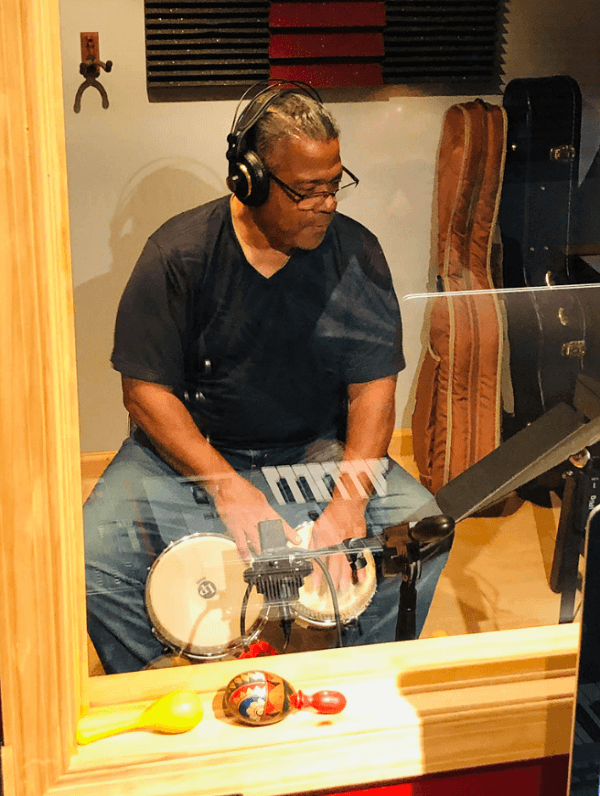
Although it is true that Pablo’s first major project was The Pablo Pérez Project in 2005, prior to that, he already had a group called Orquesta Yanes (2001), with which he recorded two albums back then. During that time, what was used were LPs and cassettes, one of them being a recording made in Belgium (country where he also lived) and called ”Pablo Pérez con el paisaje latino”. This was the same name of a group he created with local and Latin European musicians in Europe.
At the same time, the musician was also part of other orchestras in his native New Jersey as well as in Puerto Rico and some of them were ”El Nuevo Sonido”, ”Paquito Y Su Tumbao”, ”Peligro” and many others.
One of the most important events in Pablo’s career during his time in Europe was his involvement in the album ”Algo Diferente” by Mexican musician Héctor Islas y Su Pachuco 21. The artist referred to Islas as a very good person and a great singer whom he met in the aforementioned country and it was not long before they worked together.
Hector invited him to join his orchestra as a timbalero and they both toured the rest of Europe together, taking their music to anyone who wanted to listen to them in those territories. Later, the Mexican went to Cuba to make a series of recordings in which he asked Pablo to play the bongos.
During their tours, they were able to play alongside El Gran Combo de Puerto Rico, Jerry Rivera, Original de Manzanillo, Sin Damas, La Fania All Stars, La India and many more.

A very interesting facet Pablo had was that of a politician in 2014, when he ran for mayor of Trenton, New Jersey. Although targets were not met, the artist explains that this decision to compete gave him many positive experiences with the community.
One of the biggest endorsements he received at the time came from Willie Colón, whom he had known for many years. When the trombonist asked Pablo about his motivations for running for office, he replied that what he wanted was to help the community from a better position. That is when Colón nicknamed him ”El Alcalde de La Salsa” (The Mayor of Salsa), which Pablo liked so much that he decided to use it for the rest of his career.
It is worth mentioning that he also received the endorsement of Tito Nieves during his aspirations for political office.
Music played a crucial role in the campaign events, since the artist’s orchestra was very attractive to people, especially for the fundraisers that Pablo and his team carried out. Likewise, it was a good tool for the former candidate to connect with the community, especially the Latino community.
It was in this same period that he made contact for the first time with his current bassist and arranger Michael Colón, pianist Efraín ”Juanito” Dávila and other musicians with whom he was able to form his orchestra, which helped him a lot during his political career to gain the sympathy and attention of people.
When asked if he would be interested in running for public office, he assured that this stage of his life is over and that he prefers to concentrate solely on music for now.

Read also: How freelance musicians are viewed today

Directory of European nightclubs |
||
|
|
||
|
|
||
|
|
||
|
|
|
|
|
|
|
|
|
|
|
|
|
|
||
|
|
|
 Adenauerallee 3 20097 Hamburg, Germany |
|
|
|
|
|
|
||
|
|
||
|
|
||
|
|
||
|
|
||
|
|
|
|
|
|
|
|
|
|
|
|
 Av. del Vallès, 117 08223 Terrassa, Barcelona, Spain |
 C/ Olvido 15 28026 Madrid, Spain |
 Carrer del Perill 10 08012 Barcelona, Spain |
|
|
||
|
|
||
|
|
|
|
|
|
|
|
| Karina Bernales present |
APRIL 2025 |
FESTIVALS |
|
|
 |
¡Meneate! Viena Cuban DanceApr 10 / 13 2025 Fanialive From €159 |
|
|
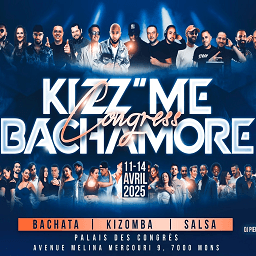 |
Kizz Me BachAmore CongressApr 11 / 14 2025 Palais des Congrès Mons From € 70 |
|
|
 |
World Stars Salsa FestivalApr 24 / 28 2025 Maritim Hotel Paradise From € 79 |
|
|
 |
Bachata Magic FestivalApr 05 / 06 2025 OX Club Prague From $79 |
|
|
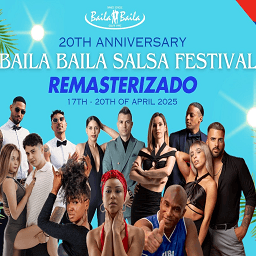 |
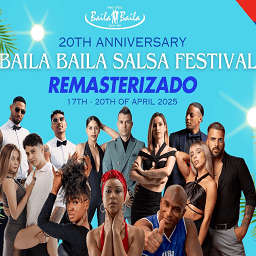
Baila Baila Salsa FestivalApr 17 / 20 2025 Tanssikoulu-Dance School Baila Baila From € 150 |
|
|
 |
Paris International Salsa CongressApr 11 / 13 2025 La Palmeraie Hotel From € 164 |
 |
Lyon BachataApr 18 / 20 2025 Espace Ecully Bar From € 97 |
|
|
|
 |
Bachata Festival StuttgartApr 09 / 14 2025 Sängerhalle From € 99 |
|
|
 |
AloCubano Salsa FestivalApr 24 / 27 2025 Golden Coast Hotel From € 140 |
|
|
 |
SPRING WeekendApr 11 / 13 2025 Hotel Annabella From € 110 |
 |
Diamond KizombaApr 03 / 07 2025 Hotel D50 From € 92.31 |
|
|
|
 |
Zeno Latin FestivalApr 11 / 13 2025 Zeno Complex From € 55 |
|
|
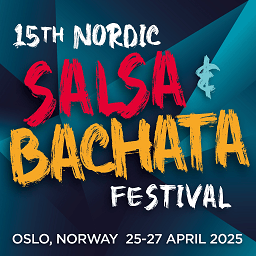 |
Nordic Salsa & BachataApr 25 / 27 2025 Samfunnssalen Event & Konferanse From KR 390 |
 |
Oslo Kizomba FestivalApr 10 / 12 2025 Dancecity From KR 850 |
|
|
|
 |
El Sol Bachata FestivalApr 11 / 13 2025 Sound Garden Hotel |
|
|
 |
Bachata Takes Over BucharestApr 04 / 07 2025 NORD Events Center by Globalworth From € 100 |
|
|
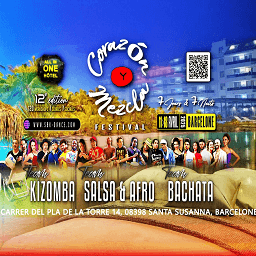 |
Corazon y MezclaApr 11 / 18 2025 Don Angel Hotels From € 100 |
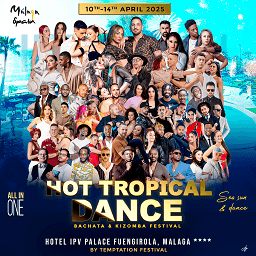 |
Hot Tropical Dance MálagaApr 10 / 14 2025 Hotel IPV Palace & Spa From € 79 |
|
 |
Kizomba Barcelona CongressApr 11 / 13 2025 Hotel Evenia Olympic Park From € 75 |
|
 |
KizCon
|
|
 |
Fever Bachata World CongressApr 24 / 28 2025 Hotel Gandia Palace From € 105 |