
• Skip to primary navigation
  • Skip to main content

International Salsa Magazine

  • HOME
  • Previous editions
    • 2026
      • ISM / March 2026
      • ISM / February 2026
      • ISM / January 2026
    • 2025
      • ISM / December 2025
      • ISM / November 2025
      • ISM / October 2025
      • ISM / September 2025
      • ISM / August 2025
      • ISM / July 2025
      • ISM / June 2025
      • ISM / May2025
      • ISM / April 2025
      • ISM / March 2025
      • ISM / February 2025
      • ISM / January 2025
    • 2024
      • ISM / December 2024
      • ISM / November 2024
      • ISM / October 2024
      • ISM / September 2024
      • ISM / August 2024
      • ISM / July 2024
      • ISM / June 2024
      • ISM / May 2024
      • ISM / April 2024
      • ISM / March 2024
      • ISM / February 2024
      • ISM / January 2024
    • 2023
      • ISM / December 2023
      • ISM / November 2023
      • ISM / October 2023
      • ISM – September 2023
      • ISM – August 2023
      • ISM July 2023
      • ISM Edition June 2023
      • ISM – May 2023
      • ISM April 2023
      • ISM March 2023
      • ISM February 2023
      • ISM January 2023
    • 2022
      • ISM December 2022
      • ISM November 2022
      • ISM October 2022
      • ISM September 2022
      • ISM August 2022
      • ISM July 2022
      • ISM June 2022
      • ISM May 2022
      • ISM February 2022
      • ISM January 2022
    • 2021
      • ISM December 2021
      • ISM November 2021
      • ISM October – 2021
      • ISM September 2021
      • ISM August 2021
      • ISM July 2021
      • ISM May 2021
      • ISM April 2021
      • ISM June 2021
      • ISM March 2021
      • ISM February 2021
      • ISM January 2021
    • 2020
      • ISM December 2020
      • ISM November 2020
      • ISM October 2020
      • ISM September 2020
      • ISM August 2020
      • ISM July 2020
      • ISM June 2020
      • ISM May 2020
      • ISM April 2020
      • ISM March 2020
      • ISM February 2020
      • ISM January 2020
    • 2019
      • ISM December 2019
      • ISM November 2019
      • ISM October 2019
      • ISM Septembre 2019
      • ISM August 2019
      • ISM July 2019
      • ISM June 2019
  • Download Salsa App
    • Android
    • Apple
  • Spanish

Search Results for: Bar

Europe / January 2025

Calibrated maracasMartinez attorney

Directory of European nightclubs

Czech Republic circular flag
CZECHIA

La Macumba 2024
La Macumba
Štefánikova 230/7 150 00
Prague, Czech Republic

fRANCE FLAG
FRANCE

Canela
Canela Club Latino Paris
77 Rue du Faubourg du temple 75010
Paris, France

Cuba Compagnie
Cuba Compagnie Café
48 BD Beaumarchais 75011
Paris, France

Cubana
Cubana Café
47 rue Vavin 75006
Paris, France

La Pachanga
La Pachanga Officiel
8, rue vandamme 75014
Paris, France

La Peña
La Peña Saint Germain
3 passage de la Petite Boucherie 75006
Paris, France

Balajo
Le Balajo
9 rue de Lappe 75011
Paris, France

Pachamama
Pachamama PARIS
46 rue du Faubourg Saint Antoine 75012
Paris, France

Selsero
Salseroparis
9 Rue du Petit Pont, 75005
Paris, France

Germany circular Flag
GERMANY

Cascadas
Cascadas
Ferdinandstr. 12
20095 Hamburg-Mitte, Germany

Havanna
Havanna Berlin
Hauptstr. 30
10827 Berlin-Schöneberg, Germany
La Macumba - The Real Latin Club in Hamburgs
La Macumba – The Real Latin Club in Hamburgs
Adenauerallee 3 20097
Hamburg, Germany

Latin Palace Changó
Latin Palace Changó
Münchener Strasse 57
60329 Frankfurt, Germany

SODA
Soda Club Berlin
Schönhauser Allee 36
10435 Berlin, Germany

Malta Circle flag
MALTA

Bario Latino Malta venue
Barrio Latino Malta
Ghar il Lembi Street SLM1562 Sliema
Central Region, Malta

Poland flag
POLAND

Teatro Cubano
Teatro Cubano Warsaw
ul. Aleksandra Fredry 6 00-097 /> Warsaw, Poland

Spain Flag
SPAIN

ACM City
ACM CitY
Carrer Can Pallarès 2, Cerdanyola del Vallès
08290 Barcelona, Spain

Antilla
Antilla Barcelona
C/ d’Aragó, 141
08015 Barcelona, Spain

Azucar
Azúcar SalsaDisco
Calle de Atocha, 107
28012 Madrid, Spain

Disco Bar Cuba Live
Cuba Live
Ramón y cajal número 2
07011 Palma de Mallorca, Spain

El Son
Discoteca El Son
C. de la Victoria, 6
28012 Madrid, Spain

Prisma Discoteca
Discoteca Prisma
C. de Alcalá, 192
28028 Madrid, Spain

Discoteca El Edén Boliviano
El Edén Boliviano
Carrer Gremi de Tintorers, 49A
07009 Palma, Illes Balears, Spain

Mojito
Mojito Club
Rosselló, 217
08008 Barcelona, Spain

Morena
Morena Barcelona
calle 11 num.29
08860 Castelldefels, Spain
Que Chimba
Qué Chimba
Av. del Vallès, 117
08223 Terrassa, Barcelona, Spain
Sala Olvido Madrid
Sala Olvido
C/ Olvido 15
28026 Madrid, Spain
Seven Dance
Seven Dance (Dio Club)
Carrer del Perill 10
08012 Barcelona, Spain

The Host Madrid
The Host
C/ Ferraz nº 38
28008 Madrid, Spain
+34 918 05 36 48

United Kingdom circular flag
UNITED KINGDOM

Salsa Soho
Bar Salsa Soho
96 Charing Cross Rd
WC2H 0JG London, UK

Salsa Temple
Bar Salsa Temple
Victoria Embankment, Temple
WC2R 2PH London, UK

Juju's
JUJU’s Bar & Stage
Ely’s Yard 15 Hanbury Street
E1 6QR London, UK

Revolucion de Cuba
Revolucion de Cuba Leeds
64-68 Call Lane
LS1 6DT Leeds, UK

LightHouse
The LightHouse Bar & Club
62 Rivington Street
EC2A 3AY London, UK
Karina Bernales present

JANUARY 2025

FESTIVALS

Belgium circular flag
BELGIUM
Latin Dreams Amsterdam Bachata

Latin Dreams

Jan 31 / Feb 02 2025

Van der Valk Hotel Charleroi Airport
Chaussée de Courcelles 115
Charleroi, Belgium 6041

From € 155.45

France circle flag
FRANCE
Suave Dance Festival 2025

Suave Dance Festival

Jan 24 / 27 2025

Novotel Paris Est
1 Republic St
Bagnolet, France 93177

From € 100

Dale Sensual 2025

Dale Sensual 7

Jan 24 / 26 2025

Pasino Grande Motte
335 Allée des Parcs
La Grande Motte, France 34280

From € 85

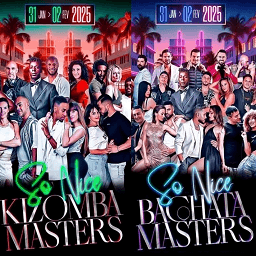
So’Nice Bachata Masters 2025

So’Nice Bachata Masters

Jan 31 / Feb 03 2025
LV Lagrange Apart’hôtel
180 Voie Marie Fischer
Antibes, France 06600
From € 90

Germany circular Flag
GERMANY
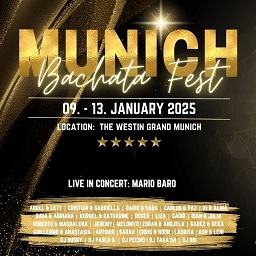
Munich Bachata Fest 2025

Munich Bachata Fest

Jan 09 2025 – Jan 13 2025

Hotel The Westin Grand Munich
Arabellastraße 6
Munich, Germany 81925

From € 130

Latin Festival Würzburg 2025

Latin Festival Würzburg

Jan 17 / 19 2025

B. Neumann Restaurant & Biergarten
Residenzplatz 1
Wurzburg, Germany 97070

From € 97.07

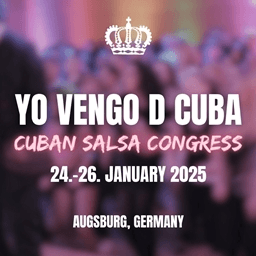
Yo Vengo De Cuba 2025

Yo Vengo De Cuba

Jan 24 / 26 2025

Kongress am Park
Gögginger Strase 10
Augsburg, Germany 86159

From € 110

Xplosion Hamburg Edition III 2025

Xplosion III

Jan 24 / 26 2025

Isabel Edvardsson – DIE Tanzschule
Banksstr 2b
Hamburg, Germany

From € 119

Hungary circular flag
HUNGARY
Live 2 Mambo Budapest 2025

Live 2 Mambo Budapest

Jan 30 / Feb 10 2025

Anantara New York Palace Budapest
Erzsébet krt. 9
Budapest, Hungary 1073

Italy circle flag
ITALY
Eventopeople Roma 2025

Eventopeople Roma

Jan 10 / 12 2025

Hotel Cristoforo Colombo
Via Cristoforo Colombo, 710
Rome, Italy 00144

From € 179

Le Kiz 8 Ed 2025

Le Kiz Eight Edition

Jan 17 / 19 2025

Best Western Plus Leone di Messapia Hotel & Conference
SP23
Lecce LE, Italy 73100

From € 70

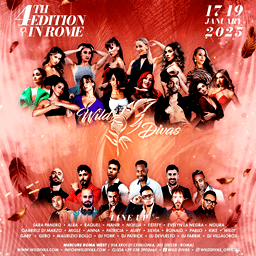
Wild Divas Congress 2025

Wild Divas Congress

Jan 17 / 19 2025

Hotel Mercure Roma West
Via Eroi Di Cefalonia, 301
Rome, Italy 00128

From € 130

Firenze Kizomba Salsa & Bachata Festival 2025

Firenze Kizomba Salsa & Bachata

Jan 24 / 26 2025

Hotel Delta Florence
Via Vittorio Emanuele, 3
Florence, Italy 50041

From € 69

Salsanama Italia 2025

Salsanama Italia

Jan 30 / Feb 02 2025

Camana Club
Via Palermo, 12, Buccinasco
Lombardia, Italy 20090

Netherlands circular flag
NETHERLANDS
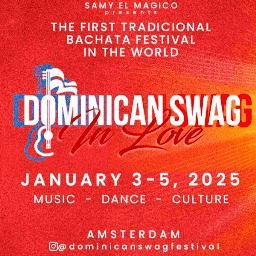
Dominican Swag 2025

Dominican Swag

Jan 03 / 05 2025

CanDance Studios
Isolatorweg 28, Amsterdam, Netherlands 1014 AS

From € 109

SADH International New Years Gala 2025

SADH
International New Years Gala

Jan 04 / 05 2025

De Doelen Convention Centre
Schouwburgplein 50
Rotterdam, Netherlands 3012

From € 25

Poland flag
POLAND
Kizzaffaire Warsaw 2025

Kizzaffaire Warsaw

Jan 09 / 13 2025

Sound Garden Hotel
Żwirki i Wigury 18
Warsaw, Poland 02-092

From € 67

Exodus Kizomba Congress 2025

Exodus Kizomba Congress

Jan 29 / Feb 03 2025

Novotel Warsaw Airport
1 Sierpnia 1
Warsaw, Poland 02-134

From € 85

Slovenia circular flag
SLOVENIA
Bachata Sensual World Congress 2025

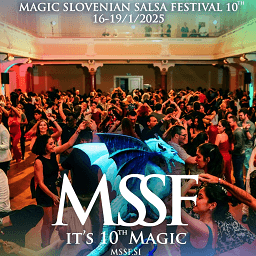
Magic Slovenian Salsa Festival

Jan 16 / 20 2025

Hotel Union
Miklosiceva 1
Ljubljana, Slovenia 1000

From € 140

Spain Flag
SPAIN
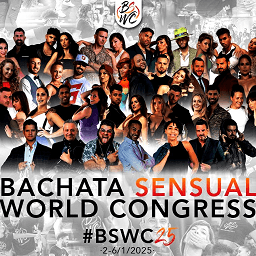
Bachata Sensual World Congress 2025

Bachata Sensual World Congress

Jan 03 / 06 2025

Hotel Evenia Olympic Palace
Av. del Rieral, 57
Lloret de Mar, Spain 17310

From € 100

Malaga Dance Congress 2025

Malaga Dance Congress

Jan 23 / 26 2025

Hotel Las Palmeras
Calle Martínez Catena, 9
Fuengirola, Spain 29640

From € 75

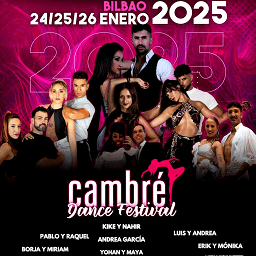
Cambre Dance Festival 2025

Cambre Dance Festival

Jan 24 / 26 2025

Hotel Urh Oriol’s Palace
27 Avenida Murrieta
Portugalete, Spain 48980

From € 80

TA BOM African Rhythms 2025

TA BOM
African Rhythms

Jan 31 / Feb 02 2025

Hotel Leon Camino
C. Obispo Vilaplana, 3-5
Leon, Spain 24008

From € 60

Turkey circle flag
TURKEY
I Love Kizomba Sensual Festival 2025

I Love Kizomba Sensual Festival

Jan 09 / 12 2025

The Green Park Pendik Hotel & Convention Center
Kaynarca, Erol Kaya Cd No:204
Istanbul, Turkey 34890

Full Pass: € 91

Antalya Sensual Dance 2025

Antalya Sensual Dance

Jan 31 / Feb 03 2025

Limak Limra Hotel & Resort
Kiriş Mh. Sahil Cd. No:11 Kiriş
Kemer, Turkey

From € 400

United Kingdom circular flag
UNITED KINGDOM
Newcastle Salsa Congress 2025

Newcastle Salsa Congress

Jan 03 / 06 2025

Holiday Inn Newcastle
Gosforth Park
Great North Rd, Seaton Burn
Newcastle Upon Tyne, United Kingdom NE13 6BP

Full pass from: £ 79

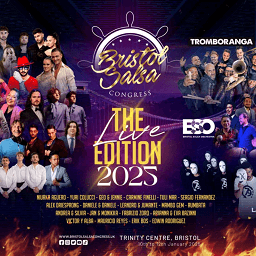
Bristol Salsa Congress 2025

Bristol Salsa Congress

Jan 10 / 12 2025

The Trinity Centre
Trinity Rd.
Bristol, United Kingdom, BS2 0NW

From £ 90

Scottish Salsa Congress 2025

Scottish Salsa Congress

Jan 17 / 20 2025

Hotel Leonardo Edinburgh Murrayfield
187 Clermiston Rd
Edinburgh, United Kingdom EH12 6UG

Full Pass £ 120

ABCD 2025

ABCD Any Body Can Dance

Jan 31 / Feb 02 2025

Haverstock School
24 Haverstock Hill
London, United Kingdom NW3 2BQ

From £ 129


Larry Harlow and Ismael Miranda: beginning of the so-called “Salsa Arseniana” in honor of the music of Arsenio Rodriguez, the creator of Son Montuno and “King of Guaguanco”

Extracted from the book called: “El origen y la creación de la Salsa”; creator: Mon Rivera, promoter: Al Santiago.

For sale on Amazon kdp, by clicking on the following link:

With which is attached a complete summary of the musical work of Larry Harlow with Ismael Miranda from its creation in 1966 to 71.

At the end is the original song of Arsenio: “Oiga mi Guaguanco”, with the fabulous musical arrangement of Harlow himself in “Salsa Clasica”, with the exquisite singing of the “Niño Bonito de Puerto Rico” Ismael Miranda.

Larry Harlow and Ismael Miranda: 1966 – 1971 with trombones.

Julio Cesar Galindo Alarcón Diplomático de Peru Ministro (R), Historiador Musical. Autor de Libro sobre Creacion de la Salsa

Lawrence Ira Khan, better known in the music scene as Larry Harlow, affectionately known as “The Wonderful Jew”, was born in Brooklyn, New York, on March 20, 1939 and died in New York on August 20, 2021, American musician, orchestra conductor, pianist, composer, musical arranger, producer, creator of the so-called “Latin Opera”, in 73 he was one of the most important disseminators of Afro-Cuban Jazz, “Arseniana” Salsa and Classical Salsa, confirming at the highest level the use of the trombone and the USA instrumental technique, corroborated as the two most important characteristics that identify the new American Musical Movement.

The beginning of Larry’s musical work must be analyzed from his return from Cuba in 1959, after having traveled to the island in the mid 50’s, to know and study Cuban music in its different rhythms, but because of the Revolution he had to return to New York; finding the boom and enthusiasm produced by the Pachanga spread by Charlie Palmieri, Pacheco, Quijano, Orlando Marin, Mon, Eddie Palmieri, Ray Barretto, Richie, among others.

At the end of 65 he forms his orchestra with trombones and application of the instrumental technique of Jazz; he signs a contract with the “Fania” label and plans to record his first album.

In 1966 he recorded his first album called “Heavy Smokin” with Felo Brito’s vocals; L.P. little known, in which stand out: “Tu Tu Ratan”, “Maria la O”, “Rica Combinación”, “Mi Guaguancó”, “Orchestra Harlow” and “Adios Mamá”.

In the same year he recorded his second album called “Gettin’ Off” or “Bajándote”, sung by Ramón Quian: “Monguito” el Unico, an excellent full-length album that was a great success.

Some of the highlights are “Bajandote”, “Guarachita”, sung by Vickie; “Tu no lo creas”, “Meta y Guaguancó”, “Coco May May” and “Cienfuegos”.

In ’66, a young teenager appears singing in Andy Harlow y su Sexteto’s group.

Andy gave him to his friend Joey Pastrana at the beginning of 67 to record the album “Let’s Ball”, in which the young singer Ismael Miranda had his first hit with the song “Rumbón Melón”.

Larry Harlow who lacked a good singer, offered the job to Ismael, who without hesitation accepted it immediately; and debuted with Larry on his third album in 67 called “El Exigente” and thus began the WONDERFUL DUPLE OF LARRY HARLOW AND ISMAEL MIRANDA, who together formed a sensational duet, amazing and impressive, in the History of Classical Salsa.

In “El Exigente” with the debut of the “Niño Bonito de Puerto Rico”, the songs “El Exigente”, “Las luces”, “Rumba me llaman” and “El Mejor” stand out.  The following year, in 1968, he recorded the album, “Orchestra Harlow presenta a Ismael Miranda”.  With this unsurpassable combination, the Classic, Brava and Hard Niuyorquina Salsa begins in the unique style of the “Judío Maravilloso” with the singing of the fabulous Ismael Miranda, one of the most attractive, fine and sharp voices in the history of Salsa, in which stand out the songs: “La Contra- ria”, “Jaguey”, “Yo me voy”, “Lamento Cubano”, “Bobby’s Boo-galoo, ‘Rumba a la vida’ and ‘Mi Guajira si’.

In 1969 he recorded his fifth album and third with Ismael Miranda, called “Mi Mono y Yo”, in which he continues the teaching of Classical Salsa with Afro-Cuban Jazz fusion, in which almost all the songs stand out: “El Malecón”, “Voy para la luna”, “Amorcito Ven”, “Jovenes del Muelle”, “Ven Rumbero Ven”, “Para donde tu vas”, “Mi Madre” and “Traigo Guajira”.  With these last two albums, Larry with Ismael had achieved the expected success; and they had become the favorite orchestra in all the Salsa Concerts that had already become customary in the weekends of the Big Apple.   In ’69, the author witnessed for a month these Salsa Dance Concerts that were usually given in the halls of the Hotels of the New York districts.

DIPLOMATICO DE PERU, MINISTRO (R); HISTORIADOR MUSICAL; AUTOR DE LIBRO SOBRE CREACION DE LA SALSA.

In 1970, Larry introduces the electric piano in his orchestral format; this motivates him to title his album of the same year: “Electric Harlow”.  With the recording of this album really begins the so-called “Salsa Arseniana” of Larry, coinciding with the last year of life of the great Cuban musician Arsenio Rodriguez, the father of Son Montuno and “King of Guaguancó”, Legend and undisputed genius of the development of Cuban music; but, however, having been the most important Cuban musician of the twentieth century, for his contribution of having created the Son Montuno and the modernization of Guaguancó, has NOTHING TO DO WITH THE CREATION OF SALSA:  BUT YES; FOR HIS VALUABLE CONTRIBUTION, WITH THE DEVELOPMENT OF THE MOVEMENT CREATED BY MON.

In “Electric Harlow” stand out: “La Revolution”, the wonderful Salsa arrangement of “Oiga mi Guaguancó”, by Arsenio Rodríguez, “Guasasa”, “Con Dulzura”, “Donde va Chichi” and “Tu Cosita Mami”. In 71 he recorded his album “Abran Paso”, and here we have to refer to Ismael Miranda as a singer-songwriter; because if from his first album recorded with Larry: “El Exigente”; he had already shown his composer’s fiber, having composed some songs together with Harlow; in this 71 album:  “Abran Paso”, he confirms and ratifies his conditions as a singer-songwriter, composing five themes of his authorship, successfully distinguishing the theme of the same name of the album: ‘Abran Paso’, ‘Donde lle- vas el Son’, ‘Abandonada fue’, ‘Oigan bien mi Guaguancó’ and ‘Dolor y Amor’.  Other highlights include: “Se casa la Rumba” and ‘Vengo Virao’, by Tite Curet Alonso.

Orchestra Harlow Vocal Ismael Miranda – Electric Harlow

Having died the penultimate day of 70 Arsenio Rodriguez, Larry Harlow, a few months later had the idea of offering him a posthumous tribute, which materialized with the recording in 71 of an album “Homenaje Póstumo”, which was called “Tribute to Arsenio Rodriguez”, including four hit songs by Arsenio:  “Tumba y Bongo”, ‘No me llores’, ‘Sueltala’ and ‘El Terror’; ‘Arsenio’, Harlow’s theme with Ismael Miranda and ‘Saludos a todos los Barrios’, by Lázaro Prieto.  The Harlow Orchestra in the last two albums was integrated with:  Conductor and piano: Larry Harlow; Singer: Ismael Miranda; Trumpets: Larry Spencer and Ralph Castrello; Trombones:  Lewis Khan, Leopoldo Pineda and Sam Burtis; Bass: Lydio Fuentes; Congas: Frankie Rodríguez; Bongó: Manny Oquendo; Timbal: Phil Newsum; and Tres y Cuatro: Yomo Toro, in “Abran Paso”.

Finally, Larry Harlow participated as pianist in “Red Garter”; and also as pianist and producer in “Chee-tah”.  Ismael Miranda did it as a singer in the two concerts of the “Fania All Stars” in ’68 and ’71.

Julio Cesar Galindo Alarcón

Diplomat of Peru Minister (R), Musical Historian. Author of a book on the Creation of Salsa.

Also Read: Larry Harlow ”El Judío de la Salsa”: innovative and irreverent

Fundación Cultural Madera 15 where Brotherhood, Sports, Dance and Salsa go Hand in Hand

By the end of the 70’s and beginning of the 80’s a group of young people from different parts of the country gathered by chance in the same sector 4 de las Mercedes in La Victoria, Aragua State, began to listen to the new genre of the time, the popular “Salsa”.

Fundación Cultural Madera 15 donde la Hermandad, el Deporte, la Danza y la Salsa van de la Mano

Each one with different tastes but without leaving the genre, they felt the desire to imitate the Venezuelan and international bands they knew through the Lps, so every weekend they organized themselves to play their instruments with musicians already studied and the guataqueros in an empirical way.

These meetings became more and more frequent and due to the need of an acquaintance of the zone to have a salsa group they decided to form the first salsa group of the sector called “El Quinto Sonero”, then years later with many of the members of the previous group they formed the group “Juancito y su Son” and years later the “Conjunto Sabor”.

It is worth mentioning that the rehearsals of the different groups took place in the homes of some of the members, playing songs by Ray Barreto; Eddie Palmieri; Dimensión Latina; Grupo Mango; Trabuco Venezolano Grupo Libre and of course Grupo Madera, among others.

By the end of the 80’s this same group of young people always supported by their families decided to formalize all the events that took place during the year, thus creating the “Madera 15 Foundation” unifying culture, sports, art and dance all in what was once a “Little Square” and over the years became a court, which would become its main location.

Its name is due to the admiration that everyone felt for Grupo Madera and product of its unexpected accident in which most of its members lost their lives on August 15, 1980.

Fundación Cultural Madera 15

For this reason the affection and the interpretation of many of their songs and the attendance to their concerts. Once the tragedy occurred, the passion for the Caracas group grew, specifically in the Marín neighborhood of San Agustín del Sur, which was invited to the inauguration of the Cancha in 1989, an invitation that was accepted and it was possible to enjoy three days of Afro-Caribbean songs and dances among neighbors and people close to the area.

From then on, cultural, recreational and sporting activities are carried out and one of the most important meetings is organized every year on December 31st, where the Guataca de Fin de Año is held, which began as an informal meeting of these young people every year-end, specifically on the 31st of the year, and continued with a soup on January 1st, welcoming the new year.

Currently by decree of the Mayor of the Municipality of Ribas in La Victoria Aragua State, specifically by Mayor Juan Carlos “Jaimito” Sanchez in his 1st term in 2012, the Municipal Day of Salsa is celebrated, and are invited to cultors and musicians from different parts of the country to participate in this special date with all attendees, which enjoy a unique day full of much feeling.

For years, all kinds of musicians, orchestras, groups and salsa characters that have exalted the salsa culture, as well as characters of the gaita and folklore, have passed through the festival.

Today, the tradition of the Guataca is still maintained, paying tribute to the life of its famous characters and remembering those who left for another plane and those who unfortunately emigrated.

Hand in hand with the music was also formed the dance group of the area called in its beginnings “Los Gurrugurru” which performed nationalist dances and sang aguinaldos and parranda every Christmas. Today there is still a dance group called “Danzas Tricolor” also dancing all the national folkloric dances.

Danzas Tricolor
Danzas Tricolor

Through both groups passed the great majority of the young people of the sector and after generations their children and now grandchildren, all under the direction of Griseida and Mileyda Batidas.

It is important to highlight some emblematic names of the foundation among them stand out:

Benilde (RIP), Mercedes (RIP), Ligia (RIP), Aminta (RIP), Alicia (RIP), Carmen (RIP), , Williams (RIP), Santana (RIP), Agustín (RIP), Neptali (RIP), Mileyda (RIP), Ángel Miguel (RIP), Amalia, Dinora, Raquel, Adela, Eugenia, Ángel, Jaime, Nelly, Entre otros.

Participating Families:

Los Bauter, Los Yanes, Los Ascanio, Los Bastidas Salazar, Los Momplasiert, Los Power, Los Anzolar, Los Escalona, Los Guevara and many more.

Memorable sites

La Placita, La Cancha, La Matica de Amalia, La Esquina de los Bauter, and El Terreno.

There the traces of all those who in their time gave their hearts for the good of the most rumbustious sector of La Victoria were captured.

This message goes to them:

MADERA 15 we are all and even those who left.

Collaboration and Main Source:

Lcda. Shinaury Rojas / Publicist for Salsa Escrita

Photographer Nelson Bauter

Actividad con el Septeto Caribe y Nelson Bauter en La Fundación Cultural Madera 15

Also Read: Djane. Shina Rojas una Pasión Convertida en Realidad

Enrique “Culebra” Iriarte, master of the piano and musical composition

Eusebio Enrique Iriarte, “Culebra Iriarte, was born on January 24, 1947 in Maiquetía, in the Republic of Venezuela.

Enrique Culebra Iriarte, master of piano and musical composition

In his childhood, Enrique Iriarte was already taking his first steps in the musical world with his father, who played several instruments.

His name was born in the Sonora Caracas thanks to the vocalist Johnny Perez when he discovered the thinness.

After his incursion in this world, with the inherited talent and the permanent updating and musical practice, has allowed him to treasure a long trajectory full of experiences next to orchestras such as La Sonora Caracas, Federico y su Combo Latino, El Sexteto Juventud, Don Filemón, in the beginnings of La Dimensión Latina for 10 months.

He also accompanied Oscar D’León on piano, for whom he also arranged his songs, among which are: “Mata Siguaraya”, “El Manicero”, “Siéntate Ahí”, “Mi Bajo y Yo”, “Mis Hijos”, “Juanita Morei”, “María”, “Ven Morena”, among many others.

In 1981 he recorded his first long-playing record, standing out with the song “La Ola Marina”, a piece that reached the first place in the music scene. It is worth mentioning that this album earned him a platinum record.

With more than six decades of artistic career, this Venezuelan virtuoso has left an indelible mark on salsa, collaborating with great artists such as Oscar D’León. During his career, the experience gained in iconic groups such as: La Dimensión Latina, Sonora Caracas, Federico y su Combo Latino, among others.

Currently, he continues to perform with his Sonora and has already become an internationally recognized musician.

Enrrique “CulebraIriarte Icon of Salsa is declared Illustrious Son of La Guaira and Cultural Heritage of Venezuela.

“Mr. Felo Bacallao Founder of the Aragon Orchestra, we are very proud to have as Cultural Heritage this distinguished MUSICIAN Maestro Enrique Culebra Iriarte”.

Reconocen trayectoria de “Culebra” Iriarte

September 28, 2019

The outstanding Guairean musician and arranger Enrique “Culebra” Iriarte was honored for his career, being considered one of the best salsa pianist, in an event held in the auditorium of the Bolivar Chavez Square.

Iriarte has stood out as a member of orchestras such as La Sonora Caracas, Federico y su Combo Latino, Sexteto Juventud and Don Filemón.

He was one of the founders of Dimensión Latina, the group that paid tribute to him yesterday and with whom he shared in some of the interpretations made by Rodrigo Mendoza, José and Edie Pacheco.

Culebra accompanied Oscar de Leon for many years as arranger of many of his songs.

The Mayor’s Office of Vargas presented him with the Armando Reverón order, within the framework of the municipal program “Forjadores y Forjadoras de Identidad Guaireña”, which seeks to exalt the work of men and women from Guaire.

Culebra Iriarte's trajectory recognized
Culebra Iriarte’s trajectory recognized

“This is an emotional act with the presence of many musicians of the region, friends and relatives of Iriarte, to exalt the legacy that for years has given us this extraordinary musician. This is the twelfth award to people who have marked the local history”, said Alexis Rumbo, secretary of municipal government.

Percussionist Augusto Felibertt relates: exactly from 1997 to 1999 I was in the ranks of Maestro Enrrique ¨Culebra¨ Iriarte and his Sonora playing the Tumbadoras, at that time the founding members were:

Enrrique ¨Culebra¨ Iriarte: Pianist, Musical Director and Arranger, Eli: Bassist.

Juan Pablo Barrios: Timbalito, Campana and Bongo, Larry Machado: Singer, Perla Tabata: Singer, then Maritza De Quisquella, Cesar Pinto: 1st Trumpet, Yenny: 2nd, 3rd Trumpet a special guest, substitute percussionists: Yomar Mendez (Caballo) and Heyzer Cabrera.

Tremendous experience lived with all these musicians. Fabulous.

Note: The rehearsal studio at No 41 in Caño Amarillo-Caracas.

Augusto Felibertt y Enrrique Culebra Iriarte Foto en Rincon Caribeño

Cheo Navarro, Naty and El Maestro Enrique “Culebra” Iriarte Respected Masters and indisputable referents of the sound of Salsa and its history in Venezuela!!!!!

It has been for me immensely pleasing to share and receive with them this valuable recognition from SALSA SUPERIOR INTRNACIONAL!


Enrrique “Culebra” Iriarte, Alfredo “Guajeo” Naranjo, Dj. Augusto Felibertt, Elio Pacheco, Cheo “Bailatino” Navarro and Joseito Rodriguez 2nd Edition of the International Award 2022 by Richard Roman Director and Founder of Salsa Superior Miami.

Enrrique “Culebra” Iriarte, Alfredo “Guajeo” Naranjo, Dj. Augusto Felibertt, Elio Pacheco, Cheo “Bailatino” Navarro y Joseito Rodríguez 2da Edición de la entrega de Reconocimientos

Also Read: Eddie Palmieri brought salsa for the first time and live from Sing Sing Penitentiary in New York

Milonga’s contribution to Latin music in general

There are many Latin genres that have managed to find a place in the USA music scene thanks to the constancy of many of its great exponents, salsa being the genre we talk about the most. However, today we want to change the subject a little bit and analyze what is milonga and how popular it has become in recent years.

Malevo y su dama
Recreation of ”Malevo y Su Dama” in Buenos Aires, 1970

Definition of milonga

The milonga can be defined as a folkloric musical genre coming from the Rio de la Plata region, which is usually performed with a guitar accompaniment in 6/8 time. Usually, it is divided in two modalities that are the milonga campera (the genre in its purest form) and the city milonga (style subsequent to the milonga campera).

Etymology of ”milonga’’

Although the musical genre is known for being originally from Argentina, Uruguay and certain parts of Brazil, ”milonga” means ”word” in the Quimbundu language (a language of Angolan origin that corresponds in several expressions with Portuguese). It is important to mention that this is the language used by some tribes from Angola, which was a colony of Portugal, and that many of the slave population of those lands was transported to Brazil, Uruguay and Argentina.

According to information received from some scholars, after the defeat suffered by the Argentine founding father Juan Manuel de Rosas in Caseros at the hands of Entre Rios Governor Justo José de Urquiza, the Brazilian soldiers caught the porteños off guard while singing guajiras in mockery, at the same time that the porteños sang milongas.

In the ears of Brazilians, these songs sounded like gibberish they could not understand. In the end, as a result, the term had such an impact that locals began referring to their own creolized guajiras as milongas.

La milonga de buenos aires
Yanina Quiñones and Neri Piliu dancing “La milonga de Buenos Aires” at the 4th TangoLovers Festival 2018 in Athens, Greece

A little history of milonga

Milonga is known for its joy, speed and sensuality at the time of being performed by its dancers. Its binary rhythm is of great simplicity, so it is in stark contrast to the four beats of the guitar that gives the melody to the dance and is usually accompanied by lyrics occasionally.

It has always been closely related to paya and tango. In the case of paya, milonga used some of its elements specifically for the dance, while tango uses some details of the rhythm and the melody in milonga for its own dance. Today, the three genres are considered a very important part of the Rio de La Plata music scene and each of them has their own characteristics that distinguish one from another.

Milonga had much to do with the birth of tango, but at the same time, it evolved and maintained its independence. In fact, there is some sort of mix of the two called tango milonga that is almost extinct, although it is known that many musicians wanted to use it to give the rhythm of the tango more strength and sustainability. 

As for the places where milonga could be danced, the genre used to be found in neighborhood clubs, dance halls, tearooms and boites. The music used was usually recorded, although the venue owners hired small bands occasionally to change the modality. The popularity of these groups was so great that several of their musicians managed to join highly recognized orchestras at the time. 

Couples who went to milonga clubs to dance ballroom tango and outskirts tango. The first only consisted of beat and elegance, while the second had beat, elegance and figure. Among the most famous places to dance milonga that remain active to this today, we can mention El Barracas Central, Unidos en Pompeya, El Sunderland and many others.

Se dice de mi in milonga
Theddy Lizama and Pamela Ramos Aracena dancing ”Se dice de mí” in Santiago de Chile, November 2022. Source Fuente General de la Nación Argentina

Milonga at present

Today, milonga has become a genre of big importance for people eager to learn to dance things other than salsa, bachata or merengue. This genre offers them the opportunity to try something completely different thanks to which they can connect with others in ways they would not have imagined due to its peculiar rhythm and overflowing sensuality.

In addition to that, every day there are more and more events also called milongas, which consist of massive dances where couples show their best moves to the rhythm of various genres, such as milonga, tango, and vals criollo. In general, the scheduling of a milonga is divided into blocks of three, four or five dances that are separated by short pieces of light music. Apart from that, each block contains a sort of rhythm that is grouped by orchestra, singer or composer.

These events were very typical in Argentina, but have been gradually spreading throughout various parts of the world, including the United States. Nowadays, it is fairly common to find restaurants, night clubs and academies that offer this kind of entertainment to their attendees such as Alberto’s Night Club (San Francisco), The Tango Room (Los Angeles), Milonga La Paz Tango Club (San Francisco), Tango De Rey (San Diego), Tango La Nacional (New York), Fairmont Tango Club (Philadelphia), Dance Fire Studio (New York), and many more.

Read also: The best marimba band found in Los Angeles

  • « Go to Previous Page
  • Page 1
  • Interim pages omitted …
  • Page 41
  • Page 42
  • Page 43
  • Page 44
  • Page 45
  • Interim pages omitted …
  • Page 165
  • Go to Next Page »

International Salsa Magazine (ISM) is a monthly publication about Salsa activities around the world, that has been publishing since 2007. It is a world network of volunteers coordinated by ISM Magazine. We are working to strengthen all the events by working together.