• Skip to primary navigation
  • Skip to main content

International Salsa Magazine

  • HOME
  • Previous editions
    • 2026
      • ISM / March 2026
      • ISM / February 2026
      • ISM / January 2026
    • 2025
      • ISM / December 2025
      • ISM / November 2025
      • ISM / October 2025
      • ISM / September 2025
      • ISM / August 2025
      • ISM / July 2025
      • ISM / June 2025
      • ISM / May2025
      • ISM / April 2025
      • ISM / March 2025
      • ISM / February 2025
      • ISM / January 2025
    • 2024
      • ISM / December 2024
      • ISM / November 2024
      • ISM / October 2024
      • ISM / September 2024
      • ISM / August 2024
      • ISM / July 2024
      • ISM / June 2024
      • ISM / May 2024
      • ISM / April 2024
      • ISM / March 2024
      • ISM / February 2024
      • ISM / January 2024
    • 2023
      • ISM / December 2023
      • ISM / November 2023
      • ISM / October 2023
      • ISM – September 2023
      • ISM – August 2023
      • ISM July 2023
      • ISM Edition June 2023
      • ISM – May 2023
      • ISM April 2023
      • ISM March 2023
      • ISM February 2023
      • ISM January 2023
    • 2022
      • ISM December 2022
      • ISM November 2022
      • ISM October 2022
      • ISM September 2022
      • ISM August 2022
      • ISM July 2022
      • ISM June 2022
      • ISM May 2022
      • ISM February 2022
      • ISM January 2022
    • 2021
      • ISM December 2021
      • ISM November 2021
      • ISM October – 2021
      • ISM September 2021
      • ISM August 2021
      • ISM July 2021
      • ISM May 2021
      • ISM April 2021
      • ISM June 2021
      • ISM March 2021
      • ISM February 2021
      • ISM January 2021
    • 2020
      • ISM December 2020
      • ISM November 2020
      • ISM October 2020
      • ISM September 2020
      • ISM August 2020
      • ISM July 2020
      • ISM June 2020
      • ISM May 2020
      • ISM April 2020
      • ISM March 2020
      • ISM February 2020
      • ISM January 2020
    • 2019
      • ISM December 2019
      • ISM November 2019
      • ISM October 2019
      • ISM Septembre 2019
      • ISM August 2019
      • ISM July 2019
      • ISM June 2019
  • Download Salsa App
    • Android
    • Apple
  • Spanish

Search Results for: Bar

Mimi Ibarra singer-songwriter from Colombia to the world

Latin America / Colombia / Bogota

Mimi Ibarra Colombian singer-songwriter. Her talent makes Latin American women proud

Elizabeth “Mimi” Ibarra was born in Colombia in the department of Choco. Since she was a child she dreamed of being able to venture into music as a performer, but “Mimi” was far from imagining that she would first become known internationally as a composer.

It all started when “Mimi” Ibarra dedicated herself to writing melodies, she felt happy doing it and as she describes it “it was definitely a gift from God” she kept the songs she wrote. She composed some songs for a record label in her native Colombia.

Mimi Ibarra - Tu no me mandas
Mimi Ibarra – Tu no me mandas

Her first song as a composer “Amor ingrato” was recorded in Puerto Rico by Milly, Jocelin y los Vecinos for the Musical Productions label.

“Mimi” Ibarra wrote songs that were definitely hits such as: “Señora”, “Nobody’s Toy”, “Déjala”, “Morena Linda”, “Tell him” and “Te Propongo” in the voices of well-known salsa performers like Tito Rojas, La Puerto Rican Power, Tito Gómez, Anthony Cruz, Maelo Ruiz among others.

“Mimi” Ibarra, romantic par excellence… a woman who has the virtue of writing beautiful songs dedicated to love, but who in turn considered that it was time to offer the public songs with romantic lyrics that were also danceable.

After becoming known as a composer “Mimi” Ibarra, she makes her most cherished dream come true… to become a performer. In the first production, the eight songs are of his inspiration, among them “así”, “que tiene ella”, “Para Quererte” and “No puede ser” in duet with Anthony Cruz.

In the second production the themes “hurts” (a duet with Tito Rojas), “I love you like this”, “Private Property” were heard.

These productions have taken her with her music to different places such as Panama, Colombia, the Dominican Republic, Puerto Rico; and cities like New York, Houston and Los Angeles, among others.

Now, he presents us with his fourth record production, with a very varied repertoire to satisfy all his followers.

The bachata “because I loved you so much” stands out, a theme that in turn was recorded as a ballad, in addition to “the Tun Tun dance, which is an indigenous rhythm of Colombia.

All songs are authored by Mimi Ibarra, arranged by Rafael “Bodo” ​​Torres, Ramón Sánchez and Julio “Gunda” Merced.

Mimi Ibarra singer-songwriter
Mimi Ibarra singer-songwriter – Colombia

Hit compositions by Mimi Ibarra

  • Nobody’s Toy – Puerto Rican Power
  • Déjala – Tito Rojas in duet with Tito Gómez
  • I propose – Hector Rey
  • I need you my love – Maelo Ruiz
  • Why do I love you so much – Tito Rojas
  • For that woman – Tito Rojas
  • Lady – Tito Rojas
  • It also hurts us – Tito Rojas
  • I will cry – Tito Rojas
  • Why do you refuse – Roberto Roena
  • Compare me – Roberto Lugo
  • If you let me love you – Roberto Lugo
  • I couldn’t help it – La Mulenze Orchestra
  • Blame Me – Luisito Carrion
  • Your way of loving – Pedro Conga
  • You are the only one – Nino Segarra
  • Win – Tito Gomez
  • Never let you down – Anthony Cruz
  • Tell Him – Anthony Cruz

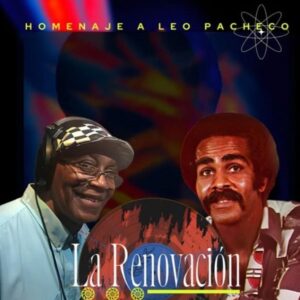
Leo Pacheco Sonero del barrio and beloved example of father and friend was lead vocalist of the Orquesta Renovación under the direction of the tumbador Nico Monterola.

On May 17, 1948, Alejo Veliz Pacheco was born in Las González, Miranda State.

Under the musical influence of his father, an outstanding Afro-Venezuelan drummer, his debut as a professional took place in 1973, when he became the lead vocalist of the Renovación, after the departure of Orlando Castillo “Watussi” to the orchestra of Porfi Jiménez.

Leo Pacheco Sonero del barrio and beloved example of a father and friend

An advanced group, which emerged on February 6, 1973, under the musical influence of Harlow y la Perfecta, became the ideal competition to the “Galician” Dimensión Latina.

Under the direction of tumbador Nico Monterola, La Renovación, despite not having much luck, presented in its ranks timbalero Alfredo Cutuflá, (great Venezuelan timbalero, with a brilliant career in France), then Cheo Navarro (Director of Bailatino), the future trombonists of Oscar D’ León, the Piñango brothers: Nené and Taito.

This is the first recording for the album of La Renovación, one of the best Venezuelan salsa groups of the 70s. La Renovación since its foundation had in its ranks a select group of musicians that in the future would make a brilliant career in our salsa, needless to say that this group in its different stages has always tried to maintain a very fat and hard sound in the style of the good bands of New York”.

Orquesta Renovación under the direction of the tumbador Nico Monterola

This LP gathers many good songs but there is one in particular that I like very much and it is “Guaguancó a Barlovento”, authored by Orlando Watussi, who was also founder of this group, but he left before the recording of this first album.

Rafael García on bass, Félix Suárez “Shakaito” (future director of the Bronko), Hungria Rojas (later Oscar D’ León’s bongos player) and the vocalization of Leo Pacheco, who recorded with them, (5) Cinco Producciones: Echa Pa’ lante (1974); Llegó la Renovación (1975); Pare Cochero (1975); Lo máximo es Renovación (1976) and A todo el mundo le gusta (1976).

Due to some problems he left La Renovación and went on tour to Colombia with Nelson Henríquez, commitments that prevented him from joining the newly formed orchestra of Oscar D’ León, who observed in Leo his great conditions to do the chorus and second voice, (as a substitute for the work done by Wladimir Lozano in Dimensión Latina), and in a nightclub, Oscar told him: “Leo was looking for you, because the two of us, for whatever comes out …”, “here there is nothing else…”, “here we are going to bust everybody…”.

In fact, after Rodrigo Mendoza’s departure in March 1977, the band replaced him thanks to Leo Pacheco’s very special timbre to do the chorus and second voice, with some songs that served as witnesses, such as the unforgettable: Juramento, Fuego de Amor, Capullito de Azucena, Cruel Desilusión (Con la Crítica de Oscar), among others.

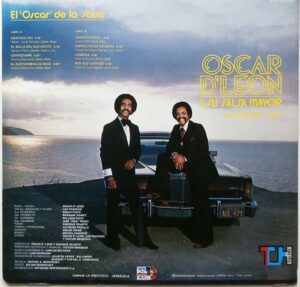
Oscar D'Leon Y Su Salsa Mayor El Oscar De La Salsa
Oscar D’Leon Y Su Salsa Mayor El Oscar De La Salsa

The last days of May 1977, the breakup of Oscar D’ León’s Salsa Mayor is announced, where the bassist-singer in record time reassembles his orchestra dismantling the Renovación itself, while Leo Pacheco, together with the timbalero Alfredo Padilla, Henry Camba, William Puchi, Miguel Pacheco, José “Pipo” Pérez form: “Nuestra Orquesta La Salsa Mayor”, with whom he recorded three anthological albums: De frente y luchando (1978); Strong & Hots (1979); Sello de garantía (1979).

He continued his musical activity in the following years with La Crítica, Combo Venezuela and other groups.

“There was a lot of history left to tell, impossible to tell in this opportunity for reasons of space, although we hope it will be the beginning of a series of works on Venezuelan Salsa, which unfortunately we begin with the sad news of the death of Leo Pacheco, who left us with the fullness of his vocal cords and strength, which impressed the doctors on the day of his death when he resisted 8 hours with a heart attack while driving home in Ocumare del Tuy in his native Miranda state”.

For July 2023 the Lutier, Percussionist and friend Maestro Nico Monterola made a well-deserved tribute with a single titled:

“Tribute to Leo Pacheco”.

Sonero of the neighborhood and beloved example of father and friend.

Leo Pacheco Sonero del barrio and beloved example of a father and friend


Source: Jose “Cheo” Guevara of Asocosalsa 74

Also Read: “Canelita Medina” Caribbean popular music loses one of its best exponents

5 best places to dance in Barcelona

Europe - Spain - Barcelona

5 best places to dance in Barcelona

We tell everything you need to know about it

Everyone wants to seize time when they travel, so we save you the search and show you the 5 places where you can go dancing salsa, bachata, merengue and all those vibrant tropical rhythms.

Europe cannot resist the swing of Latin music, dance and guaguancó!

1.- Antilla Salsa Barcelona

Antilla Salsa Barcelona is a discotheque specialized in Latin Music, the best option for your nights of Salsa in the city. Pass by the discotheque and share with us our happiness, our rhythm and our unique atmosphere. Approach to discover the musical selection of our DJs: salsa, bachata, kizomba, merengue, rumba, cha-cha-cha, casino wheel… They see and enjoy all our activities: exhibitions by renowned dancers, Free workshops and the collaboration of the Salsa-boys… Come and enjoy our unique and special environment!

Their school organizes the courses quarterly, and in the summer it also offers Intensive Courses and free Workshops for those who want to take advantage of their vacation period. Their School of dance receives pupils of all levels and for the different specialties and rhythms, too.

Antilla Salsa Barcelona

Address: Carrer d’Aragó 141, 08015 – Barcelona

http://www.antillasalsa.com

www.antillaescueladesalsa.com


2.- Mojito Club

Mojito Club is offering three salsa-nights a week and has one night completely dedicated to Cuban music. If you want latino music, salsa or bachata, Mojito Club is the place to go!  On Fridays & Saturday the club is 100% an international latino music club. You will also find orchestras playing live music that you can strut your moves to. The club is very popular and might be busy on Fridays and Saturdays, so arrive early! Mojito Club is the reference of Salsa, Bachata and Latin music in Barcelona. The classic Mojitos and an international cocktail bar and the restaurant will not leave you indifferent!

Sundays is student’s day! If you are a student of their dance school, Sunday is your day. Enjoy discounts with your VIP card and wardrobes for FREE. If you don’t know how to dance, they have their own Salsa School where you can learn from the first steps to the most advanced movements.

Mojito Club
Mojito Club

Address: Carrer del Rosselló, 217, 08008 Barcelona

http://www.mojitobcn.com


3.- Habana Club

Habana Club is both a dance club and a restaurant in one. Go there for a delicious meal with live music or show off your rhythm and moves on the dancefloor. The club is located in the district of La Barceloneta and is very popular. You’ll definitely enjoy the view! The party in Habana Barcelona consists of a large number of live shows that will make you enjoy music, quality and harmony of your audience to the fullest. A place where you can enjoy a full night, with exquisite dinner, dances with our entertainers and the best tropical cocktails and mojitos in Barcelona.

Habana Club
Habana Club

Address: Passeig de Joan Borbó, 74.


4.- El Bombón

El Bombón is the portal to the Caribbean in the heart of Barcelona. Salsa, latin soul, merengue, caribbean food and cocktails. The best Caribbean tapas in Barcelona and the best music. Amazing cocktails and amazing food!! Really good dancing music but not enough space to dance, so try to go to monday to friday.

El Bombón
El Bombón

Address: C. Mercè, 13 bis, Barcelona.

https://www.facebook.com/bombonbarcelona/


5.- Dio Club

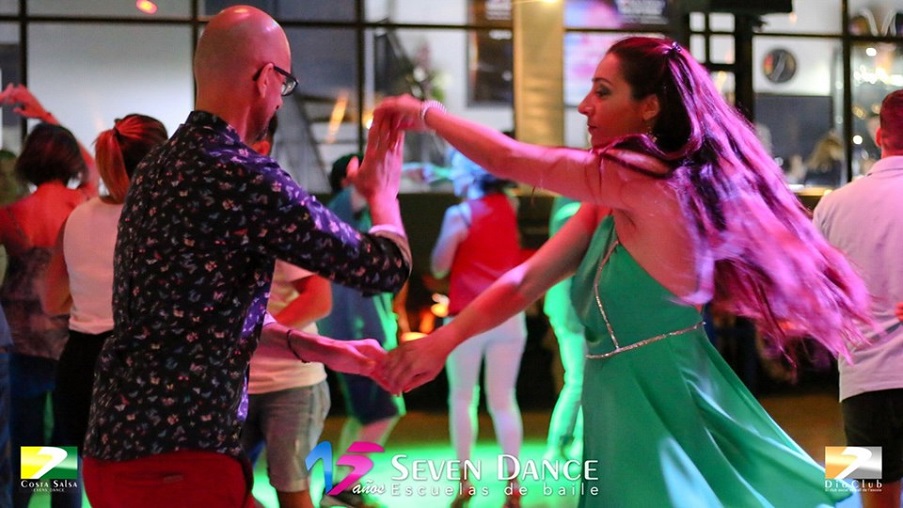
The party for students and partners of the Seven Dance dance school.

It is a magnificent space in the neighborhood of Gracia that has 2 spacious dance halls and that on Thursdays and Saturdays you can go dancing salsa, bachata and kizomba as long as you have your school membership card. You can get your card completely free at the door or by contacting them previously. On Fridays and Sundays you can go dancing ballroom dancing or swinging. It is advisable to check the schedule before going to dance. A lovely place to practice any type of dance offered there, plenty of space, comfortable ventilation and a bar as god commands.

Dio Club
Dio Club

Address: Carrer del Perill, 10 08012 Barcelona

https://www.facebook.com/pages/Dio-Club/544345925626341

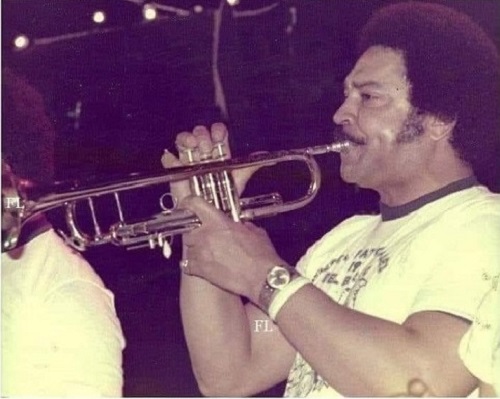
Roberto Rodríguez was a Cuban trumpet player and composer, author of Ray Barreto’s hit song “Que viva la Música” (Long Live Music)

Roberto Reimundo Rodríguez (Cienfuegos, January 23, 1936 – April 18, 1988), was a Cuban trumpeter and composer, who belonged to Ray Barreto’s orchestra, which he would later leave to belong to Fania All-Stars, as lead trumpet player.

Roberto is the author of Ray Barreto’s hit “Que viva la música”.

Roberto was born in 1938, in Cienfuegos (Cuba). He began his musical career at the age of 12, in his native province; cradle of the world famous Orquesta Aragón.


Roberto Rodríguez
Roberto Rodríguez

From an early age he participated in “Las Comparsas de Cuba” and with the orchestra “La Unión Fraternal de Cienfuegos”.

In 1955, he emigrated to the United States and in 1957 he married Nancy Zayas, with whom he had three sons: Roberto Jr., William and Richard.

While growing as an artist, Roberto co-founded the orchestra “Los Jóvenes Estrellas de Cuba” with his long-time friend Ernie Stairs. He later moved on to Wilfredo Figueroa’s orchestra and “Ritmo Swing”.

In 1965, Roberto was recommended to Ray Barreto by Eddie Martinez. Eddie was a pianist for both the TataVazquez and Ray Barretto orchestras.

After listening to Roberto, Ray Barretto recognized that he was in contract with Vivar, one of his former colleagues and musicians, and brought him on board. Roberto remained in Ray’s orchestra for 11 years.

His performance as first trumpet soloist was extraordinary. While in Ray’s orchestra, Roberto composed several famous songs such as: “Yo Soy La Candela”, “Fuego y Pa’Lante”, “Invitación al Son”, “Cienfuegos, Perla del Sur”, “Se Traba”, “El Tiempo lo Dirá”, “O’Elefante”, and the worldwide hit: “Que Viva la Música”.

Roberto Rodríguez
Que viva la música

In 1972, Roberto became a member of the Fania All-Stars as first trumpet and soloist. The documentary “Our Latin Thing” launched Roberto along with the other members of the All-Stars to international fame.

Our Latin Thing

On August 26, 1971 New York City gave birth to a sound that would change Latin music forever. That night at the renowned Cheetah nightclub, the Fania All Stars took the stage with their unique sound that echoed across all borders and reached every country. Fania Records re-releases “Our Latin Thing” on DVD, the film that sparked the salsa movement of the seventies.

Roberto Rodríguez
Our Latin Thing (Nuestra Cosa)

From the concert came a double LP entitled “Live At The Cheetah” and the historic film “Our Latin Thing”. Its director, Leon Gast, documented the events at the Cheetah with the addition of footage of the musicians in the recording studio and scenes of New York’s Spanish Harlem.

The 40th anniversary edition of “Our Latin Thing” includes a DVD with the remastered film, and two CDs with the music from the film and some additional tracks, which can be purchased on the label’s official website.

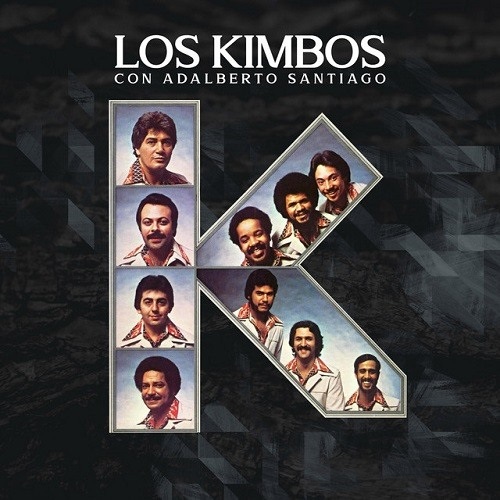
In 1975, Ray decided to take a turn towards a new musical facet and Roberto became part of the group “Los Kimbos”.

Roberto Rodríguez
Los Kimbos

Two years later, in 1977, Roberto joined the charanga band “Orquesta Broadway”. In this group he not only excelled as a trumpet soloist but also as a vocalist. Here he composed new hits, including: “No Se Va a Poder” and “Como Nueva York no Hay”.

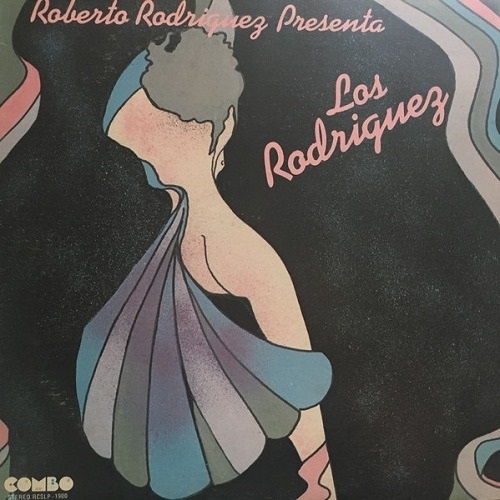
In 1982, Roberto decided to assist his sons in their desire to continue their musical journey and produced the album: “Roberto Rodríguez Presenta a Los Rodríguez”, under the “Combo Records” label.

Roberto Rodrígue
Roberto Rodríguez Presenta a Los Rodríguez

In 1983, Roberto joined the “Los Rodriguez” Orchestra, to perform with his sons Roberto Jr (trumpet player) and Willie (bass player).

His health deteriorated in early 1988, and he finally passed away in April of that year, victim of skin cancer. His son Roberto Rodriguez Jr. followed in his footsteps and has excelled in salsa orchestras in New York.

 Roberto Rodríguez was a Cuban trumpet player and composer

Read Also: Miguelito Cuní recognized among the best soneros of Cuba


La Gozadera in Barcelona will never be the same

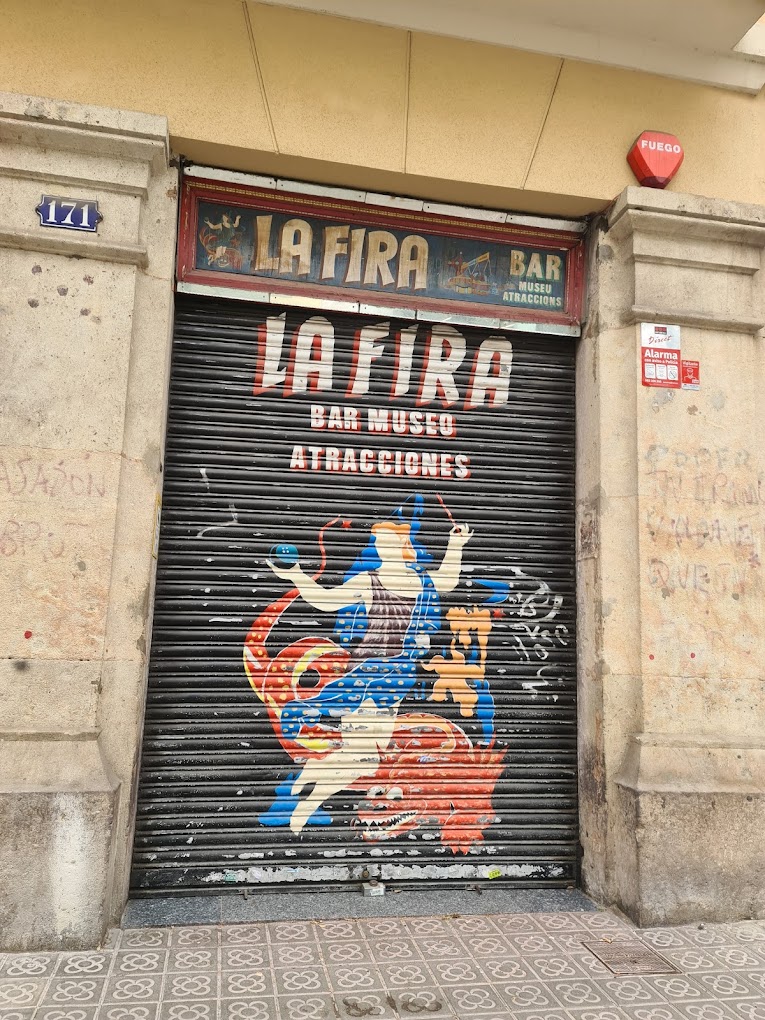
Latin rhythms are very popular in Europe, Spain is not escaping this and one of its most cosmopolitan and original cities is enjoying the Latin party. In Barcelona you can enjoy the best Latin party “La Gozadera” every Thursday at La Fira Provença. There is a lot to do in this city but if you want to dance the night away to the best Latin rhythms, La Fira Provença is your place. Learn more in the following lines.

Barcelona is your city if you are looking for cosmopolitan and original environments

One of the most impressive cities in Spain is Barcelona, filled with a lot of art and creativity. It has become one of the cultural capitals of Europe, where in each street there is an artistic representation of different genres. It is a place that knows how to mix the new with the old, that is not afraid to show how its artists left their marks, and that attracts people for its tendencies.

Gaudí is one of those artists who left his artistic signature wherever he could, and one of those who gave the city the most fame. It is not strange to see the Gaudí touch in most of its buildings, but also the modernization that this fame has brought it. Visitors can easily enjoy the city life together with the flair of the Mediterranean coastwhich turns nights into an adventure.

Find La Gozadera in Barcelona Nights

One of those adventures can be found in La Fira Provença, one of the most fashionable nightclubs in the city. La Fira translates to The Fair, and precisely the style of this place can be defined as a fair, since everything is very lively and exuberant. From the decoration of the premises that is governed by Feng Shui, which gives it a unique atmosphere, to what they offer in food and drinks, and of course the loyal public of La Fira.

Its location is highly exclusive on Carrer de Provença, one of the most elite areas of the city, which generates one of the most visited experiences in Barcelona. From sunset to midnight, it offers a great gastronomic service but at 12, the disco starts its Latin party.

It has become so popular that you can see great figures from Barcelona, Spain and even international celebrities in the VIP area. But the central day of this Latin party is Thursday with “La Gozadera”, a party organized by Barceloning, which starts at midnight and ends at 5am.

During those hours the best Latin music of the moment is presented with great hits from the past, some Thursdays there is live talent. But the best thing is that until 1am the entrance is completely free, so it is not strange to go through Carrer de Provença before midnight on Thursdays and observe a line to be able to enter to enjoy “La Gozadera”.

Barcelona offers a lot for all its inhabitants and visitors, but if it is about Latin rhythms, La Fira Provença is the best place for this. Its location, atmosphere, and service make it one of the best nightclubs in this Spanish city.

  • « Go to Previous Page
  • Page 1
  • Interim pages omitted …
  • Page 3
  • Page 4
  • Page 5
  • Page 6
  • Page 7
  • Interim pages omitted …
  • Page 165
  • Go to Next Page »

International Salsa Magazine (ISM) is a monthly publication about Salsa activities around the world, that has been publishing since 2007. It is a world network of volunteers coordinated by ISM Magazine. We are working to strengthen all the events by working together.