• Skip to primary navigation
  • Skip to main content

International Salsa Magazine

  • HOME
  • Previous editions
    • 2026
      • ISM / March 2026
      • ISM / February 2026
      • ISM / January 2026
    • 2025
      • ISM / December 2025
      • ISM / November 2025
      • ISM / October 2025
      • ISM / September 2025
      • ISM / August 2025
      • ISM / July 2025
      • ISM / June 2025
      • ISM / May2025
      • ISM / April 2025
      • ISM / March 2025
      • ISM / February 2025
      • ISM / January 2025
    • 2024
      • ISM / December 2024
      • ISM / November 2024
      • ISM / October 2024
      • ISM / September 2024
      • ISM / August 2024
      • ISM / July 2024
      • ISM / June 2024
      • ISM / May 2024
      • ISM / April 2024
      • ISM / March 2024
      • ISM / February 2024
      • ISM / January 2024
    • 2023
      • ISM / December 2023
      • ISM / November 2023
      • ISM / October 2023
      • ISM – September 2023
      • ISM – August 2023
      • ISM July 2023
      • ISM Edition June 2023
      • ISM – May 2023
      • ISM April 2023
      • ISM March 2023
      • ISM February 2023
      • ISM January 2023
    • 2022
      • ISM December 2022
      • ISM November 2022
      • ISM October 2022
      • ISM September 2022
      • ISM August 2022
      • ISM July 2022
      • ISM June 2022
      • ISM May 2022
      • ISM February 2022
      • ISM January 2022
    • 2021
      • ISM December 2021
      • ISM November 2021
      • ISM October – 2021
      • ISM September 2021
      • ISM August 2021
      • ISM July 2021
      • ISM May 2021
      • ISM April 2021
      • ISM June 2021
      • ISM March 2021
      • ISM February 2021
      • ISM January 2021
    • 2020
      • ISM December 2020
      • ISM November 2020
      • ISM October 2020
      • ISM September 2020
      • ISM August 2020
      • ISM July 2020
      • ISM June 2020
      • ISM May 2020
      • ISM April 2020
      • ISM March 2020
      • ISM February 2020
      • ISM January 2020
    • 2019
      • ISM December 2019
      • ISM November 2019
      • ISM October 2019
      • ISM Septembre 2019
      • ISM August 2019
      • ISM July 2019
      • ISM June 2019
  • Download Salsa App
    • Android
    • Apple
  • Spanish

Search Results for: Bar

Danibel Breton “The Barbie of the Accordion in the Dominican Republic”

Danibel Breton was born on November 13, 1997, at the Santiago Rodriguez General Hospital in San Ignacio de Sabaneta.

She is the second daughter of Mr. David Breton and Mrs. Maribel Breton.

When she was a few months old, her family moved to Santo Domingo East in search of better opportunities. She was always a happy child, intelligent and very dedicated to her studies.

Her mother recalls that in her first years of school when Danibel arrived home she immediately took out her school supplies and began to do her homework.

She has always shown a vocation for painting, the arts and she loved to sing and dance. She participated for several years in the dance ministry in her parish.

His interest in typical music was born at the age of thirteen. Accordionist Reyes Pilarte would go to La Barbie’s house to teach her father, David Breton, how to play.

One day after witnessing several accordion lessons Danibel asked her father for the accordion and performed the merengue “El puente seco” much better than her father. After that day she started taking weekly accordion lessons with Reyes Pilarte, a native of Los Bombones, Santiago Rodriguez.

Her first stage performance was at El Rincón Santiago Rodríguez where Bartolo Alvarado El Ciego de Nagua, gave her the opportunity to play for the first time.

Maestro Bartolo Alvarado was very impressed by her playing at such a young age. When he felt Danibel’s face with his hands, El Ciego de Nagua said: “She is a doll”, and from there Danibel Breton’s first artistic name was born: “La Muñeca del acordeón” (The Accordion Doll).

A few weeks later they discovered that there was already an accordionist with the name “La Muñeca”, so Danibel Breton was baptized as “La Barbie del Acordeón” because of her similarity to the popular doll with blonde hair and light eyes.

Other artists that gave her participation on stage before she launched herself professionally were: Narciso El Pavarotti, Manny Jovany, El Prodigio, La Reyna Maria Diaz, Banda Real, among others. These presentations helped her to grow as an artist, to fall in love with the stage and to discover her passion for typical music.

Along with her music, accordion and singing lessons, Danibel Breton studied English, Voiceover and Accounting before working professionally in music. At the present time she continues to receive singing lessons and is studying law, which she started at the Universidad Católica del Este (UCADE) and continued in Santiago at the UAPA University.

Since she wrote her first merengue with the help of her father and older sister, she and her family have dreamed of launching the musical project of Accordion Barbie.

As God’s timing is perfect, the opportunity to start the project professionally presented itself at the beginning of 2018, when David Breton, Barbie’s father and an ensemble of typical music professionals carefully selected each of the musicians and arrangers that are part of La Barbie del Acordeón.

On September 29, 2018 at The New Monte Bar, in Santiago de los Caballeros, the grand Debut of “La Barbie el Acordeón” took place. Danibel Breton narrates that she says she felt very excited to see her dream come true.

For her, playing typical music is an opportunity to represent Dominican women in the new generation of perico ripiao artists, to preserve the merengue derecho or “de línea” and at the same time to make modern songs to captivate a young audience.

Home

In Barrio Marianao in Havana, Cuba was born Armando Peraza was a Latin jazz percussionist

Peraza (May 30, 1924-April 14, 2014) was a Cuban Latin jazz percussionist.

Thanks to his collaborations with guitarist Carlos Santana, jazz pianist George Shearing and vibraphonist Cal Tjader between 1950 and 1990, he is internationally recognized as one of the most important figures in the field of Latin percussion.

Known primarily as a conguero and bongocero, Peraza is also a skilled dancer and composer. He has appeared on recordings by Pérez Prado, Machito, George Shearing, Charlie Parker, Tito Puente, Cal Tjader and Carlos Santana. Performances with Santana, Shearing and Tjader brought him international fame.

He was inducted into the Smithsonian Institute and had three “Armando Peraza Days” from the city of San Francisco.

One of the most important and respected figures in the world of percussion.

He is a legendary master on both congas and bongoes, whose unorthodox style and story are an inspiration to countless young musicians.

He began his artistic career in the early 1940s, played with singer Alberto Ruiz’s Kuvabana ensemble where he played the bongo and moved to San Francisco in 1949.

At the New York World’s Fair he played congas in an African pavilion with a Nigerian.

This African arrives and says to me: “Man, what part of Africa are you from? I told him, I am from Cuba. He said: “Don’t tell me” He later worked with the orchestras of Paulina Álvarez and Dámaso Pérez Prado, and the Bolero group.

In 1947 he moved to Mexico, where he joined with Mongo Santamaría the ensemble Clave de Oro, and in 1948 they both traveled to New York as percussionists accompanying the dance couple Pablito y Lilón.

At the end of that year, Peraza joined Slim Gaillard’s jazz combo with which he traveled throughout the United States. After arriving in New York in 1949, Armando became a sought-after musician, especially in the contemporary Bebop and Latin Jazz scenes.

Armando built a reputation for impressively fast and complex hand technique, experimental techniques and great talent for entertaining. He flourished in progressive atmospheres that combined jazz with Afro-Cuban styles and was at the center of a new expression called “Cubop”.

He has played on more than 100 albums and is the composer of more than 40 songs. Some of these works include collaborations with Mongo Santamaria, George Shearing, Cal Tjader and Carlos Santana.

Settled in San Francisco, California, in the early 1950s, Peraza began working with pianist George Shearing’s quintet, where he demonstrated his mastery as a player of the tumbadora and bongo; also in this period he recorded several albums of Cuban folk music with Mongo Santamaria.

In the 60’s he joined the quintet of vibraphonist Cal Tjader, with whom he remained for several years and with whom he popularized Chano Pozo’s Guachi guaro. In the 1970s, he joined Mongo Santamaría’s orchestra, with which he participated in the Montreaux Jazz Festival in Switzerland.

Later he worked with Carlos Santana’s rock band, in which he remained for 17 years, until his retirement from artistic life in the 90s.

He possessed a great capacity to obtain the most unusual sounds of the bongo and the tumbadora, and distinguished himself for his extraordinary solos on both instruments.

He died on April 14, 2014 in California, United States, as a result of pneumonia.


Fuente: https://kripkit.com/armando-peraza/

Cabaret Sauvage’s 25th Anniversary with Latin Essence

This atypical room located in the Parisian capital will offer Latin music for a month

Originally, Cabaret Sauvage was a Magic Mirror installed for only a few weeks in 1994.

A quarter of a century is the occasion for Cabaret Sauvage will celebrate its anniversary month with a Latin music festival. From July 1st to August 6th enjoy a colorful summer at Parc de la Villette – 59 boulevards Macdonald 75019 Paris, France.

This mythical place was created by Méziane Azaïche in December 1997. This first urban cultural park located in the heart of Parc de la Villette is surrounded by nature, has a terrace overlooking the Canal de l’Ourcq, has a circular dance floor, tables, benches, lights, and beveled mirrors. In the summer of 2019, they modernized this place with a new tent making it the first soundproof Magic Mirror in the world.

At Cabaret Sauvage you can eat, drink, dance, meet your neighbor from the next table, or even lounge on the terrace. Through its diversified program, you will be surprised by the quality of circus shows, dances, and night concerts with artists from all over the world.

During this anniversary month, Cabaret Sauvage https://www.cabaretsauvage.com/agenda welcomes attendees in a spirit of unity and acceptance with mixes of rhythmic genres for their knowledge and enjoyment, starting with Yuri Buenaventura on Saturday, July 9th. Doors open at 7:30 PM and the price is €35.

Yuri’s Salsa is marked by the lyricism of Europe and the drums of Africa. During his childhood, he listened to Gregorian chants, French songs, and classical music (melodies admired by his father) just as he enjoyed moving to the rhythm of percussion, marimba, and songs from the African continent that still sounds on the Buenaventura’s beaches (Colombia), his native island.

Máximo Francisco Repilado Muñoz “Compay Segundo” was the leader of the Compay Segundo y Sus Muchachos band.

The Latin music festival continues with Grupo Compay Segundo – Buena Vista Social Club on Friday, July 15th, and tickets are €25.99 (pre-sale price). Doors open from 8 PM on this day.

This group revives Cuban music before the revolution and expresses its distinguished stamp with a warm and unique sound.

This ecliptic music venue will bring Los Van Van in August, specifically on Friday, August 5th, and the doors open at 7:30 PM, and the ticket price is €35. On this occasion, César “Pupy” Pedroso will join this orchestra.

Los Van Van or better known by many in Latin America as “the Rolling Stones of Salsa” are a band created by Juan Formell in 1969 and has been a school for many current Salsa artists.

Cabaret Sauvage’s anniversary month ends with Chico Trujillo + Sidi Wacho on Saturday, August 6th. Doors open at 7:30 PM and the price of admission is €27.

Chico Trujillo began his musical career in Valparaíso (Colombia) in 1999. His project combines traditional Colombian Cumbia with Punk and has become today the standard-bearer of this new wave of traditional Colombian music accepted by many fans and exported for a long time to the European and American stages.

Likewise, the Sidi Wacho group is nomads born on the island of Valparaíso (Colombia), Roubaix (France), Lima (Peru), and Barbès (France). Their band is made up of two MCs (Rap vocalists), a trumpeter, an accordionist, and a percussionist who mix sounds and dialects accompanied by their war cry “La Lucha Sigue” (the fight continues) in an environment of Cumbia, Balkans, and Hip Hop.

José Mosquera from Barquisimeto for the World “The bodybuilder and elegant”


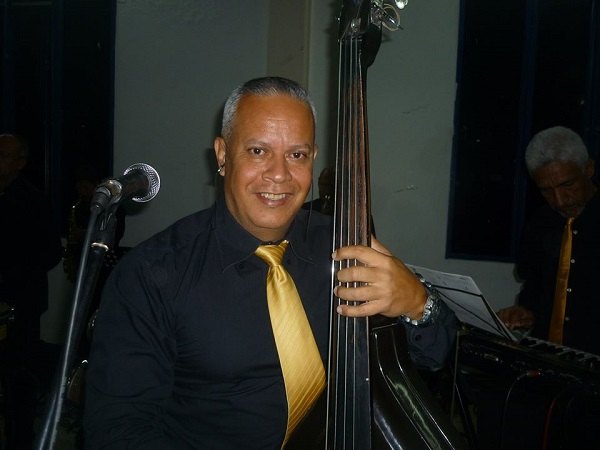
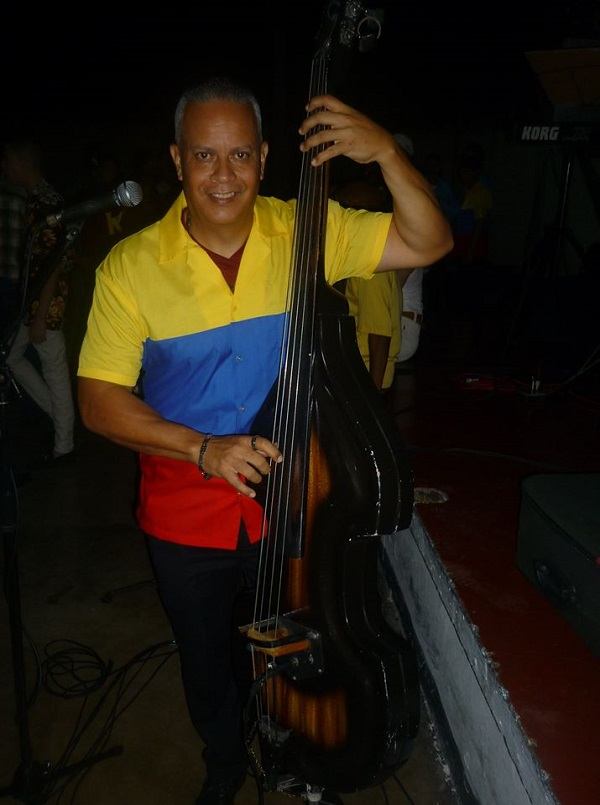
Barquisimeto, is well known as the musical capital of Venezuela and in this opportunity we will make special mention to the musician José Jesús Mosquera Cañizales, born in our city in the Antonio María Pineda Hospital, on May 23, 1969, son of Rafael Mosquera and Juana Cañizales, married to Yolanda García and from this union were born their children Yolanda José and Luis José.

Mosquera was always inclined to music since he was a child, participating in the musical activities of his school “Ciudad Bolivar”, located on Carrera 13 and 48th Street, in Barquisimeto, singing and playing the cuatro in a self-taught way and with the help of his father who taught him to improve his playing.

At the age of 8 he studied at Pablo Canela’s academy, at the age of 10 he learned to play guitar, also with the support of his father and his cousin Carlos Romero.

At the age of 11 he participates in the musical groups of the Christian church, standing out as a guitarist, drummer and timbalero. When he turned 15, he became interested in playing the bass guitar and during his high school studies at the Ezequiel Bujanda Combined Cycle, he met Jesús Rincón, also a musician, and joined the ranks of the “Obeligaitas” bagpipe group, where he began his career as a bass player.

When he turned 18 years old, he was part of the staff of the group “Tecnogaitas” of the Tecnológico Antonio José de Sucre and simultaneously he was bassist of the band “La Salle”. Afterwards, he is recommended to Alí Rojas and auditions to be the bassist of the “Sonora de Alí”, where he remains for 3 years.

Alí Rojas gave him the responsibility of being the bassist of the dance orchestra “Sensación”, where he remained for 15 years. In 1992, he began working as a music instructor for the Fundación del Niño until 1996.

Mosquera, besides being an excellent bass player, plays string instruments such as the cuatro, guitar and requinto

In 1993, Mosquera turned to romantic music and created the duet “Génesis” with his friend and compadre Carlos Enrique Prince, performing in nightclubs and private parties. In 1997, he joined the Poliboys Orchestra of the General Command of the Lara State Police as a bass player, where he currently works. In 2004 he began his musical studies at the Vicente Emilio Sojo Conservatory and graduated as an academic musician in 2009 with excellent grades. José has performed on regional television stations demonstrating his qualities in various prestigious programs and in 2016, he won 3rd place in the Police Voice Festival.

Mosquera, at what date do you become interested in salsa as a musical genre?, Professor Carlos in 2007 I start playing the baby bass and in 2011 I join the K’dencia Latina Orchestra of Carlos Sanchez and also had the privilege of accompanying Benjamin Rausseo “El Conde del Guácharo”, performing with his band and with K’dencia Latina, accompanied the late Willy Rodriguez, and vocalists of national and international renown: Hildemaro, Pibo Márquez, Charlie Guzmán, Alejandro Mayora, Mariana “La Sonera de Venezuela” and the official doubles in Venezuela of Rubén Blades (Jhony Heredia) and Celia Cruz (Ibrahíma Rondón).

Mosquera finally told us that musical excellence is achieved through perseverance and dedication.

Finally we wish the best of success on behalf of International Salsa Magazine, to the excellent musician José Mosquera “The bodybuilder and elegant bass”.

See you next time and let’s keep on salsaing!

José Mosquera “The bodybuilder and elegant”.


By Carlos Colmenares, ISM Correspondents, Barquisimeto, Venezuela

José Mosquera from Barquisimeto for the World “The bodybuilder and elegant”

Barquisimeto, is well known as the musical capital of Venezuela and in this opportunity we will make special mention to the musician José Jesús Mosquera Cañizales, born in our city in the Antonio María Pineda Hospital, on May 23, 1969, son of Rafael Mosquera and Juana Cañizales, married to Yolanda García and from this union were born their children Yolanda José and Luis José.

Mosquera was always inclined to music since he was a child, participating in the musical activities of his school “Ciudad Bolivar”, located on Carrera 13 and 48th Street, in Barquisimeto, singing and playing the cuatro in a self-taught way and with the help of his father who taught him to improve his playing.

At the age of 8 he studied at Pablo Canela’s academy, at the age of 10 he learned to play guitar, also with the support of his father and his cousin Carlos Romero.

At the age of 11 he participates in the musical groups of the Christian church, standing out as a guitarist, drummer and timbalero. When he turned 15, he became interested in playing the bass guitar and during his high school studies at the Ezequiel Bujanda Combined Cycle, he met Jesús Rincón, also a musician, and joined the ranks of the “Obeligaitas” bagpipe group, where he began his career as a bass player.

When he turned 18 years old, he was part of the staff of the group “Tecnogaitas” of the Tecnológico Antonio José de Sucre and simultaneously he was bassist of the band “La Salle”. Afterwards, he is recommended to Alí Rojas and auditions to be the bassist of the “Sonora de Alí”, where he remains for 3 years.

Alí Rojas gave him the responsibility of being the bassist of the dance orchestra “Sensación”, where he remained for 15 years. In 1992, he began working as a music instructor for the Fundación del Niño until 1996.

Mosquera, besides being an excellent bass player, plays string instruments such as the cuatro, guitar and requinto.

In 1993, Mosquera turned to romantic music and created the duet “Génesis” with his friend and compadre Carlos Enrique Prince, performing in nightclubs and private parties. In 1997, he joined the Poliboys Orchestra of the General Command of the Lara State Police as a bass player, where he currently works. In 2004 he began his musical studies at the Vicente Emilio Sojo Conservatory and graduated as an academic musician in 2009 with excellent grades. José has performed on regional television stations demonstrating his qualities in various prestigious programs and in 2016, he won 3rd place in the Police Voice Festival.

Mosquera, at what date do you become interested in salsa as a musical genre?, Professor Carlos in 2007 I start playing the baby bass and in 2011 I join the K’dencia Latina Orchestra of Carlos Sanchez and also had the privilege of accompanying Benjamin Rausseo “El Conde del Guácharo”, performing with his band and with K’dencia Latina, accompanied the late Willy Rodriguez, and vocalists of national and international renown: Hildemaro, Pibo Márquez, Charlie Guzmán, Alejandro Mayora, Mariana “La Sonera de Venezuela” and the official doubles in Venezuela of Rubén Blades (Jhony Heredia) and Celia Cruz (Ibrahíma Rondón).

Mosquera finally told us that musical excellence is achieved through perseverance and dedication.

Finally we wish the best of success on behalf of International Salsa Magazine, to the excellent musician José Mosquera “The bodybuilder and elegant bass”.

See you next time and let’s keep on salsaing!

José Mosquera “The bodybuilder and elegant”.

  • « Go to Previous Page
  • Page 1
  • Interim pages omitted …
  • Page 4
  • Page 5
  • Page 6
  • Page 7
  • Page 8
  • Interim pages omitted …
  • Page 165
  • Go to Next Page »

International Salsa Magazine (ISM) is a monthly publication about Salsa activities around the world, that has been publishing since 2007. It is a world network of volunteers coordinated by ISM Magazine. We are working to strengthen all the events by working together.