• Skip to primary navigation
  • Skip to main content

International Salsa Magazine

  • HOME
  • Previous editions
    • 2026
      • ISM / March 2026
      • ISM / February 2026
      • ISM / January 2026
    • 2025
      • ISM / December 2025
      • ISM / November 2025
      • ISM / October 2025
      • ISM / September 2025
      • ISM / August 2025
      • ISM / July 2025
      • ISM / June 2025
      • ISM / May2025
      • ISM / April 2025
      • ISM / March 2025
      • ISM / February 2025
      • ISM / January 2025
    • 2024
      • ISM / December 2024
      • ISM / November 2024
      • ISM / October 2024
      • ISM / September 2024
      • ISM / August 2024
      • ISM / July 2024
      • ISM / June 2024
      • ISM / May 2024
      • ISM / April 2024
      • ISM / March 2024
      • ISM / February 2024
      • ISM / January 2024
    • 2023
      • ISM / December 2023
      • ISM / November 2023
      • ISM / October 2023
      • ISM – September 2023
      • ISM – August 2023
      • ISM July 2023
      • ISM Edition June 2023
      • ISM – May 2023
      • ISM April 2023
      • ISM March 2023
      • ISM February 2023
      • ISM January 2023
    • 2022
      • ISM December 2022
      • ISM November 2022
      • ISM October 2022
      • ISM September 2022
      • ISM August 2022
      • ISM July 2022
      • ISM June 2022
      • ISM May 2022
      • ISM February 2022
      • ISM January 2022
    • 2021
      • ISM December 2021
      • ISM November 2021
      • ISM October – 2021
      • ISM September 2021
      • ISM August 2021
      • ISM July 2021
      • ISM May 2021
      • ISM April 2021
      • ISM June 2021
      • ISM March 2021
      • ISM February 2021
      • ISM January 2021
    • 2020
      • ISM December 2020
      • ISM November 2020
      • ISM October 2020
      • ISM September 2020
      • ISM August 2020
      • ISM July 2020
      • ISM June 2020
      • ISM May 2020
      • ISM April 2020
      • ISM March 2020
      • ISM February 2020
      • ISM January 2020
    • 2019
      • ISM December 2019
      • ISM November 2019
      • ISM October 2019
      • ISM Septembre 2019
      • ISM August 2019
      • ISM July 2019
      • ISM June 2019
  • Download Salsa App
    • Android
    • Apple
  • Spanish

Search Results for: Bobby Cruz

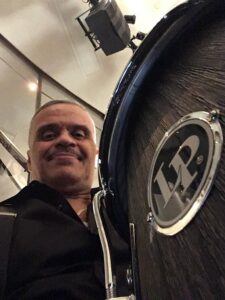
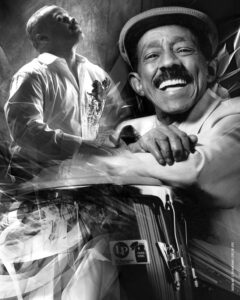
Wilson “Chembo” Corniel Jr.

Wilson “Chembo” Corniel Jr.“A sprinkling of be-bop, a touch of swing with a dollop of bomba, rumba, tango and danzón topped with ‘un chin’ de charanga.”

Grammy award nominated percussionist Wilson “Chembo” Corniel was born in Manhattan on November 22, 1953 of proud Puerto Rican parents; Chembo was raised in the humble streets of Red Hook, Brooklyn.
1- Wilson “Chembo” Corniel Jr

Wilson “Chembo” Corniel Jr

It was during these years, as a quick-witted youngster, that he had the privilege and honor to study with such percussion luminaries as, Tommy Lopez Sr., “Little Ray” Romero, Louie Bauzo, and Cachete Maldonado.

Chembo honed his skills at The Harbor Conservatory for the Performing Arts in New York, and also at the prestigious La Escuela Nacional de Arte in Havana, Cuba under the direction of the great Chucho Valdés.

His intense studies with such legends noted above channeled his energy onto a path where Wilson “Chembo” Corniel has now created a reputation for himself among musicians and the public. Today, he is considered as one of the best hard-hitting, versatile percussionists around.
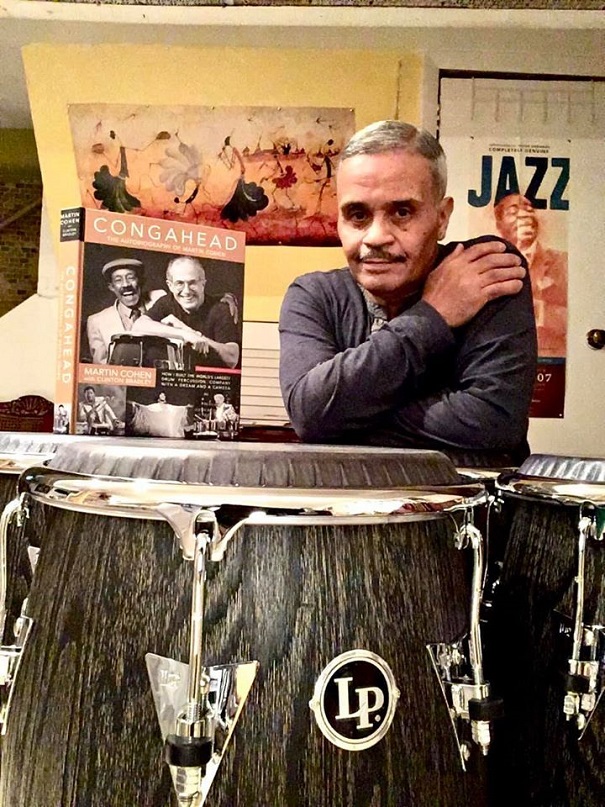
Chembo teaches percussion to students at the SUNY Purchase Conservatory of Music and leads numerous clinics throughout the United States where he brings awareness to others of the rich Afro-Caribbean traditions.

Among his credits, Chembo was chosen to create his own instructional DVD called, “An Introduction to Hand Percussion: Volume I—Congas”. It was released in December of 2000 and with distribution by Warner Brothers it has been a success.

He’s been a vital endorser of Latin Percussion instruments since 1982 as he is currently for Remo drum heads, Vic Firth sticks and Sabian cymbals.

His touring credits are as long as his performing credits. Chembo has toured with many major artists throughout Europe, Asia, North & South America, and the Caribbean. Television credits include an appearance on the “Bill Cosby Show” and a recurring recording gig on Nickelodeon’s children show, “Dora the Explorer”.

Chembo continues to perform and/or record with many artists of different genres. He is currently concentrating on leading his own Latin Jazz quintet, “Chembo Corniel Quintet”. Chembo received a GRAMMY NOMINATION by NARAS IN 2009 for “BEST LATIN

JAZZ ALBUM” for his 2009 cd “Things I Wanted To Do”. This is a well-balanced Latin Jazz group that incorporates many rich traditions, such as writer Aurora Flores states:

“A sprinkling of be-bop, a touch of swing with a dollop of bomba, rumba, tango and danzón topped with ‘un chin’ de charanga.”

Wilson “Chembo” Corniel Jr. ARTISTS: RECORDINGS:

  • Wilson “Chembo” Corniel – “Land Of The Descendants” – 2016
  • Wilson “Chembo” Corniel – “Blue Monk” (ASM) – 2012
  • Wilson “Chembo” Corniel – “Things I Wanted To Do” – 2009
  • Akiko Tusuruga – Orient Express – 2009
  • Wilson “Chembo” Corniel – “For The Rest Of Your Life” – 2007
  • Mark Sherman – Family – 2007
  • Carlos Jimenez – El Flautista – 2007
  • Akiko Tusuruga – Sweet And Funky – 2006
  • Chris Washburne & SYOTOS – Land Of Nod – 2006
  • Chembo Corniel & Andrea Brachfeld – Beyond Standards 2006
  • Willie Martinez – La Familia – 2005
  • Hilton Ruiz – Steppin’ With T.P. – 2005
  • Wilson “Chembo” Corniel – Portrait In Rhythms – 2004
  • Ray Vega – Squeeze Squeeze2004
  • Chris Washburne & SYOTOS – Paradise In Trouble – 2003
  • Steve Wilson – Soulful Songs – 2003 Larry Harlow’s
  • Latin Jazz – Live At Birdland -12/02
  • Chico Freeman – By The Way -4/2002
  • Ray Vega – Pa’lante -3/2002
  • Blood, Sweat & Tears – Christmas Album -12/02
  • Chris Washburne & SYOTOS – The Other Side – 4/2001
  • David Gonzalez & LLB – Sofrito3/2000
  • Bobby Sanabria BIG BAND-Live At Birdland -2/2000
  • (Grammy Nominated) Chris Washburne & SYOTOS – Nuyorican Nights -10/99
  • Ray Vega – Boperation- 8/99
  • Larry Harlow – Latin Legends Band – 5/98
  • The Bronx Horns – Silver in the Bronx – 4/98
  • Greg Abate – Sweet Samba – 3/98
  • Buddy Montgomery Trio – Here Again -1/98
  • Ray Vega – Ray Vega -12/97
  • Willie Colón – Honra y Cultura Louie Ramirez – El Genio de la Salsa Jose Bello – Jose Bello y su Orchestra Bobby Rodriguez y la Compañia – Hay Que Cambiar La Rutina
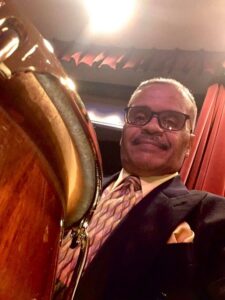
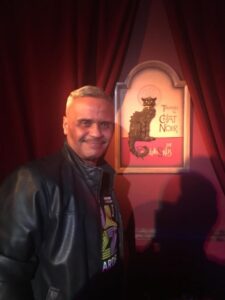
ARTISTS: TOURS/PERFORMANCES:

  • Chucho Valdés
  • Hilton Ruiz
  • Buddy Montgomery
  • Angela Boll
  • Tito Puente
  • Grady Tate
  • Machito
  • Willie Colón
  • Toshiko Akiyoshi
  • Jane Bunnett & Spirits of Havana
  • Bobby Sanabria Big Band
  • Charlie Sepulveda
  • Andrea Brachfeld
  • Ray Vega
  • Bob Baldwin
  • Jose Alberto “El Canario”
  • Pete “El Conde” Rodriguez
  • Larry Harlow
  • Tito Nieves
  • Louie Ramirez
  • Chico Freeman
  • Chris Washburne & the Syotos Band
  • Chico O’Farrill Big Band
  • Bobby Rodriguez y Compañia
  • Lainie Kazan
  • Celia Cruz

Larry Harlow ”El Judío de la Salsa”: innovative and irreverent

A set of innovative ideas


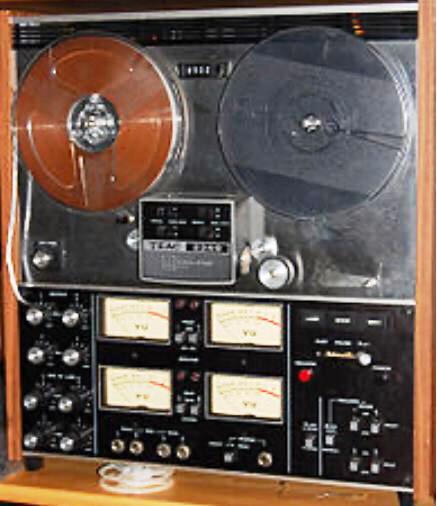
Recorded live on January 16, 1974 at Sing Sing Prison, listeners will immediately discover that the musicians actually came to play from the first note. In a recent conversation, Harlow considers this album to be one of the best of his career and tells how the enthusiasm of the audience positively affected the performance. This was the only Latin album to be recorded in quadraphonic format. The basic concept was similar to today’s surround sound systems, but the way to achieve the four audio channels changed in terms of format.

Harlow took advantage of new technology and recorded the live album live an 8-channel RCA unit and mixed the recording by spinning on a chair surrounded by four speakers. The Fania sound was created by New York musicians who added swing and a distinctive musical sensibility to Cuban son and other Spanish-speaking Caribbean genres. In the process, they twisted the music into something totally new. “Live in Quad” provides an opportunity to hear that musical transformation, as the main part of the music from this concert consists of compositions by Arsenio Rodriguez.

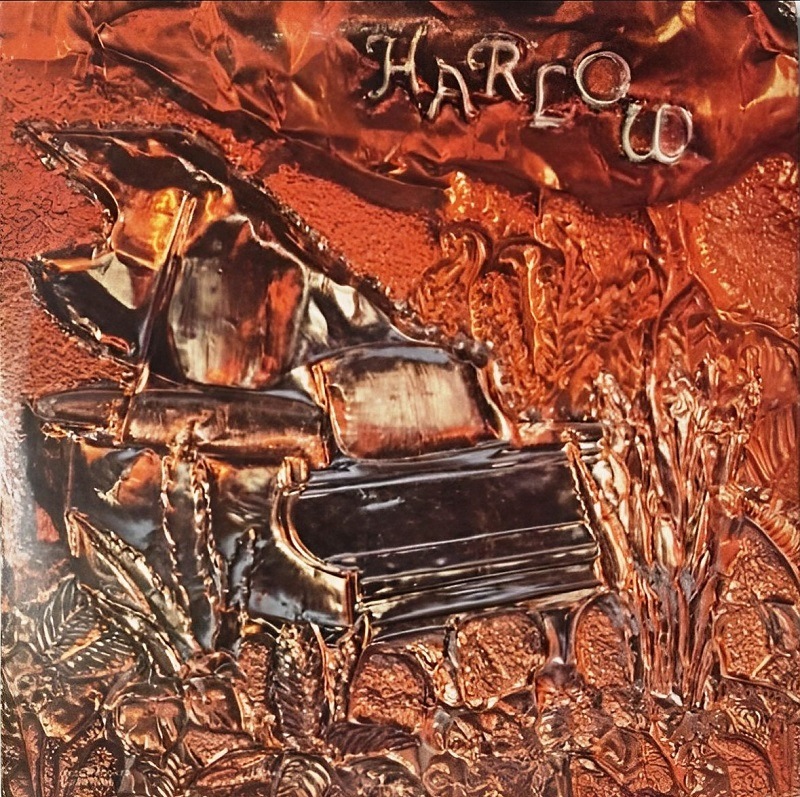
Cover of the album
Cover of the album ”Live In Quad”

In the 1950s, Harlow made several visits to Cuba, where he followed and became friends with Rodriguez. Back in New York, he had the opportunity to play with his idol and eventually dedicated an full album to him. For Harlow, the piano is overdubbed and interacted with a harpsichord, simulating the union of the tres and the piano made by Arsenio. This album sounds as exciting and fresh as it did 32 years ago. “Señor Sereno,” Harlow’s big hit with Ismael Miranda, opens the album. Junior Gonzalez, who debuted with Harlow in Hommy, gives us his own version. On a personal level, this performance is an example of the Fania sound: great orchestral work, swing and energy.

More details about the album

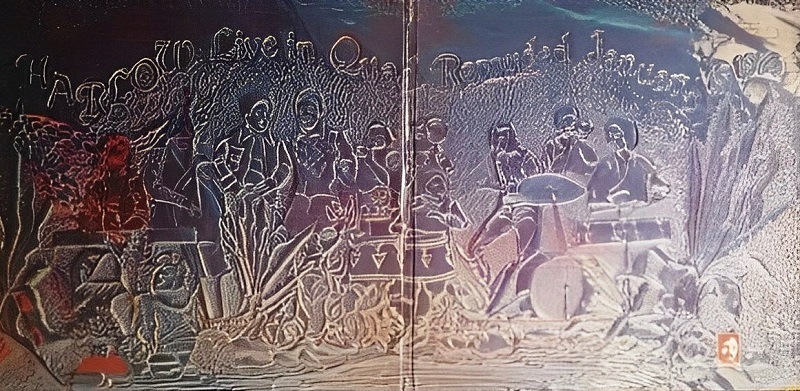
 Inside of the album
Inside of the album ”Live In Quad”

Also from Hommy, the song “Gracia Divina” grows in intensity with Tony Jiménez’s brilliant rhythmic fills over Harlow’s guajeos and the powerful swing of the horn section. Justo Betancourt’s gifted voice stars in the treatment given by Harlow to “Mayari” by Compay Segundo. “Jóvenes Del Muelle” is another Cuban classic, arranged by the great Barry Rogers. The arrangement and playing evoke classic ensembles while still sounding modern. Here we listen to trombone solos and a tasty bass solo by Eddie Guagua Rivera.

To date, Harlow is best known for his version of “The Wallet.” This arrangement by Sam Burtis in a masterclass. Notice the Lilí Martínez’s influence in Harlow’s solo, followed by fine trumpet solos and another violin solo by Lewis Kahn. “Tumba y Bongo” was originally composed for Arsenio’s rhythm section (Kila, Quique and Chocolate). This arrangement by Mark Weinstein highlights an exciting hand-to-hand between Pablo Rosario and Tony Jimenez, who delights the audience when he raises his drum in the middle of the solo.

Back of the album
Back of the album ”Live in Quad”

“Suéltala” provides a framework for Júnior González’s soneos while offering exciting solos by Reynaldo Jorge and Nicky Marrero. “Arsenio”, the theme song of the dramatic album Harlow recorded in tribute to his musical hero, gets the matancero flavor of Justo Betancourt with Tony Jimenez standing out with another great solo. In “Descarga Final,” Harlow unleashes the creativity of the members of his orchestra and the singers exchange soneos in a friendly hand-to-hand. Guagua offers another impressive solo while the percussionists are meant to steal the show.

Credits:

Ralph Castrella – Trumpet

Charlie Miller – Trumpet

Junior Gonzalez – Maracas

Larry Harlow – Piano, Harpsichord

Reynaldo Jorge – Trombone

Pablo “El Indio” Rosario – Bongo, Cowbell

Anthony “Tony” Jimenez – Congas

Nicky Marrero – Timbales

Eddie “Guagua” Rivera – Bass

Lewis Kahn – Trombone, Violin

Lead Singers – Justo Betancourt, Junior Gonzalez

Choir – Adalberto Santiago, Larry Harlow, Ralp Castrella

Master Of Ceremonies – Paco Navarro

Producer – Larry Harlow

Engineer – Bernie Fox

Assistant Engineer – Randall Shepherd

Mixing – Good Vibration Studios, N. Y. C.

Recorded Live – Sing Sing, January 16, 1974.

Arrangements – Louie Cruz (“Señor Sereno,” “Gracia Divina”), Larry Harlow (“Mayari,”, “Descarga Final”), Barry Rogers (“Jóvenes del Muelle”), Sam Burtis (“La Cartera”), Mark Weinstein (“Tumba y Bongo”), Charlie Camilleri (“Suéltala”), Bobby Valentín (“Arsenio”)

Original Album Cover – Gary Mason

Metal Graphic Art From Original Album – Charlie Rosario

Devised used by Harlow
Device used by Harlow to record the album

Señor Sereno
Ismael Miranda

Garcia Divina
Larry Harlow / Jenaro ”Heny’’ Álvarez

Mayarí

Jóvenes Del Muelle
Sabino Peñalver

La Cartera
Arsenio Rodríguez

Tumba Y Bongó
Arsenio Rodríguez

Suéltala
Arsenio Rodríguez

Arsenio
Larry Harlow / Ismael Miranda

Read also: Javier Cabanillas and his Cabanijazz Project

September 22, 2022 marked the 48th anniversary of the Fania All-Stars concert in Zaire, Africa

Last Sunday, September 22, 1974 (On a day like today, Fania All-Stars made history by performing for the first time in Africa in front of 80 thousand spectators.

A magical night that included wonderful moments. This is their story.

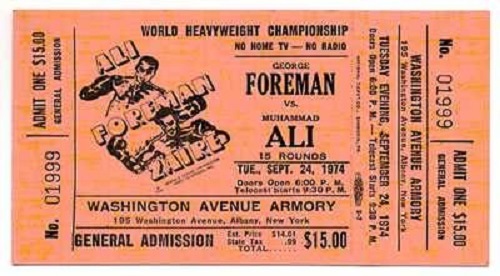
In mid-1974, American boxing promoter Don King organized a fight in Kinshasa, Congo, for Muhammad Ali to regain the crown against the then heavyweight champion of the world, George Foreman, a bout that was called ‘The Rumble in the Jungle’.

Fania All-Stars en Zaire, África

Parallel to the boxing match, musician Hugh Masekela and renowned producer Stewart Levine scheduled a series of concerts at the 20 du Maipara stadium in Kinshasa (Zaire) as part of a 3-day festival (September 22-24, 1974) that would later become one of the most important musical events of the century in Africa, which the organizers called ‘Zaire 74’Unfortunately, an injury suffered by George Foreman while training forced the fight to be postponed for almost six weeks, but the music festival did take place.

La Pelea del Siglo
La Pelea del Siglo

The event was attended by 31 groups (17 local and 14 foreign) and featured artists such as James Brown, BB King, Bill Withers, Manu Dibango, Miriam Makeba, Fania All-Stars, among others.

The Fania musicians who traveled to Africa and performed at the festival were: Johnny Pacheco (flute), Larry Harlow (piano), Bass: Bobby Valentin (bass), Nicky Marrero (timbales), Ray Barretto (congas), Roberto Roena (bongos), Yomo Toro (Cuatro), Pupi Legarreta (Violin) Jorge Santana (Electric Guitar), Victor Paz, Kurt Ranno, Luis ‘Perico’ Ortiz (Trumpets), Lewis Kahn (Violin and Trombone), Ed Byrne (Trombone), and 6 singers: Celia Cruz, Ismael Miranda, Jose ‘Cheo’ Feliciano, Hector Lavoe, Santitos Colon, Ismael ‘Pat’ Quintana (vocals and backing vocals).

Concierto de la Fania All-Stars en Zaire, África

Everything was ready to return to the Big Apple, New York but a major misfortune forced Johnny Pacheco and company to stay.

Although it may seem incredible, musicians and singers had to stay 11 additional days due to a political and social problem in that country, unable to leave the hotel where they were staying. This is how Bobby Valentín tells it in an exclusive interview to Rafael Vega Curry, journalist of elnuevodia.com

“We couldn’t get out. (Jerry) Massucci had to pay an extra $18,000 because we would gather in the rooms to order food and empty the coolers (laughs). There was always someone who said “tomorrow we’ll play in my room”, says the well-known ‘King of Bass‘.

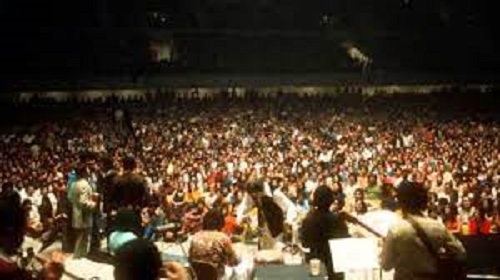
With the concert in Zaire, Fania All Stars had become the first tropical orchestra to set foot on African soil. The show, held at the Statu Hai stadium in Kinshasa, was attended by more than 80 thousand spectators.

Estadio Statu Hai de Kinshasa

It was part of the “Zaire 74” event held from September 22 to 24 of that year, and also featured R&B and Soul artists such as James Brown, Bill Withers and BB King.

In 1974, salsa was at its peak in New York. However, its top representatives were confined within four walls.

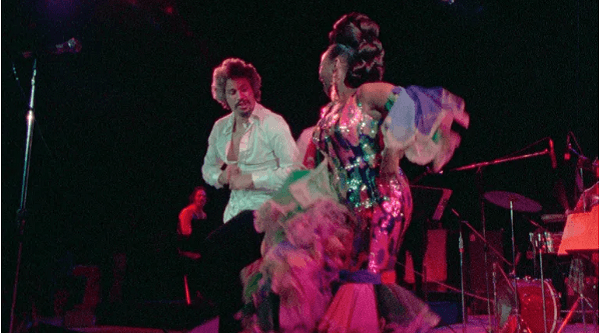
Celia y Jhonny en África

Among the musical geniuses were Johnny Pacheco, Ray Barretto and many others who made this orchestra the most important salsa orchestra in its history. Héctor Lavoe could not be missing in that directory.

Important Note:

The Democratic Republic of the Congo, also popularly known as D. R. Congo, Democratic Congo, Congo-Kinshasa or Eastern Congo, and called Zaire between the years 1971 and 1997, is one of the fifty-four countries that make up the African continent. Its capital and most populated city is Kinshasa.

Between October 27, 1971 and May 17, 1997, the African country currently known as the Democratic Republic of the Congo was known as the Republic of Zaire (in French, République du Zaïre).

The name Zaire was given to it during the rule of Mobutu Sese Seko, who ruled it with an iron fist during a long dictatorship, and from whom emanated the political system and the characteristic ideology of the State.

The instability and rebellions that plagued the Congo until 1965 culminated in the seizure of power by Lieutenant General Mobutu Sese Seko, then Commander-in-Chief of the Congolese Army.

Mobutu proclaimed himself president for five years and in 1970 consolidated his power by being elected president without opposition.

In 1971 the new name of the State was adopted, with the official proclamation of the denomination: Republic of Zaire. This name and the new national symbols would remain until 1997, when at the end of the First Congo War Mobutu was overthrown and fled the country.

Upon assuming the presidency of the country the guerrilla leader Laurent-Désiré Kabila proclaimed the Democratic Republic of Congo, recovering its own name.

Sources:

Bobby Valentín

Salserisimo Peru

https://es.wikipedia.org/wiki/Zaire

You can read: Fania All Stars

Papo Rosario with his “Salsa de La Buena” at the Spanish Harlem Salsa Gallery Museum

Papo Rosario and his “Salsa de La Buena”

We are incredibly pleased to talk about Luis Alberto Rosario, better known as Papo Rosario, who can be considered one of the most beloved salseros by people who have enjoyed his music for decades. In addition to being a very cloase and kind man to everyone around him, his musical and acting talent is undeniable.

Isidro Infante next to Papo Rosario

After having sung along with El Gran Combo de Puerto Rico for more than 40 years, Rosario makes his debut as a soloist with his first recording work “Salsa de La Buena”, in which he receives the full support of maestro Isidro Infante. Both Rosario and Infante are part of Salsaneo Records, which is close to becoming one of the most important music labels thanks to its contemporary salsa. Thanks to the counselling and advice received from Isidro, Papo has managed to create one of the most important and interesting albums in 2002.

One of the things that makes the album stand out is the great amount of danceable rhythms, positive lyrics, good vocals and fresh sonority. It is evident that the essence of the artist always stands out and he does not let himself be dragged along by what he learned during his time in El Gran Combo. While it is true that there are some traits learned from his friend and former colleague Jerry Vivas, Rosario seems pretty determined to distance hemself from the past and focus on a vastly different future.

Rosario and Infante recording in the studio

What “Salsa de La Buena” is 

“Salsa de La Buena” has many tracks that can perfectly mark a before and after in current Latin music. It starts with a beautiful hymn to optimism and perseverance called “Gracias”, which is one of the four songs composed by the pen of maestro Infante. In the case of “Salsa de La Buena”, the song that gives its name to the entire album, speaks of the connection the singer has with his people as an exponent of the salsa genre. The arrangements and piano melodies are reminiscent of what Richie Ray and Bobby Valentín did when they sang “Los Reyes de La Salsa”.

Isidro also shows his great talent with “Los refranes de Don Yeyo”, a beautiful piano solo where you can see how important the Caribbean collection of proverbs is for the culture at large.

Johnny Cruz with Papo Rosario

Promotion for Papo Rosario’s album 

In a conversation between Papo Rosario and Johnny Cruz, director of the Spanish Harlem Salsa Gallery Museum, the two talk about this recording work and the artist tells how did the whole process go.

Rosario has said that both he and Infante had studied together, but had built their careers separately until they met again recently. That’s when he proposed him to make some arrangements to his songs, but they ended up collaborating to make the album in full. The main objective of the record production was to bring a positive message to the peoples and do what God has put on their shoulders.

In the same way, he pointed out that the salsa museum was quite empty the last time he went, but he was surprised to see that all those spaces have been filling up with truly valuable objects for salsa and its fans.

From there, they gave their regards to Isidro Infante and invited him to the museum to join them and talk about “Salsa de La Buena” and other issues that arise.

Johnny Cruz, Papo Rosario and Rubio Boris

        By Johnny Cruz, ISM Correspondents, New York, New York City

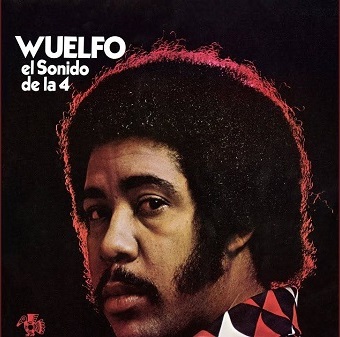
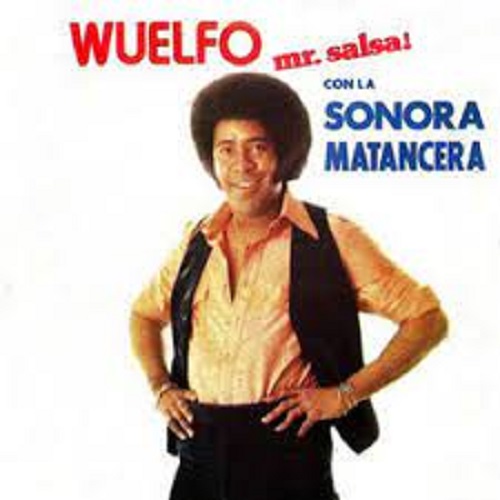
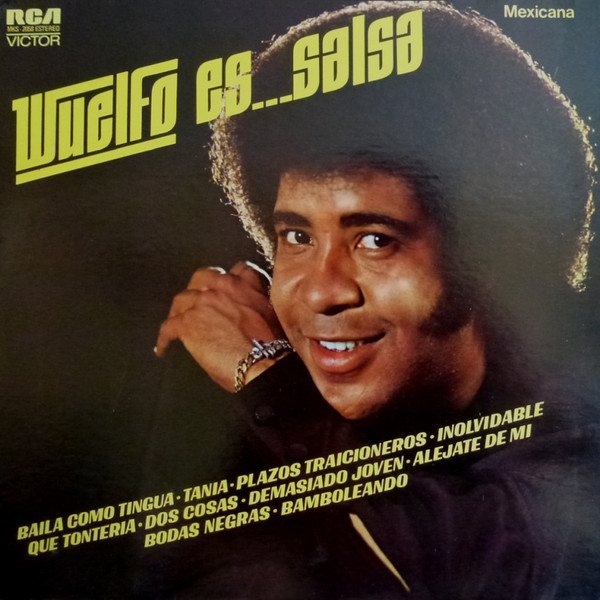
Wuelfo Gutiérrez López was a brilliant Sonero, “El Ultimo de los Matanceros”

Wuelfo Huergo Gutiérrez López, son of Wuelfo the sailor, was born in Santiago de Las Vegas, Cuba on September 23, 1942.

The eldest of three brothers, he was from a very young age an enthusiast of dancing, music and singing.

On May 31, 2005, Wuelfo Gutiérrez López “El Ultimo de los Matanceros” passed away.

He was a brilliant Sonero of outstanding participation with “La Sonora Matancera”, Orquesta de Javier Vásquez, “Orquesta Harlow”, and his own group, which he founded in Mexico after settling in this country.

He gave as much luster to his small homeland as to the big one: in the 70’s he was the singer of the famous “Sonora Matancera”, the pioneer of the Cuban ensembles.

At the end of the 50’s he organized together with three other coterráneos, Juan Luis Cobo, Manolito Santos, and Rolando (Rolo, E.P.D.) González, a quartet called “The Fraterns” (Los Fraternos), in the style of the American school of famous quartets like “The Platters”, “The Drifters”, “Frankie Lymon and the Teenagers”, and others that marked a guideline in the history of “Rock and Roll” and the so-called “Doo Wop”, which is a choral sound characteristic of these groups of the decades of the 50s and 60s.

Around 1958, the group appeared in the well-known José Antonio Alonso’s program of the then powerful Cuban television, which was a continuity of “La Corte Suprema del Arte” of the Cuban radio, initiated in 1938, from where great figures of the Cuban music came out. Substantial changes took place in our country and soon after “Rock and Roll”, at least in Cuba, fell into silence.

Wuelfo left Cuba in mid-1961. I did not see him again (although I always knew about him through his brothers Juan and Gabriel) until 1979, when he returned to visit his native land.

Always with the same sympathy and friendly and popular simplicity that characterized him.

At that time he had already been with “La Sonora Matancera”; the great singer Roberto Torres, “El Güinero Mayor”, who was leaving his place in the Sonora to form his own group, introduced him to the director Rogelio Martinez, who accepted him immediately.

He remained with La Sonora from 1973 to 1976, with which he visited the U.S.A., Mexico and most of Latin America. He recorded, among sones and guarachas, 20 numbers of diverse musical authors, among them: “Anacaona”, by Tite Curet Alonso; “A Burujón Puñao”, by José Carbó Menéndez; “Así Se Compone Un Son”, by Ismael Miranda; “Muñeco Viajero”, by Carlos and Mario Rigual; and “El Chivo”, by our late compoblano Vinicio Gonzaléz, one of our santiagueras glories, among other authors.

When he left La Sonora due to disagreements with Don Rogelio, he settled definitively in Mexico, which became his second homeland.

In Mexico City he formed his own group, which he named “Sonora Las Vegas”, alluding to the person who made him known as a singer and gave him celebrity, and to his hometown, therefore Las Vegas.

He began to be called “Mister Salsa” working in radio, television and cabarets. He loved Mexico very much; in an interview he said: “because the people are tasty and because I feel at home here”.

In Mexico he married Miss Araceli Zoreda Pérez, from whose marriage there were no children; the union was interrupted by Araceli’s death several years later.

The year 1989 marked the 65th anniversary of the founding of “La Tuna Liberal”, among other names, which achieved notoriety in Cuba and internationally under the name of Sonora Matancera. So that this date would not be overlooked, the notable Puerto Rican journalist, broadcaster and producer Gilda Mirós had the happy initiative to gather all the singers alive at that time who had left their art with La Sonora Matancera.

The event was to be held in New York City. Wuelfo was there singing “Anacaona”, together with a true constellation of stars: Vicentico Valdés, Yayo El Indio, Celio Gonzaléz, Nelson Pinedo, Carlos Argentino, Bobby Capó, Alberto Beltrán, Leo Marini, Albertico Pérez, Roberto Torres, Jorge Maldonado, Daniel Santos, and the greatest female voice Cuba has ever produced: Celia Cruz.

In July 1995 I met my friend again, when Wuelfo arrived from Mexico invited to the celebration of our patron saint, Santiago Apostle, in the halls of the former Radisson Hotel in Miami. Among those present sang Amado Herrera (Maninito), José Antonio García (Chamaco), and Wuelfo. All the santiagueros present recognized our values; among them were Wuelfo Sr. and other close relatives.

I did not see him again until 1999, when a group of santiagueros friends welcomed him to Miami, where he intended to settle down. It was not possible.

Wuelfo’s last recording?

He had spoken to me about sending me his recordings with the idea of getting them to some radio stations so that they would know him, and in turn, to some places where records were sold to see if I would have the opportunity to play his recordings, among them the 14 LPs he had recorded and possibly his last recording, a CD called “Wuelfo Cumbia Del Gato Volador”, which he kindly sent me from Mexico.

He spent long periods of time in Veracruz, where he felt at home and his performances were strongly applauded. To such an extent that the government of the state of Veracruz, in November 2003, offered him a just tribute in the framework of the Festival del Son (first photo, above right). On that occasion he performed with his “Sonora Las Vegas” at the La Reforma Theater and the Atarazanas Cultural Center.

Wuelfo, Lázaro Reutilio Domínguez (son of Celina González and Reutilio Domínguez), and the author meet by chance at the “Palacio de los Jugos” on 8th Street and 143rd Avenue in Southwest Miami.

Like many other singers, he dreamed of spending the rest of his life singing; he wanted to die on the stage. Apparently an oversight in his health was complicated by prostate cancer. We would talk on the phone from time to time and he would show me that he was very optimistic, but he was not. In 2004 he underwent intensive treatment at the Oncology Hospital of the Centro Medico Nacional Siglo XXI in Mexico City, but the initial illness led to pulmonary complications which in turn caused a stroke that took his life on May 31, 2005.

According to a friend who assisted him until the last hour, it was very sad to see how his life was passing away.

The Sindicato Único de Trabajadores de la Música had been carrying out activities to collect funds to help him financially.

He was buried in the American Pantheon at 11:00 a.m. on June 1, 2005.

It seems to me very fair to remember this value of ours six years after his departure, remaining in our local history along with other celebrities that also in due time it will be necessary to give them the merit they deserve, not only for future generations to know them, but at present there are coterráneos that for lack of the required information, and against our will, do not know anything about them.

This small biography is not even remotely all that can be known and said of Wuelfo, because there are stages unknown by the writer, who urges those who know and wish, to make their contribution to know much more of our singer friend, who had the honor of going down in posterity, perhaps without him thinking about it, for having sung with that great musical group that was and is La Sonora Matancera.

This work would not have been possible if he had not had the help of Dr. Héctor Ramírez Bedoya. Héctor Ramírez Bedoya, Colombian anesthesiologist who helps many to mitigate their ills through surgery in his native Medellín, but who as a musicographer, and from the presidency of the Corporación Club Sonora Matancera de Antioquia, has had the merit of having written the “Historia de la Sonora Matancera y sus Estrellas”, a book of the same title published in 1996, which is considered the greatest work ever written about the dean of the Cuban ensembles.


Home

  • « Go to Previous Page
  • Page 1
  • Interim pages omitted …
  • Page 12
  • Page 13
  • Page 14
  • Page 15
  • Page 16
  • Interim pages omitted …
  • Page 19
  • Go to Next Page »

International Salsa Magazine (ISM) is a monthly publication about Salsa activities around the world, that has been publishing since 2007. It is a world network of volunteers coordinated by ISM Magazine. We are working to strengthen all the events by working together.