• Skip to primary navigation
  • Skip to main content

International Salsa Magazine

  • Home
  • Previous editions
    • 2025
      • ISM / November 2025
      • ISM / October 2025
      • ISM / September 2025
      • ISM / August 2025
      • ISM / July 2025
      • ISM / June 2025
      • ISM / May2025
      • ISM / April 2025
      • ISM / March 2025
      • ISM / February 2025
      • ISM / January 2025
    • 2024
      • ISM / December 2024
      • ISM / November 2024
      • ISM / October 2024
      • ISM / September 2024
      • ISM / August 2024
      • ISM / July 2024
      • ISM / June 2024
      • ISM / May 2024
      • ISM / April 2024
      • ISM / March 2024
      • ISM / February 2024
      • ISM / January 2024
    • 2023
      • ISM / December 2023
      • ISM / November 2023
      • ISM / October 2023
      • ISM – September 2023
      • ISM – August 2023
      • ISM July 2023
      • ISM Edition June 2023
      • ISM – May 2023
      • ISM April 2023
      • ISM March 2023
      • ISM February 2023
      • ISM January 2023
    • 2022
      • ISM December 2022
      • ISM November 2022
      • ISM October 2022
      • ISM September 2022
      • ISM August 2022
      • ISM July 2022
      • ISM June 2022
      • ISM May 2022
      • ISM February 2022
      • ISM January 2022
    • 2021
      • ISM December 2021
      • ISM November 2021
      • ISM October – 2021
      • ISM September 2021
      • ISM August 2021
      • ISM July 2021
      • ISM May 2021
      • ISM April 2021
      • ISM June 2021
      • ISM March 2021
      • ISM February 2021
      • ISM January 2021
    • 2020
      • ISM December 2020
      • ISM November 2020
      • ISM October 2020
      • ISM September 2020
      • ISM August 2020
      • ISM July 2020
      • ISM June 2020
      • ISM May 2020
      • ISM April 2020
      • ISM March 2020
      • ISM February 2020
      • ISM January 2020
    • 2019
      • ISM December 2019
      • ISM November 2019
      • ISM October 2019
      • ISM Septembre 2019
      • ISM August 2019
      • ISM July 2019
      • ISM June 2019
      • ISM May 2019
      • ISM April 2019
      • ISM March 2019
      • ISM February 2019
      • ISM January 2019
    • 2018
      • ISM December 2018
      • ISM November 2018
      • ISM October 2018
      • ISM September 2018
      • ISM August 2018
      • ISM July 2018
      • ISM June 2018
      • ISM May 2018
      • ISM April 2018
      • ISM March 2018
      • ISM February 2018
      • ISM January 2018
    • 2017
      • ISM December 2017
      • ISM November 2017
      • ISM October 2017
      • ISM September 2017
      • ISM August 2017
      • ISM July 2017
      • ISM June 2017
      • ISM May 2017
      • ISM April 2017
  • Download Salsa App
    • Android
    • Apple
  • Spanish

Search Results for: Cali

Miguel Zenón is widely regarded as one of the most innovative and influential saxophonists and composers of his generation

“Miguel Zenón, this young musician and composer, is simultaneously re-establishing the artistic, cultural, and social tradition of jazz while creating an entirely new jazz language for the 21st century.”

Miguel Zenón is widely considered one of the most innovative and influential saxophonists and composers of his generation.

Born and raised in San Juan, Puerto Rico, Zenón has released seventeen recordings as a leader, including his most recent, the Grammy-nominated Golden City (2024), and the Grammy-winning album El Arte Del Bolero Vol. 2 (2023).

He has collaborated with luminaries such as The SFJAZZ Collective, Charlie Haden, Fred Hersch, Kenny Werner, David Sánchez, Danilo Pérez, The Village Vanguard Orchestra, Kurt Elling, Joey Calderazzo, Steve Coleman, Ray Barreto, Andy Montañez, Jerry Gonzalez & The Fort Apache Band, The Mingus Big Band, and Bobby Hutcherson.

Zenón is a Grammy Award winner, a Guggenheim Fellow, a MacArthur Fellow, and a recipient of the Doris Duke Artist Award.

He also holds an honorary Doctorate of Arts from the Universidad del Sagrado Corazón.

Widely considered one of the most innovative and influential saxophonists and composers of his generation, he has also developed a unique voice as a conceptualist, focusing his efforts on perfecting an excellent blend of jazz and its many musical influences.

enón ha lanzado diecisiete grabaciones como líder

Zenón has released numerous albums as a bandleader and has appeared on over 100 recordings as a sideman.

Música de las Américas: A Masterpiece

With Música de las Américas, Puerto Rican saxophonist Miguel Zenón has created his finest album to date since his professional debut twenty-two years ago.

On this album, Zenón is accompanied by the same combo he has worked with on his recent projects, notably Venezuelan pianist Luis Perdomo, with the addition of some high-caliber percussion reinforcements from his native Puerto Rico.

He has worked with luminaries such as The SFJAZZ Collective, Charlie Haden, Fred Hersch, Kenny Werner, David Sánchez, Danilo Pérez, The Village Vanguard Orchestra, Kurt Elling, Joey Calderazz

Música de las Américas presents a very appealing balance across its eight tracks, weaving classic Latin jazz with more modern jazz forms, venturing into the turbulent waters of free jazz when necessary (as heard in ‘Venas Abiertas’), and incorporating traditional music from his homeland.

Zenón’s compositions aim to reflect the dynamism and complexity of indigenous American cultures (‘Taínos y Caribes,’ which opens the album), as well as their encounters with Europeans and the resulting historical implications, exemplified by tracks like ‘Imperios.’

As Miguel Zenón himself has stated, “the music on the new album is inspired by the history of the American continent, not only before European colonization but also by what has happened since.”

Música de las Américas serves as a kind of manifesto for Zenón’s concept of America as a continent.

This new musical offering from the alto saxophonist, born in San Juan, Puerto Rico, in 1976, was conceived during the pandemic (does anyone remember that there was a pandemic in 2020 and 2021 originating in the People’s Republic of China that caused thousands of deaths?). The book ‘Venas Abiertas’ by Uruguayan writer Eduardo Galeano, who passed away in 2015 and was a prominent figure of the Latin American left, played a significant role in its development.

Zenon Nacido y criado en San Juan, Puerto Rico

Zenón has been featured in publications such as The New York Times, The Wall Street Journal, The Los Angeles Times, The Boston Globe, and The Chicago Tribune. He also topped the Jazz Artist of the Year and Alto Saxophonist of the Year categories in the 2014 JazzTimes Critics’ Poll and was selected as Alto Saxophonist of the Year by the Jazz Journalists Association in 2015, 2018, 2019, and 2020 (when he was also recognized as Arranger of the Year). In 2023, he was recognized by the same organization as Composer of the Year.

As a composer, he has received commissions from SFJAZZ, NYO Jazz, The New York State Council on the Arts, Chamber Music America, Logan Center for The Arts, The Hyde Park Jazz Festival, The John Simon Guggenheim Foundation, MIT, Spektral Quartet, Miller Theater, The Hewlett Foundation, Peak Performances, PRISM Quartet, and many of his colleagues. Zenón has given hundreds of lectures and masterclasses at institutions worldwide and is a faculty member of MIT’s Music and Theater Arts Department, as well as the current Visiting Scholar for the Jazz Harmony and Composition Department at Berklee College of Music.

Ultimately, Música de Las Américas is the product of Zenón’s intellectual curiosity to learn more about the history of America (the continent) and translate that history into music (distritojazz).

Miguel Zenón – Música De Las Américas (2022)

Tracks:

  1. Tainos y Caribes
  2. Navegando (Las Estrellas Nos Guían)
  3. Opresión y Revolución
  4. Imperios
  5. Venas Abiertas
  6. Bámbula
  7. América, El Continente
  8. Antillano

Musicians:

  • Miguel Zenón (Alto Saxophone)
  • Luis Perdomo (Piano)
  • Hans Glawischnig (Bass)
  • Henry Cole (Drums)

Guest Musicians:

  • Los Pleneros de La Cresta (Emil Martinez, Edwin “Wechin” Aviles, Joshuan Ocasio, Joseph Ocasio, and Jeyluix Ocasio) (Panderos, percussion, and vocals on #2)
  • Paoli Mejías (Percussion #3)
  • Víctor Emmanuelli (Barril de bomba #6)
  • Daniel Díaz (Congas #8)

Recorded at Big Orange Sheep, Brooklyn, New York, March 21-22, 2022.

Miguel Zenón - Música De Las Américas (2022)
Miguel Zenón – Música De Las Américas (2022)

Zenón lives in New York City with his wife, Elga, and their daughter.

By:

Miguel Zenón

Dj. Augusto Felibertt

L’Òstia Latin Jazz

Also Read: Luis Perdomo, one of the most diligent jazz pianists in New York

North America – July 2017

Advanced Salsa Dancers thubnails - North America - July 2017

Bachata Festival 2017 thubnails - North America - July 2017

Dance With Joy Studios thubnails - North America - July 2017

DF Dance Studio thubnails - North America - July 2017

Rumbao Latin Dance Company thubnails - North America - July 2017

Salsa Sabor thubnails - North America - July 2017

Eduardo Tancredi is a renowned Uruguayan pianist and composer specializing in Latin Jazz

Eduardo was a distinguished student at Berklee College of Music in Boston.

Eduardo was an outstanding student at the Berklee College of Music in Boston.

Musical Style: His music fuses a wide variety of Afro-Latin rhythms (such as Uruguayan candombe, Brazilian samba, Cuban son, Peruvian landó, and Venezuelan joropo) with the harmonies and melodies of modern jazz.

Accolades: He has recorded several CDs with his own compositions and has received awards for his outstanding performance in the Latin jazz scene. His album “Ongoing Dreams” was chosen as the best album in its category in 2002 by “The Boston Globe.”

Teaching Experience: During his time in the United States, he was a piano and harmony professor at Berklee College of Music. Since 2003, he has resided in Barcelona and teaches at ESMUC (Escola Superior de Música de Catalunya).

Collaborations: He has collaborated with numerous musical groups as a pianist and is a significant figure in the jazz scene in Spain.

Eduardo Tancredi is a prominent figure in Latin Jazz, known for his ability to integrate diverse Latin American rhythmic influences with the harmonic sophistication of modern jazz.


Latin accents took some time to establish themselves in jazz music. Very few composers ventured into that genre in the early decades of the last century, to the point that their timid attempts were considered exotic and trivial.

Initially, one recalls passages from William C. Handy’s “St. Louis Blues,” some Scott Joplin ragtimes, Jelly Roll Morton’s references to the “Spanish tinge,” or, shortly after, the themes performed by Duke Ellington’s orchestra.

Eduardo Tancredi
Eduardo Tancredi

It was in the 1940s that the Latin touch gained relevance. Cuban Mario Bauzá, who had played trumpet in Chick Webb’s and Cab Calloway’s orchestras, propelled the success of Machito’s band and convinced Dizzy Gillespie to hire conga player Chano Pozo.

Afro-Cuban influence became powerful in the following decades through sones, charangas, rumba, mambo, and salsa. Names like Chico O’Farrill, Tito Puente, Mongo Santamaría, Ray Barretto, and Chucho Valdés became highly regarded, and their works inspired a legion of jazz musicians.

Eduardo Tancredi es un reconocido pianista y compositor uruguayo, especializado en Jazz Latino

Latin jazz today has a strong presence in popular music, and Uruguayan Eduardo “Edú” Tancredi is a brilliant exponent of that style. He was an outstanding student at Berklee College of Music in Boston, where he won awards such as the Quincy Jones Award and the Outstanding Latin Act Award.

After his acclaimed “Ongoing Dreams” from 2002, this CD, “Venimos Tumbando,” recorded in 2007, now arrives with ten formidable compositions and his own arrangements. His background in Latin American folklore plus his jazz studies have achieved a splendid confluence that is enjoyed from beginning to end on this album.

His versatility as a composer is evident in candombes (“La mama vieja” and “Montevideo”), a baião (“Baialona”), a chorinho (“El germen”), a zamba (“Zamba del aire”), and the obvious references to Afro-Caribbean rhythms that unite their exciting cadences with jazz elements. Edú’s works are incisive, stimulating, possess an overflowing swing, and it’s easy to imagine the musicians’ pleasure during their performance.

The arrangements contrast the different orchestral sections, highlighting their diverse sound textures, suggestive harmonizations, and enhancing the dynamics and fiery percussion instruments. Three saxophones, piano, guitar, bass, and drums alternate with ten other guest musicians (vocals, sax, harmonica, two basses, two drum sets, and three percussionists), generating a sonic turbine that captivates the listener from the first note.

This doesn’t mean that all tracks propose an overwhelming rhythm. There are passages of beautiful lyricism, as in the two versions sung by Ana Finger, or the pleasant harmonica of Antonio Serrano, or the director’s piano in “Como un blues.”

The soloists perform at a high level, with special mention of Miguel Zenón’s alto sax, an improviser of fresh ideas, clean musicality, and great inspiration and fervor. The interventions of guitarist Alejandro Luzardo, trumpeter Matthew Simon, tenor saxophonist Eladio Reinón, and baritone saxophonist Xavi Figuerola are also noteworthy.

“Venimos Tumbando” confirms Tancredi’s talent as a composer and pianist and his skill as an orchestra conductor. Abilities he generously demonstrated during his acclaimed performance at the Teatro Solís last December. Thomas Werner

Edu Tancredi & Bandon 33 – Venimos Tumbando (2007)

Tracks:

  1. El Subibaja
  2. Hocus Pocus
  3. Montevideo
  4. El Germen
  5. La Mama Vieja
  6. Baialona
  7. Mapa Del Mundo
  8. Venimos Tumbando
  9. Como Un Blues
  10. Zamba Del Aire

Musicians: Edu Tancredi (Piano) Ana Finger (Vocals) Antonio Serrano (Harmonica) Mathew Simón (Trumpet) Pere Grau (Soprano sax, alto sax) Miguel Zenón (Alto sax) Eladio Reinón (Tenor sax) Juajo Arrom (Trombone) Xavi Figuerola (Baritone sax) Alejandro Luzardo (Guitar) Matías Migues, Paco Weht, Javier Gómez (Double Bass) Santiago Blanco, Salvador Toscano (Drums) Carlos Reyes “Compota”, Alejandro Luzardo, Santiago Blanco, Alexis Liden, Sandro Lustosa, Salvador Toscano (Percussion)

Edu Tancredi & Bandon 33 - Venimos Tumbando (2007)
Edu Tancredi & Bandon 33 – Venimos Tumbando (2007)

Information By:

Ostia Latin Jazz

DJ, Augusto Felibertt

Also Read: Arturo “Chico” O’Farrill. “The Architect of Afro-Cuban Jazz”

Trombone player Lindsey McMurray from the women’s orchestra Las Chikas

Lindsey McMurray, bandleader of the group Las Chikas, has graciously accepted our invitation to talk about the women’s orchestra she is leading, which makes us very happy and pleased, so we invite our readers to enjoy this interview from beginning to end and learn about the musical journey of this young artist.

Lindsay from Las Chikas singing
Lindsey McMurray singing during a concert with Las Chikas

How Lindsey got started in music

Lindsey’s journey to become an artist began very soon at school, when she was just 10 years old and started learning to play the trombone. Prior to this, she had already studied other instruments such as the keyboard and the recorder, but she ended up trying the trombone.

Soon after, at the age of 11, she joined the school jazz band, but it was not until college that she began experimenting with salsa in orchestras that played this genre. Until then, Lindsey had had virtually no contact with Latin music, as she had only listened to typical U.S. rhythms. However, once she discovered Latin American music, she could not escape her love for it and continues to play it to this very day.

It should be noted that the musician does not have any family member who is too. So she would be the first one to make music her profession and, of course, one of the most important areas of her life.

Professional experiences prior to Las Chikas

Before even getting to know of the existence of Las Chikas, Lindsey was on a TV show called ‘’Noches Con Platanito’’ in the musical side, but she did not really lead anything until the bandleaders of the groups who were there left. Her big break came in 2017, when she finally managed to become a bandleader herself and, in turn, started two groups at the same time. 

This is because Lindsey did not want to depend on anyone be called whenever she was required, but, on the contrary, she wanted to go on developing her autonomy to the point of being the one to create jobs for others instead of looking for them somewhere else.

Whitney and Gabby from Las Chikas
Singers Whitney Hernández and Gabby Tamez from Las Chikas in Carson City

Las Chikas

It is important to clarify that Lindsey is not the founder of Las Chikas, but that the group already existed before she joined during the pandemic. The idea of Las Chikas was born during “Noches Con Platanito” as part of the show, but Lindsey and the other members wanted to have activities outside of the show and what the production asked them to do. At that time, the leader and founder of the group was Eliana Rose who during the pandemic wanted to settle in Southern California, so she asked the artist to take her place, which she accepted.

This posed a significant challenge for her, as she had never led a Latin music orchestra in her life. However, the novelty did not make him get cold feet, but on the contrary, it was an experience she wanted to live in order to learn from it.

The current members joined the group thanks to recommendations from friends and other people in the industry. Already at this point, it can be said that they all are her friends, to the extent that they have shared all kinds of special occasions such as birthdays, trips, and much more. 

Why only women in the orchestra

What catches the attention about Las Chikas is that, as its name suggests, it is only composed of women. One of the reasons is that the industry, despite of the recent social changes, continues to be dominated by men, so these young female talents find support between themselves.

What the original founder wanted was to promote the idea that a group of girls could play Latin music without it being perceived as strange. Lindsey shares this vision with hundred percent and hopes new generations of women never think for a moment that their gender is a limitation to achieve what they want in music.

Las Chikas with its certificate
Marina Panzetta, Shirly Ace, Lindsey Murray, Whitney Hernadez, Gabby Tamez, Maria Vega, Mayelin Vazquez, Alisha Ard Vazquez, Dolores Duran-Cefalu, and Anitta Garay from Las Chikas posing for the camera with its certificate from the City of Los Angeles. Photo taken by Craig Cochrane

While acknowledging that there have been positive changes in recent decades, she thinks there are areas that do not have enough female representation such as percussion, bass, production, arranging, among others. It is very common for women to be vocalists in a band, but it is still unusual to see them in other areas of the project.

Las Chikas as a mix of cultures and ethnicities

On the band’s website, it can be read that the group is a mix of diverse cultures and ethnicities. In this regard, Lindsey pointed out that, while it is true that she is not a Latina, she has always sought to create something as authentic as possible that is rooted in Latin culture, of course with great respect. “Latin music is so joyful, intelligent, and capable of being beautiful to the eyes of any human being who hears it. I also want in a certain way to make non-Latinos enjoy this beautiful music as much as I do,” Lindsey added on the subject.

She also said that diversity plays a very important role, as non-Latino audiences tend to feel that they have permission to be part of the joy emanating from this music. In addition to that, the fact that the members have diverse backgrounds helps the band have different perspectives on what they want to do.

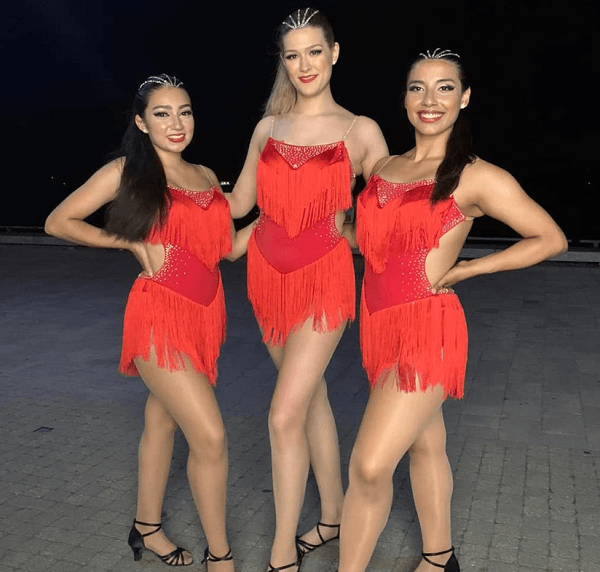
Today, Las Chikas is composed of Cuban singer Mayelin Vázquez, Cuban singer Whitney Hernández, American pianist Dolores Duran-Cefalu, bassist María Vega, Mexican timbalera Anita Garay, Mexican conga player Diana Teixeira, American trumpet player Anne King, Mexican saxophonist Marina Panzetta, and Lindsay herself on trombone.

Read also: The best of Cuban music in Tampa with Cuband Son Band

Africa / August 2025

PedSalsa Angola 2025Calibrated maracasMartinez attorney

Directory of African nightclubs

Angola circular flag
ANGOLA

Casa da Música Talatona
Avenida S8, Espaços Avenida, 2do anda, porta 36,Talatona
Luanda, Angola

Marginal Lounge Conceito 3D
Marginal Lounge
Avenida 4 de Fevereiro, Marginal de Luanda, Edifício Deana Day Spa
Luanda, Angola

PediSalsa Luanda
Restaurante Péd’Salsa
Ilha de Luanda (ex Cais de 4)
Luanda, Angola

South Africa cIRCULAR FLAG
SOUTH AFRICA
Pa Mi Corazon Academic
Pa Mi Corazon
Suite 4, 680 Musgrave Rd, Essenwood, Durban, 4001, South Africa

Salsa Addicts Academic
Salsa addicts
47 5th Ave, Parkhurst
Randburg, 2193, South Africa
  • « Go to Previous Page
  • Page 1
  • Interim pages omitted …
  • Page 18
  • Page 19
  • Page 20
  • Page 21
  • Page 22
  • Interim pages omitted …
  • Page 132
  • Go to Next Page »

International Salsa Magazine (ISM) is a monthly publication about Salsa activities around the world, that has been publishing since 2007. It is a world network of volunteers coordinated by ISM Magazine. We are working to strengthen all the events by working together.