• Skip to primary navigation
  • Skip to main content

International Salsa Magazine

  • Home
  • Previous editions
    • 2025
      • ISM / November 2025
      • ISM / October 2025
      • ISM / September 2025
      • ISM / August 2025
      • ISM / July 2025
      • ISM / June 2025
      • ISM / May2025
      • ISM / April 2025
      • ISM / March 2025
      • ISM / February 2025
      • ISM / January 2025
    • 2024
      • ISM / December 2024
      • ISM / November 2024
      • ISM / October 2024
      • ISM / September 2024
      • ISM / August 2024
      • ISM / July 2024
      • ISM / June 2024
      • ISM / May 2024
      • ISM / April 2024
      • ISM / March 2024
      • ISM / February 2024
      • ISM / January 2024
    • 2023
      • ISM / December 2023
      • ISM / November 2023
      • ISM / October 2023
      • ISM – September 2023
      • ISM – August 2023
      • ISM July 2023
      • ISM Edition June 2023
      • ISM – May 2023
      • ISM April 2023
      • ISM March 2023
      • ISM February 2023
      • ISM January 2023
    • 2022
      • ISM December 2022
      • ISM November 2022
      • ISM October 2022
      • ISM September 2022
      • ISM August 2022
      • ISM July 2022
      • ISM June 2022
      • ISM May 2022
      • ISM February 2022
      • ISM January 2022
    • 2021
      • ISM December 2021
      • ISM November 2021
      • ISM October – 2021
      • ISM September 2021
      • ISM August 2021
      • ISM July 2021
      • ISM May 2021
      • ISM April 2021
      • ISM June 2021
      • ISM March 2021
      • ISM February 2021
      • ISM January 2021
    • 2020
      • ISM December 2020
      • ISM November 2020
      • ISM October 2020
      • ISM September 2020
      • ISM August 2020
      • ISM July 2020
      • ISM June 2020
      • ISM May 2020
      • ISM April 2020
      • ISM March 2020
      • ISM February 2020
      • ISM January 2020
    • 2019
      • ISM December 2019
      • ISM November 2019
      • ISM October 2019
      • ISM Septembre 2019
      • ISM August 2019
      • ISM July 2019
      • ISM June 2019
      • ISM May 2019
      • ISM April 2019
      • ISM March 2019
      • ISM February 2019
      • ISM January 2019
    • 2018
      • ISM December 2018
      • ISM November 2018
      • ISM October 2018
      • ISM September 2018
      • ISM August 2018
      • ISM July 2018
      • ISM June 2018
      • ISM May 2018
      • ISM April 2018
      • ISM March 2018
      • ISM February 2018
      • ISM January 2018
    • 2017
      • ISM December 2017
      • ISM November 2017
      • ISM October 2017
      • ISM September 2017
      • ISM August 2017
      • ISM July 2017
      • ISM June 2017
      • ISM May 2017
      • ISM April 2017
  • Download Salsa App
    • Android
    • Apple
  • Spanish

Search Results for: Caribbean Rhythms

Latin Music Revolution in United States: Record labels that bet on producing Latino Artists

North America / United States

Record labels that bet on the first Latin singers in the United States

Currently, visiting a nightclub in the US and listening to a bachata or merengue song is totally normal. The assistants, regardless of their nationality, will end up dancing and chanting the melodies. However, a few years ago it was not this way. Find out which labels made this a reality.

Latin music came to the United States around 1930 thanks to the bolero. Its growth continued to rise within its borders passing through salsa, chachachá and merengue; until genres such as bachata and Latin jazz became popular in order to position themselves as they are today. To a large extent, social networks have contributed to the projection of today’s artists. For the most part, they create strategies that increase their reach by improving their sales and reproductions. In 2019, on the Billboard Hot 100 chart, which measures the most popular songs in the United States, there were more Latin songs than ever. A true historical record!

Record Labels in Latin Music
Record Labels of Latin Music

These data were revealed by Leila Cobo, Billboard’s vice president for the Latin market.

In 2018, Latin music rose to the fifth place with the highest demand in the United States, according to the music statistics firm BuzzAngle, in charge of rankings for Rolling Stone magazine.

For many, it is a cause for astonishment and they cannot imagine what the previous story is. The first Latin singers had to go a long way, being rejected in some opportunities but, finally, achieving success on American soil. There is a long list of characters who paved the way for other Latin musicians such as: Héctor Lavoe, Celia Cruz, Rubén Blades, among others.

Another curious fact worthy of consideration corresponds to the companies that were behind these releases: the record companies. Those record labels that dared to try a foreigner with a proposal in a language other than the United States; They trusted and believed in his talent. Part of this musical revolution, it is thanks to them and their directors.

Record labels that bet on the first Latin singers in the United States

Fania Records

In 1964 this project was born in New York City. It was founded by the American businessman, producer and promoter, Jerry Masucci and the Dominican musician Johnny Pacheco.

Pacheco is one of the most influential figures in Caribbean and Latin music. He is a composer, director, arranger; he specializes in Cuban and Caribbean music such as salsa. This singer also had to go step by step within the US market, train in its streets and go after recognition. In 1960 Pacheco y su Charanga was created, a band that reached more than 100,000 copies on its first album. Alegre Records was the label they signed with. His fame led him to visit countless countries. His experience in the industry made his wish he could help others. After creating Fania Records, he was recognized for promoting the careers of many young artists.

The name of Fania Records was taken from a Cuban song by Reinaldo Bolaño. In part, their great popularity was due to their promotion of salsa. The label supported the greats of the show such as: Rubén Blandes, Willie Colón, Tito Puente, Bobby Valentin, Ray Barretto and Héctor Lavoe, among others.

Alegre Records

It was founded in 1956 by Al Santiago, the owner of a record store in the Bronx. It specialized in products born in the 1950s.

Alegre Records represented, for the most part, Latin music singers. In addition, opening its doors to greats such as Tito Puentes, Johnny Pacheco, founder of Fania Records, Eddie Palmieri. In 1975 it was acquired by Fania Records.

Capitol Records (EMI Latin)

It is an American record company that opened its doors in 1942. Its founders were Johnny Mercer and Buddy DeSyIva, American singers. Today it is owned by Universal Music Group, one of the world’s leading record labels. In most cases, it focused on genres typical of its borders. However, they gave their support to the American with Mexican roots, Selena and the Dominican Juan Luis Guerra.

Discos CBS International

CBS Record Label
Record Label of Latin Music

At first it was located in Coral Globes and then it was transferred to the city of Miami. Discos CBS supported bands like Miami Sound Machine, in which the renowned singer and songwriter Emilio Estefan participated. In 1991, it was acquired by Sony. It is one of the best known for being part of the CBS television network (Columbia Broadcasting System, Inc). It was founded in 1962 by Harvey Schein. Discos CBS is active despite the number of years since its inception. He is dedicated to different genres, without neglecting music in Spanish.

Warner Music Latina (WEA Latina)

Warner Music Latina
The world of Latin Music Record Labels

It is a label belonging to Warner Music Group, one of the world powers in the field. Warner Music Latina emerged in 1987 and focused on Latin productions, giving the opportunity to artists such as the Puerto Rican, Olga Tañón. It was the label that gave her her first opportunity as a solo artist with the album Sola (1992), making her a Platinum Record recipient. At present, it has branches in different countries of the world. It has production and publication of music, recorded music and services for artists.

RMM Records

It was an independent record company that operated in New York City until the late 1990s. It focused on salsa, merengue, and Latin jazz productions. He worked with artists such as Marc Anthony, Tito Puente, Cheo Feliciano, Tito Nieves, Celia Cruz, Óscar D´León, among others. RMM Records went bankrupt due to legal problems with artists and a millionaire lawsuit filed by singer Glenn Monroig. In 2001 Universal Music acquired the RMM records catalog. A lot of

Over the years, the American music industry was increasingly influenced by songs in Spanish. Those who do not speak the language have commented that they are attracted to the catchy rhythm and do not hesitate to dance them non-stop. The US public has become less skeptical of Latin rhythms. Recording industry experts say it is due to the rhythms and their proximity to the songs in English.

The creation of platforms such as YouTube and the appearance of streaming platforms has given greater openness to the market. More and more Latinos are succeeding in the US and record companies are deciding to finance their projects.

Merlin, a specialized agency, has been in charge of bringing together different independent record companies and managing the collection of income derived from streaming platforms. Half of the record labels associated with Merlin are American. On the other hand, the number of clicks and visits obtained by Latin songs on video platforms such as YouTube and Vevo are increasing, especially in the case of audiences in the US The number of new immigrants and young people must also be considered. Born to Latino or Latin American parents.

The market continues to bet on Latin music. In fact, in the United States there are a large number of stations focused on this type of music. Users can request the songs of their choice and enjoy them at any time of the day.

What will be the next step for songs in Spanish within the United States?

Home

6 artists who helped make Latin Music successful in the United States

The success of Latin Music in the United States

Some artists have taken Latin music to another level. They fell in love with the public on American borders and helped shape the market as we know it today. We will tell you more details!

Latino immigrants who made their way into the United States gave way to Hispanic music as it is known today.

The Argentine tango, for example, was a success in the US in 1930 and is considered the first Latin genre to have participation on American soil. As you can imagine, from then on a movement was born that is here to stay. At the end of the 90s, this musical boom finished exploding. The numbers were increasing and more and more artists were honoring their Latin roots.

Currently, the industry numbers give prominence to Latin artists, having a greater incidence when they present their songs in Spanish. Also, there are a large number of versions that have been translated into English and are heard in renowned venues. In fact, it is enough to go to a nightclub or a Latin concert in iconic venues such as Madison Square Garden, located in New York or American Airlines Arena in Miami to check acceptance by the public. How much ground have they gained to have a leading role in the most powerful country in the world?

La Guarachera del Mundo - Latin America
Celia Cruz is well known all around the latin world

The road has not been easy, it has been marked by countless artists who, little by little, were making known the rhythms of Caribbean countries. Salsa, for example, was one of the most popular rhythms at the time. Starting in 1960, it was catapulted into the United States, paving the way for Latina artists who are now considered legends of the genre. Celia Cruz, Willie Colón, Héctor Lavoe, Rubén Blades, Johnny Pacheco, among others, marked a before and after in the industry.

Today we want to talk about some famous singers who set the tone and promoted the careers of other Hispanics.

6 Latino artists who paved the way for new generations

Emilio Estefan, Cuba

The Cuban was born in 1953 and arrived in the United States at the end of 1960, from Spain. Estefan always had musical interests. Although, in principle he had to work in other areas. He formed the band “Miami Latin Boys”, which would later be called “Miami Sound Machine”. Thanks to his different presentations, he met Gloria Fajardo, today known as Gloria Estefan, who accompanied them as vocal reinforcement. No one imagined that this singer would become their life partner.

Despite the success of the group, it is other achievements of the artist that place him in this category. Emilio Estefan soon established himself as a producer for Latin American artists and contributed to Gloria Estefan’s success as a soloist. He quickly became known within the industry, working with artists such as Charliee Zaa, Cristian Castro, and Carlos Vives.

In 2002, Estefan became a producer for the Latin Grammy Awards, an annual event that awards artistic excellence for productions in Spanish, Portuguese or other languages ​​of Hispanic countries.

Emilio Estefan and his wife have been awarded the Presidential Medal of Freedom from the United States, the highest honor in the country, due to their work in the training of artists and projection of Latin music in the world.

Celia Cruz, Cuba

Celia Cruz, began her career in her native Cuba. She excelled in tropical music and was known as “The queen of salsa.” During her first years of career, she stood out in her country, and later ventured into Mexico and the United States. She moved to the US and at the end of the 70s she joined the Fania All-Stars, along with other artists, fully joining salsa. In 1987, her star was debuted on the Hollywood Walk of Fame.

Cruz is part of a legacy that will continue throughout history. Her songs remain current and are part of the heritage of Latin America. She was nominated for two Grammys and three Latin Grammys.

The Postal Service of the United States included it in a selected group of five stamps, destined to the greats of Latin music; together with Selena, Tito Puente, Carmen Miranda and Carlos Gardel.

Selena, Mexico

The singer was born in the United States and was of Mexican descent. Her genre leaned toward ranchera, Mexican cumbia, and ballads. Selena is known as “the queen of Latin music” and has exceeded 70 million records worldwide.

In the 1990s, the US Billboard magazine named her “the most influential and best-selling Latin artist.” In addition, she is credited with catapulting Latin music in the United States and the world. Selena featured five albums ranked on the Billboard 200 at the same time. Her album Live (1993) won a Grammy for best Mexican-American music album, leaving behind the paradigms of those who considered the Tejano musical style as exclusive to men.

Selena was murdered in 1995. A great loss to show business. Her fans still regret her departure and imagine what she could achieve thanks to your talent. However, it leaves a very broad legacy for Latinos. After her death, she continues to be an example and inspiration for those who want to enter the market.

Juan Luis Guerra, Dominican Republic

The Billboard Winner Juan Luis Guerra
An Artist who help the genre in USA

Juan Luis Guerra is one of the most recognized Latin artists in the world. In the United States, he has been the recipient of 24 Latin Grammys, three Latin Billboard Awards and two American Grammys. He has recorded in Portuguese, English and, of course, in Spanish.

She trained at the largest private music college in the world, Berklee College of Music, in Boston. Earning a degree in jazz composition.

Guerra has made different tours of the US obtaining a box office record. He is a recognized exponent in the genre of merengue and bachata. In 2015, he collaborated with the financing of the Juan Luis Guerra Scholarship, presented by the Latin GRAMMY Cultural Foundation for a low-income student.

The singer is of Dominican origin and today he works as a composer, arranger, musician and producer.

Héctor Lavoe, Puerto Rico

Considered one of the best salseros of all time. He is credited with helping to bring about the genre’s golden age in New York. In addition, to expand the popularity of salsa in the 60’s, 70’s and 80’s.

In New York City, he takes his first steps as a bolero vocalist to make his way in what would be a great musical career. The Puerto Rican’s success kept on rising, he sang with the famous Willie Colón and together they toured different stages. Lavoe was also part of the Fania All Stars, a salsa and Latin music group. The Singer, as he was also baptized, died on June 29, 1993. He left an unforgettable musical legacy in the United States and the world; his songs and style are inspiration for many salsa performers today.

Marc Anthony, United States

For many, it could come as a great surprise that an American artist has such a marked and extraordinary Latin musical rhythm. However, his parents are Puerto Rican and he grew up with part of this culture. Marc Anthony is a singer of ballads, pop, salsa and bolero; ambassador of Latin music and culture.

When he began his career, many doubted whether he would be successful in Latin music.

“My career was not easy at first, because I neither looked nor sounded like the ‘typical salsero’. My sound was not considered usual for purists, ”he told The Associated Press.

The singer and actor has sponsored young talents such as Luis Figueroa, a Latino who was just beginning his career in the artistic medium. In addition, it has sold more than 30 million records around the world. Received 2 Grammys and 7 Latin Grammys. Marc Anthony has many fans worldwide. However, Latinos have a very special appreciation for him. In 2012, he started the Maestro Cares Foundation, to raise funds to build orphanages in Latin America.

If we wanted to mention those musicians to whom the expansion of Latin music is due, the list would be endless. Infinity of people who overcame cultural barriers to carry the name of their country, its rhythms and culture high. Currently, the city of Miami is considered as the starting point. The first contact of the young musicians, before venturing to the rest of the country. In addition, the same experts call it “the epicenter of the Latin industry.” This is due to the number of media, producers, multinationals and locals that are willing to open their doors to them and boost their talent.

Latin music represents an industry that does not stop, is profitable and is taking more and more space in the United States. Therefore, a decline is not expected in the coming years.


Home

Azúcar Club Cubano – Brazil

Meet the “ Azúcar Club Cubano ” of Sao Paulo, Brazil:

Since the Salsa boom in the sixties, “60” invaded the ears of many Latinos and North Americans, later Europeans, Africans and Asians in restaurants, Academies, clubs, parties and events since they were the novelty of the moment and they had something that made his guests dance with seasoning and fun and for future talents (artists) a new style and / or musical genre.

Brazil is the largest country in South America and is one of the countries with the most energy and positivity. The good humor of its people and its constant party atmosphere make this Brazilian culture one of the pillars of world dance. Among the dances that exist in Brazil, the “Samba” stands out, which is danced during festivals and popular celebrations such as the Carnival, some of the most popular versions include “carioca”, “a baion”, “conga”, “mesemba”, “a batucado” and “carnivale”.

Outside of the carnival there is the Carimbó, Capoeira, Lundu, Baião and “Xote” (typical type of lining dance that is incredibly versatile and has several variations throughout the country, it is a dance that has a mixture of European and African influences, it also incorporates elements of salsa, mambo and rumba, depending on the region of Brazil).

Night Club
Azucar Club Cubano is open

Despite everything in Brazil other musical rhythms are also danced but in less quantity such as salsa and bachata in nightclubs and in Brazil there are a great variety of Latin academies, restaurants and clubs where you can enjoy pleasant music and if what You want to dance Merengue, Salsa and Cumbia, you can go visit the “Azúcar Club Cubano” which is a disco and nightclub that is located at Rua Dr. Mário Ferraz, 423 Itaim – Bibi, São Paulo, Brazil.

Which was inaugurated in August 2000; being the first Latin house in Sao Paulo at that time thanks to the Latin inspiration with its flirty and great Caribbean music. Currently it is recognized for being very cheerful and with excellent service where it had great successes and that until today it opens its doors to all people who like Latin rhythms, both music played by DJs and live music are also performed. events, concerts, festivities (birthdays, anniversaries, celebrations, among others).

Azucar Club Cubano working
In the Azucar Club Cubano

They also have a bar where the most requested alcoholic beverages are Rum and Tequila and among their cocktails are ” El Margarita “, ” El margarita con Tequila ” and ” Mojito “, the latter known as the best in all of Sao Paulo, Brazil; They also have a varied menu so that people can taste good food and the music that they are playing at that time.

The Club opens its doors to the public from Tuesday to Friday from 7:00 p.m. (7:00 p.m.) and on Saturdays from 8:00 p.m. (8:00 p.m.) and there one can pay with any credit card or debit.

Cocktails
cocktails are “El Margarita”, “El margarita con Tequila” and “Mojito”,

For more information you can search through:

WebSite:

Facebook: @ azucarclubcubano

Instagram: @ azucarclubcubano

Correo: azucar@ azucar.com.br

Teléfono: +55  11 3074 3737

Tripadvisor:


Home

Tito Puente’s must-hear: Records you won’t be able to forget

North America / Unites States

The best and more emblematic Tito Puente’s records

Ernesto Antonio Puente, better known as Tito Puente, El Rey del Timbal, was a recognized percussionist in the music industry. He was born in Harlem, New York on April 20, 1923.

Those who knew him as a child considered him very active. He was always looking for objects to generate sounds and make noise. The New Yorker, of Puerto Rican parents, began his music studies too young. At an early age he learned to play percussion and piano.

He was heavily influenced by jazz artists and Gene Krupa, considered the most influential drummer of the 20th century. Puente participated in various local bands and was part of the Machito group; musician and singer of Cuban origin who contributed to the creation of Afro-Cuban jazz.

Remember the great percussionist
Tito Puente made history with his unique style

Their first steps

At the age of fifteen he made his debut in a Miami orchestra. He amazes everyone with his ability for Latin perc battledussions.
For seven years he studied piano and drums. He then attended the Juilliard School, a conservatory of the arts located in New York. His musical training was very solid, which led him to become a great figure of the genre.

It was part of the development of rhythms and fusions that led to the success of salsa. However, he wasn’t a big fan of that term. Although he was known as a “salsa ambassador”, when asked about it, he responded in a humorous way:

“Salsa is what I put in spaghetti. What I play is Cuban music”, he repeated over and over again, extolling the roots of Afro-Caribbean music.
In the 1940s, he decided to form his own band, the Picadilly Boys, specializing in Latin jazz. They received the support of Tico Records to make their first musical recording. His career was just beginning. At the end of the 50s, “Dance Manía”, one of the artist’s most popular albums, was released.

Puente walked among the mambo, bossa nova and Afro-Cuban jazz. In the 60s, he ventured into salsa, without leaving behind other rhythms that characterized him.

The timbalero did not hesitate to support talented young people, Sophy from Puerto Rico recorded his first productions under the recommendations of Puente. Puente was in charge of the production, arrangements and instruments. It was a pleasure for her to receive the affection that he gave her. He treated her like a daughter and learned a lot from him; Celia Cruz was another of the artists who had the honor of working with “El Maestro”.

The sound of their timpani was known worldwide. He recorded more than a hundred albums, received a star on the Hollywood Walk of Fame in 1969, as well as the key to New York City and different nominations: Grammy Award for artistic career, Grammy Hall of Fame Award, Latin Grammy Award for Best Salsa Album, Grammy Award for Best Traditional Tropical Latin Album, Latin Grammy Award for Best Traditional Tropical Album, Grammy Award for Best Salsa Album and Grammy Award for Best Latin Recording.

Throughout his career, he had the opportunity to work with several record labels including: Charly Records, BMG, RCA Victor, Fania Records, Sony Discos and Concord Picante.

Most recognized albums:

Dance Mania, 1978.

Dance Manía, 1958 was the artist’s first album. Considered the most famous percussionist. The study work, entered in 2002, in the National Recording Registry; list of recordings that are considered important and part of the culture and history of the United States. It is also found in the 1001 Albums You Must Hear Before You Die, a music reference book founded in 2005.

The history of Latin music in the United States took a cultural turn after the appearance of Dance Manía. It was recorded under the voice of the Puerto Rican Santos Colón, in Spanish. They were generally performed in the native language of the United States or only as instrumental music.

Tito Puente wanted to break down barriers and have the American public listen to the pieces in Spanish. The album is positioned as the most famous Latin album of all time, surpassing successful artists of the time like Héctor Lavoe and Celia Cruz.

Homenaje a Beny, 1978.
Tito Puente made history with this album, by obtaining his first Latin Grammy. It was the winning album for Best Latin Music Album. With the help of his orchestra, he created an unprecedented album, full of flavor; an album that highlighted Cuban origins and fusions. A heartfelt tribute to the remembered Benny Moré, Cuban singer and musician who died in 1963. “Homenaje a Beny” featured 17 pieces of music.

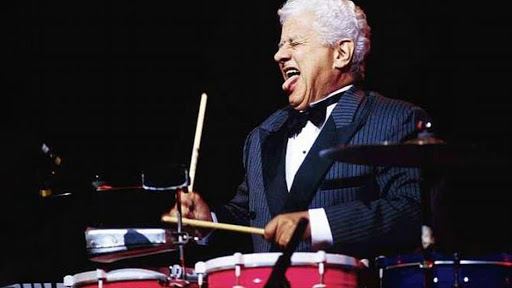
Tito Puente - Nobody will have his wonderful character
Tito Puente ‘s grimaces while performing

Cuba y Puerto Rico son…, 1966.
The career of the remembered Cuban singer Celia Cruz was on the rise. In 1966, Tito Puente decided to contact her to work together. They established a kind of association that was maintained through the years. In addition, they became very close friends, a bond that went beyond the musical realm.

Cruz appreciated him and was saddened after his death. In her autobiography “Celia, mi vida” she recalled the day she received the terrible news. She considered him an authority on Cuban music and admired his career.“Tito was always in charge of the arrangements, and he liked to work at dawn. We would go out to dinner, and when we returned, Tito would stay until four in the morning composing arrangements for what we were going to record the next day.

Although we were not very lucky with our recordings, Tito and I did very well with the tours. Together we travel to many countries. It was during those trips that we developed that great friendship that we had, ”said La Guarachera del Mundo.

In addition to “Cuba y Puerto Rico Son”, they recorded five more albums: Quimbo Quimbumbia (1969), Etc., Etc., Etc. (1970), Alma con alma (1971), En España (1971) and Algo especial para memoria (1972).

Timbalero Tropical (1998)
One of the last works of the artist and that featured fifteen songs. He worked hand in hand with the RCA label. The album stood out with works such as: El Timbal, Mi Guaguancó, Lo Dicen Todo, Mambo Macoco, Mambo and Preparen Candela. Topics that were very popular at the time and that today continue to sound at family gatherings. They are classic salseros that do not go out of style.

“Oye como va” was a song written by Puente in 1963. However, it was rock guitarist Carlos Santana who popularized it. The song went international and was positioned on the Billboard Hot 100, a list that ranks the best-selling hits in the United States. However, he was not the only one to cover it: Celia Cruz, rapper Gerardo Mejía, Bobby Hutcherson, Joe Cuba Sextette and Cheo Feliciano. When he presented the theme on stage he affectionately presented Santana as its author.

This 2020 marks the 20th anniversary of the physical disappearance of the great: Tito Puente. He passed away on May 31, 2000. His Caribbean flavor, his big smile and his white hair left a great void in the entertainment world. Puente left a great legacy. He contributed to the expansion of Latin music in the United States and served as a composer, percussionist, conductor, and performer.

His exaggerated grimaces, his style, energy, and his skill with the instrument earned him worldwide recognition. In addition to positioning him as an admirable figure among colleagues and young people who want to follow in his footsteps. Simply unforgettable!


Home

What zouk is and how its origin was

Zouk and its origins

It is incredible to see how far certain rhythms and dances from all over the world have become popular in Europe.  One of them has been zouk, which can be defined as a pretty fast musical style which is traced directly back to the French Antilles, mostly on the islands of Guadeloupe and Martinique.

Zouk was viewed as only one sensual dance practiced by African slaves in the less favored areas of the continent at the turn of the 21st century.

In fact, some think that this genre originated in Cape Verde and spread throughout the Caribbean thanks to the slaves were moved into that part of the world. 

As can be seen, the history of zouk is not very different from that of many rhythms of this type that were exported all over the world from Africa. As well as other genres, zouk was merged with other local styles to get as a result a set of sounds that is more relevant than ever. 

How is the origin of zouk? 

Two people dancing zouk with a dark background

According to the earliest records of the word zouk, it was the band Kassav that made this term popular during the 80’s decade, which means happiness or move with force. Supposedly, the rhythm was introduced by a large group of Haitian musicians in the above-mentioned decade. 

Since the 90’s decade, zouk began to diminish in popularity, but this rough patch did not last too long. When it arrived in Latin America, more specifically in Brazil, the genre started to mingle with local sounds and to adapt to the many shadesof lambada. That was the reason why zouk began to be known as lambada zouk, French lambada, among other nice monikers. 

So great was the rapport between zouk and lambada that they gave rise to a whole new mix known as lambazouk. While both rhythms appear to have separate origins, the truth is that these two genres have much more in common than you think. 

How to dance zouk 

Zouk and African slaves
Two people while dancing zouk

Officially, zouk has three different rhythms and one of its greatest characteristics is that it is always performed by couples while both members move in a very smooth and sensual way. It is possible to dance it with a lot of closeness or almost no physical contact on the part of the man and the woman. 

The man has a lead role in this dance and it is he is the one who leads the woman in order to keep up without losing balance at no time. It is the man who must propose all movements and steps that his female counterpart will reproduce on the dance floor. Everything depends on the boy the dance being varied, creative, and respectful of the essence of zouk in each step. 

All the woman has to do is allow the man to take control and follow his directions to the letter. Anyway, she needs to be very attentive to her back positioning and work hard on her style to achieve graceful and delicate movements. 

Home

  • « Go to Previous Page
  • Page 1
  • Interim pages omitted …
  • Page 27
  • Page 28
  • Page 29
  • Page 30
  • Go to Next Page »

International Salsa Magazine (ISM) is a monthly publication about Salsa activities around the world, that has been publishing since 2007. It is a world network of volunteers coordinated by ISM Magazine. We are working to strengthen all the events by working together.