• Skip to primary navigation
  • Skip to main content

International Salsa Magazine

  • Home
  • Previous editions
    • 2026
      • ISM / January 2026
      • ISM / February 2026
    • 2025
      • ISM / December 2025
      • ISM / November 2025
      • ISM / October 2025
      • ISM / September 2025
      • ISM / August 2025
      • ISM / July 2025
      • ISM / June 2025
      • ISM / May2025
      • ISM / April 2025
      • ISM / March 2025
      • ISM / February 2025
      • ISM / January 2025
    • 2024
      • ISM / December 2024
      • ISM / November 2024
      • ISM / October 2024
      • ISM / September 2024
      • ISM / August 2024
      • ISM / July 2024
      • ISM / June 2024
      • ISM / May 2024
      • ISM / April 2024
      • ISM / March 2024
      • ISM / February 2024
      • ISM / January 2024
    • 2023
      • ISM / December 2023
      • ISM / November 2023
      • ISM / October 2023
      • ISM – September 2023
      • ISM – August 2023
      • ISM July 2023
      • ISM Edition June 2023
      • ISM – May 2023
      • ISM April 2023
      • ISM March 2023
      • ISM February 2023
      • ISM January 2023
    • 2022
      • ISM December 2022
      • ISM November 2022
      • ISM October 2022
      • ISM September 2022
      • ISM August 2022
      • ISM July 2022
      • ISM June 2022
      • ISM May 2022
      • ISM February 2022
      • ISM January 2022
    • 2021
      • ISM December 2021
      • ISM November 2021
      • ISM October – 2021
      • ISM September 2021
      • ISM August 2021
      • ISM July 2021
      • ISM May 2021
      • ISM April 2021
      • ISM June 2021
      • ISM March 2021
      • ISM February 2021
      • ISM January 2021
    • 2020
      • ISM December 2020
      • ISM November 2020
      • ISM October 2020
      • ISM September 2020
      • ISM August 2020
      • ISM July 2020
      • ISM June 2020
      • ISM May 2020
      • ISM April 2020
      • ISM March 2020
      • ISM February 2020
      • ISM January 2020
    • 2019
      • ISM December 2019
      • ISM November 2019
      • ISM October 2019
      • ISM Septembre 2019
      • ISM August 2019
      • ISM July 2019
      • ISM June 2019
      • ISM May 2019
      • ISM April 2019
      • ISM March 2019
      • ISM February 2019
      • ISM January 2019
    • 2018
      • ISM December 2018
      • ISM November 2018
      • ISM October 2018
      • ISM September 2018
      • ISM August 2018
      • ISM July 2018
      • ISM June 2018
      • ISM May 2018
      • ISM April 2018
      • ISM March 2018
      • ISM February 2018
      • ISM January 2018
    • 2017
      • ISM December 2017
      • ISM November 2017
      • ISM October 2017
      • ISM September 2017
      • ISM August 2017
      • ISM July 2017
      • ISM June 2017
      • ISM May 2017
      • ISM April 2017
      • ISM March 2017
      • ISM February 2017
  • Download Salsa App
    • Android
    • Apple
  • Spanish

Search Results for: Covid

Gilberto Santa Rosa arrives in Spain with his “Camínalo Tour”


The great Puerto Rican singer Gilberto Santa Rosa continues his successful concert tour “Camínalo Tour” with four stops in Spain’s most representative cities. This tour is not only to relive his best hits, but also to celebrate his more than four decades on the stage. We tell you everything in the following lines.

Gilberto Santa Rosa, an artist with four decades on the stage

“El Caballero de la Salsa” was born in Puerto Rico in 1962 and from a very young age showed talent for music, especially Latin genres. After more than four decades on the stage, Santa Rosa has left an indelible mark on Latin music, hence his nickname.

This artist has managed to be very versatile in his work, even though he concentrates on a single genre such as salsa. Many of his songs show different sides of the genre, from a very romantic salsa to one that makes everyone dance.

Another of his great talents is his ability to improvise on stage, in many of his shows it is not surprising to hear different lines from the original ones. But all this, plus his great charisma, conquers his public, as he says: “In my concerts, music is always the star of the show.”

“Camínalo Spain Tour” is the reunion of Gilberto Santa Rosa with Spain

“Camínalo Tour” began in June 2021, when he returned to the stage after the COVID-19 pandemic. It has passed through the big cities of Latin America and the United States. Finally after 4 years without stepping on Spanish soil we will be able to enjoy Gilberto in this part of his tour.

The great Puerto Rican artist will be in four cities: Barcelona, Alicante, A Coruña, and Madrid; from March 2 to 5, 2023. The announcement was made in November 2022 and tickets are already on pre-sale, so if you want to see this great salsa singer, run and secure your ticket.

The love that the Spaniards have for Gilberto is so great that the best arenas in each city were reserved for these stops. And it will be a once-in-a-lifetime experience, as he himself explains: “We are a generation of artists who, if we didn’t sing on stage, would feel like we’re cheating people.”

And this love for the stage is also shown in these words: “I am very happy to be able to close this tour… which has given us so many unforgettable moments. These next concerts will be very special, because in some cities we haven’t been there for a long time and that always gives it a particular aura. The musicians who accompany me from Puerto Rico, all those who are part of the tour, and I are more than ready to present the Camínalo Tour”.

The talent, passion and charisma that Gilberto Santa Rosa imposes on his work is undeniable, which is reflected in his Latin Grammy awards for best salsa album in 2007 and 2010, best traditional tropical album in 2009, best traditional pop vocal album in 2015 and the Latin Grammy for musical excellence that he won in 2021. We are excited for this concert!


Christmas songs in salsa format from Puerto Rico to the world

International Salsa Magaine presents by Bella Martinez the Irreverent writer of La Salsa.

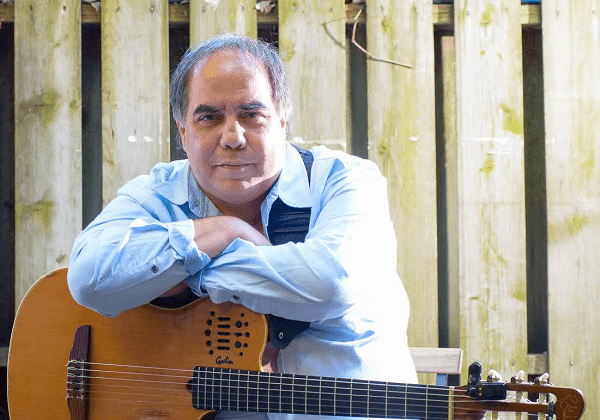
Julito Alvarado compone, arregla, produce “La marquesina”

Julito Alvarado composes, arranges, produces, complements on backing vocals and plays his trumpet on the recently released Christmas single entitled La marquesina.  For this, he invites Luisito Carrión and Prodigio Claudio to be part of the song conceptualized in a traditional septet format.  Before looking at the credits, I thought I heard Henry Santiago in the chorus singing: “Tú pones la marquesina y te traigo lo que te gusta” (You put up the marquee and I’ll bring you what you like) between pregón and pregón.   Indeed, I located his name in the credits.

In the first minute, Julito harmonizes with his characteristic trumpet solo.  At the second minute, we are treated to the Puerto Rican cuatro solo by Prodigio, shortly after Luisito Carrión brings out his commercial announcer’s voice, announcing the solo.

In addition to the above mentioned, the musicians responsible for such sonority are: Jerry Rivas and Julito Alvarado, along with Henry Santiago on backing vocals; Efraín Hernández on bass; Pedro Bermúdez on piano; Omar Hernández on timbales and bongo set; Tommy Lee Ramos on tumbadoras and Neftalí Ortiz on güiro.

Melina Almodóvar “Estamos en Navidad”

Melina Almodóvar brings us Estamos en Navidad, written by Luigi Flores, who also made the musical arrangement and played the piano.

The song starts in Melina’s voice, announcing that we are in Christmas and that a new year is coming.  “Oh, what an emotion and blessing that we are in Christmas…” she announces the good wishes chanting, between soneos: “have a lot of prosperity and that your dreams come true”.

Before the first minute, Fabiola Muñoz Ortiz’s Puerto Rican cuatro takes center stage.  During the second minute, the guest of honor adds Puerto Rican spice to the longest Christmas in the world with her Puerto Rican cuatro solo, after Melina gives way with a resounding: “Tell Fabiola, how Christmas is heard in Puerto Rico”.

Melina also sings about the coquito, the Christmas menu and everything else that might suggest a Puerto Rican Christmas in full swing.  I love the positive message, whose lyric assures us that the best is yet to come.  It is one of the few contemporary Christmas songs -if not the only one- in that line of positive and motivational inspiration, without being a religious or sacred lyric.  Anyway, the Christmas salsa song is great. It is very tasty.

The musicians responsible for accompanying Melina on this recording are as follows:  Alex Zapata on trombones, Daniel Silva on bass, Caliche Sabogal on all percussion, our beloved musical genius -Luis Aquino- on trumpets. Henry García, Melina Almodóvar and Ángel Vallenilla complement from the choirs.

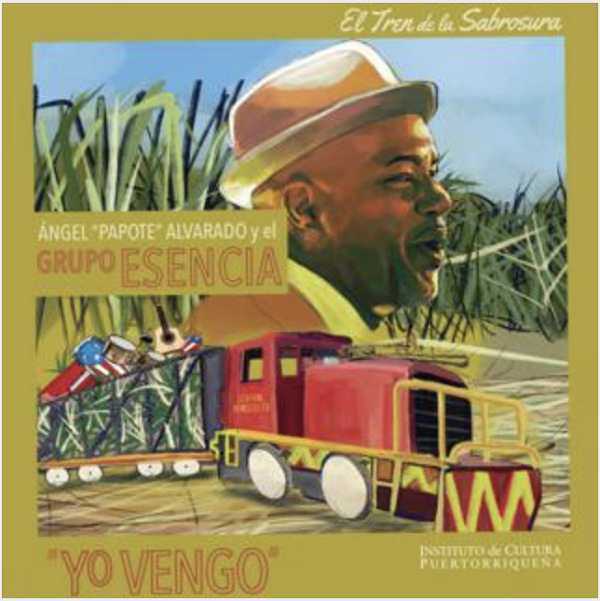
Ángel “Papote” Alvarado y su Grupo Esencia “Yo vengo”

Angel “Papote” Alvarado and his Grupo Esencia bring us the single entitled Yo vengo.  The song takes off and “takes a trip” from the first bars, affirming with forcefulness between trombones and tambourines: “I come from a truly powerful race, very deep roots and unparalleled culture”.  The pen and accordion of Ricky Martinez affirm in the voice of Papote: “My homeland is a jewel and in the world is unique, my people and my flag, are national treasure …” declaring patriotic pride and cultural responsibility, between soneos that embrace the chorus: “I come, I come, I come …”.

Motivating to move forward with the well known “pa’ lante boricua”, an honorable mention is given by saying a musical farewell to the late plenero Tito Matos, shortly before José Eduardo embellishes the theme with his Puerto Rican cuatro, so present during the Christmas season.  This is the song that awakens Puerto Rican patriotism and motivates it to flourish.

Statements like: “how happy I feel with my flag held high” and “Puerto Rico my homeland, the queen of my loves, for its people and my people, the most beautiful of flowers” while listening to the brothers Toñito and Victor Vazquez guapear with their trombones; synchronize our hearts to the rhythm of patriotic pride that only the Puerto Rican Afro-Caribbean essence understands.

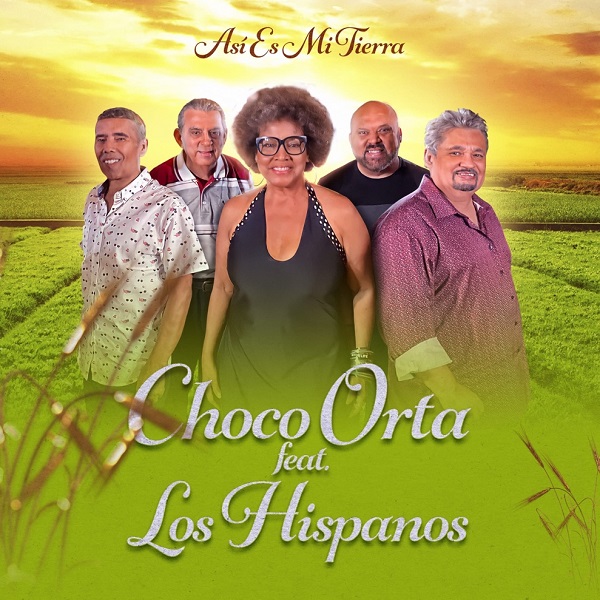
Choco Orta  “Asi es mi Tierra”

In keeping with the Puerto Rican concept of celebrating Christmas as early as September, as soon as the gentle breezes of our tropical Christmas season begin to be felt, Choco Orta released this Christmas classic. From the pen of our own Gloria Gonzalez, Choco Orta produced, directed and released this all-time hit.

It is worth mentioning that this song has already consolidated as a classic, originally popularized by the quartet Los Hispanos. In this way, Choco celebrates with Los Hispanos the 70th anniversary of the longest running quartet in existence, in addition to his 35 years of artistic career.

Choco Orta considers the Los Hispanos quartet “one of the great pearls and treasures of our Puerto Rican soil.  Currently, the members of the Los Hispanos quartet are Wisón Torres, Tato Díaz, Rafy Torres and Nino Segara.

For the production of this single, Choco had the collaboration of Nino Segarra in the arrangement, musical direction and keyboards. Musicians of the stature of Julio Loyola on trumpets; Moisés Cancel on trombones; Hilton Mercado on baritone saxophone; Ceferino Cabán on piano; Alexis Pérez on bass; Manny Trinidad on cuatro and guitar and Javier Tito Álvarez on tumbadoras, bongo and timbales delivered such perfection.

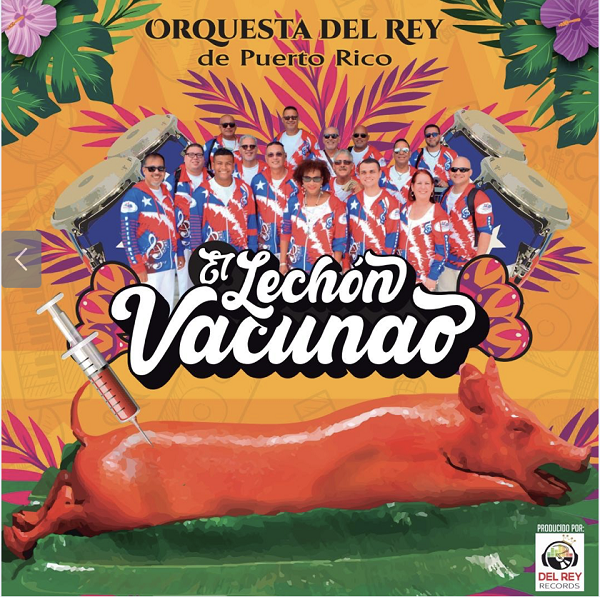
La Orquesta del Rey de Puerto Rico “El lechón vacunao”

The Orquesta del Rey de Puerto Rico brings us El lechón vacunao, from the pen of Miguel García. The composer manages to inject jocularity into the return of the Puerto Rican Christmas celebration with all the trappings of the law, after having been inhibited from celebrating Christmas in person because of COVID-19.

Néstor Ramos Zavala interprets the nice song.  He is accompanied by: Michael Colón and David Irurita on trombones; Harel Orengo, José Claudio and Eduardo Alvelo on trumpets; Juan Ramos on bongo; Gary Rodríguez on tumbadoras; Javier González on timbal; Benjamín Vázquez on bass; Sebastián Alicea on piano; Israel Santana on Puerto Rican cuatro; Cándido Reyes on güiro; Millie Smith, Luis Martínez and Jorge Agosto on backing vocals; Ezequiel Colón is the voice of Don Seco.


By Bella Martinez, ISM Correspondents, San Juan, Puerto Rico

Producer, composer, and singer D’ William tells his story

Who is D’ William?

William Pagán Díaz, artistically known as D’ William, is a talented producer, composer and singer with extensive experience in various tropical genres. He was part of the Oro Negro Orchestra and the Tañón Band before starting his solo career. We were fortunate to talk to him and learn a little more about his history and career.

Producer, composer, and singer William Pagán Díaz

How his career began

The Oro Negro Orchestra represented his first musical experience and he was about 17 years old at the time. In fact, his mother had to sign a contract for him to be part of the group because he was underage. He stayed there for a year until he got asked to audition for the Tañón Band, a group that Olga Tañón was creating at the time.

After auditioning with 300 or 400 candidates, I was chosen as the last missing member for the group because it required four and there were only three. D’ William told us that he felt he had the world in his hands due to work with Olga Tañón, but unfortunately she decided to broke up the band because she had other plans. At that time, Pagan did not know what to do with his life because he thought he had already pursued the ultimate in his career, so he decided to turn his life around, enlist in the army and forget all music.

These years of his life contributed a lot to strengthen his discipline, but he also realized that he did not want to dedicate himself to military life forever. After he retired, he moved to Japan and lived there for about seven years, during that time he was introduced to Puerto Rican salsa thanks to some friends. He started singing salsa, but always saw music as sort of a hobby and not as something he wanted to do professionally.

He toured all over Japan with the Conquistando Orchestra and composed for other artists and various franchises, but nothing for himself. In 2010, he decided that he wanted to change that situation and recorded six salsa songs with the idea of moving to Puerto Rico thinking he was going to find the same country in the musical field. Then, all the songs recorded by him stayed on the hard drive of his computer and he could not do anything with them.

D' William at the Estela Awards
D’ William at the Estela Awards

Unable to get a job, he decides to use his veteran’s benefits to complete his education, which leads him to study criminal justice and law. In 2018, a job opportunity as a lawyer for the federal government in Washington DC arose, so he moves there and meets some people who reconnect him with music thanks to his career in Japan.

When the COVID-19 pandemic arrived, he finally made the decision to start his solo career and choose a stage name that referred to his real name, which led him to use D’ William. In September 2020, he recorded his first song titled “24 horas enteras” giving start to his solo career.

Why use merengue as a base for his music?

Although merengue has not had such a boom in recent years, D’ William is passionate about this genre that he never wanted to leave aside and even said that “a party without merengue is not a party”. The artist wanted to do something that included a tropical genre handled very well by him and he knows he was right about deciding on merengue, since he has observed a renaissance in the popularity of this set of rhythms with the help of artists such as Elvis Crespo, who was again seen in awards recently.

Music for millennial ears

D’ William points out that the most important elements of merengue will always be present in his work, but in his own words, ”the years and generations make the music evolve”. Since the performer did not want to stignate in the same thing, he tries to experiment with a new style of singing merengue and writes some of his lyrics with other genres in mind, such as dembow. He also incorporates kicks, snares, synthesizers and other sounds to reach millenial ears.

This combination of the above elements has made the reception to the artist’s music great.

D' William performing on stage
D’ William performing on stage

Experience in Guatemala

D’ William also told us about the Estela Awards in Guatemala, which he did not knew nothing about until he was invited to attend. Once there, he noticed the importance of these awards for Central America, as they recognize the talent of Guatemala, El Salvador, Costa Rica, Nicaragua, Mexico and many more.

He had the honor of being in its sixth edition and seeing how artists who did not have the opportunity to be in bigger events such as Billboard, Tu Música, Latin Grammy, among others, were awarded. Something very special about this year was the participation of a Puerto Rican delegation of for the first time in its history, in which D’ William was with several of his compatriots.

The reception of the public and press towards this group was great and they really enjoyed the show. They were so well received that they plan to return soon in December to continue delighting Guatemalans with their talent.

What did D’ William do during the pandemic?

D’ William told us that he did a lot of things for himself and other colleagues during the pandemic. He did a great collaboration on a track with Dominique Patrick Noel, a French percussionist with whom we had the pleasure to talk beforehand. They have done several songs together in which the Puerto Rican sings and does some arrangements with Noel.

He also sang with Eduardo Padua, who is a very famous Puerto Rican conguero in Virginia and Peruvian Andy Caseda.

D' William did interesting collaborations during the pandemic
D’ William did interesting collaborations during the pandemic

Read Also: The interesting story of French percussionist Dominique Patrick Noel

AQUILES BÁEZ

Swing And Tradition Of A Distinguished Venezuelan Artist

Chapter I: Aquiles’ Farewell

Aquiles Báez
Aquiles Báez began to flow within the Jazz and Latin American rhythm during his stay in New York (USA).

“With all the pain in my soul, I must publicly communicate that my friend, my brother, my accomplice Aquiles Báez passed away this morning at 5 in the morning in the city of Aachen, Germany. Aquiles was in the middle of a concert tour here in Europe. He flies high gordito.” Ramón Arturo Aular (Báez’s friend, musician, and professor at the Aachen Conservatory of Music) informed the community through his Twitter account the Monday, September 12th.

The virtuoso musician, noble guitarist, arranger, and excellent composer died of a sudden heart attack at the residence of his friend Ramón Aular. His last concert was held in the city of Cologne located in western Germany as part of his 2022 European tour, the first he did after the cessation of activities due to the Covid-19 pandemic.

The noble 58-year-old artist had already performed in Spain and was preparing to present his music in some German cities such as Berlin, Tubingen, and Hamburg, before finishing his tour in France and Portugal.

“I think it is important to project the work that one has been developing in other latitudes. This is very interesting because I realize that the music I make is universal, it is not limited only to playing for the Venezuelan diaspora, which of course also provides an audience”. Báez expressed this to an international media.

During his artistic career, he recorded 17 albums and collaborated on more than 150 recordings with other artists. Báez was a professor at the Berklee College of Music (Boston, Massachusetts) and was recognized for his mastery of the guitar with “elements of mixed Caribbean and Afro-Venezuelan cultures with classical music and Jazz.” Fragment extracted from his biography.

In life, he shared stages with artists such as Paquito D´ Rivera, John Patitucci, Romero Lubambo, C4 Trío, Ilan Chester, Simón Díaz, Huáscar Barradas, Worlds of Guitars, Aquiles Machado, Serenata Guayanesa, Iván Pérez Rossi, Fareed Haque, Dawn Upshaw, Richard Bona, Luisito Quintero, Solo Razaf, Marco Pereira, Oscar Stagnaro, and Ensamble Gurrufío.

Before passed away, Aquiles Báez was preparing the publication of two studio albums and the creation of five more. He was also in charge of making the music for the Venezuelan play Mi último delirio, which premiered on September 2nd with the lead role of his friend Héctor Manrique and with great reception from the public and specialized critics.

Chapter II: Getting to know the musicians’ Master to the rhythm of the compass

Julio, was the one who instilled in him a love for music by giving him his first instrument, the Cuatro.
His older brother, Julio, was the one who instilled in him a love for music by giving him his first instrument, the Cuatro.

Aquiles Báez was always an irreverent musician who made the type of music that he felt. “It is important to make music from what one feels it is, from that forceful energy that is the act of creating…Lately, I have been respected. It was hard to get that position. They have not always respected me, perhaps because of my way of being, irreverent. The people who manage cultural spaces have always taken me as an anarchist… I consider myself someone accessible, the teacher thing hasn’t gotten to me, seeing everyone below me, that seems pathetic to me…” Aquiles expressed this to a Venezuelan media.

“Throughout his career, Aquiles has received various awards and recognitions. These include Pepsi music awards and the William Leavitt award given by the Berklee College of Music; In addition, he has stood out with more than a dozen awards as a composer of music for film, theater, and dance. Extracted from his biography.

In 1996, at the age of 32, Aquiles decided to move to the United States to study at the Berklee College of Music in Boston. After two semesters he dropped out, considering that he was “learning the same thing but in another language.” And that was not only his thinking, but also what he demonstrated during his stay as a student at the academic campus, so shortly after he entered the Berklee College of Music again, but this time as a professor.

On this academic campus, he gave “clinics, workshops, and seminars at different universities and musical institutions such as Indiana University, Temple University, Queen College, Krems Summer camp, Curitiba Music Office, The Jazz School in San Francisco, among others, in Europe and the United States”, according to his biography.

Shortly after, he participated as a guest musician on the albums of Panamanian artist Danilo Pérez: Central Avenue (1998) and Motherland (2000), both albums nominated for Grammys.

Aquiles Báez was a founder and member of the board of directors of Guataca productions. In this space, they continue to support emerging Venezuelan artists. Báez’s methodology for finding new talent was to research, listen to them live and contact them. “Why not support those guys who come after you? Why not make life more pleasant for them? Or a lighter path than one had. This road is not easy at all, it has been very hard, and it continues to be hard. And one continues and believes that he has acquired a certain reputation…” Báez expressed this in an interview conducted by a Venezuelan media outlet.

Chapter III: Anecdotes of a famous life

Last night sharing with the beloved Maestro Carlos Cruz Diez (Panama. October 29, 2016)

Countless artists expressed their affection and grief for Aquiles’ departure, expressing testimonies of a life full of joy, love, and passion for musical colors.

“One of the artists who has inspired me the most and a great human being. He made it possible for us to make our first album, the tour of the United States and opened the doors of his home for us. We made a lot of beautiful friends with Aquiles. D.E.P, Maestro,  compaíto Aquiles Báez”. Jorge Glem (Cuatrista and member of the group C4 Trio).

“The wonderful Aquiles Báez was a musician capable of playing all Venezuelan music of all genres“. Alfredo Naranjo (Vibraphonist)

“Dismayed by the sudden death of my dear friend Aquiles Báez, one of the great musicians of our country, guitar teacher, and eternal officiant of humor and simplicity”. Leonardo Padron (Writer)

“Today we are less. I have just been informed that our admired and beloved musician and my dear friend, Aquiles Baez, has passed away. This news is heartbreaking and unfair. Aquiles is one of the most creative and generous people I have ever met”. Héctor Manrique (Director and theater actor)

“Thank you for being an inspiration in music and a big brother in life. Without your unconditional support, I would not have even reached the corner”. Álvaro Paiva Bimbo (Guitarist and 2022 Oscar nominee for the soundtrack of the Disney movie “Encanto”)

“How can we forget this great friend and fellow adventurer”. Claudio Nazoa (Comedian)

“I was left with the desire to carry out the project we had to record an album together. What profound sadness!” Miguel Delgado Estévez (Musician, arranger, and producer)

Finally, the Venezuelan percussionist Omar Ledezma Jr. expressed his sorrow for the death of Báez.

LENTEJAS. That’s what the gordo called me. 7 years of my life I played and toured the world with Aquiles Báez. We met at one of his concerts at the Bellas Artes thanks to my dear Carlos Reyes, another great guitarist from our country, at the time I worked at the MACCSI. Years later, arriving in Boston, he called me to be in his group and I couldn’t believe it. The gordo was my musical hero thanks to his Platabanda and the number of times I saw him accompanying great singers. He was the one who told me to grab El Cajón and start putting in the merengue and the gaitas. I knew his bad jokes by heart: “Vamos a tocar la canción de DC: Di si encontraste…”, with him, I learned to be a person first, then a musician, I learned not to make ugly faces if I made a mistake, with him, I had to press on reading, to be punctual, to put my batteries.

Anyway… with the gordo I learned to be a professional musician, because with his virtues and defects, for me, he was the best.

I love you my gordo, wherever you are. Thanks. #aquilesbaez”.

You can continue reading the article about Omar Ledezma Jr. From The Venezuelan Melody To The Caribbean Rhythm.

Here is a small excerpt from this interview of 2021:

Years later, and with experience acquired in presentations, and groups, Omar Jr. met his first mentor, Aquiles Baez, a famous Venezuelan artist, guitar virtuoso. Together with Aquiles, he made his first international tour of the United States. “With Aquiles, I had the pleasure of playing Venezuelan music. We play with many artists in the United States… Thanks to him I developed percussion (Non-autochthonous element) in Venezuelan music”. Ledezma Jr. commented.

“Fall in NY. How beautiful are the colors of Autumn in NYC. Enjoying that watercolor of nature”. Aquiles Baez (November 8, 2018)

Melissa Aldana Will Headline The Wellington Jazz Festival

The Most Acclaimed Latin Saxophonist On The International Jazz Scene

Melissa Aldana started playing the alto saxophone at the age of 6

Melissa Aldana is a Chilean saxophonist and composer nominated for the Grammy Awards (2020) for her skills with this wind instrument, she has six studio albums, and her fame has spread to all Jazz circuits around the world.

Aldana with his quartet will headline the Wellington Jazz Festival 2022 to present to the fans the debut album with the company Blue Note Records titled 12 Stars, and you cannot miss the opportunity to experience this exceptional live performance with flowing harmonic notes seasoned with feeling in the Wellington Opera House (111 – 113 Manners Street, Wellington, New Zealand) on Sunday, October 23rd from 7PM to 8:30PM, and the ticket price is $69.

The Wellington Jazz Festival is an entry point into the Jazz music calendar for fans and the curious. This event will offer more than 100 magical concerts in bars, restaurants, and live music venues in the capital. This year the splendid festival will take place in mid-spring in Aotearoa (New Zealand’s Maori name), featuring some of the best international Grammy Award-winning and nominated artists, as well as renowned talent from this Oceanian country and the world.

On the other hand, Melissa Aldana was the first South American woman and instrumentalist to win the Thelonious Monk International Jazz Contest (Washington -USA) in 2013. This artist born in Santiago de Chile in 1988 is a graduate of the prestigious Berklee College of Music with a full music scholarship in 2009, moreover, she also comes from a musical family where her father and paternal grandfather played this instrument.

The discography of this tenor saxophonist goes back 12 years when, at only 22 years old, she came out on the music market with her debut album Free Fall (2010). It is followed by Second Cycle in 2012, Melissa Aldana & Crash Trio (2014), and Back Home in 2016. Her fifth studio album was Visions (2019), an album that earned her first Grammy nomination for Best Solo by Improvised Jazz in recognition of her impressive tenor solo on her composition Elsewhere.

12 Stars was composed in Harlem (New York - USA) in 2020
12 Stars was composed in Harlem (New York – USA) in 2020

Most recently her record production is 12 Stars, an anecdotal album that she wrote during the Covid-19 pandemic and the product of the struggles she went through due to the breakup of a long relationship. “This is a very important album for me. I felt like I had a lot to say because of all the experiences I had during 2020. After the personal process that I went through, I feel more connected to myself and my imperfections… Embrace everything I hear, everything I touch, including mistakes, is more significant than perfection”. Aldana exposed in her biography

12 Stars was recorded under the Blue Note label and released on the music market on March 4th. “I feel super privileged, but I had a feeling that this had to happen at some point. I’ve been very consistent with my band and my projects for a long time. I am very motivated for what comes next”. Aldana expressed to an international digital medium.

Melissa will end her presentations in Europe this year with a tour during November that will take her to the capital of Spain on Friday, November 11th (Teatro Fernán Gómez) and on Saturday 12th, she will be in Badajoz (Teatro López De Ayala). While on Monday, November 14th, she will perform at the Zig Zag Jazz Club (Berlin-Germany), and on Wednesday, November 16th, she will have the same but this time at the Porgy & Bess in Vienna, Austria.

The Padova Jazz Club (Padua- Italy) will be handed over to Melissa Aldana on Friday, November 18th, and a day later she will do so at the Teatro Lauro Rossi in Macerata, Italy.

  • « Go to Previous Page
  • Page 1
  • Interim pages omitted …
  • Page 3
  • Page 4
  • Page 5
  • Page 6
  • Page 7
  • Interim pages omitted …
  • Page 22
  • Go to Next Page »

International Salsa Magazine (ISM) is a monthly publication about Salsa activities around the world, that has been publishing since 2007. It is a world network of volunteers coordinated by ISM Magazine. We are working to strengthen all the events by working together.