• Skip to primary navigation
  • Skip to main content

International Salsa Magazine

  • Home
  • Previous editions
    • 2026
      • ISM / January 2026
      • ISM / February 2026
    • 2025
      • ISM / December 2025
      • ISM / November 2025
      • ISM / October 2025
      • ISM / September 2025
      • ISM / August 2025
      • ISM / July 2025
      • ISM / June 2025
      • ISM / May2025
      • ISM / April 2025
      • ISM / March 2025
      • ISM / February 2025
      • ISM / January 2025
    • 2024
      • ISM / December 2024
      • ISM / November 2024
      • ISM / October 2024
      • ISM / September 2024
      • ISM / August 2024
      • ISM / July 2024
      • ISM / June 2024
      • ISM / May 2024
      • ISM / April 2024
      • ISM / March 2024
      • ISM / February 2024
      • ISM / January 2024
    • 2023
      • ISM / December 2023
      • ISM / November 2023
      • ISM / October 2023
      • ISM – September 2023
      • ISM – August 2023
      • ISM July 2023
      • ISM Edition June 2023
      • ISM – May 2023
      • ISM April 2023
      • ISM March 2023
      • ISM February 2023
      • ISM January 2023
    • 2022
      • ISM December 2022
      • ISM November 2022
      • ISM October 2022
      • ISM September 2022
      • ISM August 2022
      • ISM July 2022
      • ISM June 2022
      • ISM May 2022
      • ISM February 2022
      • ISM January 2022
    • 2021
      • ISM December 2021
      • ISM November 2021
      • ISM October – 2021
      • ISM September 2021
      • ISM August 2021
      • ISM July 2021
      • ISM May 2021
      • ISM April 2021
      • ISM June 2021
      • ISM March 2021
      • ISM February 2021
      • ISM January 2021
    • 2020
      • ISM December 2020
      • ISM November 2020
      • ISM October 2020
      • ISM September 2020
      • ISM August 2020
      • ISM July 2020
      • ISM June 2020
      • ISM May 2020
      • ISM April 2020
      • ISM March 2020
      • ISM February 2020
      • ISM January 2020
    • 2019
      • ISM December 2019
      • ISM November 2019
      • ISM October 2019
      • ISM Septembre 2019
      • ISM August 2019
      • ISM July 2019
      • ISM June 2019
      • ISM May 2019
      • ISM April 2019
      • ISM March 2019
      • ISM February 2019
      • ISM January 2019
    • 2018
      • ISM December 2018
      • ISM November 2018
      • ISM October 2018
      • ISM September 2018
      • ISM August 2018
      • ISM July 2018
      • ISM June 2018
      • ISM May 2018
      • ISM April 2018
      • ISM March 2018
      • ISM February 2018
      • ISM January 2018
    • 2017
      • ISM December 2017
      • ISM November 2017
      • ISM October 2017
      • ISM September 2017
      • ISM August 2017
      • ISM July 2017
      • ISM June 2017
      • ISM May 2017
      • ISM April 2017
      • ISM March 2017
      • ISM February 2017
  • Download Salsa App
    • Android
    • Apple
  • Spanish

Search Results for: Covid

How talented Puerto Rican singer Fernandito Rentas started his career

How his career started

We have here Fernandito Rentas, who is a Puerto Rican salsa singer. Good afternoon, Mr. Rentas, how do you do?

Good afternoon. Thank goodness, i’m doing just fine right in good health and working hard. We are doing what is done daily, which is my regular job, but on the other hand, we are making the music that I would be able to do up to the present time, or rshould I say, musical projects.
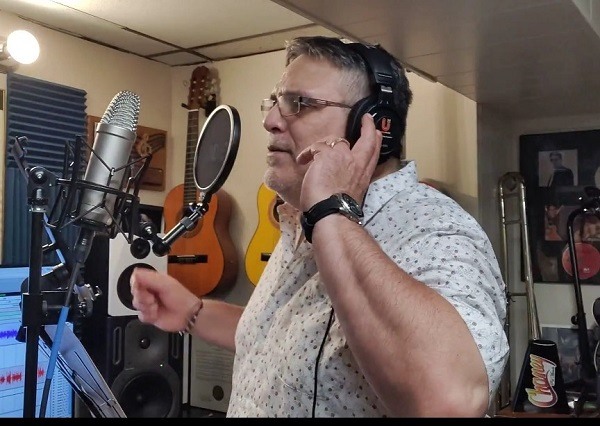
Fernandito Rentas recording one of his songs

You come from Ponce. This is a city from which many famous Puerto Rican artists come, especially in the salsa genre. Do you think that coming from that city had something to do with the road you would take later on?

Ar some point, yes because that influence was around me since I was a little boy. I have always been interested in music and sports, but I enjoyed more of music. I don’t come from a family of musicians as far as I know, but my biggest influences come from distant relatives like, for example, Mr. Esteban Tato Rico Ramírez, who was a singer in the orchestra La Solución.

Basically, what I remember most about my childhood is that it was from there that I became interested in music. At the same time, I would see my parents dancing at parties and there was all that excitement and feeling of celebration. The church and its chants were also important in that regard.

Those were earlier influences, but it was from the age of 7 that I began to understand tropical music. As time went by, I got more interested in it. I couldn’t take music lessons due to economic problems at that time, so I did everything by ear. I do remember that there was an instrument I liked a lot when I was in elementary school, which was marimba. I was strock by it, which led me to join a group of classmates at school who practiced in the school canteen in the afternoon. I also remember my music teacher, Mr. Fermín Torres, who was from the Adjuntas or Coamo area in Puerto Rico, but he was well known in the musical area of the school system.

I didn’t really jump right into music until a few years later because our family moved to Florida, where I began to look out for other interests such as the US Armed Forces. When I graduated from high school, I joined the army and there I met other colleagues from my homeland, which made me reconnect to Latin music. I was not only focused on music of Puerto Rico, but also from Colombia, Venezuela and other countries.
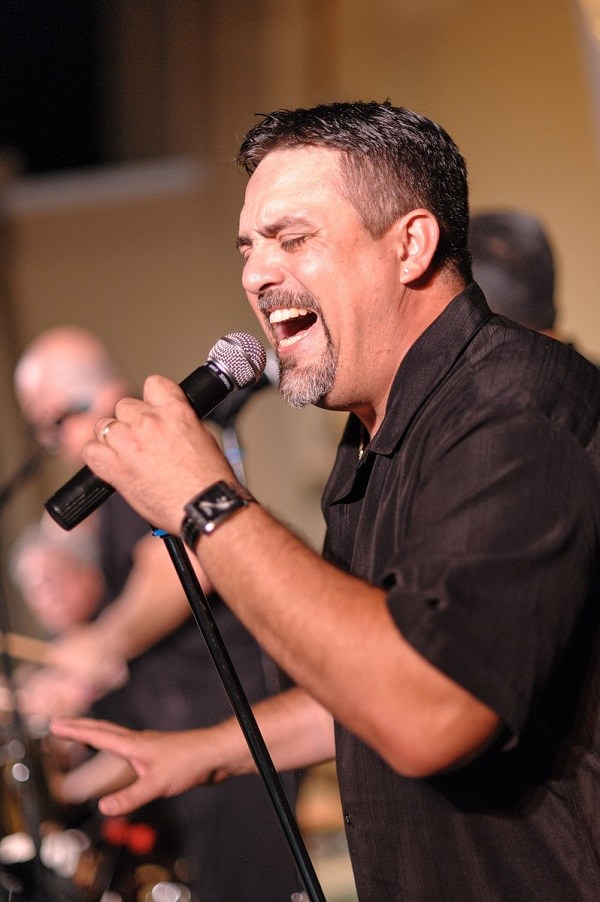
Fernandito Rentas singing on stage

My idol as an artist in the genre has always been Oscar D’ León since the first time I saw him when I was 7 or 8 years old during the patron festivities in my village. When I went into the army, many colleagues who were already veterans in this issue helped me to train me. The first person I met was bass player Héctor Cruz, who I say was my godfather in music. That was in Germany when I served on the force in 1989. When I returned to the United States, I went to North Carolina and began to succeed in music step by step.

I spent nine years serving in the South Korean peninsula, where I was blessed to pull together a group of musicians and perform live music with many fellow musicians, including Korean friends I made there. I returned to the United States in 2011 and thank goodness I stay on this. These days, I had the opportunity to connect or lift me up from where I were and do something different. What I was looking for was to create my own productions with the music that I like, so that’s what I’ve been doing these last two years.

His groups

You were part of various groups including Orquesta Mambo Son, Grupo Descarga, among others. When did you decide to go solo and create your own productions?

I decided to do it in 2020. I had already had this interest for many years and was always seeking the opportunity to break the ice through groups. I was looking to take part in the production of a group I was with and start from that point, but unfortunately none of my groups managed to get into production.

I finally got the chance with the pandemic, as I started to be able to be interacted with colleagues and friends through Facebook and connect with musicians from around the world. Then, other comrades who were also in the armed forces told me about Mr. Robert Requena, who is a Chilean who lives in Medellin, Colombia.

Fernandito Rentas in his military uniform

When I wanted to do things differently adapting myself to the new era, they put me in touch with Mr. Requena and I expressed my ideas. Then, he was the one who showed me the first composition for my first song, which we titled Bailando debajo del agua (Dancing under the water). The thing is that this song is based on an event that happened here in my house, which I told Requena about and we used it for the song. Then, we talked about its musical bases and what I was looking for in my future songs, so he came up with the formula. Today, we are working on my sixth record and thinking about releasing it in June, but there are seven others that are being created right now.

Seeing as your career practically started with Covid-19, do you think the pandemic precipitated what you had in mind?

Well, in a way, yes. My desire to make a solo album is very old, but the 20 years in which I was serving in the armed forces limited me, thing that also happened to other colleagues who are also launching their own albums today, such as Arnaldo LaFontaine, Edwin El Calvito Reyes, Josean Rivera, José Rivero, among others. Arnaldo La Fontaine, Jose Rivero and I were singers in the same orchestra in the southeastern United States during the 1990s.

My interest in being a soloist was present for a long time, but the opportunity to do so did not come until I made use of technology. I can tell you that all my albums are being made in Medellin, Colombia. All I do here in New Jersey is go to the studio and record the voice. That advantage that we have today really helped us and, at the same time, the arrival of the pandemic has prevented us from going to other places to bring our talent. I have accumulated unimterrupted 33 years of career, but the pandemic prevented us from going out and locked us up at home. It was there when many other artists began to take alternate measures to be able to continue reaching people.

In any way, I think we have turned this situation to our advantage in the best way that the Lord has not allowed.

Art of his last song Qué difícil es

An artist I interviewed told me that many musicians were preferring to release single songs instead of full recordings. Are you makings full recordings or single songs?

Based on advice that Mr. Requena gave me, I am releasing single songs. Nowadays, the matter of full albums has become complicated due to the lack of record labels and factories where these materials are produced. I would say that the idea of releasing singles was the best because you want to know if the public is going to accept or like the album. Instead of releasing all the songs at the same time, releasing one song at a time is more comfortable, less expensive and easier to work with. For the time beingt, I have no plans to release a CD.

How did you balance your musical and military activities?

I had to balance them because our obligations and priorities in the military service are focused on the mission and commitment to the defense of the country. During our free time, we liked to clear the mind and do different things. We went to parties.

We felt great making music for our fellow soldiers, their communities and families. We were able to bring our Latin culture to the countries we went to.

Music was our main hobby and the to entertain ourselves on the weekends.

Social networks and website

Facebook: Fernandito Rentas II

Instagram: Fernandito Rentas

YouTube: Fernandito Rentas
Current news in the San Francisco Bay Area

What is happening now?

Tito Garcia-The Doctor of Salsa, the renowned colorful bandleader and timbalero of Tito Garcia y Orquesta Internacional passed away on Saturday, April 23rd after a long battle with cancer.  Tito has performed Salsa and Charanga in the 1970’s with the seminal SF based bands Ritmo 74 and later Charanga Rene Del Mar. He later spearheaded the band “Orquesta Salsa Dulce” in the late 1980’s which morphed into the first edition of his band La International featuring a young Julio Bravo on coro in the early 1990’s.  La Internacional were remembered for their explosive performances by dancers and aficionados.

Tito was a staple at the late, famed salsa palace Cafe Cocomo with his monthly “Mambo Saturdays” during the early 2000’s. I often was the DJ during those hot nights. His band featured fine musicians and vocalists such as former Batachanga vocalist Ricky Rangel, congueros Eddie Borrero and Sandy Perez of Los Muñequitos De Matanzas and keyboardist Coto Pincheira who relocated to New York.

Tito García had been fitghing against, cancer, which took his life at the end

Tito resurfaced after his bout with Cancer in 2020 to relaunch La Internacional but the comeback was short lived due to his health issues. He later hosted some outdoor rumba sessions near his new home of Vallejo but those dates were limited due to COVID restrictions. He relapsed during his recent trip to Costa Rica and died due to complications with his recovery.  He will be sorely missed.

Don’t forget coming up on Friday, May 6th at 8 pm with be the tremendous Cuban music double bill of “El Tren De Cuba”…Los Van Van and Alexander Abreu y Havana d’Primera at the UC Theatre, 2036 University Avenue in Berkeley. Two of the powerhouses of Cuban Popular music are appearing together for the first time in the US and on only certain dates of the tour…SF Bay Area residents are blessed to have this double bill play here!  DJ Antonio will spin in-between sets.  I will be your MC for the evening. Run to get your tickets because they’re going fast!  For more information, go to jaffeevents.com

Salsa superstar Oscar D’Leon and his orchestra will visit the SF Bay on Saturday, May 21 at Roccapulco, 3140 Mission St. in San Francisco. Oscar is still one of the dynamos to watch perform live…a tremendous show!  Guayacan Orquesta from Colombia will also play on Friday, May 13 at the Mission Street hot spot.  Also coming to Roccapulco Sat. June 11th…the Homenaje A La Musica Cubana featuring Mayito Rivera, Alain Perez, Yeny Valdes, Lily Hernandez “La Amaona” and Julio Cesar “JC Five” plus DJ Walt Digz (SF) and DJ Jimmy Rumba (LA) and on Thursday, July 7th…the explosive sounds of Pupy Y Los Que Son Son direct from Cuba.

Oscar D’ León will be in the San Frrancisco Bay Area on 21 May

SF JAZZ and the San Francisco Jazz Festival are featuring an impressive array of Salsa, Cuban and Latin Jazz starting Wednesday June 8 with Pacific Mambo Orchestra.  Followed by Gonzalo Rubalcaba and Grammy nominee Aymee Nuviola 6/9; Chucho Valdes with Dianne Reeves and Joe Lovano 6/12; Changui Majadero 6/13, Danilo Perez Global Messengers 6/14; Issac Delgado’s Con Tumbao Project w/Miguel Zenon, Oscar Hernandez, Pedrito Martinez, Alain Perez, Tony Succar and more 6/18.  SF JAZZ and Stanford University co-presents Eddie Palmieri and Arturo Sandoval at Stanford’s Frost Amphiteater on July 23.  Info: www.sfjazz.org.

The Yerba Buena Gardens Festival will begin Saturday, May 7th from 1 to 2:30 pm with a free concert featuring local treasure Jesus Diaz y Su Habana Afro-Cuban Ensemble featuring a lineup of heavyweights from Cuba and the SF Bay including Ariacne Trujillo Duran, Leider Chappotin, Raul Pineda, Roberto Junior Vizcaino, Karl Perazzo, Jeff Cressman, Melecio Magdaluyo and Julio De La Cruz.  The Yerba Buena Gardens is located on Mission Street between 3rd and 4th Streets in San Francisco.  Visit ybgfestival.org for more information.  There will also be an after party featuring Jesus Diaz and the Habana Afro-Cuban Ensemble and DJ Carlitos Way at the Elbo Room, 311 Broadway in Oakland.

The San Francisco Carnaval and much more

The annual Carnaval San Francisco is back on the streets of San Francisco on Sat, May 28 and Sun. May 29th with the theme Colores De Amor.  The two day festival will take place on Harrison between 17th and 22nd Streets from 11 am to 6 pm.  The grand parade will take place on Sunday, May 29th starting at 9:30 am on 24th and Byrant Streets.  Scheduled to perform will be Jesus Diaz y Su QBA, Momotombo, Sambada, Javier Navarette & His Socially Distant Friends, Dos Four, Puro Bandido, Namorados da Lua, Annette Aguilar & West Coast Stringbeans, Susanna y Orquesta Adelante, Magna Fresq, Los Allegres Callejeros, Aqua Pura, Mariachi Juvenil, Azul Latino and more.  Headliners TBA.  Food, Beer, Crafts, DJ areas and Cannabis gardens on the grounds.  Free!   For more information: carnavalsanfrancisco.org.

There is a new Salsa scene happening on Thursdays starting May 12th at Charley’s LG, 15 N Santa Cruz Ave, Los Gatos presented by your friends at International Salsa Magazine.  Opening night at this state of the art club will feature the swinging sounds of the multi-talented vocalist/conguero Edgardo Cambon and Candela.  I, Luis Medina from KPFA/WSR and International Salsa Magazine will be your DJ.  World Salsa Radio DJ El De La Clave will also be in the house. Dance lessons by Migi & Angel starts at 8:00 pm.  Music starts at 9 pm.  The upcoming schedule is the following: Julio Bravo and Salsabor 5/19, Manny Martinez and La Rebeldia 5/26 and the Charanga sounds of Orquesta La Moderna Tradición 6/2.  Thursday nights just got hotter in the South Bay…be there!!

Edgardo Cambón at The Seahorse Restaurant, Sausalito

The Ramp at 855 Terry Francois Blvd in San Francisco continues to present Salsa orchestras on Saturday afternoons starting at 5 pm.  The night is closed on June 7th for a private event, The Ramp’s first Salsa festival featuring 2 bands: Gary Flores y su orquesta Salsa Caliente and Eric Rangel and Orquesta America 5/14, The Latin Rhythm Boys 5/21 and Louie Romero and Mazacote on May 28th.  DJ Mendy spins in-between sets and after the live music from 9 to 11 pm.   The Ramp has a great patio overlooking the SF Bay and serves food and drinks.

The Seahorse located at 305 Harbor Drive in Sausalito features live music plus KPOO-KPFA DJ Jose Ruiz on Saturday and Sundays.   Sat, April 30th features La Clave Del Blanco, Rene Escovedo Salsa Band with Ric Feliciano Sun 5/1; Edgardo Cambon & Candela Sun, 5/8; Orquesta Timbalero Sat, 5/14; Louie Romero & Mazacote Sun, 5/15; Susanna y Adelante Sat, 5/21; Orquesta La Original w/Alexis Guillen 5/22; Pepe Y Su Orquesta Sat. 5/28; and Orquesta Taino Sun. 5/29.  Enjoy the fine Italian cuisine, beer, wine and ambiance both indoors and the outdoor patio at this scenic spot just crossing the bridge to Marin County.

The Cigar Bar, 850 Montgomery St. in San Francisco is a favorite spot to dine, have drinks, enjoy a cigar in the courtyard and dance to hot Salsa music.  The calendar for May includes Manteca 5/6, Orquesta Timbalero 5/7, Somos El Son 5/13, Josh Jones Latin Jazz Ensemble 5/14, N’Rumba 5/20, Edgardo y Candela 5/21, Orquesta Taino 5/27 and La Clave Del Blanco 5/28.

René Escovedo will perform at the Seahorse Restaurant, Sausalito, on May 1

DJ Walt Digz has a hot Wednesday night Cuban scene “El Timbon” happening at the Slate Bar, 2925-16th Street in San Francisco.  Digz also hosts his own livestream called “El Timbon” featuring the latest Timba, Cuban Salsa and Cubaton videos every Tuesday night from 7 to 9 pm on Twitch.  He also keeps busy by hosting the monthly Fresquecito Saturday nights at La Furia Chalaca in Oakland and the outdoor El Timbon En El Callejon Sundays from 3 to 8 pm at Vida Cantina, 56 Belden Place in San Francisco.  Digz also continues his original Friday La Tropi-Cal monthly at Il’ Pirata in SF with Añejo Productions now going on their 21st year!

Berkeley’s Ecology Center will present the Berkeley Farmer’s Market Salsa Festival on Saturday, May 21 from 10 am-5 pm.  This free event will feature Christian Pepin and Orquesta Bembe, Afro-Cuban and Afro-Peruvian keyboardist Erick Peralta and Band, Berkeley High School Youth Ensemble and the Latin Jazz Youth Ensemble.  Dance performance and Dance lessons by Rebecca Galindo.  Food, crafts and more. For more information, visit www.ecologycenter.org. 

Don’t forget to check out my radio programs: Con Sabor now in it’s 25th Anniversary Year on KPFA 94.1 FM every Saturday night from 9 to 11 PM PST and Sabiduria Con Tumbao every Wednesday night 5 to 7 pm PST on WorldSalsaRadio.com.

That’s it for this month!  Ciao 4 now!

Izis La enfermera de La Salsa talks about her passion for music and nursing

This is our interesting conversation

Right now we are talking to Izis La Enfermera de La Salsa Good afternoon, Izis, how are you today?

I’m super happy and feel very blessed. I believe that being healthy is already a great blessing.

One of the things about you that has caught my attention the most is the name you chose. Why are you called Izis La Enfermera de La Salsa?

I have been a military nurse for the last 15 years. I mean, I’m a soldier in the United States Army. I work for the army as a nurse.

La Enfermera de La Salsa

So you use that name because of your first profession.

That’s correct. I loved the name because I believe that music has the power to cure, distract and heal. So, I think that mix was perfect. The fact remains that the name comes from my profession, but I also use music as part of the cure for my patients.

You come from a musical family. Evidently, that also influenced the path you took later on. What did you like most about the musical world while still a child?

I was born in Puerto Rico and my parents are Puerto Rican, but I moved out because my dad served in the army, so I followed in his footsteps. Indeed my family is musical and specialized in jíbaro music, which is very typical in Puerto Rico. I think this was the connection with my native island and my family, so to speak. When I listened to their songs, it inspired me to follow this path and, in particular, salsa was the genre with which I have made the strongest conection. My parents listen to a lot of salsa music and I fell in love with it. Since I was a child, I always wanted to be involved in these activities of dance and song.

Your first instrument was the flute. Do you play any other instruments?

I play a little bit of cuatro, which is the Puerto Rican string instrument, but I focus more on the flute and the vocal part. I used to play flute in classical music when I was in school, but I never thought I would use it in salsa. It’s the perfect combination.

How have you managed to combine your facets as a singer and a nurse?

That’s the question my family, friends and co-workers always ask me. My answer is that my profession requires 12 hours, but the advantage I have is that I don’t have to work every day. I take advantage of my spare time to pursue my other passion which is music; that’s why I always tell people that music is like my baby. Those who have children know that you have to make many sacrifices for them. That’s the same thing I do for music. Sometimes, it may happen that I don’t sleep or eat well, but I pour all that passion into music.

When asked how I combine both facets, I think I use my two passions to serve others. What feeds my heart and soul is to serve, so I serve my nation as a nurse and soldier. As a singer, I serve my community and anyone who listens to my music. That’s what fills me with energy.

Izis playing the flute

Salsa as a medicine

I recently interviewed Jérôme Martin, a Frenchman who runs an Internet site called La Salsa Es La Cura. When asked why he uses that name, he replied that salsa and music heal everything, whether it’s a physical or emotional pain, do you agree with that statement?

I totally agree. Karina, I began my career as a general nurse, but there came a point where I had the opportunity to specialize as a labor and delivery nurse. However, I felt I was missing something and that’s where I made the change for mental health. It is in this field that I have seen results related to music.

Although I was not a psychiatric nurse, I have had moments in which I have cared for patients with pills as I have mentioned in other interviews, but I felt they needed something more. When I started singing to them, I started noticing physical and mental changes. I remember a comatose patient who, when she came back, told me that all that she remembers was my voice. So, I myself have seen and experienced what music can do for your health.

Psycho-oncologist Argelia Melet states that the physical part won’t improve unless the mental part is well. In fact, she uses music in several of her therapies. It has much to do with what you are telling me.

That’s is absolutely true. If you don’t feed your body and your mental health, you are going to fail in many things.

Izis performing on stage

How was your musical activity during the pandemic?

As a soldier, at that time, the army had sent me to a town in the middle of the desert and that’s when I knew that I would not be able to have so much musical activity because I was far away from everything. I did events for the military community here and there, but all that is over because of Covid.

At that time, I started recording and connecting with other people through a virtual initiative called Corro Con Salsa with which people can listen to this genre from anywhere and at the same time. The point of the show is to exercise with music and that project combines everything I believe in, that is, the physical, mental health and music. That made me cheer myself up a bit, as I was a little sad not to see my audience. As artists, the audience is our fuel.

During the pandemic, I got connected to my musical roots, that is to say, my uncle, my aunt and my cousins. We join together to make a song together online, which I don’t believe we could have done without Covid due to our occupations.

Let’s talk about your new album and the genres in which it focuses on.

You know that my passion is salsa, but I sing anything. I usually record salsa, but I have also recorded several bachata songs and one or another merengue song. However, I am no longer focused on albums because the release of a full album is not like it was before. Now, what I’m doing is releasing one song at a time. I’m releasing a Madonna song in a salsa version called Like A Prayer. I have been releasing songs in English because I live in the United States, so if I want Americans to understand me and feel the same passion for salsa, we have to have something in common, that’s where the language comes into play.

Besides music and nursing, what other passions do you have?

I love to paint. I paint on hats, shirts and many other things. This passion for art is like an extension of my passion for music and my way of connecting with the public because, oftentimes, I perform on stage and then I go to my sales kiosk where I interact with my fans, sign autographs, paint hats, among other things.

Almost all of my designs are related to music. In fact, many important artists have used them such as Larry Harlow, La Sonora Ponceña, El Gran Combo, and so on. Almost all my designs include musical notes, maracas, drums, among other musical elements.

One of the hats where Izis has painted

NOTICIAS CON SABOR MARCH 2022 by Luis Medina

Live music and other news in the SF Bay Area

I recently interviewed percussion phenom and timbalero for Santana, Karl Perazzo on my KPFA Radio program Con Sabor. He is quite a busy man…I caught up to him while he is in Las Vegas for rehearsals for Santana’s upcoming slew of shows at the House Of Blues. In addition to his busy schedule with Santana, Karl has other projects during his spare time that include the SF based all-star Salsa band Karabali as well as guest appearances with Salsa Caliente that kept him busy during the COVID. He also appears on occasion with fellow bongocero Jake Jacobs band VibraSON. On top of all of that, Perazzo also creates and manages his own line of jewelry.

Perazzo, a self taught musician who was drawn to the drum and Afro-Cuban music as a young child and started his musical studies at the age of 8. Karl is a phenomenal percussionist who plays masterful Timbales, Bongo, Congas, cowbell and an impressive array of percussion instruments. He has been a mainstay in the Santana band for the past 31 years inheriting the Timbales spot from the legendary Orestes Vilato. Perazzo is still going strong keeping the percussive fire burning on Santana’s latest recording Blessings and Miracles. The band will be launching a major tour with Pop legends Earth Wind and Fire later this year. He has his own signature line of Latin Percussion congas and bongos that he designed himself with a distinctive Dia De Los Muertos sugar skull theme to honor the ancestors.

Karl Perazzo and his instruments
Percussionist and timbalero for Santana Karl Perazzo

Perazzo has previously performed with the greats such as Tito Puente who mentored him when he was a young kid along with another fellow kid phenom Gibby Ross. I saw Karl and Gibby playing with Tito on stage-what a sight to see! Karl also played with Sheila E. (as a member of her band in her emergence as a huge star in the 1980’s), Prince, Pete Escovedo, Dizzy Gillespie, Malo, Pacific Mambo Orchestra, Ray Obiedo, Andy Narell, Jorge Santana, Raul Rekow and many others. Perazzo also formed the popular SF based salsa band Avance which had a long run starting in the early 1990’s. The group disbanded in 2020. Karl has kept himself connected to his roots which is Salsa and Afro-Cuban music but has always kept his hear open to all types of music since his childhood. He credits his father who always encouraged Perazzo to push himself to be a complete percussionist, to learn how to sing and be a versatile performer.

Perazzo is now launching his own YouTube show “The Backstage Show” on the TBS Music Channel in the next couple of months which will focus on fellow creatives such as musicians, artists, chefs, writers and other notable individuals involved in arts and culture. Perazzo who is the host of “The Backstage Show‘ told me that the program’s mission is “to turn music into inspiration“. I asked Karl Perazzo what keeps him going. He told me “you have to have passion in whatever you do in life…whether it’s sweeping the floor or playing the drum”. You can feel that burning passion, inspiration and enthusiasm along with those great playing chops whenever you see him play live! You can catch up with Karl Perazzo by following him on Instagram under karlpperc.

Music Notes

Music Notes: Salsa superstar Luis Enrique and Peruvian salsero Josimar Y Su Yambu are the new headliners replacing Victor Manuelle on Saturday, April 9th at the Hyatt Regency Hotel in Burlingame. Promoters JC Coral and Bosco Vega are presenting the show which originally was scheduled for early February but was postponed due to COVID restrictions. The new lineup was announced earlier in February. For tickets, visit eventbrite.com, tickeri.com, ticketsparati.com or call 415-424-8809 or 650-218-0861.

Luis Henrique performing
Luis Henrique on stage

Former El Gran Combo vocalist Charlie Aponte will be singing his original solo material as well as a slew of his great Gran Combo hits on Friday, April 6 at Roccapulco in San Francisco. Pepe Y Su Orquesta will be opening up the show brought to you by Jaffe Events. Roccapulco will also be presenting the red hot Combinacion De La Habana with a high energy six man vocal front line for their SF debut on Saturday, March 5th. CDLH is under the direction of Gerson Valdes, the nephew of iconic pianist Chucho Valdes and performs Timba mixed in with Reggaeton and Salsa Dura. This popular group is embraced by Cuba’s youthful fans and making fans everywhere.

Jaffe Events in association with MGD Productions will be presenting a dream Cuban music double bill featuring Los Van Van and Havana d’Primera with Alexander Abreu on Friday, May 6th at Berkeley’s UC Theatre, 2036 University Avenue. DJ Antonio will also play in-between sets. I have the honor of serving as the Master of Ceremonies of this special event. For Info and tickets visit www.jaffeevents.com.

Former Los Van Van vocalist Yeny Valdes and her band will be visiting the popular Fresquecito monthly party at La Furia Chalaca, 310 Broadway in Oakland on Saturday, March 12 at 10 pm. Yeny will be joined by resident DJ’s Walt Digz and Pepe Timba. For tickets, visit www.eventbrite.com

La Peña Cultural Center, 3105 Shattuck Avenue in Berkeley is featuring a special “Baila” community dance party on Friday, March 18th from 7 pm to 1 am with a multi-room environment featuring the explosive salsa of BrauLio Barrera’s Somos El Son with KPOO/KPFA DJ Jose Ruiz in the main auditorium. DJ Ron will be spinning Bachata in the lounge. Salsa and Bachata dance lessons by In Lak’ech Dance before the show begins at 7:30 pm. Tickets are already going fast. For tickets and information, visit lapena.org.

World Salsa Radio is presenting their second in a series of dance socials on Friday, March 25th at The Beat, 2560 Ninth Street in Berkeley. There will be dance performances by renowned Salsa dance troupes as well as Salsa lessons starting at 9 pm. The DJ music will be provided by WSR CEO Felipe “El De La Clave SF” Martinez and WSR co-founder Orlando DJ Boricua” Felix. Special guest DJ will be yours truly, Luis Medina of “Sabiduria Con Tumbao” starting my set at 10 pm.

Be sure to tune in on your laptop, phone or devices by visiting www.worldsalsaradio.com. It’s on 24 hours a day!

Some of the DJ's
Walt Digz, Felipe “El De La Clave”, Antonio and Luis Medina

The Seahorse in Sausalito continues to showcase a variety of fine bands on Saturday and Sunday evenings starting at 5 pm. This month, the Seahorse features Julio Bravo’s 50+ Birthday Party with Julio and Salsabor 3/6, Rumbache 3/12, Edgardo Cambon and Candela 3/13, Anthony Blea & Friends and DJ Jose Ruiz’ Birthday Party 3/19, Louie Romero & Mazacote 3/20, La Clave Del Blanco 3/26 and Orquesta Taino on 3/27. The featured DJ is KPOO/KPFA’s Jose Ruiz. Great food, Beer and Wine are offered at this popular venue located across the Golden Gate Bridge at 305 Harbor Drive.

The Ramp, 855 Terry Francois Blvd near the water in San Francisco continues their popular Salsa Saturdays with N’Rumba 3/5, Orquesta Borinquen 3/12, Karabali 3/19 and Manny Martinez y Orquesta La Rebeldia 3/26. The shows start at 5 pm and feature DJ Mendy in-between the sets.

San Francisco’s The Cigar Bar on 850 Montgomery Street is continuing their hot Friday and Saturday night live Latin music schedule in March. This month, they are presenting Manteca, 3/4, Pepe Y Su Orquesta 3/5, The Latin Rhythm Boys 3/11, Josh Jones Latin Jazz Ensemble 3/12, Julio Bravo y Salsabor 3/18, La Clave Del Blanco 3/19, Somos El Son 3/25 and Edgardo Cambon y Candela 3/26. Enjoy the classic surroundings, the patio, the fine food, cigars, drinks and the swinging music at the Cigar Bar.

Promoter/DJ Bosco Vega is also opening a new local night spot Gustoso at the Atlas Lounge, 637 San Mateo Avenue, San Bruno on Sat. March 12th featuring Salsa, Bachata and Timba by DJ’s Franklin, Antonio and Bosco himself!!

Remember you can catch my radio programs Con Sabor (in its 25 anniversary year) on KPFA 94.1 FM and kpfa.org Saturday nights 9 to 11 PM PST & Sabiduria Con Tumbao on Wednesday nights 5 to 7 PM PST on WorldSalsaRadio.com.

That’s it for this time! Ciao 4 now!!

This is Julio Bravo
Julio Bravo performing with his orchestra

BY LUIS MEDINA, PRODUCER AND HOST OF CON SABOR ON KPFA 94.1 FM AND SABIDURIA CON TUMBAO ON WORLD SALSA RADIO.COM

To speak of Leonardo Ortiz Chacón is to speak of a musical institution of Mexico

Performer of the tres, composer, arranger, music and radio producer, director and founder of Combo Ninguno since 1983.

He studied at the Faculty of Music of the UV, in JAZZUV, in Musinetwork in Boston MA and with teachers Luis Martinez, Carlos Tercero and Edgar Dorantes, he is a teacher of Musical Education in the Ministry of Education of Veracruz and since January 2019 participates in the direction of the Papakilistli Orchestra of the same Secretariat.

He has collaborated in television as musical director of the program “Cómo suena la clave” in TV Más. He is currently producer and host of the program “Cadencia Caribe”.

Since 1983 in Xalapa, the members of Combo perform dance music from the Antilles, integrating a repertoire with their own creations and original arrangements to themes of other authors in different musical genres such as son, guaracha, mambo, merengue, danzón, bolero, etc, achieving in their thematic diversity, a unique sound full of references to their native state of Veracruz.

He has taught workshops of appreciation and execution of Caribbean music and has participated as a lecturer and speaker on this subject in countless events, have been presented in Spain, Cuba, United States and Canada.

Accessing different forums from the small and improvised street space to large venues with capacity for tens of thousands of spectators such as the Azteca stadium or the Salsa Fest in Boca del Rio.

He has performed at prestigious cultural festivals such as the Cervantino, the Quimera, the Afro-Caribbean of Veracruz, the Vancouver Folk Festival and the International of Houston, at Fairs such as the San Marcos and the Expo Sevilla, Carnivals such as the one of Veracruz, Havana and the Mardi Gras in New Orleans and Galveston Texas.

Maestro Leo, how can you define yourself in the music scene?

Leonardo Ortiz Chacón is to speak of a musical institution in Mexico.
Leonardo Ortiz Chacón Tres player, composer, arranger, music and radio producer

I see myself as someone captivated by this music since I heard it for the first time, thanks to it I have been able to enjoy unforgettable moments and for many years I have not had a day in my life without doing something related to music. Be it as a performer, manager, broadcaster, props man, audio manager, producer, etc.

I understand that you have had many presentations abroad?

For me there have been many and I would like to have more. I think I have been fortunate to take advantage of the opportunities that have presented themselves with Combo Ninguno. I must say that personally I would never have been able to be in the places where music has taken me.

As part of your presentations you toured the U.S. How pleasant was the experience?

At one time we participated in a project to promote tourism in the State of Veracruz and we continually visited the State of Texas and then extended to Louisiana and Colorado, thanks to this an American promoter invited us to tour from coast to coast presenting a show of music and dance that began in New Hampshire and continued in New York, Pennsylvania, Illinois and other states to conclude in California after performing in New Mexico and Arizona. The program of the presentations was with original repertoire and Mexican authors.

What did it mean to you to perform for the first time in such a musical country where many great exponents of the island of Cuba came from?tional in 1989 at the Na Theater of Cuba

For me this was one of the memorable moments that I thank to music, the fact of participating with Combo Ninguno in a Gala dedicated to Mexico, in such an important place in Cuba, the country where this music was born.

I tell you that my emotion was so great that at the beginning of our performance, I could not complete the first verse of the song with which we opened, it was El jarocho by Lino Carrillo, I had to sing: Jarocho yo soy señores and I only said Jarocho, the rest was a sort of incomprehensible sounds that I could emit with a lump in my throat.

Have you had an endless number of participations in Cultural Festivals, which is the one that leaves a mark on you in your own country?

I can’t say one in particular, I remember presentations at anti-nuclear rallies where there were children, young people, adults and elderly people that were not festivals strictly speaking, a Cervantino festival where in the middle of a downpour people danced in the Alhóndiga de Granaditas under an impressive downpour, the Festival de la Nueva Canción Mexicana where we performed for the first time in 1983. And I could go on mentioning many more.

How did the Como Suena La Clave Festival come about?

 Combo Ninguno
Combo Ninguno

This festival arises with the intention of being a showcase where to make visible and position the Mexican orchestras with original proposal. Trying to promote, preserve and spread salsa music made in Mexico.

At first the orchestras were invited to play original arrangements of songs by other composers, then they were asked to play music by national composers and nowadays they are asked to play original music complemented of course with songs by national composers.

You don’t stop, you continue harvesting and now the project Coloquio Musical Afroantillano is born, why make this new proposal?

I think that in Mexico little is reflected and little is written about this genre. It seems that when we take the music out of the dance floor, we lose the rhythm and also the step.

For some time now, most of the debates on this subject have taken place backstage and in the places where musicians and some dancers gather to refresh themselves after the events. Recently, social networks have continued with this exercise, I must point out that for decades the main topic to be discussed has been: Does salsa exist or not? Should it be called salsa or son? And I believe that among other issues, we have left aside fundamental matters such as the creative part, the economic aspect and the diffusion.

Based on this consideration and thanks to the support of Rafael Figueroa, the Festival Como suena la clave, the Centro de Estudios de la Cultura y la Comunicación of the Universidad Veracruzana and the Red de estudios de la Música Afroantillana en México convened the Colloquium La música afroantillana en México: confluencias y divergencias where the participants in a framework of cordiality and respect have made valuable contributions that will be included in a report that will be released as a digital multimedia document for free distribution.

Do you think that the music called salsa is evolving worldwide?

I don’t have the slightest doubt about it, just as I don’t hesitate to mention that due to diffusion factors we only know a small part of the new salsa music that is being made in many places and that perhaps most of the music that is more accessible to us on digital platforms is not the best.

Have you experienced the best times in music today, and what do you think is missing?

Among other things, today and always it will be necessary to contribute new music that increases the cultural heritage of this genre. We need to talk about our present without forgetting the past, about our environment and our daily life in a globalized world. We need to speak our own language and disseminate these productions in the best possible way, trying to overcome the reluctance of many towards what is new and what does not come from the places where this music has traditionally been produced.

Already with seventeen record productions, now that you have worked on them, which is the production that has marked the history of Combo Ninguno? What has been the one that has left the greatest mark on you?

Undoubtedly the most significant record production is the first one, in it, as in each of the subsequent ones, our desires and also our possibilities and limitations are recorded musically. The most present record you have now is the one you are making or that you intend to make. Each record becomes a part of your musical history and your own life.

Have I heard salsa with the jalapeño touch mentioned because of that phrase?

In our case it is an advertising phrase that alludes to the hot sauce.  Salsa with jalapeño flavor. Initially it was used for our presentations in the United States where the chili peppers are called jalapeños. Today we use it by writing jalapeños with an x.

Combo None other cultural heritage that we have while we are still alive that you feel after 39 years in the music industry?

I’m looking forward to at least as many more. Looking back I realize that Combo Ninguno became a life project that has filled my days with music, so there will always be little I can do for music.

What do you expect from Leonardo Ortiz Combo Ninguno?

I have two record productions pending with Combo Ninguno, one of them is already quite advanced and I hope to finish both this year. I hope to give continuity to the Festival Como suena la clave and continue participating and enjoying everything that has to do with salsa made in Mexico.

Maestro, what would you like to say goodbye with and what message would you like to leave to the new generations?

I would invite them, besides the musical study, to try to make their contribution and leave their name in the salsa made in Mexico, to document their creativity in our reality and then communicate it in their creations, I would also ask them to debate and collaborate with their colleagues.

DISCOGRAPHY

 In their discographic work we can see a style that can be projected without problems towards the universal, but that does not cease to feed on their own Veracruz identity by offering us a combination of traditional and original pieces that exude Veracruz and Afro-Hispanic Caribbean flavor.

 To date they have made seventeen recordings, seven exclusively of combo none:

– Tumba Verde (1987)

– Traigo este son (1990)

– Son de amor (1994)

– Carnaval Veracruzano (2001)

– Con Sabor a Veracruz (2005)

– La Bruja recorded at the 17th Afro-Caribbean Festival Veracruz 2011 (2012)

– Inventario- Combo Ninguno, of which the singles Descarga de las flores, Calaveritas de Azúcar and Alambre, cuero y madera have been presented.

 And ten productions in which they intervene with other groups:

– Son 13 rolas antinucleares (1989).

– Somos indios (1995)

– Homenaje a Luis Martínez, recorded live at Barlovento de Xalapa in the 1st.

Festival Como Suena la Clave 1997 (1998)

– Tribute to Carlos Pitalúa, recorded live at Barlovento de Xalapa in the 2nd Festival Como Suena la Clave 1998 (1998).

Festival Como Suena la Clave 1998 (1999)

– From Son to Danzón (2000)

– Tribute to Emilio Domínguez, recorded live at Barlovento de Xalapa in the 3rd Festival Como Suena la Clave 1998 (2000)

3rd Festival Como Suena la Clave 2004 (2010)

– Con sabor a Veracruz-RTV music (2012)

– Tribute to Toña la Negra, a recording that records the V Festival Como Suena la Clave

Clave Festival held in Veracruz, Veracruz, Ver (2013)

– Salsa a la veracruzana, recording of the VI Festival Como Suena la Clave held in Veracruz, Veracruz, Veracruz, Veracruz (2015).

Veracruz, Ver (2015)

– Al Son del Covid, record of the VII Festival Como Suena la Clave held in Veracruz, Veracruz, Veracruz (2015).

virtual way in December 2020.

Erika Muñoz (La Mulata Rumbera)

Article of Interest: Maestro Jorge Anselmo Barrientos Silva, conductor, arranger and composer

  • « Go to Previous Page
  • Page 1
  • Interim pages omitted …
  • Page 5
  • Page 6
  • Page 7
  • Page 8
  • Page 9
  • Interim pages omitted …
  • Page 22
  • Go to Next Page »

International Salsa Magazine (ISM) is a monthly publication about Salsa activities around the world, that has been publishing since 2007. It is a world network of volunteers coordinated by ISM Magazine. We are working to strengthen all the events by working together.