• Skip to primary navigation
  • Skip to main content

International Salsa Magazine

  • Home
  • Previous editions
    • 2025
      • ISM / November 2025
      • ISM / October 2025
      • ISM / September 2025
      • ISM / August 2025
      • ISM / July 2025
      • ISM / June 2025
      • ISM / May2025
      • ISM / April 2025
      • ISM / March 2025
      • ISM / February 2025
      • ISM / January 2025
    • 2024
      • ISM / December 2024
      • ISM / November 2024
      • ISM / October 2024
      • ISM / September 2024
      • ISM / August 2024
      • ISM / July 2024
      • ISM / June 2024
      • ISM / May 2024
      • ISM / April 2024
      • ISM / March 2024
      • ISM / February 2024
      • ISM / January 2024
    • 2023
      • ISM / December 2023
      • ISM / November 2023
      • ISM / October 2023
      • ISM – September 2023
      • ISM – August 2023
      • ISM July 2023
      • ISM Edition June 2023
      • ISM – May 2023
      • ISM April 2023
      • ISM March 2023
      • ISM February 2023
      • ISM January 2023
    • 2022
      • ISM December 2022
      • ISM November 2022
      • ISM October 2022
      • ISM September 2022
      • ISM August 2022
      • ISM July 2022
      • ISM June 2022
      • ISM May 2022
      • ISM February 2022
      • ISM January 2022
    • 2021
      • ISM December 2021
      • ISM November 2021
      • ISM October – 2021
      • ISM September 2021
      • ISM August 2021
      • ISM July 2021
      • ISM May 2021
      • ISM April 2021
      • ISM June 2021
      • ISM March 2021
      • ISM February 2021
      • ISM January 2021
    • 2020
      • ISM December 2020
      • ISM November 2020
      • ISM October 2020
      • ISM September 2020
      • ISM August 2020
      • ISM July 2020
      • ISM June 2020
      • ISM May 2020
      • ISM April 2020
      • ISM March 2020
      • ISM February 2020
      • ISM January 2020
    • 2019
      • ISM December 2019
      • ISM November 2019
      • ISM October 2019
      • ISM Septembre 2019
      • ISM August 2019
      • ISM July 2019
      • ISM June 2019
      • ISM May 2019
      • ISM April 2019
      • ISM March 2019
      • ISM February 2019
      • ISM January 2019
    • 2018
      • ISM December 2018
      • ISM November 2018
      • ISM October 2018
      • ISM September 2018
      • ISM August 2018
      • ISM July 2018
      • ISM June 2018
      • ISM May 2018
      • ISM April 2018
      • ISM March 2018
      • ISM February 2018
      • ISM January 2018
    • 2017
      • ISM December 2017
      • ISM November 2017
      • ISM October 2017
      • ISM September 2017
      • ISM August 2017
      • ISM July 2017
      • ISM June 2017
      • ISM May 2017
      • ISM April 2017
  • Download Salsa App
    • Android
    • Apple
  • Spanish

Search Results for: Cuba

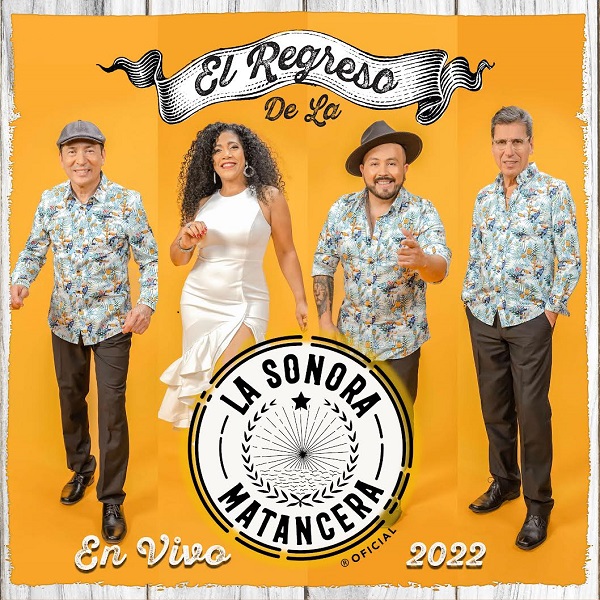
La Sonora Matancera musical congregation of long trajectory and its sound quality, is one of the most popular in the Caribbean island “Cuba”

It was founded in Matanzas in 1924 under the name of La Tuna Liberal.

Its first members were: Valentín Cané, director and tres player, Manuel Valera, guitar and second voice, Manuel Sánchez (Jimagua), timbal, Ismael Governa, cornetín, Pablo Vázquez Govín (Bubú), double bass, Domingo Medina, guitar, Ismael Goberna, cornetín, Julio Govín, guitar, José Manuel Valera, guitar, Juan Bautista Llopis, guitar.

In 1926 Carlos Manuel Díaz Alfonso (Caíto), falsetto voice and maracas, and Rogelio Martínez Díaz (El Gallego), guitar, joined the group and it adopted the name Sexteto Soprano.

On January 12, 1927, under the name of Estudiantina Sonora Matancera, they moved to Havana. In November of that year they recorded their first two recordings for the Victor label: Fuera, fuera, chino, by José Manuel Valera, and El porqué de tus ojos, by Valentín Cané.

With the definitive name of Conjunto Sonora Matancera, it began its transmissions on the radio station El Progreso Cubano (later Radio Progreso). At that time it appeared on Radio Atwater Kent; in 1932, at the suggestion of Rogelio Martínez Díaz, it took the name of Sonora Matancera, and began its performances in the Havana Sport dance academies, and later in Marte and Belona, and later became part of the cast of CMQ Radio. In 1935, trumpeter Calixto Leicea joined the group; in 1939, composer, pianist and orchestrator Severino Ramos, who gave the Sonora its distinctive sound with his orchestrations.

La Sonora Matancera congregación musical de larga trayectoria y su calidad sonora, es una de las más populares en la isla caribeña “Cuba”

In 1944 pianist Lino Frias and trumpeter Pedro Knight Caraballo joined the group, who with Calixto Leicea formed the most interesting trumpet duo in the history of Cuban ensembles; in 1945 singer Bienvenido Granda Aguilera; in 1948, Angel Alfonso Furias (Yiyo), tumbadora. At this time the Sonora Matancera was formed by Rogelio Martínez Díaz, director, guitarist and chorus; Pablo Vázquez Govín (Bubú), double bass; José del Rosario Chávez (Manteca), timbal; Ángel Alfonso Furias (Yiyo), tumbadora, who replaced Valentín Cané; Calixto Leicea, first trumpet; Pedro Knight Caraballo, second trumpet; Lino Frías, pianist; Carlos Manuel Díaz Alfonso (Caíto), falsetto voice and maracas; Bienvenido Granda, singer and claves; and Celia Cruz, who soon became the stellar singer we knew and the mainstay of the Sonora Matancera hits. Thus began a period that critics have called the golden age of the Sonora.

In 1950, with the advent of television, the Sonora Matancera was one of the first musical groups to perform on this medium. It also signed a contract with the Seeco record company, with whose recordings it made a name for itself in the international market. In 1952, Raimundo Elpidio Vázquez replaced his father, Pablo Vázquez, on double bass (when Rogelio Martínez Díaz died in 2001, he took over the leadership of the group).

In 1926, it changed its name to “Septeto Soprano”. That same year, Carlos M. Díaz “Caíto” accompanied Eugenio Pérez in the choir.

Later in 1927, on Caíto’s recommendation, Rogelio Martínez joined the group and the name of the group was changed to Estudiantina Sonora Matancera.

Sonora Matancera
Sonora Matancera

With a great desire to improve the group travels to Havana where they get in touch with the record company “RCA Victor” and make their first recording on January 12, 1928.

At the beginning of the thirties, the group began to adapt to the new rhythms that were appearing at that time as well as adapting new instruments, such as the grand piano, which was played for the first time in the group by Dámaso Pérez Prado, who years later would become the “King of the Mambo”.

But it was in 1935 when the group took the name La Sonora Matancera, and with this change it introduced a new trumpet player: Calixto Leicea, who replaced Ismael Goberna, who died a few months later due to health problems.

The unforgettable José Rosario Chávez “Manteca”, who replaced the resigned “Jimagua”, also joined the band. Humberto Cané joined the group playing the tres and his father Valentín Cané began playing the tumbadora.

In 1938, Dámaso Pérez Prado retired and left the vacant piano position to Severino Ramos, who soon after became the musical arranger of the group.

During the first years of the forties they made presentations in dance academies, cabarets and in Radio Progreso Cubano, they also included in their repertoire: guarachas, montunos.

On January 6, 1944, two musicians from Arsenio Rodriguez’s group joined the group: Lino Frias (author of the popular song Mata Siguaraya) who began to play the piano and Pedro Knight who became the second trumpet player of the Sonora Matancera.

In the month of December, Bienvenido Granda enters the band recommended as vocalist, being his first recording “La Ola Marina” by Virgilio González, and with him they sign a contract with the nascent record label Panart Records. Valentín Cané, Israel del Pino, Caíto and Humberto Cané made recordings with this label.

In the middle of 1946 the founder Valentín Cané suffers asthmatic problems that force him to leave the group, dying two years later. Before the group joined Panart Records, it recorded other songs for the “Varsity” label, without the name of the Sonora Matancera appearing on the labels, here the first version of “Se Formó la Rumbantela” by Pablo Cairo, “Tumba Colorá”, “El Cinto De Mi Sombrero”, Bienvenido Granda and Humberto Cané participated in these numbers.

El Regreo de La Sonora Matancera 2022 2023

Members

Trumpets: Calixto Leicea and Pedro Knight

Double Bass: Elpidio Vázquez, replacing his father Pablo Vázquez, “Bubu”.

Piano: Lino Frías

Timbales, Bongó and Campana: José Rosario Chávez “Manteca” Chávez

Tumbadora: Ángel Alfonso Furias “Yiyo”.

Guitar and Choir: Rogelio Martínez

Maracas and Chorus: Carlos Díaz Alonso “Caíto”.

Claves and Choir: Bienvenido Granda.

Last January 13, 2023 they turned 99 years old and are still going strong from generation to generation.

Source:

Enrrique “Culebra” Iriarte, Venezuelan pianist, arranger and orchestra conductor.

Bibliography: Ecured Cuba

La Sonora Matancera 

You can read: Carlos “Patato” Valdés one of the best percussionists in the history of Latin Jazz

Miguel “Angá” Díaz the percussionist who made his name in the ranks of Cuba’s legendary and enigmatic Irakere group

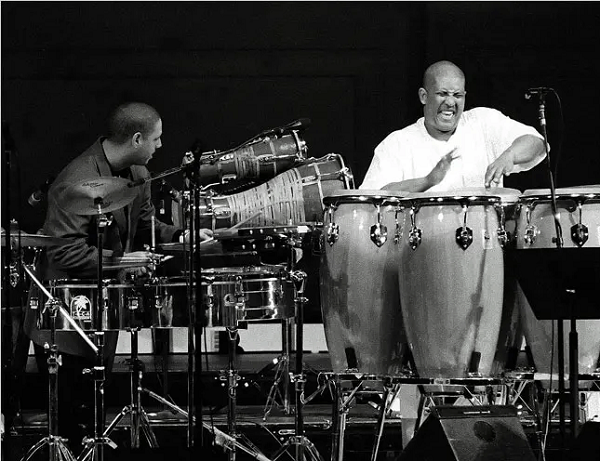
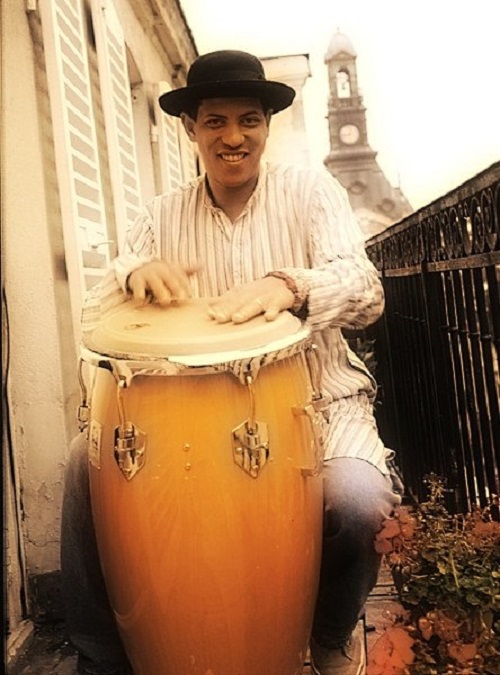
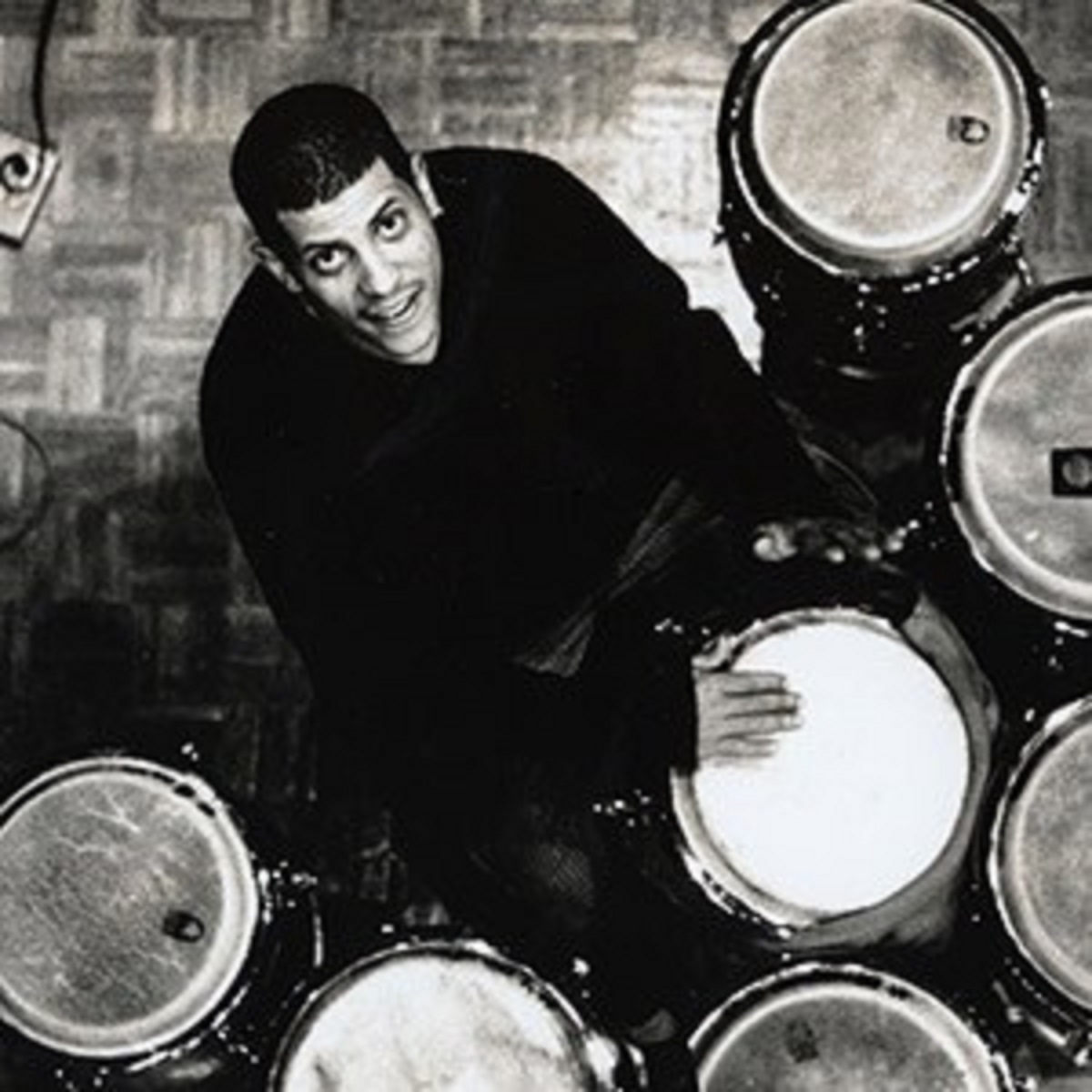
Miguel “Angá” Díaz (1961-2006) was a valuable and prolific Cuban percussionist. With his explosive solos and the creation of five conga toques, “Angá” was widely acclaimed as one of the world’s great congueros.

One of the mainstays of Afro-Cuban rhythm in recent times, Angá played with a multitude of jazz stars, from Chucho Valdés, Chick Corea or Steve Coleman, to Roy Hargrove, Minino Garay, Chano Domínguez and Herbie Hancock, among others.

The claim that he was one of the best percussionists in the world is backed up by the Grammy awards he won, his participation in such important projects as Buena Vista Social Club and the Afro-Cuban All Stars, and his status as sideman of geniuses like Tito Puente, Herbie Hancock, Carlos Santana or Danilo Pérez, as well as his membership in legendary groups like Irakere, according to Más i Más, the organizer of his concerts in Barcelona.

 Miguel "Angá" Díaz el percusionista que se dio a conocer en las filas del legendario y enigmático grupo Irakere de Cuba
 Miguel “Angá” Díaz el percusionista que se dio a conocer en las filas del legendario y enigmático grupo Irakere de Cuba

Father of three daughters – the eldest living in Cuba and the two younger ones in Paris – Angá never stopped searching for new forms of musical expression, experimenting with the fusion of different styles, such as jazz, African sounds, rock and hip-hop.

He was committed to the development of the conga, breaking the traditional barriers of percussion, to introduce them into classic Latin rhythms while preserving their distinctly Cuban roots.

He played with several Cuban artists, including Irakere, Afro-Cuban All Stars, Buena Vista Social Club, Omar Sosa, Omara Portuondo, Tata Güines, Rubén González and Orishas.

Miguel “Angá” Díaz
Miguel “Angá” Díaz

At that time he recorded and toured frequently with international musicians such as Steve Coleman, Roy Hargrove, Baba Sissoko, Ry Cooder, Pascal Coulon, Mezzadri Malik, Montgomery Buddy, Pascal Coulon and John Patitucci. Angá’s musical journey was a personal quest to investigate and create new sounds and rhythmic fusions.

More than just an artist, Angá demonstrated his commitment to the development of his instrument, teaching master classes at various schools and universities in North America and throughout Europe.

For Paris-based Argentine percussionist Minino Garay.

“He is indisputably one of the great percussionists of his generation; the greatest of all. His death causes me enormous sadness, as if it were a story that did not end,” lamented Garay, who will not attend the funeral this Friday, due to the fact that on that day he will give a concert in Vance, in the south of France. “I will certainly dedicate it to him,” he added.

Miguel Angá Díaz (1961-2006) fue un valioso y prolífico percusionista cubano

Angá Díaz received his formal education at the Escuela Nacional de Arte in Havana, Cuba, and after joining the Latin jazz groups Opus 13 and Irakere, where he perfected his conga playing technique, he moved to Europe, where he devoted himself to exploring the fusion of styles, bringing Cuban music closer to other musics and thoroughly investigating the relationship between Afro-Cuban polyrhythms and technology.

In the summer of 2005, Angá released his first solo album EChu Mingua, which the musician himself described as “a musical religious mass. Spiritual music is when the spirits are invoked to come down to earth, inviting them to a party or to talk to them”, and that is “the whole concept of the album”.

Transgressor of conventions, Angá emerged as an independent, free and committed musician with a wide variety of projects, from experimental jazz with Steve Coleman and Roy Hargrove, and hip-hop with the Orishas, to his participation in Omar Sosa’s tours, in addition to participating in numerous alternative projects with musicians from all over the world.

Angá’s musical trajectory was a tireless search, whose main purpose was to explore and create new sounds, as well as rhythmic fusions.

Source: jornada.com.mx

Miguel “Angá” Díaz

You can read: Freddy de Jesús Ortega Ruiz “Coco & su Sabor Matancero”

Irakere was a Cuban group that developed an important work in Cuban popular music and Latin Jazz under the direction of Chucho Valdés

Irakere was formed as such in 1967 but had begun to work much earlier; in that year precisely they went to a selection called in Havana to organize with the best musicians of that time the Cuban Orchestra of Modern Music; already in 1972 they were approaching to what they currently produce deciding in 1973 to call it Irakere, which in Yoruba language means Vegetation and that is how, starting from its name, they work based on the Afro-Cuban musical roots.

In this way, through the combination, mixture and interrelation of classical, impressionism, jazz, rock and various compositional techniques they managed to walk through all styles such as dance music, concert, traditional and popular Cuban music.

Thanks to the impulse of pianist Chucho Valdés, the Cuban group Irakere took off in 1973, nourished by Thelonious Monk’s bop.

Founders

Grupo Irakere: It was founded in Havana in 1973, by:

Jesús Valdés(Chucho) composer, director and pianist;

Paquito D’Rivera (Paquito), alto and tenor saxophone, flute and clarinet;

Carlos Averhoff, tenor saxophone, soprano, flute and bass clarinet;

Jorge Varona, trumpet, trombone and percussion;

Carlos del Puerto, bass, bass guitar and tuba;

Carlos Emilio Morales, guitar;

Bernardo García, drums and batá drums;

Jorge Alfonso, batá drums;

Enrique Plá, drums;

Carlos Barbón, güiro, chekeré and tambourine; and

Oscar Valdés, singer, tumbadora (conga), batá drums and bongo.

Irakere, fue un grupo cubano que desarrolló un importante trabajo en la música popular cubana y el Jazz Latino

On the founding of Irakere, Chucho Valdés expressed:

“For us the group always existed, it was present at all times; it was like something pending. At the beginning it had no name, it was just an idea we were working on: to use Cuban folkloric percussion in dance music, and to look for different timbres with a common characteristic: “ours”.

Then Oscar Valdés came up with the idea of combining the not easy and little known batá drum with the tumbadora, güiro and cowbell and so, step by step we arrived at the current group…”.

About Irakere’s first stage, the musicologist Leonardo Acosta points out: “one of the successes of Irakere had been not to try to invent and identify itself with a “new rhythm”, according to the old guidelines of advertising so much used from the forties to the sixties.

The slogan about the “new rhythm” was until recently the “open sesame” on which the musicians counted to become famous overnight, and by that way sometimes quite commercial results were achieved.

Apart from the fact that no “new rhythm” is so new, they all come from the alteration or amalgamation of pre-existing rhythms.

Irakere’s only alchemy comes from the spontaneous creativity of its members. Since there is no commercial endeavor, laboratory practices are unnecessary, and the group can perform a contradanza, a danzón, a son montuno or a cha cha chá without fear of seeming “old-fashioned”, since they are in fact playing something else at the same time. And without setting themselves the goal, nor having to invent a “pega” name, almost by an imperative of the material they are working on, new rhythmic combinations are emerging, to the point that Irakere’s rhythm is unmistakable among Cuban listeners or dancers.

Grupo cubano Irakere

Certainly, and in spite of their triumphs in international jazz festivals, Irakere is not a jazz group. But these successes are not gratuitous either, because as we have seen, they have formidable musicians with great experience in the jazz field, especially in the aspect of improvisation, the great discovery of jazz and perhaps its greatest contribution to the music of the 20th century.

“Paquito D’Rivera: Irakere was born against the will of the Cuban authorities”.

When talking about Cuban music, the name of one of the most emblematic groups in the country’s musical history comes to mind, Irakere, which in Yoruba language means vegetation, jungle.

Irakere became the seed that would germinate a lush forest of rhythms and sounds, a school through which many of the great stars of Cuban music have paraded.

Founded more than four decades ago, this legendary band has been a pioneer of Afro-Cuban jazz and the initiator of the musical revolution in the seventies.

Gracias al impulso del pianista Chucho Valdés, el grupo cubano Irakere levantó vuelo en 1973

Irakere emerged at a time when, due to political demands on the island, music and culture were treated as an instrument of revolutionary identification and jazz was branded as imperialist music.

It was at this time, in the late sixties and early seventies, that a group of great musicians founded a band whose main goal was to enrich Cuban popular dance music with Latin jazz as essential elements.

Under the direction of the outstanding pianist Jesús “Chucho” Valdés, excellent musicians came together in search of a different sonority, based on the use of Afro-Cuban folkloric percussion together with the renewed timbres of the popular rhythms of the time that fused jazz, rock, funk and popular Cuban rhythms such as son, mambo or cha cha chá, together with classical or concert music.

“Irakere was the Musical Generation of change”.

Sources:

https://www.ecured.cu/Irakere

Leonardo Acosta

Radio Televisión Marti

Mirna Guerra

Irakere

You can read: Israel Kantor was an excellent bassist, arranger and composer who achieved great popularity in Cuba for his vocal technique and original “Sonear” style

Xiomara Laugart, nicknamed “La Negra” was born in Guantanamo, Cuba

For Xiomara Laugart, the past never goes away; she likes to hide in music. “My faith, I believe in you, you won’t go away,” Alberto Tosca wrote to her in that song and Xiomara seems to have decided to live by those lyrics, to this day.

Her loud laughter filled my kitchen this afternoon, while Omar brewed coffee, many times, and my mother cooked pumpkin flan. She evokes her mother in the sweet, comes back to life and tells.

She tells with astonishing naturalness that she never studied music and goes on and on. She goes on to freedom, and overflows with passion, because for her freedom is music.

Technically she could do whatever she wants, but if she does not feel it, if it does not make her vibrate, Xiomara, “The voice of Cuba”, could not sing.

On September 8, 1960 in Guantanamo, Cuba, XIOMARA LAUGART, nicknamed “La Negra”, was born. Excellent singer, established in Massachusetts.

Before emigrating to the United States, Laugart had an extensive career within the Cuban Nueva Trova movement. He has recorded more than 17 albums.

Representative of Cuban music in various parts of the world. He worked with the group Pisos Nuevos in Nicaragua. Also with Descemer Bueno. He led the group Yerba Buena. She represented Celia Cruz on Broadway.

Xiomara Laugart was born in Guantánamo. She attended university and graduated in Economics, then began her musical career through the nueva trova, a movement of political musical protest, very popular between the sixties and nineties.

He studied music at the Escuela de Superación Profesional Ignacio Cervantes. He began his artistic career professionally in 1985.

His beginnings were quite intense, participating quickly in international stages.

In 1979 he participated in the Festival of Political Song in Berlin. In 1980 he traveled to Nicaragua with the Pinos Nuevos Group, from the Isle of Youth.

The following year she participated again as a guest at the Berlin Political Song Festival and that same year she won third prize at the Political Song Interpretation Contest in Sochi, Soviet Union.

In 1980 she won third place in interpretation at the Adolfo Guzmán Cuban Music Contest; she participated in the V Festival y Activo de la Nueva Trova, the VI Cumbre and Carifesta. He belonged to the Guiñol Theater group of Isla de la Juventud. He was a member of the group Aconcagua and Talla Extra (X-L), and, for a time, worked with Alberto Tosca.

In 1982 he performed at the Café Concert in Mexico, participated in the Festival for Non-Intervention in Central America and Disarmament, held in Holland, Belgium, and the same year, he traveled to France. He became a regular in Mexico and returned to the Aztec country in 1984.

That same year she participated in the Political Song Festival held in Sopot, Poland, and later toured Honduras and Costa Rica.

His voice has a very wide register, although he stands out for his high tones.

She shows a vivid and exceptional sense of rhythm that allows her to interpret from bolero to salsa, from danzón to guaracha to the most sophisticated jazz and funk.

Atrapando espacios, Qué manera de quererte, Hoy mi Habana, Se fue, Ni un ya no estás and Oh melancolía! are some of the songs that are part of her repertoire and that continue to receive a standing ovation every time she performs on the stages of South Florida.

“The first person who introduced me to Miami was the maestro Meme Solis.

Meme has been my mentor in this city and was responsible for opening the doors to a new audience that followed him for years and now goes to my concerts, she says when referring to her close relationship with the legendary Cuban composer.

Source: Hyper Media

Xiomara Laugart

You can read: Israel Kantor was an excellent bassist, arranger and composer who achieved great popularity in Cuba for his vocal technique and original “Sonear” style.

Israel Kantor was an excellent bassist, arranger and composer who achieved great popularity in Cuba for his vocal technique and original “Sonear” style.

His real name was Wilfredo Israel Sardiñas Domínguez. 

He was born on October 16, 1949 in Alturas de Canasí, a town in western Cuba between Havana and Matanzas, and his parents registered him a couple of years later in Bacuranao (birth date October 16, 1954).  A bassist, arranger and composer, he achieved great popularity in Cuba for his technique and original “sonear” style.

Although he was not very well publicized or acclaimed as a sonero, he managed to make a good name for himself in exile.

His mother played the tres and seven of his nine siblings formed a group with guitar, tres and lute; he played both sones and punto guajiro.

They used as bass a box called marímbula, which consisted of a box with four straps to produce the bass sound.  He began to sing with his brothers at the age of eight.

Later he went to Havana to study at the Conservatory of Guanabacoa, where he started playing trova sonera.

israel kantor
HE BECOMES A PROFESSIONAL

Israel Sardiñas improvised on the sonos with astonishing ease, and he is not exactly what you would call an interpreter “by ear”, or empirical. 

In fact, he played the bass before singing, and it was precisely his condition of bassist and arranger that made Meme Solis discover him in 1975 and took him and his group to work in the shows he was then directing in tourist centers on the beaches east of Havana.

“One night, at the dance show they were doing at the Hotel Atlántico, in Santa María del Mar, Israel took the microphone, I think because the group’s singer was not there,” Meme Solís recalls now.  “I saw him and told him: ‘But how well you sing!’ When I put on another show I gave him two numbers, and from then on people began to follow him”.

“I began to study Carlos Embale, Miguelito Cuní, Raúl Planas, Roberto Faz and Beny Moré,” he said, referring to the time when he stopped playing bass to devote himself to singing.  “There is everything that is Cuban music: guaracha, son, rumba. What I did was to listen to them and transfer them to the staff to understand how they moved their voices.

The one I liked the most was Raúl Planas; he was the one who rubateaba the most, the one who broke the syncopation the most.

Cuní had a good timbre, but always in time. Planas had a deeper timbre, and the sonero’s timbre must be metallic”.

That was the beginning of his professional career, which in Cuba would take him to the groups Ireson, Neoson, Los Yakos and Los Reyes 73. In 1979, he joined the Cuban group Los Van Van, founded and directed by bassist and composer Juan Formell (Juan Clímaco Formell Cortina was born on August 2, 1942 in Havana, Cuba).  As vocalist of the famous group, Israel became popular in Cuba for his vocal technique and his “sonear” style, which aroused great interest in the musical media, especially in popular music.  With the Los Van Van Orchestra he participated in the recording of the albums “Juan Formell y Los Van Van” in 1981 and “El Baile Del Buey Cansa’o” in 1982, both in the Egrem label of Cuba.  It was with this group that the artist became known, and left his stamp on the interpretation of the song “Seis Semanas”.

From that time on, he began to make musical arrangements.

After several international tours with Los Van Van he decided to leave them in Mexico in 1983, in search of greater freedom and possibilities for his career.

A month later he was already in Miami after crossing the border.  “I wanted to go to Grupo Afrocuba, but the bureaucracy wouldn’t let me,” he said on one occasion. “Van Van is very good, but Afrocuba came with a very strong force. I also wrote, I made arrangements, I had other ideas, and Afrocuba suited me better, because it was more jazzy”.  In an interview for a news agency years ago, he said: “I had a great school before being with Los Van Van. After traveling a lot with them, I was very anxious to see the world and the third time we were in Mexico, I decided not to return to Cuba”.

SUCCESS IN EXILE

When he arrived in New York in April 1984, he was still Israel Sardiñas, but when Johny Pacheco, the legendary director of the Fania All Stars, took him to an anniversary party of the group at the Cheetah two months later, the late “singer of singers”, Héctor Lavoe, heard him improvising and stopped the orchestra: “I want to baptize him right now as Israel Cantor”, said Lavoe.  The only thing left to do was to change the c for the k, spend two months with Lavoe’s band, and in October create his own, which he called La Verdad.

Thus, in 1984, he released the album “Israel La Verdad” with the production of Larry Harlow, on the Bacán Records, Inc. label. All the numbers were written and composed by Israel Kantor.

As its name indicates, La Verdad was a constellation of excellent musicians: Sonny Bravo on piano, Salvador “Sal” Cuevas on bass, Tony Barrero and Pedro “Pouchi” Boulong on trumpets, Barry Rogers on trombone, Mario Rivera on saxophone, Karen Joseph on flute, Frankie Malabé on congas and Nicolás “Nicky” Marrero on bongo among others.  Justo Betancourt and Adalberto Santiago collaborated on backing vocals, with Justo doing a duet track: “Rumberos De Nueva York”.  Other numbers on the album that deserve attention are: “La Verdad”, “Tu Lindo Pasado”, “María Antonia” and “A Mis Idolos”.

That same year he is invited to sing on the album by Ñico Rojas y su Orquesta entitled “Paso La Vida Pensando: ‘En Tí'”, on the Kanayón Records label, three songs: “Juan Ramón (El Chichón)”, which was popularized by José “Cheo” Feliciano when he was part of Joe Cuba’s group, “Por Encima Del Nivel”, which had the arrangements and piano of Luis Quevedo, in which he performs a superb piano solo, and in “Lo Voy A Matar”, composition by Tony Pabón and arrangements by maestro Kenny Gómez.

In 1986, he is the lead vocalist of the group Salsa Latina in the album “De Aquí . . Pa’ Lante!”, on the Coa Records label, which was produced by Isidro Infante and Israel Kantor himself and in which he composed half of the eight songs that make up the album.  The most outstanding numbers are: “En Honor A La Verdad”, “Se Acabó El Material”, “Saca Aserrín, Mete Madera”, “A La Mitad Del Camino” and “El Palo De China” (Composition by Raúl Marrero).

He temporarily left Miami to try his luck in Puerto Rico, Mexico and Italy until 1996, when he settled permanently in Miami.  He performed on various stages of the music scene: he inaugurated the Mamá Rumba Club in the Mexican capital, made arrangements for the orchestra of the Sábado Gigante program on Channel 23 in Miami, participated in a Cuban Jam Session at the Lincoln Center in New York, among others.

For more than two decades Kantor was the protagonist of important musical projects both in Latin America and Europe.  He recorded eight solo albums and six guest albums with orchestras such as those of Johnny Pacheco and Juan Pablo Torres.  Among his recordings are “Un Señor Kantor” for the BMG record label; a tribute album to Los Van Van for Sony Music and “Llegó La Música Cubana”, an album that took him on tour in Europe.

In 2003 he collaborated in the solo work of arranger and composer Jesús “El Niño” Pérez with Orquesta Sensación (not to be confused with the former group of Cuban Abelardo Barroso) entitled “Cuba y Puerto Rico Son De Un Pájaro Las Dos Alas”, in which Israel Kantor’s voice stands out over those of the other two singers: Danny Rojo and Rogelio Rente, as well as demonstrating his abilities to improvise on the soneo, in the number “Pa’ Puerto Rico” (which Jesus “El Niño” Perez composed for the album, “La Amistad” by Johnny Polanco).

His last great work, in 2003, was a tribute to Benny Moré his permanent artistic inspiration- entitled “To ‘El Bárbaro Del Ritmo'”, a live recording with the Tropicana All Stars orchestra, produced by Regu Records, owned by Recaredo Gutiérrez. 

The orchestra, made up of 22 musicians, mostly Cubans living in Miami, led by Israel Kantor, was nominated for a Latin Grammy Award in the traditional music category in 2004, and two other nominations for an Anglo-American Grammy.

The project, which consisted of a live show, recorded on DVD and seven albums, led them to share the stage with legendary figures such as Paquito D’Rivera, Marco Antonio Muñiz and Generoso “El Tojo” Jiménez, among other glories.

The Tropicana All Stars orchestra was made up of a large number of extraordinary musicians, all of them renowned and of the highest quality: Paquito Echevarría on piano, Cuban musician who has collaborated for a number of important singers such as Gloria Estefan, Rey Ruiz among others; Venezuelan Ramses Colón on bass, a virtuoso musician and desired in any band, Adalberto “Trompetica” Lara on first trumpet, possessor of a very Cuban technique when playing and improvising, he has been a musician of Irakere, Super Cuban All Stars, NG La Banda among others; Kiwzo Fumero on the second trumpet, comes from the conservatory “Alejandro García Caturla” of Cuba, since his beginnings he expressed his great interest in the instrument to which he has dedicated part of his life, he dominates the high notes with mastery for which he has been recognized by great masters of the genre; Lenny Timor on the third trumpet, participated with Los Sobrinos Del Juez for 14 years; Mario Del Monte on fourth trumpet, has been a member of prestigious orchestras such as Roberto Faz, Pacho Alonso, Tito Gómez among others; Alfredo Salvador on baritone sax, has been present in recordings for Celia Cruz, Paquito D’Rivera and Arturo Sandoval; José “Pepe” Vera on tenor sax, his resume includes recordings with the Tropicana Orchestra, Benny Moré, among others, Manuel Valera on alto sax; Juan Carlos Ledón on tenor sax, he has played with Orquestas Cubanas, Roberto Torres, Willy Chirino, Andy Montañéz, among others; Bayron Ramos on trombone, he has been a musician with Albita Rodríguez’s band and Fania All Stars; Braily Ramos on trombone, he has recorded with Gloria Estefan and Miami Sound Machine, Alejandro Sanz and others; Leonardo Timor Sr. on trombone; Leonardo García on timbales, has accompanied Luis Enrique, José Luis Rodríguez “El Puma”, Alexandre Pires, among others; Michael Gerald on percussion; Edwin Bonilla on congas, one of the best percussionists today who needs no further introduction; Juanito Márquez on arrangements, production and musical direction; Germán Piferrer is the musical director and arranger, and as very special guests Juan Pablo Torres, Roberto Torres, Generoso “Tojo” Jiménez, Carlos “Patato” Valdéz, Alfredo “Chocolate” Armenteros and Cándido Camero.

The vocal responsibility fell on Israel Kantor, who was emerging as one of the contemporary Cuban singers with the greatest international projection.  His voice can be heard in the twelve songs that made up the first musical volume: “Santa Isabel De Las Lajas”, “Oh! Vida”, “Maracaibo Oriental”, “Fiebre De Ti”, “Mata Siguaraya”, “Amor Fugaz”, “Bonito y Sabroso”, “Camarera Del Amor”, “Mucho Corazón”, “Yiri Yiri Bon”, “Perdón” and “Francisco Guayabal”, the cover was made by Cuban painter Andrés Puig.

Kantor’s love for his homeland turned his career into a constant homage to Cuban music.

“Over time, one assimilates growing up far from your homeland, not being able to return to stay connected to your roots, but time heals the wounds,” he said a short time ago.

“Inspiration is like a spring,” Kantor said, referring to the improvisations he made as a sonero singer.  “It’s born from the heart; ideas are constantly flowing to you. That’s why a sonero always sings the same song differently.

Cuban music is the continuity of what the singer generates: although the first thing is the vocal conditions, what you have to have is, above all, the clave; knowing how to play with the phrasing so as not to go against the clave”.

Kantor said, “You can train a vocalist to become a sonero, but if his relationship with the genre is not natural, from the heart, he will always end up giving clichés in his inspirations”.

He had no shortage of job offers, even though he was rarely heard on the radio in Miami.  When he was not performing with the Tropicana All Stars, he was performing with his group Havana Son -violin, flute, piano, bass, timbal and conga- in different stages both in the United States and internationally: at the Tropicana Hotel in Las Vegas; the Lincoln Center in New York (in 2003); at the Casa Cuba in Ponce, Puerto Rico, and on tours to the cities of Nicaragua, Lisbon, Oporto and Vigo, in Portugal and Spain, where he shared with other Cuban exiled stars like Willy Chirino and Albita Rodriguez.

Israel Kantor passed away on Saturday, July 1, 2006 at 11:00 p.m. at his residence in southwest Miami, victim of cancer, at the age of 57.  The artist, who had been suffering from liver problems for some time, had already undergone surgery in 2001 for colon cancer.  He is survived by his wife Rosalia Perez, aunts, uncles and cousins.  His body was laid to rest on Wednesday, July 5 at Caballero Rivero Funeral Home, 3344 SW 8th Street, in Miami, and buried the following day at Woodland Park Cemetery, located at 3260 SW 8th Street, in Miami.

“He always worked as if it was the first day,'” recounted his wife Rosalìa as she recalled the artist’s musical enthusiasm.  “He was never satisfied. He had a great hunger to play, to sing and to give people everything he had.”

REACCIONES POR SU MUERTE

 “Israel se hizo en Los Van Van. Tuvo una etapa muy brillante”, señaló Juan Formell, fundador de Los Van Van, ayer desde La Habana a El Nuevo Herald. “Está entre los cantantes más importantes con los que he trabajado. Para nosotros es una pena la pérdida de Israel”.

“Fue una de las voces más representativas de la música cubana de los últimos años”, dijo Adolfo Fernández, amigo personal y publicista de Kantor.  A su juicio, con la muerte del famoso sonero desaparece “una personalidad única y una manera de cantar irrepetible”. “El color de voz de Kantor era único”, destacó.

“Ha muerto uno de los mejores soneros que ha dado Cuba, y uno de los soneros auténticos, de los cuales no quedan muchos. Tenía una voz privilegiada, un ritmo y un sabor muy auténticos”, anotó la cantante Albita Rodríguez tras conocer la noticia de su deceso.

Fuente: herencialatina.com

  • « Go to Previous Page
  • Page 1
  • Interim pages omitted …
  • Page 8
  • Page 9
  • Page 10
  • Page 11
  • Page 12
  • Interim pages omitted …
  • Page 129
  • Go to Next Page »

International Salsa Magazine (ISM) is a monthly publication about Salsa activities around the world, that has been publishing since 2007. It is a world network of volunteers coordinated by ISM Magazine. We are working to strengthen all the events by working together.