• Skip to primary navigation
  • Skip to main content

International Salsa Magazine

  • HOME
  • Previous editions
    • 2026
      • ISM / March 2026
      • ISM / February 2026
      • ISM / January 2026
    • 2025
      • ISM / December 2025
      • ISM / November 2025
      • ISM / October 2025
      • ISM / September 2025
      • ISM / August 2025
      • ISM / July 2025
      • ISM / June 2025
      • ISM / May2025
      • ISM / April 2025
      • ISM / March 2025
      • ISM / February 2025
      • ISM / January 2025
    • 2024
      • ISM / December 2024
      • ISM / November 2024
      • ISM / October 2024
      • ISM / September 2024
      • ISM / August 2024
      • ISM / July 2024
      • ISM / June 2024
      • ISM / May 2024
      • ISM / April 2024
      • ISM / March 2024
      • ISM / February 2024
      • ISM / January 2024
    • 2023
      • ISM / December 2023
      • ISM / November 2023
      • ISM / October 2023
      • ISM – September 2023
      • ISM – August 2023
      • ISM July 2023
      • ISM Edition June 2023
      • ISM – May 2023
      • ISM April 2023
      • ISM March 2023
      • ISM February 2023
      • ISM January 2023
    • 2022
      • ISM December 2022
      • ISM November 2022
      • ISM October 2022
      • ISM September 2022
      • ISM August 2022
      • ISM July 2022
      • ISM June 2022
      • ISM May 2022
      • ISM February 2022
      • ISM January 2022
    • 2021
      • ISM December 2021
      • ISM November 2021
      • ISM October – 2021
      • ISM September 2021
      • ISM August 2021
      • ISM July 2021
      • ISM May 2021
      • ISM April 2021
      • ISM June 2021
      • ISM March 2021
      • ISM February 2021
      • ISM January 2021
    • 2020
      • ISM December 2020
      • ISM November 2020
      • ISM October 2020
      • ISM September 2020
      • ISM August 2020
      • ISM July 2020
      • ISM June 2020
      • ISM May 2020
      • ISM April 2020
      • ISM March 2020
      • ISM February 2020
      • ISM January 2020
    • 2019
      • ISM December 2019
      • ISM November 2019
      • ISM October 2019
      • ISM Septembre 2019
      • ISM August 2019
      • ISM July 2019
      • ISM June 2019
  • Download Salsa App
    • Android
    • Apple
  • Spanish

Search Results for: Cuba

Adalberto Santiago celebrates his 70th Anniversary next March

In this space, we have always worked to pay tribute to the greatest salsa legends and we consider it important that these luminaries feel the love of the public in life. That is why we want to pay homage to the man who has been a great pillar of Puerto Rican salsa as we know today. We are talking about the great singer from Ciales, Adalberto Santiago, who is celebrating the 70th anniversary of his artistic career. Here is a summary of his brilliant career.
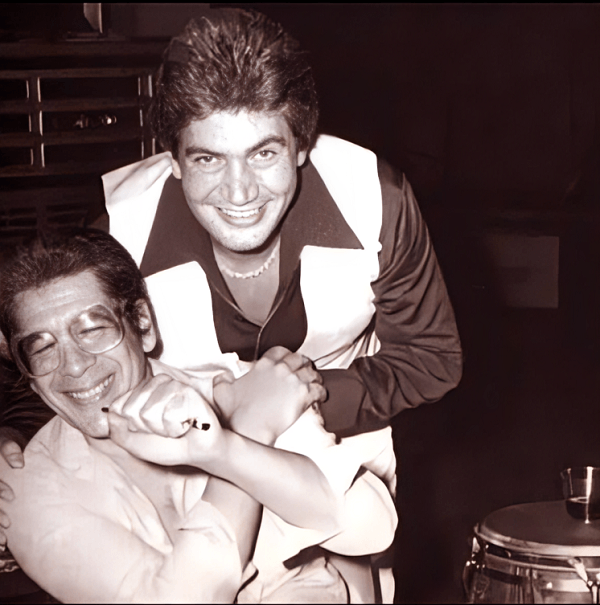
Adalberto and Ray
Adalberto Santiago and Ray Barretto in the 1960s

Adalberto’s beginnings in music

The sonero began his career by participating in trios, which he accompanied with his voice, guitar, bass and even his dance moves. This was something very few artists did at the time, which is why this young man drew a lot of attention at that time. 

He got to play with Chuíto Vélez and Willie Rosario, but his career really took off when he was given a chance to join the orchestra of Ray Barreto, which is when he managed to internationalize thanks to several albums that continue to be chanted by salsa fans until today such as ‘’Acid’’ or ‘’Rican Struction’’. Then, together with several members of this orchestra, he founded La Tipica 73, which revived Cuban son. 

Adalberto as an established artist

In the 1980s, he became part of the orchestra of Roberto Roena and got to perform famous songs such as ‘’Yo tenía una mujer’’. He is also known for co-producing the album ‘’Calidad’’ with his compatriot Papo Lucca, who arranged one of the tracks and was responsible for all the musical direction.

Some time later, he made a new version of the famous album ‘’Sex Symbol’’, becoming successful in countries such as Colombia, Peru and Venezuela. For this recording, the artist had the support of Isidro Infante in the area of production and arrangements. This is considered one of the most legendary musical works of the singer’s extensive career, to the point that many salseros around the world remember it fondly. 

Adalberto posing
Adalberto Santiago posing for the camera

During all these years, Adalberto has been the author of a great number of songs for many world-famous albums in which he has participated, either as a bandleader or lead singer. Despite the worldwide fame he has achieved, he always maintains loyalty for his Latin roots and, in his own words, the structure of Latin music is the most appropriate for his voice and singing style. 

In addition to that, the artist has always had the capability and experience to move through many Latin genres such as salsa, merengue, pachanga, cumbia, bomba, plena, boogaloo, guaracha, pachanga, among many others. 

He has always tried to maintain his physical and vocal discipline to continue giving the best of himself to his audience despite the years.

Celebrating his anniversary

As we said at the beginning, the great Adalberto Santiago is about to celebrate his 70th anniversary as an artist, an event that of course is to be celebrated big.

As a way of celebrating and thanking his public for all the support he has received, the singer has decided to hold a concert at the Lehman University of Performing Arts in New York City, more specifically in the Bronx, on Saturday, March 22 at 8PM. 

His fans have remained loyal all this time, so we have no doubt that he and his special guests will make everyone dance, making this event an unforgettable evening.

Read also: Milonga’s contribution to Latin music in general

Johnny Cru ISM corresponde in New York City

De Tierra Caliente founder Bronson Tennis talks about his career and band

There have been many American musicians who have fallen to the charms of Latin music, which is a practically inexhaustible source of genres allowing them to experiment with in many ways. One of them is Bronson Tennis, with whom we have been fortunate to talk about his interesting career and current musical group, De Tierra Caliente.

Bronson playing
De Tierra Caliente founder Bronson Tennis playing the guitar

Bronson’s beginnings in music

Bronson Tennis began to put his eyes on music when he was just a child, when he was very attracted to the 1990s alternative rock movement in the United States. When he was only 11 years old, his parents bought him his first bass guitar and later he also wanted to learn to play the guitar and sing.

In family matters, Bronson and his three brothers are musicians and several of his cousins and uncles have also been musicians. In addition, his mother was a fine artist and his grandmother was an art teacher.

Both in school and church, the boy always chased opportunities to sing and show his vocal skills to anyone who wanted to hear. He also took advantage of all these spaces to learn as much as he could about music until he was old enough to exercise it professionally. 

Today, his main instrument is the guitar, although he also plays the cavaquinho (an instrument of Portuguese origin which is widely used in samba) and the roncoco, which is an adaptation of the Andean charango that he uses to play salsa and Cuban son.

Bronson posing for the camera
Bronson Tennis playing the guitar while posing for the camera

Professional debut in music

Bronson also told us that he began his career path as a bassist and chorister in several musical groups in the city of San Diego between 2006 and 2009. He then spent some time in Philadelphia, where he also played with other bands from a variety of genres.

It is interesting that he lived in Buenos Aires, Argentina, where he also worked as a bassist and singer in some bands. In fact, in that same country, he helped form a Caribbean funk band in which he learned a lot about these genres so foreign to what he played in his childhood and youth. He stayed about four years in Argentina, specifically between 2009 and 2012, until he moved to Brazil for about six months to continue learning more and more about Latin music, but it was not his last stop in South America, as he was also in Colombia for a while more.

Following this, he returned to Philadelphia and decided to form his own orchestra which he named De Tierra Caliente.

Prior to De Tierra Caliente

When Bronson returned to Philadelphia, he had the chance to meet some musicians from the Puerto Rican music scene in that city and saw that they had similar outlooks on music, so they got back in the saddle to prepare a formal project amongst themselves.

The artist assures that it was in Argentina where he learned what it takes to move forward with his band. ”Argentines are people who do everything with strength and confidence, whether in music or in soccer. No matter who or what they have to face, as they take on all the challenges with confidence and that is something we could all learn from Argentina.” Bronson said of his stay in that country.

Bronson and his band
(L to R) Papo Buda, Bronson Tennis, Eubie Nieves, Andy Meyer and Steve Cochran

In Brazil, he studied percussion and learned Portuguese, while Colombia taught him to play salsa, champeta, vallenato and many other genres. In short, each country he has visited gave him tools to facilitate his learning in everything about Latin music in various areas.

Precisely thanks to all this acquired knowledge is that Bronson finally felt able to form his own band in 2014 in union with fellow musicians who understood what he wanted to carry out.

How De Tierra Caliente started

Upon his return to the United States, Bronson was very clear that he wanted to incorporate all those elements learned in South America and the Caribbean, but giving them his own touch. It was then that he met conguero Papo Buda, with whom he agreed on much and began the recruiting process for the rest of the musicians.

After that, Bronson and Papo could add more artists to the group, resulting in a fairly consistent group over time. Since its founding, very few musicians have left the band and Bronson and those who remain have an excellent relationship with all of them despite no longer being band mates.

Among his greatest inspirations, Bronson mentioned many artists and groups of various nationalities and genres such as El Gran Combo de Puerto Rico, the Brazilian composer and singer Paulinho da Viola, the group Caribe Funk and many others.

De Tierra Caliente playing
De Tierra Caliente playing live in Yardley

Read also: Latin jazz and mambo trumpeter Jonathan Powell and his great collaborations

Salsa, territory of joy.

Latin America / Venezuela / Caracas

Salsa, territory of joy, language of celebration, enjoyment of the towns and their people, was born from a confluence of facts, geniuses and rhythms. Confluence that happened in the faith of the same religion: Afro-Cuban music.

Salsa pal Bailador
Salsa pal Bailador

And that mixture, which Richie Ray and Bobby Cruz cleverly described as “similar to the tomato sauce that is put on hamburgers to give them flavor”, was summed up in the insightful sentence of the occasional witness, the journalist Phidias Escalona: “the music that you make is salsa. From now on we will call it sauce”.

The year was 1968 and although the new rhythm already existed, there had been no consensus on the name. And that consensus began to emerge -perhaps for the first time- on the album “Los Durisimos The Strong Ones, Salsa y Control”, by Richie Ray and Bobby Cruz. Later, Richie himself would add: “The word was born around us, (however,) if it weren’t for (Jerry) Masucci there would be no salsa, because he brought it to the world.”

In 1960s New York Harlem, black Americans had begun to like Latin music, despite not speaking Spanish.

Ama a tu musa como a ti mismo - Salsa
Ama a tu musa como a ti mismo – Salsa

The guajira dazzled them until they made them dance. Believing that the mixture of boogaloo, blues, mambo, guaguancó or son montuno, was a variant of the boogaloo invented by Chubby Checker, the new rhythm was founded, incorporating the concepts of the Latin spirit in their interpretations and that -technically- they would add to the baggage : percussion, piano, violins, trumpets, trombones and whatever instrument would serve to give it flavor and richness.

Cocola' Wears - Venezuela Salsa
Cocola’ Wears – Venezuela Salsa

Musically, for example, the so-called “blue notes” would be added (that is how the overtones of the acoustically weak E and B notes, last to be added to the scale, where they would be relocated between Lam and Lam) would be added to the new fusions. Then came the downloads and phrases that we know until now as characteristics of salsa.

Thus the sauce was born. And so it has been transformed, always within the circle that encloses joy, passion and enjoyment, history, experiences, fortune or misfortune, seen from different perspectives: urban, social, sensual or everyday.

Tocadisco - musica
Tocadisco – music

Federico Betancourt “Pioneer of Salsa in Venezuela”

Latin America / Venezuela / Carabobo

Jesús Federico Betancourt was born in the city of Valencia, Carabobo state, on March 22, 1940. He was always attracted to music from a very young age.

Photo of Federico Betancourt on stage

In his adolescence, he liked Cuban rhythms, being influenced by Sonora Matancera, Mon Rivera, Eddie Palmieri and Joe Cotto. Before entering the entertainment world, he works at the Bank of Venezuela.

He affirms that he has not carried out formal studies at the musical level, learning the necessary theory to be able to perform as an orchestra conductor, but without interest in interpreting any instrument, but with a well-tuned ear, which has allowed him to remain in the music business for decades. , in fact on certain occasions he is named as the King of the Güiro.

Photo by Federico Betancourt

His career began when he entered the Los Selectos Orchestra, where they played songs by the Billos Caracas Boy’s and the Los Melodicos Orchestra, which were at their peak in the 1960s, all this in a particular way, said Orchestra did not go beyond that.

In 1965, Federico Betancourt decides to satisfy his artistic restlessness and founds a band called Federico y su Combo Latino. The members that made up this band were chosen from among the founder and together with Roberto Monserrat.

But it was not until the middle of 1966, when the twenty-six (26) year old undertook the recording of the LP that would make him famous forever. This record production entitled LLEGO LA SALSA, would mark an important stage in Venezuelan Salsa, because it was the first LP that made use of the word SALSA in the country.

Federico Betancourt
Federico Betancourt

Federico Betancourt himself recounts that the Venezuelan announcer Phidias Danilo Escalona had a Radio Program called LA HORA DE LA SALSA, EL SABOR Y EL BEMBÉ, where all the Cuban and Puerto Rican Caribbean rhythms that were fashionable at the time were placed, among those who highlighted La Sonora Matancera with Celia Cruz, Tito Puente, Joe Cuba, Tito Rodríguez among others, and who was the one who supported them the most in terms of recording the album.

The production was recorded under the Palacio label, and the LP was titled LLEGÓ LA SALSA, he affirms that the title was chosen without taking into account the importance that it would revert in the future, he also affirms that it was not the name that gave him success , the album was a “bump” in sales, since all the songs were the most requested at the time, using his words: “The album sold like hot cakes”.

The music lovers of the time requested it on specialized sites such as the LA SALSA album. Federico says: “The father of the word SALSA was Phidias Danilo Escalona, ​​he used it for the first time in his radio program, and I, humbly, with the success of my LP, gave him the push for its mass use.”

Federico Betancourt - Photo
Federico Betancourt – Photo

In Venezuela, the word SALSA was welcomed by the public willingly, since it suggested a mixture of flavors, which was exactly what happened in the Phidias program, but at the level of rhythms. After the appearance of Federico’s album, all the shows that were performed at the level of Caribbean and Cuban rhythms, carried the name of SALSA.

It is important to name the musicians who took part in this historic production: The musicians are: Ali Rojas Bongo and Cencerro, Roberto Monserrat Music Director and Timbal, Pedro Medina Congas, Alfredo Arcas Trombone, César Pinto Trumpet, Enrique Iriarte Piano, Rafael Prado Bass, Carlín Rodríguez Singer and maracas, Dimas Pedroza Singer, Federico Betancourt Güiro and Director of the Orchestra. The musical arrangements were by the famous trumpeter Eduvigis Carrillo (RIP). Production themes:

Llego la Salsa CD - Federico su Combo Latino
Llego la Salsa CD – Federico su Combo Latino
1.- Cocolía

2.- Conmigo
3.- El Pachanguero

4.- Sancocho Caliente
5.- Guaguancó Manía

6.- Celosa

7.- Despierta Rumbero

8.- No Critiquen
9.- Saoco

10.- Baila Yemaya
11.- Café Y Pan

12.- Que Me Querías

After the success obtained with the record work, the time came for the first international outing, which was to Colombia, in 1969. It happened because the singer of Los Melodicos, Víctor Piñero, informed Betancourt that he was stuck in Cartagena and Barranquilla with the themes El Cobrador and Federico Boogaloo. After the information, the young musician went to the neighboring country and got a contract for the famous Reina del Mar parties, in Cartagena, on November 11, 1969.

The experience of the band was so good, that in 1970 they returned to visit the country. From then until our days Federico y su Combo continues to be an emblematic and legendary band in Venezuela, for this reason the WEB of the classy salsero SALSA BRAVA, offers its respects to such an important salsa figure.

Discography
1966 Llegó La Salsa Palacio (LPS-6171)
1966 Salsa y Sabor Palacio (LPS-6185)
1967 Más Salsa Palacio (LPS-6205)
1967 Durísimo – Vol. 4 Palacio (LPS-6216)
1968 Federico Boogaloo Palacio (LPS-6228)
1968 Psicodélico Con Salsa Gilmar (LPG-110)
1969 Mejor Que Nunca Gilmar (LPG-111)
1969 Vibración y Ritmo Sonus (102-17080)
1970 Dos Sets Velvet (LPV-1539)
1970 La Machaca Velvet (LPV-1539)
1973 Federico Si Te Pone A Bailar Palacio (LPS-6332)
1975 Derrape De Salsa BASF (10.068)
1976 Siguelo Ahí…. a Lo Cortico BASF (10.070)
1977 Ayer y Hoy BASF (10.076)
1977 Esto Es Lo Mejor Palacio (LPS-6372)
1978 Mis Exitos y Más BASF (10.079)
1978 Sabor Foca (LPF-10.037)
1979 Federico y Su Combo Foca (LPF-10.120)
1979 Federico y Su Orq. – El Maestro Discomoda (DCM-1128)
1980 Federico y Su Orq. con Memo Morales Discomoda (DCM-1148)
1982 No Le Digan Integra (PF-14.075)
1983 Nuevamente Palacio (LPS-66.541)
1984 SaaaBroooSo! Palacio (LPS-66.552)
Compilation
1996 Mis Exitos y Más…Vol.1 Sonograma
1996 Mis Exitos y Más…Vol.2 Sonograma
1996 Mis Exitos y Más…Vol.3 Sonograma
2005 El Pionero De La Salsa Palacio
2008 Salsa De Oro Gilmar


The Son Rumbero Academy: E-Learning in virtual classrooms reached the world of dance

Latin America / Venezuela / Caracas

The Son Rumbero Academy, in step with technological advances, now opens a virtual classroom that will allow you to access an interesting range of online courses open to all through distance education processes with invited international instructors.

The teaching and learning processes are led hand in hand by education professionals, people who handle various tools and techniques that allow reaching the objectives of generalized instruction, now, the means and the contexts that affect this process are in the same way. of great importance to meet the aforementioned goals, hence the institutions invest so much time in physical improvements for the setting of the spaces destined to unite these processes.

It is not new to speak that technological means have invaded all areas of knowledge, there is no longer an area or content that is not already in process or in the process of being taught through the internet, hence the term distance learning. It is not something that escapes from the normality of our day to day.

Professor José Manuel Pérez, director of the Son Rumbero Academy with a great career in the field of salsa and education professional in the area of ​​computer science, is carrying out a process of teaching dance through virtual means, in this case, using the so famous virtual classrooms, where it focuses on asynchronous and asynchronous communication processes by which, the didactic interaction with the students predominates as the elementary basis of teaching, the student becomes the main center of self-information managing their learning through tutors and classmates from the open classroom for the specific dance specialty, is learning to dance by learning, it is doing it between appropriate means and environments.

Aula Virtual - Son Rumbero Academy
Aula Virtual – Son Rumbero Academy

The ways and methods of how to educate in the world of dance have always been maintained, in fact many people look for different alternatives given the circumstances of their tasks, work, home, occupations, in itself, an endless number of causes motivate the desertion when it comes to complying with schedules and routines in dance halls or gyms…

How many do not avoid entering this face-to-face modality due to little free time or the long time it takes to travel to a location, hence new ideas arise that facilitate access to world of dance from any corner of the world and at the time you want, and who would not like to adjust their classes to the hours and days they prefer, even more so if they can change them weekly according to their availability.

The Son Rumbero Academy project is not an original project, E-Learning and virtual classrooms have been in the educational world for several years, only that for the context of dance it was present in tutorial videos, a positive element but more of the same circle for some:

With a virtual classroom, the teaching process is extended, it not only depends on what the student has seen and practiced, in this we obtain constant supervision of the process, teachers dedicated to nourishing theoretical information and practicing something extremely important when understanding music and shaping it in dance it is about taking evaluations, participating in forums or conversations with several students in the same classroom, surveys, tutorial videos, correction process by videos sent to the teacher, easy access to multimedia elements…

from songs to explanatory audios, a world full of of elements that support to a greater degree the fact of learning from any dance discipline, not to mention seminars or professional courses, certifications of improvements in methodological processes in teaching for teachers and instructors, going from evaluation processes for dance competitions to complete percussion courses, a whole world of knowledge and elements given to the me You work in dance and now in music.

Son Rumbero Academy
Son Rumbero Academy

For this month of April, the project will begin with 3 high-impact courses, one on Cuban folklore dictated by Mr. Damian Ballester, a certification for instructors based on planning, evaluation and methodological processes of teaching by Professor José Manuel Pérez , closing with a theoretical-practical seminar on the complex of the rumba soon dictated by a professional in this area, director of one of the largest Cuban groups and participate in endless documentaries oriented to the complex of the rumba, a surprise that They will give us soon.

In the same way, they are betting on a new teaching method for beginners, those who perhaps want more privacy when starting steps in the world of salsa or another genre, new media that can contribute to the development of the diffusion of salsa in the world.

The invitation is now open for you to follow the accounts of the son rumbero academy on Instagram and Facebook at @sonrumbero, by the numbers of its offices in Colombia +573022582306, Venezuela +584122110104, Chile and soon in Peru and Argentina.

  • « Go to Previous Page
  • Page 1
  • Interim pages omitted …
  • Page 41
  • Page 42
  • Page 43
  • Page 44
  • Page 45
  • Interim pages omitted …
  • Page 138
  • Go to Next Page »

International Salsa Magazine (ISM) is a monthly publication about Salsa activities around the world, that has been publishing since 2007. It is a world network of volunteers coordinated by ISM Magazine. We are working to strengthen all the events by working together.