
Search Results for: Cuba
Salsa trip – Where to dance Salsa in Europe?
Europe
Do you want to go to Europe but you don’t know where are the best places to dance? Do you want to enter in the passionate salsa world? Are you looking for adventures and meet new people? International Salsa Magazine wants to guide you to the best salsa and Latin places in Europe. In this edition we show you the dance life in three different countries: Ireland, Switzerland and England.
Ireland
Strictly Salsa
This academy/club offers a weekly Salsa Classes and a Salsa Club every Thursday in The National Stadium on the South Circular Road, Dublin. The classes are divided for categories:

- Ladies: Alexandra – Ladies Styling with Body movement. For those of you who know Alex, this will be one of the greatest most indebted workshop focused around not just footwork and styling but how to use your body and techniques and tips on how to practice and perfect what will be thought to you in class. It will not just be watch me then try it, Alex loves questions and wants to share her knowledge.
- Men: Claudiu – This for you guys will really help you put more flavor and movement into your dancing skills, incorporating all this with steps that are very usable on the social dance floor, there will be elements of Rumba & Guaguanco and by the end it should all come together nicely. As with Alex, Claudius knowledge is very deep so ask as many questions as possible to maximize the time.
For more info: http://strictlysalsa.ie/
Salsa Dublin
A lot of our instructors are also performers and they have a huge amount of experience performing on stage /in competitions/ at weddings & parties. The academy has dancers from Ireland, Turkey, Poland, Spain, Romania, and each one brings their own individual strengths to our group.
The teacher’s team has two previous winners of the Irish Salsa Championships, and the current (2012) Champion of the Irish Bachata Open. We also have instructors with backgrounds in Ballroom, Hip Hop, Ballet, Contemporary etc. which gives the team a greater understanding of musicality and a deeper appreciation for what they teach.

Development of the dancers is a key focus in our structure. Through regular team meetings, teachers training and dance group practice, we are able to keep physically and mentally growing and improving. You never stop learning no matter how good you are, so we are always striving to better ourselves. This academy works with world class international teachers and champions, bringing them to Ireland so that they can share their knowledge and ideas with the academy and their students.
Workshops are crafted for all levels of Salsa and Bachata lovers. A day of workshop involves a total of 4 hours of learning from four local and international dance instructors!! You will be sharing this amazing experience with both your fellow learners and from people from outside the regular classes.
For more info: SalsaDublin.com
Switzerland
La Movida Laussane
La Movida/Poco Loco is a bar-restaurant known by its Latin-Mexican aesthetic and food, which also offers special nights and parties for Salsa and Latin music lovers. With the performances of Dj’s and live bands, this special club is bringing all the Latin flavor to Switzerland. Cocktails, food, music and more!

For more info and reservations: https://pocoloco-movida.ch/
Salsa Passion Company
Whether you are completely new to the art, or experienced dancer, Salsa Passion Company has the knowledge and the experience to bring you further with your dance skills.
The academy philosophy is understanding that dance is about social and fun, but while you are investing your time and money to learn, why not learn it properly.
They’ve develop a “step by step” method that is fun and efficient for everyone to learn. They teach the “know how”. You will learn the vocabulary and the techniques of how to put them together, so you can be.
To learn how to dance Salsa, you should first understand the rhythm of Salsa, the steps, the body movement, the TWO persons but only ONE system principle in order to dance together with harmony, then move on to the turns and figures, and that’s the focus of the academy.
For more info: http://www.salsapassion.ch/d_course.html
England
Caramelo Latin Dance
Looking for Salsa classes in London? You’ve come to the right place! At Caramelo Latin Dance you will find only the highest quality tuition in Crossbody Salsa On1 and On2, as well as in and many other Latin dances.

The 4-week Latin dance courses are perfect for a consistent and immersive approach that will help you see a marked progression in your dancing irrespective of your level.
Classes take place on Wednesdays and Thursdays. You can Combine your Salsa classes with Bachata, NY Mambo On2, Cha Cha Cha, Pachanga and Styling and enjoy Latin dancing to the fullest!
For more info: http://www.caramelolatindance.co.uk/
Incognito Dance
Incognito Dance Company (IDC) was established in 1999. It has some of the most experienced and qualified Latin Dance instructors and performers in Europe. All our Latin dance courses, workshops, holidays, events and clubs are run and taught by highly trained, friendly instructors who encourage dancers of all levels to enjoy the spirit of dance.
Try the award winning Gold, Silver & Bronze Salsa Courses, learn to dance, have fun, keep fit and meet new friends. Check out the private lessons, weekly classes, regular workshops, bootcamps, monthly parties, holidays, and special events.
Experienced dancers are given fun, technically challenging classes, and plenty of hours to social dance to the latest Latin music by our fabulous DJ’s. The academy teach many Latin dance styles of salsa from LA Style, NY Style, Cuban and Puerto Rican, as well as Bachata, Kizomba, Cha Cha, Reggaeton, Latin Hip Hop, Merengue etc.
For more info and classes: https://www.incognitodance.com/
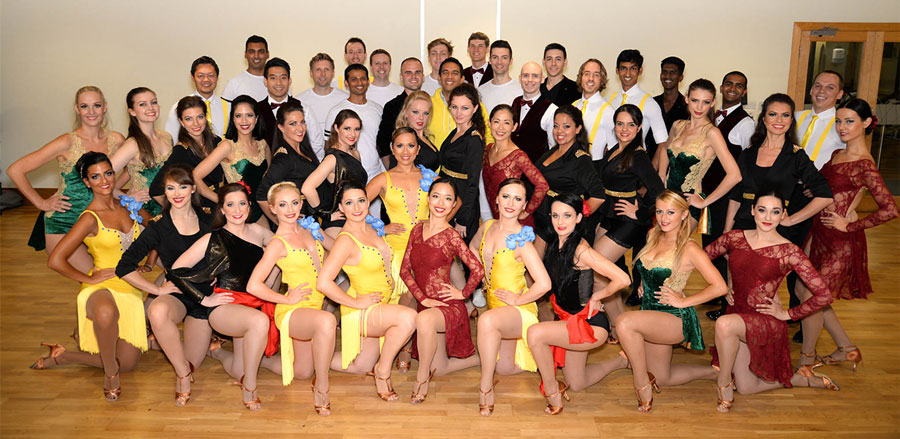
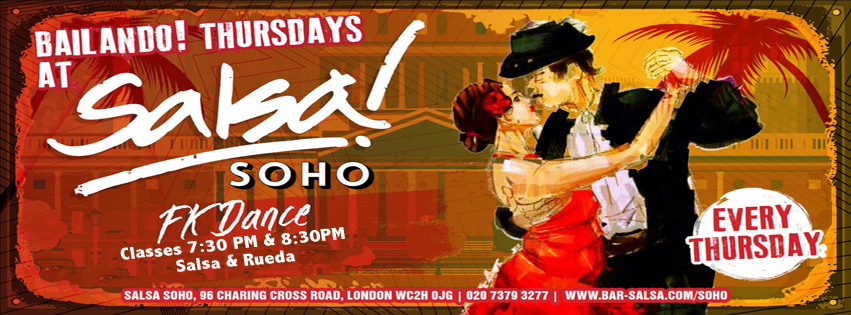
Salsa Soho London
The best place to celebrate your Latin roots! Salsa classes every night of the week, amazing drinks menu with over 50 cocktails and of course non- stop Latin music.
This club/restaurant has menus to suit all occasions and tastes. For a bigger party or less formal occasion they Sharing Planks are perfect and includes Salsa favorites like tacos and Iberico ham croquettes. Special events, birthdays, parties and more, with the best atmosphere in London!

For more info and reservations: https://www.bar-salsa.com/soho
Juan Karlos Jiménez talks about his orchestra Salsa Nueva Band and freelance career
Los Angeles is an inexhaustible source of Latin talent and this is proven every day with a large number of singers, musicians and groups that give all for all in each of their performances, with which they manage to earn a privileged place in the city and California’s music scene.
On this occasion, we talked with the great Mexican percussionist Juan Karlos Jimenez, with whom we had the privilege of making contact to learn more about his career and contributions to Latin music in US territory.

Juan Karlos’ beginnings in music
Juan Karlos was born in Veracruz, place he describes as ”one of the most salsa-loving cities in Mexico”. The first musical influence in the artist’s life has been his own father, who played a lot of Cuban music of the time when Juan Karlos was still a child, and among his favorite groups and artists were La Orquesta Aragón and Tito Puente.
Of his four brothers, he was the only one who devoted himself to music professionally and wanted to take salsa as a foundation, being something exceedingly rare for a Mexican, since most of the population does not usually see this genre as part of the typical music of the country. However, Juan Karlos also points out that, since Veracruz is located in the tropical part of the country, the city has a lot of Caribbean musical influence. This was one of the reasons that led the artist to become so passionate about salsa.
In addition to music, he also studied a degree in communication and graphic design at the Universidad del Valle de Atemajac, Guadalajara. As for the communication part, being a 13-year-old boy, he began working at a radio station, which would be the beginning of interest he would have in the not too distant future for locution in a much more formal way. This led him to work in very prestigious places in Mexico such as Televisa Radio, giving him the necessary experience to know how to handle himself as a musician in relation to the media when he would promote his orchestra years later.
While I was university studying, I worked in a music store and one day I had to serve to the Cuban Afro-jazz singer Rosalía de Cuba, who invited me to attend Cuban nights of which she was part of in restaurants and clubs in Guadalajara. One night, I was encouraged to go and started playing with one of the trios that performed that day and the leader of the group was so fascinated with my skills as a percussionist that he hired me permanently in exchange for 150 Mexican pesos per performance” said Juan Karlos about his time as a student.
He also pointed out that in order to reach such a good level, he took a few classes with the late Cuban arranger, composer and bongocero Adalberto Alvarez, leader of the group Son 14, thanks to whom he was able to play percussion so efficiently.
Today, he exercises his skills as a graphic designer with his orchestra Sangre Nueva Band, since he is the one who creates the album covers, flyers and artwork in general related to his musical project.

Moving to the United States
When Juan Karlos was just going to form his first band in Guadalajara, he met Maika Miller, who played for the Mexico’s Philharmonic orchestra and would be his partner for several years. Some time after they married, Milka was offered a master’s degree in Los Angeles and asked her husband to go with her, to which he gladly accepted because of the new opportunities he would have in his new home.
A few years later, he retried creating his group in her new city of residence after 15 years of hard work. And while Juan Karlos and Milka are no longer a couple, they continue to be part of the same musical project, which they have baptized Sangre Nueva Band.
However, in order to reach that point, he had to gain a lot of experience playing and perfecting his technique, but fortunately, many groups gave him the opportunity to make a living and be better every day at what he did, such as Conjunto Son 14, Carache, Santiago de Cuba, Rosalía de Cuba, Johnny Blas Y Afro Libre Orquesta, La Orquesta de Yari Moré, Tabaco y Ron, among others.
His first attempt at creating an orchestra was Jazz Son, which he founded with Maika in Mexico with the idea that his music would be based on the fusion of jazz and son, but his plans were postponed with their sudden move to the United States. Finally, in 2009, he managed to found the orchestra he has today, which he called Sangre Nueva Band.
Even so, he never stopped playing independently for other artists such as Gilberto Santa Rosa, Victor Manuelle, Ruben Blades, Cheo Feliciano and many more.

Salsa Nueva Band
One of the things that led Juan Karlos to create his own orchestra in Los Angeles was his desire to be the leader of his own project. He says he feels fortunate and grateful to be able to play with other orchestras, but in his own words ”it is better to be the head of mouse than the tail of a lion”. For the same reason, the idea of working in his own business without having to rely on other orchestras or singers was always in his head.
When he decided it was time, he had a chance encounter with an Armenian musician who, from the street, saw his congas in the back of his car, asked him if he was a musician and invited him to play at a nightclub next Saturday. By that time, he had managed to gather six musicians playing three congas, a trumpet and a bongo. On the same day, a music entrepreneur asked him to play at another venue, so he ventured to enlarge the group and was asked to name the band, which he called ”Sangre Nueva”.
Today, Juan Karlos is very happy with all the musicians who accompany him on this adventure and hopes that they will stay with him for a long time.
Read also: Raúl Vargas and his flamenco rumba duo Dos Bandoleros
Chick Corea Pianist, composer, arranger, producer, teacher. Acoustic and Electric
Surrounded by music since childhood, Armando Anthony Corea walked a path in which he shone like few others, accompanied by musicians who make up an encyclopedia of jazz.
Pianist, composer, arranger, producer, teacher. Acoustic and electric. Chick Corea was one of the most influential musicians in the vast universe that is jazz and surely one of the most important figures in global music of this time. In addition to being artistically prolific, he was commercially successful. For this reason, it would also be impossible to explain the music of this time without the example of Chick Corea.

Armando Anthony “Chick” Corea was born in Chelsea, Massachusetts, on June 12, 1941, to a family of Calabrian origin. At the age of four, he began to play the piano, encouraged by his father, a jazz trumpeter who led a Dixieland band in Boston in the 1930s and 1940s.
Surrounded by music, young Armando was soon introduced to the heroes of bebop. The music of Dizzy Gillespie, Charlie Parker, Bud Powell, Horace Silver, and Lester Young would leave a notable mark on his education. At the age of eight, he began studying classical piano with Salvatore Sullo, an Italian-born concert pianist who, in addition to his love of Mozart, opened up the world of composition to him.
Always tied to a confusing timeline, the first released recording of the original configuration of Return to Forever was actually its second session.
An initial ECM studio date made in February 1972 was not released until after the band had changed in 1975.
The Polydor/Verve recording from October 1972 is actually this 1973 release, which features the same band with Chick Corea, Stanley Clarke, Airto Moreira, Joe Farrell, and Flora Purim. There is no need to make distinctions, as both are five-star albums, showcasing many of the keyboardist’s enduring, instantly recognizable and highly melodic compositions.
Farrell’s joyous flute, Purim’s wordless vocals, Airto’s electrifying percussion and Clarke’s deft electric bass lines are wrapped up in a stew of Brazilian samba and Corea’s Fender Rhodes electric piano, and certainly set the tone and the highest bar for the music of the groups that will come after. “Captain Marvel,” the seed of the Farrell- and Purim-less band that expanded into a full concept album with Stan Getz, is here as a vaporous fusion samba with Corea dancing on the keys.

By now, the beautiful “500 Miles High” has become Purim’s signature song with Neville Potter lyrics and Corea’s stabbing chords, and unfortunately became a hippie anti-drug anthem.
Perhaps Corea’s definitive song of all time, and covered ad infinitum by professional and school bands, “Spain” retains the quirky melody, clapping interlude, up-and-down dynamics, exciting improvisational section and variation in time, tempo and colourations that always spark interest despite a length of close to ten minutes.
“You’re Everything” is a romantic classic that has surely been heard at many a wedding, with another Potter lyric sung to heaven by Purim, while the title track is Purim’s lyrics in a looser musical framework, with Clarke’s graphic merging with Corea and Farrell’s piercing flute work.

As much as the others have become icons, Farrell’s extraordinary sound on this date should never be trivialised or underestimated.
The final track, “Children’s Song,” was a springboard for several of Corea’s full-length album projects, and is heard here for the first time in trio format with a slow, Christmas motif.
The expanded version of this recording includes many alternate takes of four of these selections, but also includes “Matrix,” which was not on any RTF album, and there are four versions of “What Game Shall We Play Today?”, which was only available on the ECM release.
From a historical perspective, this is the most important work of Corea’s career, very different from his earlier progressive or improvisational efforts, and the pivotal beginning of his career as the most popular contemporary jazz keyboardist in history. Michael G. Nasto.
Chick Corea And Return To Forever – Light As A Feather (1973)
Tracks:
- You’re Everything
- Light As A Feather
- Captain Marvel
- 500 Miles High
- Children’s Song
- Spain
Musicians:
Chick Corea (Fender Rhodes, electric piano)
Stanley Clarke (Double bass)
Joe Farrell (Tenor sax, soprano sax, flute)
Flora Purim (Voice, percussion)
Airto Moreira (Drums)

Information provided (February 21, 2009)
Sources:
Santiago Giordano: He is a musician, teacher and music critic
Raúl Vargas and his flamenco rumba duo Dos Bandoleros
One of the Latin genres that has been gaining more popularity in California, specifically in the Bay Area, is the Spanish flamenco rumba, so it is no coincidence that every day there are more and more exponents of this genre who have achieved a huge level of fame and respect among both their peers and the public.
One of them is Raul Vargas, who has given us the honor of talking to us about his career and the projects he is currently working on, so we cordially invite you to read in order to learn more about this talented Spanish singer.

How Raúl got started in music
Raul remembers being fascinated by music when he was still very young in his hometown, Madrid. At home, they he used to listen to what his parents played on the radio, but he does not remember anyone in his family being a musician or working it, so he was the first one to have a professional interest in this field.
He also remembers listening to his mother’s cassettes with which he could enjoy all kinds of artists such as Julio Iglesias, Raphael, Camilo Sesto, Pimpinela and many others. However, as Raul grew older, he began to listen to what he liked just like his brother.
When he was 16, he began to learn on his own to play the guitar using the songs he liked at the time. At age 17 he wrote his first song and, shortly after he went to live in Eklanda, Sweden, where he started writing many more songs and take music more seriously, but he still did not see it as his profession.
It is important to note that, while it is true that music was a very important part of Raul’s life, this was not what he did for a living, but cooking. Thanks to his career as a cook, there were many countries and cities that the young man managed to visit, although he was always accompanied by a guitar or drum he played during his free time.

Arrival in the United States
After having visited many places around the world, Raul met a group of Spaniards in Australia, who suggested him to go to a guesthouse for traveling musicians in the Latin Quarter in San Francisco to see what he felt about it. It turned out to be an excellent decision as he met many professional musicians who were able to make a living from their art, which prompted the young cook to do the same and follow the dreams he felt truly passionate about.
This is how Raul decided that San Francisco should be his final destination, so he decided to remain in that city permanently. From then on, he continued to travel to other places for work and pleasure, but always returned to what he considered his new home.
Once he settled in the United States, he started playing for several bands and focused all his time and effort on what really filled his soul and spirit: music.
First groups and bands
Despite being born in Spain, Raul had never played Spanish music before and preferred rock and pop, but contact with artists from so many countries in San Francisco made him rethink everything he had done so far. Many began asking him why he had never before sung or played flamenco rumba being Spanish, which led him to do more research on the genre from his country and start playing it.
No much time would pass before the guitarist created his own flamenco rumba band, which he named ”Mala Maña” and was conceived as a circus theater and music group composed of eight people. It had a duration of three years and all these musicians, long time later, became part of the band Makrú.
Additionally, he was also part of a duo alongside a guy from Guadalajara, Mexico called ”Fulanos”, which also contributed to the artist’s experience in terms of groups.

Dos Bandoleros
The duo Dos Bandoleros started about six or seven years ago and its creation is described by Raul as a ”very lucky accident” thanks to which he met who today is his partner in this project.
It turns out that Raúl and his Makrú bandmates were experimenting with playing in duos and trios to see how things went, which led him and his guitarist to play at a French wine bar on Monday nights. One of these days, they were approached by a young man named Alberto Gutierrez, known artistically as Muchacho Mandanga, who introduced himself and also started playing at the bar along with another Spanish percussionist.
Weeks passed before both Raul and Muchacho could not take their partners to play due to personal problems, so the venue manager proposed the to join them that day. The chemistry between them was so great that they continued playing together and never apart again.
At the beginning, they only played flamenco rumba, which was what got closer to each together in the first place. Later on, they started playing cumbia, Latin rock, salsa, Cuban son and many more.
Read also: Guatemalan group Malacates Trébol Shop enchants with its Latin rock and ska