• Skip to primary navigation
  • Skip to main content

International Salsa Magazine

  • HOME
  • Previous editions
    • 2026
      • ISM / March 2026
      • ISM / February 2026
      • ISM / January 2026
    • 2025
      • ISM / December 2025
      • ISM / November 2025
      • ISM / October 2025
      • ISM / September 2025
      • ISM / August 2025
      • ISM / July 2025
      • ISM / June 2025
      • ISM / May2025
      • ISM / April 2025
      • ISM / March 2025
      • ISM / February 2025
      • ISM / January 2025
    • 2024
      • ISM / December 2024
      • ISM / November 2024
      • ISM / October 2024
      • ISM / September 2024
      • ISM / August 2024
      • ISM / July 2024
      • ISM / June 2024
      • ISM / May 2024
      • ISM / April 2024
      • ISM / March 2024
      • ISM / February 2024
      • ISM / January 2024
    • 2023
      • ISM / December 2023
      • ISM / November 2023
      • ISM / October 2023
      • ISM – September 2023
      • ISM – August 2023
      • ISM July 2023
      • ISM Edition June 2023
      • ISM – May 2023
      • ISM April 2023
      • ISM March 2023
      • ISM February 2023
      • ISM January 2023
    • 2022
      • ISM December 2022
      • ISM November 2022
      • ISM October 2022
      • ISM September 2022
      • ISM August 2022
      • ISM July 2022
      • ISM June 2022
      • ISM May 2022
      • ISM February 2022
      • ISM January 2022
    • 2021
      • ISM December 2021
      • ISM November 2021
      • ISM October – 2021
      • ISM September 2021
      • ISM August 2021
      • ISM July 2021
      • ISM May 2021
      • ISM April 2021
      • ISM June 2021
      • ISM March 2021
      • ISM February 2021
      • ISM January 2021
    • 2020
      • ISM December 2020
      • ISM November 2020
      • ISM October 2020
      • ISM September 2020
      • ISM August 2020
      • ISM July 2020
      • ISM June 2020
      • ISM May 2020
      • ISM April 2020
      • ISM March 2020
      • ISM February 2020
      • ISM January 2020
    • 2019
      • ISM December 2019
      • ISM November 2019
      • ISM October 2019
      • ISM Septembre 2019
      • ISM August 2019
      • ISM July 2019
      • ISM June 2019
  • Download Salsa App
    • Android
    • Apple
  • Spanish

Search Results for: Cuban music

You always can count with friends

Latin America / Puerto Rico

I want to congratulate Gilberto Santa Rosa for a great job done with his first Virtual concert “Canta Mundo” to inaugurate the Coca-Cola Music Hall in El Distrito, located near the Puerto Rico Convention Center, in Miramar.

Gilberto offered a magnificent a virtual live concert with his band of Puerto Rican musicians. This is the first time, since the emergency began in Puerto Rico due to the pandemic created by COVID-19, that this modern room was activated to present a live concert recorded live, especially for Rums of Puerto Rico, and that they have chosen such an extraordinary artist for the inauguration was without a doubt a great success.

After much expectation, the Coca Cola Music Hall had its opening in a totally different way than imagined, with a concert that did not have the presence of the public or applause between songs, due to the limitations imposed by the COVID pandemic- 19. Gilberto Santa Rosa was entrusted to offer the first recital in the space. Both the singer and his musicians took all possible security measures to prevent the spread of the disease, but obviously, without the use of masks that would prevent them from playing their instruments or singing.

The concert “Canta Mundo” continues online so that the millions of Gilberto fans throughout the world become intimate audiences in their favorite spaces, you will surely enjoy it. The event was exclusively presented by Rums of Puerto Rico, and can be seen through the social networks of Gilberto Santa Rosa, as well as those of Coca-Cola Music Hall and Rums of Puerto Rico.
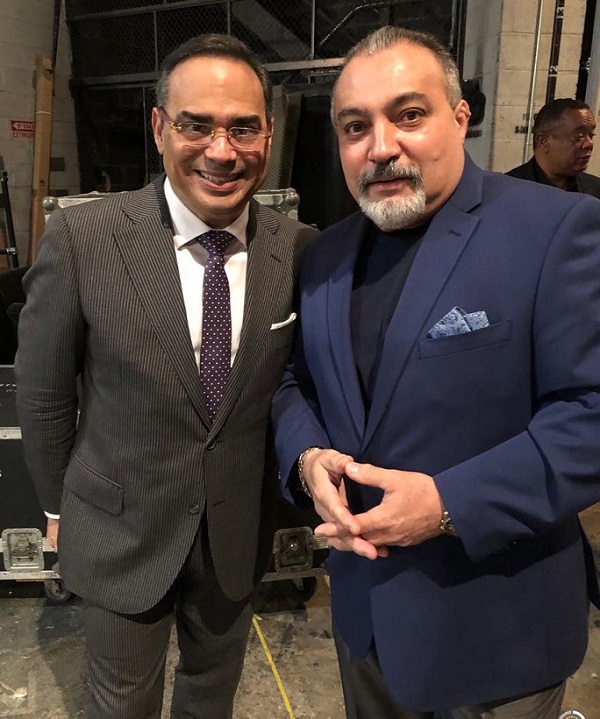
Gilberto Santa Rosa and Johnny Cruz - friends
Gilberto Santa Rosa and Johnny Cruz

I send a warm greeting to my good friend Jerry Rivas, singer of “El Gran Combo de Puerto Rico” since April 19, 1977, who now shares hits and music with his son Gerardo Rivas. In 1977 Andy Montañez, the lead vocal of the Gran Combo de Puerto Rico, announced his departure from the orchestra. Many saw the group debacle coming. When everyone expected to see an experienced singer, the always-wise director Rafael Ithier found a young singer to suit his group’s style.

The chosen one was a young man of just 21 years: Jerry Rivas. A shy Jerry Rivas presented himself with a cassette recorded with the music of the first groups that he joined for a short time, the musicians of the Gran Combo, looked at him suspiciously. Ithier, with his traditional good humor, contained his musicians with these words: “you rest easy, it is a black painted white”.

On April 19, 1977, Jerry began singing with El Gran Combo de Puerto Rico. Jerry Rivas’ first performance was “Buscando Ambiente” at El Club Caborrojeño de Guaynabo and his first international success was “La Clave y el Bongó”. Rivas, self-taught and who in addition to singing plays guitar, cuatro and cuban tres guitar, remembers that as a young man he was a rocker, but he was struck by the joy that the members of the Gran Combo projected in their dances and choreography.

In his long career with El Gran Combo, Jerry Rivas, has become a renowned sonero and one of the oldest members of the Universidad de la Salsa, has recorded 30 albums with the group and many of the greats were recorded in his voice. hits from the orchestra, such as “Y No Hago Más Na”, “El Menú”, “Azuquita pa’l Café”, “Que me lo Den en Vida”, “Ojitos Chinos”, “Me Liberé”, among many others. The Gran Combo was the key to success for Jerry, who thanks Quique Lucca, founder of Sonora Ponceña, for his recommendation that Ithier give him the opportunity to audition. His talent was passed on to his sons, who became Los Rockolos as children.

Gilberto Santa Rosa Concert Without Public

Today, Gerardo begins his solo career, and Jerry Junior together with Samuel conducts the Los Rivas Orchestra organized more than a decade ago. Gerardo always affirms that no matter how many differences they may have, music unites them. He revealed on some occasion that his father did not want him to dedicate his life to popular music due to the strong and unstable environment, the risks and swings of the artistic world.

However, when Jerry looks at them during rehearsals and on stage, he is proud and always advises them to be responsible, avoid the negative and assimilate the positive. Recently, the vocalist of El Gran Combo joined with his son, also singer Gerardo Rivas, and his grandson Gerardo Gabriel to carry a musical message to his followers in the midst of the coronavirus pandemic (Covid-19).

The trio came together to perform a classic by the legendary salsa orchestra, Mente Positiva. “In difficult times, the best we can do is carry a positive message,” wrote Gerardo, also a member of NG2, in his social media. Rivas father was in charge of the Cuban tres guitar, Gerardo Gabriel of the key and the maracas and Rivas son interpreted the theme. It is not the first time that they have joined this quarantine to delight their followers with a musical number.
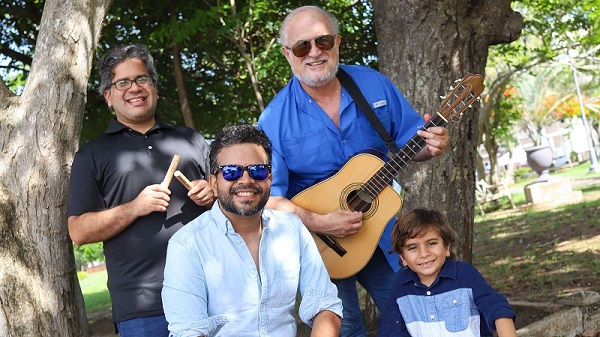
Photo by Jerry Rivas and his family

I applaud the initiative of Pedro Oggie García as CEO of Salsa Artist Booking Entertainment Group (SAB), who with his daily work supports all the salseros in the world at SalsaArtistBooking.com. SAB is the company specialized in the digital coding of music, administration, promotion and representation of Artists of the Salsa genre, With an experience of more than 30 years in the media and with relationships worldwide, always characterized by our responsibility, seriousness and compliance.

Using their experience, international relations and positioning, they will make your musical work a success. Always taking care of their interests and rights, trying to take the artists and their music where their public requires it. Contact them +1 956-442-0099

José Mangual Jr
José Mangual Jr

I would like to share with you my admiration for José Mangual Jr. “El Campanero Mayor”, who is an American percussionist, of Puerto Rican origin, son of also percussionist José Mangual Sr. He was born in New York on January 11, 1948 and has a trajectory of almost half a century in Salsa.

His contribution to this genre began in the mid-sixties in his native city, when he joined the group of Monguito Santamaría, son of the great percussionist Ramón “Mongo” Santamaría. He also played with La Conspiración. He was part of Tony Pabón’s band, which marked the beginning of his role as a singer. On the LP “La protesta”, recorded in 1972 for the Rico Records label, José Mangual Jr. sang the song “San Miguel”.

In 1971 he joined the Willie Colón band, and since the singer was Héctor Lavoe, José participated in the best and biggest albums recorded by that great duo. Mangual Jr. also recorded with Rubén Blades on some of the most representative albums in the Panamanian singer’s musical career. His talent has allowed him to be making simultaneous recordings with other groups, musicians and singers, such as Ismael Miranda, Mon Rivera, Frankie Dante, Ismael Quintana, Celia Cruz and the Willard Orchestra, conducted by Willie Pastrana.

In 1977 he launched as a soloist, recording with his own group the album titled Tribute To Chano Pozo, and so far, he has around twenty of his own albums. These are added to almost thirty recordings with Willie Colón, Rubén Blades and Héctor Lavoe. But they are only part of the huge list of his recordings with other orchestras, musicians and singers. His meritorious career has allowed him to travel to many countries of the world alongside countless great musicians and singers, and become an example of dedication and love for music.

This has also allowed him to make friends around the world who admire, love, respect; and be with him in important moments, triumphs, defeats and also in goodbyes … José Mangual Jr. lost his grandson Tyrell Bryant a few weeks ago to the covid-19. I extend my heartfelt words of condolence for such an irreparable loss, and reiterate my unconditional support for the entire family at this difficult time. You are not alone! I dedicate special tribute to his grandson Tyrell Bryant who always be present in our hearts. RIP 04/04/1992 – 04/18/2020.

My friends, I need you know that we continue working hand in hand with prominent artists from New York and Puerto Rico on the CD dedicated to maestro Adalberto Santiago on his 60th Anniversary. I promise to have more details about this fantastic musical production very soon.

Johnny Cruz and Adalberto Santiago

I appreciate the support of Carl Cristiano, L&S Custom Tailors and cKc for my TV Show outfits and my public performances. Tailored suits with total care and confidence. Contact them, I recommend them with pleasure. www.LSTailors.com. Address: 138 E 61st Street Suite 201. New York, NY 10065. Phone: +1 212 752 16 38.

Don’t forget tune in to my new Fm / Internet radio station on Live365.com: Salsagallery. Great music, artist interviews and much more made with love for you all. There is the link: https://live365.com/station/a77973

Although yet It will not be possible to open to the public the Spanish Harlem Salsa Gallery in 1708 Lexington ave New York N.Y. 10029, you can see the entire exhibition with more than 200 articles through our social media. Check the updates in our website: spahasalsagallery.com.

Salsa Artist Bokking logo

New York City is slowly returning to normal. We hope to be sharing with you physically again, but now we follow the instructions of the authorities to keep us safe and healthy.

Contact: Johnny Cruz. 917-747-8505. [email protected].

By Johnny Cruz, ISM Correspondent, New York, New York City

Honor to whom honor is due – Johnny Cruz

Johnny Cruz
Johnny Cruz

This month I hope to be able to pay tribute to great figures of our Latin music, who have worked tirelessly for years to make our music very high.

I want to greet my great friend Larry Harlow and wish him a speedy recovery. Larry Harlow is an American artist and performer, composer and producer of Cuban son, Montuno, Afro-Cuban jazz, mambo, guaracha, cha-cha, and salsa, hailing from Brooklyn, New York. Harlow, who is known for his mix of Afro-Cuban jazz and piano playing styles, studied music in the 1950s in Cuba, but was unable to complete his studies before the 1959 Cuban Revolution, forcing him to leave the island.

Larry Harlow y Johnny Cruz

The Harlow Orchestra was the first to sign with Fania Records, Harlow has also produced more than 106 albums by various artists and more than 50 albums of his own authorship, in addition to those he produced for Fania. Among his most popular albums were “Abran Paso” and “Tributo a Arsenio Rodríguez” with Ismael Miranda as the vocalist. He also appeared with La Fania All-Stars, in the film, Nuestra Cosa Latina.

Harlow recorded one of his most momentous albums in just two days. Under the simple title of Salsa, it pays homage to the Cuban roots of tropical music, combining the sound of trumpets and trombones with two violins that evoke the aesthetics of the charanga of groups such as Orquesta Aragón.

With “The portfolio”, a version of a song by Arsenio Rodríguez, Harlow finds his greatest success. Thanks to the singers Adalberto Santiago and Junior González, the nickname “the wonderful Jew” arises. In 1972, salsa was in full swing. Larry Harlow, meditates on a musical concept for the Afro-Caribbean music market. Inspired by the success of the Anglo-Saxon opera, “Tommy”, Harlow was preparing for the launch of a similar concept, aimed at the salsa market.

For 1973 the opera Hommy, using the lyrics of Heny Álvarez, tells the story of a boy who, although blind and deaf, had a great talent for percussion. The outstanding musicians of the time and singers such as Justo Betancourt, Cheo Feliciano, Adalberto Santiago, Junior González, Pete “El Conde” Rodríguez and Celia Cruz joined.

The combination of musicians and voices achieved its goal with a recording that established a lecture in the history of Afro-Caribbean music with a radiant exhibition that captured the airwaves and the imagination of the salsa audience. The songs “Es un Varón”, “El Día De Navidad”, “Quirinbomboro”, “Gracia Divina”, “Cari-Caridad” and “Soy Sensacional” were undoubted radio hits that became themes of dance and discussion among all the salseros.

It was the first time that an opera, Spanish-speaking, and in the salsa guild, was directed to the populace. Salsa got dressed up and that legacy opened the doors for the Afro-Caribbean musical tradition to now visit the most prestigious venues in the world.

That is the legacy of “Hommy”, one of the best recordings of the time, which brought together the best musicians of the moment in an expression that transcended time; and, in turn, he brought Celia Cruz to the salsa market and placed her in a seat of honor which she never left. But more importantly, “Hommy” took Salsa to a new place among audiences. What a contribution from Larry Harlow!

Ralph-Irizarry
Ralph-Irizarry

I also want to send my regards and appreciation to Ralph Irizarry. Recognized as one of the timpanists with the greatest “swing”, Ralph Irizarry has a distinctive style that has allowed him to leave an indelible mark in the groups where he has played. Born in Harlem Latino New Yorker, Ralph is a self-taught musician who learned his trade by listening to his brother’s records and the music of his idols in nightclubs, where he used to sneak into when he was 16 years old.

His family moved to Puerto Rico when Ralph was in his teens; There he acquired his first professional experiences with La Terrífica, El Gran Combo, La Sonora Ponceña and many other groups. After three years on the island, Ralph returned to New York, where he began playing with local groups.

One winter night in 1978, he met the legendary Ray Barreto at Manhattan’s Corso Nightclub and began a productive working relationship that would result in five extraordinary recordings. Ralph has recorded with David Byrne, Paul Simon, Harry Belafonte, Earl Klugh, Juan Luis Guerra, Cachao, Celia Cruz and Yomo Toro, although he is widely recognized for his musical relationship with Rubén Blades and Seis Del Solar, with whom he remained. recording and performing internationally for 13 years.

His musical contributions have also been fundamental in the recording of two Latin jazz albums made by Seis del Solar for the Messidor Records label. Currently, he is one of the most sought after musicians who has kept working on commercials and film and television soundtracks.

His charisma also allowed him to develop an unexpected acting career: he acted in The Mambo Kings, playing the role of Pito Fernández. In the summer of 1996, Ralph participated along with Tito Puente in the show Master Timbaleros, presented at S.O.B.’s in New York. This historic concert was the culmination of 26 years of dedication, practice, and love of music. He founded the group Timbalaye, a septet with a strong big band sound.

The group combines contemporary Latin jazz with diverse tropical rhythms (timba and songo) and traditional Afro-Cuban rhythms (bomba, cha cha chá and son montuno). Their innovative sound has allowed the group to perform weekly at various venues in New York. Among his most recent projects is a recording at Birdland for a compilation to be released by the RCA Records label. Timbalaye is considered the force of Latin jazz. My hug and respect to you Ralph!

I am happy to express my gratitude and admiration to a powerful woman, Director of Taínos Tower and Vice President of the Museum of Salsa: María Cruz.

Johnny Cruz and Mrs. María Cruz

María Cruz was born in Carolina, Puerto Rico. In 1966 she came to New York looking for new opportunities. While studying at Manhattan Community College, she began working with the East Harlem Pilot Block Redevelopment Project. Although she may have had no idea at the time, that job was the beginning of her career as a community activist and advocate for social services. As a community worker at the East Harlem Pilot Block, she helped design and offer a tenant orientation in preparation for the occupation at Taino Towers.

Later, she became a Building Representative and worked with tenants regarding apartment issues, rent, social service issues, and Section 8. Maria Cruz has been involved in many community activities:

From 1984 to 1989; She served as president of the Tenants Association of her apartment building. She was vice president of the East Harlem Little League Baseball organization. In her spare time, she organized bus trips for neighborhood children to amusement parks and ball games. Encouraged and assisted several tenants to return to school and continue their education, so that they can be trained and empowered to return to the workforce and leave Public Assistance. Ms. Cruz earned her RAM (Registered Apartment Manager) certificate from NYU and is registered as a Certified Leasing Professional.

Currently, Ms. Cruz is the Executive Director of ARCO Management Inc. / Taino Towers. She has always been a strong activist for the community. In the summer of 1999, Ms. Cruz organized the first annual Taino Family Day. Day in which all residents and members of the East Harlem community participate and celebrate a day of unity. On Taino Family Day, residents rent “kioscos” food stalls and sell various ethnic foods, dance to the rhythm of various musical bands, and children enjoy activities such as face painting, puppet theater, and a petting zoo.

Each year, Ms. Cruz focuses on a different topic such as: education, music, tributes, and family values. As Executive Director, one of her greatest accomplishments was the renovation of the Touro College building. She is currently a board member of the East Harlem Council for Human Services and works closely with local politicians and representatives.

In 2002, Ms. Cruz along with Irving “Magic” Johnson opened the Magic Johnson Computer Learning Center. This program provides computer classes to Taino Towers and the East Harlem Community. As Executive Director, she was also able to oversee the completion of the Senior Park at Taino Towers.

In the summer of 2003, voted by the majority of the tenants, the Park for the elderly was renamed the Maria Cruz Park for the elderly. In September 2019, she was honored with the Eugenio María de Hostos Award from the Puerto Rican National Association for her commitment to the East Harlem Community. People like Mrs. Cruz are exemplary citizens of the Latino community in the United States, and in New York.

Papo Rosario and Isidro Infante

Do not stop listening to the new single: “Gracias”, and the first solo production of Papo Rosario, produced by the arranger and musician Isidro Infante. Rosario is grateful to be alive and to be able to walk after being bedridden as a result of a car accident. Papo Rosario is a world-class artist who has put the name of Puerto Rico high. Rosario, withdrew in 2019 from the group considered the “university of salsa”, El Gran combo de Puerto Rico, after having an accident and presenting health problems. Now, he affirms that he already feels ready to resume his musical career with the launch of his first solo production by producer Isidro Infante. Much success in this new stage.

I highly recommend that you follow the track of Quintero’s Salsa Project, a Venezuelan salsa group based in New York, nominated for a Latin Grammy and led by cousins ​​Luisito and Roberto Quintero, released an album in which they pay tribute to the work of La Dimensión Latina, the orchestra that represented a before and after in the history of this musical genre in Venezuela.

Quintero´s Salsa Project

The band wanted to go back to the 60s to remember that particular style with which La Dimensión Latina championed Venezuelan salsa: “Many of the world’s salsa players and Venezuelans identify with this rhythm. We, the Quintero, have always been loyal fans of these great teachers. With this album we wish to pay tribute to those who today are a world icon of salsa ”, they said through their networks. “Ya tú lo verás”, promotional single from the album composed by Oscar D’León, was arranged by the legendary trombonist and director of La Dimensión Latina, César Monges, better known as “Albóndiga”.

The album is the second released by Quintero’s Salsa Project, following their debut project, Nuestro Hogar, which was nominated for the 2019 Latin Grammy for Best Salsa Album. In that same ceremony, Luisito Quintero, one of the great Venezuelan percussionists who make a professional life in the United States, received the gramophone as a member of the Spanish Harlem Orchestra, which was recognized for his Anniversary album as Best Latin Tropical Album. Quintero is also a member of the group of the great pianist Chick Corea. Do not miss it!

The invitation to tune in to the new Fm / Internet radio station on Live365.com continues: Salsagallery. Good music, interviews with the artists and much more.

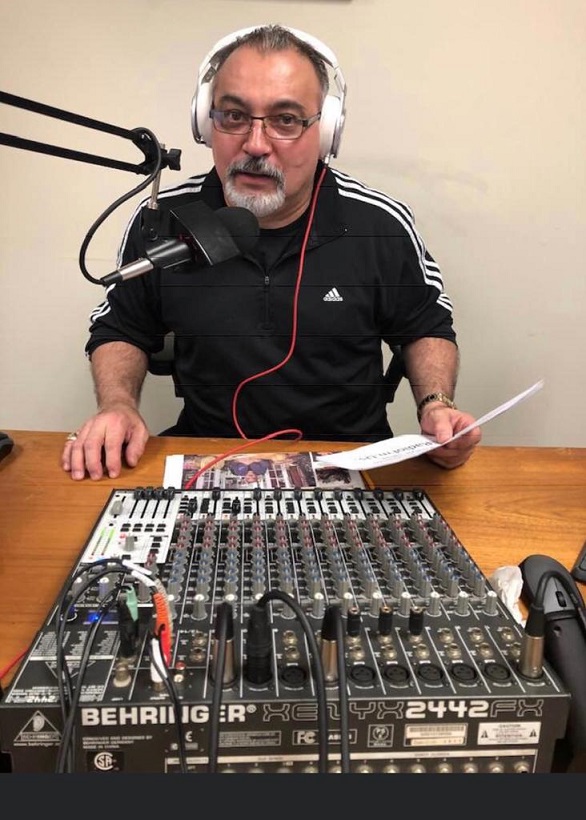
Johnny Cruz on the Radio

At the Spanish Harlem Salsa Gallery Museum we are happy to say that we are gradually returning to our activities and we will be opening the gallery sporadically. We do not stop, we continue to work for our music and we will always keep you informed through our social networks. We hope to have more news shortly and that we can return to normal soon.

By Johnny Cruz, ISM Correspondents, New York, New York City
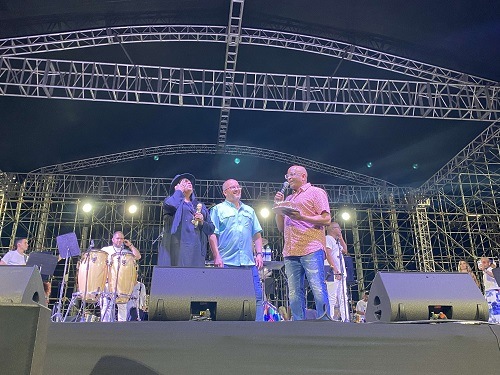
National Zalsa Day in its XXXIX edition a total success

Sunday, March 19, 2023, the 39th edition of National Zalsa Day returned to the date established in 2000 with the approval of Law No. 100, which decrees the third Sunday of March of each year as National Salsa Day.

This edition of the activity of worldwide importance, which has almost reached four decades since its first edition at the José Pepito Bonano Park in Guaynabo, demonstrated Z-93’s support for the proposals of the new generation. That promise, made in its 38th edition, has been fulfilled.

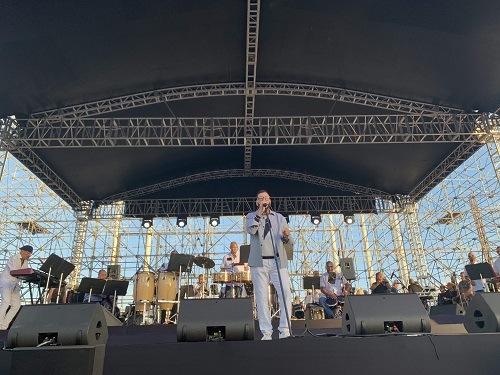
The day began at about eleven in the morning. The Orquesta del Rey de Puerto Rico, winners of the contest held in Panama to select the talent to be presented yesterday on the DNZ stage, was in charge of the ignition.

Orquesta del Rey de Puerto Rico after the performance that kicked off the National Zalsa Day

As soon as this first intervention culminated; the orchestra of Robert Burgos shone in a change of rhythm something more cubaneao. When the sun was at its hottest moment, Maelo Ruiz arrived on stage for the first time as a soloist, accompanied by the musical direction of his nephew, the outstanding percussionist of the so-called nueva cepa: Jean Carlos Camuñas.  Pirulo arrived on stage with his usual urban charisma, stealing the hearts of the new salsa

The fifth intervention marked the arrival of the Orquesta del Día Nacional, led by the multifaceted Isidro Infante.  The orchestra backed Nino Segarra, who enchanted the audience with Entre la espada y la pared and Porque te amo; Yolanda Rivera, who performed Se formó and Hasta que se rompa el cuero as well as a descarga in front of the timbal; Luigui Texidor, who sang Boranda and Moreno soy.

Yolanda Rivera performing a timbal solo

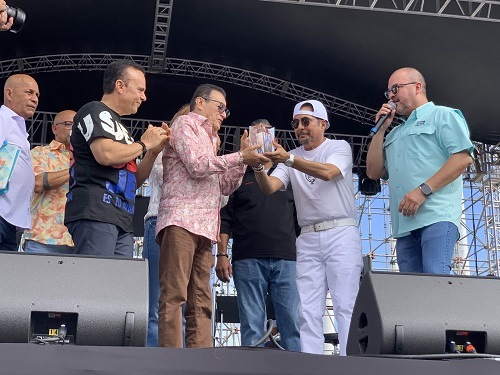
Next, “El Niño Bonito de la Salsa”, Ismael Miranda arrived accompanied by his family and Pastor Alex D’ Castro to receive from Néstor Galán -better known as “el búho loco”- the well-deserved Estrella Award, instituted as part of the annual salsa day.

Ismael Miranda receives Estrella Award from Néstor Galán

Once the Estrella Award was presented to Miranda, Pichie Pérez sang El sonero del bailador and a medley of the songs that consolidated him as a singer when he was part of the giants of the south, the Sonora Ponceña. These were: Hacheros pa’ un palo, Fuego en el 23, El pío pío and Yambeque.

After Pichie finished his performance, Alex D’ Castro took the stage and gave the evening its climax with Te fuiste, Como si nada and Si no fuera por ti. Alex was followed by the new promise of salsa, already recorded, published and released by Sony Music Latin: Luis Figueroa.

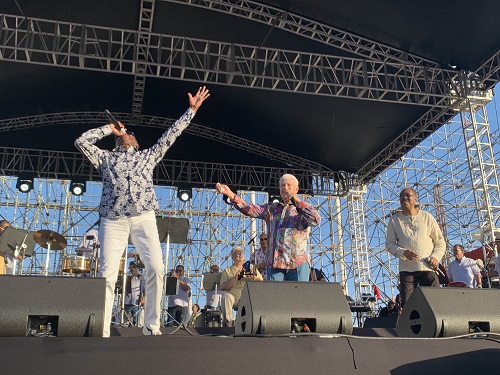
As part of the tribute to the 50th anniversary of the establishment of Típica 73, there was a reunion on stage of singers Tito Allen, Adalberto Santiago and José Alberto “El Canario”; backed by the manager of Típica 73, Johnny Dandy Rodríguez. Tito Allen performed Guancona and Guaguancó de los violentos. Adalberto Santiago showed off his voice with Mañoño and La candela. For his part, “El Canario” arrived with his usual scenic mastery with A la hora que me llamen voy, Esta noche pinta bien, Xiomara -a theme in which he was accompanied by Tito Allen and Adalberto Santiago- and Baila que baila.

José Alberto "El Canario", Adalberto Santiago and Tito Allen joined Johnny "Dandy" Rodríguez in tribute to Típica 73
José Alberto “El Canario”, Adalberto Santiago and Tito Allen joined Johnny “Dandy” Rodríguez in tribute to Típica 73

After the segment in which the three singers came together again, bongos player Johnny Dandy received the tribute on behalf of Típica. The first intervention of the DNZ Orchestra closed with Domingo Quiñones in an energetic interpretation of Salsumba, a song with which he participated in the production El número 100 of the “King of the Timbal”, Tito Puente.

Domingo Quiñones performed Salsumba, a song he recorded with El Rey del Timbal for his production 'El número 100'
Domingo Quiñones performed Salsumba, a song he recorded with El Rey del Timbal for his production ‘El número 100’

When the afternoon wanted to give way to the night, Charlie Aponte’s orchestra was in charge of keeping the audience in the necessary mood to continue with salsa. The songs that Charlie kept the audience captive were Arroz con habichuelas, Se nos rompió el amor, Teléfono, Esos ojitos negros, Goyito Sabater and Gracias salsero.

Charlie Aponte and his orchestra

Preceding the tribute to the “King of the Timbal”, on the 100th anniversary of his birth; India showed off her interpretative quality, evidencing her well-earned title. Yes, India is “la más que canta”. Her interpretation of Vivir lo nuestro, Dicen que soy -a song for which she was accompanied by Sergio George on piano shortly after he brought her a birthday cake on stage-, Ese hombre and Mi primera rumba showed her vocal virtuosity.

Sergio George celebrated India's birthday within the framework of DNZ 2023
Sergio George celebrated India’s birthday within the framework of DNZ 2023

The concert was closed by Tito Puente, Jr. surrounded by timbaleros Nicky Marrero, Endel Dueño and Orestes Vilató, under the musical direction of timbalero José Madera.  Tito’s guest singers for the closing were Frankie Figueroa, Frankie Morales and Melina Almodóvar.

Melina Almodóvar fue una de las invitadas de Tito Puente, Jr.


Bella Martinez
Writer, Afro-Caribbean Music Researcher

Major Latin radio stations in New York

The current radio

Radio has always been present in a very important part of our lives, which is information and communication. Over time, it has also been a bridge for the most deprived to go public with their complaints and for new artists to make their work known. After the emergence of the internet, traditional radio stations had to adapt to the new era and air their content through the diverse digital platforms that have appeared in recent years. This is how all these shows have avoided their possible disappearance due to the lack of traditional radio listeners.

New York is one of the cities that has several of the most important radio stations in the United States whose content can be easily found in the web search engines. In view of the importance of radio and locution in entertainment and treatment of sensitive topics in society today, we consider it appropriate to name some of the main Latin radio stations in New York for the public to get to know them.

El Vacilón de La Mañana
El Vacilón de La Mañana team consisting of DJ Ash, Gerpis Correa, Natalia ”Vacilón”, Francis Mendez, Jessica Pereira and DJ New Era

Mega 97.9

Mega 97.9 is a radio station operating in New York City whose tropical format offers musical genres such as salsa, merengue, reggaeton, and bachata. Its official name is WSKQ FM and its headquarters is located in the Empire State Building, as it is the case with many other stations.

It was created in 1951 under the name WEBD FM and its programming consisted of pop and jazz music of the time, but that was slowly changing. There were many changes of names, personnel, directors, presidents and much more, so the current programming is radically different from that of past times. In 1993, its name changed to Mega 97.9 and its content became based on tropical and Latin genres, which caused a revival of the station and a very considerable increase in the audience that it had until that year.

Among its most watched programs, we can mention the now defunct ”El Vacilón De La Mañana” and ”On Fuego: The Daddy Yankee Show”.

El Palo Con Coco
El Palo Con Coco team consisting of Tony Sanchez ”El Tiburón”, Coco Cabrera and Diosa Fernández

WXNY X96.3

WXNY X96.3 is a station mainly focused on contemporary adults whose main language is Spanish and is broadcast on the frequency 96.3 FM. The programming focuses on providing the biggest hits of the moment in terms of Latin rhythms and some entertainment programs that address contemporary issues in the entertainment world. Two of the most popular shows are ”La Gozadera” and ”El Palo Con Coco”.

Radio Puerto Rico

Radio Puerto Rico offers the most popular music from both the present and the past in the salsa genre. It streams Latin music of all genres such as salsa, reggaeton, merengue, vallenato, among others. At any time of the day, listeners can tune in and listen to El Gran Combo de Puerto Rico, Marc Anthony, Ismael Miranda, Ismael Rivera, Marc Anthony, Daddy Yankee, Don Omar and many others. Some of its shows are ”Al Son de Harold Montañez”, ”La música de tierra adentro”, ”Música Tropical” and ”Repartiendo su fortuna”.

Havana Club Radio
Havana Club Radio’s logotype

Havana Club Radio

As the name suggests, Havana Club Radio is a radio station that seeks to unite all Cubans around the world in becoming one voice. Its waves play the island’s typical genres such as salsa, salsatón, rumba, danzón and more. It has very good ratings in several major cities in the United States and gives Cubans and Latinos in general the opportunity to connect with their homelands, even if they are far away.

Read also: Interview with Colombian singer-songwriter Potty Lozano

Mexican announcer Jesse ‘‘Chuy’’ Varela and the radio today

‘‘Chuy’’

Jesse ”Chuy” Varela is a famous radio host from the San Francisco Bay Area who currently works at KCSM Jazz 91 and constantly interviews all kinds of important figures of the present day such as artists, singers and musicians of all genres, but especially jazz. We had the opportunity to talk with the well-respected communicator to learn about his transition from musician to announcer and his history in general.

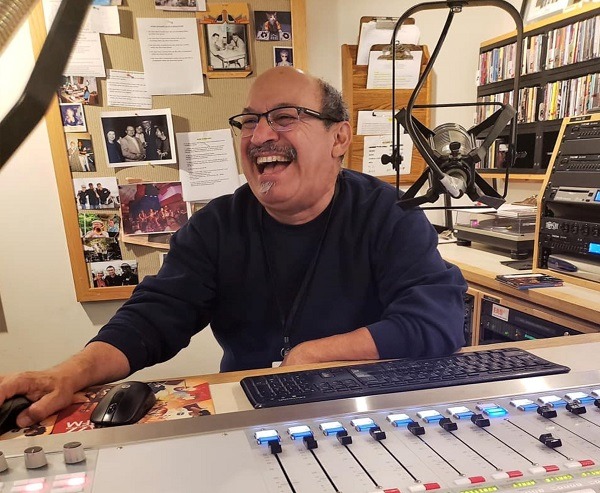
Jesse ''Chuy'' Torrealba airing on KCSM Jazz 91
Jesse ”Chuy” Torrealba airing on KCSM Jazz 91

His career as a musician

He began his career as a musician in the entertainment world when he was just in high school in his native Mexico. He started playing the guitar at a very young age and his uncles taught him to play ”La Bamba” and other very famous songs in those years, which led him to continuing on this path. That’s why it did not take long for him to start playing grupera music in Mexican groups in Oakland.
However, a great passion for jazz came over him, which made him learn to play this genre with the guitar. One of his greatest inspirations during those years was Carlos Santana and the great work he was doing in the Bay Area. Varela did imitations of Santana and played his songs, which generated a great deal of interest in the circle in which he developed and helped him to get much work in groups that saw potential in his talent. About these years, he commented that, on one occasion, the singer’s father, Don José Santana, went see him play, which was a source of great pride for Jesse and his budding career.
Although the Mexican artist was one of his major influences, there were other big names from other genres that helped him expand his horizons, such as Eddie Palmieri and other salsa singers who already had a recognized career.
As he pursued his professional career, he began to be part of jazz groups at Diablo Valley College and other schools, until he realized that this set of activities was financially unprofitable, so he began working as a volunteer at KPFA in Berkeley and later at KJAZZ. ”I managed to show my qualities as a volunteer and intern, so they decided to give me a part-time job and I became a reporter at KPFA. At KJAZZ, I started doing shows and I was given The Latin Jazz Show, which continues to air.
His first big break came during the promotion of some shows by Tito Puente, whose tickets were not selling well, so the artist needed all possible support to arouse public interested in his shows. That made the owners of the club where the shows were being held decide to use this station to broadcast commercials to publicize them. It was then when the programming manager wanted Varela to interview Puente, who gladly accepted.
After interviewing the artist and putting the material on the air, many listeners contacted the station because they were fascinated by the work done by the announcer, to the point that the timbalero himself asked the programming manager to give a chance to this young communicator, since he saw great potential in him. That is when he was given the space dedicated to Latin Jazz, something for which Varela will always be grateful to Tito Puente.

Cuban composer, arreglist, and pianist Chucho Valdés and Jesse ''Varela'' Varela
Cuban composer, arreglist, and pianist Chucho Valdés and Jesse ”Varela” Varela

Announcer of the first bilingual program in the U.S.

Jesse told us that he began working as a volunteer in a bilingual program called ”La Onda Bajita”, which was entirely focused on a young audience. What it is looking to do with that program was to make young people see that violence and gangs were very negative for their lives and that difficulties overcame with education and effort. He also liked to play ”oldies”, Chicano music, salsa, Latin rock, among other genres.

Throughout his career, most programs hosted by him were in English, although he also served as public affairs director and reporter at KPFA in Berkeley, where he did a lot of bilingual work. At the same time, he worked for Radio Bilingüe in Fresno, which led him to use both languages in his reports and expand his audience. At that time, he covered controversial topics such as discrimination towards Latinos, farm worker leader Cesar Chavez, the situation with crime and guerrillas in Central America, among others.

These reports took him to visit these countries and many other places where he discovered typical music and rhythms. This interest he has always had in music led him to become the music director of KPFA for a while until he moved to KCSM, where he has been working for 22 years.

Multifaceted

Although today he works as an announcer, he says he always wanted to be a sound engineer to have his own salsa groups, but ended up learning a lot about mixing, editing and much more. What he liked most in this world of radio was the possibility to interview artists and he considers this to be one of the best talents he has to offer. Getting the story or report from interviewees is a pleasure for him and helps him understand this business better.

Many veteran announcers adviced him and helped him a lot to perfect his skills and improve his work as much as he could. Some of them even gave him their record collections so he could learn more about music and soak up more the topics he had to cover in his programs.

Jesse is also dedicated along with other colleagues to give classes to young people who wish to train for this career and be part of the new generations of announcers with all the knowledge of the old school.

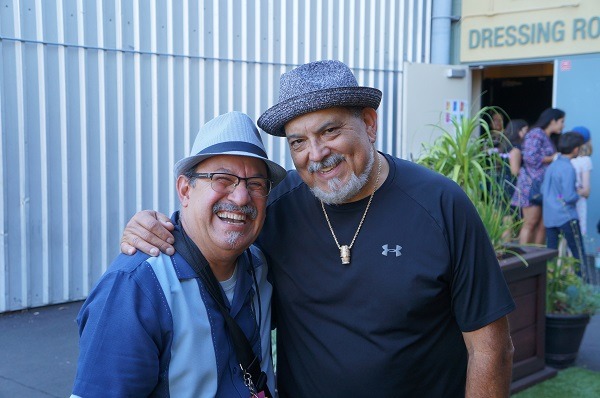
Jesse ''Chuy'' Varela and bandleader, percussionist and singer Poncho Sánchez
Jesse ”Chuy” Varela and bandleader, percussionist and singer Poncho Sánchez

What does a radio station need to work properly?

To tell you the truth, a radio station needs money to function properly. In the case of public and college radio stations, we are forced to ask our listeners to support us with their donations and subscribe as supporters. We have been fortunate to have a very generous audience in that regard,” said the announcer. He also added that the pandemic was to some extent beneficial for shows like his, as they got a great amount f audience due to the quarantine.

Varela mentions that one of the biggest problems facing most public broadcasters is communication. ”There is a division between the administrations and workers. The boards do not have the best ideas regarding the use of available resources. Many times, they start spending in an uncontrolled way without notifying the public about how they invest that money” said the communicator.

In the opinion of Varela, the most important thing for a station to maintain is public trust and to let people know that their money will be used in the best interests of the station. When administrators use those economic resources for trips, dinners and luxury hotels, listeners will consider it an abuse. I have seen this unfortunate situation on every station where I have worked,” the announcer continues.

Read also: Steffen Kuehn and Christian Tumalan talk about their musical roots and orchestra

  • « Go to Previous Page
  • Page 1
  • Interim pages omitted …
  • Page 77
  • Page 78
  • Page 79
  • Page 80
  • Page 81
  • Interim pages omitted …
  • Page 102
  • Go to Next Page »

International Salsa Magazine (ISM) is a monthly publication about Salsa activities around the world, that has been publishing since 2007. It is a world network of volunteers coordinated by ISM Magazine. We are working to strengthen all the events by working together.