• Skip to primary navigation
  • Skip to main content

International Salsa Magazine

  • HOME
  • Previous editions
    • 2026
      • ISM / March 2026
      • ISM / February 2026
      • ISM / January 2026
    • 2025
      • ISM / December 2025
      • ISM / November 2025
      • ISM / October 2025
      • ISM / September 2025
      • ISM / August 2025
      • ISM / July 2025
      • ISM / June 2025
      • ISM / May2025
      • ISM / April 2025
      • ISM / March 2025
      • ISM / February 2025
      • ISM / January 2025
    • 2024
      • ISM / December 2024
      • ISM / November 2024
      • ISM / October 2024
      • ISM / September 2024
      • ISM / August 2024
      • ISM / July 2024
      • ISM / June 2024
      • ISM / May 2024
      • ISM / April 2024
      • ISM / March 2024
      • ISM / February 2024
      • ISM / January 2024
    • 2023
      • ISM / December 2023
      • ISM / November 2023
      • ISM / October 2023
      • ISM – September 2023
      • ISM – August 2023
      • ISM July 2023
      • ISM Edition June 2023
      • ISM – May 2023
      • ISM April 2023
      • ISM March 2023
      • ISM February 2023
      • ISM January 2023
    • 2022
      • ISM December 2022
      • ISM November 2022
      • ISM October 2022
      • ISM September 2022
      • ISM August 2022
      • ISM July 2022
      • ISM June 2022
      • ISM May 2022
      • ISM February 2022
      • ISM January 2022
    • 2021
      • ISM December 2021
      • ISM November 2021
      • ISM October – 2021
      • ISM September 2021
      • ISM August 2021
      • ISM July 2021
      • ISM May 2021
      • ISM April 2021
      • ISM June 2021
      • ISM March 2021
      • ISM February 2021
      • ISM January 2021
    • 2020
      • ISM December 2020
      • ISM November 2020
      • ISM October 2020
      • ISM September 2020
      • ISM August 2020
      • ISM July 2020
      • ISM June 2020
      • ISM May 2020
      • ISM April 2020
      • ISM March 2020
      • ISM February 2020
      • ISM January 2020
    • 2019
      • ISM December 2019
      • ISM November 2019
      • ISM October 2019
      • ISM Septembre 2019
      • ISM August 2019
      • ISM July 2019
      • ISM June 2019
  • Download Salsa App
    • Android
    • Apple
  • Spanish

Search Results for: Cuban music

From Repression to Liberation through Salsa

Interview with Isidra Mencos, Author of Promenade of Desire, A Barcelona Memoir

By Luis Medina

Isidra Mencos is the author of the engrossing, page-turning book, Promenade of Desire, A Barcelona Memoir. This book is a frank, honest and revealing coming of age story as a young woman in the transitional period marking the end of the Franco dictatorship to political freedom in Spain. It chronicles her formative experiences growing up with her family, embracing her sexuality, her relationships with men, discovering her liberation through Salsa music and finding herself.

Isidra Mencos, Author of Promenade of Desire, A Barcelona Memoir

LM: In your memoir Promenade of Desire, you describe your fascination with Salsa music as a liberating force during your coming of age as a young woman. Why Salsa music?

IM: I grew up in Spain under a dictatorship closely allied to the Catholic church. It was a very repressive atmosphere, not only politically but also culturally and sexually. From a very young age I learned to associate sensuality and pleasure with shame and guilt, so I felt disconnected with my body.

When the dictator died in 1975, I was 17 years old and in college. Spain transitioned to democracy and the culture went from repression to liberation and hedonism. That’s when I discovered Salsa music and dancing. From the moment I heard Salsa for the first time, I knew it was the music I had waited for my whole life. Although I didn’t know the steps, I was instinctively in sync with the beat.

Salsa allowed me to reconnect with my body and my sensuality in a guilt and shame-free way. It opened the door to a new me, a young woman aware and accepting of her body’s needs and desires. I fell in love with the great Salsa icons of the 70s, from the Fania All Stars to Rubén Blades, and Los Van Van. I went dancing three or four nights a week, until 5 a.m. I couldn’t get enough.

Salsa scene in the eighties

LM: What was the nascent Salsa scene like in Barcelona in the eighties?

IM: Salsa was not yet popular in Barcelona, where I grew up. Spain had been very isolated from other countries during the dictatorship and did not have significant immigration until the mid-70s so the exposure to this music had been limited. When I started dancing in 1977, there was only one dump of a club in the red light district, appropriately named Tabú, full of seedy characters. I was there all the time.

In the 80s Salsa started to gain traction and a few other places popped up. A very famous one at the time was Bikini, which was in a more bourgeois, safer area, and had two rooms, one for Salsa and one for Rock. Every single night the DJ would end the gig with “Todo tiene su final” with Hector Lavoe and Willie Colón. I loved it.
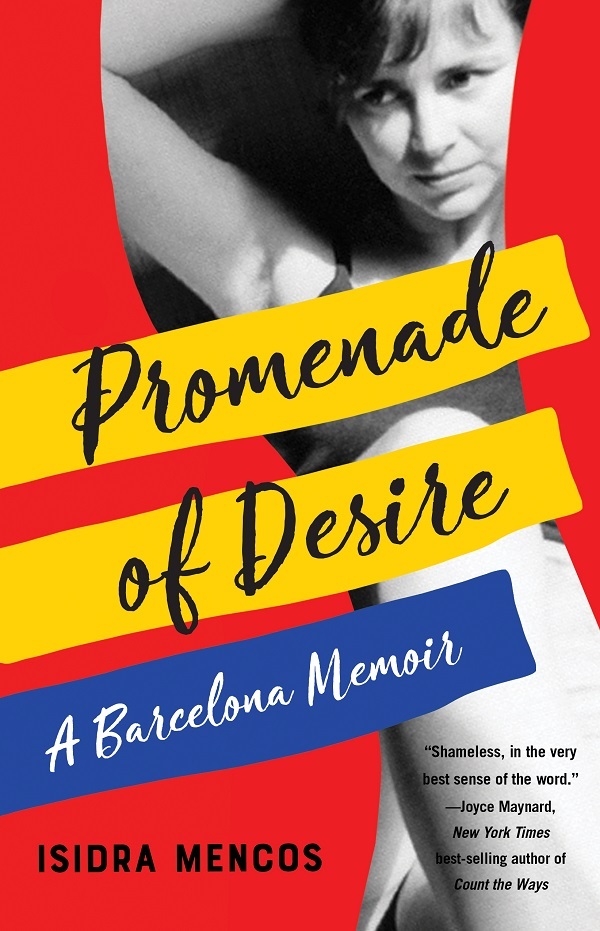
Promenade of Desire cover

By the time I left Spain in 1992 there were four or five clubs dedicated to Salsa, and live concerts with iconic figures had started to come to the city. There were also Catalan bands that played salsa standards, like Orquesta Platería and others.

LM: What was the popular music in Spain at that time?

IM: Rock and punk were the most popular. Punk represented the rebellious spirit of the youth, who had grown oppressed and now had the freedom, in the new democracy, to be outrageous and excessive without consequences. A very famous punk group was Alaska y the Pegamoides.

LM: Your ex-boyfriend Abili was a prominent pioneer in promoting Salsa Music in Barcelona during that era. Can you describe the triumphs and challenges that he had promoting Salsa music?

IM: Abili had fallen in love with Salsa before me. He was a journalist by profession and had come into some money due to a labor dispute. He decided that he would invest that money into making Salsa as popular as any other type of music in Barcelona. He produced concerts with Salsa greats like Rubén Blades, Eddie Palmieri, Ray Barreto, Luis Perico Ortiz and others, who came to Spain for the first time. Unfortunately, he was a bit ahead of his times. There wasn’t still a big enough audience to fill in the venues, and he lost a lot of money. That said, he was a major contributor to popularizing Salsa in Barcelona. For example, he ran a weekly Thursday salsa night for a few years at a club, with a live band (Catalan players) and a DJ, and you could see the club filling up more and more every week.

He later got involved with one of the major Salsa spaces in Barcelona, El Antilla, programming the live bands and promoting the scene.

Isidra Mencos during her book reading

LM: You have visited Barcelona throughout the years since you immigrated to the United States. What are the differences that you have seen in the Barcelona salsa scene?

IM: Salsa is now very well established in the city, in part due to the increasing numbers of Latin American immigrants who started coming in the 80s and the 90s. There was a big wave of Cuban immigration starting in the 90s which changed the direction of Salsa in the city, making timba and rueda very popular, for example.

Salsa was also taken on by several bands which mixed Catalans with Latina American immigrants, and produced great music, such as Lucrecia or, nowadays, Tromboranga.

That said, when I go back now I notice that there are less venues that offer live bands on a regular basis. It’s more of a DJ scene with dance instructors.

LM: In the book, you described Salsa music as a passionate force in your life as you dealt with your family, relationships with different men, sexuality, and the transition in Spain from Franco’s era of dictatorship and repression to freedom and democracy. What do you want the reader to take from reading your book?

IM: I think we all have repressed one or more parts of ourselves from childhood on, in order to be accepted by our parents, our teachers, our friends, our bosses…. My memoir is an inspirational tale about finding a way to reclaim the parts of yourself that have been hidden and becoming a whole person again.

Read also: The multifaceted artist Yamila Guerra and all her projects

Latin America – December 2022

3 Reasons To Stay In Paris This Season

We show you the different places to visit with authentic Salsera fun

Paris (France) has always been a popular tourist destination with musical tradition, and the rhythm of Salsa is no exception. There are plenty of places to dance if you like this Afro-Caribbean tune, but what makes it especially appealing this season? We show you three reasons why you will want to spend more time in the capital of this beautiful Western European country during December 2022.

Latin New Year’s At Cabaret Sauvage

Cuarteto Cubano has toured France’s stages for four years

The biggest Latin New Year’s Eve in Paris will be at Cabaret Sauvage with the live presentation of Cuarteto Cubano playing the great classics of Cuban and French music that will make you travel through old Havana and give French hits an air of partying and joy. The Cuban Quartet www.cuartetocubano.com has toured the stages of France since 2018, always with the same goal of “making people dance and smile”.

Then, the wild mixes by DJ El Dany, DJ Hot Rod, and DJ El Cuco will begin with the best of Salsa, Merengue, Bachata, Guaracha, Reggaeton, Dembow, Funk, and Cumbia together with the magical voice of Cuban singer Denis Mora.

All of this is accompanied by the show of the Latin Cabaret and intelligent Pitshow that will take you into the idyllic atmospheres of the Latin American carnivals with the performances of the divine Cuban dancers Roima and Diane Alcalá who form the duo “Las Mulatas del Sabor” that will transport you to a paradise of the burning party of Havana, Cuba.

Cabaret Sauvage will open its magical doors on Saturday, December 31st, 2022, from 10 PM to 5:30 AM on Sunday, January 1st, 2023. Tickets are already available for reservation, but if you want to purchase them at the box office, they will have a value of €50 all night. Cabaret Sauvage is located at 59, bd MacDonald – Parc de La Villette – Paris 19 M° Porte de La Villette.

¡Vamos Pa’ La Rumba!

Cabaret Sauvage starts Christmas on December 3rd

If you like to dance Salsa, then you can go to Cabaret Sauvage https://www.cabaretsauvage.com/agenda throughout this season. Yes, we continue with the Latin party in this magnificent place.

The ingredients are assembled on the table to make La Rumba an unmissable event for all lovers of Latin music and Latin American culture in a unique party experience in Paris.

The Salsa Concerts will present the best current and classic pieces from the orchestras that make life in the capital of this country, renowned for its wines and haute couture brands.

On the stage of Cabaret Sauvage on Saturday, December 3rd, you will satisfy your Salsa cravings with Salsa Caleña classes with Calisabor instructors, a performance by the Jim López & La Nueva Edición orchestra, and tonight will be enlivened by the Show Super Heroes of Salsa and the mixes of DJ El Dany, DJ Dominicano, and DJ El Cuco de la Salsa.

On the second Saturday of the month (December 10th), the Rumba continues with the second edition of El Perreo de Navidad: Mega Reggaeton Party with the opening of its doors at midnight. Here, you will find until 6 AM the best selection of this urban rhythm that has guaranteed its permanence at the top of popularity among the youngest in France and the world. The DJs present will be DJ El Dany, DJ Ortega Dogo, DJ Lina, and DJ Driver MC. The ticket price at the box office is €20.

France’s  Clubs

Le Balajo nightclub
Le Balajo nightclub

This season you can have fun in Paris with its landscapes, winter climate, cultural offer, sophisticated gastronomy, and above all in the various clubs that offer a palette of Afro-Caribbean colors and Salsa enjoyment, among which the Le Balajo nightclub stands out https://www.balajo.fr/ open since 1936. Every Tuesday there are Salsa and Bachata classes for beginners and intermediate level dancers followed by a Latin party hosted by DJ Karim until 2 AM.

The Parisian Restaurant/ Bar/ Nightclub Pachamama https://www.pachamama-paris.com/index.php/en/home-alt-2/ is located at 46-48 rue du Faubourg Saint Antoine, 75012, in a historic building from the 19th century designed by Gustave Eiffel in the neo-vintage colonial style. It has three levels and is open from Thursday to Saturday from 8 PM to 5 AM with resident DJs lighting up the dance floor (Ground Floor) with harmonious mixes between Latin Music, Soul, Pop, and Deep House.

Finally we bring you the Bar/ Restaurant/ Club La Pachanga https://www.lapachanga.fr/, a place of reference for lovers of Salsa, it is located near the Eiffel Tower at 8, rue vandamme 75014.

At La Pachanga you can attend two-hour Cuban Salsa and Puerto Rican Salsa dance classes from Tuesday to Thursday from 7:30 PM to 9:30 PM, continuing with social dancing and a DJ set until 2 AM. On Saturdays La Pachanga closes its doors at 5 AM.

You Can Also Read: Where To Go Dancing Salsa In Paris?

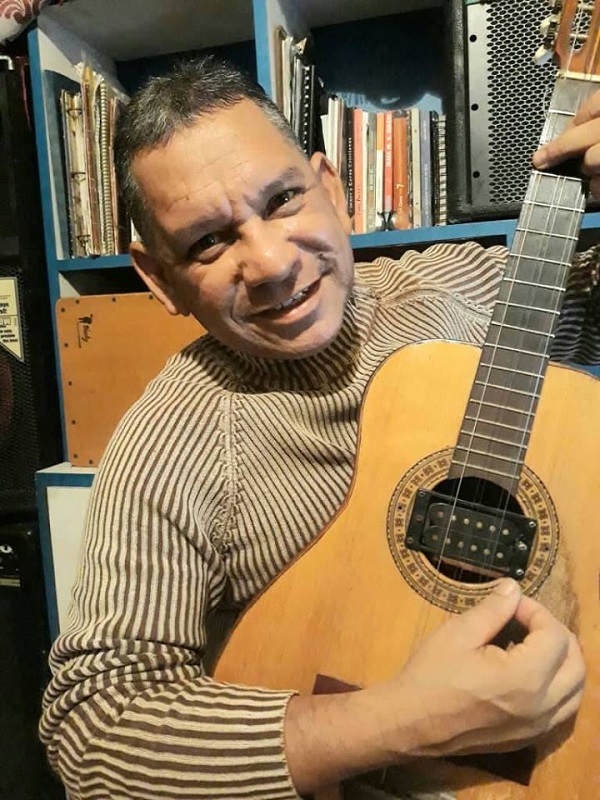
Today’s feature in “International Salsa Magazine” is multi-instrumentalist Jorge Gregorio Rojas Perozo

The name of the city of Barquisimeto continues to be known as the musical capital of Venezuela.

Characteristic by which, for years, is national and international reference and for proof of this, excellent musicians born in this city, who triumph and shine with their own light, demonstrating quality and versatility in all Latin rhythms stand out.

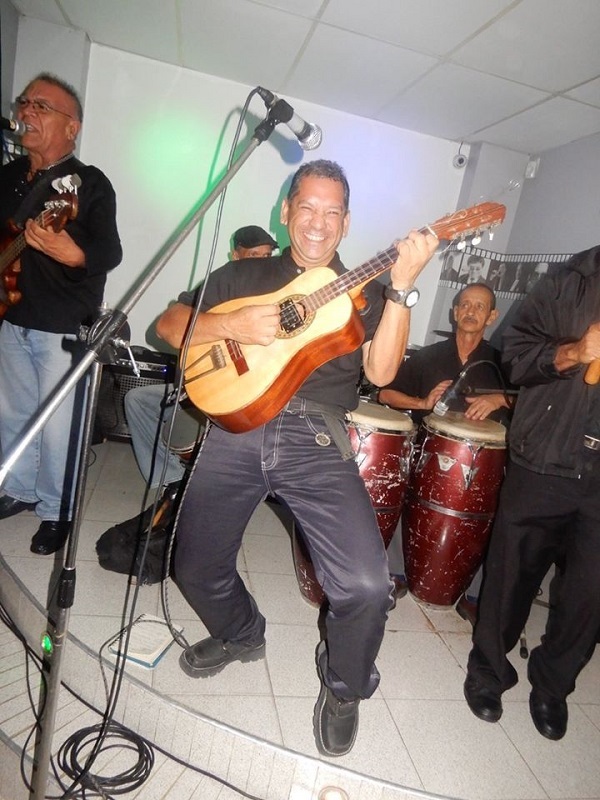
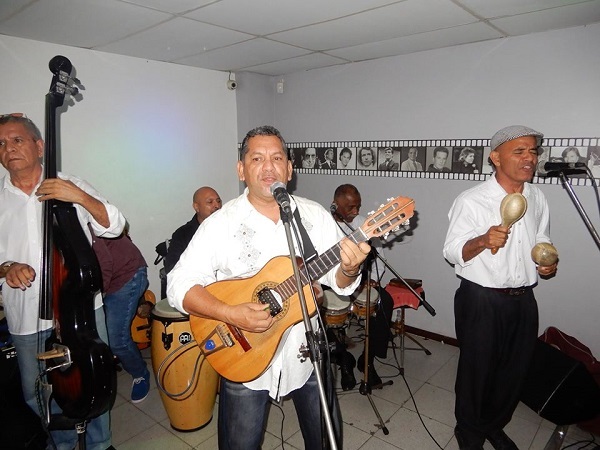
And today’s character in “Salsa Escrita” is the multi-instrumentalist Jorge Gregorio Rojas Perozo, artistically known as Jorge “El Papi” Rojas, extraordinary tres player, guitarist, bassist, arranger, composer, producer and teacher of Latin rhythms and tumbaos.

Jorge Gregorio Rojas Perozo

“El Papi”, as he is commonly known, was born on November 28th in the city of Crepuscular and from a very young age he started in this wonderful art of music, studying at the Vicente Emilio Sojo Music Conservatory.

Welcome Jorge to “Salsa Escrita”, through International Salsa Magazine, www.salsagoogle.com our readers want to know your wide and successful trajectory.

Thank you Professor Carlos Colmenárez for giving me the opportunity to appear in your well read and well known salsa column.

Jorge, tell us in general terms, with which groups have you been part of?

Professor, in 1986 I was director and founder of Grupo Identidad Caribe, in the salsa genre, then in 1987, founder of Grupo Miyare, also salsa.

From 1988 to 1992, director of the Orquesta Profecía (Christian salsa); 1996 to 2003, director of the Orquesta Monumental. From 2003 to 2008 I was director of the Epsilon Band (rock-pop) with music from the 60’s, 70’s and 80’s and from 2003 to 2010, bass player, accompanying on tours in Venezuela of: Henry Stephen, Trino Mora, Los Tres Tristes Tigres, Carlos Moreno, Los Pasteles Verdes, Los Ángeles Negros, Mirtha Pérez, Tania and Leo Dan; from 2007 to 2009, accompanying musician for singers: Mervin Rodriguez, Aurita Uribarri and Marco Molina.

Jorge “El Papi” Rojas, extraordinario tresista, guitarrista, bajista, arreglista, compositor

In 2012 to the present, tres player of “Sasón Latino”; in 2018, musical director of the Orquesta Siete Mangos y una Flor.

Today I direct the salsa group “Coimbre” and in parallel I am recording my own production of salsa and sones with lyrics and arrangements of my authorship to provide a contribution to Latin music from the state of Lara.

Also, I am giving virtual classes of Latin rhythms and tumbaos in the Cuban tres, bass and guitar, both nationally and internationally.

Very interesting and admirable your trajectory; Jorge, by the way, I remember a performance of you with the “Orquesta Profecía”, alternating with the “Estrellas de Fania” in the Municipal Coliseum of Barquisimeto, how was that experience? Well professor, it was an unforgettable experience, to be sharing the stage with Ismael Miranda, Larry Harlow, Bobby Valentin, Richie Ray, Bobby Cruz, Pete “Conde” Rodriguez and Jhonny Pacheco; in an unforgettable night, where we opened that concert, taking pleasant impressions from the audience and salsa specialists.

Jorge “El Papi” Rojas

And I tell you professor, besides alternating with Fania here in Barquisimeto, we also did it in the Poliedro of Caracas, in a tour made by them in our country in 1993.

And as for international tours, which countries have you visited? Professor Carlos, I had the honor of performing in the brother country of Neogranadino with the salsa group “Coimbre”, where the Colombian salsa public enjoyed the Afro-Caribbean music, made by musicians from Barquisimeto; visiting the cities of Cucuta and Medellin.

Recently we accompanied the sonero Ramoncito Mendez in his show at the end of 2019, here in the state of Lara. Current projects “Papi”, what do you have out there? Friend Carlos, at the moment, as I told you at the beginning, I am finishing my production and simultaneously I am teaching online classes, with people from abroad.

What are your digital platforms? They are, Facebook: Jorge El Papi Rojas; phone +58 426 3531337; email: [email protected]. Finally, on behalf of Salsa Escrita, we would like to congratulate you for your vast and interesting artistic career and we hope you continue to succeed in our country and abroad, with the help of God Almighty.

Multi-instrumentista Jorge Gregorio Rojas Perozo

Thank you Professor Carlos Colmenárez, for the interview in your salsa column, very grateful and I wish you long life to continue supporting and projecting the musicians from Barquisimeto, Venezuela and around the world.

Jorge El Papi Rojas

You can read: Henry Valladares, a brilliant, versatile, and disciplined percussionist

Sweden Will Live November With Swing

3 events that will warm your days during winter

Going out on winter nights in Sweden (the fifth coldest country in Europe) can be a truly daunting task. Temperatures during the eleventh month of the year are around 5 °C during the day and 1 °C at night. Most people yearn for the scarce two hours of radiant sunshine a day, however, we bring you three Latin music events that accompany the beautiful northern lights that cover the sky during this date and that will make you vibrate and get warm during these days of lively freezing.

The Showtime with some of the best dancers in the world will start at 9 PM

We begin with a weekend full of Salsa parties with Hot Salsa Weekend, the largest Salsa and Bachata festival in Sweden will be celebrating its twentieth edition from November 4th to November 6th.

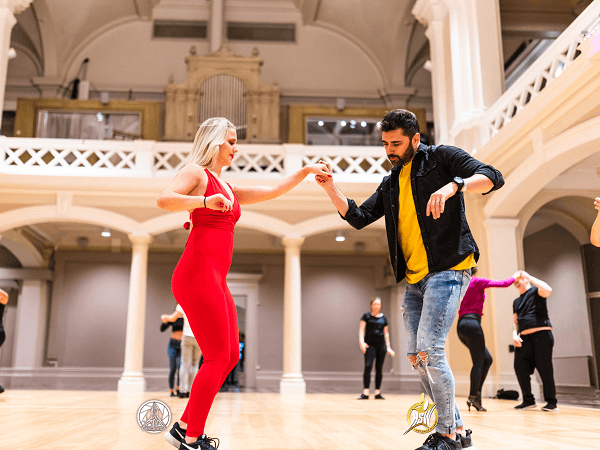
This festival will bring together dancers from the US, Italy, Mexico, Norway, and Stockholm. It will also feature inspiring workshops in Salsa L.A Style, Salsa On2, Salsa Cubana, and Bachata, impressive shows, and nightly parties accompanied by seven international and national DJs.

The workshops will take place on Friday from 4:30 PM at SSD Studio (Adolf Fredriks Kyrkogata 13, Stockholm) while on Saturday (11 AM) and Sunday (11 AM) they will take place in the beautiful building located in the heart of Stockholm Norra Latin (Drottninggatan 71b).

The themed parties (White Gala Party, Glitter & Glamor Gala Party, and Farewell Party) will take place from 10 PM to 5 AM on three dance floors (Salsa, Salsa Cubana & Bachata) at the Norra Latin a short distance from the central station Stockholm. Tickets for the three days of learning and fun are worth 2000 SEK. So get ready to be a part of Sweden’s biggest weekend party, Hot Salsa Weekend 2022. https://hotsalsaweekend.com/

Max Alton (Drums/Timbal), Raciel Garcés (Vocals), Rapson Espinosa (Vocals), Jonás Pomo (Piano), Homero Álvarez (Guitar), Aleks Brdarski (Bass), Rickard Valdés (Congas), Rickard Lindgren (Trumpet), Nikolas Viisanen (Trombone)

We continue with the Cuban band La Liga Habanera. This group formed 15 years ago in Havana (Cuba) has toured Europe and mainly has infected every corner of Sweden with its music. Its melody lies in a mixture of modern Cuban Timba with elements of traditional Son, Salsa, Soul, and Funk. The voices create a nuance that adorns the brass section that, together with the bass and the piano, recreates the Son montuno. The Havana League will be presented at the emblematic Fasching Club https://www.fasching.se (Kungsgatan 63, 111 22 Stockholm) on Friday, November 11th at 9 PM, and tickets are now available for 260 SEK (standing places). The age limit is 18 years.

The beginners’ course in Salsa starts at 4:30 PM

We end with the free dance party with Swing, Salsa, and Tango at the Merjeriet cultural center https://g.page/Mejeriet (Stora Södergatan 64, 222 23 Lund). This great event on Sunday, November 27th will now be free and open to all those over 13 years. The dance rhythms will range from an intense Salsa set through Lindy Hop (Swing) to Tango with surprises on stage and on the dance floor with three different DJs.

The evening will begin with workshops for each rhythm and three rounds of courses so you can try the three dance styles and choose the one you prefer. The party will be from 5:30 PM until 7 PM while the courses for beginners will be gradually every hour starting at 2:30 PM.

The Dance Party with Swing, Salsa, and Tango is organized in collaboration with the extensive program of new and recurring events in the center of Lund known as vinterlund https://vinterlund.se/

The main objective of this vast program is to fill the inhabitants of this city in the province of Scania with joy through cultural life during the dark winter months.

  • « Go to Previous Page
  • Page 1
  • Interim pages omitted …
  • Page 80
  • Page 81
  • Page 82
  • Page 83
  • Page 84
  • Interim pages omitted …
  • Page 102
  • Go to Next Page »

International Salsa Magazine (ISM) is a monthly publication about Salsa activities around the world, that has been publishing since 2007. It is a world network of volunteers coordinated by ISM Magazine. We are working to strengthen all the events by working together.