• Skip to primary navigation
  • Skip to main content

International Salsa Magazine

  • HOME
  • Previous editions
    • 2026
      • ISM / March 2026
      • ISM / February 2026
      • ISM / January 2026
    • 2025
      • ISM / December 2025
      • ISM / November 2025
      • ISM / October 2025
      • ISM / September 2025
      • ISM / August 2025
      • ISM / July 2025
      • ISM / June 2025
      • ISM / May2025
      • ISM / April 2025
      • ISM / March 2025
      • ISM / February 2025
      • ISM / January 2025
    • 2024
      • ISM / December 2024
      • ISM / November 2024
      • ISM / October 2024
      • ISM / September 2024
      • ISM / August 2024
      • ISM / July 2024
      • ISM / June 2024
      • ISM / May 2024
      • ISM / April 2024
      • ISM / March 2024
      • ISM / February 2024
      • ISM / January 2024
    • 2023
      • ISM / December 2023
      • ISM / November 2023
      • ISM / October 2023
      • ISM – September 2023
      • ISM – August 2023
      • ISM July 2023
      • ISM Edition June 2023
      • ISM – May 2023
      • ISM April 2023
      • ISM March 2023
      • ISM February 2023
      • ISM January 2023
    • 2022
      • ISM December 2022
      • ISM November 2022
      • ISM October 2022
      • ISM September 2022
      • ISM August 2022
      • ISM July 2022
      • ISM June 2022
      • ISM May 2022
      • ISM February 2022
      • ISM January 2022
    • 2021
      • ISM December 2021
      • ISM November 2021
      • ISM October – 2021
      • ISM September 2021
      • ISM August 2021
      • ISM July 2021
      • ISM May 2021
      • ISM April 2021
      • ISM June 2021
      • ISM March 2021
      • ISM February 2021
      • ISM January 2021
    • 2020
      • ISM December 2020
      • ISM November 2020
      • ISM October 2020
      • ISM September 2020
      • ISM August 2020
      • ISM July 2020
      • ISM June 2020
      • ISM May 2020
      • ISM April 2020
      • ISM March 2020
      • ISM February 2020
      • ISM January 2020
    • 2019
      • ISM December 2019
      • ISM November 2019
      • ISM October 2019
      • ISM Septembre 2019
      • ISM August 2019
      • ISM July 2019
      • ISM June 2019
  • Download Salsa App
    • Android
    • Apple
  • Spanish

Search Results for: Cuban

Lawyer in the USA talk about Visas and entering the country

Interview: Bill Martinez and Eduardo Guilarte


The term “vet”  was originally used in horse-racing, referring to the requirement that a horse be checked for health and soundness by a veterinarian before being allowed to race. Thus, it has taken the general meaning “to check”. It is a figurative contraction of “veterinarian,” which originated in the mid-17th century.

The colloquial abbreviation dates to the 1860s; the verb form of the word, meaning “to treat an animal,” came a few decades later—according to the Oxford English Dictionary, the earliest known usage is 1891—and was applied primarily in a horse-racing context (“He vetted the stallion before the race,” “You should vet that horse before he races,” etc.). By the early 1900s, “vet” had begun to be used as a synonym for “evaluate,” especially when searching for flaws.

“Vetting” in reference to immigration in the United States of America involves investigations by the State Department’s security units, which include various branches of security. This process is used to assess individuals applying for visas or those who already have visas or residency status. The purpose of vetting is to ensure that individuals entering or remaining in the country are not a security risk and that they maintain their lawful status.

Eduardo Guilarte

Okay, so I’m talking with immigration attorney Bill Martinez about the current immigration situation here in the United States and the impact that the executive order is having. Bill, tell us what’s going on?

Bill Martinez

Well, since the elections, there’s been a chilling effect on the artists, presenters, promoters, everyone involved in bringing international artists over to the United States, particularly from certain country-designated countries. The executive order that Trump announced divided countries into different categories: red, yellow, and green. If you’re coming from a “red” country like Cuba or Venezuela, the vetting process is tougher.

The vetting process, which involves investigations by the State Department’s security units (which are multi, the various “ramas,” various branches of security), can delay the processing of visas for a long, long time, in some cases years. I had somebody vetted for a couple of years; he was always supposed to be here for two months. This was just last year. A famous Cuban artist was going to be honored as the best of his instrument, just to get an award.

Eduardo Guilarte

Who was that?

Bill Martinez

I can’t tell you. I don’t want to…I feel like I can’t give you that information. But it was someone very well known. Okay, and he ended up missing that opportunity. We’re going to try to bring him in again, but for right now, it’s very unsure and uncertain whether an artist will get a Visa or not.

It’s not just Cubans, but it’s across the board. The process under the executive order continues throughout, even if you have residency, even if you seem to have a Visa and you’re okay. At any point, if there’s some red flag of uncertainty, you are subject to having a Visa revoked and being returned to your home country, or in the majority of the cases for Cubans, you suffer really long delays for administrative processing, which means security clearances.

We just lost out on getting 15 young artists from the jazz school “Diana,” who were going to be in Berkeley on April 10th (or I think it was October). They were invited to go to Berkeley for about 10 days, and their visas were denied under the executive order because they come from a country whose ideology is contrary to the United States.

These are kids, and they’ve been practicing since July to come and do this wonderful exchange with their colleagues at Berkeley High School. The Berkeley High School people, the kids and supporters, were really excited for this to happen, and there was sadness for them after they got interviewed in December. They were told, “Why are you getting the administration involved? We need to vet, we need to investigate more and more.”

Finally, about three weeks ago, we found out, “Well, we made a decision because they come from a country whose etiology is going for the United States.” These are young kids, and their hearts were broken equally.

The Berkeley students wanted to reciprocate; Berkeley students to go to Cuba every year for the past eight years. They wanted to reciprocate, but they couldn’t. Similarly, a project we had with a famous Broadway producer…

Our licensed activity was essentially to send (this happened) the day after we got the denials of these kids, three days (or two days) later, I could not get visas for two of the three original members of the Buena Vista Social Club and Ibrahim Ferrer Jr., the son of Ibrahim Ferrer from the original Buena Vista Social Club. I could not get their visas to attend.

Did one of these Social Club members play on Broadway? We were only asking for one day, so the 30 kids from “Diana,” that’s nice, and the Broadway play…

Eduardo Guilarte

So, let me ask you about artists like Isaac Delgado. What’s his status right now?

Bill Martinez

I’m not sure because I know he does a yearly tour over here, I believe, and I could be wrong, but he now has dual citizenship. I’m not talking about citizenship and people who have become residents or permanent residents with permanent residence. The vetting process isn’t just to get the visa originally; it continues throughout. I mean, it is subject to review at all times. It’s an exhaustive review of the entire vetting process, and that continues even if you have residency. So, they will continue to investigate to assure that you maintain your lawful status, even when you think everything is okay.

Eduardo Guilarte

So, let me ask you this question: Let’s say that I am a permanent resident, and have been here for 20 years. Are you saying that if I am against Trump, they could potentially cancel my residency?

Bill Martinez

You can see what happened to the medical doctor, at Rutgers University. She’s a Lebanese doctor who went home to visit her family for a couple of weeks, and they wouldn’t let her back in. She had an H-1B visa. (referring to MD Rasha Alawieh, which while some initial reports mentioned Rutgers, also affiliated with Brown Medicine and had a clinical appointment at Brown University).

There was a…I forget which country this gentleman was from; I think he was a journalist, and he tweeted something against Donald Trump, and he had residency and was not allowed back yet. So, it’s a risky proposition to leave the country, even if it’s lawful and everything’s cool. You think it’s not a time to be taking risks.

Eduardo Guilarte

Thank you, Bill.

Bill Martinez

It’s a dark place right now.Bill Martinez 2025

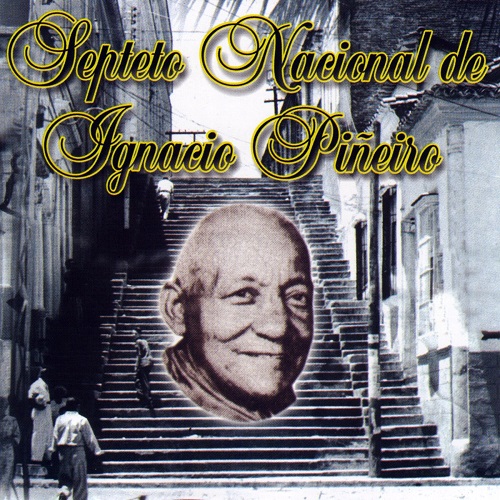
Ignacio Piñero Septeto Nacional has played an important role in Cuba’s music for more than seven decades

Founded by Havana-born bassist and vocalist Ignacio Piñero in 1927, the Septeto Nacional De Ignacio Piñero has played an important role in Cuba’s music for more than seven decades.

Fundado por el bajista y vocalista nacido en La Habana Ignacio Piñero en 1927

Pioneers of son, a rhythmic blend of African and Cuban music that evolved into salsa, mambo and Latin jazz, the group was the first son band to incorporate the trumpet as the main instrument.

Ignacio Piñero’s Septeto Nacional gained worldwide recognition with its performance at the 1928 Universal Exposition in Seville, and was reportedly the first group to mention “Salsa” in a song “Echale Salsita” recorded in 1933. The song composed by Piñero, was adapted by George Gershwin for the opening theme of his “Cuban Overture”.

Since Piñero’s death in 1968, after 41 years at the helm of the band, the Septeto Nacional De Ignacio Piñero has been led by a series of leaders.

Guitarist and composer Rafael Ortiz, who took over after Piñero’s death, bequeathed the position to vocalist Carlos Embale in 1982.

After leaving the group due to illness in 1998 Embale’s leadership was inherited by guitarist Richard Aymee Castro. True to their original musical roots, Ignacio Piñero’s Septeto Nacional continues to offer a danceable blend of montano, merengue, bolero, rumba and cha cha cha. Craig Harris.

Ignacio Pineiro
Ignacio Pineiro

Ignacio Piñero was one of the Pioneers of Son Cubano

In 1906 he already knew and had assimilated the different toques of the African cabildos that existed in the neighborhood of Pueblo Nuevo, which he later incorporated into some of his creations.

He began his artistic career with the group claves and guaguancó El Timbre de Oro, later he directed Los Roncos de Pueblo Nuevo, in which he developed as a decimist and director, at the same time he took his first steps as a composer.

From this stage are: Cuando tú, tu desengaño veas, Dónde estabas anoche, El Edén de Los Roncos, Mañana te espero, niña. Later he joined the group Renacimiento de Pueblo Nuevo.

To the folkloric values that Piñeiro cultivated in these groups, he contributed a wider melodic-harmonic development and a greater depth and poetic flight.

In 1926 he was one of the founders, together with María Teresa Vera, of the Sexteto Occidente, with which he made his first tour to the United States in order to record an album with this group.

In 1927 he founded the Sexteto Nacional, formed by Ignacio Piñeiro, director and double bass; Alberto Villalón, guitar; Francisco González Solares, tres; Abelardo Barroso, lead vocals; Juan de la Cruz, tenor; Bienvenido León, baritone and maracas, and José Manuel Carrera Incharte (El Chino), bongo; that same year trumpeter Lázaro Herrera joined the group. With this septet he traveled to New York, where he recorded his first works.

In 1929 he participated with the Septeto Nacional in the Fair-Exposition of Seville, Spain; in that country they were hired as exclusive artists by the company SEDECA, and toured other cities of that country: Vigo, La Coruña, Santander, Madrid and Valladolid; in addition, they performed in the theaters Torero, Jovellanos, the Cine-Teatro Grado, and the cabaret Maicú, all in Madrid. In 1930 he was one of the founders of the National Association of Cuban Soneros.

Pioneros del son, una mezcla rítmica de música africana y cubana

They performed at the Sans-Souci cabaret (1930); in 1931 they performed at the Lavín and CMCG radio stations; in 1932, at the Dos Hermanos Hotel, he premiered Buey viejo; that same year the American composer George Gershwin came to Havana, at the CMCJ radio station he listened to Piñeiro’s son Échale salsita, from which he later used the theme played on the trumpet in his Cuban Overture.

In 1933 he performed at the Fair-Exhibition A Century of Progress, held in Chicago, United States.

In 1934 Piñeiro retired from the septet, which from 1935 was directed by trumpeter Lázaro Herrera. In 1954, Piñeiro reappeared as leader of the septet, with which he appeared on the television program Música de Ayer y de Hoy.

As a composer, Ignacio Piñeiro broke, although he took elements from the form of the oriental son, in which its creators used the quatrain and the tenth; an example of this break is his son Buey viejo, from 1932:

Carretero no maltrates a ese pobre buey tan viejo, que ya doblbla la cabeza por el peso de los tarros, y por senda de guijarros va tirando la carreta, y nunca llega a la meta, término de su dolor.

Piñeiro was one of those synthesis cases that managed to capture, develop and express the full richness of the son.

The structural modifications, the cadence, the rhythm and the use of refined melodies and lyrics, achieved by this creator and interpreted by the Septeto Nacional, make it possible to say that the work of this singular artist, although he did not mark the boundaries of son (which corresponded to the Sexteto Habanero), he did turn it into a son that today we can call classic, which became a model for its further development.

When Ignacio Piñeiro founded the Septeto Nacional, his purpose was to be a high exponent of the Cuban son and its various variants, he himself made use of those variants, composing guajira-son, canción-son, afro-son, so he worked with the elements offered by the oriental son, to which he gave a broader treatment, both musically and literary.

According to Miriam Villa: “If we analyze the organization of the literary text, we observe in his work the formal use of metrically heterogeneous links subjected to rhythm, characterized by the presence of accented and unaccented elements within the system of units that are repeated at intervals between them.

Piñeiro must not have been concerned about the meter in the text as a pattern, since through the rhythm of the composition he achieves the contrast relations, making the change of meter express a change in the thematic movement, either from intermittences or accentuations or sometimes both, which give it different semantic nuances and alternations of tensions and distensions.

And elsewhere Villa states: “Another aspect that in relation to the literary text is reflected in Piñeiro’s creative work is that of the thematic contents; these are shown from a diversification with greater scope in relation to his contemporaries.

His work can be divided into multiple themes among which are love, homeland, philosophical reflection, politics, the bucolic, the infantile, expressed in a variety of forms: satirical, apologetic, humorous and with greater depth than in the sonorous production that preceded him and even with which he shared.

With the Septeto Nacional, Piñeiro appears in the musical short El frutero, and in the film Nosotros la música, by director Rogelio París.

Ignacio Piñeiro Septeto Nacional

Septeto Nacional de Ignacio Piñero El Son de Altura

El Son de Altura (1998)

Tracks:

  1. Mayeya – No Juegues Con Los Santos (Son) (I. Piñeiro)
  2. Bardo (Bolero-son) (I. Piñeiro)
  3. Lejana Campiña (Guajira-son) (I. Piñeiro)
  4. Canta La Vueltabajera (Guajira-son) (I. Piñeiro)
  5. Guanajo Relleno (Guaracha-son) (I. Piñeiro)
  6. Esas No Son Cubanas (Son) (I. Piñeiro)
  7. Suavecito (Son) (I. Piñeiro)
  8. Alma Guajira (Guajira-son) (I. Piñeiro)
  9. Castigador (Son) (I. Piñeiro)
  10. Échale Salsita (Son-pregón) (I. Piñeiro)
  11. EI Viandero (Son-pregón) (Ernesto Muñoz)
  12. Son De La Loma (Son) (Miguel MGllamoros)
  13. Trompeta Querida (Boleró-son) (Lózoro Herrera)
  14. La Mujer De Antonio (Son) (Miguel Matamoros)
  15. La Cachimba De San Juan (Son) (l. Plñeiro)
  16. EI Alfiler (Son) (l. Plñeiro)
  17. Noche De Conga (Son) (l. Plñeiro)
  18. EI Paralitico (Son) (Miguel Matamoros)

By:

EcuRed

Dj. Augusto Felibertt

L’Òstia Latin Jazz

Also Read: From Cuba El Septeto Son de Nipe vienen Abriendo Caminos

Del Campo Dance Studio

North America / USA /  California

Del Campo Dance Studio is proud to be the longest running studio for Salsa dance instruction in the Sacramento area. With a well-rounded program focused on Salsa dancing they have seen countless students dance their way into confidence. Their dance community is welcoming and lively. You’ll find an energy and style that brings life to the dance floor in the group classes, workshops and at the outside weekly venues. Beginners are welcome and encouraged to join. Offering beginner classes on the dance floor, and in studio (no partner needed).

Now is your time to dance!

Salsa is a Latin style of dance that is primarily danced with a partner. The music is energetic and lively with percussions, horns and a distinct latin beat that has you moving in your seat. The dance is made of quick footwork, spins, patterns and a passionate show of body movement in relationship to the music-styling known as cuban motion or latin hip action.

Salsa is an excellent dance for inexperienced dancers to get their dancing feet moving and a favorite style for those who dance with a passionate soul.

Del Campo Dance Studio - Dancers
Del Campo Dance Studio – Dancers

Private lessons

Private lessons are available for individual students or for couples by appointment.

Private sessions are an excellent way for inexperienced dancers to become familiar with the dance style(s) they are most interested in, and a quick way to feel comfortable on the dance floor. Private lessons are also perfect for the more experienced dancer to quickly advance their dancing skills.

Group Classes

Group classes are an important part of the Salsa Dance program. Salsa Dance offers group classes for beginners, and intermediate classes for those who desire to continue learning and keep in-step with their dance training. All of the classes accommodate leaders and followers with attention to steps, partner techniques, rhythm with a touch of style. No partner needed! All you have to do is show up and have fun.

For more information about other dance classes, visit https://www.delcampodance.com/home . Private Lessons


Europe / May 2025

Cafe Berlin 2025Radio Gladys Palmera 2025Martinez attorney

Karina Bernales present

May 2025

FESTIVALS

Czech Republic circular flag
CZECHIA
Prague Salsa Marathon 2025

Prague Salsa Marathon

May 08 / 12 2025

Art Nouveau Building

Bělohorská 262/35
Prague, Czech Republic 16900

From € 200

France circle flag
FRANCE
KIZ ME UP 2025

Kiz Me Up Festival

May 05 / 11 2025

The Atrium Hotel & Conference Centre Paris CDG Airport

351 Av. du Bois de la Pie
Roissy-en-France, France 95912

From € 85.99

Paris Sensual Festival 2025

Paris Sensual Festival

May 23 / 26 2025

The Atrium Hotel & Conference Centre Paris CDG Airport

351 Av. Du Bois De La Pie CS
Roissy-en-France, France 95912

From € 77.38

Germany circular Flag
GERMANY
Xplosion RITMO 2025

X RITMO
Berlin Festival

May 16 / 18 2025

Kasselhaus & Maschinenhaus
Schonhauser Allee 36
Berlin, Germany 10435

€ 90

Cologne Salsa Congress 2025

Cologne Salsa Congress

May 30 / Jun 01 2025

Bürgerhaus Hürth
Friedrich-Ebert-Strase 40
Hurth, Germany 50354

From € 50

Israel circle flag
ISRAEL
Salsa Bachata Congress 2025

Salsa Bachata Congress

May 15 / 18 2025

Leonardo Club Eilat
Kampen St.
Eilat, Israel 8810201

From $ 499

Italy circle flag
ITALY
Salsa on Tour 2025

Salsa on Tour

May 08 / 11 2025

Garden Toscana Resort
Via dei Cavalleggeri, 1, San Vincenzo, Italy 57027

From € 100

Salsa on the Beach 2025

Salsa on the Beach

May 09 / 11 2025

Hotel Bibione Palace
Via Taigete 20
Bibione, Italy 30028

From € 295

Poland flag
POLAND
Bailame 2025

BailaMe!

May 01 / 04 2025

Studio Club
Witolda Budryka 4
Cracow, Poland 30-072

From € 66

Cracow Bachata Experience 2025

Cracow Bachata Experience

May 23 / 25 2025

LOFToDANCE Lukasz Ras
Kamienna 2-4
Cracow, Poland 30-001

From € 65

Portugal Circular Flag
PORTUGAL
Open Summer Festival 2025

Open Summer Festival

May 21 / 26 2025

Salgados Palace
Herdade dos Salgados
Albufeira, Portugal 8200-424

From € 75

Serbia And Montenegro circular flag
SERBIA AND MONTENEGRO
Neighborhood LAF Varijanta 2025

Neighborhood LAF Varijanta

May 01 / 04 2025

Dom omladine Beograda
Makedonska 22
Belgrade, Serbia and Montenegro 11000

From € 95

Slovenia circular flag
SLOVENIA
Afro Latin Village 2025

Afro Dance Vacation

May 09 / 11 2025

LifeClass Portorož
Obala 33
Portoroz, Slovenia 6320

From € 115

Spain Flag
SPAIN
Viva La Bachata 2025

Viva La Bachata

May 01 / 05 2025

Holiday World Polynesia Hotel
Rotonda de los Elefantes, Av. del Sol, 195
Benalmadena, Spain 29630

From € 129

Salsa Spain 2025

Salsa Spain

May 23 / 25 2025

Occidental Aranjuez
Pl. de la Unesco, 2
Madrid, Spain 28300

From € 65

ILKSF Spain 2025

I Love Kizomba Sensual Fest

May 29 / Jun 01 2025

Hotel Gandia Palace
Calle Galicia, 18
Valencia, Spain 46730

From € 75

Directory of European nightclubs

Czech Republic circular flag
CZECHIA

La Macumba 2024
La Macumba
Štefánikova 230/7 150 00
Prague, Czech Republic

fRANCE FLAG
FRANCE

Canela
Canela Club Latino Paris
77 Rue du Faubourg du temple 75010
Paris, France

Cuba Compagnie
Cuba Compagnie Café
48 BD Beaumarchais 75011
Paris, France

Cubana
Cubana Café
47 rue Vavin 75006
Paris, France

La Pachanga
La Pachanga Officiel
8, rue vandamme 75014
Paris, France

La Peña
La Peña Saint Germain
3 passage de la Petite Boucherie 75006
Paris, France

Balajo
Le Balajo
9 rue de Lappe 75011
Paris, France

Pachamama
Pachamama PARIS
46 rue du Faubourg Saint Antoine 75012
Paris, France

Selsero
Salseroparis
9 Rue du Petit Pont, 75005
Paris, France

Germany circular Flag
GERMANY

Cascadas
Cascadas
Ferdinandstr. 12
20095 Hamburg-Mitte, Germany

Havanna
Havanna Berlin
Hauptstr. 30
10827 Berlin-Schöneberg, Germany
La Macumba - The Real Latin Club in Hamburgs
La Macumba – The Real Latin Club in Hamburgs
Adenauerallee 3 20097
Hamburg, Germany

Latin Palace Changó
Latin Palace Changó
Münchener Strasse 57
60329 Frankfurt, Germany

SODA
Soda Club Berlin
Schönhauser Allee 36
10435 Berlin, Germany

Malta Circle flag
MALTA

Bario Latino Malta venue
Barrio Latino Malta
Ghar il Lembi Street SLM1562 Sliema
Central Region, Malta

Poland flag
POLAND

Teatro Cubano
Teatro Cubano Warsaw
ul. Aleksandra Fredry 6 00-097 /> Warsaw, Poland

Spain Flag
SPAIN

ACM City
ACM CitY
Carrer Can Pallarès 2, Cerdanyola del Vallès
08290 Barcelona, Spain

Antilla
Antilla Barcelona
C/ d’Aragó, 141
08015 Barcelona, Spain

Azucar
Azúcar SalsaDisco
Calle de Atocha, 107
28012 Madrid, Spain

Disco Bar Cuba Live
Cuba Live
Ramón y cajal número 2
07011 Palma de Mallorca, Spain

El Son
Discoteca El Son
C. de la Victoria, 6
28012 Madrid, Spain

Prisma Discoteca
Discoteca Prisma
C. de Alcalá, 192
28028 Madrid, Spain

Discoteca El Edén Boliviano
El Edén Boliviano
Carrer Gremi de Tintorers, 49A
07009 Palma, Illes Balears, Spain

Mojito
Mojito Club
Rosselló, 217
08008 Barcelona, Spain

Morena
Morena Barcelona
calle 11 num.29
08860 Castelldefels, Spain
Que Chimba
Qué Chimba
Av. del Vallès, 117
08223 Terrassa, Barcelona, Spain
Sala Olvido Madrid
Sala Olvido
C/ Olvido 15
28026 Madrid, Spain
Seven Dance
Seven Dance (Dio Club)
Carrer del Perill 10
08012 Barcelona, Spain

The Host Madrid
The Host
C/ Ferraz nº 38
28008 Madrid, Spain
+34 918 05 36 48

United Kingdom circular flag
UNITED KINGDOM

Salsa Soho
Bar Salsa Soho
96 Charing Cross Rd
WC2H 0JG London, UK

Salsa Temple
Bar Salsa Temple
Victoria Embankment, Temple
WC2R 2PH London, UK

Juju's
JUJU’s Bar & Stage
Ely’s Yard 15 Hanbury Street
E1 6QR London, UK

Revolucion de Cuba
Revolucion de Cuba Leeds
64-68 Call Lane
LS1 6DT Leeds, UK

LightHouse
The LightHouse Bar & Club
62 Rivington Street
EC2A 3AY London, UK


John Leguizamo Returns to Broadway

North America / USA / New York

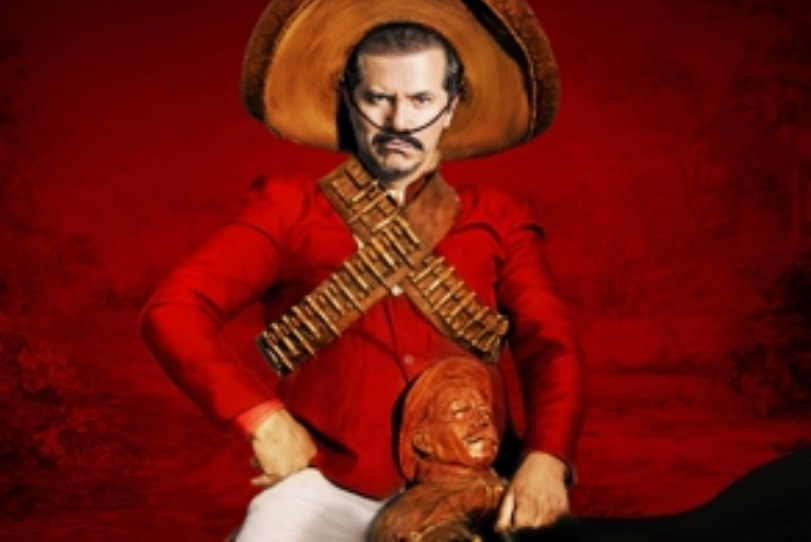
John Leguizamo returns to Broadway with the super production LATIN HISTORY FOR MORONS for only 16 weeks, a comedy theater that will teach the audience the story of Latino immigrants in North America that you won’t find either in books or in the education provided in the schools of the country.

John Leguizamo returns to Broadway with the super production LATIN HISTORY FOR MORONS

This sympathetic actor, comedian, and Colombian – American producer created this monologue due to the situation he faced a long time ago with his son. The child was being bullied in the private school that he attended in NYC for being one of the few children of Hispanic origin there. For that reason, and using homework of heroes assigned to his son, John began to teach him some Latino leaders who played big roles in American history. “Things were getting kind of rough out there…

And then, all of a sudden, we were in this dark episode where Latin people are being maligned and we’ve become the whipping post for the president. They even tried to pass the – show me your papers- law in Texas, basically profiling Latin people”, said Leguizamo to an American media.

After 4 years of research, this Emmy Award-winner actor, very happy, created this dramaturgy in which he reveals the struggle of 10,000 Latinos in the American Revolutionary War, the brave AfroCaribbean women in Virginia who sold their jewels to feed the patriots in the wars. The shocking truth of the Cuban woman, Loreta Velasquez, who joined the army in New Orleans and fought the front in three battles of the Civil War disguised as a man. And not in accordance with it, John will continue walking for 3000 years of history, he will make us cross three continents and tell us about different empires, Mayas, Aztecs and Incas.

John Leguizamo - Latin History for Morons - 3
John Leguizamo – Latin History for Morons – 3

He will speak of Montezuma and Menudo, Yes! You read well, “Menudo” and he will close the acts with traditional dances like the Cumbia and indigenous rituals without censorship. “I was so ignorant of my own history because it is not taught in schools. It was a huge hole in my education and it shouldn’t have been, because without us Latinos, America wouldn’t be the country that it is”, Leguizamo explained to an American media.

John, who acted in series such ER (Dr. Victor Clemente), films such as: Super Mario Bros (Luigi) and more recently Wick 2 (Aurelio), besides, the voice of Sid (the laziness) in Ice Age, he in Latin History for Morons has a very unique style, a mixture between a stand up and a traditional dramaturgy. “There are other characters on stage, which I play; I do scenes with them and there is a narrative moving forward… I like to take people there with mime, dance, and music – it is very physical… It’s amazing what the audience will allow you to do.

John Leguizamo - Latin History for Morons - 4
John Leguizamo – Latin History for Morons – 4

They will go with you anywhere as long as you stick to the rules that you set up at the beginning. That’s the beauty of theater. And that’s what makes me keep coming back. Anything is possible on stage. It seems to be the most democratic and egalitarian place in America for entertainment. Where else would Hamilton have happened? It couldn’t have happened in Hollywood, or on cable or the networks”, said Jhon Leguizamo in an interview.

John Leguizamo - Latin History for Morons - 2
John Leguizamo – Latin History for Morons – 2

For his solo work of 45min of duration and which began since the third week of October he had to prepare himself in boxing as well as in dance. Hard work he had to do every day. “I’ve learned to consolidate my storytelling and be more of myself. To not just be an entertainer, but allow my anger, my edgier sides – and allow people to be even more uncomfortable. I never wanted my shows to be just Pollyanna shows,” he also said, “Latin comedy is a full emotional experience.”

Latin History for Morons (a satirical History Class) back to John Leguizamo to Broadway, under the direction of the famous theater director Tony Taccone, who owns 36 years of Career and who currently is the artistic director of Berkeley Repertory Theater in Berkeley, California. Moreover, John made his first Broadway presentation in 1991 with “Mambo Mouth” winning an Obie and he was nominated several times for Tony Awards for “Freak” in 1998.

“Broadway is just a culmination of a lot of work, and it always feels so celebratory. It’s the gaining of the highest prize.” John Leguizamo.

John Leguizamo - Latin History for Morons - 1
John Leguizamo – Latin History for Morons – 1

Venue: STUDIO 54. 254 W. 54TH ST., NEW YORK, NY. Tickets: $79 – $139 To get more information like them on Facebook https://www.facebook.com/LatinHistory101/ or buy the tickets online through https://www.latinhistorybroadway.com/

  • « Go to Previous Page
  • Page 1
  • Interim pages omitted …
  • Page 25
  • Page 26
  • Page 27
  • Page 28
  • Page 29
  • Interim pages omitted …
  • Page 114
  • Go to Next Page »

International Salsa Magazine (ISM) is a monthly publication about Salsa activities around the world, that has been publishing since 2007. It is a world network of volunteers coordinated by ISM Magazine. We are working to strengthen all the events by working together.