• Skip to primary navigation
  • Skip to main content

International Salsa Magazine

  • HOME
  • Previous editions
    • 2026
      • ISM / March 2026
      • ISM / February 2026
      • ISM / January 2026
    • 2025
      • ISM / December 2025
      • ISM / November 2025
      • ISM / October 2025
      • ISM / September 2025
      • ISM / August 2025
      • ISM / July 2025
      • ISM / June 2025
      • ISM / May2025
      • ISM / April 2025
      • ISM / March 2025
      • ISM / February 2025
      • ISM / January 2025
    • 2024
      • ISM / December 2024
      • ISM / November 2024
      • ISM / October 2024
      • ISM / September 2024
      • ISM / August 2024
      • ISM / July 2024
      • ISM / June 2024
      • ISM / May 2024
      • ISM / April 2024
      • ISM / March 2024
      • ISM / February 2024
      • ISM / January 2024
    • 2023
      • ISM / December 2023
      • ISM / November 2023
      • ISM / October 2023
      • ISM – September 2023
      • ISM – August 2023
      • ISM July 2023
      • ISM Edition June 2023
      • ISM – May 2023
      • ISM April 2023
      • ISM March 2023
      • ISM February 2023
      • ISM January 2023
    • 2022
      • ISM December 2022
      • ISM November 2022
      • ISM October 2022
      • ISM September 2022
      • ISM August 2022
      • ISM July 2022
      • ISM June 2022
      • ISM May 2022
      • ISM February 2022
      • ISM January 2022
    • 2021
      • ISM December 2021
      • ISM November 2021
      • ISM October – 2021
      • ISM September 2021
      • ISM August 2021
      • ISM July 2021
      • ISM May 2021
      • ISM April 2021
      • ISM June 2021
      • ISM March 2021
      • ISM February 2021
      • ISM January 2021
    • 2020
      • ISM December 2020
      • ISM November 2020
      • ISM October 2020
      • ISM September 2020
      • ISM August 2020
      • ISM July 2020
      • ISM June 2020
      • ISM May 2020
      • ISM April 2020
      • ISM March 2020
      • ISM February 2020
      • ISM January 2020
    • 2019
      • ISM December 2019
      • ISM November 2019
      • ISM October 2019
      • ISM Septembre 2019
      • ISM August 2019
      • ISM July 2019
      • ISM June 2019
  • Download Salsa App
    • Android
    • Apple
  • Spanish

Search Results for: Cuban

Anacaona The Cuban Female Orchestra

It was founded on February 19th, 1932 by Concepción Castro Zaldarriaga and her sisters, being the first son female Sextet and expanded to the jazz band and typical charanga format in 1934 and projected onto the world from the famous “Aires libres of the Hotel Saratoga” at the Prado of Havana.

These talented women toured the entire length of America from north to south, the Caribbean and France between the 1940s and 1960s.

In Mexico, one of the most visited countries by the Orchestra at this stage, their images and sounds were recorded in some Mexican films, such as: “La noche es nuestra”, “No niego mi pasado” and “Mujeres de teatro” that they alternated with film and music artists from that country. At the same time, they recorded for the record label RCA Victor.

Anacaona The Cuban Female Orchestra It was founded on February 19th, 1932 by Concepción Castro Zaldarriaga and her sisters
Anacaona The Cuban Female Orchestra

THE AGUIRRE

 Sisters Georgia and Dora Aguirre, who have a strong background playing contrabass and saxophone and were new graduates from the “Amadeo Roldan” Conservatory, joined the Anacaona Orchestra with its founders from the 1983 under the direction of Alicia Castro, with whom they learned the most genuine genres of Cuban popular music, rigor and discipline in this profession.

3rd GENERATION

 With the Castro sisters’ retirement in December 1987, Georgia Aguirre asumed the direction of the orchestra and continued the work of its founders with her sister and other young women graduates in music schools, consolidating a style that combines tradition with modernity in order to preserve and enlarge the history of Anacaona.

Sisters Georgia and Dora Aguirre, with a solid musical training in the specialties of double bass and saxophone, recently graduated from the "Amadeo Roldán" Conservatory of Music.
Anacaona La Orquesta Femenina de CUBA Between the 1940s and 1960s, these talented women toured all of North and South America, the Caribbean and France.

TOURS

At international level, they have traveled to more than 30 countries in Europe, Asia, Africa, America and the Caribbean to perform at important festivals and multiple scenarios including: The 34-city tour in China; their participation in the theater play “The Tropical Bourgeois” under the direction of Gerome Sabarí and inspired by Moliere’s classic, “Le bourgeois gentilhomme”; the tour round some US cities in which they also had an emotional meeting with Graciela Pérez, singer and founder of Anacaona and the show “Sabor de la Habana” that opened the season of Cuban shows at the Cabaret of the Grand Casino Monte Carlo from the Principality of Monaco and other important jazz and summer festivals in Spain, Germany, Belgium, Sweden, Holland, Canada, Jamaica, Aruba, Curaçao, French Guiana, Guadeloupe, Martinique, St. Lucia, Peru, Honduras, Venezuela, Mexico, among others.

TRAYECTORY

The orchestra has also participated in several films such as “La Bella de la Alhambra” by director Enrique Pineda Barnett, “Vidas Paralelas” by Pastor Vega, the Cuban-Swiss co-production, “Barrio Negro”, as well as the documentaries “La ruta del ritmo” by director Harry Belafonte, “Anacaona, 70 Años después” by director Jorge Aguirre and produced by Cuban Television, and the documentary “El mundo cantan el mundo baila” about the history of Cuban music produced by NHK from Japan.

LATEST NEWS

 In recent years, they have recorded 8 albums with the labels PM Record, LUSAFRICA, BISMUSIC and COLIBRI and have been invited to productions from other labels such as DISMEDI-Spain in Volume ll of “Cuba le canta a Serrat” and with the English producer Kenny Young to perform two classic theme songs of Anglo-Saxon music set to Cuban rhythms.

Anacaona The Cuban Female Orchestra

In Cuba, it performs in popular dance music main stages, cultural events, national tours, festivals and Cuban radio and television programmes with a great gathering and the public and critical acceptance.

At present, it is integrated by 14 women who cultivate Cuban popular music, merging the most traditional rhythms with a contemporary sonorite. The musicians, also known as “Las Mulatísimas del Sabor”, have achieved a seal that distinguishes them and are appreciated by critics and dancers from all over Cuba and other countries.

ANACAONA, with more than 85 years of uninterrupted work, is among the top-level groups of Cuban popular music and considered “The Distinguised Cuban Female Orchestra”.


RAIDER  TECHNICAL

– YAMAHA or Peavy Drum

(’10, ’12, ’14, ’22) with stool.

-Timbal LP (’14 and ’15) with stand.

-LP Congas (’12 and ’13) with stand.

-Bongó LP with stand.

-ROLAND RD 700 or ROLAND RD 500 piano with stand.

-Korg Trinity keyboard.

-Baby Bass, AMPEG or similar with stand.

-Peavy, Tracy Elliot bass amp, or similar for Baby 400w (minimum) Bass and Electric Bass.

-Digital mixing console with 32 channels for living room with splitter and connectors (Yamaha).

-MCL7, CL5, LS9, Soundcraf Expression Si3 or similar).

-7 Music stands.

MICROPHONICS

-1 Shure Beta 52 AKG 112 (Bass Drum)

-6 Shure SM 57 or similar (Brass)

-8 Senheiser 421 or SM 98 H or similar (Percussion)

-3 Condenser SM 81 (Over)

-6 Shure SM 58 or SM 87 (Vocals)

-6 Direct Box (Piano, Bass, Keyboard, Tres)

Each microphone with its stand and corresponding lines.

MONITORING

-1 Mixing console with 32 reference channels with 8 sends and splitter.

-5 floor monitors for vocals.

-2 Brass monitors.

-1 Tres and guitar monitor.

-1 Piano monitor.

-2 Drum monitors.

-1 Drum Field.

* Kilos of Power and Monitoring will be adjustable according to the to the conditions of the place, depending on whether they are indoor or outdoor stages.

ANACAONA THE CUBAN FEMALE ORCHESTRA

Director: Georgia Aguirre

Email: [email protected]

FB/Orchestra Anacaona II

Recruitment agency: Artex’s Clave Cubana

Email: [email protected]

Manager: Leonardo Sintes

Email: [email protected]

FB/Orquesta Anacaona II

Cell phone number: 5 35 289 82 26

Email: [email protected]

ANACAONA, with more than 85 years of uninterrupted work, is one of the first level groups of Cuban popular music and is considered "The Insigne Female Orchestra of Cuba".
“Las Mulatísimas del Sabor”

José Madera Timbal de Machito and his Afro-Cubans, Tito Puente, Mambo Legends Orchestra and Fania Record Co.

The musician, arranger and composer who has yet to find the time to record and write music for some of the most influential bands in existence.

José Madera, Timbal of Machito and his Afro-Cubans, Tito Puente & Fania All-Stars
osé Madera, born on September 30th

One might think that working for Tito Puente’s famous band can keep a percussionist busy enough.

But musician, arranger and composer Jose Madera had found time to record and write music for some of the most influential bands in the world.

Before joining Tito Puente over 35 years ago, Madera played for four years with the famous Machito Orchestra and recorded with many R&B artists (including James Brown, Diana Ross, David Sanborn and Aztec Two – Step).

Jose musical director of Mambo Legends Orchestra

As an arranger for Fania Records, he participated in several commercial hits, and over the years has composed music for Fania All-Stars, Larry Harlow, Johnny Pacheco, Willie Colón and Celia Cruz.

As an arranger for Fania Records, he participated in several commercial hits, and over the years has composed music for Fania All-Stars, Larry Harlow, Johnny Pacheco, Willie Colón and Celia Cruz.
Jose musical director of Mambo Legends Orchestra

Despite having recorded some 75 albums in 20 years, as well as numerous radio jingles and movie soundtracks, Madera still had time for his other career: for 15 years he worked as a teacher and director at a privately funded performing arts high school in New York City.

Jose has written many arrangements for countless commercial Latino artists and has also recorded or worked with many of them.

Some of them include: Larry Harlow, Johnny Pacheco, Chico O’Farill, the Lincoln Center Afro-Cuban Jazz Orchestra, Celia Cruz, Tito Rodriguez, Fania All-Stars, Willie Colon, Joe Farrell, Machito, Graciela, Mario Bauzá, Willie Rosario, Earl Klughand, Eddie Palmieri, to name a few. Jose also worked and recorded with many pop, R&B and jazz artists.

Some of them include Diana Ross, James Brown, Dizzy Gillespie, Paquito D’Rivera, George Benson and Lionel Hampton, among others.

Jose has participated in over 250 recordings. He has worked on several television show soundtracks, including The Simpsons, and several film soundtracks, including The Mambo Kings Play Songs of Love, where he was the musical arranger and conductor for the Tito Puente film segment.

Jose also taught the art of playing Latin percussion instruments at BOYS HARBOR in New York City for 28 years.

Jose has done and continues to do musical clinics around the country at various schools.

He was the musical director of the Latin Giants of Jazz from 2001 to 2009.

Jose continues his musical direction with Mambo Legends Orchestra, a band composed of former members of the Tito Puente Orchestra, which is dedicated to the execution of new and creative Latin and Latin Jazz concepts, as well as some of the music of Machito, Tito Rodriguez and Tito Puente.

He was the musical director of the Latin Giants of Jazz from 2001 to 2009.
José has participated in more than 250 recordings


Jose has personally recreated and re-arranged much of the music that the bands performed during the heyday of the mambo at the Palladium Ballroom in New York City, which many critics consider to be the “Greatest and Most Innovative Era” in the history of Latin music.

Madera’s father, Jose “Pin” Madera, a saxophonist, was one of the original members of the Machito Afrocubans.

The young Jose was influenced by Machito’s drummer (“the best Latin Big Band drummer I’ve ever heard”). He was later influenced by José Mangual and Tito Puente himself.

Madera's father, Jose "Pin" Madera, saxophonist, was one of the original members of the Machito Afrocubans
José Madera was influenced by José Mangual Padre and Tito Puente himself

Home

Role of the Triangle Trade in the birth of Cuban rumba

What Cuban rumba is

As we all know, Latin music is a very diverse mix of a series of rhythms and musical styles from all over the world. What we know today as Latin music was the result of a whole concoction of historical facts that must come first in any story that seeks to explain the origins of any Latin rhythm that wants to be studied.

A good example of this that we have just said is the Cuban rumba, which is part of a set of cultural concepts that can be found in many parts of the world. There are certain musical rhythms that have allowed us to see that some seemingly alien places have made us discover each and every one of the common points they have, both historically and culturally.

How Cuban rumba starts

Cuban rumba and the Triangle Trade
Some people dancing rumba and and playing drums

One of the most important historical events that marked the birth of the Cuban rumba was the triangular trade carried out between Africa, America and Europe. This fact was the emergence of a large number of musical genres that were resulting from the mixture of rhythms and styles from all the aforementioned continents.

After the Discovery of America, Europe saw in the New World a useful territory for many of the economic activities that were not possible in their respective countries. In the case of labor, many African chiefdoms offered for sale to part of their inhabitants, something that was seen with very good eyes by the powerful Europeans of the time. This is how what historically would be known as triangular trade began.

This activity consisted of sending low-quality materials to be exchanged by African slaves to work with African and American resources in terrible living conditions. Once in America, some African ethnic groups were in charge of introducing the rumba in the Antilles, although the origins of the groups that brought these rhythms continue to be controversial among many scholars of the subject.

Although the slaves worked very hard during the day, they continued to practice their traditional rituals and rites at night. These practices were entirely based on their traditional music and religious customs to stay united with their Mother Earth despite the remoteness and the circumstances. Over time, these rites and percussion instruments were banned, so the new inhabitants of America had to adapt to the instruments allowed by the Spanish Crown. This made these sounds unknown to the Africans together with their forbidden dances in this land were merging until resulting in what we know today as rumba.

Rumba today

Cuban rumba and the role of the slaves
People dressed in white to enjoy Cuban Rumba on the streets

The characteristics of the rumba vary enormously from one place to another, since there are many variations and changes from one continent to another. In Africa, many see this genre as similar to zouk or benga, while Europeans refer to it as flamenco or Catalan rumba. There have been many artists who have taken on the task of making this genre their own and making it evolve to unsuspected levels to make it what it is today.

Today, we can appreciate a good number of subgenres that have their origin in the same parrones rhythms from which rumba derives in its different versions.

Home

Azúcar Club Cubano – Brazil

Meet the “ Azúcar Club Cubano ” of Sao Paulo, Brazil:

Since the Salsa boom in the sixties, “60” invaded the ears of many Latinos and North Americans, later Europeans, Africans and Asians in restaurants, Academies, clubs, parties and events since they were the novelty of the moment and they had something that made his guests dance with seasoning and fun and for future talents (artists) a new style and / or musical genre.

Brazil is the largest country in South America and is one of the countries with the most energy and positivity. The good humor of its people and its constant party atmosphere make this Brazilian culture one of the pillars of world dance. Among the dances that exist in Brazil, the “Samba” stands out, which is danced during festivals and popular celebrations such as the Carnival, some of the most popular versions include “carioca”, “a baion”, “conga”, “mesemba”, “a batucado” and “carnivale”.

Outside of the carnival there is the Carimbó, Capoeira, Lundu, Baião and “Xote” (typical type of lining dance that is incredibly versatile and has several variations throughout the country, it is a dance that has a mixture of European and African influences, it also incorporates elements of salsa, mambo and rumba, depending on the region of Brazil).

Night Club
Azucar Club Cubano is open

Despite everything in Brazil other musical rhythms are also danced but in less quantity such as salsa and bachata in nightclubs and in Brazil there are a great variety of Latin academies, restaurants and clubs where you can enjoy pleasant music and if what You want to dance Merengue, Salsa and Cumbia, you can go visit the “Azúcar Club Cubano” which is a disco and nightclub that is located at Rua Dr. Mário Ferraz, 423 Itaim – Bibi, São Paulo, Brazil.

Which was inaugurated in August 2000; being the first Latin house in Sao Paulo at that time thanks to the Latin inspiration with its flirty and great Caribbean music. Currently it is recognized for being very cheerful and with excellent service where it had great successes and that until today it opens its doors to all people who like Latin rhythms, both music played by DJs and live music are also performed. events, concerts, festivities (birthdays, anniversaries, celebrations, among others).

Azucar Club Cubano working
In the Azucar Club Cubano

They also have a bar where the most requested alcoholic beverages are Rum and Tequila and among their cocktails are ” El Margarita “, ” El margarita con Tequila ” and ” Mojito “, the latter known as the best in all of Sao Paulo, Brazil; They also have a varied menu so that people can taste good food and the music that they are playing at that time.

The Club opens its doors to the public from Tuesday to Friday from 7:00 p.m. (7:00 p.m.) and on Saturdays from 8:00 p.m. (8:00 p.m.) and there one can pay with any credit card or debit.

Cocktails
cocktails are “El Margarita”, “El margarita con Tequila” and “Mojito”,

For more information you can search through:

WebSite:

Facebook: @ azucarclubcubano

Instagram: @ azucarclubcubano

Correo: azucar@ azucar.com.br

Teléfono: +55  11 3074 3737

Tripadvisor:


Home

Puerto Rican bandleader and musician Diana Sosa talks about her many projects in Nashville, Tennessee

We had a wonderful and very nice conversation with Puerto Rican percussionist, timbalera, conga player, and cuatro player Diana Sosa, who kindly told us about all the projects she has in the pipeline. Her husband and bandmate, guitarist and vocalist Chuck Nelson, put us in touch with her so we could learn more about both the project they share and the one she has undertaken on her own.

Then these are the things the talented Puerto Rican shared with us on this warm Sunday before Easter.

Diana Sosa is playing
Diana Sosa is posing for the camera while playing the timbales

How Diana got into the world of music

Diana was born and raised in Puerto Rico, where she began to love music and play, but not professionally yet. She was just experimenting with some traditional instruments of her homeland, such as the Puerto Rican cuatro, which she even studied with a private teacher. 

At the age of 39, she moved to Nashville, Tennessee, where she finally got her first big opportunities in music, and the background she brought for years helped her a lot. It all started with a short rehearsal she was invited to, and from there, she has done nothing but prove what she is really made of. 

Of course, she keeps studying and preparing to improve every day. When she is not learning to play with fellow musicians like John Santos, she is taking online courses to solve any doubts she may have.

Diana’s first opportunity with The Bicho Brothers

The first serious group that gave Diana the opportunity to develop professionally—and with which she keeps to playing to this day is The Bicho Brothers, a classic rock band whose members really appreciated the contribution provided by Diana. For this reason, it is she who brings that Latin flavor, the product of her heritage and years of training in these genres.

Something that really attracted the audience was that she was the only woman in the group and, incidentally, she played the timbales, which was uncommon back then. In addition, she added atypical sounds to certain well-known songs, which was also remarkable.

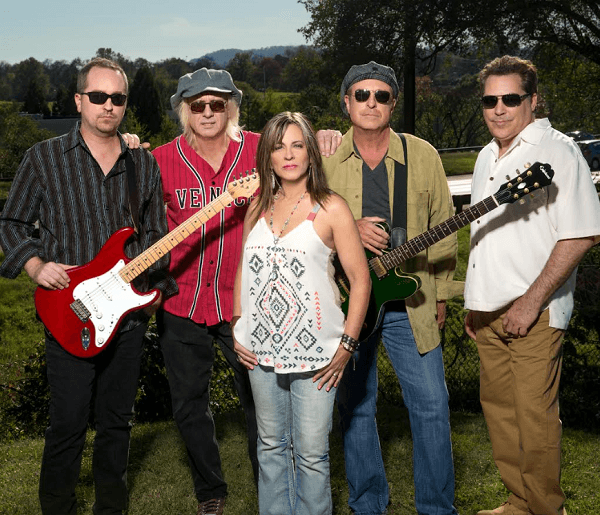
Diana Sosa and the rest of the Bicho Brothers
The Bicho Brothers from left to right: Jeff Krinks (guitar and vocals), Ron Krasinski (drums), Diana Sosa (timbales, congas, percussion, and Puerto Rican cuatro), Chuck Nelson (guitar and vocals), and Kenny Zarider (keyboards and vocals)

Another important personality who encouraged her to follow this route was the great producer Bill Cuomo, who told her she was very good at playing but needed to improve her technique. Twenty years later, it can be said that she took him at his Word seeing all she has achieved since then. From that point on, there have been many other projects and opportunities that make her very happy and keep her fulfilled.

Soul Sacrifice

Soul Sacrifice is a Santana tribute band founded in 1969 that has won a high reputation in Nashville by becoming one of the best tributes to Santana to date. The mix of familiar melodies and infectious rhythms they play at every show transports audiences to the biggest classics of the legendary Latin rock group created by Carlos Santana.

The band also includes some of the same members of The Bicho Brothers, such as the cases of Diana and Chuck due to all the years they have spent playing together, but including Cuban musician John Santos. He plays a fundamental role in making people feel they are listening to the original Santana rather than an imitation, which is why both he and Diana are key to the band’s performance.

Diana Sosa with Diana's Mambo Maniacs
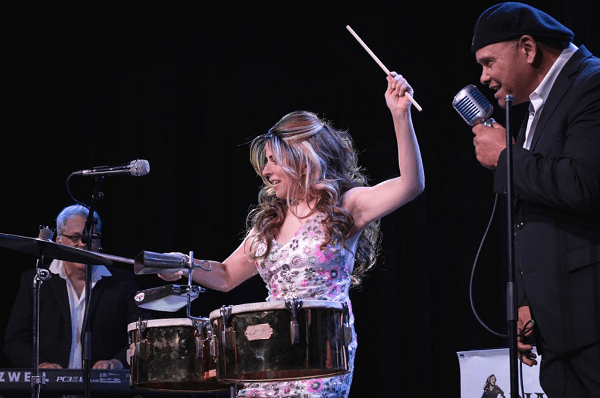
Diana Sosa playing with Diana’s Mambo Maniacs

Diana’s Mambo Maniacs

Diana also has her own project, which she decided to call Diana’s Mambo Manics. This Latin music group was founded in the early summer of 2025 as part of Hispanic Heritage Month. In that time of year, there are always many festivals dedicated to Hispanic and Latin music in the United States and around the world, so Diana and a group of musicians she had been in contact with for some time took the opportunity to play wherever they were able to make themselves known.

Among some of the musicians in the band we can mention John Santos as singer and timbalero, whose presence is essential at every show. The group also includes conga player Josvany Cordero, bassist Isoel Villareal, pianist Kenny Zarider, trumpeter Joe Mercado, and trombonist Huge Lindsay.

The main difference between this band, The Bicho Brothers and Soul Sacrifice is that it plays exclusively Latin music, but of the great artists in the 1950s and 1960s who performed at the Palladium Ballroom, the Copacabana, El Corso, Chez José & 3 and 1, among many others. Diana feels that, to a certain extent, she pays tribute to her parents, who used to go dancing and enjoying these rhythms to some of these places in their youth.

However, not all are covers. She is about to release an original song featuring Puerto Rican cuatro player Prodigio Claudio, but she did not have the details to share with us yet.

Diana and Tito Puente Jr.
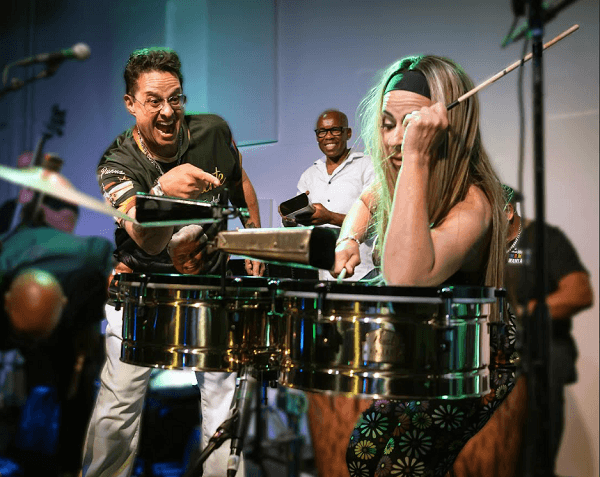
Diana Sosa Playing with Tito Puente Jr.

Read also: Bandleader and bongosero Ray Degaldo is here to talk about his life and career

  • « Go to Previous Page
  • Page 1
  • Interim pages omitted …
  • Page 7
  • Page 8
  • Page 9
  • Page 10
  • Page 11
  • Interim pages omitted …
  • Page 114
  • Go to Next Page »

International Salsa Magazine (ISM) is a monthly publication about Salsa activities around the world, that has been publishing since 2007. It is a world network of volunteers coordinated by ISM Magazine. We are working to strengthen all the events by working together.