• Skip to primary navigation
  • Skip to main content

International Salsa Magazine

  • HOME
  • Previous editions
    • 2026
      • ISM / March 2026
      • ISM / February 2026
      • ISM / January 2026
    • 2025
      • ISM / December 2025
      • ISM / November 2025
      • ISM / October 2025
      • ISM / September 2025
      • ISM / August 2025
      • ISM / July 2025
      • ISM / June 2025
      • ISM / May2025
      • ISM / April 2025
      • ISM / March 2025
      • ISM / February 2025
      • ISM / January 2025
    • 2024
      • ISM / December 2024
      • ISM / November 2024
      • ISM / October 2024
      • ISM / September 2024
      • ISM / August 2024
      • ISM / July 2024
      • ISM / June 2024
      • ISM / May 2024
      • ISM / April 2024
      • ISM / March 2024
      • ISM / February 2024
      • ISM / January 2024
    • 2023
      • ISM / December 2023
      • ISM / November 2023
      • ISM / October 2023
      • ISM – September 2023
      • ISM – August 2023
      • ISM July 2023
      • ISM Edition June 2023
      • ISM – May 2023
      • ISM April 2023
      • ISM March 2023
      • ISM February 2023
      • ISM January 2023
    • 2022
      • ISM December 2022
      • ISM November 2022
      • ISM October 2022
      • ISM September 2022
      • ISM August 2022
      • ISM July 2022
      • ISM June 2022
      • ISM May 2022
      • ISM February 2022
      • ISM January 2022
    • 2021
      • ISM December 2021
      • ISM November 2021
      • ISM October – 2021
      • ISM September 2021
      • ISM August 2021
      • ISM July 2021
      • ISM May 2021
      • ISM April 2021
      • ISM June 2021
      • ISM March 2021
      • ISM February 2021
      • ISM January 2021
    • 2020
      • ISM December 2020
      • ISM November 2020
      • ISM October 2020
      • ISM September 2020
      • ISM August 2020
      • ISM July 2020
      • ISM June 2020
      • ISM May 2020
      • ISM April 2020
      • ISM March 2020
      • ISM February 2020
      • ISM January 2020
    • 2019
      • ISM December 2019
      • ISM November 2019
      • ISM October 2019
      • ISM Septembre 2019
      • ISM August 2019
      • ISM July 2019
      • ISM June 2019
  • Download Salsa App
    • Android
    • Apple
  • Spanish

Search Results for: Dance Company

Tribute to Alberto Naranjo and his musicians

Latin America / Venezuela / Caracas

40 years of El Trabuco Venezolano A Deserved Tribute to Alberto Naranjo and his musicians

Teresa Carreno Theater. Caracas, Venezuela August 21 to 25, 2017
Collaboration and Photographs by Lysbeth Weffe

From August 21 to 25, at the Teresa Carreño Theater (TTC), in Caracas, the Tribute to maestro Alberto Naranjo was held for his 57 years of artistic life, and to the group of his creation El Trabuco Venezolano for its 40 years of founding . With a long time of preparation and a lot of love involved, as it said in the hand program and was perceived in the environment, the event had the general production of Franklin Rojas, the Grupo Madera Foundation and the Teresa Carreño Theater Foundation.

Alberto Naranjo and Noel Mijares

More than an orchestra, El Trabuco Venezolano has been an authentic Venezuelan salsa movement born from the initiative of Alberto Naranjo, a veteran drummer and arranger who has walked the trade through the most diverse tendencies and schools of popular music in the Caribbean, always counting with the direct support of the musical producer, Orlando Montiel(I).

It was at a recital conference given by César Miguel Rondón and Domingo “El Flaco” Álvarez at the Museum of Contemporary Art in Caracas, in August 1977, that El TrabucoVenezolano(2) made its public debut.It immediately became the most finished and interesting musical project known to the city of Caracas up to that time. Alberto Naranjo organized it under the concept of a big band with the idea of ​​developing a particular proposal that would differ from its similar ones in the rest of the Caribbean, with a sound that bridges salsa, jazz, funk and Venezuelan.

With seven albums released, two of them live with the group Irakere from Cuba, and having passed more than a hundred performers through its ranks, El Trabuco, more than a group in conventional terms, has been a download and meeting space for local musicians, as well as the best of schools for many of them.

Alberto Naranjo
Alberto Naranjo

He also counts among his achievements, having motivated the Caracas salsa environment of the moment, imposing a high standard that influenced the formation of the best salsa orchestras, apart from creating, in short, his own Caracas sound brand(3).

The activities of this large tribute began on Monday 21 with the talks in the Protocol Plate of the TTC: “History in Venezuelan salsa” with Franklin Rojas and “Hera & Pablo, the Venezuelan salsa dance”; on Tuesday 22, Cheo Guevara’s discussion on “Alberto Naranjo, and his historical mark” and the forum “The production of salsa content in alternative radio” moderated by Zulay Millán. They continued like this throughout the week.

Several workshops were held, among them, “Percussion Tuning” dictated by Nicolás Monterola and “Latin Percussion” by Professor Frank Márquez. Also in the lobby on the ground floor of the TTC, the following concerts were presented: Caracas Legends Ensemble, with its tribute to Eddie Palmieri, the Salsarría Orchestra, Grupo Madera, Mundito and his Orchestra La Celestial, The Big Band of San Agustín and the Orquesta Carlin.

Grupo Madera
Grupo Madera

The highlight of this week of well-deserved recognition was the Trabuco Venezolano concerts at the Ríos Reyna venue on August 24 and 25, presented by Zulay Millán and José Gregorio Acero.

Although with a room not completely full and recalling other times of splendor of a TTC that received the stars of the show from all over the world, we enjoyed two nights of memorable, tasty, lively and educational concerts, with a stage full of great musicians. and a full Alberto Naranjo, going through it and playing around more than directing the members of the big band. With the best of the best-known musicians and singers of Venezuela in the genre, with some of the original members of this group and new talents, we were able to delight ourselves in an exquisite waste of salsa, jazz and funk, lasting three hours each day.

“The teacher was narrating the stories of the different themes that they interpreted…”

Alberto Naranjo at the Teresa Careño with his orchestra "Trabuco Venezolano"
Alberto Naranjo at the Teresa Careño with his orchestra “Trabuco Venezolano”

The member musicians of El Trabuco Venezolano 2017, present at the concerts on August 24 and 25, were: Alberto Lazo (piano), José “Mortadelo” Soto (bass), William Vásquez (three), William Mora (tumbadoras), Frank Márquez (timbale), Franklin Rojas (bongo), Hugo Olivero (sax), Eduardo “Mondy” Dávila (sax), Manuel Barrios (sax), Irvin Blanco (sax), Edwin Ruiz (sax), Adrián Suárez (trombone), Eliel Rivero (trombone), Pedro Carrero (trombone), Franklin Moreno (trombone), Oscar Mendoza (trombone), Vicente Freijeiro (trumpet), Rafael Rey (trumpet), Gustavo Aranguren (trumpet), José “Cheo” Rodríguez (trumpet) , Noel Mijares (trumpet), Edgar “Dolor” Quijada (voice), Troy Purroy (voice), José Luis Peña (voice), Yeci Ramos (voice), Arturo Guaramato (voice).

The teacher was narrating the stories of the different songs they performed, referring to the fact that his musicians were chosen by meritocracy, sharing with the audience and ordering someone to shut up on more than one occasion, in a humorous tone, yes. He reminded us that they are not only dedicated to salsa and in some pieces where they did not sing, he emphasized that they were instrumental and that they could help us soar our imagination and dream.

Yeci Ramos, Juan Jose Conde, Edgar "Dolor" Quijada, Jose Luis Peña, Troy Purroy
Yeci Ramos, Juan Jose Conde, Edgar “Dolor” Quijada, Jose Luis Peña, Troy Purroy

The great experience of this meeting of musicians that has been El Trabuco Venezolano was reflected in a repertoire of 13 songs, including originals, emblematic and premieres, which they gave us.

They began with the songs “Yo Soy La Rumba” (Marcelino Guerra) with the solo voice of Troy Purroy and a timpani solo by Frank Márquez, “Bravo Rumbero” (José “Cheo” Navarro) sung by Edgar “Dolor” Quijada, “ La Negra Tomasa” (Guillermo Rodríguez Fiffe) in the voice of Arturo Guaramato, “Tres Días”, an original theme by Chucho Valdés and ceded to El Trabuco, sung by José Luís Peña, with the participation of the dancers Hera and Pablo. At this point, the entire audience had warmed up, and there was even a couple from the public who danced in the hall from the beginning of the concert until the end, both days.

The night continued with the emblematic “Almendra” (Alberto Barroso). This theme arranged by Naranjo for Arturo Sandoval 46 years ago, featured the masterful participation of Noel Mijares -Venezuela Big Band Jazz, Desorden Público- on trumpet, interacting with great complicity with the maestro. It followed with a premiere, “Alna’s Mambo” an instrumental composition, subliminal as Naranjo described it.

Yeci Ramos, Juan Jose Conde, Edgar "Dolor" Quijada, Jose Luis Peña, Troy Purroy - Photo
Yeci Ramos, Juan Jose Conde, Edgar “Dolor” Quijada, Jose Luis Peña, Troy Purroy – Photo

The concert continued with “Gongo Blues” (Eduardo Cabrera), a theme in which the extraordinary solos of Eliel Rivero on the trombone, Gustavo Aranguren on the trumpet, Manuel Barrios on the saxophone and Alberto Naranjo pleased us playing the kettledrum. . He followed up with the instrumental “El Ojo del Huracán,” a Latin jazz combo, which was written in the early ’70s and still sounds weird, Maestro Naranjo said.

Then with the song “Oye como va” (Tito Puente) the rumba was lit up, the lights in the room were turned on and hardly anyone could keep up without stopping and dancing. In the song “El Hijo del Sonero” (Ricardo Quintero) Yeci Ramos sang, in “El Cumaco de San Juan” (Francisco Delfin Pacheco), Arturo Guaramato and in “Compañeros” (Ricardo Quintero), Juan José Conde, these three songs they were accompanied by the drums of Grupo Madera.

“Imágenes Latinas” (Bernardo Palombo – Andy González), was the theme chosen as the finale, a piece that has become a cult object among music lovers, the salsa audience and lovers of Latin jazz, according to the words of connoisseur José Orellán .

It featured the extraordinary participation of Adrián Suárez in the trombone and bodyguard solo, and the interpretation of the son player Edgar “Dolor” Quijada.

Alberto Naranjo in his tribute

At the concert on Friday 25, El Trabuco Venezolano and its creator were declared CULTURAL HERITAGE OF THE NATION by the Institute of Cultural Heritage (IPC) and the Ministry of People’s Power of Culture of Venezuela.

With the hope that this experience can be repeated in other theaters in the country and the world, we congratulate the organizers, Alberto Naranjo and the musicians of El Trabuco Venezolano for having received such well-deserved recognition as Cultural Heritage of the Nation.

Notes: (1) and (2) The salsa book. Chronicle of urban Caribbean music. Cesar Miguel Rondon. Ediciones B Venezuela SA., 2007. (3) Taken from the Caracas Exhibition. Ciudad del Son, montage and texts by Alejandro Calzadilla, at the La Estancia Cultural Center, belonging to the company Petróleos de Venezuela (PDVSA La Estancia), September 2017.
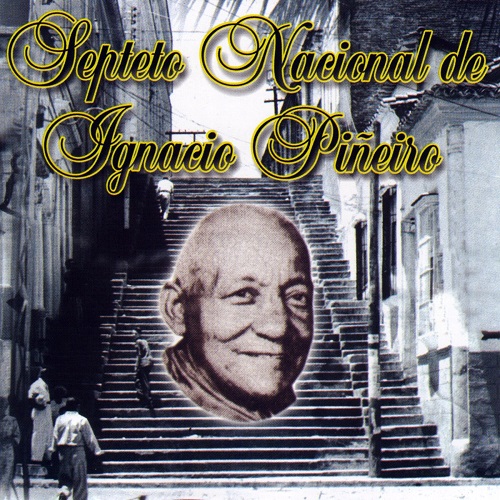
Ignacio Piñero Septeto Nacional has played an important role in Cuba’s music for more than seven decades

Founded by Havana-born bassist and vocalist Ignacio Piñero in 1927, the Septeto Nacional De Ignacio Piñero has played an important role in Cuba’s music for more than seven decades.

Fundado por el bajista y vocalista nacido en La Habana Ignacio Piñero en 1927

Pioneers of son, a rhythmic blend of African and Cuban music that evolved into salsa, mambo and Latin jazz, the group was the first son band to incorporate the trumpet as the main instrument.

Ignacio Piñero’s Septeto Nacional gained worldwide recognition with its performance at the 1928 Universal Exposition in Seville, and was reportedly the first group to mention “Salsa” in a song “Echale Salsita” recorded in 1933. The song composed by Piñero, was adapted by George Gershwin for the opening theme of his “Cuban Overture”.

Since Piñero’s death in 1968, after 41 years at the helm of the band, the Septeto Nacional De Ignacio Piñero has been led by a series of leaders.

Guitarist and composer Rafael Ortiz, who took over after Piñero’s death, bequeathed the position to vocalist Carlos Embale in 1982.

After leaving the group due to illness in 1998 Embale’s leadership was inherited by guitarist Richard Aymee Castro. True to their original musical roots, Ignacio Piñero’s Septeto Nacional continues to offer a danceable blend of montano, merengue, bolero, rumba and cha cha cha. Craig Harris.

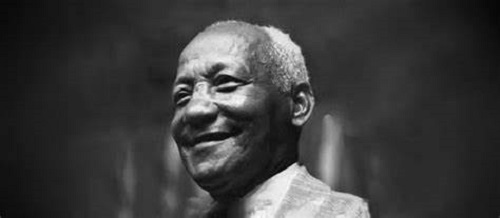
Ignacio Pineiro
Ignacio Pineiro

Ignacio Piñero was one of the Pioneers of Son Cubano

In 1906 he already knew and had assimilated the different toques of the African cabildos that existed in the neighborhood of Pueblo Nuevo, which he later incorporated into some of his creations.

He began his artistic career with the group claves and guaguancó El Timbre de Oro, later he directed Los Roncos de Pueblo Nuevo, in which he developed as a decimist and director, at the same time he took his first steps as a composer.

From this stage are: Cuando tú, tu desengaño veas, Dónde estabas anoche, El Edén de Los Roncos, Mañana te espero, niña. Later he joined the group Renacimiento de Pueblo Nuevo.

To the folkloric values that Piñeiro cultivated in these groups, he contributed a wider melodic-harmonic development and a greater depth and poetic flight.

In 1926 he was one of the founders, together with María Teresa Vera, of the Sexteto Occidente, with which he made his first tour to the United States in order to record an album with this group.

In 1927 he founded the Sexteto Nacional, formed by Ignacio Piñeiro, director and double bass; Alberto Villalón, guitar; Francisco González Solares, tres; Abelardo Barroso, lead vocals; Juan de la Cruz, tenor; Bienvenido León, baritone and maracas, and José Manuel Carrera Incharte (El Chino), bongo; that same year trumpeter Lázaro Herrera joined the group. With this septet he traveled to New York, where he recorded his first works.

In 1929 he participated with the Septeto Nacional in the Fair-Exposition of Seville, Spain; in that country they were hired as exclusive artists by the company SEDECA, and toured other cities of that country: Vigo, La Coruña, Santander, Madrid and Valladolid; in addition, they performed in the theaters Torero, Jovellanos, the Cine-Teatro Grado, and the cabaret Maicú, all in Madrid. In 1930 he was one of the founders of the National Association of Cuban Soneros.

Pioneros del son, una mezcla rítmica de música africana y cubana

They performed at the Sans-Souci cabaret (1930); in 1931 they performed at the Lavín and CMCG radio stations; in 1932, at the Dos Hermanos Hotel, he premiered Buey viejo; that same year the American composer George Gershwin came to Havana, at the CMCJ radio station he listened to Piñeiro’s son Échale salsita, from which he later used the theme played on the trumpet in his Cuban Overture.

In 1933 he performed at the Fair-Exhibition A Century of Progress, held in Chicago, United States.

In 1934 Piñeiro retired from the septet, which from 1935 was directed by trumpeter Lázaro Herrera. In 1954, Piñeiro reappeared as leader of the septet, with which he appeared on the television program Música de Ayer y de Hoy.

As a composer, Ignacio Piñeiro broke, although he took elements from the form of the oriental son, in which its creators used the quatrain and the tenth; an example of this break is his son Buey viejo, from 1932:

Carretero no maltrates a ese pobre buey tan viejo, que ya doblbla la cabeza por el peso de los tarros, y por senda de guijarros va tirando la carreta, y nunca llega a la meta, término de su dolor.

Piñeiro was one of those synthesis cases that managed to capture, develop and express the full richness of the son.

The structural modifications, the cadence, the rhythm and the use of refined melodies and lyrics, achieved by this creator and interpreted by the Septeto Nacional, make it possible to say that the work of this singular artist, although he did not mark the boundaries of son (which corresponded to the Sexteto Habanero), he did turn it into a son that today we can call classic, which became a model for its further development.

When Ignacio Piñeiro founded the Septeto Nacional, his purpose was to be a high exponent of the Cuban son and its various variants, he himself made use of those variants, composing guajira-son, canción-son, afro-son, so he worked with the elements offered by the oriental son, to which he gave a broader treatment, both musically and literary.

According to Miriam Villa: “If we analyze the organization of the literary text, we observe in his work the formal use of metrically heterogeneous links subjected to rhythm, characterized by the presence of accented and unaccented elements within the system of units that are repeated at intervals between them.

Piñeiro must not have been concerned about the meter in the text as a pattern, since through the rhythm of the composition he achieves the contrast relations, making the change of meter express a change in the thematic movement, either from intermittences or accentuations or sometimes both, which give it different semantic nuances and alternations of tensions and distensions.

And elsewhere Villa states: “Another aspect that in relation to the literary text is reflected in Piñeiro’s creative work is that of the thematic contents; these are shown from a diversification with greater scope in relation to his contemporaries.

His work can be divided into multiple themes among which are love, homeland, philosophical reflection, politics, the bucolic, the infantile, expressed in a variety of forms: satirical, apologetic, humorous and with greater depth than in the sonorous production that preceded him and even with which he shared.

With the Septeto Nacional, Piñeiro appears in the musical short El frutero, and in the film Nosotros la música, by director Rogelio París.

Ignacio Piñeiro Septeto Nacional

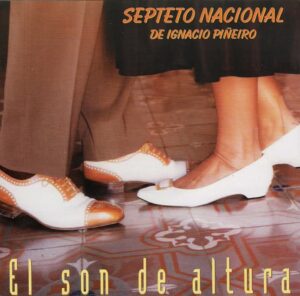
Septeto Nacional de Ignacio Piñero El Son de Altura

El Son de Altura (1998)

Tracks:

  1. Mayeya – No Juegues Con Los Santos (Son) (I. Piñeiro)
  2. Bardo (Bolero-son) (I. Piñeiro)
  3. Lejana Campiña (Guajira-son) (I. Piñeiro)
  4. Canta La Vueltabajera (Guajira-son) (I. Piñeiro)
  5. Guanajo Relleno (Guaracha-son) (I. Piñeiro)
  6. Esas No Son Cubanas (Son) (I. Piñeiro)
  7. Suavecito (Son) (I. Piñeiro)
  8. Alma Guajira (Guajira-son) (I. Piñeiro)
  9. Castigador (Son) (I. Piñeiro)
  10. Échale Salsita (Son-pregón) (I. Piñeiro)
  11. EI Viandero (Son-pregón) (Ernesto Muñoz)
  12. Son De La Loma (Son) (Miguel MGllamoros)
  13. Trompeta Querida (Boleró-son) (Lózoro Herrera)
  14. La Mujer De Antonio (Son) (Miguel Matamoros)
  15. La Cachimba De San Juan (Son) (l. Plñeiro)
  16. EI Alfiler (Son) (l. Plñeiro)
  17. Noche De Conga (Son) (l. Plñeiro)
  18. EI Paralitico (Son) (Miguel Matamoros)

By:

EcuRed

Dj. Augusto Felibertt

L’Òstia Latin Jazz

Also Read: From Cuba El Septeto Son de Nipe vienen Abriendo Caminos

Liz Rojas and John Narvaez share their experience with the San Francisco Salsa Festival

The San Francisco Salsa Festival is one of the most important Latin music events in The Bay Area and California in general, so we could not miss it. Eduardo Guilarte, senior editor of International Salsa Magazine attended on our behalf to witness firsthand everything that happened over the three days of the festival, as in previous years. 

To learn a little more about the most important facts related to the festival, Elizabeth Rojas and John Narvaez have made room in their busy schedule to talk with us and relate some elements and details of this fifteenth edition, which we are infinitely grateful. 

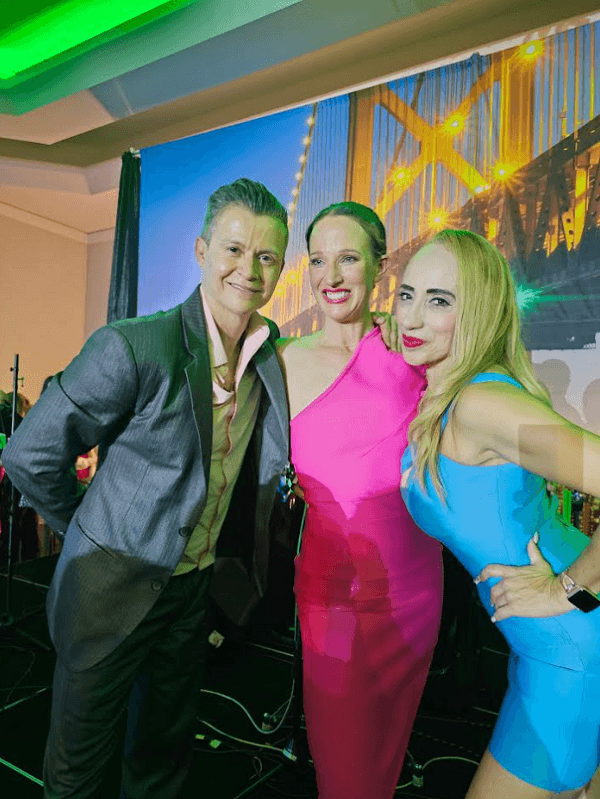
John, Liz, and Angie at the festival
John Narvaez, Angie Seminario y Liz Rojas

How was the 15th edition of the San Francisco Salsa Festival organized? 

Liz tells us that the organization of this edition started last year immediately following the previous festival to avoid wasting time and handle contingencies as soon as possible. Whenever they complete an edition, they immediately start to organize the next one, since all the details to keep in mind are too many to leave them for another time.

Liz and John always have to confirm orchestras and artists in advance, but they have a very efficient team of friends and partners to help them with everything related to the event. For this reason, every year it has become easier to make the preparations faster and more efficiently.

Novelties compared to other years

As for the novelties of this edition compared to other years, it could be shown that there was much more influx of people wanting to enjoy the activities offered. In addition to that, the dancers made sure that the program included more guests for classes, dance workshops on Friday, shows and competitions, which in turn helped to attract more interested public.

Another innovative detail was the invitation to local teachers in order to attract their students and people from their academies in general.

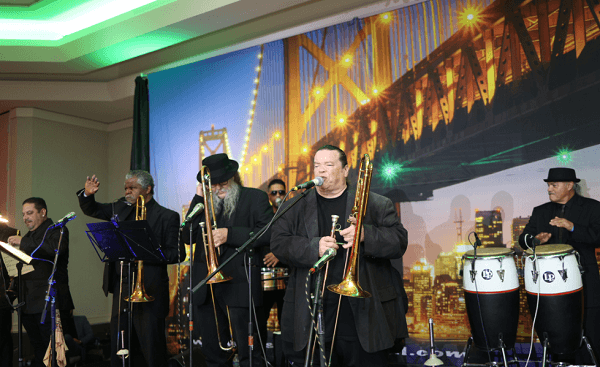
Latin Rhythm Boys at the festival
The Latin Rhythm Boys playing at the San Francisco Salsa Festival

Adding to all this, Liz and John sought to take much more into account the bachata dancers and artists in order to offer a little more variety in terms of musical genres and not just salsa.

Situation with the Orquesta La Máxima 79

No matter how majestic an event can be, there are always facts that can tarnish a little the satisfaction of organizers with all that has been achieved. This not so pleasant situation was the regrettable absence of the orchestra La Máxima 79, which was unable to travel to the United States at the last minute because of visa related issues.

John described how the days went by and the visas for the members of the group were not issued, to the point that the immigration department had not even conducted the first interviews. Because of this, they began to consider the possibility that La Máxima might not perform their show as planned. 

However, this didn’t stop them from having a card up their sleeve, so replacing La Máxima 79, they hired the amazingly talented Ray de La Paz, whose concert was amazing and delighted the audience with his fabulous show. They had to do much more publicity in the last few days due to the unforeseen change, but fortunately, it was all worth it.

They met Ray de La Paz in Hong Kong in 2004 during one of his shows where they were dancers on stage with him. Although they did not know him at the time, they really liked how he sang, so they called him up for the festival. They proposed to him to participate through Javier Cabanillas, another musician hired for the festival, who was a friend of his and kindly provided them with his contact information to invite him.

Ray at the festival
Ray de La Paz on the red carpet at the San Francisco Salsa Festival

When we wanted to know how the organization deals with last-minute inconveniences, Liz commented that they already had a plan B for such an eventuality. The main organizer of the event, Angie Seminario, and John had already talked about what to do in a situation of this kind. Likewise, they did not wait for the last moment to replace the missing orchestra, but acted quickly and worked on an alternative in parallel. At this point, John highlighted the importance of cultivating good connections and relationships with many musicians, so that they can count on them in emergencies.

Despite everything, they do not give up and will do whatever it takes to bring La Máxima to the festival next year. They are already working on this issue with the company’s lawyer.

The hardest thing to organize the San Francisco Salsa Festival

Together with last-minute absences, another problem which Liz and John face when organizing the festival is the hotel booking process for the time planned. Booking for the selected days and times of the festival and the multiple activities to be developed can turn to a headache, even more so than the organization of the workshops and concerts.

Also, the economic and time requirements can be very complex depending on what an event needs. The fines imposed by the government on venues that exceed the time limits with their events are well known, so planning failures should be avoided at all costs. 

John also added that it is always very complicated to deal with people and the selection process of the best staff to work with is not always easy. ”We always look for people who are equal or better than us. We make sure to surround ourselves with people who are even smarter and more capable than us so that they can see what we can’t” said the dancer and entrepreneur.

John, Anfie, Liz, and Ray at the festival
John Narvaez, Angie Seminario, Liz Rojas, and Ray de La Paz

How John and Liz feel now in comparison to the first festival

When compared this latest edition with the first one, John says that both he and Liz are extremely proud of what has been achieved so far. The artist assures that for him it is a great honor to be able to have Liz by his side, then thanks her for accompanying him and making the festival and the rest of the things they have achieved possible. 

Meanwhile, Liz fully agrees with her partner and also said she feels very proud of what they have accomplished all these years. Since we have seen other artists doing big dance events, John and I set out to achieve the same thing someday and we are very proud to have been able to make it possible” said the dancer ending her speech.

Julio at the festival
Julio Bravo playing the maracas during Ray de La Paz concert

Read also: Kiki Valera and his talented and special family’s great legacy

Mambo Coffee

Latin America / Ecuador / Quito

Mambo Coffee. One year playing El Ritmo

Mambo Coffee - Photo 1
Mambo Coffee – Photo 1

We are talking about the fashionable nightlife space in Quito, a space dedicated to dancing, enjoyment and the city’s nightlife. From its tropical image that clearly denotes its dedication to Latin music, to its context, it calls you to have a good time, with family, friends and in the company of a good musical selection.

In a short time, the Mambo, as it is known, has achieved an important link between all the dance schools in the city, sometimes being the meeting place for these dance professionals. For everyone’s benefit we have bachata and salsa Wednesdays, classic salsa Thursdays and Fridays and tropical Saturdays where we can listen to a musical variety that manages to absorb a very heterogeneous audience.

Mambo Coffee - Photo 2
Mambo Coffee – Photo 2

Michell Castillo, manager, expresses to us, “…the concept of Mambo Café is aimed at a Latin public, salsero, who wants to enjoy a good bar.” Concept that day after day continues to be rooted in the visiting public. “… the name arose from the need for something multicolored for a salsa bar, the conditions of the premises allowed the designer to play with colors and structures that will speak for themselves.” It is striking to see a column decorated with acetate discs, murals and paintings in the best Caribbean style.

We had the experience of collecting impressions from many of the city’s dancers, all express the good atmosphere that is lived in this beautiful place, these institutions have had their doors open to celebrate their anniversaries, special parties, closing of the year and other festive occasions. thanks to the great opportunities that the bar offers us.

Mambo Coffee - Photo 3
Mambo Coffee – Photo 3

The recommendation is to try the range of cocktails, delight yourself with the flavored Margarita, a huge glass that you will surely taste with great fascination, not to mention the Maracuya mojitos and the bulldog tequila that surprises you with a corona beer among the decoration, all a show. The Mambo is still waiting for everyone’s visit, from Wednesday to Saturday making the bailadera fashionable in Quito.

It is located on Ave. Cristóbal Colón, Quito 170517, Ecuador where you can contact them through: Facebook: MamboCafeQuito Email: [email protected] Telephone: +593 2-223-1249

Mambo Coffee - Photo 4
Mambo Coffee – Photo 4

Burju Pérez

North America / USA / Boston

Burju Pérez. From Dance to the Fashion Industry

Turkey is considered one of the countries with the most successful traders in the world and with a big musical influence of the Islamic and Western culture, well, from this country come the wonderful professional salsa dancer Burju Pérez, an entrepreneur who fused the tempo with the comfort and fashion of footwear.

Burju Pérez Shoes - Photo
Burju Pérez Shoes – Photo

Born in Turkey but arrived from 2 years old to Boston, Massachusetts. From very young, Burju began in the world of rhythmic gymnastics and dance. “My parents say I danced before I walked, or at least I started them both at the same time. I always had a wiggle and a bop”, said Burju for an American media.

Over the years, she learned other rhythms such as: Hip hop, Jazz and classical. Once at the university, she really dabbled in Latin dance, there a dance group was formed and she met her current husband Víctor, whose roots from Puerto Rico and who by that time was already an expert in Salsa dancing.

Dancers in workshop
Dancers in workshop

Once associated both personally and professionally, Burju and Víctor embarked on their way to conquer the most important congresses and festivals in the country as qualified Salsa dancers, starting with the nation’s largest annual convention, LA SALSA FEST, which for that time was only made in two cities of the world: one in San Juan (Puerto Rico – original headquarters) and the other in Los Angeles, (US).

Russia, China, Japan, Turkey, Lithuania, Germany and all Western Europe were also witnesses to the rage of the audience that generated this duo on the dance floor, who stepped on the best stages, generating great respect in the salsa community for being a couple of high competitive range.

Burju Pérez on the show - Photo 2
Burju Pérez on the show – Photo 2

Burju during the decade of the 90s began to add her identity to the attire, painting his shoes and creating her own style. By 2003, this regular salsa girl from the stages of Boston and New York had the opportunity to belong to Juan Matos’ Fogarate Dance Project, which was held every weekend in New York. For the same period, Matos came up with another project, this time in Italy and Turkey and for which he had no partner dance so Burju was the ideal candidate to make this tour with him for a month, working full time.

Burju Shoes

Burju Shoes
Burju Shoes

Once in Milan, this choreographer and professional dancer began to create her own project, an idea that would satisfy the needs of the dancers, simply a hybrid between dance and fashion, was the creation of Burju Shoes. In Milan, where I was based for the project, there is this very high fashion and lots of people not wearing dance shoes when they dance.

I was like, “Oh, I’m not trying to be left out.” So when I was social dancing I was rocking these hot fashion shoes I bought there, but every night I was nearly crying because I was in so much pain. That’s when I was like, OH MAN! I want to combine fashion with comfort for dance shoes. She explained in an interview.

Burju Shoes (created in December 2010) are the perfect combination between the avant-garden design, contrast of colors, versatility and comfort, made to highlight the distinctive beauty in each dress and coziness when dancing.

Burju decided to create this company in his home, Boston, a very welcoming place where the scenes and the Latino community has grown exponentially.

Burju Shoes Types
Burju Shoes Types

When I first started my business, I asked a lot of ladies that were well known (in the dance and salsa world) to help me with a collective push with the brand. These girls not only endorsed it, but became part of the brand and helped with the designs. I even named shoes after them!, said she. I had my own following, but it was so wonderful to have all these girls supporting me and spreading the word.

When I felt weak, I had people to lean on who were not just friends but collaborators in the scene… I’m so grateful for the love and support here. She added. The Burju Shoes business was the change in the footwear industry’s perception for the ladies. The belief for years that the beauty of the shoe was synonymous with pain and tiredness of the feet was in the past.

Burju Pérez on the show - Photo 4
Burju Pérez on the show – Photo 4

Burju Shoes offer you elegant shoes that you can use to do your dailies and go to work, they are also perfect for a dinner, cocktail and especially for a night of total fun and a lot of Latin dance.

Burju also cared about brides, and created a wide selection for them for that special day.

Burju thanks to his experience as a professional dancer with 14 years of career, travel and in addition to her creative intuition, she has created great innovative designs in each shoe, which are flexible for the comfort of the user and functional for each occasion.

Burju Pérez on the show - Photo 3
Burju Pérez on the show – Photo 3

The construction of each pair of shoes is derived from custom made patterns, high-end manufacturing and high quality materials: satins, leathers, sparkle, faux animal prints and other synthetic or man-made materials.

For the outer soles, the options of suede (more traditional for dance shoes) to the street sole which is great for indoor and outdoor use. I think people appreciate that we put a higher standard on presentation… At the end of the day, selling is not my main mission. But I will educate you and help you find what’s right for you, and help you feel good about yourself. I think this draws people in, said

Even though I don’t dance as much as I used to (since I got pregnant four years ago), and went the fashion and entrepreneur route, I’m still connected to this dance scene through my work and like giving back to the community… I want to show people that arts and business can function together. Burju Perez

Burju Pérez on the show - Photo
Burju Pérez on the show – Photo
  • « Go to Previous Page
  • Page 1
  • Interim pages omitted …
  • Page 12
  • Page 13
  • Page 14
  • Page 15
  • Page 16
  • Interim pages omitted …
  • Page 39
  • Go to Next Page »

International Salsa Magazine (ISM) is a monthly publication about Salsa activities around the world, that has been publishing since 2007. It is a world network of volunteers coordinated by ISM Magazine. We are working to strengthen all the events by working together.