• Skip to primary navigation
  • Skip to main content

International Salsa Magazine

  • HOME
  • Previous editions
    • 2026
      • ISM / March 2026
      • ISM / February 2026
      • ISM / January 2026
    • 2025
      • ISM / December 2025
      • ISM / November 2025
      • ISM / October 2025
      • ISM / September 2025
      • ISM / August 2025
      • ISM / July 2025
      • ISM / June 2025
      • ISM / May2025
      • ISM / April 2025
      • ISM / March 2025
      • ISM / February 2025
      • ISM / January 2025
    • 2024
      • ISM / December 2024
      • ISM / November 2024
      • ISM / October 2024
      • ISM / September 2024
      • ISM / August 2024
      • ISM / July 2024
      • ISM / June 2024
      • ISM / May 2024
      • ISM / April 2024
      • ISM / March 2024
      • ISM / February 2024
      • ISM / January 2024
    • 2023
      • ISM / December 2023
      • ISM / November 2023
      • ISM / October 2023
      • ISM – September 2023
      • ISM – August 2023
      • ISM July 2023
      • ISM Edition June 2023
      • ISM – May 2023
      • ISM April 2023
      • ISM March 2023
      • ISM February 2023
      • ISM January 2023
    • 2022
      • ISM December 2022
      • ISM November 2022
      • ISM October 2022
      • ISM September 2022
      • ISM August 2022
      • ISM July 2022
      • ISM June 2022
      • ISM May 2022
      • ISM February 2022
      • ISM January 2022
    • 2021
      • ISM December 2021
      • ISM November 2021
      • ISM October – 2021
      • ISM September 2021
      • ISM August 2021
      • ISM July 2021
      • ISM May 2021
      • ISM April 2021
      • ISM June 2021
      • ISM March 2021
      • ISM February 2021
      • ISM January 2021
    • 2020
      • ISM December 2020
      • ISM November 2020
      • ISM October 2020
      • ISM September 2020
      • ISM August 2020
      • ISM July 2020
      • ISM June 2020
      • ISM May 2020
      • ISM April 2020
      • ISM March 2020
      • ISM February 2020
      • ISM January 2020
    • 2019
      • ISM December 2019
      • ISM November 2019
      • ISM October 2019
      • ISM Septembre 2019
      • ISM August 2019
      • ISM July 2019
      • ISM June 2019
  • Download Salsa App
    • Android
    • Apple
  • Spanish

Search Results for: Dance Company

From Cuba El Septeto Son de Nipe come Abriendo Caminos (Opening Paths)

Son de Nipe. A musical septet born in the municipality of Antilla, it burst into the cultural world with an album of the In Situ label of the Colibri Record Production Company.

Antilla is the smallest municipality of the province of Holguin in Cuba and one of the smallest of Cuba, it was founded on January 21, 1925, it is famous from distant times for its beauty, legends and original aspect.

De Cuba El Septeto Son de Nipe vienen Abriendo Caminos

The group is formed by former musicians of the orchestra Brisas de Nipe of this municipality.

This project was born from the hands of Porfirio Núñez Cruz (Firo) who as Art Instructor at the Casa de Cultura Adelaida del Mármol of Antilla had experimented with other amateur groups, but not with the same results, because the members did not have the necessary musical training.

The album Abriendo Caminos includes 14 songs, 10 of which belong to Antillean authors.

“The value of Abriendo Caminos also lies in the fact that it helps Antillean composers and arrangers to open up to the recognition of their work and ways of doing things”.

From the singer and percussionist of the septet Son de Nipe, Alejandro Arencibia appears the guaracha Esa muchacha quiere bailar and the son, Honor al Guayabero; from Edalio Espinosa Alayo (Pupi), former member of the Brisas de Nipe orchestra, the son, Es caliente como el sol (It’s hot like the sun).

The songs A mi Antilla (bolero-son) and, Y no me niegues el beso (son) by José James Pinder, singer of the septet. By Oscar Fernández, former singer of the Brisas de Nipe Orchestra, the disc offers the themes Rebozo de amor (guaracha) and the son Que lástima.

Septeto Son de Nipe
Septeto Son de Nipe

From the director of the septet Son de Nipe Porfirio Núñez Cruz, Mi son tradicional.

And the guaracha Olvídate de esa nena by the Antillean composer Nemesio Palacio.

The remaining four musical numbers are; De que callada manera by Nicolás Guillén and Pablo Milanes, Culpable by Pepe Delgado, Rabo de nube by Silvio Rodríguez and Una alborada de amor by Ariel Dotres Zaldivar, these songs were arranged by Porfirio Núñez Cruz.

In the septet’s album Son de Nipe Abriendo Caminos “the guaracha, the bolero, the bolero-son and the genuine son are retaken with originality and revalued”.

The latter is due to the fact that the musical criteria followed by its director was the respect for traditional music, its deep knowledge, but imbuing it with very contemporary nuances, which results in a seal that distinguishes the septet Son de Nipe.

“We use the son, but more updated because we make innovations, harmonizing it in a more modern way, without losing its roots”.

The selection of the songs that made up the album Abriendo Caminos was in charge of the septet’s management, since the Casa Discográfica Colibrí wanted originality and the authentic exhibition of the work that has been developed with traditional music in the eastern part of the country.

Son Cubano de Nipe en Holguin

The graphic image of the disc, worked in sepia and black colors fundamentally manage to set the atmosphere that is offered to us with a vintage flavor and invites us to listen to these 14 songs full of tradition and contemporaneity.

“It will be a delight for the listener and the dancer, the good function of the tres in its solos and “entregas”, the beautiful and ingenious introductions, the exquisite mixture between text and music of the boleros, the harmonic patterns of the soneros that not for conventional reasons give up a significant finish, without neglecting, on occasions, the voices replacing wind instruments”.

The selection of the members was meticulous. Porfirio had in his favor the prestige he possessed and the convening power among his former colleagues of the Orquesta Brisas de Nipe, so much so that in the list of his group he planned to include Reyes Cástulo Urgellés Fáez, better known as Lulú as bassist and José James Pinder (Joseíto) as singer, both retired from the Orquesta Brisas de Nipe and linked to the Casa de Cultura in occasional activities.

The septet still needed to be completed with a key piece, the tres, for which the prestigious Mario Arencibia Rodríguez, one of the best tres players in Antilla, was summoned.

In the Arencibia family, musicians abound, that is why the group was completed with them: Alejandro, singer and Rafael on the tumbadora.

Alejandro and Mario had been part of an amateur group called Renovación Antillana for more than 20 years, which was very famous in its time and where a great number of aficionados were formed.

Alejandro sometimes played the tres in other groups, but in Son de Nipe he remained as a singer, he also had a work relationship that did not allow him to devote himself entirely to music; His nephew, trained at the Casa de Cultura and under the musical influence of the family, had taken over the tumbadoras, so Rafael Arencibia was the youngest of the group, he was barely 25 years old and at this young age he had already played in several amateur groups and got the Brisa de Nipe orchestra out of trouble, due to the unexpected absence of its percussionist.

Rafael Arencibia Rodríguez joined the project with enthusiasm despite the fact that the genre and style of the repertoire were not those used by the amateur groups of his contemporaries.

Iro had obtained the desired musicians, but he still had a big step to climb, his musicians were not professionals, they all had work commitments and he needed to prepare the project for the right day…(ecured).


Septeto Son De Nipe – Abriendo Caminos (2006)

Temas:

  1. Esa Muchacha Quiere Bailar (Alejandro Arencibia)
  2. Es Caliente Como El Sol (Edalio Espinosa Adayo)
  3. A Mi Antilla (José James Pinder)
  4. Rebozo De Amor (Oscar Fernández Paz)
  5. De Qué Callada Manera (N. Gillén / Pablo Milanés)
  6. Honor Al Guayabero (Alejandro Arencibia)
  7. Culpable (Pepe Delgado)
  8. Mi Son Tradicional (Porfirio Núñez Cruz)
  9. Y No Me Niegues el Beso (José James Pinder)
  10. Clodomiro (Oscar Fernández Paz)
  11. Rabo De Nube (Silvio Rodríguez)
  12. Qué Lástima (Oscar Fernández Paz)
  13. Una Alborada De Amor (Ariel Dotres Zaldívar)
  14. Olvídate De Esa Nena (Nemecio Palacio)
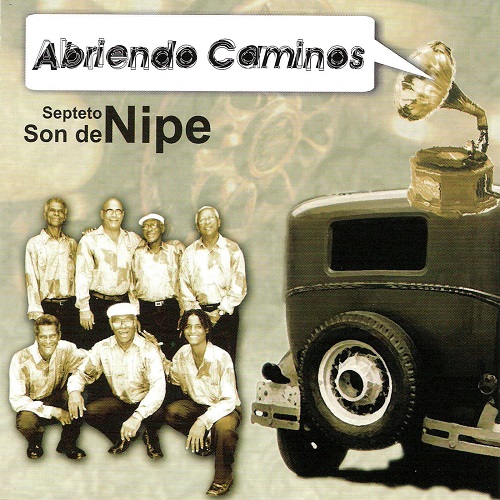
Septeto Son De Nipe - Abriendo Caminos (2006)
Septeto Son De Nipe – Abriendo Caminos (2006)


Research Sources:

L’Òstia Latin Jazz

Dj. Augusto Felibertt

Also Read: Virgilio Martí was an excellent rumbero and composer of the classic “Cuba Linda” where he was vocalist and percussionist in Grupo Folklorico Experimental Newyorkino

Marcial Isturiz from Capaya with soneos and melodic phrases and his popular “Agua pa’ los Gallos “Puerto Rico

In 2023 Sergio George, the famous “magician” who produced the artistic career of famous salseros and artists, said that salsa was “dead” and called on new artists to resurrect it and support each other as urban singers do.

Marcial Isturiz de Capaya

This caused commotion and controversy among salseros and made them doubt without a doubt what is the reality that salsa lives and more with the progressive physical departure of emblematic legends who made history in the world, coupled with the proliferation of the so-called “DJ” who multiply many times the nostalgia of the public for living the times of said legends and who became a trend due to this fact. In 2024 we saw how important salsa concerts were held in our country Venezuela where foreigners who had not visited us for a long time did so and so we enjoyed what some call “the last of the Mohicans”, as well as Venezuelans who took to various stages making it clear that, if they continue creating, either by adjusting the sound of the old and modernizing with quality staging or simply delighting with their career and style what they have already established.

We think that there is a lot missing since there is plenty of musical talent and a new generation in every sense, but not who listens to them and supports them, this being a truth bigger than the size of the sun.

Marcial Isturiz
Marcial Isturiz

After this necessary reflection we want to talk about Marcial Isturiz who was born in the sandunguera town of Capaya, Barlovento in the Miranda State of VENEZUELA, and we put it in capital letters because this “extraordinary sonero who wandered through the streets of Petareña hitting any pot he found in his path, finding out where and at what time the “arayé” was lit, always on the “hunt” for a good opportunity”, a quote was written by Ángel Méndez in his book “Entren que Caben Cien” describing how clear this man has been since childhood in pursuing and having the firm certainty of where he had to go to achieve his dream. He understood, from my point of view, that he who perseveres succeeds and we have seen his professional growth during all these years, thirty years recently completed, being a musician performing several instruments, going on to be also a composer and arranger, accompanying with his voice in duos of consecrated stars and groups, renowned orchestras as well as others not so well known, his voice being a characteristic seal that draws the attention of his followers, a sonero that we can say “gets lost from sight”.


A man who has earned the respect and affection of the public wherever he goes and to name one of the presentations in which he has demonstrated his “people skills”, we had the opportunity to travel and share with him closely accompanying him Sonero Clásico del Caribe in that free event that the Barquisimetanos salseros put on at the end of January 2024 to Ramón Méndez, where by the way Marcial took advantage of the invitation to perform the National Anthem the day before at the Cardenales – La Guaira Game, impeccably. Undoubtedly, that presentation was an omen of good fortune for what would be a year full of success.


Marcial Isturiz began hitting a home run this 2025 by performing on January 5 in Puerto Rico on the “Island of Enchantment”, at the traditional Three Kings Eve dance at the Sheraton Hotel, Convention District, with Don Perignon and La Puertorriqueña, with salsa figures such as Herman Olivera, Pedro Bull, Pichie Pérez, Joe González, Rico Walker, Josué Rosado, Jerry Rivas, Gilberto Santa Rosa and of course our Marcial Izturiz.

Joe, Rico, Marcial, Herman

We saw him singing choruses with these greats, specifically next to Herman Olivera and Rico Walker waiting for his turn like each of those called to this meeting until Peter Perignon introduced him for the first time with his Orchestra La Puertorriqueña and said that the person responsible for that invitation and presence of our sonero there was his friend Gilberto Santa Rosa.

Briefly, Perignon told the audience that he knew Marcial since he was part of Bailatino and he fell in love with that group, since then he had been following him and now recently in his participation with the Latin Dimension he knew that Marcial with this performance made his dream of being in that country come true.

Saying good night to Puerto Rico he performed the song “La Familia” (authored by José Curbelo and musical arrangement by Louie Ramírez, inserted in the production titled Indestructible by Ray Barretto and his Orchestra in the voice of Tito Alen for the year 1973) with soneos and melodic phrases and his popular “agua pa’ los gallos Puerto Rico” left established what this Venezuelan is made of, acclaimed and congratulated by his peers on stage.

Joy is not enough for what we salseros in Venezuela feel for this representation that should not be overlooked because if there are soneros from Venezuela and with class: Marcial Isturiz is one of them; with his own style and professionalism, this is how our “Mayor of Capaya” was seen next to these greats, comfortable, safe and proudly waving our tricolor wherever he goes.


At Swing Latino we say congratulations to Marcial, keep doing your thing without resting like until now, because later it will be too late:

AGUA PA’ LOS GALLOS  y

¡Ponle Sabor!

Source: Giorgenling Méndez from Swing Latino

Also Read: Salsa at its best, led by the leader of La Puertorriqueña: Don Perignon

Continues in the spanish repertoire “The Colonel has no one to write to him” by Gabriel Garcia Marquez

North America / USA / New York

During this month of March, the super theatrical production “The Colonel has no one to write to him” by Gabriel Garcia Marquez, continues in the Spanish Repertoire, the only company to present plays entirely in Spanish since 1968, subtitled in English, in New York City.

Gabriel Garcia Marquez

“The Colonel has no one to write to him” is under the direction of Colombian director Jorge Alí Triana and has a leading cast of wonderful Latin American theater, film and television actors such as: the first Colombian actor, Germán Jaramillo incarnating the Colonel and the first Cuban actress on the New York scene, Zulema Clares, playing the Colonel’s selfless wife. This play is an adaptation by Jorge Alí Triana and his daughter Verónica Triana to the novel published in 1961 by the Nobel Prize for Literature (1982) and world-renowned Colombian writer, Gabriel García Márquez.

The story of this theatrical piece focuses on the life of a retired colonel, who fought in the Colombian Civil War and since then has longed for his retirement pension, delayed for 15 years due to the country’s bureaucracy.

The Colonel has no one to write to him - Gabriel Garcia Marquez
The Colonel has no one to write to him – Gabriel Garcia Marquez

The thoughtful colonel lives with his unconditional wife in a situation of poverty and they only have a fighting rooster, the product of the inheritance of their deceased son, Agustín. The bird becomes, then, a possible salvation from his misery, since he questions whether or not to sell it to be able to eat, while every Friday he waits for the postman, who yells at him: “Nothing for the colonel.” Nobody writes to the colonel.”

According to statements made by director Jorge Alí Triana for the news outlet Efe, the play “The Colonel has no one to write to him”: “It is a play about dignity, about hope. Every transcendental work of art has a great metaphor and here is that of our peoples who have waited their whole lives with great hope that their situation will change”.

While for the actor Germán Jaramillo, the personification of the colonel has been quite a challenge. “Entering a character like the colonel is like entering the universe of Shakespeare… It is a very beautiful fable but it is also the story of power, old age, decrepitude and political struggle. And this character (the Colonel) in García Márquez’s perspective, which is also universal, achieves that greatness”. (Statements to an international media).

The bird and The Colonel has no one to write to him - Gabriel Garcia Marquez
The bird and The Colonel has no one to write to him – Gabriel Garcia Marquez

The play concentrates the action in the dialogues, maintains the atmosphere of the time and has a dramatic language.


Gabriel Garcia Marquez (Writter):


Gabriel García Márquez was born in Aracataca (Colombia) on March 6, 1927. He studied law at the National University of Colombia, but abandoned it to devote himself to journalism and literature.

In 1955, he published “The Leaf Storm”, his first novel. In 1961, he settled in Mexico City. That same year he published “The colonel has no one to write to him” and the following year “Big Mama’s funerals”. In 1967, he had “One Hundred Years of Solitude” published in Buenos Aires, the work that consecrated him worldwide. In 1972, he won the Rómulo Gallegos Prize and in 1982, the Nobel Prize for Literature.

Other of his great works are: “The Autumn of the Patriarch” (1975), “Chronicle of a Death Foretold” (1981), “Love in the Time of Cholera” (1985) and “News of a Kidnapping” (1996) . His memoirs were published in 2002 under the title “Living to tell the story.” On Thursday, April 17, 2014, at the age of 87, he died in Mexico City, being one of the most recognized, admired and influential authors of Latin American literature and culture.


JORGE ALI TRIANA (DIRECTOR):

Jorge Alí Triana was born in Colombia and is considered one of the most distinguished film and theater directors in Latin America. He studied film and theater at the Higher Academy of Arts in Prague. He is the founder of the Popular Theater of Bogotá. His films have been presented at the most important film festivals in the world such as Cannes, Sundance, Berlin, London and Mar del Plata.

His theatrical credits include “Chronicle of a Death Foretold”, “The Goat Party”, “Don Quixote”, “Blind Date”, among many others, for Repertoire Español. Triana has collaborated with Gabriel García Márquez in several film and theater projects, among them: “Time to die” and “Oedipus Alcalde”, the latter selected to be presented at the Cannes Festival in 1996.

Some of the recognitions that he has in his have are: 3 ACE Awards for Best Director; a Tucán Award for best film for “Time to die”, the Ombú de Oro and Ombú de Plata awards at the Mar del Plata Festival, both for his film “Bolívar Soy Yo!”, among others. Triana directs in Repertorio since 1992 and currently presides over her own production company “Dramax”, where she makes the TV series “Comando Elite” for the RCN – Colombia network.

Jorge Alí Triana
Jorge Alí Triana

GERMAN JARAMILLO (ACTOR):

Germán Jaramillo was born in Manizales, Colombia. His performances as an actor earned him awards as the best actor of the year in Colombia on several occasions. He starred in the film “La virgen de los sicarios” (2000), with which he obtained international nominations and awards.

He is also known for his performances in “Paraíso Travel” (2008) and the famous series “Narcos” (2015). Jaramillo is co-founder of ID Studio Theater in New York, of which he is the Artistic Director. He is also co-founder of the Teatro Libre de Bogotá (1973) and its Actors Training School (1988), where he worked as a resident actor, producer and director for almost 30 years with more than 40 productions. His credits in Repertoire Español include: “Blind Date”, “Bad Grass Never Dies”, “Aunt Julia and the Writer” and “Burundanga”.

German Jaramillo and Zulema Clares

ZULEMA CLARES (ACTRESS):

Born in Cuba and graduated from the National School of Art in Havana in the careers of Choral Direction and Theater Direction. She has worked in theater, film and television as an actress, playwright and director. She was the founder of the Argos Teatro de Cuba group in 1996 and soon after became one of the most acclaimed actresses on the Cuban scene for her performances in classics by Strindberg, Brecht and Calderón de La Barca, among others. She worked as an acting and directing teacher at the National School of Theater in Cuba.

His film credits include the leading roles in “The Nights of Constantinople”, “Three Times Two” (Silver Zenith, debut film, Montreal 2004) and “Long Distance”. He currently resides in New York and is part of the Spanish Repertory company of actors. His credits with the company include “La fiesta del chivo”, “La casa de Bernarda Alba”, “En el nombre de Salomé”, among many others.


Functions:

▪ Friday, March 02: 8:00 pm

▪ Saturday, March 03: 8:00 pm

▪ Sunday, March 04: 3:00pm

▪ Thursday, March 08: 7:00 pm

▪ Saturday, March 10: 3:00pm

▪ Friday, March 16: 11:00am and 8:00pm

▪ Thursday, March 22: 7:00pm

General Admission

▪ $30.00

logo repertorio - Gabriel Garcia Marquez
logo repertorio – Gabriel Garcia Marquez

Address: Spanish Repertoire. 138 East 27th Street, New York, NY 10016


“The colonel has no one to write to him.” An adaptation of the novel by Gabriel García Márquez as part of the 50th Anniversary of Spanish Repertory.

Do not miss it!!!

The bird and The Colonel has no one to write to him - Gabriel Garcia Marquez
The bird and The Colonel has no one to write to him – Gabriel Garcia Marquez

For more information visit: https://repertorio.nyc or follow them on Facebook: https://www.facebook.com/repertorionyc/

Salsa at its best, led by the leader of La Puertorriqueña: Don Perignon

The most recent production of the Bailable Víspera de Reyes, which was instituted in 1987 by the timbalero and band leader known in the salsa scene as Don Perignon, was quite an event. Thirty-eight years ago, ‘La Puertorriqueña’ was still known as ‘Compañeros y amigos’.

El líder de La Puertorriqueña, Don Perignon

However, the dance that fulfills a promise made by Perignon to kings has continued to be celebrated beyond the names with which Perignon has identified his band over time.

Each year, the show brings with it a box of surprises. In addition to what is promised during the promotion, the salsa public that comes to the traditional gala knows that anything can happen there. This year, the stage showcased great artists in addition to the luxurious closing that gave us the night by way of El Caballero de la Salsa, Gilberto Santa Rosa performing the emblematic song by Johnny Ortiz, ‘Tu música popular’.

Ángel Martínez, Efraín Hernández, Don Perignon y Miguel Aponte

In this edition, held on January 5, 2025, the concert was started by the successor of the Perignon dynasty, also a percussionist, Pete Perignon; flanked by vocalists Ricardo Rodríguez in the more melodic songs and Julio López in the heavier numbers. López got the first turn at the microphone with ‘Azúcar pa’ un amarga’o’, followed by Rodríguez in the key of ‘Cuéntame tu historia’.

According to Pete himself, he invited Jorge Yadiel Santos to silence rumors regarding the singer’s departure from his orchestra. With the vocal power that characterizes him, the now soloist closed the presentation of the first orchestra of the night; performing ‘Baila’ and ‘Gotita caído en clave’.

Cuto Soto, Gamalier González, Rafy Torres, Pedro Marcano, Carlos __Coamito__ Martínez, Jr., Ángel Segarra y Humberto Ramírez

The group led by Pete Perignon and his timbal offered a great performance with master musicians of the present generation. These were: Jean Carlos Camuñas on the tumbadoras, Carlos Pagán on the bongó, Reynaldo Burgos on the piano, Jorge Rivera on the bass; Víctor Ambert and Jahaziel García on the trumpets; Darnell Febres and César Javier Ayala on the trombones, and Víctor “Yuca” Maldonado on the baritone saxophone.

La Mulenze kept the crowd on the dance floor, with the first song of their repertoire being ‘La sala pa’l baile’, performed by Rafy Andino. The vocal front was completed by Rafy Cruz and Alex Ojeda. The bassist, director of the orchestra of eternal youth, Edwin Morales led his boys, as he affectionately refers to his musicians; Among them were Emanuel Navarro on the tumbadoras, Robert Watts on the timbal, Alberto Muriel on the bongo, Manolo Navarro on the piano, Carlos “Coamito” Martínez, Jr. and Abdel Rivera on the trumpets; in addition to Willie Torres Ortiz and Heity Morales Nogueras on the trombones. The golden touch was offered to those present during the interpretation of the song “Mala paga”, written by our Moncho Rivera, when the Venezuelan master musician and sonero Marcial Istúriz took on the task of accompanying Rafy Andino on the soneos, shortly after Rafy confessed to being a great admirer of one of the greatest exponents of the salsa sound in Venezuela.

Henry Santiago, Joe González, Rico Walker, Marcial Istúriz, Hermán Olivera, Jerry Rivas, Pichie Pérez, Josué Rosado y Pedro Brull

Before starting his presentation, the star of the annual gala, Don Perignon marked and conducted the orchestra to play ‘Happy Birthday’ in honor of the evening’s host, also Z-93 announcer: Néstor Galán, “El Búho”. The timbalero conducted the orchestra, which was reinforced for the evening with guest musicians. The group in its Bailable Víspera de Reyes 2025 version was composed of: Charlie Padilla on the tumbadoras, Miguel Aponte on the bongó, Ángel Martínez on percussion (güiro), Luis Marín on the piano, Efraín Hernández on the bass; Cuto Soto, Gamalier González and Rafy Torres on the trombones; in addition to Pedro Marcano, Carlos “Coamito” Martínez, Jr., Ángel Segarra and Humberto Ramírez on the trumpets. For the vocal front, Perignon called on: Henry Santiago, Pedro Brull, Joe González, Pichie Pérez, Josué Rosado, Jerry Rivas, Rico Walker, Marcial Istúriz, Hermán Olivera and Gilberto Santa Rosa.

Cuto Soto, Gamalier González, Rafy Torres, Pedro Marcano, Carlos __Coamito__ Martínez, Jr., Ángel Segarra y Humberto Ramírez

The repertoire took the followers of La Puertorriqueña on a historic tour that demonstrated the variety of songs and voices that come together in a salsa key with the cadence and flavor that Perignon manages to give to each project he leads. Joe González performed ‘Ciudad, ciudad’, Pedro Brull excelled singing ‘Represento’, Pichie Pérez was in charge of vocalizing ‘Como mangó’, Josué Rosado visited to sing ‘Cantándole al amor’, Jerry Rivas was in charge of ‘El pin pin’, Rico Walker shined with ‘Que vengan rumberos’, followed by Marcial Istúriz and a masterful interpretation of ‘La familia’ and Hermán Olivera with his spectacular ‘Ritmo Bembé’.

Marcial Istúriz comparte micrófono con Hermán Olivera

La Puertorriqueña was born in 1988 near the promise of Kings, which happens every January 5. The dance of January 5, 2025, which was held at the Sheraton in San Juan, Puerto Rico and was dedicated to trombonist Toñito Vázquez (RIP) showed that the promise of Reyes by Don Perignon -who is the leader of a generation of musicians- established more than three decades ago, remains valid. The participation of El Caballero de la Salsa recreated the beginning of his career, together with his first musical director: Don Perignon. That brotherhood between Gilberto and Perín, like the promise of Reyes, also remains valid. For our part, we will continue in salsa thanks to the call of the leader of La Puertorriqueña.

Also Read: Don Perignon and La Puertorriqueña are prides of Puerto Rico

Bella Martinez Puerto Rico

Yasser Peralta and his musical experience

Latin America / Argentina / Buenos Aire

We have the opportunity to meet the dancer and teacher Yasser Peralta, who is dedicated to teaching Son and Rumba in the Cuban style, being something very striking due to the naturalness of his classes and we can believe that it is because his Cuban blood flows through his veins, giving the essence and flavor to the dance. He tells us that the development of his profession as a dancer and instructor began when he was little, since he was dedicated to dancing at parties, being a very common characteristic for most Cubans.

Yasser Peralta
Yasser Peralta

When he moved to Argentina, that did not stop him and in order to maintain his firm roots in his native land and to have his beloved culture very close, he went dancing, where he took advantage of every trip to Cuba to take classes, of which he was with:

  • Julia Fernández Regisseur of the National Folkloric Ensemble.
  • The Aspirins: Rumberos majors of Regla.
  • Luis Roblejo, professor of Modern Cuban Dance.
Yasser Peralta and his students

He tells us that he not only took classes, he also took training courses in both Cuba and Argentina; in Cuba he was in Cubadanza and in FolkCuba. In Argentina he was with two great dance masters of various genres and musical styles including the Cuban style such as the Mambo in 2 L.A. styles. All this made him increase his knowledge and resume of his musical career, being expanded by studying music, where he learned to play piano, guitar and percussion. And over time he began to organize events through his production company “AhíNaMá!”.

Workshop with Yasser Peralta

Of all his life journey, he tells us that “it was not only learning and having a profession, he enjoys dancing and teaching the genres of popular Cuban roots such as Afro-Cuban dances, Son and Rumba, because I understand that you have to go to the basis to better interpret current Cuban music…

On the other hand, I am from the Timba generation and I apply all of the above”, that is, dancing and teaching Cuban popular root genres are 2 of the things that I enjoy a lot, especially since In the future, he sees the possibility of traveling to, meanwhile, dedicate himself more to the production of cultural events of these Latin genres.

Photo - Workshop with Yasser Peralta
Photo – Workshop with Yasser Peralta

Yasser tells us that he has an event production company called “AhíNaMá!” where they hold workshops and teach at other academies:

La Viruta AhíNaMá! Vibra Dance
Tuesday: 20.30hs. $140

Thursday: 20.30hs $150

Wednesday: en Feeling 21.30hs más baile Social $120 Friday: 21.30hs más baile Social $150

Yasser expresses himself to all of us and above all recommends that lovers of Latin rhythms, whether they are dancers or artists who want to expand in the artistic area, “open your studio to other genres, other styles.” “Everything nourishes and gives resources to personal dance and there is nothing more difficult (but sublime) than achieving one’s own style; especially that they study the music they dance to, understand its structure and the “root” sub-genres that make it up. That is what makes the detail, and the difference is in the detail”.

Salsa Casino with Yasser Peralta

For more information:

  • Facebook:
    • https://www.facebook.com/yasser.peralta/
    • https://www.facebook.com/ahinamaproducciones/


  • Class:
    • Cuban Style : https://m.facebook.com/story.php?story_fbid=822097507972681&id=402506703265099
    • AhíNaMá en Feeling: https://m.facebook.com/story.php?story_fbid=877213132439763&id=739677559526655
    • Son: https://m.facebook.com/story.php?story_fbid=886905821470494&id=739677559526655
    • Rumba: https://youtu.be/BiTCxVsVeag
    • Musicality: https://youtu.be/ypUe_CYHRfk
    • La Viruta: https://m.facebook.com/story.php?story_fbid=809590925890006&id=402506703265099
    • Vibra: https://youtu.be/yRo9ZI1D1r0


  • « Go to Previous Page
  • Page 1
  • Interim pages omitted …
  • Page 13
  • Page 14
  • Page 15
  • Page 16
  • Page 17
  • Interim pages omitted …
  • Page 39
  • Go to Next Page »

International Salsa Magazine (ISM) is a monthly publication about Salsa activities around the world, that has been publishing since 2007. It is a world network of volunteers coordinated by ISM Magazine. We are working to strengthen all the events by working together.