• Skip to primary navigation
  • Skip to main content

International Salsa Magazine

  • HOME
  • Previous editions
    • 2026
      • ISM / March 2026
      • ISM / February 2026
      • ISM / January 2026
    • 2025
      • ISM / December 2025
      • ISM / November 2025
      • ISM / October 2025
      • ISM / September 2025
      • ISM / August 2025
      • ISM / July 2025
      • ISM / June 2025
      • ISM / May2025
      • ISM / April 2025
      • ISM / March 2025
      • ISM / February 2025
      • ISM / January 2025
    • 2024
      • ISM / December 2024
      • ISM / November 2024
      • ISM / October 2024
      • ISM / September 2024
      • ISM / August 2024
      • ISM / July 2024
      • ISM / June 2024
      • ISM / May 2024
      • ISM / April 2024
      • ISM / March 2024
      • ISM / February 2024
      • ISM / January 2024
    • 2023
      • ISM / December 2023
      • ISM / November 2023
      • ISM / October 2023
      • ISM – September 2023
      • ISM – August 2023
      • ISM July 2023
      • ISM Edition June 2023
      • ISM – May 2023
      • ISM April 2023
      • ISM March 2023
      • ISM February 2023
      • ISM January 2023
    • 2022
      • ISM December 2022
      • ISM November 2022
      • ISM October 2022
      • ISM September 2022
      • ISM August 2022
      • ISM July 2022
      • ISM June 2022
      • ISM May 2022
      • ISM February 2022
      • ISM January 2022
    • 2021
      • ISM December 2021
      • ISM November 2021
      • ISM October – 2021
      • ISM September 2021
      • ISM August 2021
      • ISM July 2021
      • ISM May 2021
      • ISM April 2021
      • ISM June 2021
      • ISM March 2021
      • ISM February 2021
      • ISM January 2021
    • 2020
      • ISM December 2020
      • ISM November 2020
      • ISM October 2020
      • ISM September 2020
      • ISM August 2020
      • ISM July 2020
      • ISM June 2020
      • ISM May 2020
      • ISM April 2020
      • ISM March 2020
      • ISM February 2020
      • ISM January 2020
    • 2019
      • ISM December 2019
      • ISM November 2019
      • ISM October 2019
      • ISM Septembre 2019
      • ISM August 2019
      • ISM July 2019
      • ISM June 2019
  • Download Salsa App
    • Android
    • Apple
  • Spanish

Search Results for: Dance Company

Latin music Festival in Spain August 2023

SalsaNor’s Rueda Congress

Aug 31 2023 – Sep 03 2023

https://www.ruedacongress.com/

https://www.facebook.com/events/866583731386591

Eurostars Madrid Foro Hotel

Ronda de Europa, 1, Tres Cantos, Spain, 28760

Description

The 20th edition of SalsaNor’s Rueda Congress offers 50 workshops and 4 parties with national and international instructors and artists performers: Enrique Solla & Meli Rodríguez de Guzman

Cost: from € 120

Sevilla Sensual Summer

04/08/2023 – 06/08/2023 

Hotel Vértice Aljarafe

Apartaments Vértice Aljarafe. Av. República Argentina,1
Bormujos, Sevilla, Spain

Description

Event where we will enjoy Bachata and Kizomba from the best artists.

Bachata and Kizomba

  • Luis y Andrea
  • Jesus y Anni
  • Arlu e Isa
  • Yoel y Aris
  • Camilo y Laura
  • Diego y Rocio
  • Sergio y Gema
  • Rober y Marta
  • Alex y Anita
  • Diego y Macarena
  • Adrian y Leti
  • Lidia Mart
  • Ismael y Merchi
  • Joelson
  • Antonio y Belen
  • Josan y Soraya
  • Dani RG
  • Kevin
  • Jesús Caceres
  • Modo on Dance

Dj´s

  • Kevin RG
  • Kizzme
  • Pumuky
  • Joelson
  • Yago
  • Kevin

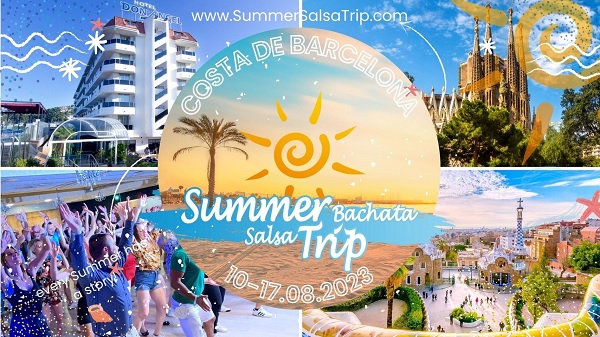
Summer Bachata & Salsa Trip 2023 ✩ Holidays Official Event

10/08/2023 – 17/08/2023

https://www.facebook.com/SummerSalsaTrip

https://www.SummerSalsaTrip.com


Spain Don Angel Hotel

Carrer del Pla de la Torre, 14, 08398 Santa Susanna, Barcelona, España

Description

It will take place at the hotel in the center of a beautiful city where the biggest bachata festivals in Spain take place.

60 hours of workshops on various levels, separate bachata and salsa dance floor during the events!
great entertainers during events and Pool Party, a crazy travel program that guarantees unforgettable memories, crazy company focused on integration, varied music for everyone – salsa, bachata in all its varieties, relaxation on the beach, sun and tanning, fabulously wide Mediterranean beaches, tasted Spanish cuisine, probably the craziest vacation of your life.

Bachata Summer

11/08/2023 – 13/08/2023

https://lasalsadelbaile.com/comprar/bachataummer2023


Thalasia Costa de Murcia Hotel

Av. del Puerto, 327-329, San Pedro del Pinatar, Murcia, España

Description:

Artists:

– Ronald Y Alba

– Magda Y Valeria

– Alfonso Y Mónica

– Antoni Y Belén

– Alfredo Y Andrea

– David Eines

– Tamara Y Candido

– Crecory Campillo

– Oscar E Inés

– Alonso Y Noelia

– Yaizà Melero

– Franco Rocha

– Juan Y Nerea

– Jesus Y María

– Oleo Eisa Adán

– Agustin Y Amanda

– Juanma Y Tania

– Julio Y Alicia

– Andy Y Saray

– Marcelo Y Maribel

– Samu E Isa

Dj:

– Dj Salya

– Dj Miguelom

– Dj Franky

– Dj Samu

– Nicko Play

MADRIDKIZ

11/08/2023 -13/08/2023

https://wa.me/34636087027?fbclid=IwAR2-HO0fRnZJ727Xd3aiHmCPnK_WqMGTvM4U32pcKCO8GdZ8C5GWPjoYBZ8

Hotel SPORT Náyade

Av del Nautico, s/n, 40424 Los Ángeles de San Rafael, Segovia, España

Description:

Jesús y Anni
Luis y Karen
Keco y Moni
Dario y Cristina
Juanra Kizomba
Mamen Vergara
Alberto y Paula
Kevin y Sara
Corneluis
Yago y Yure
Alsajo
Rafa y Natalia

Dj Neo
Dj Linduka
Dj Ness
Dj Adol
Dj kot

***** HORARIOS ***

VIERNES
178h-21h Talleres + Social
23h-24h Taller
24h-05h Fiesta Kizomba

SÁBADO
11h-14h Talleres
16h-18h Talleres
18h-21h Pool Party
23h-24h Taller
24h-05h Fiesta Kizomba

DOMINGO
11h-14h Talleres
14h-17h Pool Party

*********** PRECIO ********

FULL PASS (sin consumición)
35€ (50 unidades)
40€ (50 unidades)
45€
50€
55€
60€ (en puerta)

NOCHES (desde 23h)
Viernes: 10€ (sin consumición)
Sábado: 15€ (sin consumición)

Bachatazo Beach Festival

24/08/2023 – 27/08/2023

https://www.facebook.com/BachatazoBeachFestival


VS Gandía Palace Hotel

Carrer de la Rioja, 41, Gandia, Valencia, Spain

Description:

4 days and 4 nights of partying (from Thursday to Sunday), from August 24 to 27, 2023….

We will have a POOL PARTY (on Sunday), and a BEACH PARTY (on Friday), because the BACHATAZO takes place in a hotel next to the beach.

The important thing is that you book your accommodation soon, because in August, occupancy in Gandía will be 100%.

Artists:

  • Ronald & Alba (Alicante)
  • Tamara & Cándido (Madrid)
  • Marley & Leo (Madrid)
  • David & Inés (Valencia)
  • Miguel & Sunsiré (Madrid)
  • Jesús & María (Valencia)
  • Sergio & Gema (Madrid)
  • Joan & María (Alicante/Valencia)
  • Alberto & Marta (Madrid)
  • Jose & Layla (Madrid)
  • Oscar & Inés (Valencia)
  • Sara & Javier (Gandia)
  • La clave del Cuarto (Gandia)
  • Marcos Lahorga (Zaragoza)

DJ’S:

  • Dj Pier (Madrid)
  • Dj Miguelón (Valencia)
  • Dj Salva (Valencia)
  • Dj Yago (Madrid)
  • Dj Pulpo (León)

Programación:

Thursday:

  • Workshops from 17:30h to 20:30h
  • Evening workshops from 22:30h to 23:30h.
  • Party from 23:30h to 05:00h

Friday:

  • Workshops from 11h to 14h and 15h to 19h
  • Beach Party 18h to 21h
  • Party from 24h to 05h.

Saturday:

  • Workshops from 11h to 20h
  • Shows 23:00h
  • Party from 24h to 06h.

Sunday:

  • Workshops from 11h to 18h
  • Pool Party from 17:30h to 21h
  • Evening workshops from Bachata from 22:30h to 23:30h.
  • Party from 23:30h to 05:00h

Accommodations:

The entire event (workshops, parties, shows…) will be held at the Hotel Versus Gandía Palace, in Playa de Gandía, a beautiful brand-new hotel, just 100 meters from the beach.

Hotel launch offer (can only be booked in full board, water and wine included in meals):

Double/Triple Room: €99 x person and day.

– Minimum stay: 3 nights.
– Prices offer 100 rooms. Then €105 per person.


Soneros Birthdays Party

Soneros Birthdays Party

Omara Portuondo, Ismael Rivera, Jimmy Bosch, and Luisito Carrión celebrate their birthdays this month

October is filled with talent and it’s that in this month a hurricane of brilliant artists of the Salsero genre was born, who have captivated us and have shown their Gift before hundreds of audiences around the world. These Latin Stars have bathed us in SABOR with their lyrics and infected with joy with their melodies. It for that, this month we celebrate their births and dance to the rhythm of the applause towards them. Happy Birthday, Soneros!

Omara Portuondo (October 29, 1930)

Omara was born in La Habana (Cuba). Her first encounter with music was at a very early age. Just as in any other Cuban home, the future singer and her siblings grew up with the songs which her parents, for lack of a gramophone, sang to them. Those melodies, some of which still form part of her repertoire, were young Omara’s informal introduction to the world of music.

She and her sister Haydee sang well-known American group “Los Loquibambla” and their style, a Cubanised version of the Bossa Nova with touches of American jazz, was known as “Feeling”. In their radio debut, Omara was introduced as “Miss Omara Brown, the girlfriend of Feeling”.

“Magia Negra” was her debut record released in 1959. It combined Cuban music with American jazz and included versions of “That Old Black Magic” and “Caravan”, by Duke Ellington. Later she joined one of Cuba’s most important orchestras, La Orchestra Aragón, with which she recorded several albums, such as the one she did with Adalberto Álvarez in 1984 and “Palabras and Desafíos” on which she was accompanied by Chucho Valdés.

Omara Portuondo
Omara Portuondo

However, Omara Portuondo catapulted to her well-earned fame was in the mid-1990s when she collaborated in the recording sessions for Buena Vista Social Club on which she sang “Veinte Años”.

She was the star of the third launching of the Buena Vista Social Club released in 2000 and she toured Europe, traveled to Japan, and performed in the USA and Canada.

Omara went back to the studio to record her second solo album “Flor de Amor” (World Circuit), which was produced by Nick Gold and Alê Siqueira, signals a change in direction in her career: it is an album marked by a more subtle sound and a richness of texture. Portuondo brought in a mixture of Cuban and Brazilian musicians for this album, and it is this factor which influences the particular style of the music.

Omara returned to Europe in 2004 to promote this album, performing at such illustrious venues as the North Sea Jazz Festival, Marble Hill House in London, Olympia in Paris and the Concertgebouw in Amsterdam. “Flor de Amor” was nominated for a Grammy in the Best Traditional Tropical Record category and the 16th edition of the Billboard Latin Music Awards (2005); this album obtained the Tropical Record of the Year award.

Later, Omara released “Gracias”, the record that marks her sixtieth year in the music business and won the Latin Grammy Award for the Best Contemporary Tropical Album. It was a very special night as Omara was there to receive the prize in person and she also presented one of the awards, the first time that a Cuban artist has done this. The album was also later nominated for a Grammy in the Best Tropical Latin Album category.

After touring with the Orquesta Buena Vista Social Club in Europe during 2010, “the girlfriend of Feeling” released the latest recording, Omara & Chucho (Montuno Producciones) in spring 2011. 14 years after their last joint album, they reunite once again to continue unravelling the thread of their first joint project, and show us their talents in the simplest, most unclad manner on a context that enables them to lay emphasis on some of the features that been characteristic of their music at various stages in their careers.

Omara will also tour with the Orquesta Buena Vista Social Club later in Europe and the U.S.

Ismael Rivera (October 5, 1931 – May 13, 1987)

Puerto Rican singer and songwriter contributed to the dissemination of the island’s native rhythms such as the Bomba and Plena, and he was one of the first standard-bearers of the Salsero movement of the decade, the reason for he was called “El Sonero Mayor” and also known for others by the nickname “Maelo”.

In 1952 he was hired as a singer for the Lito Peña’s Orquesta Panamericana with which he became known and reaped his first hits: “La vieja en camisa”, “La sazón de la abuela” and the most popular “El charlatán”, a song in Plena rhythm that was widely heard through the Puerto Rico’s local radio stations.

Two years later he left this group to join the Combo de Cortijo with whom he popularized “El bombón de Elena” by Rafael Cepeda Atiles, and as well as performed on Puerto Rican television in the “El Show del Mediodía”.

At the end of the ‘50s, they were presenting their shows at the prestigious New York club Palladium Ballroom, where they contributed to making popular the tropical rhythms imported from the island with great hits such as “El negro bembón”, “Maquinó Landera”, “Tuntuneco ”, and others.

Ismael Rivera
Ismael Rivera

Ismael Rivera’s triumphant career was interrupted in 1962 for paying four years under the laws of Puerto Rico for possession of narcotics. Then, after recovering his freedom, Ismael formed his musical ensemble “Los Cachimbos” and immersed himself in the nascent Salsero movement to which he contributed two classics such as “Dime por qué” y “Mi negrita me espera”.

In the mid-70s “El Sonero Mayor” became the ambassador of Salsa throughout America, working for the record label of the genre Fania, and triumphing with emblematic songs such as “De todas maneras rosas”.

In his facet as a composer, he wrote very notable pieces such as “Besito de Coco” (famous song by Celiz Cruz), “El incomprendido”, “Arrecotín, arrecotán”, “El que no sufre no vive”, y “Mi libertad eres tú among many others.

In his last years, he suffered a throat cancer that caused him to lose his voice and he died as a result of a heart attack.  R.I.P MASTER!

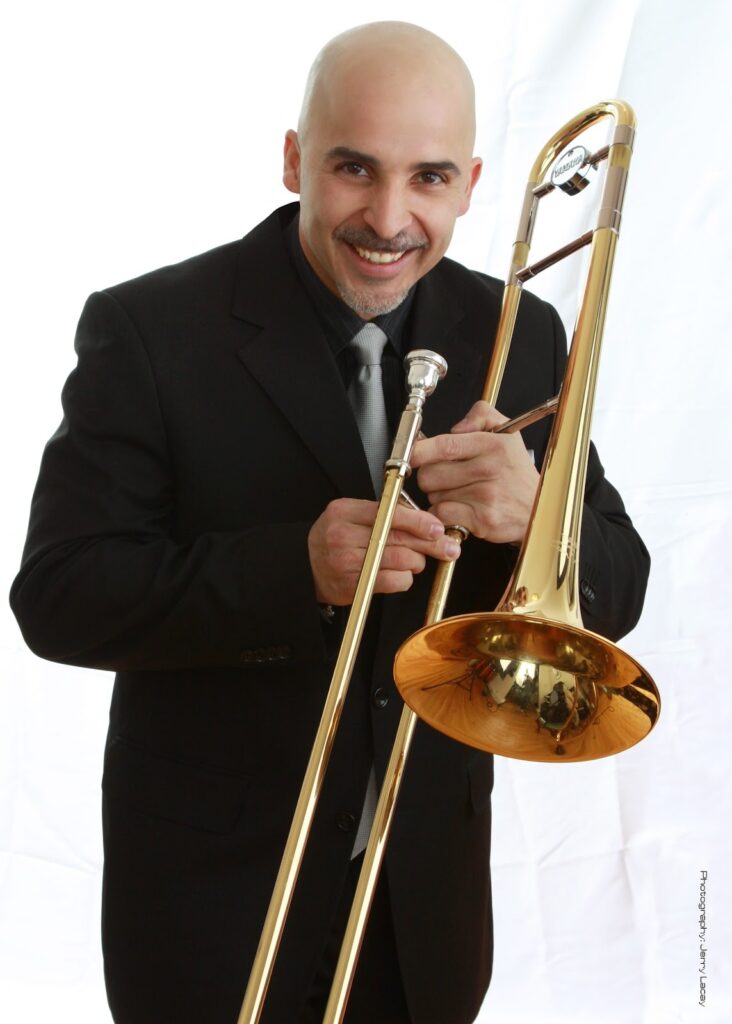
Jimmy Bosch (October 18, 1959)

Jimmy Bosch was born in 1959 (New Jersey, U.S.). He is a world-renowned Trombonist, composer, singer, and bandleader in the world music genres. He has been performing professionally since age 13. Jimmy’s first two solo CDs, “Soneando Trombón” and “Salsa Dura” established him as the Ambassador of the Salsa Dura movement. He ignited this movement by combining old school quality salsa arrangements with a modern NY aggressive edge and socially conscious lyrics. “El Avión De La Salsa” demonstrates and solidifies his commitment to dancer centered music, while “A Millón” is the title of Jimmy’s 4th solo record released.

Jimmy Bosch
Jimmy Bosch

Appearing in over 100 recordings, Bosch “El Trombón Criollo de La Salsa” has garnered at least 10 Grammys and has toured with his orchestra, his sextet or as a solo artist, as well as with: Eddie Palmieri, Ruben Blades, Celia Cruz, Ray Barretto, Willie Colon, Manny Oquendo y Libre, FANIA Allstars, and the list goes on.

Jimmy has been featured throughout the world in major venues and festivals, including; Carnegie Hall, Lincoln Center (NYC), Celebrate Brooklyn (NYC), Montreal Jazz (Canada), Madison Square Garden (NYC), Sydney Opera House (Australia), Barranquijazz (Colombia), El Poliedro and Teresa Careña (Venezuela), and many other important places.

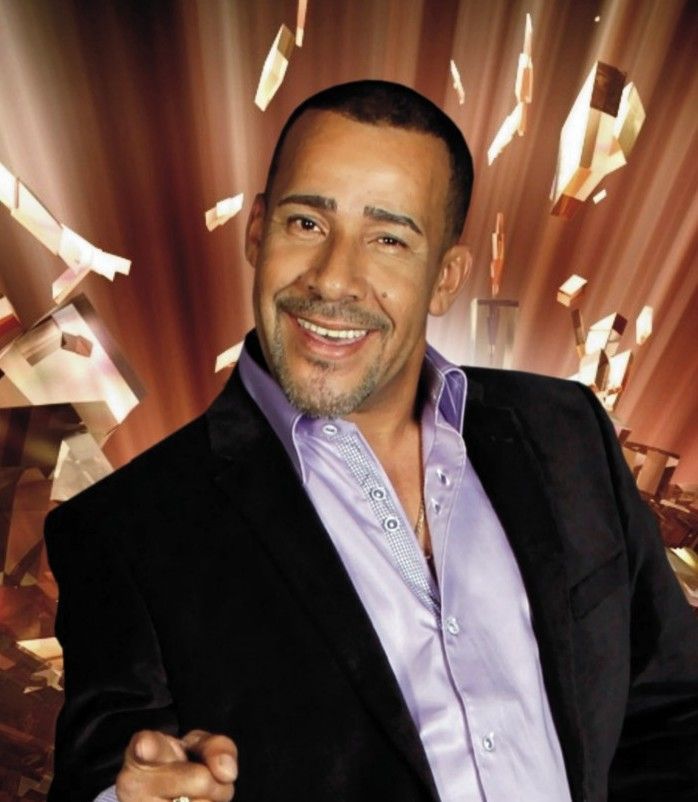
Luisito Carrión (OCTOBER 26, 1962)

A native of Arecibo in Puerto Rico, Luisito Carrión has been singing since he was 13 years old. He began his career as a Salsa artist with the Orquesta Kafe, Orquesta La Nativa and Grupo Concepto Latino.

In his first performances, he sang along with Celia Cruz, Adalberto Santiago, and Santitos Colón. Later on, he was a member of Salsa Fever together with Julio “Gunda” Merced, were several hits come from: “Renta de Amor” and “Señores ahí va Julián”. Afterward, he joined the Bobby Valentín Orchestra, where he sang songs, such as: “El Señor de las Señoras”, “Ramos de flores”, “El Gigoló”, “Tributo de Cali” and “Como lo hago yo”. In his evolutionary process, Luisito joined the Orquesta Don Perignon where he sang “La Fuga” and later with the Sonora Porceña, where he performed songs, such as “Yaré” and “A Comer Lechón”.

Luisito Carrión
Luisito Carrión

In 1997, he recorded with Roberto Roena y Su Apollo Sound “Mi música 1997”. At the end of the 90s, Carrión began his career as a soloist with the record company MP Records with Julio “Gunda” Mercéd and Rafael Bodo Torres, which led to hits, such as: “Sin tu amor”, “La Chica Más Popular”, “Nadie Como Tú”, “Porque”, “Amiga Mía”, “Muriendo”, “Como Ave Sin Rumbo” and “Para Ser Real”. Nowadays, Luisito Carrión is one of the best Puerto Rico’s Soneros bringing on “Histeriaaaa…” in his fans.

Cali Fairs 2019

What you should know before arriving in Cali

Cali is the capital of the department of Valle del Cauca, located on the Colombian Pacific. Located at 1,018 meters above sea level, its average temperature is 32 degrees, with a dry climate for most of the year.

The climate of the city is hot most of the day, so it is advisable to wear fresh clothing and elements to protect yourself from the sun.

The city is one of the main economic and industrial centers of Colombia, in addition to being the main urban, cultural, economic, industrial and agrarian center in the southwest of the country and the third nationally.

Cali Fairs - Flyer
Cali 2019 Fairs Flyer

The number of inhabitants according to the result of the last census is 2,420,013 inhabitants, which makes it the third most populous city in the country.

The Alfonso Bonilla Aragón International Airport is located just 35 minutes from the city center.

Salsa is the musical genre that is most listened to in the city; but there are places for all kinds of musical tastes.

The dancers from Cali are recognized for the speed of their movements and there are academies where classes are taught for tourists.

Aguardiente is the typical drink of the region. To consume it, it is recommended to eat first and hydrate well.

A variety of beers, local rum and imported spirits are also available.

It is essential to try the local delicacies: Lulada, marranitas, pandebonos, cholados, chontaduros and shampoos.

If you arrive in Cali at the time of the Fair, it is best that you prepare to live six of the best days of your entire life; where the music, the dance, the gastronomy and the warmth of the Caleños will make you fall in love with this city which they call “La Sucursal del Cielo”.

Cali has a massive transportation system called MIO, which has routes designed to cover the entire city; but you can also get around in taxis. The minimum race has a cost of $4,700. ($1.5)


Places to visit in Cali:

1. Calima Gold Museum

It is an archaeological museum dedicated to the Calima culture located in the historic center of Cali.

2. Boulevard of Colombia Avenue

Also known as the River Boulevard for being located on the banks of the Cali River.

It is a boulevard located in the historic center of the city, in whose surroundings are the Ermita Church, the Coltabaco Building (architectural heritage), the Municipal Administrative Center, CAM; the Puente España, the Jorge Isaacs Theater, among others.

This pedestrian space has become one of the most visited sectors of the city due to its traveling art shows.

3. The Tertulia Museum

It is a museum of modern art and has the most important collection of works on paper in the country.

4. Alameda Park

It is a space for family integration that has become a great cluster of gastronomy, music and dance.

5. Caliwood Museum of Cinematography

It stands out for its emblematic collection of cinematographic, photographic and phonographic devices, which show the evolution of the filming and film exhibition equipment used in Colombia.

6. La Merced Religious Complex

Religious complex located in the place of foundation of the city of Santiago de Cali.

It is made up of the main nave of the church dedicated to Our Lady of Mercy (patron saint of the city), the auxiliary chapels dedicated to Our Lady of Remedies and the Lateran Christ, the religious convent, the museum of religious art and the archaeological museum.

7. Pance River and Health Park

It is one of the most frequented natural places by the inhabitants of Cali.

From the town of Pance to the area known as the Vorágine there are a good number of restaurants and recreational parks.

8. Sebastian de Belalcázar viewpoint

It has a monument that pays homage to the conqueror Sebastián de Belalcázar, who founded the city in 1536.

9. San Antonio neighborhood

Its richness lies in its urban landscape and in the daily expression of its inhabitants, custodians of the oral traditions that gave the city its identity.

It is the cradle of a varied gastronomic offer and fashion shops, as well as religious devotion and the sweet tradition of flower pots on the last weekend of June when the Flower Pot Festival is celebrated.

10. Christ the King

It is the monument that dominates and protects the city with open arms. It is 26 meters high and is located on Cerro Los Cristales.

11. Granada and El Peñon

These neighborhoods are renowned for their hotels, shops, restaurants, bars and nightclubs, with something for everyone.

12. The Cat of the River

It is one of the sculptural works of different artists located on the banks of the Cali River.

The Cat is the work of Hernando Tejada. A series of complementary sculptures can also be found accompanying the cat, called Las Novias del Gato.

Cali fairs - events
Other events in Cali

Events to return to Cali

Macetas  festival

It is part of a local tradition that celebrates the bond between godparents and godchildren. Every year, during the last days of June, cultural activities, exhibitions and sales of pots, made with sugar candies, are held.

Dance Biennale

It is a festival dedicated to the music of Pacific folklore that takes place in the month of August. It seeks to highlight composers, musical groups and music researchers of Afro-Colombian origin. Gastronomy, clothing and handicrafts are some of the components of this multicultural meeting.

Cali Fairs Flyer
Multiple free events in Cali

Petronio Álvarez Pacific Music Festival

Event that aims to stage theater shows at a local, national and international level, during the month of October.

World Salsa Festival

National and international companies arrive in the dance capital in November to show the country the best of contemporary, urban and folkloric expression.

Cali fairs - event flyer
Other events at the Cali Fairs

Cali International Theater Festival

It takes place in Cali every year in the month of September and recognized orchestras and all the salsa schools in the city participate, accompanied by dance academies from other cities and abroad that are represented by around 5,000 dancers.

During the festival, workshops, talks and academic meetings are held around salsa.

Cali Exposhow

It is the most important beauty, health and fashion event in Colombia, it takes place annually in the month of October and brings together important local and international designers and exhibitors.

Cali fairs - free
Free events in Cali
  • Information: https://feriadecali.com.co/sobre-cali

Alex Sánchez “Salsa has always had a special place. It is a genre that will never go out of style ”.

Latin America / Venezuela / Miranda

Mulato en Rumba his greatest bet Alexis José Sánchez:

He is a versatile artist, who like many other musicians begins his training from home, with his brothers he learned to play the cuatro and the guitar, this motivated him to continue his formal studies at the School of Music “José Lorenzo Llamozas”, where he also studied trumpet alongside maestro José “Cheo” Rodríguez; He jointly studies Afro-Latin percussion with maestro Orlando Poleo, Barloventeña percussion with Alfredo “Pandilla” Bolívar and Arturo Piñango, African percussion with José Shalons and Yonder Rodríguez.

At the “Nicomedes Marrero” Cultural Training Center in Tacarigua, he took piano lessons with professor Manuel Sepúlveda, Afro-Venezuelan percussion with maestro Alexander Livinalli and Choral Direction in the free art workshop of “Río Chico”.

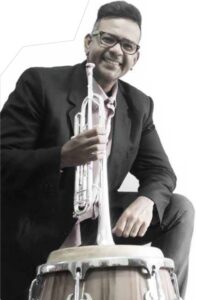
Photo- Alex Sánchez
Photo by Alex Sánchez

Although he was born in the city of Caracas, all his life he has lived in the Barlovento region, an area with a great cultural and musical richness, there he also performs the role of teacher, being a facilitator of the Afro-Barloventeña, Afro-Venezuelan and Afro-Venezuelan percussion chairs. Afro-Latin, in School District No. 4.

From a very young age he has been linked with the traditions of his town; Tacarigua. This young man is an active part of the cultural development of the area and together with his wife Yermy Martínez and his mother-in-law Zenaida Gamboa, founders of the group “Danzas Tacarigua”, they are in charge of training the youth of relief, in order to keep the demonstrations alive. traditional barloventeñas for many generations.

Sánchez, assures us that he has a great responsibility, to preserve the legacy that the Africans left in their path through our land, that despite the obstacles he gets along the way to carry out his work, he is overcoming them one by one with perseverance and dedication. that love he feels for music, his family, his traditions and his other passion for teaching.

Salsa and Venezuelan Folklore, two different worlds, each rich and varied in rhythms and styles, however, it takes them by the hand, something that is not strange in a country where the mixture abounds, that we Venezuelans are the product of an ethnic and cultural mix.

How were your beginnings in music?

“I started in music at home with my brothers. I learned with them to play cuatro and guitar. That was the fundamental basis of what has been my musical career up to now and it also inspired me to continue with formal studies in music ”.

Your musical training has been very broad. Why did you decide precisely to specialize with the trumpet?

“I decided on the trumpet, since it has been the traditional instrument in my family, first my great-grandfather Gregorio Machado, then my great-uncle“ Perucho ”Machado and my brother Wilman”.

A man from Caracas who decides to emigrate to Barlovento Why not Barquisimeto or another region?

“My whole family is from Barlovento, since I was born I have lived here in Tacarigua, Brión municipality. After studying music I realize the musical wealth that exists in this region. That is why I decide to bet on the musical production of my homeland and also be part of that artistic movement that represents Barlovento and that has given so much to our country ”.

Composing and arranging music, the work that leads its creators and orchestras to position themselves in the first places. Which of your works as a composer and arranger have been positioned in that place?

“That is the dream of every arranger, to achieve that an orchestra reaches the first places of popularity and in sales. I haven’t had that luck yet, but it’s my dream as a songwriter. I have arranged for many orchestras that have been quite popular and are playing in various countries ”.

Alex Sánchez
Mulato in Rumba your biggest bet

There are many orchestras for which you have done this work, could you name them?

“I have arranged for orchestras and singers such as: Bailatino, Cheo Linares and his Orchestra, Víctor Cardona and the Salsa Machine, Cheo Navarro and his Tribute, Francisco Pacheco and his People, Hildemaro Jr., Orquesta Sarayé (Colombia), Orquesta La Suprema (Panama), Orlando Watussi and my musical project “Mulato en Rumba”, among other national artists “.

Percussion is another of its virtues, of the different rhythms. Which of them is more difficult to teach or learn?

“Percussion is a world that allows you to express yourself and make contributions based on its rhythmic quality. All rhythms have difficulties, but their great musical richness and the magic of the ancestral charge make it possible for us to digest them naturally ”.

“I invite the musicians and the community in general to come to Barlovento to learn about the regional culture, so that they learn to play Mina, Culo e puya, Quitiplás, Fulía and Parranda.”

In the vineyard of the Lord there is everything and for everyone. What has been the most difficult thing about this profession?

“Music gives you a lot of satisfaction, but around it there are circumstances that create disappointments – they can scam you, you have friction with colleagues, etc. – you will find obstacles, but I think that all this is overcome with perseverance and dedication to work. That is what it takes to stay in the musical world ”.

The Music Producer is the architect of a record. What do you feel at the end of each record? What do you feel at the end of each work done?

“Music production is hard work, bringing together musicians, writing and selecting songs, directing, molding and creating a pleasing product for the public, where feelings are reflected on paper, which in turn become sounds that will mark the life of anyone who is a music lover. That is the greatest satisfaction ”.

Each era has its ups and downs, do you think you can make a living from music?

“Of course, if we think of music as an industry we can find that starting from being a composer, arranger, through instrumentalist, singer, among other things, always keeping in mind the quality of the work to be able to sell it, it can be said that we are prepared to live from what we love to do ”.

How does it feel to be part of the cultural development of Barlovento?

“It is a great responsibility to know and feel that you are the bearer of such an important heritage for the development of the culture of an area where the legacy of the Africans who populated our lands will always prevail. Maintaining, disseminating and promoting the culture of my people through workshops, talks and exhibitions will guarantee that tradition is not lost and that these children and young people, just like I started, will be the future protagonists of the traditional Barlovento demonstrations. ”

Tell us about the Black Theater of Barlovento and Danzas Tacarigua. How do you undertake the preparation of the new generations so that the traditions last over time?

“The Black Barlovento Theater, a group that has 43 years of artistic experience, also proudly carries the cultural heritage of the Miranda State. It is and has been a great school for me for 27 years when I made my first presentation with this great family. I say that it is a great school because it is characterized by being an avant-garde group and that it has given me the green light and total confidence to develop and put into practice all the knowledge acquired musically throughout my career through the different productions of the theatrical works brought to the scene ”.

“Following this example and great experience with the Black Theater of Barlovento, we have been working with the Danzas Tacarigua group, directed and founded by my wife Yermy Martínez and my mother-in-law Zenaida Gamboa for 20 years, training children and adolescents in terms of traditional Venezuelan culture, emphasizing the Barloventeña. They are currently part of the main actors in the traditions of my Tacarigua people. It is an arduous work in favor of the diffusion of the same ”.

His wife is an active part of the Cultural development of the young people of Barlovento, here we could say that “Next to a great man goes a great woman”?

“When one is passionate and responsible with what he does, with his profession, his home, that is accompanied by a great companion, I thank my wife very much, a large part of who I am and what I have achieved is accompanied by her great support, she is passionate about what she does, and that gives me a lot of strength ”.

Salsa and Venezuelan Folklor take you by the hand, how does it unfold between these two worlds?

“Despite the fact that they are two different worlds and from different markets, I have tried to take them by the hand, since from a very young age I was linked with the tradition of my town and the Barloventeño region in general, participating in the demonstrations held throughout of the holiday calendar. The salsa world has helped me understand and handle our culture in a more respectful way through arrangements, compositions, and also when interpreting it”.

Flyer Alex Sánchez
Alex Sánchez & Mulato in Rumba

How do you see the sauce right now?

“Salsa has always had a special place. It is a genre that will never go out of style. We must thank the DJs very much, who, whether they like it or not, have been a fundamental part of the salsa being maintained over time, since the media have lost that interest in promoting and promoting new salsa talents for their music. respective development.

In Venezuela the salsa movement has suffered a lot, since orchestras and producers have had little support at the level of the music industry, since it has diverted its attention to urban genres, which according to them is the most commercial. Despite all this panorama, many musicians, singers, producers have made efforts to continue working in favor of Venezuelan salsa with what we call “record pocket” -hahaha-. All this so that his musical work does not remain only in a dream ”.

Barlovento and its sauce, what can you tell us about “Trabuco Barlovento”? “Trabuco Barlovento is an initiative of my cousin Richard Frías. He told me one day at a salsa concert held in Mamporal, seeing that the great stars were accompanied by musicians from Barlovento, -with all those musicians who are there you can make a blunderbuss that represents Barlovento- and that is how the group was born ” Trabuco Barlovento ”, with more than 10 years of artistic life and 1 recording production to be finished.

I remember that among those musicians who accompanied the artists were Rodolfo Rada (trumpet), Ángel González (saxophone), Darlin Palacios (trombone), among others who are today the fundamental pillar of this group. It has 14 members, where I work as the musical director and main arranger of this prestigious group”.

Orlando Poleo, a national and international percussion reference. What anecdotes do you have of his training with him?

“Orlando Poleo arrived in Tacarigua in 1986 as a percussion teacher at the” Nicomedes Marrero “Cultural Training Center, which was a great experience for me, since he was venturing into the world of Afro-Caribbean music”.

“I remember that once he came with his orchestra“ Casino ”and as he was quite advanced in his classes, he rewarded me by playing a song. It was the glory for me to play with the maestro. It was a great experience for the musicians of Tacarigua and other nearby towns because it helped improve playing techniques and understanding of the use of the clave. Much of that learning I apply to create arrangements. ”

He is a teacher and a student, what is more difficult for you to teach or learn?

“Both are difficult, because to teach well you must learn well.”

You are working with a new musical proposal. What do you have in store for us with the Mulato en Rumba project?

“Mulato en Rumba is my biggest bet. This movement has more than 15 years, began as “Alex Sánchez and his Orchestra” to accompany artists and participate in ¬estas and salsa events in the area. One day recording for another orchestra, we met my brother Edward Plater, my compadre Yoryi Pacheco and I fine-tuning details of what we had already recorded. We saw each other’s faces and said -Why don’t we make an orchestra that is ours? -; we always record and produce for others ”.

“It is then that we decided to set up and start this musical project with our own songs composed by Yoryi Pacheco and myself and arrangements made by me as well. The main members are: Yoryi Pacheco (singer), Edward Plater (trumpet), José Madera Niño (tumbadora), Jonal Rivero (trombone), Rodolfo Frías (bassist) and Alex Sánchez (trumpet, piano and musical direction). Soon our first record production will be ready, which has been done uphill because it is financed by “Pocket record”

–”jajajajajajaja”-.

That name sounds like ¬esta, joy and sauce. How was the name Mulato born in Rumba?

“This name was given to him by my friend and brother Cheo Linares. I told him that we had a new project and he told me

-The mulattoes are going to start partying in Barlovento- and from that moment we call ourselves “Mulato en Rumba”.

Alex Sánchez
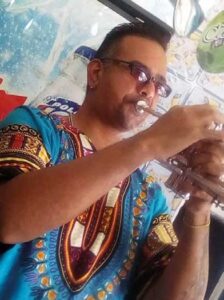
Alex Sánchez playing the trumpet

Creativity is in decline in Venezuela, you are a composer and arranger and many of the Salsa orchestras are betting on versions or tributes, they do not risk innovating, creating or inventing. What do you think about this matter?

“I think that covering is very fashionable, I think that for many people it is easier to live attached to the shadow of another than to risk producing their own.

Perhaps it is fear of failure due to the lack of support for the artist that exists in our country. There are those who do take risks and bet on other markets (other countries), where the appetite for good music is always thanks to the fact that in those countries there are people eager for new things. In our country that culture of wanting to hear something new and as the saying goes: “-No one is a prophet in his land-” has been lost.

If you bet on innovating and creating, what are the themes of your production?

“We have 10 songs, 2 versions and the other 8 songs are unpublished, we bet on ourselves, not to be in the shadow of others, here the lyrics and music are by José Madera Niño, and my person, Yoryi Pacheco also writes some of the topics. In the version of “Tú mi Delirio” I sing ”.

“The song, get ready, Dancer, the lyrics and the music are by Freddy Junior Solórzano.”

The support of the media is important to show the work done by national talent. Do you feel that there is little dissemination by the media to show the work done by the different groups?

“-Well-, in previous questions I have said that there is no support from the mass media. Hopefully that will end one day and they give importance to Venezuelan music and talent as much as they give it abroad.

La Payola, many criticize it and want it to disappear, however, there are musicians who contribute to this scourge that hurts everyone. Would you ever pay to play?

“I don’t agree with the Payola. Colleagues have told me that if they have done it that it is a rather shameful situation, since many times they have to play without any remuneration in exchange for playing on the radios several times a month. Personally, I would never pay for what he calls Payola ”.

What would be the good and not so good things about this beautiful but tough profession?

“I think there are more good things than bad things, and more when we take music as a profession. The musical world is very satisfying, since it makes you live unique experiences that fill your soul and spirit with joy ”.

Teacher, musician, arranger, music producer What do you feel you need to do?

“Learn, learn and keep learning to make good music and also be able to make” Mulato en Rumba “recognized nationally and internationally.”

His daughters have grown up in an environment full of music, tradition, folklore, they have the musical vein Sánchez, would you like them to be musicians, what legacy would you leave them?

“Hopefully they decide to be musicians, I would never force them to do something they don’t want to, because I think that everyone should do what they really like and are passionate about. The legacy that I will leave you will be all I can do in my musical life, since a large part of what I do is for my family. My daughters at their young ages have already been immersed in the artistic world, they sing, dance and participate in the cultural manifestations of our people. ”

In a word, who is Alex Sánchez?

“A fighter”.

Barlovento and Venezuela in one sentence

“My homeland, My Dear Homeland”.

Eiling Blanco Latin America Corresponded


Francisco Aguabella “El Tamborero de Cuba” Bravo and Virtuoso Percussionist of Afro-Cuban Ritual Music

Aguabella was born on October 10, 1925 and grew up in the drumming tradition of Matanzas in Cuba.

On May 8, 2010, Francisco Aguabella “El Tamborero de Cuba” passed away in Los Angeles, United States. Bravo and virtuoso percussionist of Afro-Cuban ritual music, Latin/jazz and jazz.

Of remembered links to Tito Puente’s band, Mongo Santamaría, Cachao López, Eddie Palmieri, Dizzy Gillespie, Frank Sinatra, Jorge Santana’s group “Malo” and his own “Latin Jazz Emsemble”.

Aguabella nació el 10 de octubre de 1925 y se crio en la tradición de los tambores de Matanzas en Cuba

In 1953 he emigrated to the United States and settled in California as an olu batá (bata drummer).

Batá drumming is a ceremonial musical style that plays an integral role in the African-derived Santeria religion practiced in Cuba, Puerto Rico and since the 1950s in the United States.

No other music of the Americas bears a more striking similarity to West African music than the batá. Its set of three double cone drums reproduces the Nigerian Yoruba drum set of the same name.

Francisco Aguabella “El Tamborero de Cuba” Bravo y Virtuoso Percusionista de la música ritual afrocubana

Many of the rhythms closely resemble their African prototypes, and the Afro-Cuban language of Lucumí, in which Aguabella sings, is clearly a derivation of Yoruba.

Prior to 1980, Aguabella and Julito Collazo were the only olu batá in the United States who had been initiated into a secret society of drummers designated to perform a very sacred type of batá known as batá fundamento .

The batá fundamento is an integral part of Santeria ceremonies in which an individual’s initiation into the religion cannot be consecrated unless he or she has been presented before this sacred ensemble.

Each year Aguabella builds a shrine for his patron saint, Santa Barbara (Changó), and plays music at a birthday party held in her honor.

Francisco Aguabella “El Tamborero de Cuba”

It’s an all-day celebration for invited friends who are primarily but, not exclusively members of the Santeria sect “Santa Barbara knows it’s her birthday,” Aguabella said, “I know how she feels.

She feels happy if I honor her, I feel bad if I don’t so on St. Barbara’s day every December 4 whatever work I am doing today I don’t do for anyone, I love this saint very much and I promised her I was going to have a party every year.

Se recuerda sus vinculaciones a la Banda de Tito Puente, Mongo Santamaría, Cachao López, Eddie Palmieri, Dizzy Gillespie, Frank Sinatra, el grupo Malo

Although Aguabella is widely respected for his sacred drumming he is also known for his virtuosity in the secular forms of Afro-Cuban music.

Choreographer Katherine Dunham was so impressed with Aguabella’s drumming that she invited him to join her company for tours of South America and Europe.

The most influential of Aguabella’s secular styles is rumba, a complex of several musical genres that evolved in Cuba in the early 20th century.

Rumba was the basis for much of the Cuban dance hall music that in turn helped shape American popular music through dance bands based throughout the United States.

However Afro-Cuban rumba bears little resemblance to the ballroom dance rumba that inspired Francisco. Rumba as Aguabella said is part of daily life for many Afro-Cubans, it doesn’t have to be a special day to play rumba, we could start a rumba here without a drum.

You could play it here or there on the wall, in Cuba rumba is 24 hours a day, we gather in a corner and have a glass of rum…. And someone says: Why don’t we play a little rumba?  Some people touch the wall and someone else plays a bottle and maybe takes a cap off the bottle and ‘ca ca ca ca ca ca ca ca ca’ and the Rumba.”

Aguabella’s goal has long been to maintain the integrity of the tradition he so respects, while incorporating it into “crossover” music aimed at a wider audience.

It was his superior musical ability and commitment to tradition that led musicians such as Mongo Santamaria, Malo and Carlos Santana to bring him into their groups.

Cubacan Francisco Aguabella Año 2002

Aguabella lived in Los Angeles; where he continued to performand exert a great influence on Latin American music.

Afrontilas Music

Read Also:  Tata Güines known as Manos de Oro, Cuban rumbero and percussionist

  • « Go to Previous Page
  • Page 1
  • Interim pages omitted …
  • Page 20
  • Page 21
  • Page 22
  • Page 23
  • Page 24
  • Interim pages omitted …
  • Page 39
  • Go to Next Page »

International Salsa Magazine (ISM) is a monthly publication about Salsa activities around the world, that has been publishing since 2007. It is a world network of volunteers coordinated by ISM Magazine. We are working to strengthen all the events by working together.