• Skip to primary navigation
  • Skip to main content

International Salsa Magazine

  • HOME
  • Previous editions
    • 2026
      • ISM / March 2026
      • ISM / February 2026
      • ISM / January 2026
    • 2025
      • ISM / December 2025
      • ISM / November 2025
      • ISM / October 2025
      • ISM / September 2025
      • ISM / August 2025
      • ISM / July 2025
      • ISM / June 2025
      • ISM / May2025
      • ISM / April 2025
      • ISM / March 2025
      • ISM / February 2025
      • ISM / January 2025
    • 2024
      • ISM / December 2024
      • ISM / November 2024
      • ISM / October 2024
      • ISM / September 2024
      • ISM / August 2024
      • ISM / July 2024
      • ISM / June 2024
      • ISM / May 2024
      • ISM / April 2024
      • ISM / March 2024
      • ISM / February 2024
      • ISM / January 2024
    • 2023
      • ISM / December 2023
      • ISM / November 2023
      • ISM / October 2023
      • ISM – September 2023
      • ISM – August 2023
      • ISM July 2023
      • ISM Edition June 2023
      • ISM – May 2023
      • ISM April 2023
      • ISM March 2023
      • ISM February 2023
      • ISM January 2023
    • 2022
      • ISM December 2022
      • ISM November 2022
      • ISM October 2022
      • ISM September 2022
      • ISM August 2022
      • ISM July 2022
      • ISM June 2022
      • ISM May 2022
      • ISM February 2022
      • ISM January 2022
    • 2021
      • ISM December 2021
      • ISM November 2021
      • ISM October – 2021
      • ISM September 2021
      • ISM August 2021
      • ISM July 2021
      • ISM May 2021
      • ISM April 2021
      • ISM June 2021
      • ISM March 2021
      • ISM February 2021
      • ISM January 2021
    • 2020
      • ISM December 2020
      • ISM November 2020
      • ISM October 2020
      • ISM September 2020
      • ISM August 2020
      • ISM July 2020
      • ISM June 2020
      • ISM May 2020
      • ISM April 2020
      • ISM March 2020
      • ISM February 2020
      • ISM January 2020
    • 2019
      • ISM December 2019
      • ISM November 2019
      • ISM October 2019
      • ISM Septembre 2019
      • ISM August 2019
      • ISM July 2019
      • ISM June 2019
  • Download Salsa App
    • Android
    • Apple
  • Spanish

Search Results for: Dance Company

Latin Music Revolution in United States: Record labels that bet on producing Latino Artists

North America / United States

Record labels that bet on the first Latin singers in the United States

Currently, visiting a nightclub in the US and listening to a bachata or merengue song is totally normal. The assistants, regardless of their nationality, will end up dancing and chanting the melodies. However, a few years ago it was not this way. Find out which labels made this a reality.

Latin music came to the United States around 1930 thanks to the bolero. Its growth continued to rise within its borders passing through salsa, chachachá and merengue; until genres such as bachata and Latin jazz became popular in order to position themselves as they are today. To a large extent, social networks have contributed to the projection of today’s artists. For the most part, they create strategies that increase their reach by improving their sales and reproductions. In 2019, on the Billboard Hot 100 chart, which measures the most popular songs in the United States, there were more Latin songs than ever. A true historical record!

Record Labels in Latin Music
Record Labels of Latin Music

These data were revealed by Leila Cobo, Billboard’s vice president for the Latin market.

In 2018, Latin music rose to the fifth place with the highest demand in the United States, according to the music statistics firm BuzzAngle, in charge of rankings for Rolling Stone magazine.

For many, it is a cause for astonishment and they cannot imagine what the previous story is. The first Latin singers had to go a long way, being rejected in some opportunities but, finally, achieving success on American soil. There is a long list of characters who paved the way for other Latin musicians such as: Héctor Lavoe, Celia Cruz, Rubén Blades, among others.

Another curious fact worthy of consideration corresponds to the companies that were behind these releases: the record companies. Those record labels that dared to try a foreigner with a proposal in a language other than the United States; They trusted and believed in his talent. Part of this musical revolution, it is thanks to them and their directors.

Record labels that bet on the first Latin singers in the United States

Fania Records

In 1964 this project was born in New York City. It was founded by the American businessman, producer and promoter, Jerry Masucci and the Dominican musician Johnny Pacheco.

Pacheco is one of the most influential figures in Caribbean and Latin music. He is a composer, director, arranger; he specializes in Cuban and Caribbean music such as salsa. This singer also had to go step by step within the US market, train in its streets and go after recognition. In 1960 Pacheco y su Charanga was created, a band that reached more than 100,000 copies on its first album. Alegre Records was the label they signed with. His fame led him to visit countless countries. His experience in the industry made his wish he could help others. After creating Fania Records, he was recognized for promoting the careers of many young artists.

The name of Fania Records was taken from a Cuban song by Reinaldo Bolaño. In part, their great popularity was due to their promotion of salsa. The label supported the greats of the show such as: Rubén Blandes, Willie Colón, Tito Puente, Bobby Valentin, Ray Barretto and Héctor Lavoe, among others.

Alegre Records

It was founded in 1956 by Al Santiago, the owner of a record store in the Bronx. It specialized in products born in the 1950s.

Alegre Records represented, for the most part, Latin music singers. In addition, opening its doors to greats such as Tito Puentes, Johnny Pacheco, founder of Fania Records, Eddie Palmieri. In 1975 it was acquired by Fania Records.

Capitol Records (EMI Latin)

It is an American record company that opened its doors in 1942. Its founders were Johnny Mercer and Buddy DeSyIva, American singers. Today it is owned by Universal Music Group, one of the world’s leading record labels. In most cases, it focused on genres typical of its borders. However, they gave their support to the American with Mexican roots, Selena and the Dominican Juan Luis Guerra.

Discos CBS International

CBS Record Label
Record Label of Latin Music

At first it was located in Coral Globes and then it was transferred to the city of Miami. Discos CBS supported bands like Miami Sound Machine, in which the renowned singer and songwriter Emilio Estefan participated. In 1991, it was acquired by Sony. It is one of the best known for being part of the CBS television network (Columbia Broadcasting System, Inc). It was founded in 1962 by Harvey Schein. Discos CBS is active despite the number of years since its inception. He is dedicated to different genres, without neglecting music in Spanish.

Warner Music Latina (WEA Latina)

Warner Music Latina
The world of Latin Music Record Labels

It is a label belonging to Warner Music Group, one of the world powers in the field. Warner Music Latina emerged in 1987 and focused on Latin productions, giving the opportunity to artists such as the Puerto Rican, Olga Tañón. It was the label that gave her her first opportunity as a solo artist with the album Sola (1992), making her a Platinum Record recipient. At present, it has branches in different countries of the world. It has production and publication of music, recorded music and services for artists.

RMM Records

It was an independent record company that operated in New York City until the late 1990s. It focused on salsa, merengue, and Latin jazz productions. He worked with artists such as Marc Anthony, Tito Puente, Cheo Feliciano, Tito Nieves, Celia Cruz, Óscar D´León, among others. RMM Records went bankrupt due to legal problems with artists and a millionaire lawsuit filed by singer Glenn Monroig. In 2001 Universal Music acquired the RMM records catalog. A lot of

Over the years, the American music industry was increasingly influenced by songs in Spanish. Those who do not speak the language have commented that they are attracted to the catchy rhythm and do not hesitate to dance them non-stop. The US public has become less skeptical of Latin rhythms. Recording industry experts say it is due to the rhythms and their proximity to the songs in English.

The creation of platforms such as YouTube and the appearance of streaming platforms has given greater openness to the market. More and more Latinos are succeeding in the US and record companies are deciding to finance their projects.

Merlin, a specialized agency, has been in charge of bringing together different independent record companies and managing the collection of income derived from streaming platforms. Half of the record labels associated with Merlin are American. On the other hand, the number of clicks and visits obtained by Latin songs on video platforms such as YouTube and Vevo are increasing, especially in the case of audiences in the US The number of new immigrants and young people must also be considered. Born to Latino or Latin American parents.

The market continues to bet on Latin music. In fact, in the United States there are a large number of stations focused on this type of music. Users can request the songs of their choice and enjoy them at any time of the day.

What will be the next step for songs in Spanish within the United States?

Home

The Legends: Tribute to Billo’s

North America / United States

Tribute to Billo’s. How was made?

Legends was conceived between April and September and it is already a reality! The album that is making people of all ages dance.

The record label JN Music Group is recognized for enhancing the work of Latinos in the United States. The company has 37 years of experience in the market and is chaired by Juan Hidalgo and Nelson Estévez, producers of Latin music in its different genres. Both have set themselves the goal of promoting other genres because “not everything is reggaeton”.

Adrián Frometa, grandson of the remembered Luis María Frometa “Billo’s”, is the new Director of the orchestra and was in charge of the negotiations around the album.

Great tropical artists participated in the tribute to Billo’s
Artists like Milly Quezada, Karina and Oscar D’León participated in the Billo’s album

“Los Legendarios” was conceived as a nice reminder of the musical career of maestro Luis Frometa. The proposal was born in these months of quarantine and the invited artists did not hesitate to participate. Different exponents of tropical music came together to enhance the work of the Dominican artist.

“For us as a record label it is an honor to make this tribute album that maestro Billos deserved it for a long time, the artists we have contacted are excited to participate in what we are sure will be the end of the year album”, commented Nelson Estévez owner by JN Music Group.

The project aroused great interest from fans around the world; and from now on it is considered the “album of the year”. A few days after its premiere, the views on YouTube have exceeded ten thousand visits. “Sigan bailando”, performed by Milly Quezada, reached forty thousand views.

Established artists such as Tito Rojas, Oscar D ’León, Wilfrido Vargas, Carlos Vives, Milly Quezada, Eddy Herrera, Karina, Alex Bueno, Charile Aponte, Sergio Vargas and Don Fulano; they were in charge of giving life to the remembered songs.

A closing of the year that arrives in style, under the musical production of Remil Cobi Renna and Victor Pabon.

“Tres Perlas”, performed by Carlos Vives, “De qué me sirve el cielo” by Karina, “El Brujo” by Don Fulano, “Por encima de todo” by Óscar D ‘León, “Sigan bailando” by Milly Quezada and “ Caminito De Guarenas” by Alex Bueno, are some of the video clips that are already on the different digital platforms. The cover is accompanied by an illustration by Luis Frometa and the interpreters.

The initiative took place during the long days of the global pandemic, where many artists and producers took the opportunity to exploit their creativity, generating new materials; and pleasantly surprising the fans. The album was recorded between Miami, New York, Colombia, the Dominican Republic and Puerto Rico.

“Tres Perlas” was very famous in 1971. In this case, Carlos Vives was in charge of bringing it to life. It is the beginning of a job well thought out and done with the heart. It has an animated audiovisual work where Vives and the remembered Frometa are observed. There are also three ladies, symbolizing “Santa Marta, Barranquilla and Cartagena”, present in the song.

Remembering the golden age

The singer is remembered for his great successes, as well as his great love for Colombia and Venezuela.

Luis María Frometa was the founder of Billo’s Caracas Boys and, for years, he remained at the helm. Starting in the 1960s, they became more famous in Colombia. He took part in family gatherings and renowned events.

Even Pablo Escobar himself, a remembered drug trafficker from that country, wanted to have him in some of his celebrations. In fact, he came up to thank her himself after he sang for his mother’s birthday. However, his children claim that he was not aware of who the hiring was for and if he had known, he would not have wanted to make an appearance.

The Billo’s also had the opportunity to appear at the Bogotá Modelo Prison, after Carlos Orjuela, Frometa’s friend, was confined in one of his cells. The singer did not hesitate to visit his friend. However, he did not allow it. He looked for excuses to prevent me from visiting that place. This was not an impediment for Frometa who ended up showing up at the facilities. For him, they too had the right to enjoy his music. Those who accompanied him affirmed that the energy was incredible and everyone enjoyed the presentation.

The group had great talents such as: Memo Morales, Cheo García, Felipe Pirela, Manolo Monterrey, José Luis Rodríguez, Rafa Galindo, Víctor Pérez and Nelson Henríquez.

Luis María Frometa Pereira, was born in the capital of the Dominican Republic, on November 15, 1915. He got his nickname for a phrase he used very frequently, he called any route that came his way Billo. He started in music from a very young age. Represented the Santo Domingo Symphony and the Firefighters Orchestra Band. So he walked through some small bands, until he reached his first big break. Venezuela was one of the first countries to receive him with open arms and where he was presented for the first time under the name “Billo’s’ happy boys ”´; ignoring the demand of Rafael Leonidas Trujillo, dictator who led his country.

Even when the band disintegrated, Frometa remained in Venezuela. Going through difficulties, economic downturns and a disease that took him away from the stage. However, he returned in style and was consolidated in the memory of those who enjoyed his songs. The contracts did not stop arriving and thus were the beginnings of a band that celebrates 80 years of musical trajectory.

A tribute to history

This is why this 2020 will be a celebration for the issues that moved masses and passed from generation to generation. “Legends” consists of twelve songs and ten originals by the group.

The idea is that Billo’s remains in the hearts of his fans. After 80 years since its creation and some 100 productions are still valid. His repertoire has always been the most varied; It ranges from boleros, guarachas, porros and Dominican merengue. Also, of Caribbean music.

Milly Quezada, a Dominican merenguera with a Colombian heart, was one of the special guests. In charge of interpreting “Sigan Bailando” and was very enthusiastic.

“What I consider to be one of the most contagious and joyful tropical songs that best defines the happy and fun spirit of Latin Americans and especially of us, the Caribbean, who carry the rhythm in our blood. Definitely, the greatest and most important contribution of the Billo’s Caracas Boys was the presentation, diffusion and positioning of the Dominican merengue, which he transmitted with such musical and literary quality, as well as other Caribbean genres that belong to all of us, ” said Quezada.

Carlos Vives also premiered his album song: “Tres Perlas”. He confessed himself a fan of the teacher Fometa and, for this, he is very excited.

“If there is a legendary orchestra, it is Billo’s. I want them to enjoy it, to mourn it, because I know that many will do it, and that the youth discover a great figure in music that is not only from Dominicans, Venezuelans and Colombians, but from all of America ”, said the artist through from your Twitter account. “Participating in this album is as if I had won a prize, I don’t know what, but I feel like a prize,” said Vives.

Legendarios is now available on different digital platforms under The Orchard Music label (on behalf of J&N Records, LLC). Do not miss it!

Home

Project Pentagram Agrupación Gaitera de Venezuela in the USA

At present, Pentagram has international recognition for being the group that has made more national tours in the USA

Agrupación “Gaitera” was born in 2008 in the city of Miami, participating in various events and festivals, in 2012, they began to produce themes for the Spectator, which were very accepted by the public.

In 2017, the group was established as a group since they began to accompany great artists of the genre, as Neguito Borjas, Ricardo Cepeda, Nelson Arrieta, Rafael “Pollo” Brito among others.

Agrupación "Gaitera" was born in 2008 in the city of Miami, participating in various events and festivals, in 2012 begin to produce themes for the Spectator, which were widely accepted by the public
Project Pentagram Agrupación Gaitera de Venezuela in the USA

At present, Pentagrama has international recognition for being the group that has made more national tours in the USA and international tours in Panama, Chile, Spain, Argentina, and Colombia.

Members

Robert Richards-Four and Soloist

Jesus “Chuchito” Ibarra-Solista

Fernando Mindeola-Solista

Avelino Romero-Solista

Luis “Chua” Urdaneta-Congas y Coros

José Rafael Querales-Bajo y Coros

Gilberto Ferrer-Teclados

Ronald Guerra-Pianos

Adelmo Gauna-Battery – Timbal

Alejandro Araujo (Timbal)

José “Pokemon” Ferrer-Tambora

Melvin W. Alvarez-Charrasca

Melvin Álvarez Sr. – Furro

Arnaldo Quintero (Contra Bass)

Daniel González (Drums)

At present, Pentagrama is internationally recognized for being the group that has made more national tours in the USA and international tours in Panama, Chile, Spain, Argentina and Colombia
Project Pentagrama Agrupación “Gaitera” born in 2008 in the city of Miami

The Gaita and its History

In the first forms of bagpipes, the chants of the Mass that the Catholic missionaries taught, the percussion of the drums, the characteristic guttural sound of the furro (a derivative of the Zambomba), the maracas and the charrasca were combined, and the cuatro, derived from the guitar, together with the Spanish chants, represented the Iberian contribution.

The performance of the natives contributed the definitive style to this new music.

The following is an extract that comments a little more on the origins of the Gaita:

The origins of the Zulian Gaita have not been established with precision, but it is assumed that it was born with the republican concerns of the people, perhaps in the first decades of the 19th century, as demonstrated by the patriotic Easter songs dedicated to Ana María Campos, the Altagratian patrician who was whipped by order of the fierce Morales when she refused to withdraw her lapidary phrase: “O capitula o monda”.

Traditionally, the Gaita has been linked to the devotion to Santa Lucía in the El Empedrado neighborhood, and in this sense it is recalled that when Father José Tomás Urdaneta was in charge of the parish, he took the noisy bagpipers out of the temple. It can be said that since then, the Gaita has lost the religious character that it had for many years in the cobblestone district, to become definitively an instrument of healthy Easter joy and the most effective means of criticism and protest of the humble people.

Our Gaita has always been characterized by the freshness of its music and the mental agility of its players.

The origin of the Gaita according to Rafael Molina Vilchez

“The Zulian Gaita, like many other manifestations of Latin American costumbrismo, is mestizo. It has a polyethnic genetic mosaic, but its root is Hispanic, although the Hispanic nature is preserved in very different progressions than the maracaibera bagpipe (also called the furro bagpipe), the song of the criollo citadinos, in which it survives with strength, in comparison with the tambora and perijanera bagpipes, in which the blackness leaves a more intense mark”.

This scholar of folklore points out that the gaita is Spanish, but that over time two divergent tendencies have emerged: The maracaibera Gaita and the black Gaita.

This opinion has generated controversy, but it is quite shared, since the term “gaita” has Galician-Portuguese roots: it comes from the Gothic word “gaits” which means “goat”, because the bellows of the Galician gaita are made from the leather of the goat. From Spain through the African Arab countries it reached Turkey, in whose language it is translated as “shepherd’s flute”, which would be in accordance with the drawing Agustín Pérez Piñango found with the Glorious San Sebastián Gaita, which dates from 1668, according to a document located in the old National College of Maracaibo, which brings the lyrics and music in Gregorian characters. It would be the oldest Gaita known.

However, other scholars, among them Juan de Dios Martinez, maintain that the Gaita began with the black slaves in the haciendas of the South of the Lake, as a protest and evoking their festivals in the African areas from which they came.

The Gaita and its History The first bagpipe forms combined the mass chants taught by the Catholic missionaries, the percussion of the drums, the characteristic guttural sound of the furro (a derivative of the Zambomba), the maracas and the charrasca.
Our gaita have always been characterized by the freshness of their music and the mental agility of their performers.

Home

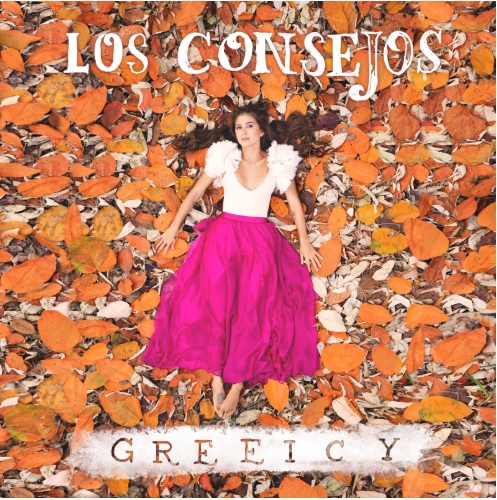
Greeicy premiere “Los Consejos”

Greeicy premieres her new single “Los Consejos” and is nominated for the 2020 youth awards

This time we have the Colombian actress, singer and dancer Greeicy Rendón who has moved into the world of current music; Since she was little, she was interested in acting and music, so with the help of her parents, she began to take acting classes, piano, flute, guitar and singing.

On August 3, 2017, she made her debut as a solo singer with the release of her first single, «Brindemos» and subsequently, in the company of other artists or alone, they developed various musical themes; currently the charismatic and talented Colombian singer and songwriter, Greecy premieres “Los Consejos” the second preview of her new album.

"LOS CONSEJOS" the second advance of his new record material
New single “Los Consejo”

“Los Consejos” is a ballad with a fresh proposal that incorporates urban pop tones with a sweet melody and powerful lyrics that fuse nostalgia and disappointment “Duele quererte y tú tan lejos, tenía la fé de que íbamos a llegar a viejos, me hago la fuerte, pero es complejo, si la tristeza se me nota en el espejo”

The song was written by Greeicy, Andres Torres, Mauricio Rengifo, Keityn, Rudeboyz, Lexuzbeatz, Bullnene, Flybot, and Juan Camilo Vargas Vasquez.

“Los Consejos” is accompanied by a music video, directed by Greeicy and Dario F. Burbano and produced by Mike Bahía, where Greeicy is seen longing for that love that could one day be, while he is seen alone on a swing, transmitting that pain we feel when love escapes from our hands, without really knowing why.

Greecy photo
Greecy photo on an estate

This new song follows in the footsteps of the premiere of “Los Besos” and its version on piano, a song that was initially released in April this year. “Los Besos” already has more than 60 million combined reproductions and its video more than 40 million views and is currently in Spotify’s Top 200 and Top 50 Viral lists in 9 countries, and also in the Top 100 of Apple Music Latino in 11 countries.

“Greeicy Rendón delights with his version of ‘Los besos’ on piano” – RCN Radio

“In this new romantic and fresh version, the charismatic and cheerful personality of Greeicy continues to be reflected, who today is positioned as one of the most important Latin pop artists of the moment.” – 40

Since entering the music scene, Greeicy has become one of the most prominent female figures within the genre, projecting sensuality, sparkle and style. For this reason, she has established herself as one of the most influential female artists, reaching 4.1 million subscribers and almost 2 billion views on her YouTube channel.

The nominees for Youth Awards 2020 were announced through social networks and in the voice of the most important artists of the moment, where the Colombian artist Greeicy achieves a nomination.

The awards given by the leading Hispanic network in the United States Univision, which year after year recognize the best of music, confirm Greeicy’s nomination in the Hottest Core category with their single “Aguardiente”.

The award ceremony will take place live at 8P / 7C on August 13 from Miami, Florida, in compliance with strict public health and safety measures.

Votes are already available at www.premiosjuventud.com/vota until next July 21.

“Orquesta Bomplenea” with ISM

Meet the ” Orquesta Bomplenea “

Let’s start this month of November presenting a musical group that emerged in the year two thousand ( 2000 ), created with the sole purpose and intention of taking Puerto Rican culture to the top, it is nothing less than the “Orquesta Bomplenea”, who will be with us thanks to Mrs. Jimena Verano León from the company “Verano Producciones Latinoamérica” from Bogotá, Colombia; so that the public and fans of International Salsa Magazine can meet this great Latin music orchestra.

Mr. Gary Vera is the founder and member of the “ Orquesta Bomplenea ”, who has been an outstanding musician in the musical genre of Salsa, Merengue and Latin Jazz for about thirty-five (35) years, the past twenty (20) years in the genre of the Bomba (which is the first indigenous music of Puerto Rico, created in the sugar estates by slaves more than four hundred (400) years ago, where African slaves were brought to Puerto Rico by the Spanish and French in the year one thousand six hundred (1600)) and Plena (it is the native music of Puerto Rico, which has the history of miscegenation in the aforementioned country “the Puerto Rican culture”, its birth is located at the beginning of the twentieth century “XX ”). He has also traveled to Europe, the US (United States), and the Caribbean representing our music and culture.

Bomplenea Orquest
Bomplenea members

They knew that the “Plena” together with the “Bomba”, the “Trova Jíbara” and the “Danza” make up the four pillars of indigenous Puerto Rican music. The purpose of the “Orquesta Bomplenea” is always to maintain the culture of its island (Puerto Rico), of the greatest possible interest to Puerto Ricans inside and outside of Puerto Rico.

Trying to reach the hearts of everyone with flavor around the world all tastes. With this assignment in mind, they have adopted a different style of playing the “Plena” (Puerto Rican popular dance and song that is characterized by its musical simplicity and the repetition of its phrases, especially the choirs).

The lyrics and the aggressiveness of the piano together with the combination of the vocal tone (timbre) give a salsa touch to our Plena, but without forgetting the most essential purpose of the composition, which is to transmit to its audience the “Bomba” and the “Plenas ” .

At the beginning of January 2000, Gary Vera organized the musical group Bomplenéa and made his first recording entitled “Ritmo Caliente”. The CD includes eight (8) musical themes. La Mulata, which is a mix of (Bomba – Sicá – Plenas), Jazz A La Bomplenéa is the alloy of (Plena – Latin Jazz), and María Rumbón, La Carta, El Meneíto, Ritmo Caliente, Remembering Papá, and Bells De Christmas (Plenas).

They recently started a new proposal that includes Salsa, Bomba and full songs. Some themes are: El Pan (Bomba), Mi Parranda (Christmas Sauce) and Déjate Amar (Sauce).

Dejate Amar new music - Bomplenea
Bomplenea Orquest

Members: Gary Vera – composition, drummer, congas, Güícharo and direction; José Cheo Arce – arrangement; Luis Discípulo Cuevas, Jan Meléndez – vocals; Carlene Vera and Jan Meléndez – backing vocals; Omar Maldonado – piano; Carlene Vera – flute; Tito Degracia – timbal and bongo; Coamito Martínez – trumpet; Toñito Vásquez – Trombone; Efraín Hernández – bass; Juan Rivera – piano; Celso José Clemente – percussion and minor percussion, recording director, timpani, tambourine; Rafael “Bodo” Torres – piano; Papo Clemente – congas; Cándido Reyes – güícharo; Luis Jungo Ortiz – bass and arrangements; Orlando Ortiz – members; Danny Fuentes – Trombone; Carlos Torres – bass; José Rodríguez – Trumpet; Doel González – vocals

For more information contact you through:

Facebook @ Bomplenea

Home

  • « Go to Previous Page
  • Page 1
  • Interim pages omitted …
  • Page 36
  • Page 37
  • Page 38
  • Page 39
  • Go to Next Page »

International Salsa Magazine (ISM) is a monthly publication about Salsa activities around the world, that has been publishing since 2007. It is a world network of volunteers coordinated by ISM Magazine. We are working to strengthen all the events by working together.