• Skip to primary navigation
  • Skip to main content

International Salsa Magazine

  • Home
  • Previous editions
    • 2025
      • ISM / November 2025
      • ISM / October 2025
      • ISM / September 2025
      • ISM / August 2025
      • ISM / July 2025
      • ISM / June 2025
      • ISM / May2025
      • ISM / April 2025
      • ISM / March 2025
      • ISM / February 2025
      • ISM / January 2025
    • 2024
      • ISM / December 2024
      • ISM / November 2024
      • ISM / October 2024
      • ISM / September 2024
      • ISM / August 2024
      • ISM / July 2024
      • ISM / June 2024
      • ISM / May 2024
      • ISM / April 2024
      • ISM / March 2024
      • ISM / February 2024
      • ISM / January 2024
    • 2023
      • ISM / December 2023
      • ISM / November 2023
      • ISM / October 2023
      • ISM – September 2023
      • ISM – August 2023
      • ISM July 2023
      • ISM Edition June 2023
      • ISM – May 2023
      • ISM April 2023
      • ISM March 2023
      • ISM February 2023
      • ISM January 2023
    • 2022
      • ISM December 2022
      • ISM November 2022
      • ISM October 2022
      • ISM September 2022
      • ISM August 2022
      • ISM July 2022
      • ISM June 2022
      • ISM May 2022
      • ISM February 2022
      • ISM January 2022
    • 2021
      • ISM December 2021
      • ISM November 2021
      • ISM October – 2021
      • ISM September 2021
      • ISM August 2021
      • ISM July 2021
      • ISM May 2021
      • ISM April 2021
      • ISM June 2021
      • ISM March 2021
      • ISM February 2021
      • ISM January 2021
    • 2020
      • ISM December 2020
      • ISM November 2020
      • ISM October 2020
      • ISM September 2020
      • ISM August 2020
      • ISM July 2020
      • ISM June 2020
      • ISM May 2020
      • ISM April 2020
      • ISM March 2020
      • ISM February 2020
      • ISM January 2020
    • 2019
      • ISM December 2019
      • ISM November 2019
      • ISM October 2019
      • ISM Septembre 2019
      • ISM August 2019
      • ISM July 2019
      • ISM June 2019
      • ISM May 2019
      • ISM April 2019
      • ISM March 2019
      • ISM February 2019
      • ISM January 2019
    • 2018
      • ISM December 2018
      • ISM November 2018
      • ISM October 2018
      • ISM September 2018
      • ISM August 2018
      • ISM July 2018
      • ISM June 2018
      • ISM May 2018
      • ISM April 2018
      • ISM March 2018
      • ISM February 2018
      • ISM January 2018
    • 2017
      • ISM December 2017
      • ISM November 2017
      • ISM October 2017
      • ISM September 2017
      • ISM August 2017
      • ISM July 2017
      • ISM June 2017
      • ISM May 2017
      • ISM April 2017
  • Download Salsa App
    • Android
    • Apple
  • Spanish

Search Results for: Dj

Miguelito Cuní recognized among the best soneros of Cuba

Miguelito Cuní. Pinareño recognized among the best soneros of Cuba, who shared the stage with Benny Moré, Arsenio Rodríguez, Félix Chapotín, Richard Egües, Enrique Jorrín, among others.

Miguel Arcángel Conill, better known as Miguelito Cuní (Pinar del Río, May 8, 1917 – Havana, March 3, 1984), was a Cuban music singer. He was one of the emblematic voices of Cuban son in the 1940s and 1960s.
He was born in Pinar del Río, the westernmost province of the island of Cuba, into a humble family.
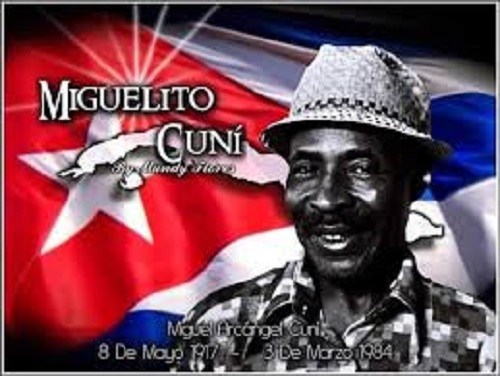
Miguelito Cuní Pinareño reconocido entre los mejores soneros de Cuba

During his school days he dedicated himself to the exercise of minor trades to help support the family. In 1932, at the age of fifteen, he began as a vocalist in the group “Los Carameleros”.
Soon after, he was the vocalist of Septeto Lira, Septeto Caridad and other groups in his province.
In 1938, already in Havana, he joined Arsenio Rodríguez’s group, and also worked actively with the orchestras “Melodías del 40” and Arcaño y sus Maravillas, making recordings and performing live and on the radio.
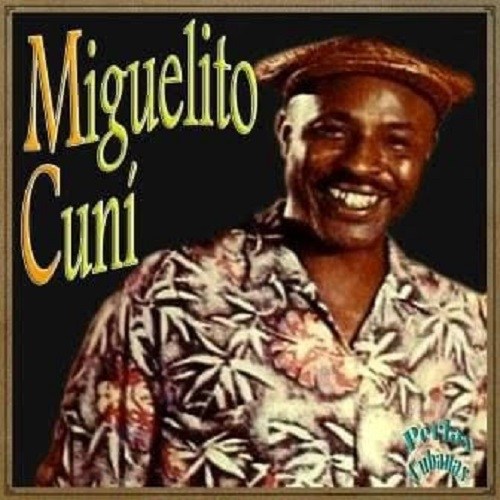
Miguelito Cuní
Miguelito Cuní

During the forties he developed an intense artistic life, he lived two years in Panama and in 1949 he settled in New York, as director of the orchestra of trumpeter Félix Chappottín.

He worked with Cuban music icons such as Beny Moré and in 1956 he traveled to Caracas to work with the “Bárbaro del Ritmo” with the group “La Tribu”. In 1960 he returned to New York, where he made several presentations, including the famous “Palladium”.

He returned to Cuba in 1966 where he founded his own group.
He participated in the film “Nosotros, la música” and other documentaries.

Some of the melodies that reached popularity in his voice were Con maña se rompe, No hay amor sin caridad, Viejo Socarrón, Nos estamos alejando, Canallón, Quimbombó, Yo sí como candela, Ay qué Canuto, Ya tú ves campeón, Cuento na’ ma, Mi son, mi son, mi son, mi son, Alto Songo, Canto al monte, Cuchillo para la piña cubana, Sacando palo del monte, Camina y prende el fogón, Rompe Saragüey, Convergencia, La protesta de Baraguá, Todos bailan con la guajira, Cárdenas, Guachinango, El carbonero, among others, most of them recorded with the group Chappottín y sus Estrellas, a group with which he achieved great projection and in which he sang until his death.
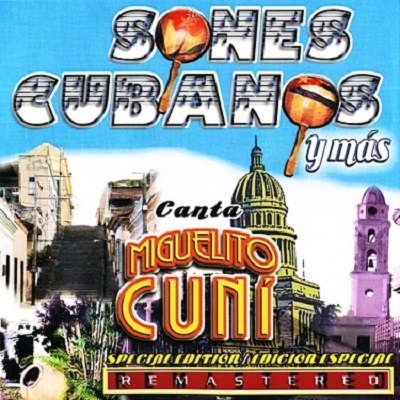
Sones Cubanos con Miguelito Cuni

In his last recording he interpreted the bolero “Lágrima” from the long-playing record entitled “De nuevo Arcaño”. His last trip abroad was to Mexico in 1982.

Composer

Besides being a singer, he ventured into the world of musical composition, of his authorship are cited: Congo africano, Ay mamita!, Batanga africana, A bailar con la guajira.
Sones montunos from the late 1950’s, the boleros: Lloró Changó, Toque santo, Las ansias mías, A ti, Benny Moré.
And the guaracha “Esto no se ve”, among other titles.

He died in Havana on March 3, 1984, three months after his dear friend and companion of countless days, Félix Chapotín, who had passed away on December 21, 1983.

Tribute

Miguelito Cuní was admired by all those who knew him, highlighted by all his friends and close ones as a man of excellent human qualities, in homage to his trajectory the Commander of the Revolution, Juan Almeida composed the lyrics “Este son homenaje”, which was interpreted by the singer-songwriter Pablo Milanés.
In the artistic field, he deserved the recognition of his colleagues and thousands of admirers, and in the personal field, those who treated him remember him as a man of impeccable words and good speech, Miguelito Cuní was a true Creole gentleman.

Source: Ecured

Major Latin radio stations in New York

The current radio

Radio has always been present in a very important part of our lives, which is information and communication. Over time, it has also been a bridge for the most deprived to go public with their complaints and for new artists to make their work known. After the emergence of the internet, traditional radio stations had to adapt to the new era and air their content through the diverse digital platforms that have appeared in recent years. This is how all these shows have avoided their possible disappearance due to the lack of traditional radio listeners.

New York is one of the cities that has several of the most important radio stations in the United States whose content can be easily found in the web search engines. In view of the importance of radio and locution in entertainment and treatment of sensitive topics in society today, we consider it appropriate to name some of the main Latin radio stations in New York for the public to get to know them.

El Vacilón de La Mañana
El Vacilón de La Mañana team consisting of DJ Ash, Gerpis Correa, Natalia ”Vacilón”, Francis Mendez, Jessica Pereira and DJ New Era

Mega 97.9

Mega 97.9 is a radio station operating in New York City whose tropical format offers musical genres such as salsa, merengue, reggaeton, and bachata. Its official name is WSKQ FM and its headquarters is located in the Empire State Building, as it is the case with many other stations.

It was created in 1951 under the name WEBD FM and its programming consisted of pop and jazz music of the time, but that was slowly changing. There were many changes of names, personnel, directors, presidents and much more, so the current programming is radically different from that of past times. In 1993, its name changed to Mega 97.9 and its content became based on tropical and Latin genres, which caused a revival of the station and a very considerable increase in the audience that it had until that year.

Among its most watched programs, we can mention the now defunct ”El Vacilón De La Mañana” and ”On Fuego: The Daddy Yankee Show”.

El Palo Con Coco
El Palo Con Coco team consisting of Tony Sanchez ”El Tiburón”, Coco Cabrera and Diosa Fernández

WXNY X96.3

WXNY X96.3 is a station mainly focused on contemporary adults whose main language is Spanish and is broadcast on the frequency 96.3 FM. The programming focuses on providing the biggest hits of the moment in terms of Latin rhythms and some entertainment programs that address contemporary issues in the entertainment world. Two of the most popular shows are ”La Gozadera” and ”El Palo Con Coco”.

Radio Puerto Rico

Radio Puerto Rico offers the most popular music from both the present and the past in the salsa genre. It streams Latin music of all genres such as salsa, reggaeton, merengue, vallenato, among others. At any time of the day, listeners can tune in and listen to El Gran Combo de Puerto Rico, Marc Anthony, Ismael Miranda, Ismael Rivera, Marc Anthony, Daddy Yankee, Don Omar and many others. Some of its shows are ”Al Son de Harold Montañez”, ”La música de tierra adentro”, ”Música Tropical” and ”Repartiendo su fortuna”.

Havana Club Radio
Havana Club Radio’s logotype

Havana Club Radio

As the name suggests, Havana Club Radio is a radio station that seeks to unite all Cubans around the world in becoming one voice. Its waves play the island’s typical genres such as salsa, salsatón, rumba, danzón and more. It has very good ratings in several major cities in the United States and gives Cubans and Latinos in general the opportunity to connect with their homelands, even if they are far away.

Read also: Interview with Colombian singer-songwriter Potty Lozano

Pacifica Radio, history, shows and controversy

This is Pacifica Radio

Pacifica Radio has been one of the largest radio networks in the United States in recent decades and its importance remains enormous today despite the time elapsed. It has given voice to figures of all kinds of political and ideological trends and artists from all genres who sought a platform in order to be heard. However, such popularity does not make this organization to be free from controversy that, like its history and shows, we would also like to explore with the greatest possible respect.

Next, we will talk about the most outstanding to observe about this radio station since its beginnings from 1946 to this day, since talking about Pacifica Radio is also talking about communication in the United States and the role played played by Latino culture and music in all of this.

Logo of Pacifica Foundation

Beginnings of Pacifica Radio

Pacifica Foundation is a non-profit organization that owns five independent radio stations financed from listener contributions. It is widely known for its progressive and liberal tendencies and is located next to KPFK in Los Angeles, California.

This organization is also responsible for managing everything related to Pacifica Network, which, in turn, runs much more than a hundred affiliated stations with all kinds of shows and content, although it specializes on political and social issues to varying degrees. It is the oldest radio network in the country and the oldest non-profit network in the world, which speaks of Pacifica’s relevance compared to other media.

It was founded in 1946 by E. John Lewis and Lewis Hill after the Second World War. Both men were totally anti-war and refused to perform military service as conscientious objectors. They joined other pacifists to create Pacifica Foundation, whose first station started to air on April 15, 1949 in Berkeley, California.

Being true to the beliefs with which they started this project, the founders gave voice to all those who were against the Korean War the following year along with many other minorities who could not find means of communication to express their views contrary to the majority position of the time.

The station started operating in several cities over the years due to its enormous success and the following radio stations were created in several cities: KPFA/94.1 and KPFB/89.3 in Berkeley, California (San Francisco Bay Area), KPFK/90.7 in Los Angeles, WBAI/99.5 in New York, KPFT/90.1 in Houston and WPFW/89.3 in Washington, DC.

Lewis Hill, co-founder of KPFA and Pacifica Radio

Operation

Pacifica is governed by a board of directors that sets out the policies that determine the organization and oversees the network operations. The board is comprised of representatives from each of the stations that comprise the foundation, as well as directors elected by the Pacifica community.

The members of this board are elected and replaced every three years and have regular meetings to discuss issues related to the operation of the foundation and decision-making regarding the management of the network. It is from there that the use of resources donated by the audience is being decided.

The board members are as follows:

Lydia Brazon (Chair), representing KPFT in Houston, Texas

Sabrina Jacobs (Vice-Chair), representing KPFA in Berkeley, California

Alex Steinberg (Secretary), representing WBAI in New York City, New York

Donald Goldmacher (Treasurer), representing KPFA in Berkeley, California

Christina Huggins, representing WPFW in Washington, D.C.

T.M. Scruggs, representing WBAI in New York City, New York

Janet Coleman, representing WBAI in New York City, New York

Cerene Roberts, representing KPFA in Berkeley

Pacifica Foundation’s Latino shows

If there is something Pacifica Radio has stood out is for the enormous space provided to the Latino community to spread its music and culture in general. That is why there have been many shows entirely dedicated to these topics and whose hosts have been Latinos or children of Latinos.

KPFA has Luis Medina and Emiliano Echeverría, who are in charge of hosting the show ”Con Sabor”, which specializes in artists and news related to salsa, Latin jazz, Afro-Cuban and Afro-Caribbean music, among other genres. In addition, they also interview these artists, provide the audience with the musical calendar and offer concert tickets.

Broadcasters Luis Medina, Chata Rodríguez, and Emiliano Echeverria

In the case of KPFK, the Latin community has the well-known show ”Canto Tropical” hosted by Kathy Diaz and Hector Resendez, whose work is focused on promoting the main Latin music genres such as Latin jazz, Afro-Cuban music and salsa. They also focus on interviewing and giving space to both local and foreign artists to promote their talent and be made known to the widest possible audience.

Host of ''Canto Tropical'' Kathy Díaz and host of ''Alma Del Barrio'' Eddie López
Host of ”Canto Tropical” Kathy Díaz and host of ”Alma Del Barrio” Eddie López

On WBAI, ”Salsa Con Candela” is a weekly celebration of the rich history and diversity of the salsa music genre. The show hosted by DJ Candela includes a mix of classic and contemporary songs, as well as interesting and enlightening interviews with artists and important figures in Latin music culture.

Another noteworthy Latin program is ”Salsa y más” on KPFT, which explores in detail the world of salsa and other important Latin genres. The program hosted by DJ Leonard Trujillo, as well as ”Salsa Con Candela” also offers a mix of Latin and contemporary songs along with interviews with local and international artists.

And finally, WPFW has ”Latin Flavor”, a program dedicated to the most important Latin genres such as salsa, Latin jazz and many others. The show hosted by DJ Jim Byers explores the cultural and historical roots of Latin music and provides a platform to present new artists from around the world.

Locutor Jim Byers
Locutor Jim Byers

Controversy

Since the beginning of this foundation, its stations have been embroiled in a series of scandals that have not gone unnoticed by telecommunications and the community at large, especially political and ideological. Among the many events suffered by Pacifica, we cannot fail to mention the requests from the government to obtain the recordings of some shows, controversial interviews such as the one with Che Guevara, reports about embezzlement of funds, financial crisis, among many other things.

In 2020, it was learned that some Pacifica listeners, volunteers and donors have created an organization called Pacifica Safety Net with which they seek to expose mishandling and attitudes of Pacifica’s board members, whom they accuse of compromising the main mission of the station network. The members of this group have filed a lawsuit against this board for prevarication and mismanagement, assuring that the board’s lack of leadership resulted in the loss of many revenues in the station network and, therefore, caused a serious problem of solvency in the organization.

KPFA's building
KPFA’s building

A great example of this mismanagement is the reduction from 120,000 to 40,000 members the network has today, as was the case in just a few years. There are also many complaints about the type of programmes broadcast by the network in recent years due to their high content of hate, conspiracy theories, racism and a lot of things that did not represent the values upon which Pacifica Foundation was based.  

In that sense, the members of the aforementioned committee make an urgent call to all members of the radio network to recover these spaces to go back to the main mission of the foundation, which unfortunately has been taken by other interests completely unrelated to those of the donors, workers and listeners.

In 2019, the network was able to get a $3 million loan that would allow it to pay part of the debt accumulated up to that date, but the possibility of the foundation achieving long-term financial stability is not even close to being a fact. Due to mismanagement, the foundation is not able to pay this amount back, so it is forced to cut costs. This reduction in income is causing the board of directors to seek to sell the building where WBAI operates, which had been given by the Empire State Realty Trust (ESRT) in exchange for a rental agreement that is quite detrimental to the foundation from the point of view of current and former workers.

The Empire State Building, where WBAI FM is located now

Wit regard to this issue, Mexican broadcaster Jesse ”Chuy” Varela, who worked for several years at KPFA, told us a little about the irregularities presented both there and at other stations where he worked. The radio professional points out that there have always been serious communication problems between administrations and workers. ”The board always thinks they can do something better with the money raised and spend a lot of resources without notifying the audience about what they are doing. When you ask for money from the listeners, they have to trust that when they give it to you, you are going to put it to good use” declared Varela.

”I knew of many cases where executives who had meetings in different cities, stayed in expensive hotels and ate in exclusive restaurants. I consider this is an abuse and a lack of respect for those who donate their money. I have seen this in all the stations where I worked unfortunately. In this sense, trade unions play a fundamental role to avoid these kinds of problems” the broadcaster continued.

Announcer Jesse ''Chuy'' Varela at KCSM Jazz 91
Announcer Jesse ”Chuy” Varela at KCSM Jazz 91

As for other announcers and former Pacifica Radio employees or managers, they did not want to make comments in this respect. We presume that this could be because of possible reprisals due to the power accumulated by the largest radio network in the United States.

It should be noted that everything written here is based on testimonies of others that have not yet been confirmed, so we neither confirm nor deny any of the facts as presented here.

Read also: Two radio programs of the salsa movement in California

The world congress you were waiting for is in Spain

Salsa returns to Spain in April, after the successful Congress in 2022, this year it was decided to hold the Salsa Spain World Congress in a new city, Valencia. The entire event will take place very close to the sea, and will be full of great artists in different fields of this tropical genre, along with demonstrations of other genres. Know all the details in the following lines.

Valencia receives the Salsa Spain World Congress

Valencia is a charming and welcoming city with a beautiful Mediterranean climate. Modern architecture mixes with ancient art, the city’s history and culture, to offer visitors a unique destination. The beaches, museums, parks, and festivals contribute to its vibrant cultural scene.

The City of Arts and Sciences is the pride of Valencia. Here, you can explore historic temples or ultra-modern buildings, surrounded by gardens paved with colorful mosaics. This Spanish city also offers numerous culinary options, from traditional tapas to excellent restaurants serving modern Spanish and international cuisine.

And it is precisely this destination that has been chosen to host the Salsa Spain World Congress 2023. The Salsa Spain World Congress is an annual salsa dance festival that is expected to take place every year in Spain. The event highlights the main styles and trends of salsa dedicated to professional dancers, dance enthusiasts, musicians and followers of the genre.

Last year the festival attracted hundreds of attendees who enjoyed spectacular dance shows, master classes, hands-on workshops, musical showcases, and some well-organized competitions. This colorful event will have a program dedicated to salsa and other tropical rhythms.

From April 14 to 16, Valencia will open its doors to all those professionals, and lovers of Latin dance to enjoy everything that the Salsa Spain World Congress will offer. All the events will take place at the Hotel Versus Gandía Palace, a beautiful brand new hotel, whose facilities are only 100 meters from Playa Gandía.

Great artists will highlight each activity

There are many artists confirmed for this great congress and there are still many who are confirming their participation. There will also be incredible performances by the following DJs, who will further elevate the party mood.

Regarding programming, the following information is handled, but is subject to change:

THURSDAY (a pre-party is not included):

  • 23h – 24h Workshop
  • 00h – 04h Part

FRIDAY:

  • 15h – 20h Workshops
  • 11:30h Doors Open
  • 24h – 1:30h Shows
  • 01h – 06h Party

SATURDAY:

  • 11 – 14h Workshops
  • 14h – 20h Workshops
  • Doors Opening 11pm
  • 23:30h – 1h Shows
  • 1:30 – 06h Party

SUNDAY:

  • 11 – 14h Workshops
  • 17h – 20h Pool Party
  • 22h – 23:30h Night workshop
  • 23:30h. – 04h Party

To know the price of the tickets, which will depend on what kind of ticket you are looking for, and in what condition you go, you can check the prices on the LaSalsaDelBaile portal. They also make available a WhatsApp number, and an email for any questions or doubts: [email protected].

“Mambo Night in Miami Beach” celebrates the 100th anniversary of the birth of “El Inolvidable”, our own Tito Rodriguez


De izquierda a derecha, Tito Puente, Jr., Mario Grillo, Tito Rodríguez, Jr. Foto: sobejazzfestival.com

The initial idea of bringing together the three great orchestras of the Palladium in this innovative “three-in-one” orchestra concept came to Mario Grillo more than two decades ago.

As early as March 3, 2022, the mambo heirs celebrated the coming of age of The Big Three Palladium Orchestra in New York. Twenty-one years after the establishment of this remarkable big band, the concert entitled Palladium in the New Millennium took place in a packed Lehman Center for the Performing Arts.

The first presentation of 2023 of the “three-in-one” big band and coinciding with the 100th anniversary of the birth of “El Inolvidable”, Tito Rodriguez, the South Beach Jazz Festival’s line-up opened its musical offerings on Saturday, January 7, 2023 with the concert entitled Mambo Night in Miami Beach. At around 8:00 p.m. The Big Three Palladium Orchestra took over the Miami Beach Band Shell when Mario Grillo, known in the music scene as Machito, Jr. kicked off the musical feast that awaited us, to the sound of Cuban Fantasy.

Foto:  Miami Bandshell broadcast

As you can see, each of the “big three of the Palladium” and owners of the mambo in its golden age inherited a timbalero son. These three bandleaders have made it their mission to keep the Palladium legacy alive and well.  Although the mambo heirs have transcended the label of being the sons of the mambo owners, they do not forget that the Patriarchs are still a topic of conversation in musical circles around the world.

For the concert at the Miami Beach Band Shell, The Big Three Palladium Orchestra was joined by the veteran musicians: Carmen Laboy on baritone saxophone and musical direction; Jose Heredia on tenor saxophone, Mark Friedman on alto saxophone and flute, Julio Andrade on alto saxophone; Larry Moses, Seneca Black, Dante Vargas and Julio Diaz on trumpets; William Rodriguez on piano, Jerry Madera on bass, Daniel Peña on bongo and Diego Camacho on tumbadoras.  On the vocal front, Sammy González, Jr. was backed by the coros of Starlyn Benítez and Tatan Betancurt.

Carmen Laboy en el saxofón barítono y la dirección musical de The Big Three Palladium Orchestra Foto: Ethan Dangerwing of Masterwing Creative Agency

The upscale repertoire vibrated and rumbled at the Miami Beach Band Shell, an elegant venue steps from the beach, which was filled to capacity.

Mario GrilloFoto: sobejazzfestival.com
Mario Grillo Foto: sobejazzfestival.com

Mario Grillo’s highlights were: Cuban Fantasy, Oye la rumba (La rumba), Ahora sí, Piñero tenía razón (Piñero was right), Babarabatiri (Babarabatiri) and Rumbantela (Rumbantela). On the other hand, Tito Rodríguez, Jr. performed the following songs: El que se fue, Cheveré, Yambú, Avísale a mi contrario, Agua de Belén and Fagot’s world. In the performance of Avísale a mi contrario, the conga of Diego Camacho and the bongo of Daniel Peña, who “quinteando a lo bravo” and adjusting to the tuning of the timbal in charge of Rodríguez, Jr. opened the way for the winds. And the winds entered through the wide door to increase the tempo of the night, which was already heating up to the sound of mambo.

Tito Rodríguez, Jr.Foto: Migdalia Sánchez
Tito Rodríguez, Jr. Foto: Migdalia Sánchez

When it was Tito Puente, Jr.’s turn to play the timbal, he affirmed that Tito Puente was the pioneer in having a woman in the vocal front of an orchestra.

Then, preparing to close the first segment of the concert, he introduced Puerto Rican businesswoman and singer Melina Almodóvar, whom he backed for the performance of Mi socio.

Tito Puente, Jr. y Melina AlmodóvarFoto: sobejazzfestival.com
Tito Puente, Jr. y Melina Almodóvar Foto: sobejazzfestival.com

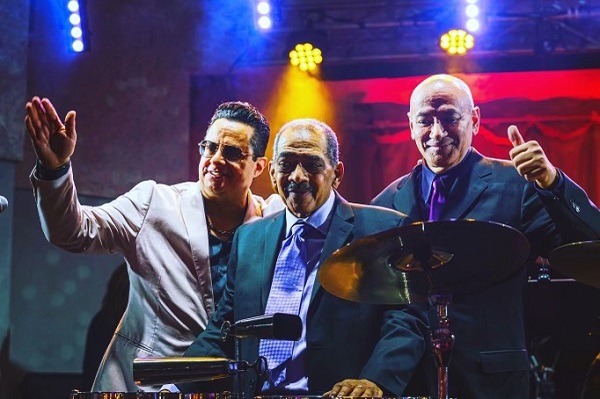
The grand finale of the event placed the three timbaleros heirs of mambo in front of the orchestra to delight us with a masterful performance in sync with the rhythmic base that Diego Camacho and Daniel Peña did not hesitate to maintain.

Last year such a show was promised in which the heirs of mambo honor the legacy of their fathers on Puerto Rican soil.  The show was to be entitled “Palladium in the new millennium” and was to be presented on Father’s Day at the Symphonic Hall of the Fine Arts Center in Santurce. However, it was cancelled.

I often say that the past is the past and the future is uncertain, so let’s hurry and wait for The Big Three Palladium Orchestra to perform in Puerto Rico.

I for one continue to live in salsa, which is still magic, fantasy and illusion.

Bella Martínez Writer, researcher of Afro-Caribbean music

You can read: Mike Arroyo the guitarist Using Jazz to praise God

Bella Martínez Writer, researcher of Afro-Caribbean music and author of Un conguero para la historia, Las memorias de Jimmie Morales.

787-424-8868

  • « Go to Previous Page
  • Page 1
  • Interim pages omitted …
  • Page 38
  • Page 39
  • Page 40
  • Page 41
  • Page 42
  • Interim pages omitted …
  • Page 69
  • Go to Next Page »

International Salsa Magazine (ISM) is a monthly publication about Salsa activities around the world, that has been publishing since 2007. It is a world network of volunteers coordinated by ISM Magazine. We are working to strengthen all the events by working together.