• Skip to primary navigation
  • Skip to main content

International Salsa Magazine

  • Home
  • Previous editions
    • 2025
      • ISM / November 2025
      • ISM / October 2025
      • ISM / September 2025
      • ISM / August 2025
      • ISM / July 2025
      • ISM / June 2025
      • ISM / May2025
      • ISM / April 2025
      • ISM / March 2025
      • ISM / February 2025
      • ISM / January 2025
    • 2024
      • ISM / December 2024
      • ISM / November 2024
      • ISM / October 2024
      • ISM / September 2024
      • ISM / August 2024
      • ISM / July 2024
      • ISM / June 2024
      • ISM / May 2024
      • ISM / April 2024
      • ISM / March 2024
      • ISM / February 2024
      • ISM / January 2024
    • 2023
      • ISM / December 2023
      • ISM / November 2023
      • ISM / October 2023
      • ISM – September 2023
      • ISM – August 2023
      • ISM July 2023
      • ISM Edition June 2023
      • ISM – May 2023
      • ISM April 2023
      • ISM March 2023
      • ISM February 2023
      • ISM January 2023
    • 2022
      • ISM December 2022
      • ISM November 2022
      • ISM October 2022
      • ISM September 2022
      • ISM August 2022
      • ISM July 2022
      • ISM June 2022
      • ISM May 2022
      • ISM February 2022
      • ISM January 2022
    • 2021
      • ISM December 2021
      • ISM November 2021
      • ISM October – 2021
      • ISM September 2021
      • ISM August 2021
      • ISM July 2021
      • ISM May 2021
      • ISM April 2021
      • ISM June 2021
      • ISM March 2021
      • ISM February 2021
      • ISM January 2021
    • 2020
      • ISM December 2020
      • ISM November 2020
      • ISM October 2020
      • ISM September 2020
      • ISM August 2020
      • ISM July 2020
      • ISM June 2020
      • ISM May 2020
      • ISM April 2020
      • ISM March 2020
      • ISM February 2020
      • ISM January 2020
    • 2019
      • ISM December 2019
      • ISM November 2019
      • ISM October 2019
      • ISM Septembre 2019
      • ISM August 2019
      • ISM July 2019
      • ISM June 2019
      • ISM May 2019
      • ISM April 2019
      • ISM March 2019
      • ISM February 2019
      • ISM January 2019
    • 2018
      • ISM December 2018
      • ISM November 2018
      • ISM October 2018
      • ISM September 2018
      • ISM August 2018
      • ISM July 2018
      • ISM June 2018
      • ISM May 2018
      • ISM April 2018
      • ISM March 2018
      • ISM February 2018
      • ISM January 2018
    • 2017
      • ISM December 2017
      • ISM November 2017
      • ISM October 2017
      • ISM September 2017
      • ISM August 2017
      • ISM July 2017
      • ISM June 2017
      • ISM May 2017
      • ISM April 2017
  • Download Salsa App
    • Android
    • Apple
  • Spanish

Search Results for: Eddie Montalvo

José Fajardo was a virtuoso flutist, composer, orchestra conductor and music producer

José Antonio Fajardo, in the month of November we refer to one of the greatest musicians that the island of Cuba has given in the last century; we are talking about maestro José Antonio Fajardo Ramos: flutist, composer, orchestra conductor and music producer; one of the great promoters of Cuban music represented in the rhythms of bolero, son, guaracha, mambo, chachachá and pachanga.

José Fajardo was born in Guane, province of Pinar del Río in 1919. He began his musical career as a maraquero in his father Alberto Fajardo’s orchestra, later he took up the flute.

From the age of 16 he was part of several groups such as: Joseíto Fernández, Paulina Álvarez, Melodías del 40, La Romance de René Álvarez, the orchestra of maestro Antonio María Romeu, the orchestra of pianist Luis González Valdés: “Neno” González and the orchestra of Antonio Arcaño, known as Arcaño y sus Maravillas.
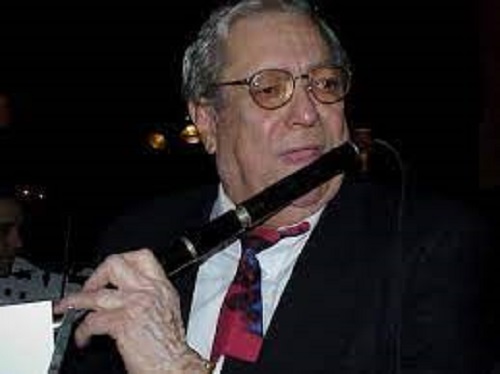
José Fajardo fue un virtuoso flautista

After his time in these famous groups, in 1949, Fajardo created his own orchestra called Fajardo y sus Estrellas, with musicians such as: Orlando “Cachaito López”, René Fernández on piano, violinists Ignacio Berroa and Félix Reyna, who was also the composer; percussionist Jesús Esquijarrosa on timbales; Carlos Real on tumbadora and Rolando Valdés on güiro; in the vocal part he initially integrated Joseito Valdés.

In the early fifties, with the boom of chachachá in 1951, things improved a lot and the charangas orchestras began to perform in the best cabarets, aristocratic salons and private parties of high society, such as the Montmatre and Tropicana cabarets.

Fajardo became internationally known in the mid 50’s at the head of his orchestra, Fajardo y sus Estrellas, he was the first charanguero to introduce the cymbals to the timbal and the pioneer in the incorporation of the cowbell and the bongo to the charanga, his group was one of the sensations of the golden age of chachacha and pachanga.

After going into exile in the 1960s, he toured Asia, Africa, Europe and Latin America, popularizing an eminently Cuban repertoire.

Maestro José Fajardo has been one of the only musicians who have stood out in different periods of Latin music; initially in Cuba, in the 50’s with the arrival of Chachachá, later in the era of Pachanga and Boogaloo, in the sixties in the United States, and he also came to prominence in the golden era of salsa in the seventies and eighties of the last century.

In the seventies, eighties and later, the flute master recorded with Joe Quijano & His Conjunto Cachana, Tico-Alegre All Stars; Ray Barretto and Adalberto Santiago; Johnny Pacheco, Pupi, Javier Y Su Charanga; Jimmy Sabater, Orlando Contreras, Alfredo Valdés Jr, Fania All Stars, Louie Ramirez, Graciela and Mario Bauza, Israel “Cachao” Lopez, with our great Joe Arroyo in the nineties and with Hector Casanova, Mario Muñoz, Andy Gonzalez, Eddie Montalvo, Manny Oquendo, Alfredo “Chocolate” Armenteros, Carlos “Patato” Valdes, Alfredo Rodriguez and Francisco Aguabella.

After a brilliant musical career spanning more than six decades, Maestro José Antonio Fajardo passed away in New York City on December 11, 2001, leaving an enormous legacy to our culture.
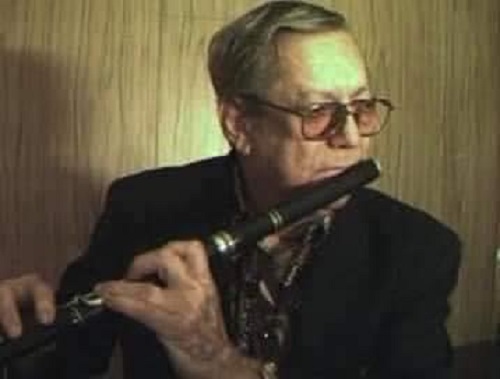
José Fajardo fue un virtuoso flautista, compositor, director de orquesta y productor musical

The great musical contribution of this portentous son of Pinar del Rio, has highlighted him as the highest flute of Cuba and Latin America, a true ambassador of Cuban music and salsa in the world; from our beautiful page ‘Los Mejores Salseros del Mundo’ we want to highlight the enormous artistic career of maestro José Antonio Fajardo Ramos as a tribute to his wonderful musical work.
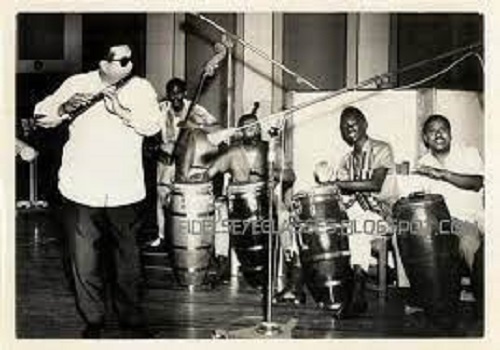
José Antonio Fajardo,  uno de los más grandes músicos que ha dado la isla de Cuba

José Fajardo Jr.

You can read: Ángel Bonne He was part of Juan Formell’s Los Van Van Orchestra, and collaborated with the impressive Irakere band of maestro Chucho Valdés

The salsa artisan who made the best cowbells and or timbales and bongo bells

The percussion artisan passed away in New York on June 31, 2017, he was the creator of the “JCR” Calixto “Cali” Rivera bells,

Cali was born in Puerto Rico and came to the United States in 1958. He was first an auto mechanic and years later started in instrument making. He was also a percussionist (he excelled for many years performing with Yomo Toro) and his father made guitars.

One of JCR’s peculiarities was that his instruments were not mass-produced but “handmade”, which is why Rivera was recognized as a reputable percussion artisan, standing out especially for the manufacture of bells, which were “the specialty of the house”.

The cowbell is a percussion musical instrument, it has the shape of a bell and is struck with wooden drumsticks. These can be made of copper, steel or other alloys.

Its use in music is very widespread and we can hear it in the folk music of the North Alpine as well as in the academic music and even in the pop and Latin music of our times.

One of the best manufacturers of cowbells is Calixto “Cali” Rivera who for more than 40 years has forged the metal to manufacture in his small workshop in the Bronx (JCR Percussion), about 10 to 12 pieces per week.

Since its creation, his instruments became a vital part of the recordings of both Salsa Dura and Salsa Suave, from the 70’s until the day of his death.

In the Bronx, there is a man who builds instruments for the great Latin percussionists of the world: Tito Puente, Eddie Montalvo, Giovanni Hidalgo, Bobby Sanabria.

He had no signs, no storefronts, no advertising of any kind, but people from all over the world call him for work.

After all, nothing sounds like one of his handmade cowbells.

Calixto “Cali” Rivera’s father was a guitar maker, and his son picked up the tradition of the craft.

But Cali gravitated to drums – he’s a timbale – and made congas, bongos and other percussion instruments.

These days, he specializes in high-quality cowbells of all kinds.

He is in his late 70s, with only his wife for administrative support, yet he cranks out dozens a week.

Jazz Night In America recently visited Rivera in his JCR percussion workshop to discover how, for nearly 40 years, he transformed strong metal into strong bells.

The Cencerro. What It Is, Origin, Types, Characteristics And How To Play It.

The cowbell is a small instrument which belongs to the family of hand percussion instruments, it is used in various styles of music including salsa and rarely in other genres of popular music. The cowbell is similar to the bell historically used by shepherds to keep track of the whereabouts of cows, hence its name.

Origin

Although the cowbell is currently found in musical contexts, its origin comes from the tracking of animals that roamed freely in the countryside. Likewise, to help identify the herd to which these animals belonged, the shepherds placed these campaigns around the animal’s neck.

As the animals moved in different parts, the ringing of the bell could be heard, which made it easier to know their whereabouts. Although the bells were used on various types of animals, they are typically referred to as “cowbells” due to their extensive use on livestock.

Palladium in the New Millenium engalana el “Lehman Center for the Performing Arts”

On March 5, 2022, the heirs to the mambo will reunite once again, this time the concert entitled Palladium in the New Millennium will grace the Lehman Center for the Performing Arts in the heart of New York’s Bronx.

This concert coincides with the coming of age celebration of the establishment of The Big Three Palladium Orchestra.  The initial idea of bringing together the three great Palladium orchestras in this innovative concept came to Mario Grillo, better known in the music world as Machito, Jr. approximately twenty-one years ago.

His counterpart, Tito Rodriguez, Jr. told me about it and, thanks to his complicity, I had a pleasant conversation during which Machito, Jr. shared with me a myriad of details.  Having previously collected and shared the conversations I had with Tito, Jr. and later with Machito, Jr. I must now share the point of view of the youngest of the three mambo heirs -Tito Puente, Jr.- about this trilogy, among other things.  During the beginnings of this historic reunion, Tito Puente, Jr. was barely 30 years old.

As with me, the two oldest members of the trilogy have been very supportive of Tito Puente, Jr.  During an exclusive interview granted for this special assignment, Tito Puente, Jr. expressed his deep appreciation for having been so lovingly guided by Tito Rodriguez, Jr. and Machito, Jr. to the recording of what has become the legacy of the Palladium big three: The Big Three Palladium Orchestra live at the Blue Note (2004).

On March 5, 2022, the heirs to the mambo will reunite once again, this time the concert entitled Palladium in the New Millennium will grace the Lehman Center for the Performing Arts in the heart of New York's Bronx.
Palladium in the New Millenium engalana el “Lehman Center for the Performing Arts” en pleno corazón del Bronx de New York

The youngest of the three heirs of the mambo is doubly celebrating, as he has just released his sixth production, entitled The King and I. It contains nine tracks, as you can hear on the album.  It contains nine tracks, as detailed below:  Picadillo, featuring Humberto Ramírez on trumpet; Salsa na ma, featuring José Alberto “El Canario” on vocals; Pa los rumberos, with a masterful performance by Domingo Quiñones; Oye como va, with a performance by “Mulato Rumbero”, Michael Stuart; Para la niña y pa la señora, with none other than Miguel Angel Barcasnegras, better known as “Meñique” (EPD) on vocals; Hong Kong mambo, instrumental theme that highlights the Puente dynasty, with Ronnie Puente on xylophone; El bribón del aguacero, with Yolanda Duke on vocals; 20 años and El Rey del Timbal.  Let’s be clear that this album is not the big band arrangement to which the eternal King of the Timbal has accustomed us.  It is, however, the best tribute that the youngest of the three heirs of the Palladium pays to his father, keeping the legacy alive and kicking.

As you can see, each of the “Palladium’s Big Three” inherited a timbalero son. Coincidentally, Machito, Jr., Tito Rodríguez, Jr. and Tito Puente, Jr. grew up surrounded by music.  Their family environments, respectively, supported them. Indeed, today, all three are musicians.  These three bandleaders have made it their mission to keep the Palladium legacy alive and well.  Although the mambo heirs have transcended the label of being the sons of the mambo owners, they do not forget that the Patriarchs are still a topic of conversation in musical circles around the world.

As the past is the past and the future is uncertain, here we are already waiting in despair. For this new reunion, first-class musicians have been secured, backing up the three heirs of the mambo.  The musical constellation that will be part of this historic night is formed by: Carmen Laboy on baritone saxophone and musical direction, Jorge Castro on tenor saxophone, Mark Friedman and Al Acosta on alto saxophones; Larry Moses, Seneca Black, Mike Mossman, and John Carlson on trumpets; Gilberto Colón, Jr. on piano, Jerry Madera on bass, John “Dandy” Rodríguez on bongo and Eddie Montalvo on tumbadoras.  On the vocal front, Sammy Gonzalez, Jr. leads with Luisito Rosario and Jeremy Montalvo on backing vocals.

I for one continue to live in salsa, which to put it in more earthly terms is, simply put: magic, fantasy, and illusion.

Article of Interest: Sigo entre amigos de Luis “Perico” Ortiz

By: Bella Martinez “The Irreverent Salsa Writer”

Puerto Rico

Know everything about Oscar Hernádez and Spanish Harlem Orchestra

Spanish Harlem Orchestra and its beginnings

Spanish Harlem
Logotype of Spanish Harlem Orchestra

Spanish Harlem Orchestra is for many one of the best Latin jazz and salsa bands in the world due to its long career, impressive relevance and numerous awards throughout its 19 years of existence. This Latin music orchestra based in the United States was created by producer Aaron Levinson and producer, composer and arranger Oscar Hernandez, who gave birth to a legendary group, which was Grammy winning twice and whose style has differentiated it from many others of its kind. 

It all started with a call from Levinson to Hernandez to offer him the opportunity to join an ambitious project he had in mind, which consisted of the creation of a Latin jazz orchestra with a very peculiar sound and style. The producer could not resist such a proposal, so he agreed to lend his talent to the nascent initiative. This is how they debuted their first album Un Gran Día en el Barrio in 2002, thanks to which they received their first Grammy nomination for Best Salsa Album. After their first singles, the new group began to garner major success and to offer great performances all over the world. 

One of the main objectives of the members of the band is to set for themselves is to keep salsa dura alive in order to be lasting and to reach as many lovers of good music as possible. This is how the Spanish Harlem Orchestra, or SHO as its fans affectionately call it, has managed to preserve the best of traditional salsa, but from a fresh and innovative perspective.   

Its centerpiece Oscar Hernandez 

This is Oscar Hernández
Oscar Hernández playing the piano

Its most famous member Oscar Hernandez got his taste for music in the vicinity of Harlem’s Latin Quarter, where he spent his early childhood that would mark his professional future. As a young boy of 12, he became a trumpet player, but it would not be long before he decided to switch to the piano. He spent much of his adolescence playing with many Latin Jazz artists of the time. One of those great stars with whom Hernández had the opportunity to explore his talents was Rubén Blades, for whom he worked as a producer, arranger and pianist. 

In the 90’s, the musician produced the album Dance City, for which he received good reviews in the New York Times and was called by singer and composer Paul Simon for his Broadway show. 

Today, we are fortunate to have the pleasant presence of Oscar Hernádez to tell us about his beginnings and the path he had to take to join the project for which he is best known today by many of his fans, Spanish Harlem Orchestra   

Mr. Hernandez, reading your story, we noticed that Spanish Harlem started with a call from Aaron Levinson in 2000, could you tell us a little about that? 

Aaron Levinson is the producer. I did not know him. I have to make it clear that he is not a musician, but a DJ with a lot of connections and was called to make a record with the Warner Bross label with a specific concept. They thought he was the right person for that. He called me to help him with the musical part. Everything related Spanish Harlem Orchestra I owe to him because that is how I joined the project. That was what had to happen in terms of my fate. That is how God told me to wake up and understand that this was what I had to do. Until such time, I had only been a producer, arranger and pianist, so Levinson came to me and I accepted. We talked about the tracks and he picked some that I did not want to do. To make a long story short, we recorded the album, but Warnes Bross said they did not want to release it, so they gave it back to Aaron. A year and a half later, he sold it to a small company whose owners were friends of his and it was nominated for a Grammy. Since then, I started with the orchestra in 2002. The orchestra is almost 20 years and has been a great blessing for me. It was intended that he called me to put my personal stamp on that record with my brain and my heart, so I could create all the music that I have made these 20 years. Aside from that, we have gotten incredible reviews all over the world and won three Grammys. People know how good the orchestra is and how good the concepts we have recorded are because it is all documented. Listen to any of the albums and you will immediately note our quality, integrity, professionalism and musical concept. Obviously, I have very good musicians helping me, but final decisions start and end with me.  

After you decided to carry out the project, how did you combine what you already had with Spanish Harlem Orchestra? 

It was a moment in time that things were changing. I did not have anything stable at that time, as I had just finished working with Paul Simon in a stage play which was quite a large process. I was freelancing, so I was working for whoever called me. The perfect time came when I had the chance to create the orchestra and it was not easy because I had no ambitions for a career as a bandleader. It was not something I wanted to do, but I had to learn a lot of things after I became one like dealing with people, with musicians and with situations that were not easy. During that process, I had to get rid of a lot of people because I realized that I had good intentions, but that is not enough. You have to have willpower and be clear about the concept musically and in terms of business. I always try to deal with musicians in the best way because I was one before anything else. I try to be transparent and understand all situations, but there are also selfish people who want to enjoy all the advantages for themselves and I am not in that plan. My plan is to look for what is in the best interest of all of us as a group. At my age, I do not have time for anything but high quality and professionalism. I lasted seven years with Ray Barreto and recorded six albums. I lasted 12 years with Rubén Blades and we also recorded six or seven albums. What do I say? I have already worked with many people like Juan Luis Guerra, Paul Simon and many others who have left an important mark on me as a musician and as a director.

Oscar with his piano
Oscar Hernández next to his piano

What do you consider to be the most valuable thing you have learned from the artists you have worked with? 

I think all these people have love for music, which is the most important thing. I remember my times with Barreto, who listened to all the mixes we made and drove musicians crazy in search of perfection. Like Rubén Blades, who was a transparent person and always wanted to do his best as a musician. It is not just one thing I have learned, but several because they are all important. I believe that love, professionalism and willingness to work with musicians. I remember that Rubén was the bandleader, but he always considered our views as musicians. I was even the arranger and my musical value was respected from the beginning. I respect my musicians very much and I give them all the value they deserve. 

You told me earlier that you were on tour in New York. Could you tell us how it went? How did the audience respond? How did it feel to be back on stage after such a long time? 

It was incredible. Our first concert with the orchestra was in the very heart of of New York City on 42nd Street in Manhattan. There is a place called Brian Park and there were about 10,000 people there, as the event was free to the public. It filmed live and virtually streamed. I mentioned to the audience that this was the first time we played live and that we had only one rehearsal the day before. It was an amazing experience because I felt that musicians were in the best position to make a first-rate performance and they did. The audience warmly and gratefully applauded. When you do something all your life and suddenly it stops for a year and a half, you realize many things.   

What other events are you going to do? Are you planning on touring outside the United States? 

We are scheduled to have a tour in June in Europe, but it remains to be seen what will because COVID is still present and countries are evaluating how things are going to go in the next few months to specify dates and cities. In December, we will have four shows, two in Santa Fe, one in Albuquerque (California) and one in Costa Mesa (California). We are no longer touring as such, we are doing dates. It had been years since we have toured like we used to. The new album is done and sounds amazing. Last week, we were in New York finishing the vocals with the three singers, who are some of the best and it was a pleasure for me to share with them. They are clear that they have to do their part in what is going to be another great record.  

Oscar with his Grammy Award
Oscar Hernández with his Grammy Award

Questions from a lifelong admirer of Oscar Hernandez   

Augusto Felibertt, international director at International Salsa Magazine, professional DJ and collector, asked Oscar Hernandez some very interesting questions to learn more about his past as a musician.  

I want to know your feeling about your time with Grupo Libre de Manny Oquendo and Grupo Folklorico y Experimental Nuevayorquino. 

Associating with Andy and Jerry Gonzalez was an incredible experience for me as a young musician in New York. They were an important part of my development. They were a little older than me, but I remember Andy came up tome and presented himself when I was playing with Ismael Miranda in a club. He told me it was nice to meet me and that we sounded great. Since then, we became friends and he invited me to his house. When I arrived, it turned out he lived with Jerry in an apartment below his father’s and had an incredible record collection. We would spend many hours listening to music I had never heard and arguing about musicians. We would debate about who was the most important, who else we liked. It was a very nice time from which Conjunto Libre de Manny Oquendo emerged. I was the founding pianist of the group that recorded the first three albums. The image of Grupo Folklorico y Experimental Nuevayorquino also emerged. That group composed of of Andy, Jerry and René López became larger with other musicians who joined later such as Alfredo Chocolate Armenteros, Virgilio Martí, Heny Álvarez, Willie García, Milton Cardona, among others. There were so many musicians that the image of what a jam was (a spontaneous concert in which an artist or group performs before a small group of spectators) was expanded.  

Ray Barreto’s album Reconstrucción, a musical jewel for the salseros of the world. I want to know about your experience on that recording. 

Reconstrucción was one of the most important recordings of that time because the elements that Rey used to design the concept resulted in something incredible. I am very proud of that record with more than 40 years old. I was 25 years old when we made it and it went down in history. I am very grateful to Ray Barreto because he gave me the opportunity to work as a pianist and arranger on that recording. Even today, many musicians tell me that they listened to that album every day and were inspired by it.  

I would like to know about your time with Carabalí. 

Carabalí was the group of Raúl Primo Alomar, who was a conguero, and percussionist Rey Colón, who was a bongo player. They wanted to make a septet and called me to join as a producer. He was the producer of the two albums. I am very proud of that experience because I can be anywhere in the world and people still call me Carabalí wherever I go. Aris Martinez, the singer of the group, was about 20 years old at the time and I kept correcting him in the studio all the time. Nowadays I listen to him and he sings very well. However, it got to the point where we had a disagreement, so I left the group and wished them luck.   

You recorded an album entitled Como Nunca with Orlando Watussi, could you tell me a little about it? 

I do not remember much about the details, but Watussi has always been in the music business and has been considered one of the best singers. We don’t talk much, but he is a great person and a lifelong friend. That was a great opportunity for us and another example of how I have done my bit in the music scene with what I feel in my heart. 

Oscar Hernández with friends
Oscar Hernández, Rubén Blades, Eddie Montalvo, and Ralph Irizarry
Oscar Hernádez and his las recording
Oscar Hernández’s last recording entitled Visión

Link to Spanish Harlem Orchestra’s official website: https://www.spanishharlemorchestra.com/

ISM: Fanny Almanera better known as La Sonera del Callao

On this occasion we have the opportunity to interview the Peruvian Sonera called Fanny Almanera also known as La Sonera del Callao, her nickname comes from her native country El Callao, Peru.

She was born on January 23 and is the 9th daughter of her parents (Don Héctor Almenara and Carmen Barreto), from a very young age she knew and learned many things about the music of both parents; in the lyrical genre thanks to his mother and his best teacher Dona Ana María Parodi and with respect to his father who is / was a collector of the best exponents of Salsa (especially Cuban and Puerto Rican music), both listened almost all the time to Justo Betancourt, La Lupe, Candido Fabre, Benny More, Ismael Rivera, Los Papines, Irakere, Luis “Perico” Ortiz, among others.

When she turned 16, she realized that she was passionately and in love with the dynamic salsa genre and made the decision to leave the choir and classical music, since her love and her taste is for the salsa musical, thanking her father greatly for showing her , show him and listen to the best collection of salsa music to date … “Music is like medicine … it fills the soul and innovates over time” and over time, while gaining his experience, his own audience would give him their nickname La Sonera del Callao and with the favor of God take his parents, especially his father, to Cuba.

Tribute to Omara Portuondo Living Legend of Cuba
Memory of the brave Sonero Cano

She also had the honor of participating for the first time in the choir to Junior Gonzales and alternate Grandes with Peruvian Orchestra such as Peru Salsa by Beto Villena, Las Estrellas de la Maquina by Boris Gomez, La Nueva Generación by Franco Covetto, during that time chosen as the best nobel voice of the salsa genre for the 80s; and at the same time he made several recordings for different groups, likewise he recorded an unpublished song of his own entitled “Yo Te Espero”.

Unlike other musicians, Fanny Almanera during this season met and currently has friends of renowned musicians, who interacted with her and her family, even before becoming a singer.

Memory of Ray Barreto and singing Adalberto Santiago de Fannia
Ray Barreto and singing Adalberto Santiago de Fannia

Between the 70s and 80s, Las Leyendas Latinas arrived in Peru with Ray Barreto and Adalberto Santiago, who gave him the great opportunity to sing with them “Quitate La Máscara”, then with Linda Caballero (La India), the song “Mi Primera Rumba ”, Then with the salsa pharaoh Oscar de León with the song“ Toro Mata ”and also with the great Lebrón Brothers with the song“ Sin Negro no hay Guaguancó ”. With the Owner of the Soneo Carlos “El Cano” ESTREMERA the song “Amame en Camara Lenta”, with Frankie Vazquez “El Cuarto de Tula”, with Yolanda Rivera the song “Rumba en el Patio”, Vity Ruiz brother of Frankie Ruiz the song “La Cura”, with Aldalbeto Santiago on the song “Nadie se Salva de la Rumba”.

In all these golden opportunities, he managed to ask her many questions to perfect her singing, including knowing more about how to rhyme the phrases and after a while with her imposing voice, Fanny captured the attention of the greats of salsa, representing Callao and for which the Chalaco people named it “La Sonera Del Callao”.

Souvenir of Linda Caballero best known India and Fanny La Sonera del Callao
Singing with Linda Caballero, the best known India and Fanny La Sonera del Callao

She tells us that she is very happy with this great experience acquired, especially that she met many internationally recognized artists, many met them in person and others thanks to social networks, expressed by many who have a very beautiful voice, which is why she sang many songs musical expressing that at the time of singing he likes it because it is his passion with all his steps (vocalization, expression, movement).

During the Covid-19 pandemic it affected her like the rest of the world, in her case the recordings of her musical themes could not be made as before since the recording studio did not work as before, she had to sing with a smaller group of people, they couldn’t get together to practice; Although he was on a halt due to the pandemic, he was able to record a challenger “El Virus Se Mata Con Musica”, invited by a Cuban musician which was also recorded by Cuban artists, which was successful as it was heard in different parts of the world.

Thank God, despite all the complications that arose regarding her musical career, she achieved many things during this pandemic and also remained active thanks to social networks and is currently activating social activities in clubs, where They work in small groups live or online.

Fanny Almenara, continues with her impeccable musical career, loving music and recording a song entitled “Amor de mis Amores”, a salsa version with the Orquesta NG del Callao Director Franco Crovetto.

For her vast artistic career, she was awarded by different musical associations and by the company Pinsen Callao, Asocosalsa Peru (Ceremony Tite Curet, Busto Hector Lavoe, Charlie Palmieri and 25 Anniversary of Artistic Life (Okonkolo Association) and a few days ago she received the award The Miami Radio Salsa Superior Award Director Richard Roman (“La Dama De La Salsa” Award)

Fanny La Sonera del Callao 2021
Fanny La Sonera del Callao the Los Award award from Radio Salsa Superior of Miami Director Richard Roman

After his voice reached Cuban pages like the page “Benny More”, “Un Millón De Adalsoneros” and “Al Son Del Pinar Del Rio” She was invited to the day of Son 8 de mayo led by the gentleman of son Adalberto Álvarez, later I also record a song authored by the Reyna del merengue Milly Quezada “Gracias A Ti” dedicated to those who are always in the front line such as doctors and nurses in Covid 19 and the latest that the production of the song La Sitiera Tributo has recorded to the Cuban diva Omara Portuondo in which Nelson Gonzales participated in the tres, Eddie Montalvo on the congas, Nohelia Zambrano from Colombia on the violin and Luis Perico Ortiz on the Trumpet

For more information:

  • Tik Tok: @fannyalmenara
  • « Go to Previous Page
  • Page 1
  • Page 2
  • Page 3
  • Page 4
  • Page 5
  • Page 6
  • Go to Next Page »

International Salsa Magazine (ISM) is a monthly publication about Salsa activities around the world, that has been publishing since 2007. It is a world network of volunteers coordinated by ISM Magazine. We are working to strengthen all the events by working together.