• Skip to primary navigation
  • Skip to main content

International Salsa Magazine

  • HOME
  • Previous editions
    • 2026
      • ISM / March 2026
      • ISM / February 2026
      • ISM / January 2026
    • 2025
      • ISM / December 2025
      • ISM / November 2025
      • ISM / October 2025
      • ISM / September 2025
      • ISM / August 2025
      • ISM / July 2025
      • ISM / June 2025
      • ISM / May2025
      • ISM / April 2025
      • ISM / March 2025
      • ISM / February 2025
      • ISM / January 2025
    • 2024
      • ISM / December 2024
      • ISM / November 2024
      • ISM / October 2024
      • ISM / September 2024
      • ISM / August 2024
      • ISM / July 2024
      • ISM / June 2024
      • ISM / May 2024
      • ISM / April 2024
      • ISM / March 2024
      • ISM / February 2024
      • ISM / January 2024
    • 2023
      • ISM / December 2023
      • ISM / November 2023
      • ISM / October 2023
      • ISM – September 2023
      • ISM – August 2023
      • ISM July 2023
      • ISM Edition June 2023
      • ISM – May 2023
      • ISM April 2023
      • ISM March 2023
      • ISM February 2023
      • ISM January 2023
    • 2022
      • ISM December 2022
      • ISM November 2022
      • ISM October 2022
      • ISM September 2022
      • ISM August 2022
      • ISM July 2022
      • ISM June 2022
      • ISM May 2022
      • ISM February 2022
      • ISM January 2022
    • 2021
      • ISM December 2021
      • ISM November 2021
      • ISM October – 2021
      • ISM September 2021
      • ISM August 2021
      • ISM July 2021
      • ISM May 2021
      • ISM April 2021
      • ISM June 2021
      • ISM March 2021
      • ISM February 2021
      • ISM January 2021
    • 2020
      • ISM December 2020
      • ISM November 2020
      • ISM October 2020
      • ISM September 2020
      • ISM August 2020
      • ISM July 2020
      • ISM June 2020
      • ISM May 2020
      • ISM April 2020
      • ISM March 2020
      • ISM February 2020
      • ISM January 2020
    • 2019
      • ISM December 2019
      • ISM November 2019
      • ISM October 2019
      • ISM Septembre 2019
      • ISM August 2019
      • ISM July 2019
      • ISM June 2019
  • Download Salsa App
    • Android
    • Apple
  • Spanish

Search Results for: El Gran Combo

The “Caballero de la salsa” delights us with his new album

North America / United States

The story of an artist

Gilberto Santa Rosa, known as “El Caballero de la salsa”, was born in 1962 in Puerto Rico.

The singer has excelled at performing romantic ballads, boleros, and salsa. His first steps in music were at a very young age. Before reaching adolescence he was already forming youth groups within the tropical genre. For about two years, he was part of the band La Grande, from the hand of greats of the genre.

Colegas is the new album of Gilberto Santa Rosa
Gilberto Santa Rosa has a new album

Elías Lopés, famous Puerto Rican trumpet player, became his teacher and tutor. At the age of 14 he traveled to New York to take his first steps in the musical field and his father entrusted him to Lopés. Santa Rosa is very pleased to have received his teachings.

“The greatest legacy for me was discipline, knowledge of the work you are doing and the challenges; He gave me musical challenges that developed the talent I had at that time, “said the salsa singer.

Gilberto participated in the “Homenaje a Eddie Palmieri” with the Puerto Rico All Star, a great opportunity for his career that was on the rise. In addition, he was in the ranks of the Willie Rosario orchestra.

First steps

In 1986, he got his first opportunity as a soloist. Combo Records allowed him to record four albums; giving it a further boost in the salsa genre. Good Vibrations (1986), Keeping Cool! (1987), De Amor y Salsa (1988) and Salsa en Movimiento (1989) were his first record works.

In 1990, he had the opportunity to change record labels. On this occasion, CBS today is known worldwide as Sony Discos. Company with which he has recorded approximately 24 albums and continues to this day.

Sony Discos trusted him and saw him succeed through the years. Punto de vista, the first production made with the label, received a gold and platinum record. The Man and His Music was quite a special production. It was held in 1995 and reflected a presentation held at Carnegie Hall in New York.

Acting is another of the roles that he has developed with great skill. In 1990, he participated in “La pareja dispareja” with Rafo Muñiz and Luis Vigoreaux, Jr.

In the 2000s he was in other theatrical pieces. He starred in the revival of “La verdadera historia de Pedro Navaja”, a musical that demanded a lot from him on a professional level; and with Cuban comedian Alexis Valdés in the play “Atrácame más”.

“Returning to the theater, this time to comedy, fills me with great enthusiasm and even more so to be able to share the stage with one of the greats of comedy in the United States and Latin America. The truth is that “Atrácame más” takes me out of my comfort zone which is music and challenges me professionally. I’m really enjoying this story and I hope people enjoy it a lot more ”, commented Gilberto Santa Rosa, about “Atrácame más”.

Gilberto Santa Rosa is one of the artists who broke paradigms in the United States and in the rest of the world. From the beginning, the Latin public did not hesitate to follow his career and, of course, attend his meetings. He also had the opportunity to travel to Japan.

He presented himself as a worthy representative of his country and surprised the audience by performing “De cara al viento” in Japanese. A feat that surprised critics due to the difficulty of the language. In addition, it was his beginning in the international market, until today he is acclaimed incessantly.

Gilberto had great acceptance and a box office record in his presentations at the First President Festival in the Dominican Republic, the Lincoln Center in New York with Andy Montañez; at the Anayansi Theater in Panama and at the Universal Studios Amphitheater in Hollywood with Olga Tañón.

The accompaniment by the Symphony Orchestra ended up catapulting him among his followers. They considered it an unprecedented presentation and brimming with talent. It was presented under this format in the United States and broke box office records at the Teresa Carreño Theater in Caracas, Venezuela.

Expresión, 1999

It was one of his most popular albums. The album marked the singer’s career as it was nominated for a Latin Grammy Award, for Best Salsa Album, in its first installment. “Que alguien me diga”, original Omar Alfanno, Panamanian composer positioned him for several weeks on the Billboard. The production featured 13 songs with a total of 55 minutes in length.

The album had great renown in the Central American market, giving it a gold record for sales. In addition, he was chosen by the National Foundation for Popular Culture among the most outstanding of the year 1999.

Gilberto, continued to count successes and praise the work of the greats in the industry. He made several tributes such as the concert “Viva Rodríguez” in tribute to Tito Rodríguez; Tribute that the Orquesta Estrellas de la Fania, to Don Tite Curet Alonso and La Guarachera, Celia Cruz, in New York.

40 … y contando, it was released in 2019. It was a live album, with which he commemorated his 40-year career. The idea was born from his concert at the Coliseo José Miguel Agrelot in San Juan, Puerto Rico. 40… y contando it ranked second in sales of Tropical Albums in the United States and first in sales in Puerto Rico.

The Puerto Rican celebrated his 2020 birthday with the launch of a new collectible album.

Colegas, 2020

Gilberto Santa Rosa - New album cover
The album cover was designed for the Venezuelan artist Gilberto Santa Rosa

In this work, he had sixteen collaborations, bringing together “colegas” known to the audience. The first single is “La Familia”, a duet with the singer Tito Nieves, a Puerto Rican recognized within the genre as well as: Tito Rojas, Luisito Carrion, Pirulo, Nino Segarra, Choco Orta, Jose Alberto “El Canario”, Isaac Delgado and Juan Jose Hernandez.

The arrangements are attributed to Ocana Sordi, (El Guateque De Chombo), James Hernandez (La Fonda De Bienvenido), Jose Madera (Bailadores), Rene Gonzalez (Estoy como nunca), Dino Nugent (Apaga la luz), Ricky Gonzalez (Vamos A Bailar El Son, Eque Tumba), Manolito Rodriguez (Medley Boleros), Marty Sheller (Ban Ban Quere, Caminalo), Ramon Sanchez (Que se sepa), Javier Fernández (Masacote, Tremendo Coco), Louis García (Por la Calle Del Medio , Isidro Infante (El Mejor Sonero, Mario Ague, Sonerito),

Singing with Tito Nieves was a pleasure for him because they share a friendship relationship:

“Tito and I have a friendship that transcends the stage and the day to day. He is my dear brother. His sense of humor is incredible. With him everything is very easy. In fact, it only took 45 minutes for us to have the song ready”, said the salsa singer.

Santa Rosa wanted this album to be a very special tribute to his companions of so many years. He looked for the numbers to fit in some way with the relationship with each colleague.

The 58-year-old singer is a winner of a Grammy and five Latin Grammys. He is in his best moment and it appeared that “Colegas” could have a continuation.

“These things excite me and motivate me to do a second part, because other “colegas” were left out,” he said.

Will it be the beginning of your new musical project? We’ll see!

Home

Rónald Gómez Original Venezuelan Sonero for the World

Rónald Gómez, One of the most respected young soneros of the New Generation

He belongs to the new legion of young soneros and projects himself as one of the greatest exponents of Venezuelan salsa at the national and international level; I am referring to Rónald Eduardo Gómez Ávila, known artistically as Rónald Gómez, born in Caracas on March 11, 1995, son of Sonia Ávila and Rónald Gómez; his brothers: Jesús Eduardo and Rónner Eduardo.

He completed his high school studies at the Orinoco High School and his university studies at UNEARTE in Caracas.

He has been living in Los Teques for some time and is currently living in Valencia.

The singer and sonero Rónald, started in music since he was 4 years old, when his father, also a musician, invited him to sing the song “Llorarás”, with the free orchestra of the UCV and from that moment he won people over with his charisma and his swing. At the age of 6, he joined the Chiky Salsa orchestra and due to his versatility, he later joined the Porfi Baloa Teenagers, first as a musician and then as a vocalist, and later as a member of the Porfi Klan staff.

Rónald Gómez soneros of the New Generation
Rónald Gómez One of the most respected young soneros of the New Generation

It is worth mentioning that Rónald Gómez, besides being one of the most respected young soneros in our country, has stood out as an excellent sportsman, being a member of the Miranda State Volleyball Team in various national competitions.

Gómez has had the honor of sharing the stage with salsa greats such as: Tony Vega, Maelo Ruiz, El Gran Combo de Puerto Rico, Cheo Feliciano, Ismael Miranda, Hermanos Lebrón, Frankie Vásquez, Hermán Olivera, Adalberto Santiago, Oscar D’León and was a special guest to sing along with Sonora Ponceña and La India from New York.

Rónald has worked with the orchestras La Dimensión Latina, the Dance Orchestra “La Resistencia Salsera de Venezuela”, the Cheo Navarro Tribute Orchestra and currently Los Adolescentes.

Ronald Gòmez One of the most respected young soneros of the New Generation
Orchestra los Adolescentes

Among the countries where Rónald Gómez has represented Venezuela are United States, Peru, Canada, Colombia, El Salvador, Ecuador, Mexico and Cuba.

Some of the songs he has recorded are: “No puedo vivir sin ti”, “Ya la vi” with Bailatino and “No temas al amor” and “Tengo un amor” with Los Adolescentes, which are played on radio stations and social networks.

What are your current projects, Rónald? Carlos, I am currently continuing with the Teenagers and I also have projects as a soloist; I am recording some things on the fly individually, obviously without leaving the orchestra and at the same time I have in mind to enhance the image as Rónald Gómez. Have you recorded any new songs? Indeed, professor, I have recorded some with the Teenagers and as I told you, I am going to record with some guests together with myself; that is going to be good and I hope you enjoy it; in due time I will make them known.

Ronald, where are you currently with the Teen Orchestra? At the moment I am in Miami, last week we were in Los Angeles, San Francisco and Santa Ana.

What can you tell us about your next tour? We are going to Colombia at the beginning of March, we will be alternating with Diego Galé and Maelo Ruiz, then we will be on a break there in Venezuela and then we will continue with the full tour in the United States, having concerts in: Houston, Utah, Ohio, among many other cities.

Finally, Rónald tells us that he feels satisfied by his successes at a professional level and wishes to continue to succeed inside and outside our country, with the support of all his family, musicians, friends and all the salsa musicians who enjoy his presentations.

It is important to emphasize that Rónald Gómez is characterized by his simplicity, professionalism and gift of people who will surely make him one of the greats of Latin music.

From “Salsa Escrita” and International Salsa Magazine, we wish Rónald the best performance and he always counts on us.

To contact Rónald Gómez, you can do it through the Instagram: Ronaldadolescentes.

Ronald Gomez soneros of the New Generation
The singer and sonero Rónald Gòmez


Home

Timbalero Manolito Rodríguez Debuts a Fresh Sound as Musical Director of La Zónica

On Friday, March 27, 2026, Manolito Rodríguez and La Zónica performed at La Respuesta, a unique venue a hall where diverse musical genres blend, creating an atmosphere where a dance concert serves as the artists’ formal introduction to the public. The ensemble has been working together since August 2025, when the new orchestra was formed under the leadership of the virtuoso timbalero.

Timbalero Manolito Rodríguez arrives with a renewed energy as musical director of La Zónica

When Manolito began assembling the group, he sought out songs that resonated with him, such as “Gente Luminosa” and “A Mi Medida.” He has also been working with unreleased compositions by Anthony García and Leni Prieto. La Zónica marks a new chapter for the timbalero as the director of his own orchestra. Nevertheless, they continue to perform hits from Manolito’s previous era, now brought to life by the vocal front: Ángel Pomales, Joelis Crespo, and Gabriel Cotto. Manolito has promised to step back from singing to focus entirely on his instrument and musical direction.

The director of La Zónica hopes the dance concert at La Respuesta on March 27 marked a turning point for the band. “It’s an event we’ve been working on with great intensity,” Manolito says with enthusiasm. With energy and conviction, the timbalero adds: “I want to leave a legacy like El Gran Combo de Puerto Rico, like Sonora Ponceña, like Roberto Roena’s Apollo Sound, or Willie Rosario’s band. I want people to say in 25 years, ‘Look, that’s Manolito’s La Zónica.’ It’s a long road, but it’s possible.”

As if that weren’t enough, a new line of Meinl Percussion instruments, inspired by the young Puerto Rican timbalero, is now available.

The new line of instruments - from Meinl Percussion - inspired by Manolito
The new line of instruments – from Meinl Percussion – inspired by Manolito

A Prodigy’s Journey

The career of this salsa virtuoso began early. Manolito Rodríguez is a percussionist, musical director, singer, and dancer. While he was still in middle school, piano genius Papo Lucca invited him to record on the 45th-anniversary album, Homenaje a Tres Grandes del Teclado. “At that time, I was just entering the Escuela Libre de Música; I was in ninth grade,” the timbalero recalls. Four years later, upon graduating from the Ernesto Ramos Antonini ELM in San Juan, Manolito earned the timbalero chair with Sonora Ponceña on Papo Lucca’s recommendation. “Don Quique” accepted him, and the young musician remained with the group for four years.

Puerto Rico’s salsa stages watched Manolito Rodríguez grow up, flanked by musical institutions such as Sonora Ponceña, his now-colleague Willie Rosario, and Roberto Roena’s Apollo Sound.

His skill as a percussionist grew by leaps and bounds, and his versatility was tested on multiple fronts. In fact, his vocals were featured with the orchestra Del Sur al Norte, led by the renowned director, arranger, and producer, trumpet master Julito Alvarado. “Julito was the first one who gave me the opportunity to record as a singer,” Manolito acknowledged in an interview.

Manolito Rodríguez and La Zónica performed at La Respuesta, a different venue.

Thanks to his interactions with salsa veterans since childhood, Manolito served as musical director for various youth projects along the way. This included Revolución Juvenil in high school and Manolito y su Trabuco, an orchestra that performed every Wednesday at El Doble Seis in Caguas.

Legacy and Discipline

According to Manolito himself now a music professor—he owes much of his career to the support of his mother and grandmother, who nurtured his musical interests and encouraged him to pursue formal training. Today, the instrumentalist considers himself a “music worker” who approaches his craft with respect and maturity.

His new orchestra, La Zónica, finds him with a different mindset: he wants to concentrate on the timbales and direction. He considers Master Willie Rosario—who treats him as a protégé one of his greatest influences as a timbalero-bandleader. Rodríguez shares that when he read the authorized biography of “Mr. Afinque” (Willie Rosario, El Rey del Ritmo by researcher Robert Téllez) and saw himself mentioned, he was overcome with emotion. “My eyes welled up. I didn’t expect it,” he says. “Since I started taking things seriously, Willie has always mentored me.”

Despite his vast experience, the young musician felt deeply blessed to be chosen to fill in for the leader of “the band that delights” (la banda que deleita) on several occasions, and to perform at the Willie Rosario Centenary concert at the Coliseo de Puerto Rico. “I feel very fortunate because Willie is a very serious person, someone highly respected in the world of salsa with an impeccable career. He is a true role model.”

Following the passing of Roberto Roena, Rodríguez was also entrusted with the legacy of the Apollo Sound—a testament to the confidence and solidity he projects despite his youth. “Wow, yes. It was an honor,” he recalls nostalgically. “Roberto was the first person to give me a big break in Puerto Rico,” referring to his participation in the 1998 Día Nacional de la Zalsa at the Juan Ramón Loubriel Stadium in Bayamón.

The timbalero Manolito Rodríguez

On Sunday, March 22, 2026, Manolito Rodríguez returned to the Día Nacional de la Zalsa as the timbalero and director of La Zónica, a project that debuted last November during Sonora Ponceña’s 70th-anniversary concert. The current lineup includes: Airemyelisse Díaz (bass), Reinaldo Burgos (piano), Savier Díaz (congas), Manolito Rodríguez (timbales/director), Carlos Arroyo (bongo), Víctor “Yuca” Maldonado (baritone sax), Efraín Martínez (tenor sax), Rubén Díaz (trumpet), and Jan Santana (flugelhorn).

Manolito is well aware that “people pay to be entertained,” as he mentioned in a Zoom interview, and he views himself as a craftsman of music. He feels fortunate to be a full-time musician. “That’s what keeps me grounded. I get paid to make music. I am a music worker with great aspirations who trusts his talent and knows he must stay focused.”

Bella Martinez Puerto Rico

Also Read: Sessions from La Loma brings together salsa fans from all over the world in Puerto Rico

Dominican bandleader and musical director Orlando Santana talks about La Makina and his career in general

Orlando Santana, the bandleader and musical director of La Makina, has made room in his busy schedule filled with studio recordings to talk about the most interesting topics of his career and, of course, the group that has given him more fame.

The Dominican artist has built an interesting career that led to his aforementioned group, which was founded in Borinquén (the name given to Puerto Rico before the arrival of the Spanish). Naturally, the genre by which La Makina is best known is merengue, implying that the Dominican Republic is still present in mind and heart.

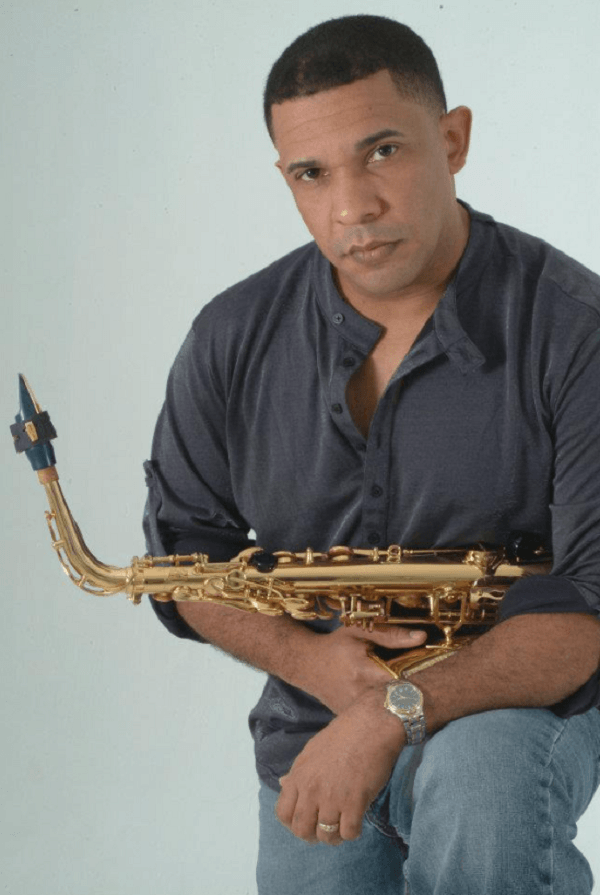
Orlando with his saxophone
Orlando Santana with his saxophone

Orlando’s Beginnings in Music

Orlando started his story by saying that music had a significant presence in his life because his father, Santiago Santana, was a music teacher who taught in their own home. He taught all types of instruments such as the saxophone, trumpet, flute, piano, bandoneon, clarinet, guitar, and many more. Additionally, he also knew about harmony, solfège (sung), and solfège (spoken).

This led to his son learning to play instruments at a very young age and being interested in this way of life. 

Orlando’s Music Education

When Orlando moved to Miami, he took private piano lessons for a while, just as his father did with his students, but it was from Richie Ray and Bobby Cruz whom he really learned. He attended their church and took advantage of his visits to receive some piano lessons from Richie, while his brother David Santana, who was already a veteran musician, bought him his first saxophone and taught him many other tricks of the trade.

Early experiences as a paid professional

As for the beginning of his professional practice, Orlando, as a 15-year-old boy, started with the orchestra Dioni Fernández y El Equipo, from which the great Sergio Vargas emerged. In fact, they entered together a television channel (Color Visión, Channel 9) on the same day in Santo Domingo. This group is still active today, and Sergio Vargas’s own brother, Caqui Vargas, is currently part of it.

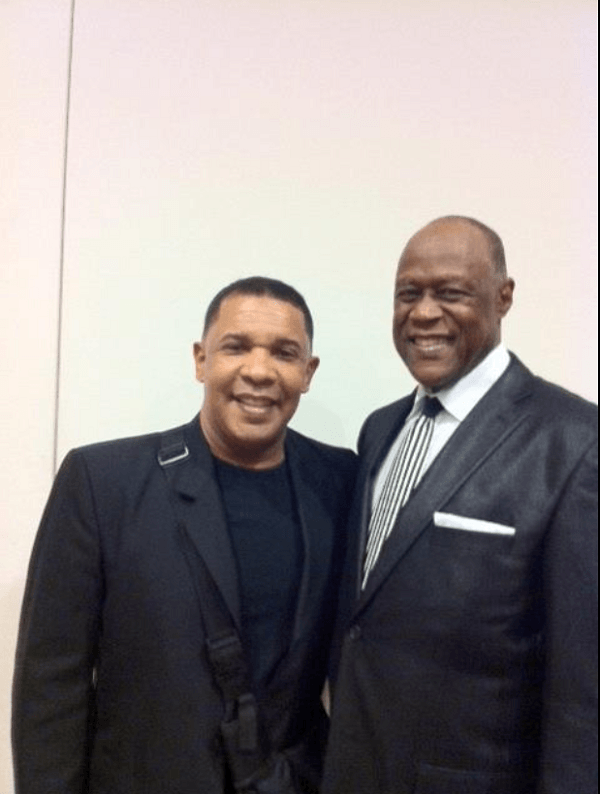
Bobby and Orlando
Bobby Valentín and Orlando Santana

Some time later, he had the opportunity to perform along with Wilfrido Vargas, which he describes as an incredible experience, since Vargas’s orchestra had a very challenging repertoire and he had to prepare himself very well in order to play along with the merengue exponents and his musicians. Orlando came on as a substitute replacing his brother on some tours, where he showed he had the capacity to keep up with their pace and improvise just like Wilfrido did so with ease on stage.

Among the most important things this time taught him, the artist mentioned discipline, the importance of always practicing his instruments, and a permanent focus on what he wanted to achieve. Another thing he mentioned was the significant improvement in his ability to improvise and release new material constantly.

He also learned a lot from Toño Rosario, Peter Cruz, Cuco Valoy, Ramón Orlando, and Elías Santana (Orlando’s first cousin and trumpeter for Conjunto Quisqueya). With all of them, he also came to play both merengue and other genres. 

How La Makina Band was founded

Orlando met Fernando Colón in Toño Rosario’s orchestra, while he was a saxophonist, and Fernando entered as a bassist. At the same time, Orlando was writing some arrangements for Los Sabrosos del Merengue, and as it so happens that Fernando was also working with them, so they were always in constant contact.

When Orlando decided to found an orchestra, it was he who called him and accepted his proposal. That was when both artists founded La Makina in 1996, though the process started a year earlier when they set up a company for that purpose.

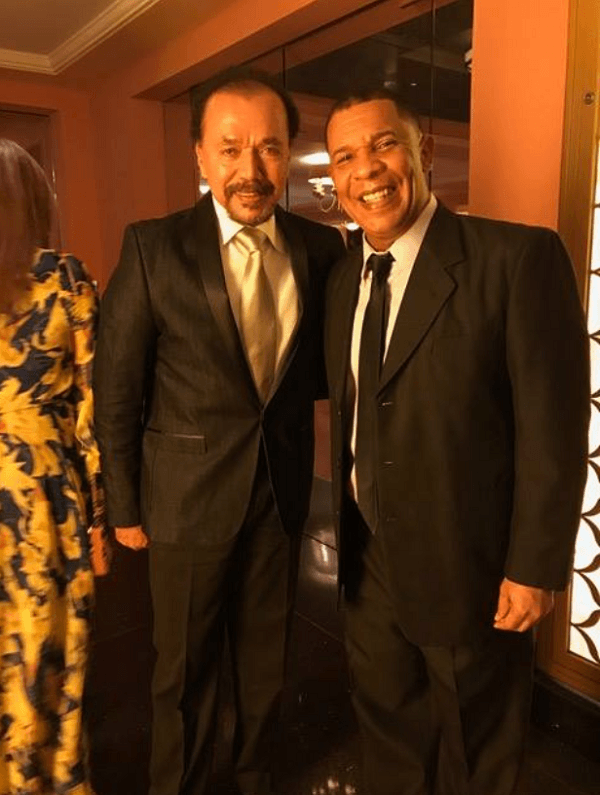
Orlando and Rafael
Orlano Santana and Rafael Ithier from El Gran Combo de Puerto Rico

His Role as producer and director

Regarding his role as producer and director of La Makina, he points out the importance of preparing and studying to exercise these areas of music. In his case, he had already spent many years working on important record productions, including those he did together with his cousin Cesar Cuesta, with whom he formed a small orchestra that covered songs by very famous bands. He created his own musical arrangements for these new versions to differentiate them from the original songs and wrote scores for other musicians.

In addition, he served as music producer for Grupomanía and wrote songs for artists such as Toño Rosario, Elvis Crespo, Oscarito, Manny Manuel, and many others.

Current Members of La Makina

Of the original members of La Makina, the only one left is Orlando himself, but he has been joined by other equally-talented musicians, including Carlitos Rivera and his own son, Anderson Santana.

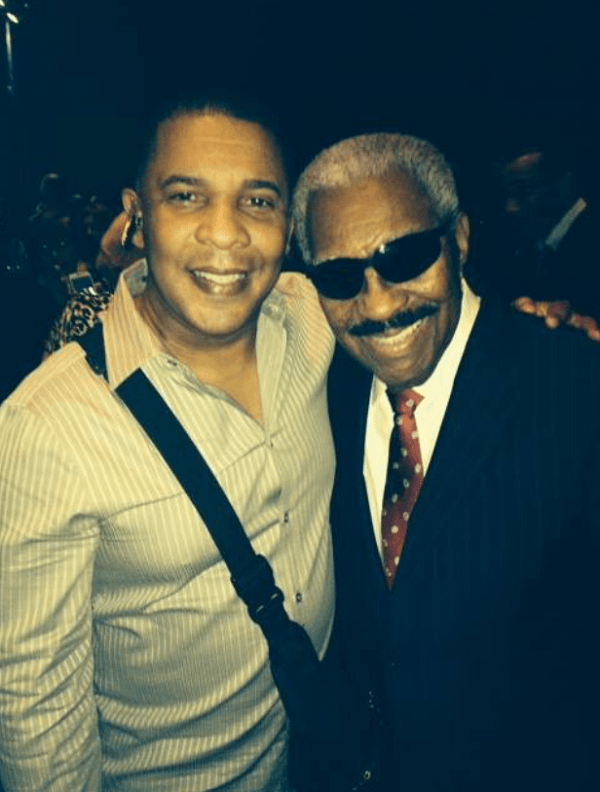
Orlando and Johnny
Orlando Santana and Johnny Ventura in San Juan, Puerto Rico

Current projects

This conversation had been delayed a few times due to how busy Orlando was in the studio working on new music, so obviously we had to ask what it was all about.

He told us that he and the rest of the group were working on a remastering of La Makina’s greatest hits, but with other arrangements and a fresh color. They also plan to include songs recorded by other artists but written by Orlando for them. He did not want to say what these would be so they would be a surprise for the audience.

Read also: Don Perignon Y La Puertorriqueña releases his new album ‘‘Classique et Savoureux’’

Caoba Y Bambú, Tito Rivera’s first discographic production

This month’s material is dedicated to the great arranger and trumpeter Ernesto “Tito” Rivera, who year after year has established himself as one of the most respected artists in the Puerto Rican music scene, especially in salsa. Below, we will mention some of the most important facts of his career to date and what he is doing presently.

Important facts of Tito Rivera’s career

One of the greatest contributions the virtuoso Tito has made to music in general has been his pen and the help he has provided to famous orchestras of all time, especially in the 1980s and 1990s. One of these is Roberto Roena y Su Apollo Sound, that to a large extent, is what fans remember today thanks to the Puerto Rican musician’s talented songwriting.

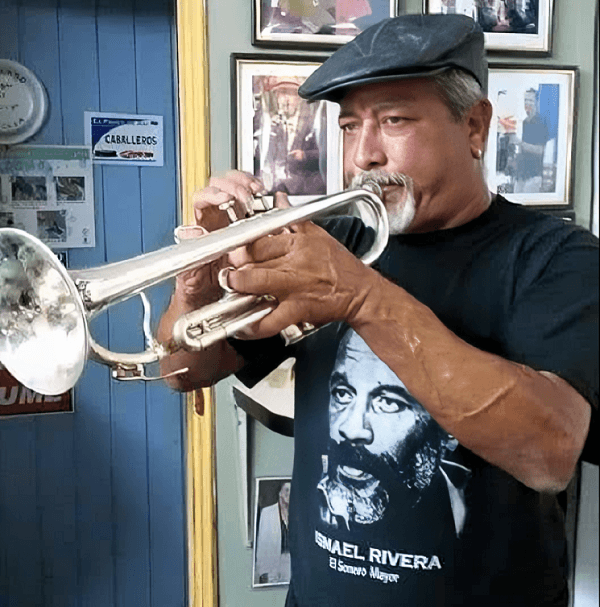
Tito Rivera playing the trumpet
Arranger and trumpeter Ernesto ”Tito” Rivera playing the trumpet

Another orchestra that was strongly influenced by Rivera was La Impacto Crea, which many remember as the group born of Hogares Crea and recorded for Vaya Records under the production of Bobby Valentín. Other groups we can mention on this long list include El Conjunto Borincuba de Justo Betancourt and Tony Yanz Y Su Orquesta Nacimiento.

Similarly, all this talent also gave him the opportunity to collaborate with many big stars, such as Marvin Santiago, who did not doubt to trust the trumpeter who lent his invaluable vision to a number of productions during those years. 

And not only that because Tito also left his mark on several songs by Kim De Los Santos Y Su Orquesta, which achieved impressive success in countries such as Colombia and Venezuela. 

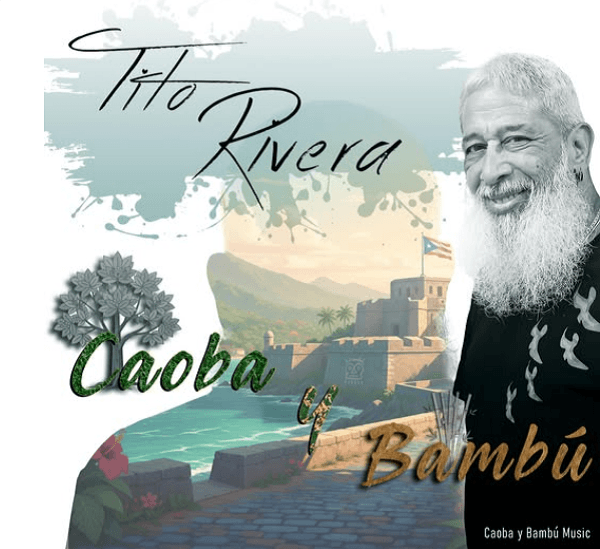
Caoba y Bambú

Caoba Y Bambú is Tito’s first album as a leader, which represents a major challenge for the sonero’s career. Once again, he demonstrates all the experience he has acquired over decades through the work of other greats who trusted his judgment at the time. Now it is his turn to work on something of his own to which he could apply everything he has learned over the years.

Cover of Caoba Y Bambú
Cover of the album ”Caoba Y Bambú”

Something very interesting to note about the album is that it brings to life great pieces such as “Musa Y Letra,” which was originally recorded by La Impacto Crea in 1981 for Vaya Records. What changes this time is that the song will be performed by Puerto Rican Jesús “Gumbi” Navedo and Venezuelan Marcial Isturiz. The soneros will also be accompanied by Danny Guzmán’s piano solo. 

The fact that “Musa Y Letra” was chosen as the first preview of the album was not a random decision, since it shows that Tito seeks to build an immediate connection with the most classic salsa fans, which only a song as representative as this one can do.

Although this has been a much talked about piece, it is definitely not the only one worthy of mention. We should also talk about “Plaza Vacante,” which is one of El Gran Combo de Puerto Rico’s best-known songs. However, this time, it will be performed by José Luis “Papa Chu” de Jesús, who will, without a doubt, do a magnificent job like the rest of the vocalists.

Another important addition to the album is “Vete Pa’alla,” which was previously recorded by Bobby Valentín for his album “Rompecabezas,” but on this occasion, it will be performed by the talented Davian Raúl. 

Johnny Cruz ISM


Read also: The 2026 NAMM Show Took Center Stage as Historic Gathering Celebrating the Future of Global Music Industry

  • « Go to Previous Page
  • Page 1
  • Interim pages omitted …
  • Page 8
  • Page 9
  • Page 10
  • Page 11
  • Page 12
  • Interim pages omitted …
  • Page 28
  • Go to Next Page »

International Salsa Magazine (ISM) is a monthly publication about Salsa activities around the world, that has been publishing since 2007. It is a world network of volunteers coordinated by ISM Magazine. We are working to strengthen all the events by working together.